The Irrawaddy Magazine |
- Viva Italia at Parami Pizza
- Reporters’ Arrest Could Lead to Review of Unlawful Associations Act
- Hearing Date Set for Detained Myanmar Journalists
- A Conversation With Mikael Gravers: Research Among the Karen, Past and Present
- Ceasefire Monitoring Committee Criticized as ABSDF Member Awaits Sentencing
- Mon State Govt Probes Looting of Smuggled Goods
- UNHCR Chief Urges Freedom of Movement in Rakhine
- Frenchman Setting the Bar for Myanmar Chocolate
- The Art of Street Stories
- Myanmar Tycoon Says Economy Neglected by Daw Aung San Suu Kyi’s Government
| Posted: 07 Jul 2017 07:50 AM PDT YANGON — Parami Pizza is looking to fortify its restaurant empire with a revamp of its traditional Italian menu with new pizzas, pastas, sharing plates, steaks, desserts, and cocktails at its three Yangon locations. "I am very excited about the new additions as it uses some excellent new ingredients we now have access to," said Nico Elliott, managing director of Parami owner 57 Below. "The menu showcases the fresh, authentic, home-cooking that an Italian 'nonna' would be proud of," he added. Parami has become the restaurant of choice for the city's pizza lovers and two new additions to give aficionados another reason to return.  The pollo piccante has a smoky eggplant sauce covered with spicy chicken, cherry tomatoes, sweet peppers and chili. The warm spiciness contrasts nicely to the smokiness of the eggplant and the mellow cheese. Garlic, spinach, parmesan, and egg top the florentina—another white pizza. (Neither is going to please people who require a tomato sauce on their base, though.) The florentina is Italia comfort food at its best with soft melty cheese and a runny yolk.  New to the menu are two carpaccios—one beef, one octopus. It's a brave move as the success of a carpaccio relies on the quality of the meat or fish. The beef carpaccio is a winning combination of rich yet refreshing raw Australian beef accompanied by a truffle mustard aioili, olive tapenade, and parmesan crisp.  The Sicilian octopus carpaccio is less of a success. The citrus-chili dressing overpowers rather than complements the octopus while the addition of pickled carrot jars the taste buds. But, maybe that's how the Sicilians like it. Elliott's favorite dish is the homemade tagliatelle with Venetian duck ragu. "The authentic flavors remind me of the years I lived in Rome eating in the local trattorias," he says.  Also showcasing Parami's homemade pasta is the wild mushroom ravioli—rich mushroom parcels served with a parmesan cream and truffle-oil foam. Any of the new items are washed down quite nicely with a cardinale. As Italy's answer to the Sangria, it's a refreshing mix of red wine, crème de cassis, and homemade bitters. Oh, and Parami has also added a gluten free pasta option. The post Viva Italia at Parami Pizza appeared first on The Irrawaddy. |
| Reporters’ Arrest Could Lead to Review of Unlawful Associations Act Posted: 07 Jul 2017 07:32 AM PDT YANGON — U Shwe Mann, chairman of Myanmar's Union Parliament Legal Affairs and Special Cases Assessment Commission, has said amendments to the colonial era Unlawful Associations need to be considered, following the arrest of three journalists in Shan State who were charged under the law. "We have to take into consideration amendments of the law," the chairman said in a statement released on Friday addressing the case of the three detained journalists under Article 17(1) of the Unlawful Associations Act. While U Shwe Mann said he does not know all the details of the case, he wrote that revisions to the 1908 law must be well thought out, and that while there is a focus on national reconciliation in the country, concerned parties should "exercise restraint" in their words and actions. U Shwe Mann referred to Myanmar's neighbor, India, which also imposed the Unlawful Associations Act during the British colonial era, but has since amended the law. The Irrawaddy's Lawi Weng (aka U Thein Zaw) and Democratic Voice of Burma's Aye Nai and Pyae Phone Aung, along with three civilians, were charged under the statute on June 28 for contacting an ethnic armed group, the Ta'ang National Liberation Army (TNLA). The reporters covered a drug-burning event to mark the UN's day against drug abuse in a TNLA-controlled area. Violators of Article 17(1) face two to three years in prison and a possible fine for being a member of an "unlawful association," making contributions to such an association or assisting in its operations. The act has long been used by the authorities to arrest and detain people in conflict affected areas, particularly in ethnic states. National League for Democracy lawmaker and commission member U Maung Maung Ohn said that the Union Parliament Legal Affairs and Special Cases Assessment Commission would review the law. He added that the chairman U Shwe Mann had told commission members at a meeting on Friday to consider amending the outdated law. "We will reconsider whether it is good for citizen and their rights, and if this law is reasonable in this time of democratic transition," U Maung Maung Ohn said. "How will we define whether an association is lawful or unlawful? We can't just call a group an 'unlawful' association because it is not reconciled with us," he said, adding that this is of importance during peace talks with ethnic armed groups. The post Reporters' Arrest Could Lead to Review of Unlawful Associations Act appeared first on The Irrawaddy. |
| Hearing Date Set for Detained Myanmar Journalists Posted: 07 Jul 2017 07:14 AM PDT YANGON — The first court hearing for three detained journalists will be on July 21, according to Hsipaw Township police major Myint Win. Six men including three reporters detained by the Myanmar Army on June 26 were brought to the court in Hsipaw on Friday morning. The case has now been transferred to Shan State's Namhsan Township, where they were arrested. "Though the case has been handed to Namhsan Township court, the hearing was held at Hsipaw Township court because they are still in Hsipaw," the police major told The Irrawaddy. "They appeared at the court today to get the court's permission for their trial on July 21," said a source at Hsipaw court. They were charged by Hsipaw Township police under Article 17(1) of the colonial-era Unlawful Association Act and held in prison on remand for 11 days before the court hearing on Friday. The three journalists are The Irrawaddy's Lawi Weng, also known as U Thein Zaw, as well as U Aye Nai and U Pyae Bone Naing from Democratic Voice of Burma. They were arrested by the Myanmar Army in an area controlled by Ta'ang National Liberation Army (TNLA) after covering the TNLA's event to destroy drugs to mark the International Day against Drug Abuse and Illicit Trafficking on June 26. The post Hearing Date Set for Detained Myanmar Journalists appeared first on The Irrawaddy. |
| A Conversation With Mikael Gravers: Research Among the Karen, Past and Present Posted: 07 Jul 2017 04:57 AM PDT This week on Tea Circle, we're pleased to feature an interview with anthropologist Mikael Gravers, an expert on nationalism, ethnic conflict, and peace and reconciliation, with extensive experience working among Karen communities in Thailand and Myanmar. He is the author of a number of books on Burma/Myanmar, including Burma/Myanmar— Where Now?, Exploring Ethnic Diversity in Burma, and Nationalism as Political Paranoia in Burma. He is also a researcher on the project "Everyday Justice and Security in the Myanmar Transition." Firstly, what made you initially interested in Burma? Or was it the Karen in Thailand, and Burma came later? Yes, actually I was reading Edmund Leach's Political Systems of Highland Burma while I was preparing for fieldwork and it inspired me so much I decided I would like to do similar fieldwork, but it was not possible to do it in Burma at that time. I was in Burma in 1972, but this was during the Ne Win years and it was very difficult. I went to meet a Christian Pwo Karen and just minutes after, I was stopped by an MI [military intelligence] agent on the bus. I don't think anything bad happened to this Pwo Karen, because the MI guy never asked me any questions about the visit, but it dawned on me that you couldn't do any decent fieldwork. This was in 1972. But I also did fieldwork on the Karen in Western Thailand in Uthaithani 1970-72 with two Danish colleagues, and the first visit, the first stop was in Sangkhlaburi at Three Pagodas Pass, where the Karen National Union (KNU) and U Nu had camps. It took more than 12 hours to reach the place in a boat. We saw wild elephants come down to the River Khwai to drink water. I visited the Baptist mission, and an American missionary, Emilie Ballard, who was evicted from Burma by Ne Win in 1962, gave us her excellent Pwo Karen language material. The teacher was Saw Tha Din, former President of Karen Central Organization until 1947, when it became the Karen National Union. He stepped down because he realized that he could not stop the young militant Karen. He wanted to negotiate, but he saw what was coming, so he stepped down. He was sent to prison for 4 years by U Nu and Ne Win. When he came out, he went to Sangkhlaburi and he worked as a missionary. But he and his wife were our teachers, and this was the beginning of my work actually, because after the language lessons, he gave lessons on Karen politics and Karen nationalism. He explained why there was this very strong ethnic Karen nationalism. He explained that Christianity was not a new religion, but that the original belief of the Karen was that they had lost their script, knowledge and religion in the past –it was the 'white brother' (in the shape of American Baptist missionaries) who returned the 'lost book.' Elder Karen firmly believed this myth. So he mentioned and referred to this script, the lost book that was found? Yes, missionaries created two Karen scripts in the 1840s. Then he said, well, 'If you want to know about Karen nationalism, you should go to the British Library!" To the India Office Library. He told me he lost all of his papers in 1949, but he was in the Karen delegation to London in 1946 and they distributed a memorial and a pamphlet to the parliament. These papers were not seen for a long time. When I consulted the literature at the time, in the 1960s and 1970s, you couldn't find anything, so I decided to search for the documents – I got some money in 1988 from the Danish Research Council, and after a few days, I found these documents, including Saw Po Chit's booklet on Karen nationalism. I think they are quite important to understand and explain the Karen expectations at that time (at the end of the British Empire). Many Karen were convinced that the British would come and help them fight for an independent State. And do you think that this expectation still exists? No, not like in that time. But, the narrative still exists. So you found these documents in the British Library? And they should still be there? Yes, they are. I think I am going to re-print one of the documents in an upcoming edited volume about the end of the empire in Burma. I used the map from the pamphlet in my 1996 article, "The Karen Making of the Nation," and the KNU territorial claim was really unrealistic because they claimed part of western Thailand. They said the border area is also the Karen land and could be included since the Thai government supported the Japanese in the beginning of the war. So, they include the area, for example, Mae Wang? Or only the border area like Mae Hong Son? I'm not sure, but the KNU mentioned Mae Sot and the border area to Chiang Mai province. They believed Sangkhlaburi and Tak province were old Karen principalities. The Thai king had appointed Karen governors of the border area around 1800 – they were guarding the border against Burmese invasion. Many Karen became allied with the Thai king after King Alaunghpaya's conquest of the Mon kingdom in 1755, which included present Karen State. The KNU's claim was unrealistic – but they never got a clear reply from the British government. Because I think, the British government found the claim to be too far out. Yes, but still, if these documents existed then… I gave Saw Tha Din's daughter a copy of it during a visit to Sangkhlaburi in 1996. Saw Tha Din had died just one year earlier. But, looking into Karen history, you can also see in the important documents how Karen Christians and Buddhists had different opinions on a state inside or outside the Union. And this divide was also really prevalent and important in 1945. Especially, in 1946, there was a Buddhist Karen organization, Burma Karen National Association (BKNA) who disagreed with the Christian Karen National Association. They wanted to negotiate with U Nu. And we have seen this divide many times in history. The most recent of them was in 1994-95 when Democratic Karen Buddhist Organization and Army was founded and split from the KNU. Yes. Do you think it is really a religious split/conflict, or is it more related to resources and political power that different groups have? How important is religion in this split? It's important to look into the main differences of identity within the Karen group; of course there was political disagreement, and the schism in 1994, when DKBA was formed, was really also about class, education. All the front line soldiers, most of them were poor, less educated, often Buddhist Pwo Karen, whereas the leadership of KNU was almost entirely Christian. The Christian elite has access to education and hospitals in Thailand. They're relatively well off, and sent their children to school in Bangkok. And as it is now, it there is also a competition for resources between armed Karen groups. Do you think it exists still today, that there is this competition for resources— for example, access to scholarships and other resources— among Christian and Buddhist Karen? Yeah, there is still lingering conflict. As you saw, U Thuzana, Myaing Gyi Ngu Sayadaw, he was constructing small pagodas near Christian churches and Muslim mosques last year, supported by Ma Ba Tha. It's perhaps not so important inside the KNU just when we are speaking now, but it's still there. And as you said, it's not just religious. It's also about class, the economy, and political disagreement. Exactly. And what is the role of foreign donors in this? Because obviously some of the Christian groups can offer scholarships because they receive donations from international groups. Well, yes. It's partly this kind of donations— scholarships and aid— that, how can I say, maintain the boundaries between these groups of Karen. And do you think that these boundaries, that they're something that donors or foreigners ask and expect? For example, that Christian Karen keep a boundary between them and the Buddhists? I'm not sure they ask. I don't think they ask this directly, but it's an indirect effect. U Thuzana has connections to Thai business people, while the KNU leadership has contacts with, for example, Japanese firms. Foreign companies want various development projects in Karen states and we have seen the same tendency in (other) conflict areas of Burma— it has been called 'ceasefire capitalism,'— when officers turn into business entrepreneurs. 'Ceasefire Capitalism.'— it's the first time I've heard of it. It's an interesting notion. Can you tell more about it? Yes, this was coined by Kevin Woods, who has written about Kachin state. For example, the illegal logging and trade in timber, mining, copper plantations, so it is, rubber plantations by the Burmese Army, but also by foreign companies— and this is very bad in my opinion because this may do a lot of damage to natural resources. It may also prevent decent sustainable development and has resulted in widespread land grabbing. That's right. And the new Karen leadership, they also practice 'ceasefire capitalism'? Yes, yes. According to our information in Myanmar, all Karen armed groups engage in business. You can also see some of the breakaway groups, like the Karen Peace Council, and the Karen Peace Force who signed agreements, and then got some license for plantations and mining, or trade licenses, from the Myanmar army. They settled there, say half a battalion. DKBA also took land, and when it was transformed into the Border Guard Force (BGF), it continued. Some of the Karen officers are wealthy, as leading officers in the BGF, DKBA and KNU are involved in business. Some are believed to be involved in the drug trade, some have rubber plantations. So this may—how can you say—this may generate new conflict between these military entrepreneurs and common people, especially because of land grabbing. For your fieldwork— you started in 1970, in Thailand? In Sangkhlaburi, you learned the whole Karen language, and then you spent two years there, and then on-and-off as you continued your fieldwork in the same area— in Lamphun? Yes, first in Uthaithani province among Pwo Karen in the hills. Almost two years, and they are Buddhist. Then, I spent time at Chiang Mai, the Mae Chaem area, just near the top of the Doi Inthanon mountain. That was a Baptist Sgaw Karen village— they converted from Animism in the 1980s. And then in Lamphun in Wat Phrabat Huai Tom, which was a very interesting place really, because this has inspired the famous Thamanya Sayadaw and U Thuzana in Karen state. The monk in Huai Tom, Kruba Wong died in 2003. His body is kept in a glass coffin in the monastery. He is one of several monks who— how can I say it— are strict vegetarians. He lived among Karen and he spoke Karen, so the Karen actually consider him as a Karen. Some 17,000 Karen live in the monastic settlement and have contacts in the Karen State [see Paul Cohen (ed.) 2017, Charismatic Monks of Lanna Buddhism]. So he helped the Karen from Burma? No, no, from Northern Thailand. But there was also a monk from the Karen state who joined him at one point. His name is Chao La' and he died in the late 70s. He was a very controversial figure—the Thai military thought he was a communist. But these monks, they went to the poor hill Karen and invited them to stop the sacrifice for the spirits. This was almost at the same time as the Catholic mission came to the area where I had been. This was a very significant point in Thai history, because the Thai prime minister was really powerful at the time and the army was very anxious to prevent communists from gaining a foothold among the Karen. On the other hand, the Karen were quite frustrated, because of new roads made into their areas and the confiscation of land for national parks, and a lot of other economic, social and political pressures. So, these monks here, they told the poor Karen, "You should join us, you have to quit sacrificing, become vegetarians and convert to Buddhism'. And then, Khruba Wong invited several villagers to come and settle in Huai Tom, Lamphun. The first group who came down, they had a very hard time, because the soil was very poor. Many got malaria, and local Thais opposed their settlement. This was in 1969-70, at the same time as I was living in Uthaithani. And at that time, there were not yet refugees from Burma in Thailand? That only started in the 1980s, right? The camps at the border? Yes, the first groups to come started in 1983 or 1984, but I mean there were refugees along the border who came as early as 1950-52. Saw Tha Din, his family came in 1949. And actually the people I studied— in the group I was living among in Uthaithani— they were refugees from 1780-1800, after the Burman conquest of the Mon kingdom. And did they consider themselves as displaced persons, or did they integrate themselves over the generations into this western Thai Karen society? They were not very integrated into Thai society. They spoke only a little Thai. Really? After all these decades and centuries? Yes, the first story they presented to me was about their exodus from Burma (known as Ba Yaung Khaung in Pwo Karen) and they told the story like this: They sent a messenger to the Thai king and he agreed that they could settle in the mountains because they were slash-and-burn farmers … and we know from historical records that they acted as border guards, as spies. They were not in the Thai army when the Burmese invaded, but some were border guards and fought the Burmese. One particularly famous one was Pha Wau, who served the Siamese king. There is a statue of him and shrine on the road to Mae Sot in the mountains. Did they ever obtain Thai citizenship? They have citizenship, yes. But they belong to one of these many Millenarian Karen sects called Phloung Lu Baung, the "Yellow String Pwo." They have a yellow string tied around their wrists, as a symbol of being 'pure Buddhist Karen,' waiting for the next Buddha. I would say they are Buddhist, but they are not recognized as real Buddhists in Thailand. In Thailand they are called Ruesifollowers, that is, followers of 'hermits' (yathey). Their religious leaders are dressed in white. However, they also have monks and monasteries. But they believe the monks' teaching will decline, as the Buddha prophesied. And in all your years of fieldwork, have you observed how the Karen in Thailand related to the Karen in Burma in different ways? Yes, because the Lu Baung used to visit Burma and visit monasteries where they learned the Mon alphabet. They went to monasteries, they became monks, they returned to the monasteries on the Thai side, but they never really engaged in this struggle for Karen independence in Burma. I have not met any Thai Karens who joined the KNU army– they were interested in the struggle, but they didn't join or support it. And why do you think? It's interesting that this was happening. Why was it that the Karen in Thailand actually never joined the Karen in Burma and found a shared Karen identity to actually have a state together? Why did that never happen, in your opinion? Well I'm not sure I can give a full answer to this, but you know, one thing is to have something in common and to have a shared identity, but another thing is a shared political project. As it was inside Burma, fighting the Burmese army, they were very much afraid also that they would be punished and couldn't return to Thailand. I mean, armed struggle is not… it's a very hard thing for Karens to start. They prefer peace to struggle and conflicts, so I think they are not really happy to fight. They felt suppressed by the Thai in the 1960s and1970s, and when the communists tried to recruit Karen, they only managed to recruit a small group in 1973-74 in Tak province and a few persons in Uthaithani, but it dawned on the Karen that they were actually then fighting some of their own people, which was very bad. Karen killed Karen, I think they don't really like this kind of a situation, where they are not in control of what's going on. I met some of these persons who joined the communists and— it's very funny— one guy was still wearing the cap with the red star, looking like Mao. But very few became communists. They were angry at the Thai incursion on their communities. The Thais really looked down on them and discriminated against them and bullied them – as I have seen. You mentioned that you're preparing for your retirement? I retired the January 1, actually. So now you're freshly retired. What are your plans for your retirement? Well, this year I'm still working on a Burma project ("Everyday Justice & Security") and in January I'm going to the Karen state to do fieldwork, and I may also go in January 2018, if I can manage. This project will finish in 2018 and the plan is I have to publish from the project. I am also writing a monograph on my many encounters with the Karen, their culture, religion and struggles. What can you say about the differences between doing fieldwork in the 1970s and today? When I retired, it dawned on me after the recent fieldwork, traveling in a car and bringing a lot of medicines and a computer…I first came to the Karen area in 1970 in a bus, and then I had to walk for 6 hours uphill. And my friends, they came out to another area with a boat, and between our two villages were 3 days through the jungle. I tried this tour one time and then I had a small bamboo house constructed, 3×7 meters. I had all kinds of animals coming in and out— snakes and rats and Palm rats— there were still tigers, barking deer, and other wildlife. Then, I stayed with the village headman's family. He was actually the first teacher in the area. And there were about 10 villages in this community of about 1000 (Pwo Karen), so I walked between these villages and dressed in a longyi, and I had a sleeping bag and a small portable typewriter. I had a box of small pieces of paper for my language study— writing in the Baptist Pwo Karen script from Burma, and then translating into Danish! Do you still have these field notes? Yes. And I'm preparing to organize them for our research archive at Moesgaard Museum (Aarhus University), but I still need them for writing the book. I brought home a large collection of ethnographic items for the Museum, as well as 6000 photos and tapes with prayers, music, and poetry. Let me show you one…this is poetry. This is translated by an assistant, actually a student from Burma, a refugee, who now lives in Ratchaburi. But my own handwriting is not so beautiful. And my dictionary – this is my own, handwritten dictionary in Pwo Karen. I speak Karen like a foreigner who has learned some of the language, especially some of the religious language. But when I come to Burma and speak (Pwo Karen) they use a lot of Burmese words, for example, for school or monastery, but I learned the Thai words— so this is a huge problem when I am in Burma now. If it's about religion and you don't need any modern words, then it's ok. But as soon as you discuss modern times— politics for example— it's very hard for me, so I need assistants, translators. However, it is improving. I could even speak Pwo with the Karen Muslims in Karen State. All the material I have collected will be organized in the archive and available for future scholars – and I hope that includes Karen scholars. So I was living there for almost 2 years and eating with my fingers. Have you tried that? Yes, I always ate with my hands. And then I brought some medicine and gave it away at first, but then my mentor said to me, why not take just one Baht each time (to re-supply)— so my small house was a kind of clinic. So what kind of medicine did you bring? For myself, I had malaria medicine. I got malaria. And was it treated? In Denmark, when I came back from to Burma. I also got amoebic dysentery, because there was an epidemic. But otherwise, it was very nice— sometimes exciting—and people were so kind. I have been re-visiting this place many times –first I was 'nephew' or 'cousin', then 'uncle' now I am 'grandfather' – a higher status than I have in Denmark! This article originally appeared in Tea Circle, a forum hosted at Oxford University for emerging research and perspectives on Burma/Myanmar. The post A Conversation With Mikael Gravers: Research Among the Karen, Past and Present appeared first on The Irrawaddy. |
| Ceasefire Monitoring Committee Criticized as ABSDF Member Awaits Sentencing Posted: 07 Jul 2017 04:22 AM PDT YANGON — More than six months after the arrest of U Min Htay, a central committee member of the All Burma Students' Democratic Front (ABSDF), a court will soon decide whether he is charged under Article 17(1) of the Unlawful Associations Act. The government's joint ceasefire monitoring committee (JMC) faces criticism for not intervening sooner. On July 10, the head of the Momauk police station, the last of 10 witnesses for the plaintiff, will give his statement to the court, which the ABSDF hopes will conclude the case. On Dec. 29, 2016, a day after his arrest in Kachin State, ABSDF leaders sent a letter to the Union-level Joint Ceasefire Monitoring Committee, calling for its chairman Lt-Gen Yar Pyae to intervene in the case. But it remains unresolved, despite sharing the request with the State Counselor, the Myanmar Army and the JMC. On July 5, Dr. Sui Khar, a secretary of the JMC, which is tasked to intervene in disputes between NCA signatory groups, told reporters in Yangon at a press conference that "the ABSDF had not had sent any letter of complaint to the JMC and the group had been dealing directly with the government regarding the issue." ABSDF members said a letter was sent to the State Counselor on Dec. 30, and that two letters were sent to the JMC. The JMC secretary's comment sparked criticism of the JMC's role in solving disputes between the NCA signatories, as it is obliged to do. The JMC has stated that it would develop a computerized complaint management system, as so far the majority of the complaints it receives are verbal. ABSDF leaders said the letters sent to the JMC dated Dec. 29 and Jan. 3 asking for help with the issue were formal complaint letters. "What kind of complaint letter do they want the ABSDF to send?" asked U Salai Yaw Aung, a central leading committee member of the ABSDF and a JMC member. Myanmar Army troops arrested U Min Htay and then informed the ABSDF that he had been arrested on suspicion of helping the Kachin Independence Army. U Min Htay's home was in the KIA-controlled territory, which he says gave the army an excuse to go after him. U Salai Yaw Aung said the ABSDF had responded to the accusations through the JMC in the January letter. The Myanmar Army overstepped the necessary process and the JMC seems incapable of helping NCA signatories, said ABSDF members. ABSDF representatives in the JMC brought this case up in meetings as well as in direct discussions with the JMC chair, they added. Myanmar Army representatives said the ABSDF needed to submit an appeal letter as the case was carried out under the instruction of armed forces chief Snr-Gen Min Aung Hlaing, according to U Salai Yaw Aung. Whether U Min Htay's case is dismissed is totally dependent on Myanmar Army leaders and whether they close the case, he said. The post Ceasefire Monitoring Committee Criticized as ABSDF Member Awaits Sentencing appeared first on The Irrawaddy. |
| Mon State Govt Probes Looting of Smuggled Goods Posted: 07 Jul 2017 02:06 AM PDT MOULMEIN, Mon State — The looting of smuggled goods that staff at an inspection gate in Mon State were destroying has sparked a state government investigation. Dozens of people came to loot the contraband—mainly food, soft drinks and alcohol—at Mayanchaung inspection gate in Kyaikto Township on June 29 despite the presence of government officials. Photos of looters grabbing goods, which were imported illegally, and fleeing on motorbikes and in cars were shared on social media. The Mon State government formed a body on Thursday to investigate the incident, according to U Wunna Kyaw, the state minister for planning, finance and immigration. "We're investigating. But we can't give any details now," said U Wunna Kyaw. The investigation will take about a week, he added. Officials at the inspection gate also declined to speak about the investigation process. U Aung Kyaw Thu, a Mon State lawmaker, complained that the inspection gate is a burden on travelers and not a good source of taxes for the state government, as there are two roads, which people can use to bypass the gate. "The gate has been there since the time of the military government. While it hampers the flow of commodities, it only benefits the staff assigned there, and contributes nothing to taxation," said U Aung Kyaw Thu. The lawmaker also criticized the state government's destruction of smuggled goods. "It is a lose-lose situation," he said. There have been cases of staff members bribing their superiors to be assigned to the inspection gate, where they can receive payoffs from smugglers, the lawmaker claimed. The inspection gate, which is on the Yangon-Moulmein road, was opened in 2003 and closed in 2012 following complaints from locals and the state's chamber of commerce about the prevalence of illicit contraband. After five years of closure, it was opened on March 1 this year as part of a state government plan to control the movement of smuggled goods. The gate has 79 staff from 11 departments and agencies, including the consumer protection department of the commerce ministry; police; traffic police; immigration and population department; road transportation administration department; and agricultural and fisheries departments. They make 24-hour checks on people and vehicles that cross the gate. From March 1 to the first week of July, smuggled goods worth 2.4 billion kyats were seized at the gate, according to statistics from Mon State's planning, finance and immigration ministry. Translated from Burmese by Thet Ko Ko. The post Mon State Govt Probes Looting of Smuggled Goods appeared first on The Irrawaddy. |
| UNHCR Chief Urges Freedom of Movement in Rakhine Posted: 06 Jul 2017 11:59 PM PDT YANGON — The UN High Commissioner for Refugees Filippo Grandi called for freedom of movement and access to services for displaced persons in Rakhine State at the end of his first visit to Myanmar that took place amid an uptick of violence in the region. "These are complex issues, but they are not intractable," said Grandi, according to a UN release, adding that efforts to increase citizenship verification and tackle poverty were also part of the solution. The recommendations of the ex-UN Secretary General Kofi Annan-led Advisory Commission of Rakhine State, which include closing internally displaced people (IDP) camps and the return of refugees from Bangladesh, provide an important roadmap for the way forward, the UN representative said. During his five-day trip, Grandi traveled to Yangon, Rakhine State's Sittwe and Maungdaw Township, and capital Naypyitaw where he met State Counselor Daw Aung San Suu Kyi, the social welfare minister, the labor minister, and the border affairs minister, according to the release. They discussed humanitarian access to camps in Kachin and Rakhine states where some 100,000 and 120,000 remain displaced, respectively. The high commissioner commended the return of mainly ethnic Karen refugees from Thailand but said that repatriation must be "voluntary and sustainable." Earlier this week, Grandi's delegation met with border police Brig-Gen Thura San Lwin in Maungdaw and visited villages that suffered from arson during Myanmar Army security clearance operations, as well as with residents of the Dapaing IDP camp. One of the camp's residents U Saw Lwin told The Irrawaddy on Monday that IDPs discussed with UN officials their lack of freedom of movement, education and healthcare after nearly five years in the camp. He said they still hoped to be compensated for assets destroyed during inter-communal riots in 2012. On July 1, the State Counselor's Office Information Committee released a statement from national security adviser U Thaung Tun that highlighted a recent increase in violence in the area, some of which stemmed from incidents between the Myanmar Army and suspected militants. It stated that from October 2016 to June 2017, 38 civilians were killed in Maungdaw district and 22 villagers were abducted or went missing. Many of the victims were village administrative officials who had collaborated with the government, according to the statement. "There has been a worrying increase in the number of murders and disappearances in recent weeks. In the past two weeks alone, six villagers have been killed and two have gone missing," read the statement. The government has provided more than US$1.96 million in humanitarian assistance to Rakhine State in the past year. Three IDP camps in Kyaukphyu, Pauktaw and Ramree townships have been closed in line with the recommendations of the Kofi Annan-led advisory commission; among them, 55 households have been relocated to Yangon. Grandi has worked in refugee and political affairs in the Middle East, Africa and Asia. This is his first visit to Myanmar since he was appointed high commissioner in January 2016 and his trip will continue to Thailand and Bangladesh. Additional reporting by Moe Myint. The post UNHCR Chief Urges Freedom of Movement in Rakhine appeared first on The Irrawaddy. |
| Frenchman Setting the Bar for Myanmar Chocolate Posted: 06 Jul 2017 10:54 PM PDT KAREN STATE — In dense jungle about 20 kilometers northeast of Taungoo, Jean-Yves Branchard hacks at thickets of vine with a stubby machete, pausing to contemplate a cacao pod blackened with disease. "The price you pay for being organic," sighs the Frenchman, as sweat washes flecks of soil from his heavy jowls. Considering all the close scrapes—the soldiers, the dengue fever, the kidnappings—rotting fruit suddenly poses the biggest threat to his Yangon-based company, Ananda Coffee and Cocoa. But most of the pods from the 40,000 or so cacao trees growing freely on his 125 acres of land are lime green, magenta, butter—the tones of immaturity. Their leathery rinds will become more creased, shading maroon and orange, come the harvest in October.  Jean-Yves, 51, is a pioneer of Myanmar's incipient chocolate manufacturing industry—in fact, he is the only one in it. He has traveled across the country, seeking the surviving cacao trees of a fabled government experiment, supposedly begun and abandoned in the 1970s or 80s, although there are no official records to confirm this. His pursuit to find conditions that could support the crop led him to the jungle near Taungoo after a government official recalled seeing the pods in the area. Ploughing through seven-foot wide dirt tracks lined with rubber trees and wild orchids, he eventually located the cacao trees, on territory controlled by the Karen National Union (KNU). Jean-Yves and his Myanmar wife bought the land from a private seller in 2004, he says, when there was "a tense situation" between the Myanmar Army and the ethnic armed group. "The army was always concerned about having a foreigner in the grey area," he says, remembering an incident eight years ago when Myanmar Army troops received the orders to "pull him out" as fighting raged toward his plantation. He would sometimes be turned away at military and rebel checkpoints, or only allowed to access his land with security personnel, but his workers suffered the most harrowing episode in 2013—a year after the KNU and the Myanmar Army signed a ceasefire. "We had two kidnappings, both at night," he says, in front of a four-year-old teak, one of the 6,000 trees his team planted under the canopy. "People coming with AK-47 [rifles] and taking our workers. As we do everything organic, we need to keep a natural environment. Some people don't understand why we don't chop everything down." The gang of armed men, says Jean-Yves, had come to log trees on his plantation, but were not associated with the military or the KNU. "We asked for help from the police and then the men released the people immediately. But it was quite scary for the workers: at night, AK out; it's no fun, especially twice. It happened again two, three months after. They wanted to cut more trees," he adds. Finding More Farms Jean-Yves located two more pockets of wild cacao trees. One was near Thaton Township, once home to an ancient Mon Kingdom, but the steep terrain made farming difficult. The other was near Kalein Aung village, about 90 kilometers north of Tanintharyi Region's capital Dawei, where he began showing farmers how to cultivate cacao trees in between their areca palms, which produce the nut chewed with betel leaf across Myanmar. It was a successful pairing in an agricultural system more regimented than the plantation near Taungoo. In 2005 the French Embassy connected Jean-Yves with French oil giant Total, a major partner in the highly controversial Yadana gas pipeline that runs through Tanintharyi from the Andaman Sea to Thailand. A black cloud of accusations, including forced labor and land confiscation, hangs over Total for its role in the pipeline. Perhaps to counter this image, it launched a social enterprise initiative, which welcomed Jean-Yves's vision as a way of encouraging sustainable living in the local community. Total lent Jean-Yves use of its plant nursery, agriculture experts, and even the odd seat on its private plane to the remote tail of southeastern Myanmar until the help fizzled out three years ago. Jean-Yves was hesitant to collaborate with such a contentious company, although he says he did not witness any of the alleged abuses. "After you go to see the place, you understand there is potential and the people need it," he considers, referring to development of the local economy. "You always think about [the accusations]. Okay, Total helped us, but the ones who profit are the farmers and us. I'm not even sure Total mentioned it in it's corporate social responsibility [report]." Jean-Yves bought 4,000 square meters in the village to build a warehouse and then purchased 29 acres of private farmland to show the community "we plant with you." The farmers use four variants of cacao chosen from a batch of 15 types of seeds that Jean-Yves ordered from a French-government laboratory on the South Pacific island nation of Vanuatu. He claims to buy the cacao from the farmers for at least twice the global market rate. Once ripe, as they currently are in Kalein Aung, the pods are cracked open and the white pulp holding the 30-50 beans in each pod is scooped out and kept in large plastic barrels to ferment for up to a week, with about four pods' worth of beans used for every chocolate bar.  They are spread onsite in the sunshine in the dry season, but during the monsoon season are transported in 4x4s or on buses to Yangon, where they are dried and roasted in a big drum in Mingaladon Township for 30-40 minutes before the shells are removed. The remaining nibs are taken to North Dagon Township and ground for three days in a hand-built stone machine, tempered, and then moulded. The final result comes in six 100-gram bars: cashew nut and caramel, milk chocolate with 45% cocoa (the term used for the heated form of cacao), and four dark chocolate variations of 60%, 72%, 80%, and 100% cocoa. Jean-Yves describes a "relatively dry" flavor shared by the bars because he uses only beans from the fruit and avoids cocoa butter. Pleasantly hand-wrapped in plastic film, as if a relative had made them, the bars are then put in aluminum foil and paper packaging. The combined harvest of the two plantations produces roughly 20,000 bars to be sold at hotels Kandawgyi Palace and Park Royal in Yangon. Ananda also has a café in one of the city's plazas, Marketplace, which serves other treats like dried orange peel dipped in milk chocolate. But Jean-Yves's ambitious shot at galvanizing Myanmar into a bean-to-bar nation took an unlikely turn this year by attracting its latest and most famous customer, Daw Aung San Suu Kyi. State Chocolate Jean-Yves parks his 4×4 to buy Lindt milk chocolate from the service station—too creamy, he says, but not as bad as the others on the shelf with hardly any cocoa content. A new Singapore-made chocolate in town is particularly egregious to him, as it's called "Mingalar Bar." He has the look of a man who has committed spans of his life to rugby, wine, and cheese, in that order. He has had dengue fever three times, and half-jokes that the next time will kill him. Time spent scurrying around malarial hotspots, however, seemed to pay off the day before Daw Aung San Suu Kyi, the foreign minister, left for her European tour on April 30. Jean-Yves received a phone call from the government in Naypyitaw ordering 120 bars to be delivered immediately to her house. The chocolate, says Jean-Yves, was handed out to the continent's leaders and figureheads as a taster of Myanmar produce, meaning Britain's Queen Elizabeth, who lunched with Daw Aung San Suu Kyi, may well have taken an Ananda chocolate bar back to her chambers. The next order from the government was for 200 bars to take on the foreign minister's trip to Sweden and Canada on June 4, he adds, and there has been a further request for 500 bars to be delivered in early July. "Maybe they plan a big meeting somewhere," he shrugs. "We are happy just to be recognized that Myanmar is producing a good product. If people want to say [a product] is bad, cheap, they say it's Chinese, but sometimes it's even worse, they say—no, it's made in Myanmar. But why must it be bad because it's made in Myanmar? The mistake not to make is believing that's it's easy to produce good." From Coffee to Cocoa Chocolate runs in the Branchard family. Jean-Yves' uncle began a firm importing cocoa from West African plantations in 1917 and his cousin launched his own chocolate factory. But Jean-Yves struck out on his own in the coffee industry after visiting Myanmar as a tourist in 1998. He met his wife in Bago Region and the newly-weds honeymooned in Hsipaw, where they visited the Shan palace of 'Mr. Donald,' the nephew of the last Shan prince Sao Oo Kya. "We had a nice day talking with him," says Jean-Yves. "This is where I saw some coffee plants in his garden. When I came back to Myanmar from France again we went to see the agriculture ministry to see if we could help them improve the quality and export of fine Arabica to Europe, which we first did in 1999." Jean-Yves eventually bought land from the government near Pyin Oo Lwin to grow coffea, the plant that fruits coffee beans, and bought two plantations from private sellers after that. He has sold one and abandoned another because of hassle from Shan locals who begrudged foreigners working the land, he says.  According to him, groups of drunken men brandishing machetes would storm one of the plantations, adding that they once accused him of trafficking a local woman. His court hearing was canceled when it transpired the girl had eloped with a Myanmar worker on the plantation, he says. She wrote to her mother explaining, and then returned. A shame to leave the plantation, he reflects, as people lost their jobs and the land is now derelict, but too risky for his own family. Yet the coffee business sustained its most serious blow when the US imposed heavy sanctions on Myanmar's military regime in 2003 for rampant human rights abuses. Customers of his coffee beans—mainly shops abroad—began receiving complaints over their association with Myanmar firms; exports were blocked, banks refused to deal with him, and so the coffee stopped. In response, Jean-Yves and his wife, a tour guide, started a tour agency, with the Frenchman using his Land Rover and experience of the country's routes to show visitors distant places. He advised the local administration in Mogok, a city in the hills of Mandalay Region famous for its precious stones and gems, on agricultural matters. Finding an interest in Mogok's stones, he completed a diploma in gemology in 2012, but he saw his future business in chocolate. "There is a nice potential to grow cacao from the south of Moulmein to the south of Myeik city, but the land mass is not that big," he says of the region between Mon State and Tanintharyi. "There is a long stretch of land and already a lot of rubber plantations. We will start but we will always be competing in this area with rubber, a big business in Myanmar. "It's not going to be Malaysia or Indonesia with hundreds of thousands of tonnes of cocoa. Myanmar will have an advantage to focus on quality, importing a very nice flavoring variety. Like the wine, the best quality cocoa is where you have the fewer yields." For now, Jean-Yves is grateful not to have any other competitors producing chocolate in Myanmar—and he doesn't expect them any time soon, either, because of the hard work involved. With Yangon's top hotels and the government showing interest in his work in the last six months, more than a decade of cacao farming is coming to fruition. "It's all happening now," he declares, gripping the wheel of his 4×4 underneath a pewter sky breaking yet another seasonal rain. "Maybe because we are producing a little more and starting to look for additional markets." The kyat is low, he says, driving up the cost of imported chocolate, and hotels are looking to impress a lower than expected number of tourists with some local produce. "All combined, it is good timing." The post Frenchman Setting the Bar for Myanmar Chocolate appeared first on The Irrawaddy. |
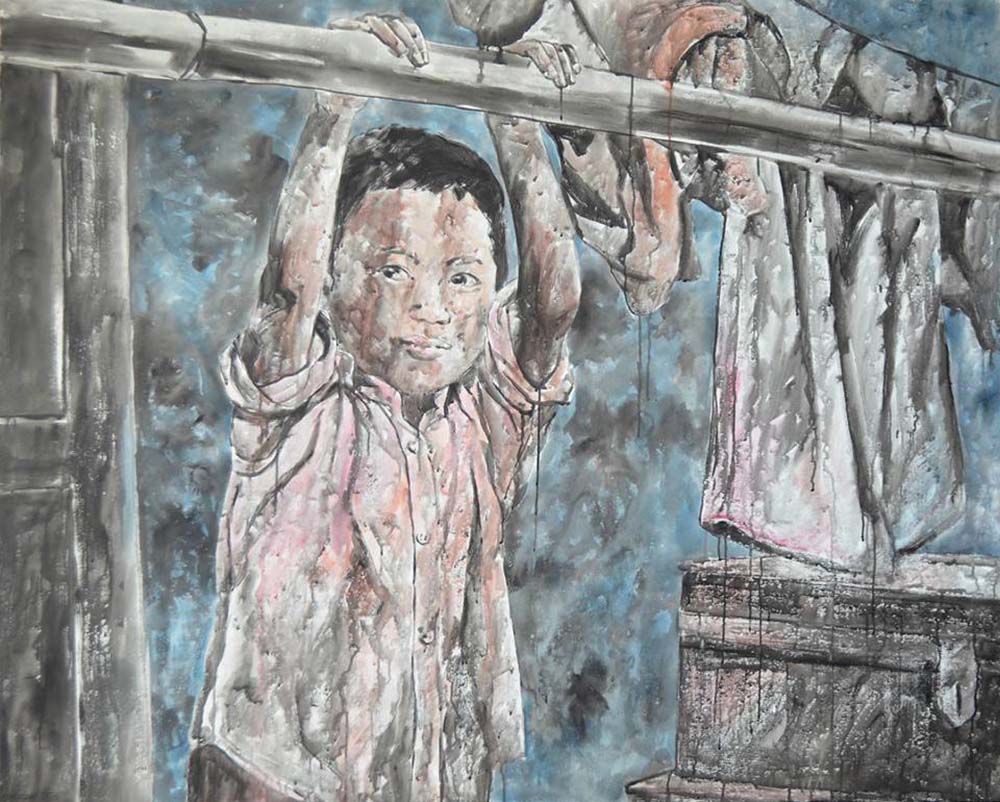
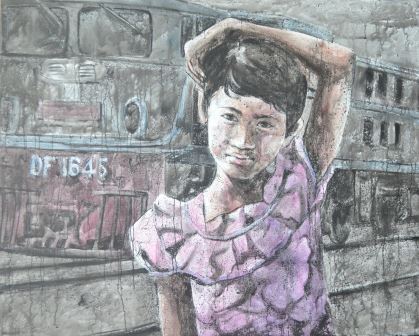
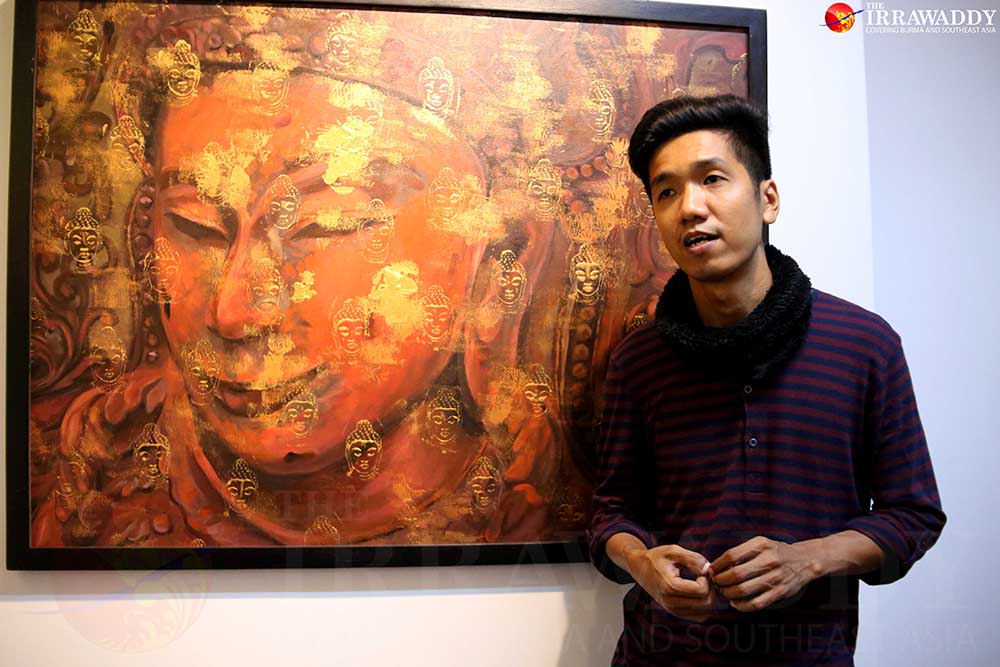
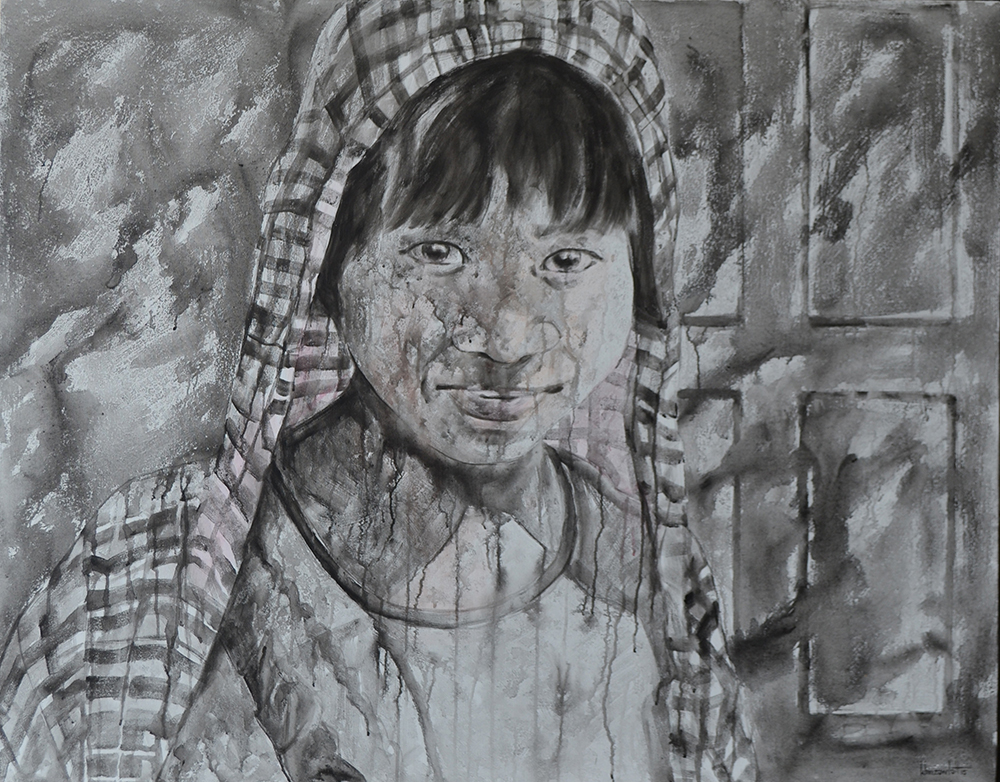
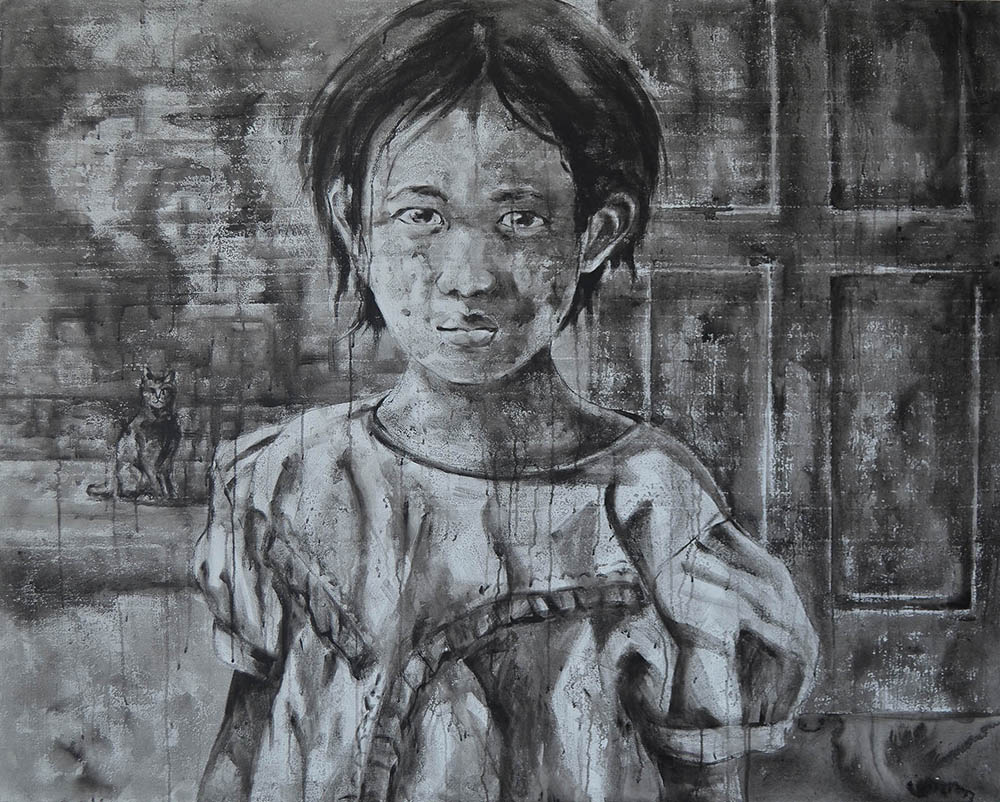
| Posted: 06 Jul 2017 10:28 PM PDT In 1961, a painting displayed at an art exhibition in Yangon's Sarpay Beikman (literally Palace of Literature – a literature department under the information ministry) became the talk of the town. Entitled 'Rice and Gold,' the work by artist Maung Ngwe Htun depicted a man gilding a pagoda while another man ate a pack of rice together with dogs and crows. Art critic Paw Thit (Hanthawaddy U Win Tin – one of the late founders of the National League for Democracy) bought the painting for 600 kyats. Some 60 years after Maung Ngwe Htun drew his famous picture, artist Khin Zaw Latt witnessed a similar scene. One day last year, Khin Zaw Latt was waiting with his friends who were gilding a famous pagoda. There he happened to talk with children who were begging for money and selling things. He took pictures and drew sketches of those children. When he got back to his studio that day, he painted the portraits of those children who were largely invisible to many people. He titled these pieces 'Street Story.' These portraits will be on display at the Retour De Voyage Art Gallery in L`lsle-sur-la-Sorgue, a town in southeastern France, from July 7 to August 6. Khin Zaw Latt also opened a free school, called Bamboo School, on his 4-acre parcel of land in Yangon's Kyauktan Township. Children learn art, computers and English at the school, which has now been open for five years. "I'm quite interested in the life experiences of children," he told The Irrawaddy. He said he has talked with children begging for money and selling things at pagodas, selling flowers on the street, selling foods and goods at railway stations and jetties, selling postcards to foreigners in downtown Yangon, and selling seashell necklaces at the beach. He has transformed their stories into art. Khin Zaw Latt will show his street stories in France after Frederic Dol, a French man who owns a hotel and gallery, offered him an exhibition. Frederic Dol has also organized solo exhibitions for Myanmar artists Than Kyaw Htay and Htein Lin. Khin Zaw Latt will also showcase some of his paintings from previous solo shows Blissful Buddha and Crowdscale at the coming exhibition, where he will show 17 paintings. He said that Street Story is different from his previous series in terms of technique. "This technique matches my account of their lives. There is no certainty in their lives. No one can say what will happen to them. So, I applied the paints loosely. And I didn't use bright colors, just black, white, and grey—just basic colors. I mainly focused on tone. They are completely different from my previous series," said Khin Zaw Latt. He has held several solo and group exhibitions in the United States, Canada, Italy, Belgium, Germany and more, and won local and international art awards. His paintings sell for thousands of dollars and are popular among international art collectors. Khin Zaw Latt will be in southeastern France in July to tell his street stories. Translated from Burmese by Thet Ko Ko. The post The Art of Street Stories appeared first on The Irrawaddy. |
| Myanmar Tycoon Says Economy Neglected by Daw Aung San Suu Kyi’s Government Posted: 06 Jul 2017 07:34 PM PDT YANGON — Myanmar tycoon Serge Pun, one of the wealthiest men in Asia, said on Thursday the government led by State Counselor Daw Aung San Suu Kyi has neglected the nation's much-needed economic reform. Pun, head of property-to-banking conglomerate First Myanmar Investment, urged authorities to give more attention to growth in one of the region's poorest countries. He said Myanmar's economy "has not performed well enough" more than one year after its first de facto civilian leader swept to power in a historic vote. Myanmar's economic growth, albeit still relatively strong, has slowed since she took power, while foreign direct investment has fallen sharply. Its gross domestic product growth fell to 6.3 percent in 2016, a full percentage point lower than the previous year, according to the International Monetary Fund. "They have definitely neglected on the economy side. They have not realized the importance of the economy," Pun told an event held by Singapore Management University in the country's commercial hub, Yangon. Daw Aung San Suu Kyi has made the push to end decades of fighting between the military and myriad rebel groups a priority for her administration, but Pun said the country’s economic development is "the most effective tool" to attain those goals. While the State Counselor has achieved a lot in Myanmar's peace process, Pun said, "without [a] vibrant economy, those objectives can be very vulnerable. Peace may not be sustainable." Pun spoke out at a time when Daw Aung San Suu Kyi has struggled to match the sky-high expectations that accompanied her National League for Democracy (NLD) to power a year ago. In additional to a slowdown in growth, the Nobel Peace Prize winner is grappling with increased fighting with armed ethnic groups and a festering crisis in troubled Rakhine State, where tensions between Muslims and Buddhists have been running high. Dubbed as "Mr. Clean" for his adherence to clean business in a country long known as anything but, Pun said the government needs to build more efficient bureaucracy and a conducive legal framework to facilitate investment. In a recent report, Singapore-based Oversea-Chinese Banking Corporation said Myanmar's recent economic victories, including the lifting of US sanctions, have "yet to translate into a meaningful improvement in terms of economic data." "Actual data proved to be a wet blanket on the optimism when these changes were first announced," it wrote. The post Myanmar Tycoon Says Economy Neglected by Daw Aung San Suu Kyi's Government appeared first on The Irrawaddy. |



| You are subscribed to email updates from The Irrawaddy. To stop receiving these emails, you may unsubscribe now. | Email delivery powered by Google |
| Google Inc., 1600 Amphitheatre Parkway, Mountain View, CA 94043, United States | |


