Thursday, February 1, 2018

The Irrawaddy Magazine

The Irrawaddy Magazine


KIA, Tatmadaw Hold Peace Talks in China

Posted: 01 Feb 2018 07:03 AM PST

CHIANG MAI, Thailand – Amid a weeks-long surge in fighting in parts of Kachin State under the control of the Kachin Independence Army, the KIA and leaders of Myanmar's military, or Tatmadaw, met for talks in China's Yunnan province on Thursday.

The talks are at the military-to-military level and being conducted with the support of China, according to sources close to the peace process who spoke on condition of anonymity.

The two sides were headed by Lieutenant-General Tun Tun Naung, the head of the Defense Ministry's Bureau of Special Operations 1, and Kachin Independence Organization/Army (KIO/KIA) chairman N'Ban La, according to Kachin News.

No one from the government's Peace Commission, which handles most peace negotiations, was present at the talks, as the KIA reportedly requested that the talks be limited to representatives of the two sides.

Renewed fighting flared up between the Tatmadaw and KIA in areas controlled by the latter's Brigade 2 in Tanai Township, and Brigade 3 in Mansi Township. The Tatmadaw recently seized the KIA's in Nam Gun, at the confluence of the Tanai tributary and the Nam Gun tributary.

The fighting trapped about 3,000 people in the Nam Gun gold mining area of Tanai. Of those about one-third have been able to leave for more secure areas. Sr. Naw Tawng, a member of the local emergency relief provision committee for IDPs, told The Irrawaddy that the Tatmadaw checkpoints have been permitting civilian travel since Tuesday.

To exit Tanai, the trapped gold and amber mine workers must pass through checkpoints where they are subject to lengthy inspections by soldiers. So far around 1,000 civilians have arrived at temporary shelters outside the township, according to local relief workers.

About two-thirds of them remain stranded in Nam Gun and are facing shortages of food and drinking water, Sr. Naw Tawng said, citing testimony from those arriving in Tanai.

"They told us they had not had enough food or water [in Nam Gun] since Jan. 28," he said. With many still stranded there, health problems are becoming a serious concern.

On Tuesday, mostly women, children and older men were allowed to pass, but on Wednesday a few young men were among the arrivals in Tanai. Only after being checked were they allowed to take the ferry to Tanai. The journey costs 10,000 MMK per person, Sr. Naw Tawng said.

Since Sunday, some of those who are stranding without shelter nor enough food had been risking their lives by walking through the jungle, which is strewn with land mines, according to Father Vincent Shawng Lwan of the Sumprabum Justice and Peace Commission.

Four miners were reportedly killed in Tatmadaw bombing raids a week ago.

The sound of artillery shelling and aerial bombardment could still be heard coming from Tanai as recently as Wednesday, local relief workers said

The post KIA, Tatmadaw Hold Peace Talks in China appeared first on The Irrawaddy.

NMSP Says Pledge To Sign Peace Deal Is Not An Agreement To Lay Down Its Arms

Posted: 01 Feb 2018 06:14 AM PST

Signing the Nationwide Ceasefire Agreement (NCA) is not an agreement to disarm, the New Mon State Party (NMSP) said in a statement issued to mark the 71st Mon National Day.

Thousands of ethnic Mon in Myanmar and abroad celebrated their national day today in Mon State and other parts of the country including Yangon, where NMSP leaders explained their decision to formally participate in the peace process.

"To participate by signing the NCA does not mean we will disarm or that it is even our goal," said the statement from the NMSP.

The NMSP intends to walk down the road of political dialogue by attending the upcoming Panglong peace conference, as only by working together with other ethnic political groups and democracy forces can we amend the 2008 constitution, which has written by the former military regime, be successfully amended to reflect the interests of all, the statement said.

NMSP leaders promised the government at a meeting in Napyitaw last month that they would sign the NCA in February. The Lahu Democratic Union (LDU), another ethnic group, also pledged to sign the accord at the same time.

Some ethnic Mon have voiced disagreement with the decision by the NMSP leadership to commit to the NCA instead of waiting to sign it with the four other members of the United Nationalities Federal Council (UNFC). Because of this, the NMSP wanted to take the opportunity to explain its political stand on Mon National Day.

In its statement, the group's leaders said they tried to stand with their UNFC allies but some of the members had opted to side with the Northern Alliance armed groups, insisting on their inclusion in the peace process as a condition for signing the NCA. Furthermore, the NMSP's base is in an isolated area in southern Myanmar, making it difficult to cooperate with other ethnic armed groups in the alliance.

"Our goal is to have democracy and a federal system under which all ethnic people have equal rights and self-determination," the statement said.

The NMSP signed its first ceasefire agreement in 1995 under the military dictatorship of U Than Shwe. They then signed a second ceasefire in 2012 during the time of the U Thein Sein's government.

But dealing with the NLD government and the two former governments was different, party leaders said. The NLD government and the military have the same view that all ethnic armed groups need to sign the NCA. Therefore, it is difficult to deal with them, said Nai Ong Ma-Nge, an NMSP leader, who gave a speech at the 71st Mon National Day held in Mahachai, just outside Bangkok.

Some ethnic Mon questioned why the NMSP had agreed to sign the NCA without first seeking the opinions of the Mon people.

Nai Ong Ma-Nge said that if the NMSP does not sign the NCA those who deal with the party can be charged with unlawful association at any time. Therefore, he said, his group went to meet the government in Naypyitaw on Jan. 23, and told administration representatives they would call a public meeting before signing the NCA.

Yesterday, the Myanmar government released five NMSP members who had been imprisoned in Kyaikmayaw town ahead of the NMSP signing the NCA.

The Office of State Counselor Daw Aung San Suu Kyi also sent a letter to the NMSP to express her government's best wishes on Mon National Day. Her letter expressed the desire that the Mon would cooperate with other ethnic groups to work toward a federal system in the country.

The post NMSP Says Pledge To Sign Peace Deal Is Not An Agreement To Lay Down Its Arms appeared first on The Irrawaddy.

Yangon Police Arrest 4 Suspects in Murder of Former Mrauk-U Official

Posted: 01 Feb 2018 05:51 AM PST

YANGON — Yangon police have arrested four suspects in the murder of a government official who had recently been transferred from his post in a Rakhine State township where police shot and killed seven protesters earlier this month, the Ministry of Home Affairs announced Wednesday.

Bo Bo Min Theik was found dead with multiple stab wounds to his chest near the highway running through Rakhine's Ponnagyun Township on Tuesday evening. He was a government official in Rakhine's Mrauk-U Township when local authorities there ordered a violent crackdown on a protest on Jan. 16 that resulted in the fatal shooting of seven people. Amid public outrage over the shootings, Bo Bo Min Theik was transferred to the state capital Sittwe three days later.

The ministry's report says police received a tip that one of the suspects, Ko Min Than Htay, 20, son of the former administrator of Mrauk-U Township's Tein Nyo village, U Kyaw Myint, was planning to visit his youngest brother on Wednesday in Yangon, where they arrested him at a bus stop.

The same day, at 7:40 p.m., Yangon police arrested U Kyaw Myint, who now runs a local furniture shop, along with his wife Daw Kyi Kyi Win and daughter-in-law Ma Khine Zar Hlaing, 20, at a Buddhist nunnery.

The police also confiscated two cars belonging to the suspects, along with 75 million kyats ($56,476), and have been questioning them.

The ministry report did not say whether Bo Bo Min Theik was murdered over a personal dispute with U Kyaw Myint's family or whether they even had a relationship. It also did not say whether the victim or any of the suspects owned the car in which the body was found.

Rakhine residents are demanding that the union government launch an independent investigation into the police shootings in Mrauk-U with the help of recognized human rights experts, civil society representatives, lawmakers and other relevant government officials.

The Rakhine State Parliament has already established an investigation team of local lawmakers.

State government Secretary U Tin Maung Swe told The Irrawaddy that Bo Bo Min Theik had been summoned by the Mrauk-U police inspector for questioning over the deadly police crackdown on Jan. 25 and was returning to Sittwe on the afternoon of Jan. 30 in his friend's car. It is not clear who was driving.

Some Mrauk-U residents say Bo Bo Min Theik and U Kyaw Myint were once close friends and even celebrated the Water Festival together last year.

U Kyaw Moe Oo, the administrator of Tein Nyo village, said U Kyaw Myint's daughters, who live in the village, also claim that their father had been on a trip to Yangon since Jan. 28. That would place him outside of Rakhine State at the time of the murder.

U Hla Maung Gyi, a farmer in Yoe Ngu village, said he witnessed the car Bo Bo Min Theik was in get into an accident and saw three people flee the scene into the surrounding forest.

"Three people entered the forest but I have no idea who they are," he said.

Once informed of the incident, Ponnagyun police arrived at the crime scene at 6 p.m. and identified the body based on documents inside the car. While they were transporting the body to the Ponnagyun hospital, a group of people arrived at the car by motorbike and torched it, according to the ministry report.

Bo Bo Min Theik's funeral is being held in Sittwe this afternoon. Rakhine State Chief Minister U Nyi Pu and some cabinet members paid their respects.

Min Aung Khine contributed reporting from Sittwe.

The post Yangon Police Arrest 4 Suspects in Murder of Former Mrauk-U Official appeared first on The Irrawaddy.

How the Suu Kyi-Richardson Clash Unfolded 

Posted: 01 Feb 2018 05:24 AM PST

YANGON — When State Counselor Daw Aung San Suu Kyi and former New Mexico governor Bill Richardson met again late last month, a public row was probably the last thing these two old friends expected.

Their friendship dates back to 1994, when she was under house arrest and he was one of the first visitors outside of her immediate family that she received. Since 2012, Richardson's Center for Global Engagement has conducted multi-party political and governance training in Myanmar.

When Richardson was among five prominent international figures appointed to the Advisory Board for the Committee for Implementation of the Recommendations on Rakhine State last year, the 71-year-old was a natural choice. Given his long involvement with and apparent knowledge of Myanmar, his credentials seemed sound.

So expectations were high when the Advisory Board and State Counselor Daw Aung San Suu Kyi met for the first time on Jan. 22 at the Ministry of Foreign Affairs in Naypyitaw.

The board members, five local and five international, were meeting on the basis that all would come with an open mind, ready to listen to all perspectives and learn from them in order to formulate collective recommendations for the Implementation Committee over the next few months. The recommendations were to be made in the best interests of conflict-torn Rakhine State.

In a statement released after the meeting, the government said simply that "matters relating to the implementation of the recommendations on Rakhine State and the work plan of the Advisory Board were discussed." The accompanying photographs show everybody apparently at ease, with Daw Aung San Suu Kyi in the center surrounded by the Advisory Board members, including Richardson, beaming warmly at the camera.

Daw Aung San Suu Kyi (center), Bill Richardson (second from right) and other Advisory Board members meet on Jan. 22 in Naypyidaw. (Photo: State Counselor Office / Facebook)

Behind the smiles, however, there was anger, surprise, recrimination and a sense of disrespect following an angry complaint from the former New Mexico governor to Daw Aung San Suu Kyi over the last-minute cancellation of his meeting with the home affairs minister, at which he had sought to discuss the fate of two Reuters journalists detained over alleged violations of the Official Secrets Act.

The board members, unaware that he had requested the meeting, were taken aback by Richardson's complaint, diplomatic sources with knowledge of the meeting told The Irrawaddy.

"Adopting an angry manner towards Daw Aung San Suu Kyi, he protested that his meeting with the home affairs minister was not going ahead, as though she had something to do with it," one of the sources said.

"No one should show disrespect or rudeness to a national leader, even when disagreeing with them," this source added.

While she is not the president of Myanmar as she is ineligible for the office under the Constitution, Daw Aung San Suu kyi has been the de facto leader of Myanmar since her National League for Democracy party won a landslide victory in the 2015 general election.

At the advisory meeting, Richardson participated in the conversation but seemed preoccupied with the journalists, one of the sources said.

The State Counselor responded in a firm and clear way that the case of the reporters was not within the scope of the advisory board's work.

"If he knew Myanmar well, he would know who controls the Home Affairs Ministry," said the same source, referring to the fact that the ministry is one of the three military-controlled institutions in Myanmar over which the government has little or no authority.

Advisory Board chairman Dr. Surakiart Sathirathai told state media on Thursday that Richardson might have come with the preconceived goal of securing the release of the Reuters reporters.

"He did not raise that in the Advisory Board at all, but he raised it with the State Counselor. It is not in the mandate of the advisory board. The board was not consulted formally in the three meetings that we had," he said.

After the meeting, Daw Aung San Suu Kyi invited the four other international board members — Richardson was excluded — to her home to say she was sorry that the exchanged had happened.

At a dinner later that night at Shwe San Eain Hotel, Richardson behaved badly and appeared drunk, according to three sources. He verbally attacked Dr. Surakiart, accusing him of not standing up for him. The State Counselor was present at the dinner.

Daw Aung San Suu Kyi hosts a dinner for members of the Advisory Board for the Committee for Implementation of the Recommendations on Rakhine State at the Shwe San Eain Hotel on Jan. 22 in Naypyitaw.  (Photo: Myanmar News Agency)

"Richardson's behavior at the dinner table was unacceptable," said someone who attended the dinner.

"Daw Suu didn't respond to his behavior at the dinner," the source added.

Witnesses told The Irrawaddy that Dr. Surakiart found Richardson's behavior unacceptable and told him to calm down.

After the dinner, Myanmar National Security Adviser U Thaung Tun was seen visiting the former governor's room at the Thingaha Hotel for talks.

When the Advisory Board members left for Rakhine on Jan. 24, Richardson was nowhere to be seen. In fact, he was on his way to Yangon. On Jan. 25, he released a statement announcing his resignation from the board, which in his view was "likely to become a cheerleading squad for government policy" and adding that he was "extremely upset" at the State Counselor's reaction to his request that she address the situation of the two Reuters journalists swiftly and fairly. He adds in the statement that "the absence of Daw Suu's moral leadership on this critical issue is of great concern."

"The board members heard of his statement after the visit to Rakhine State, which he didn't attend," one of the sources said.

In response to the statement, the Ministry of the Office of the State Counselor announced that evening that it appeared Richardson's intent had not been to provide advice to benefit Rakhine State, "but to pursue his own agenda."

"In view of the difference of opinion that developed, the government decided that his continued participation on the Board would not be in the best interest of all concerned," the announcement reads.

Dr. Win Myat Aye, the chairman of the Committee for Implementation of the Recommendations on Rakhine State, told The Irrawaddy that Richardson raised an issue not directly related to the Implementation Committee's work.

"The advisory board is supposed to advise our committee, not on other things. We want people who can advise and help our implementation," he said.

Richardson's branding the panel as an instrument of "whitewashing and cheerleading" also prompted responses from the board members. At an urgently arranged press conference on Thursday, panel member Roelf Meyer said the meeting had been the first by the board members in Myanmar and they had not yet agreed to submit any advice to the implementation committee.

Advisory Board member Roelf Meyer talks to the media at a press conference in Yangon on Jan. 25 in the wake of Bill Richardson's resignation. (Photo: Thet Tun Naing / The Irrawaddy)

"Therefore, any statement about the Advisory Board 'whitewashing' or 'cheerleading' for anyone lacks complete legitimacy," the former South African minister of constitutional development and provincial affairs said. A statement issued at the press conference said the board would offer its preliminary reflections as advice to the Implementation Committee.

On the same day, Surakiart said he thought Richardson's characterization of the Advisory Board — which the governor had shared with international media — as "whitewashing", representing or protecting the Myanmar government, was unfair.

"We don't intend to be the cheerleader of the government or the lead cheerleader of the international community," Surakiart said.

The Advisory Commission on Rakhine State led by former UN Secretary-General Kofi Annan released its final report with 88 recommendations in August 2017. The Committee for Implementation of the Recommendations on Rakhine State comprising representatives from the relevant ministries headed by the Union minister for social welfare, relief and resettlement has been implementing the recommendations. The Advisory Board was formed with national, regional and international experts on Dec. 14, 2017 to support the work of the Implementation Committee.

In comments that seem to backtrack from his accusations against Daw Aung San Suu Kyi, the former New Mexico governor said on Jan. 26 that she remains Myanmar's best hope for change, and advised Western governments to continue to engage with her.

The post How the Suu Kyi-Richardson Clash Unfolded  appeared first on The Irrawaddy.

Tax Rate to Export, Import Jewelry Remains Unclear

Posted: 01 Feb 2018 01:41 AM PST

YANGON — The Ministry of Commerce gave the go-ahead for the legal import and export of jewelry items on Jan. 22, but local gems merchants are still unclear about the tax rate.

"It is good that importing and exporting jewelry has been legalized, but at the moment, we are still not sure about the tax rate," U Aung Hsan Win, owner of Aung Thamardi Gold Shop, told The Irrawaddy.

For more than a decade, Myanmar's gold has been smuggled into China and India across the border, he said, adding that the government should set an appropriate tax rate in consultation with gold miners, transporters and gold merchants.

"I welcome both the export and import of gold and gems. But if the tax is too high, there will be tax evasion. Merchants will be willing to pay if the government levies small tax amounts over numerous instances rather than a high tax all at once," said central executive committee member U Win Myint of the Myanmar Gems and Jewelry Entrepreneurs Association (Yangon).

The Myanmar government has lost large sums of money in tax revenue from the smuggling of gems over the border, he said. "If the tax rate is low, merchants will export legally rather than smuggle."

Though the export/ import license is issued by the Commerce Ministry, other ministries such as the Mines Ministry and Customs Department under the Ministry of Planning and Finance should also collaborate in the process, he suggested.

The government should also adopt an insurance system for the export and import of gold and jewelry items, he said.

Meanwhile, Myanmar is also establishing its first official market for gold, gems and metal trading in commercial capital Yangon.

The official gold market has been in the works for three years, and various ministries and agencies, including the Ministry of Planning and Finance, Ministry of Natural Resources and Environmental Conservation, Ministry of Commerce, Central Bank of Myanmar, Myanmar Federation of Mining Association and Myanmar Gold Entrepreneurs have been collaborating in its creation.

Translated from Burmese by Thet Ko Ko.

The post Tax Rate to Export, Import Jewelry Remains Unclear appeared first on The Irrawaddy.

Molotov Cocktail Thrown at Daw Aung San Suu Kyi’s Residence

Posted: 31 Jan 2018 11:47 PM PST

YANGON — The Yangon residence of Myanmar's State Counselor Daw Aung San Suu Kyi in Bahan Township came under attack on Thursday morning while she was in Naypyitaw.

According to initial reports, a man threw a bottle of petrol into the compound of Daw Aung San Suu Kyi's residence No. 54 on University Avenue Road between 6 a.m. and 6:30 a.m. on Thursday.

"It took place around 6:30 at dawn. As far as I know, he threw a Molotov cocktail over the wall into her compound and ran away," U Thaung Htut, a Bahan Township lawmaker, told The Irrawaddy.

Police issued a culprit wanted photo. (Photo: Yangon Police/ Facebook)

Police said a water pipe near a guard's house was burned in the attack, the lawmaker said, adding that three or more people might be involved according to CCTV records. Police have opened a case under Article 436 of Penal Code. The culprit(s) shall be punished with transportation for life, or with imprisonment up to 10 years and also a fine if found guilty for mischief by fire or any explosive substance with intent to destroy property.

"Police are looking for the suspects according to procedure. There were security guards [when the attack happened]. Police are investigating and checking CCTV records," said U Zaw Htay, spokesperson of the President's Office.

Meanwhile, Daw Aung San Suu Kyi was in Naypyitaw attending the second anniversary of the national legislature.

Police have sketched out the appearance of a suspect and urged members of the public to inform them of any information. According to the police, the suspect is a stout man, about 40 years old and 5 feet 6 inches tall, with black hair and a dark complexion.

Debris from a water pipe and petrol bottle. (Photo: Yangon Police/ Facebook)

The post Molotov Cocktail Thrown at Daw Aung San Suu Kyi's Residence appeared first on The Irrawaddy.

Dutch Porcelain Artist Finds Endless Inspiration in Myanmar People, Culture

Posted: 31 Jan 2018 09:59 PM PST

Ceramist Ilona Van de Braak is not content to study Myanmar's people and culture by reading books and surfing the Internet. The Dutch artist has traveled extensively across the country, meeting and talking to people first hand.

She respects Myanmar artists, collects cultural objects, and interviews local artists in their studios.

"There is not a day that goes by that Myanmar does not inspire me; the people, the colors and its nature. I feel fortunate to be part of it," she said.

As a ceramist, she has visited the pottery workshops in Yangon's Twante Township monthly for two years, and shared her techniques with local potters and ceramists.

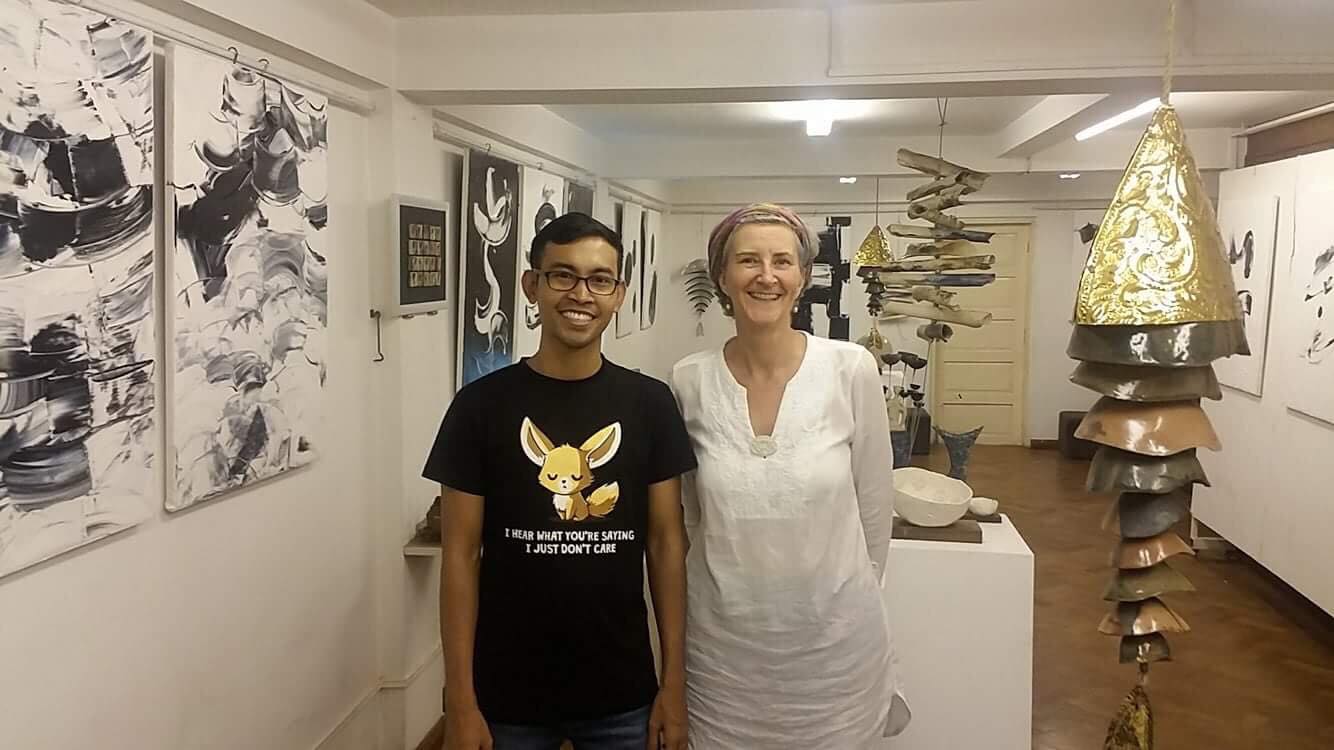
The art exhibition "Certain Interactions" is the outcome of a meeting between Ilona and artist Ko Pyay Way, curator and founder of the Nawaday Tharlar Art Gallery.

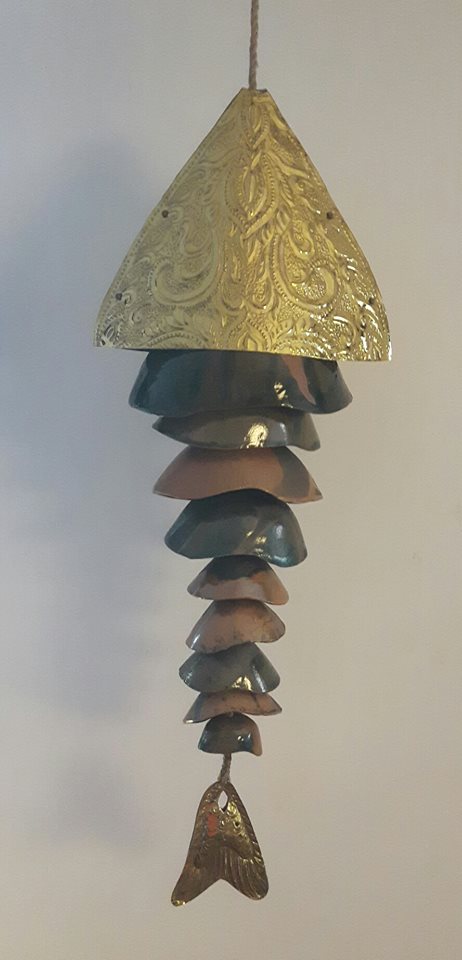
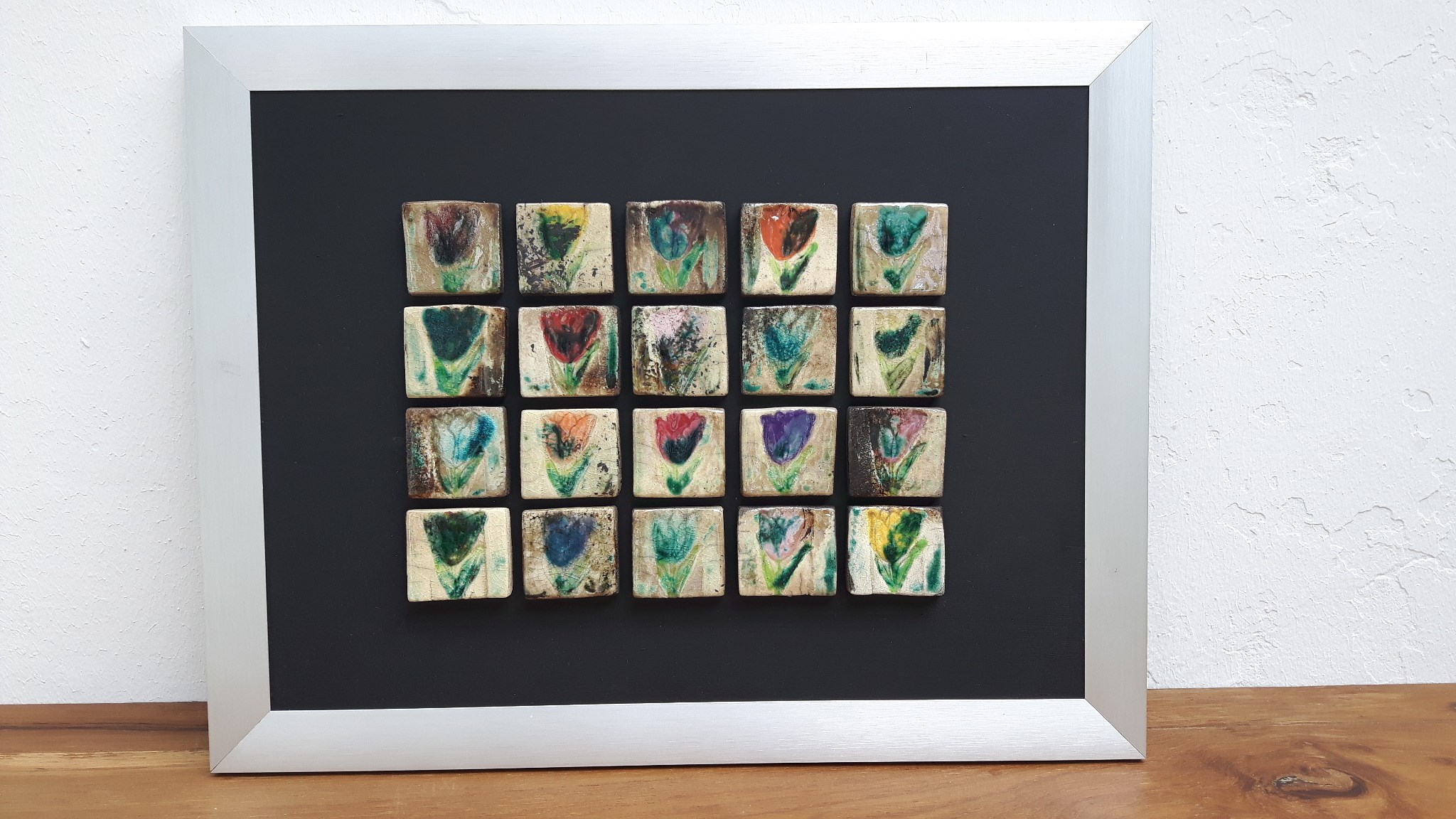
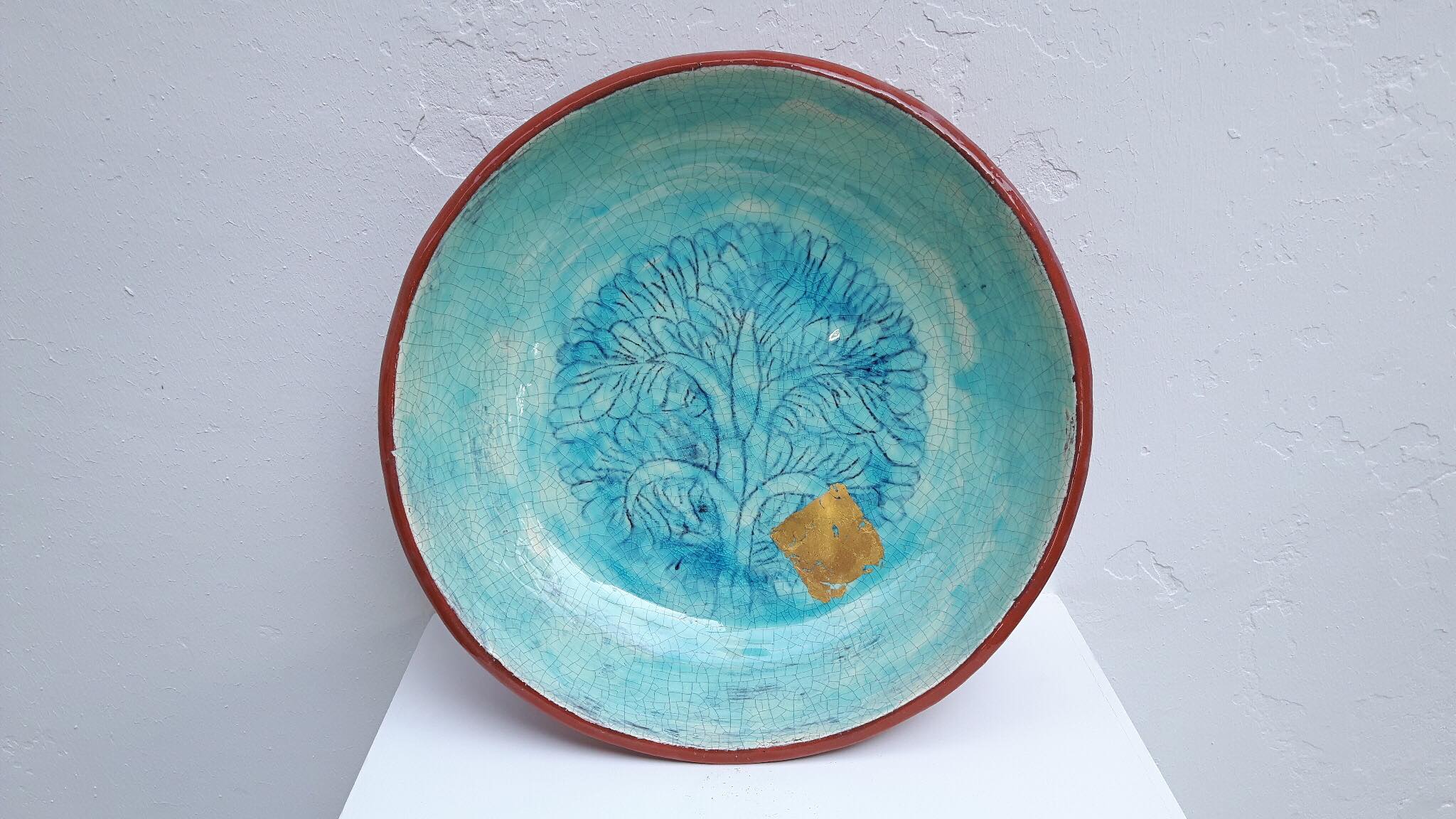
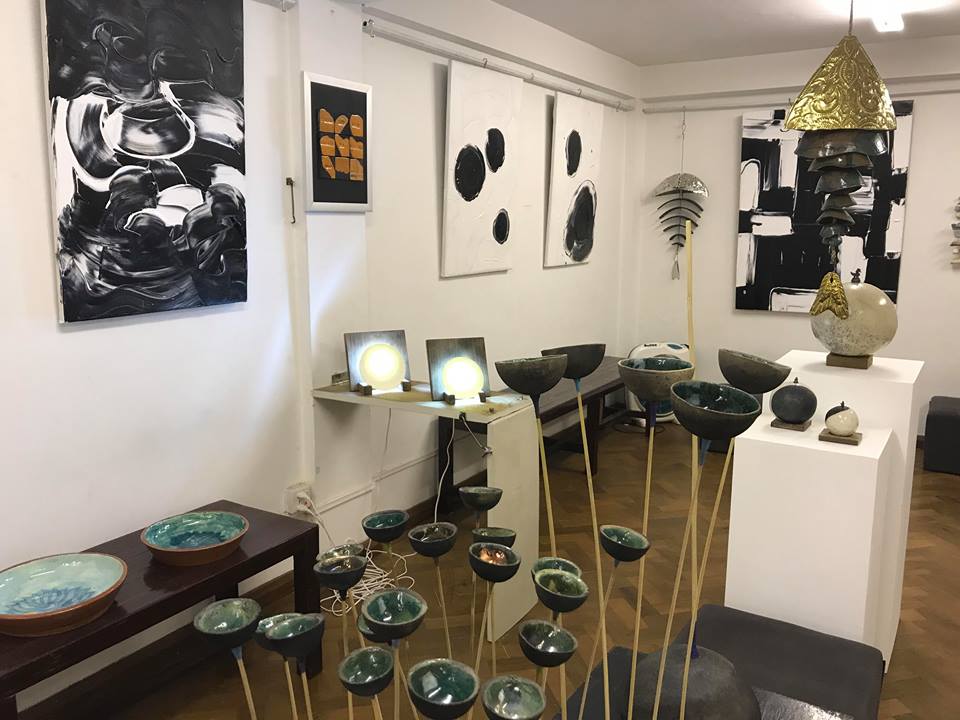
The exhibition features simple and exquisite Myanmar-style ceramics and Western-style minimalist black-and-white paintings by the two artists.

Ilona makes most of her porcelain pieces out of clay from Twante, and applies the ancient Japanese "raku" technique in her works.

Of her work "Full Moon", she said: "There is a lot of talking about the moon in Myanmar. Here we live by the lunar calendar."

"In January we even have two full moons," she said, referring to the Super Blue Blood Moon on Jan. 31.

"The symbolism around me fascinates me. So that is why I used the ancient Hintha [a mythological bird] to complete this piece," she said. Her works also incorporate lotus shapes and rare Myanmar postcards.

"This is interaction between me and Myanmar people," she said.

The exhibition features 16 paintings by artist Pyay Way, priced from $200 to $600, and around 50 ceramics by Ilona, priced at $35 to $985, from Feb. 2 to 11 at Nawaday Tharlar Art Gallery on Yaw Min Gyi Street, Dagon Township.

The proceeds will be used to benefit pottery workers in Yangon's Twante Township and Sagaing’s Swekar village.

"You can see two arrows converge on the exhibition catalogue. This represents the convergence of East and West," said Pyay Way.

The post Dutch Porcelain Artist Finds Endless Inspiration in Myanmar People, Culture appeared first on The Irrawaddy.

Beijing Treated to Super Lunar Eclipse Not Seen Since Qing Dynasty

Posted: 31 Jan 2018 09:46 PM PST

BEIJING — Millions of people across the Chinese capital were treated to a “super blue blood moon” eclipse on a cold but clear night on Wednesday, a phenomenon not seen since the late Qing dynasty more than 150 years ago.

The eclipse coincided with a so-called blue moon — or the second full moon in a calendar month — and a super moon, when the moon is at, or near, its closest to Earth.

About 400 super-keen skywatchers dressed in thick coats queued patiently outside the Beijing Planetarium to peer into eight telescopes mounted on tripods.

Beijing was among a number of locations in the country and on the Pacific Rim that witnessed the total lunar eclipse.

The entire passage took more than three hours, during which the moon turned a coppery red as sunlight going through Earth's atmosphere bounced off its surface.

The rare eclipse was also visible across western North America and in Australia, Japan and Southeast Asia.

The "lunar trifecta," as it is described by NASA, last took place in the Western hemisphere on March 31, 1866, when the second dome of the United States Capitol had just been completed and HG Wells, author of "The Time Machine," was born.

The post Beijing Treated to Super Lunar Eclipse Not Seen Since Qing Dynasty appeared first on The Irrawaddy.

Southeast Asia a “Hotspot” for Antibiotic Abuse, FAO Official Says

Posted: 31 Jan 2018 09:11 PM PST

BANGKOK — Overuse and misuse of antibiotics in food is rife in Southeast Asia, a Food and Agriculture Organization (FAO) official said on Wednesday, warning of serious risks for people and animals as bacterial infections become more resistant to treatment.

The official from the United Nations' food agency issued the warning on the sidelines of an international meeting in Bangkok focused on antimicrobial resistance (AMR).

FAO's Chief Veterinary Officer Juan Lubroth told Reuters in Bangkok that threat of antimicrobial resistance (AMR) was magnified in places, like Asia’s megacities, where there was high population growth and intense food and agriculture production.

"Here in Southeast Asia … we would consider it a hotpot because of the population growth, urbanization dynamics, the production of food," Lubroth told Reuters.

A report published on Monday by the World Health Organization said that a new global surveillance system had found widespread occurrence of antibiotic resistance among 500,000 people with suspected bacterial infections across 22 countries.

"Some of the world’s most common – and potentially most dangerous – infections are proving drug-resistant," Marc Sprenger, director of WHO's Antimicrobial Resistance Secretariat, said in a statement.

A 2016 report by economist Jim O'Neill, commissioned by the British government, projects $100 trillion in losses by 2050 if nothing is done to reverse the trend, and estimated that the annual toll resulting from AMR will climb to 10 million deaths in the next 35 years.

"Ninety percent of those deaths would be in the developing world, and that is scary," Lubroth said.

He said the FAO advocates educating farmers about the dangers of using antibiotics to promote growth in animals, and stronger enforcement of rules governing food production.

"It's not only about having the rules in black and white, they need to be applied."

The post Southeast Asia a "Hotspot" for Antibiotic Abuse, FAO Official Says appeared first on The Irrawaddy.

Myanmar to Double Electricity Capacity by 2021 to Fill Power Shortages

Posted: 31 Jan 2018 08:59 PM PST

YANGON — Myanmar is planning to double its electric power capacity by 2021 by building natural gas-fired power plants, two senior officials told Reuters on Wednesday, in an ambitious move to tackle chronic power shortages in the energy-starved country.

With only one-third of the country's 60 million people connected to the electrical grid and cities experiencing blackouts, Myanmar needs to boost its power supply to attract much-needed foreign investment.

The plan is the most impressive attempt yet to tackle the energy problem since the government led by Daw Aung San Suu Kyi swept to power in March 2016. However, experts cautioned that it remains to be seen how the government would strike power purchase agreements with the investors.

Four gas-fired power plants would be built by 2021 at a total cost of $5.16 billion in several parts of Myanmar, said two officials from Myanmar’s Ministry of Electricity and Energy.

They said the plants will raise generation capacity by 3,100 megawatts (MW) and would double the current capacity of around 3,000 MW.

"We will need another 3,000 megawatts by 2021. That's why we speed up the process in order to quickly meet the demand," said Soe Myint, deputy permanent secretary at the energy ministry.

Myanmar's government has signed agreements to "start preliminary engineering work," such as environmental assessments, with six companies, said Zaw Win Naing, assistant secretary at the ministry.

The companies include TOTAL, Siemens AG, Zhefu Holding, TTCL Public Company Ltd , Sinohydro Corporation and Myanmar-based Supreme Trading.

The four plants will be in areas including the western state of Rakhine and Myanmar's largest city of Yangon, with the government purchasing electricity from the six firms, said Zaw Win Naing.

He said Myanmar is in talks with the individual companies to work out the power purchase agreements. The plants would mostly use imported liquefied natural gas (LNG).

Myanmar has gas reserves, but exports most of its existing offshore production. Several floating gas storage and regasification units would be deployed to store the LNG for the projects, said Soe Myint.

Wa Than Oo, an analyst from Myanmar Energy Monitor, said the projects are "ambitious in scope" but there are uncertainties.

"There have been negative experiences in the past where electricity generation projects have been announced but no power purchase agreement has been signed, and as a result they haven’t been built."

Myanmar aims to increase its power generation more than fourfold by 2030 to meet demand, though that could be difficult to achieve.

The post Myanmar to Double Electricity Capacity by 2021 to Fill Power Shortages appeared first on The Irrawaddy.

Wednesday, January 31, 2018

The Irrawaddy Magazine

The Irrawaddy Magazine


KNU Leader Warns Fellow Karen of ‘Dangers’ of Political Negotiations

Posted: 31 Jan 2018 06:14 AM PST

CHIANG MAI, Thailand – Karen National Union (KNU) chairman General Saw Mutu Say Poe warned his ethnic compatriots to be careful when participating in political negotiations, saying dialogue was not only more effective but also more dangerous than armed conflict.

The Karen leader made the comments in a written statement distributed to commemorate the 69th anniversary of the Karen National Revolutionary Resistance.

He reminded his community that the resistance movement emerged in 1949 after the Karen people and their political activities "were oppressed and violated by force of arms" under the AFPFL (Anti-Fascist People's Freedom League). He recalled that the Karen leaders' efforts at peaceful political struggle were not recognized and destroyed by repressive means. Thus, he said, the resistance had been necessary in order for the Karen people "to thrive as a nationality like the others, with equality and freedom and equal development."

Karen National Revolutionary Resistance Day is observed every Jan. 31. On Wednesday, the KNU's brigades each held commemorations involving their soldiers and residents of the areas under their control. The biggest of these events was held in the area controlled by KNU Brigade No. 5 in Karen State's Phapon Township, according to KNU general secretary Padoh Saw Tadoh Moo.

"All the Karen people indeed must remember, respect and honor the anniversary of the Karen National Revolutionary Resistance like this always in the annals of history of the Karen people," the KNU chairman's statement reads.

After more than six decades of civil war and fighting with the Myanmar Army, the KNU joined ceasefire talks in 2012. That same year it agreed to bilateral ceasefires with the state and then the Union governments, before becoming a signatory to the 2015 Nationwide Ceasefire Agreement (NCA).

The KNU chairman said the organization had signed the NCA as there is "absolutely no requirement for laying down arms" and it allows the stakeholders to work "for establishing long-lasting and durable peace."

He added that the NCA represented "the establishment of a new political culture" in which political conflicts are resolved through negotiations and by peaceful means through consultations with every stakeholder.

The KNU remains committed to the resolution of political problems by political means, and negotiating under the NCA "is the most appropriate way" to reach the goal of building a democratic federal union, Padoh Saw Tadoh Moo told The Irrawaddy.

He said, "We may use different approaches to reach our goals as we now are in this ceasefire period and [engaged in the] peace process. It is a long-term process, and we must move forward to achieve it, as we have carried on our struggle for generations."

The general secretary said the NCA was "a strong and appropriate approach" and a necessary step on the path toward political dialogue, despite public anxiety over its implementation.

He reiterated the need to build mutual trust between stakeholders and extend areas of compromise and negotiation.

"We understand that it may not be easy to reach a common understanding, as we have different perspectives on ideology, federalism and democracy. But we will only achieve it through trust and commitment to negotiation. Success is never achieved easily, especially in political talks," Padoh Saw Tadoh Moo said.

The KNU has held limited consultations with its people to hear their views. During the KNU's Central Standing Committee meeting last week (Jan. 23-27), the KNU discussed recent developments involving the NCA's implementation, of which public consultations, national level dialogues, the Joint Monitoring Committee and interim period issues are all components. It also discussed the upcoming Third Session of the 21st-Century Panglong Peace Conference.

Public consultations prior to the next session of the 21st-Century Panglong conference have yet to be officially conducted in Karen areas, however, after the Tatmadaw blocked similar consultations prior to the Shan national dialogue.

The post KNU Leader Warns Fellow Karen of 'Dangers' of Political Negotiations appeared first on The Irrawaddy.

Gene Sharp: Why Burmese Resistance Has Failed So Far

Posted: 31 Jan 2018 05:39 AM PST

Gene Sharp, a lifelong advocate of nonviolent resistance whose influence has been cited in social upheavals around the world, died on Sunday. He was 90. His book "From Dictatorship to Democracy" is renowned as a handbook for strategic non-violent protest. It originated in his work with the Burmese opposition and ethnic groups in the early 1990s, and was intended as a blueprint for the liberation of the country from military rule. To mark his passing, The Irrawaddy revisits an interview Gene Sharp gave in March 2011 in which he spoke about why resistance in Burma had failed to dislodge the country's military rulers.

He has been called the man who toppled Mubarak, a description he says demeans what he sees as a wholly Egyptian uprising against authoritarian rule. Before that, he was the victim of a whispering campaign in which his work was alleged to be a US front for regime change in the guise of citizen uprisings. He calls those allegations "a joke" and reminds that he went to prison in the US for civil disobedience there.

From Dictatorship to Democracy is perhaps his best-known and most-influential work. Renowned as a handbook for strategic non-violent protest around the world, it originated in Dr Sharp’s work with Burmese opposition and ethnic groups in the early 1990s, and was intended as a blueprint for the liberation of the country from military rule.

With the army in control since 1962, and seemingly entrenched behind a parliamentary makeover, the challenges facing activists and opposition groups in Burma are among the most daunting anywhere. Now 83 years old, and with a CV that dates back to working with Norwegian opponents of Nazi/Quisling rule during World War II, Dr Gene Sharp shared his thoughts on the recent events in North Africa and the Middle East with Simon Roughneen, as well as outlining why he believes that resistance in Burma has failed to dislodge the military rulers of that country.

Dr. Sharp, your interest in Burma and the pro-democracy movement there goes back a long way. Can you tell The Irrawaddy readers about the history of your engagement with Burma?

I was brought to Burma by Robert Helvey, a former US military attache in Rangoon, who became sympathetic to the groups opposing the regime, particularly the Karen. I was asked to write some articles for Khit Pyaing, a Burmese and English journal based in Bangkok, and run by the late U Tin Maung Win, and those eventually became part of the publication known as "From Dictatorship to Democracy." I also visited Manerplaw a few times and met with Burmese exiles in Thailand.

Why in your view has non-violent resistance failed, so far, to undermine military rule in Burma? What are the factors differentiating Burma from recent changes in Egypt and Tunisia, as well as older examples such as the Color Revolutions in the former Soviet bloc, Serbia in 2000 and the Philippines in 1986?

I think there are a few explanations for that. For a start, many of the opposition groups, the various nationality groups such as the Karen, Mon and others, they all had their armies and mini-armies, and they thought they would be weakened by departing from those and going over to non-violence, or "political defiance" as it was known in Burma. Other groups, such as the All Burma Students Democratic Front (ABSDF), had their mini-army, and people in the camps, though temporarily agreeing to switch over to just political defiance, reversed that after a couple of years. All the various armed groups thought they could defeat the Army, but I think that was a foolish judgment on their part, as the Army was bigger and stronger and had more weapons.

The so-called National Coalition Government of the Union of Burma, which isn’t really a coalition government at all, with headquarters in Washington DC—not very close to Burma—they had their own ways, they thought, to get independence and defeat the government, but they didn’t show much signs of learning something new.

And, Aung San Suu Kyi, for all her wonderful qualities, and her heroism and inspiration for those who believe in democratic rights and the rights of Burmese people—she is not a strategist, she is a moral leader. That is not sufficient to plan a strategy.

Although "From Dictatorship to Democracy" was written for Burmese, there were no Burmese groups who really took that analysis seriously or used at as a strategy for the liberation of Burma. People got arrested and sent to prison for carrying it, in Burmese and other languages, they could organize very powerful and brave demonstrations in Rangoon and elsewhere, but they did not plan a grand struggle. If you don’t plan, if you don’t have a bigger strategy, you’re not going to win.

Do you see any change in Burma since the elections last November and the convening of Parliament on Jan 31? Is there now a viable outlet for non-violent opposition to express itself in Burma, without having to take to the streets, without having recourse to some of the methods you have outlined over the years? 

I am not sufficiently up to date on the details of the situation to comment, I am sorry.

Moving away from Burma, what do you say to conspiracy theorists who allege that your ideas are a convenient intellectual front for US or Western interference or intervention in the internal affairs of sovereign states, a sort of power projection masquerading as locally motivated non-violent resistance?

It is a big joke. We have had no support from the US government or military or from intelligence agencies. Our office is very small. We have very little money to operate. Someone is trying to discredit the analysis we have offered, and that is all there is to it. Such charges are false.

Some of the critiques of your work, by seeing an external or meddling hand in what might be local or nationally focused events, are themselves guilty of a sort of colonialism of the mind, implying that Burmese or Egyptians or whoever the case may be are incapable of taking action autonomously, or reacting themselves to the conditions in their own country, without a guiding hand from outside.

I think that is a good point, and a key thing to remember when people try to discredit the analysis I offer, which is based on work over decades in many countries, and contact with freedom-loving people in many parts of the world.

Often it is people who believe in violence who attack us, because they want to weaken peoples adherence to non-violence, and to the practical usefulness of a strategy of non-violence. Look at those people and ask what do they offer? Genuine criticism is always welcome, but proffering false charges is ridiculous.

For those who want to make such allegations, to say that I am a tool of the United States government, they should remember that I spent over 9 months of a two-year prison sentence for civil disobedience and for criticizing the policies of the US government.

Your work has come back into public focus due to events in North Africa and the Middle East. One newspaper headline went as follows: "Gene Sharp, the 83 year old who toppled Egypt." What is your take on that?

I may or may not have provided some analysis that fed into the actions taken by the people there, I have no confirmation of that, but the Egyptian people deserve the credit for toppling the Mubarak regime, not me.

Since Tunisia and Egypt, the protests in the region have changed. Libya’s uprising has become an armed revolt. Do you feel that—even with UN Security Council and Arab League support—it is right to intervene in Libya at this juncture?

It is not the course of action I would have chosen. I think the Libyan democrats did not do their homework in advance like the Egyptians did—in Egypt, they appeared to have a plan and studied quite some time in advance to develop a program of non-violence without fear, which brought them victory quite quickly. In Libya, this appears not to have been the case. The Libyans have gotten in over their heads, and should have expected the type of repression that Gaddafi is capable of.

People who are realistic about the power of political defiance know that if it is a threat, the regime will see it that way and will fight back. The regime will jail and beat and kill, and that is a sign that what you are doing is threatening the regime.

Dictators can beat you with violence, if you fight on those terms, and of course the rebels cannot defeat the Gaddafi regime on the level of armed force. So they are left to call in help from outside, which cannot give them the empowerment or victory they seek.

Do you think that when legitimate peaceful protest—such as in Burma—is met with state violence, the protesters then have the right to self-defense? To fight back? To seek alliances with sympathizers in the country’s police and army? To appeal for international military support, as the Libyan rebels have done?

I think it is an unfortunate choice that people make. It is predictable that your opponent will have the means of violence, the means of oppression. If you get someone else to come and help you, they will come with their interests, and potentially turn your country into a battlefield. Even if they help defeat the oppressor, it will not result in empowerment. People will not be ready to fight the next oppressor who tries to take over the country. In contrast, if the Egyptian military tries again to take control, the people know how to counter this, they have the sense of empowerment, of their own power.

Ultimately, in any non-violent resistance, you have to plan, you have to study. You have to know what the hell you are doing.

You have been credited with influencing the actions of thinkers and doers around the world. But who has influenced you?

I have learned from the many people I have met around the world over the decades, but have no single guiding light. I learned from Gandhi, that is, Gandhi as a shrewd political strategist. I learned from the Norwegian resistance against the Quisling fascist government during World War II. I learned from the non-violent resistance undertaken by Baltic countries—Estonia, Latvia and Lithuania—whose governments also read some of my work. I don’t have any political doctrine, no political messiah, just my own thinking and learning, for the most part.

The post Gene Sharp: Why Burmese Resistance Has Failed So Far appeared first on The Irrawaddy.

Jailed Members of Outlawed Mon Group Freed After NCA Deal

Posted: 31 Jan 2018 05:25 AM PST

YANGON — The government released five members of the New Mon State Party (NMSP) from the state's Kyaikmaraw Prison on Wednesday morning, following the group's recent decision to sign the Nationwide Ceasefire Agreement (NCA).

The five were arrested in 2017 for unlawful weapons possession and under Article 17 (1) of the Unlawful Association Act.

"I don't know if they were released with a presidential pardon or something else. But this release contributes to trust-building while we are working to sign the NCA. As we are signing the NCA, Article 17 (1) of the Unlawful Association Act won't apply to us any longer," said Nai Aung Mangne, an NMSP central executive committee member.

According to Nai Aung Mangne, three of the five NMSP members were arrested for unlawful weapons possession and the other two for unlawful association.

"The three who were arrested for unlawful weapons possession were sentenced to six months in prison, and the two others to two years and three months. We view their release as trust building, which is the top priority for us and the government," he said.

The Facebook pages of several government bodies, including the President's Office, State Counselor's Office and Home Affairs Ministry did not announce their release until Wednesday evening.

When contacted by The Irrawaddy, U Aung Soe, a member of the government's Peace Commission, said he was away from the office and could not comment.

The NMSP agreed to sign the NCA after a delegation led by party chairman Nai Htaw Mon held separate meetings with State Counselor Daw Aung San Suu Kyi and Myanmar Army chief Senior General Min Aung Hlaing on Jan. 23.

The previous administration of President U Thein Sein removed the original eight signatories to the NCA from the government's list of unlawful associations three days before they ratified the agreement in October 2015.

Translated from Burmese by Thet Ko Ko.

The post Jailed Members of Outlawed Mon Group Freed After NCA Deal appeared first on The Irrawaddy.

For Daw Aung San Suu Kyi, Politics is a Vocation

Posted: 31 Jan 2018 04:17 AM PST

In an interview early in 2017 with the BBC, Fergal Keane asked State Counselor Daw Aung San Suu Kyi  whether she thought that people in the West had misjudged or mischaracterized her, "expecting you to be this sort of amalgam of Mahatma Gandhi and Mother Teresa, for example, and actually maybe you’re closer in your determination and steeliness to someone like [former British Prime Minister] Margaret Thatcher?"

"Well, no," she answered. "I am just a politician. I am not quite like Margaret Thatcher, no. But on the other hand, I am no Mother Teresa, either. I have never said that I was. Mahatma Gandhi was a very astute politician."

Aung San Suu Kyi left Myanmar when she was 15. She studied philosophy, politics and economics at the University of Oxford. She only came back to Myanmar to look after her ill mother in 1988. Later she took part in the 1988 pro-democracy uprising as a daughter of General Aung San. She had never experienced political struggle in her life before then. That was the beginning of her life as a politician.

From 1990 to 2010 she was, in German sociologist Max Weber's term, "a voluntary politician" — she spent 15 years under house arrest, "economically independent from the earnings that the work as a politician may produce." She enjoyed the "naked" possession of power. She stood as an opposition leader until she became a member of parliament in the 2012 by-elections.

Weber, in his essay "Politics as Vocation," published in 1919, said that "the ethics of moral conviction is an absolute ethics." Weber was right. The luxury of the activist is that he or she can preach this absolute ethics. However, absolute ethics is not concerned with practical consequences. The activist does not share with the politician the ethics of responsibility.

Not long ago, in 2012, after her release from house arrest, Aung San Suu Kyi was finally able to deliver her Nobel lecture at Oslo City Hall, in Norway. She explained why she was fighting for human rights and democracy, first quoting from the Universal Declaration of Human Rights:

…it is essential, if man is not to be compelled to have recourse, as a last resort, to rebellion against tyranny and oppression, that human rights should be protected by the rule of law…

If I am asked why I am fighting for human rights in Burma, the above passages will provide the answer. If I am asked why I am fighting for democracy in Burma, it is because I believe that democratic institutions and practices are necessary for the guarantee of human rights.

Such beautiful sentiments are those of an activist before accepting the responsibilities of an "absolute politician." As an activist, she practiced the "duty to truthfulness," which is indispensable to "absolute ethics." However, she did not have to take responsibility for what she said. Whatever she says today has consequences because she has to take full responsibility for the country as a minister of foreign affairs and as state counselor.

Politics has become Aung San Suu Kyi's "professional vocation" only since she became minister and state counselor. Although the majority of voters chose her party in the 2015 election, the country is burdened with a constitutional provision that gives the military absolute power over the ministries that control the use of coercive force in Myanmar — namely Border Affairs, Home Affairs and Defense. That is why former UN Secretary-General Kofi Annan referred to "the duality in the leadership" in Myanmar. Aung San Suu Kyi has a responsibility as a stateswoman for the violent actions of the military and police force, but she does not have any power to control these forces.

The problem is that Aung San Suu Kyi needs to carefully handle the military for the use of violence while avoiding anarchy or a coup. Every step she takes as a politician comes with the risk of pushing the country back to military rule.

In the recent Rohingya crisis, Aung San Suu Kyi is being "accused of betraying the ideals for which the world once lionized her. Her long struggle for freedom has given her unchallenged moral authority. This power, too, she has conspicuously failed to use," Washington Post editor Christian Caryl wrote in a December opinion piece, "In 2017, no one has fallen further than Aung San Suu Kyi."

Aung San Suu Kyi's efforts to balance passion and political objectivity have always created conflict with her sense of proportion.

Aung San Suu Kyi's silence on the Rohingya and other issues is confusing.  Is it a sign of "nonviolent reconciliation" with the military? Or is it true that she is the demon she is portrayed as internationally? The dominance of the military creates a conundrum for a crusading non-violence activist like Aung San Suu Kyi. On the other hand, she is dealing with conflicts with several ethnic groups besides the Rohingya whose demands for autonomy may not be consistent with national interests. Meanwhile, internationalists focus on abstract principles of human rights.

Aung San Suu Kyi is undertaking the (nearly) impossible, as Alan Clements, a biographer of hers, wrote a few months ago on his social media page, by "making peace with everyone in her country, the oppressed and oppressors alike. This is unprecedented emotional and psychological territory, and not easy for the ‘us and them’ dynamic that dominates mainstream politics."  Nor, for the matter, for the absolute ethics of "The Sermon on the Mount" that many activists ascribe to and expect the politician Aung San Suu Kyi to follow.

Myanmar has never been a "liberal democracy," so what options does this leave a politician?

For Aung San Suu Kyi, "politics was to do with ethics, it was to do with responsibility, it was to do with service." However, as a stateswoman, "politics" means dealing with physical force — the unavoidable ethical paradox of being a politician.

Potential Threats

The International Crisis Group (ICG) recently listed the Rohingya crisis as one of the top 10 conflicts in the world to watch in 2018. Myanmar's young democracy is now facing threats that could tip the country into becoming a failed state. Aung San Suu Kyi plays a significant role in resisting those threats.

There are two main threats that the country might face. The first is targeted sanctions from the UN Security Council and the international community.

The Security Council and Western governments are moving toward targeted sanctions. Unfortunately, these sanctions are unlikely to have a significant positive impact on Myanmar's policies. As the ICG said, "Myanmar's Rohingya crisis has entered a dangerous new phase, threatening Myanmar's hard-won democratic transition, its stability, and that of Bangladesh and the region as a whole."

The second threat to Myanmar is another military coup or "state of emergency," which would lead to the dismissal of Parliament and a clampdown on newly won freedoms.  Such a state of emergency is defined in the military-drafted 2008 Constitution, which assigns the military to safeguard the country in any crisis situation.

Balancing Pressure, Balancing Power

Today, Myanmar is infamously known as a country that has committed crimes against humanity by violently uprooting hundreds of thousands of Rohingya and creating a major refugee crisis. As a consequence, Aung San Suu Kyi has been made responsible for the crime.

Ironically, the violent acts of the Myanmar military against civilians and various ethnic minority groups were never brought up at the UN Security Council until UN human rights chief Zeid Ra'ad Al Hussein labelled the military's behaviour "a textbook example of ethnic cleansing."

If Myanmar returns to military rule, what might happen? This is what the responsible politician must contemplate.  Under military rule, would there be a million refugees? What would the Bangladesh government do? Would Aung San Suu Kyi herself be placed under house arrest again? Will the violent actions against ethnic minority groups and the Rohingya resume?

Both the UN and Aung San Suu Kyi are trying to avoid pushing Myanmar toward military rule and failed-state status. Sooner or later Myanmar's ongoing civil war will produce even more refugees and potentially spread problems ever further across the region. Burdens will increase.

A real politician, in Weber's sense, will want to avoid dangerous situations and manage the military generals who are responsible for violent actions against civilians rather than focus on the civilian government. The burden of balancing international pressure should be placed on a civilian government elected by the people and on the military institutions with the absolute power over armed force. UN resolutions should encourage military reform in Myanmar too.

If the UN Security Council wants to help balance power in Myanmar's dual leadership system, it should be supportive to Aung San Suu Kyi's civilian government as it strives for a peaceful democratic transition in a violent country that has never tasted the fruits of a liberal democracy.

In concluding his 1919 essay, Max Weber said, "Only the person who is sure that he will not despair when the world, from his standpoint of view, is too simpleminded and wicked to accept what he has to offer, and only the person [who] is able to say 'In spite of it all!' has a calling for the profession of politics!"

Being in no despair of all the harsh criticisms of her, Aung San Suu Kyi, in an interview with the Nikkei Asian Review in September, said: “Actually, nothing is surprising, because opinions change and world opinions change like any other opinion."

So apparently she does have a calling for the profession of politics, even if she came to it late in her career.

This article uses Tony and Dagmar Waters’ book "Weber’s Rationalism and Modern Society" as a reference.

Mon Mon Myat is a freelance journalist and a graduate student in the PhD program in Peacebuilding at Payap University in Chiang Mai, Thailand.

The post For Daw Aung San Suu Kyi, Politics is a Vocation appeared first on The Irrawaddy.

Yangon Transport Authority to Revoke Licenses of Unregistered Cabs This Week

Posted: 31 Jan 2018 04:08 AM PST

YANGON — In response to a recent rape and murder case by a taxi driver that alarmed the city, the Yangon Region Transport Authority (YRTA) announced that it would revoke the licenses of those who failed to register and renew as city taxis starting Thursday—a move aimed to enforce existing regulations and tighten security.

Ma Shwe Yi Win, a deputy supervisor at the Health Ministry's Food and Drug Administration Department, was raped and killed on Jan. 20 by taxi driver Myo Zaw Oo, who later confessed to the crime, on her way home.

An official from the YRTA told state media that the taxi that the victim took had an expired registration.

He added that after taxis are registered, data on the vehicle's owners and drivers—the latter to be shown visibly on the taxis for security reasons—would be collected.

The YRTA announced in November 2017 that all taxis plying the city's streets must register between Nov. 14 and the end of the year. The deadline was then extended to Jan. 31, 2018.

"The registration period was short for the number of taxis in Yangon. Since [YRTA] made the announcement, taxis line up daily to get registered. I think it might take a year to register all the taxis," taxi driver Ko Hsan Min told The Irrawaddy.

Yet, Ko Hsan Min hopes that registration will ensure greater safety for passengers and also help prevent drivers from operating without a license.

"If taxis are registered, passengers can know the name of the driver and the license plate number at a glance. It is safer for them," said Ko Hsan Min.

In January last year after the introduction of the Yangon Bus Service (YBS), the Yangon Chief Minister U Phyo Min Thein said the regional government planned to allow only a certain number of taxis proportional to the city's commuter population.

He said the regional government would reduce the surplus from those operating under limited licenses and turn those taxis back into private vehicles.

Currently, the number of taxis in Yangon Region is estimated to be more than 68,000, and more than 40,000 registered by last week, according to the YRTA.

It also announced that taxis must remove window shades, stickers and advertising that could obscure the view inside by Feb. 1.

The post Yangon Transport Authority to Revoke Licenses of Unregistered Cabs This Week appeared first on The Irrawaddy.

Former Mrauk-U Administrator Stabbed to Death on Sittwe-Yangon Highway

Posted: 31 Jan 2018 02:08 AM PST

YANGON – Bo Bo Min Theik, the recently promoted assistant director of the Rakhine State government, was found dead with multiple stab wounds to the chest near the Sittwe-Yangon Highway in Ponnagyun Township on Tuesday evening, sources confirmed to The Irrawaddy.

The victim was formerly an administrative official in Mrauk-U Township.

Rakhine State Parliament speaker U San Kyaw Hla said he had received confirmation of the official's death from Ponnagyun authorities yesterday. He said Bo Bo Min Theik was killed in his constituency between Tha Yet Cho and Yoe Ngu villages, about 11 kilometers from downtown Ponnagyun.

The apparent murder is the highest-profile slaying of an official in Rakhine State in at least a decade. Bo Bo Min Theik was one of the officials responsible for ordering a deadly police crackdown on Mrauk-U rioters that left 7 people dead and severely wounded 12 others on Jan. 16.

The Ministry of Home Affairs issued a brief statement at 3:25 p.m. on Wednesday saying local police were aware of the incident and had ascertained that the victim was stabbed to death and had also sustained about a dozen injection wounds on his forearms. Police confirmed that the victim was a government administrative director (GAD) based on documents retrieved from his car, which had been set alight at the scene. The ministry said police took the victim to Ponnagyun Hospital around 7 p.m. and his body was later transferred to Sittwe Hospital.

Police have opened a case under homicide article 302, section 144 for abettors of the offense, and 440 for causing grievous harm.

According to witnesses quoted by local media, three people traveling with Bo Bo Min Theik in his private car, a Honda CRV, were later seen fleeing the scene of the attack. The victim's car was also seen being torched by a group of people. It's still unclear whether the three suspects were travelling with the official, whether the GAD was driving himself, and whether they were heading to or from Ponnagyun.

According to the Mrauk-U GAD office, Bo Bo Min Theik left the town to return to Sittwe, the state capital, on Tuesday, accompanied by several other people. The department could not clarify whether those people were civil servants or ordinary residents of Mrauk-U.

A woman on the staff of Sittwe General Hospital confirmed that the victim's body arrived there Tuesday night. At the time she spoke to The Irrawaddy, at around 12 a.m. on Wednesday, doctors were preparing to conduct an autopsy. Neither Ponnagyun police nor Rakhine State police chief Colonel Aung Myat Moe answered The Irrawaddy's phone calls.

Rakhine State Government Office secretary Tin Maung Swe could not be reached on Wednesday morning.

As of 2 p.m. on Wednesday, the information committee, which normally releases real-time information about Rakhine matters, had not issued a statement.

Public anger at the GAD official over the crackdown prompted the Rakhine government to abruptly transfer Bo Bo Min Theik to Sittwe from Mrauk-U on Jan. 19. However, it's uncertain whether the official was travelling on official business or making a personal trip at the time of his death.

In response to the Mrauk-U crackdown, the Arakan Army (AA), an Arakanese ethnic armed group based in Kachin and Rakhine, threatened "serious retaliatory measures against the culprits" including Rakhine State government officials and members of the security forces involved in the killings.

The post Former Mrauk-U Administrator Stabbed to Death on Sittwe-Yangon Highway appeared first on The Irrawaddy.

US Sanctions Laos-based ‘Criminal Organization’

Posted: 31 Jan 2018 12:45 AM PST

The US Treasury Department early Wednesday announced sanctions against four men and a group of companies allegedly linked to drug and human trafficking throughout the region.

A press release by the US Office of Foreign Assets Control said the sanctions revolved around a group based in Hong Kong and Chiang Saen district of Chiang Rai, the Kings Romans Company, a casino operator.

The company operates a well-known casino in Laos and has operations in Hong Kong, Laos, Myanmar and China, as well as Thailand, according to the sanctions list.

The Kings Romans Casino is a hotel and gambling site in Laos, clearly visible from the Thailand side of the Mekong River at the Golden Triangle.

Owned by Hong Kong-based Kings Romans Group, the casino claims to cater mostly to Chinese tourists.

Previous press reports have claimed that the casino operates in a "lawless playground."

The four people and the companies may have knowledge of in international criminal activities including drug and human trafficking, the US press release alleged.

The four sanctioned people, who are barred from doing business in the US, or with US companies or citizens are

  • Abbas “Basu” Eberahim, 29, an Australian whose residences are listed as Kooringal in Australia, Chiang Saen in Chiang Rai and the Golden Triangle Special Economic Zone in southern Laos.
  • Thai national Nat Rungtawankhiri aka Rungtawankeeree, aged 41, a resident of Mae Fah Luang district, Chiang Rai.
  • Guiqin Su aka Zhao Su or Madame Su, 69, a Hong Kong resident with Chinese nationality. She is the wife of
  • Zhao Wei aka Chio Wei aka Thanchai Saechou, 66, a dual Chinese-Macau national.

The US claims the four are members of "the Zhao Wei translational criminal organization" (TCO).

"Based in Laos within the Golden Triangle Special Economic Zone (GTSEZ), the Zhao Wei TCO exploits this region by engaging in drug trafficking, human trafficking, money laundering, bribery, and wildlife trafficking," the US announcement alleged.

"All assets of those designated that are under US jurisdiction are frozen, and US persons are generally prohibited from engaging in transactions with them," it said.

The US alleged that the group's front is the Kings Romans Casino in Laos, which it uses as a headquarters and money laundering aid.

"Operating largely through the Kings Roman Casino, the Zhao Wei TCO facilitates the storage and distribution of heroin, methamphetamine, and other narcotics for illicit networks, including the United Wa State Army, operating in neighboring Burma," said the sanctions announcement.

"Since 2014, Thai, Lao, and Chinese authorities have seized large narcotics shipments that have been traced to the Kings Romans Casino."

The post US Sanctions Laos-based 'Criminal Organization' appeared first on The Irrawaddy.

Irrawaddy Locals to Name Island in Honor of Daw Aung San Suu Kyi

Posted: 30 Jan 2018 10:50 PM PST

PATHEIN, Irrawaddy Region — Local residents in Irrawaddy Region's Shwe Thaung Yan town are planning to name an island after State Counselor Daw Aung San Suu Kyi.

Locals of Jate Lat have chosen to name Pontamau Island–also known as Pan Ta Pwint meaning 'one flower'–in her honor.

"Even Norway has a park named after Daw Aung Suu Suu Kyi, but our country still doesn't have a significant monument to our leader," U Yan Naing, administrator of Jate Lat village in Shwe Thaung Yan town, told The Irrawaddy.

"So, we'll name this island after Daw Aung San Suu Kyi to honor a leader who is establishing a good system for the country," he added.

The island is situated near Jate Lat village in Shwe Thaung Yan town in the northwest of Pathein, the capital of Irrawaddy Region. It covers more than 46 acres and is fringed with coral reefs. The wooded island is home to birds, deer, sambur, monkeys and reptiles, and locals have conserved the island and imposed a ban on cutting wood, hunting and fishing, and the extraction of gravel and sand.

The island is also a natural barrier for coastal villages against storms and tidal waves, and serves as a shelter for vessels during stormy weather, locals said.

"This island is invaluable for locals. It serves as a shield against storms and tides. We've therefore conserved this island and agreed to name it after Mother Suu, who we admire," said U Myint Lwin, a community elder of Jate Lat village.

Locals and civil society organizations have formed a committee to name 'The Lady Island' and will seek the approval of concerned regional authorities.

"Locals want to name the island after Daw Aung San Suu Kyi. The committee currently is focused on promoting tourism to the island while conserving its ecosystem," said U Tin Lin Aung of the Pathein-based Green Peasant Institute (GPI), who serves on the committee.

If approved by the Union government, the committee plans to place a statue of Daw Aung San Suu Kyi at the peak of the island, and a signboard detailing her life.

"Daw Aung San Suu Kyi has been very dutiful to Myanmar, but western countries have withdrawn the awards that they have given to her. So we thought that if we name an island in our region to honor her, no one can strip her of it," said local U Tun Tun Naing.

Legend has it that there were a brother and a sister on the island, and when the brother went fishing in the sea, the sister always wore a flower and waited for her brother at the peak of the island.

Looking from afar, locals say the island looks like a sleeping woman.

Translated from Burmese by Thet Ko Ko.

The post Irrawaddy Locals to Name Island in Honor of Daw Aung San Suu Kyi appeared first on The Irrawaddy.

UK PM May Says She Wants Free Trade Deal with China

Posted: 30 Jan 2018 09:29 PM PST

WUHAN, China — Britain is seeking a free trade agreement with China, Prime Minister Theresa May said on Wednesday as she flew to the country for talks with Chinese leaders, adding that more should be done immediately to open up market access for British firms.

The ambitious long-term goal of securing a free trade deal with the world's second-largest economy comes as May begins a three-day visit to China accompanied by businesses from sectors where Britain feels it can capitalize on China's growing middle class consumers and rapidly expanding services sector.

"China is a country that we want to do a trade deal with," May told reporters aboard her Royal Air Force jet on the way to Wuhan – a university city where she will announce half a billion pounds worth of education deals.

"But, I think that there is more we can be doing in the interim…in terms of looking at potential barriers to trade and the opening up of markets to ensure…British businesses able to do good trade into China."

China accounts for just a small proportion of British exports, 3.1 percent in 2016, compared with 43 percent for the European Union.

While diplomatic sources say China has expressed willingness to talk about a future free trade deal with Britain, formal talks cannot begin until Britain officially leaves the EU next year. Free trade talks typically take many years to conclude.

Britain has also pushed a strong message to Chinese companies that it is fully open for business.

Notable Chinese investments in Britain include the Hinkley C nuclear power station which is being built by China General Nuclear Power Corp and the British arm of France’s EDF while British firms such as Rolls Royce have won large deals from Chinese firms to supply items like plane engines.

Both May and senior Chinese officials have restated their commitment to a "golden era" in ties but a row over May's decision to delay approval for the Chinese-funded Hinkley nuclear plant in late 2016 chilled relations.

However, Britain was the first Western country to sign up to the China-backed Asian Infrastructure Investment Bank and Britain sent Finance Minister Philip Hammond to a Beijing summit last year about President Xi Jinping's flagship 'Belt and Road Initiative' – a trillion-dollar infrastructure-led push to build a modern Silk Road.

May said the Belt and Road had huge potential, but cautioned that the project had to be carried out in the proper way.

"What I would like to see is ensuring that we have transparency and international standards being adhered to, and I will be discussing that with my Chinese interlocutors," she said.

May also said she would raise the future of Hong Kong in her meetings with Xi, underlining Britain's commitment to the 'one country, two systems' rule in the former British colony.

Britain's last governor in Hong Kong before it was handed back to the Chinese, Chris Patten, had written to May on Monday urging her to raise concerns over the "increasing threats to the basic freedoms, human rights and autonomy" in the territory.

Hong Kong was rocked by pro-democracy protests in 2014 in the largest show of defiance against Beijing rule since 1997. The government has since cracked down on activists, including last week banning one from running in a by-election in March.

"We believe that the future of Hong Kong, that one country, two systems future is important. We are committed to that," May said.

"I've raised this in the past with President Xi, and he's shown commitment to that but I will continue to raise it with him."

The post UK PM May Says She Wants Free Trade Deal with China appeared first on The Irrawaddy.

Thai PM Calls for More Time In Office to Prepare for Vote

Posted: 30 Jan 2018 09:07 PM PST

BANGKOK — Thai Prime Minister Prayuth Chan-ocha said on Tuesday he needed a little more time in office to prepare the country for a general election, just days after his deputy said a vote planned for this year could be delayed.

Prayuth, installed as prime minister in August 2014 after leading a coup that ousted a civilian government, has delayed the date of a general election several times. Most recently, he said an election would take place in November.

But last week Thailand’s parliamentary body voted to postpone enforcement of a new election law by 90 days, dragging out the timeframe. At the time, the deputy prime minister said parliament’s decision could delay the election until 2019.

"Please give me some time to lay the foundation for the country, that’s all," Prayuth told reporters after a weekly cabinet meeting on Tuesday. "The length of this time depends on the law," he said, referring to last week's parliamentary decision. Prayuth did not give further details.

He is under pressure at home and abroad to return to civilian governance.

On Saturday, activists demanding an election this year gathered at a pedestrian bridge in central Bangkok in a rare show of dissent.

On Tuesday deputy police chief Srivara Ransibrahmanakul said the ruling junta, formally known as the National Council for Peace and Order, had filed a complaint with police against seven leaders of Saturday's protest.

The activists will be charged with crimes including sedition and violating a junta order that bans public gatherings of more than five people, local media reported.

Government critics say the junta is deliberately delaying the vote in order to tighten its grip on power in the Southeast Asian country by ensuring that its allies win the vote.

Some critics say Prayuth would like to stay in power after a general election. Thailand's new Constitution, which took effect last year, allows for an appointed prime minister.

Others have warned the junta needs to return Thailand to civilian rule within its promised timeframe or risk fanning flames of discontent.

Prayuth addressed questions about waning public support. "This is normal. Any government in their third year all encounter this," he said on Tuesday.

The post Thai PM Calls for More Time In Office to Prepare for Vote appeared first on The Irrawaddy.

Spread of Fake News Aims to Silence Dissent, Says Chief of Embattled Philippine Site

Posted: 30 Jan 2018 08:45 PM PST

MANILA — The head of a Philippine online news site battling revocation of its license on Tuesday said some governments have sought to "silence dissent" through the proliferation of fake news, flooding social media with hate messages.

There is now state-sponsored "patriotic trolling" designed to harass and intimidate, Maria Ressa, the chief executive of the news site, Rappler, told senators holding an inquiry into the spread of fake news in the Philippines.

"Social media provided cheap armies to potential authoritarian and dictators to control and manipulate public opinion," Ressa said, citing a study in which Rappler participated that is set to be released in the next few months.

She did not provide details of the study, but said it mirrored the findings of a survey of 65 countries released last November by a US-based group, Freedom House, that showed China and Russia were flooding social media with lies and disinformation, rather than seeking to control them.

Ressa also demonstrated for the senators how fake news was manufactured by false accounts and spread in Facebook, the top social media platform in the Philippines, with nearly 70 million users.

Governments have "weaponized the internet" to push propaganda, she said, but joined other journalists, bloggers and even the government’s communications office, to resist senators’ plans for measures to rein in social media.

In Southeast Asia, the media fear authoritarian leaders will use new laws to target legitimate news outlets critical of them, rather than focus on false stories published on social media, as they tighten clampdowns.

"There are existing laws," she said. "I don’t believe that we should have more legislation but I think we should impose existing laws on this and demand accountability."

The courts can deal with false information maligning people, said Roby Alampay, editor in chief of the BusinessWorld daily, asking lawmakers not to legislate controls on free speech, expression and the press.

"The important thing is to use our rights, to use your laws and to fight back," Alampay added.

No laws will be passed to suppress freedom of the media and expression, said Grace Poe, head of the senate panel on public information, adding that senators were only interested on how to regulate the spread of false information on social media.

Rappler has invoked freedom of the press in its appeal to the Court of Appeals in the Philippines, challenging a decision of the Securities and Exchange Commission to revoke its license for violations of foreign equity curbs on domestic media.

The post Spread of Fake News Aims to Silence Dissent, Says Chief of Embattled Philippine Site appeared first on The Irrawaddy.