Tuesday, February 27, 2018

The Irrawaddy Magazine

The Irrawaddy Magazine


Controversial Recall Bill Needs More Time, Lawmakers Told

Posted: 27 Feb 2018 05:30 AM PST

NAYPYITAW — Proposed legislation that would allow for impeachment proceedings against sitting lawmakers will need more time to craft even after years of work, a member of the Union Election Commission (UEC) told a session of the Upper House of Parliament on Tuesday.

Replying to a question from USDP lawmaker U Sai Than Naing, Karen State (5), U Aung Myint said the Joint Bill Committee concluded that the so-called recall bill could affect national reconciliation efforts and required more in-depth discussion.

The bill was debated in Parliament twice during the U Thein Sein government, in 2012 and 2015, but the Upper and Lower houses could not agree on a single version.

"Fifteen lawmakers discussed the report of the Joint Bill Committee, which called for a suspension, and the Union Parliament approved the report," U Aung Myint said during Tuesday’s session.

Citing the 2008 Constitution, U Sai Than Naing said voters should have the right to recall their elected lawmakers if they fail to serve their interests or if they are incapable, corrupt or break the law.

"However, people still can't enjoy that right until now," he said.

U Ye Htun, a former lawmaker from Shan State’s Hsipaw Township, said he supported the bill, noting that no one, not even the president or parliamentary speakers, can now dismiss lawmakers.

"It is also provided in the Constitution. This is the check and balance between the people and the lawmakers they elect," he said.

Section 396 of the Constitution states that a representative can be “recalled” for a number of reasons including high treason, breaching any provision of the Constitution, misconduct as prescribed in the Constitution, and the inefficient discharge of their duties.

According to the Constitution, at least 1 percent of the original voters in the representative's constituency must submit a complaint to the UEC to recall a lawmaker.

NLD lawmaker U Aung Kyi Nyunt said there should be a mechanism for recalling lawmakers who perform badly but argued that the threshold for doing so in the Constitution was far too low.

"That 1 percent can be constituted by those who didn't vote for the lawmaker and other forces [parties]. No lawmaker won the election with over 99 percent of the votes. What if 1 percent from other forces always file complaints?" he asked.

Section 397 of the Constitution sets the Union Parliament the task of enacting legislation to enable the recalls.

"It is a loss for the people not to enact the law just because of that percentage," said U Nanda Hla Myint, a spokesman for the USDP.

Translated from Burmese by Thet Ko Ko.

The post Controversial Recall Bill Needs More Time, Lawmakers Told appeared first on The Irrawaddy.

Chief Minister Drops Ministerial Nominations after Lawmakers Object

Posted: 27 Feb 2018 05:24 AM PST

YANGON — Magwe Region Chief Minister U Aung Moe Nyo withdrew nominations for two vacant regional ministerial positions in the Magwe Parliament on Monday amid opposition to the nominees.

Seventeen regional lawmakers from the ruling National League for Democracy (NLD) submitted objections to nominees U Aye Ngwe, a former director of the Irrigation Department, and U Aung Kyaw Moe, a retired education officer.

The two were proposed by the chief minister on Feb. 14 at an emergency meeting of the regional Parliament to consider replacements for two regional ministers who resigned: Minister for Agriculture, Livestock and Irrigation U Soe Myint, and Minister for Labor, Immigration and Population U Nay Myo Kyaw.

MP U Soe Win, one of the 17 who submitted the objections, said the opponents had planned to present strong evidence at Monday's parliamentary session that the two were not qualified for the posts.

However, "As the chief minister withdrew his nomination to abide by the public's desire, we withdrew our objections," he said.

He refused to give details on why they opposed the ministerial nominees, as the chief minister has now accepted their objection.

Some reports have circulated that under military rule, candidate U Aung Kyaw Moe fired middle school teacher U Pyuu Lwin for welcoming then opposition leader Daw Aung San Suu Kyi as she was on her way to visit Chin State.

U Pyuu Lwin was elected to an Upper House seat in Magwe region in the 2015 general election, representing the NLD.

Local media reported that political activists said they would stage protests across the region if the two were approved as ministers.

At the time, the then district assistant education officer U Aung Kyaw Moe questioned the long-time teacher, who had worked in the field for 17 years. He was later forced to resign without any pension or entitlements, U Pyuu Lwin told The Irrawaddy.

"I was not a party member at that time. But I am now and we believe the party shouldn't reward him, even if we don't punish him for his action," U Pyuu Lwin said.

The ruling party lawmakers' objection to the chief minister's nomination was applauded by some political analysts and said that hopefully it was the start of a pattern of checks and balances developing between Parliament and the government.

According to the Constitution, the chief minister has the right to submit the list again with new nominees.

The post Chief Minister Drops Ministerial Nominations after Lawmakers Object appeared first on The Irrawaddy.

Judge Rejects Evidence in Myanmar Now Editor’s Defamation Case

Posted: 27 Feb 2018 03:01 AM PST

YANGON — A lawyer for Myanmar Now editor Swe Win said he would ask a court in Mandalay to take action against the person suing his client for defamation, claiming the plaintiff had presented “false evidence” in the case.

Swe Win made his 19th court appearance in Mandalay on Monday, accused of defaming ultranationalist monk U Wirathu by sharing a Facebook post critical of the monk’s support for Kyi Win, who is on trial for fatally shooting prominent Muslim lawyer U Ko Ni in January 2017. The case was filed by Kyaw Myo Shwe following a complaint from an U Wirathu supporter.

After yesterday’s hearing at the Mandalay Maha Aung Myay Township Court, Swe Win’s lawyer, U Khin Maung Myint, said Kyaw Myo Shwe could not show the court that two printouts of photos presented as evidence in the defamation case were taken with his phone’s camera, as the plaintiff has claimed. U Khin Maung Myint said one photo was of a Frontier Myanmar article in which Swe Win comments on U Wirathu and that the other was of a photo of Swe Win that ran with the text.

"The judge at the court asked him [Kyaw Myo Shwe] to turn on his phone and show that he took the evidence with his phone. But he could not show that the two items of evidence were taken with his phone,” the defense lawyer said.

He said Kyaw Myo Shwe asked the judge for permission to check his other phone for the photos. But U Khin Maung Myint said he objected — because Kyaw Myo Shwe may have transferred the photos to his other phone from someone else’s phone after the case had been filed — and that the judge subsequently rejected the two printouts as evidence.

Swe Win and his team claim that Kyaw Myo Shwe never took the photos he claims he did.

"We, including Ko Swe Win, will discussed how to take action soon. We will ask the court to take action against the plaintiff at the next hearing," said U Khin Maung Myint.

"He just tried to punish Ko Swe Win, but he did not have his own evidence and took it from others.”

The Penal Code allows a court to take action against a plaintiff over false evidence at the request of the defense.

The court did accept evidence from Kyaw Myo Shwe at a hearing earlier this month, including paper records and a recording of a Radio Free Asia broadcast of a press conference Swe Win gave about U Wirathu. It accepted the recording of the broadcast over objections from U Khin Maung Myint, who argued that it had been edited to take his client’s remarks out of context.

Kyaw Myo Shwe is currently serving a prison sentence in an unrelated case. His lawyer could not be reached for comment.

The post Judge Rejects Evidence in Myanmar Now Editor’s Defamation Case appeared first on The Irrawaddy.

12-Year-Old Girl Raped and Murdered in Kachin State

Posted: 27 Feb 2018 12:56 AM PST

Yangon—A 12-year-old girl was raped and brutally murdered in Kachin State's Mogaung Township on Sunday.

The girl together with her younger brother went into woods near her village to collect firewood on Sunday morning. She left her brother in the woods and headed back to a farm hut near their village to get a drink of water, but was apparently raped and killed on the way.

"Her bother waited for a long time and then searched for her. He found her stiff body around 11 am in the woods," U Kyaw Lwin Soe, chairman of the Lawkahta Sarira social organization based in Mogaung Township, told The Irrawaddy.

The girl was a student attending 5th grade at a local school. Their village, Aung Mingalar, is about two miles from Mogaung, and the woods where the crime happened lies to the west of the village.

According to a postmortem, she had been stabbed around 10 times in her chest, shoulders, waist and limbs and slashed across her neck, in addition to the signs of rape.

"Her family has opened a case for rape and murder. We are still trying to identify the offender," an officer at Mogaung Township Police Station said.

U Kyaw Lwin Soe said further forensic tests were carried out on Monday, "I felt both angry and sad upon seeing her body. I could not stop the tears. The offender should be given the death penalty," he said, calling the crime "inhuman".

According to the Home Affairs Ministry, there were 897 cases of child rape [children aged under 16] nationwide in 2017—up from 671 in 2016.

In Kachin State, there were 14 cases of child rape in 2016, with the number increasing to 21 in 2017. Meanwhile, there were 1,405 cases of women above the age of 16 being raped in 2017 across the country.

On Feb. 8, women activists launched a campaign near North Dagon Township Court in Yangon calling for harsher legal measures including capital punishment to deter rapists.

The post 12-Year-Old Girl Raped and Murdered in Kachin State appeared first on The Irrawaddy.

The Kachin Journalist Breaking Stereotypes

Posted: 27 Feb 2018 12:33 AM PST

YANGON — "It was my dream to start up a local publication that reflects local needs, reports on the huge human rights violations and raises people’s concerns," said Seng Mai Maran, the 28-year-old co-founder and editor-in-chief of the Myitkyina News Journal.

Taken the journal’s name from the capital of Kachin State, Myitkyina, the founders launched the paper four years ago with the aim of informing all residents of the state regardless of their race or religion.

Into the late 2000s, state and private media were rarely reporting on Kachin State, where allegations of human rights abuses are common, particularly in the area’s jade and gold mining industries and its illegal logging business.

"People were afraid to speak out, so such news was not reported even in the private media," Seng Mai Maran said, despite a 1994 ceasefire deal between the Myanmar military and Kachin Independence Army (KIA) that was still holding but would collapse in 2011.

Chasing a Dream

"When I first started my journalism training, the media trainer U Ye Naing Moe, my first mentor, asked why I wanted to be a journalist. My answer was I wanted to be a journalist because I wanted to establish a regional news journal in Kachin State," she said. "There were many human rights violations. At that time there was still a ceasefire, and even then no journals dared to publish stories about such abuses."

She became interested in journalism in 2008, at the age of 18. She worked for the Kachin News Group, took a three-month introductory journalism course provided by the Internews journalism network and interned at the Yangon Times Journal.  She then worked as a freelancer both for local publications and foreign broadcasters including the BBC’s Burmese service.

In January 2014, the Myitkyina News Journal applied for a publishing license and printed its first issue by March, starting out as a bi-monthly. The paper now publishes every Friday, with an average circulation of 8,000. That number has not dropped, despite the challenges of gathering the news, getting the issues to readers on time amid the ongoing fighting between the military and ethnic armed groups, and online attacks from hackers.

The Myitkyina News Journal has meanwhile grown from a staff of 13 to nearly 30. Seng Mai Maran trains the new recruits.

“It is a success in the eyes of outsiders, but in my eyes I always need to do more," she said.

While most of Kachin’s residents are ethnic minorities, and despite calls to support ethnic language media, the Myitkyina News Journal publishes in the nationally dominant Bamar language.

Seng Mai Maran herself speaks Kachin and Bamar more fluently than her native Lisu, a sub-tribe of the Kachin.

"But it is a shame,” she said. “We were not taught the Lisu language at the government school. I know Kachin because I grew up in the Kachin community and learned Kachin at church.”

Reporter and Photographer

On Saturday, Seng Mai Maran, who taught herself how to take pictures, won first place at the 10th Yangon Photo Festival in the professional division for her photo essay "I Feel Safe," which portrays the lives of female KIA soldiers.

KIA soldiers at the group’s training school in Kachin State in November. This image was part of Seng Mai Maran’s winning photo essay at this year’s Yangon Photo Festival. / Supplied

Last year, she won the emerging talent division for her photo essay "The Trap," about female drug addicts in the jade mining town of Hpakant.

The eldest of five siblings, Seng Mai Maran was raised by parents who made a living through trade and put little focus on encouraging their children to read.

Still, her father supported her dream and helped her choose Seng Mai Maran as her pen name (her parents had named her Ma Shwe Yin). Concerned she might get arrested and locked up, her mother and other relatives tried to discourage her. It didn’t work. "I just wanted to share what I knew with other people," she said.

A KIA soldier at the group’s training school in Kachin State in November. This image was part of Seng Mai Maran’s winning photo essay at this year’s Yangon Photo Festival. / Supplied

Breaking Stereotypes

Seng Mai Maran gives every appearance of being a man, keeping her hair short and wearing shirts and pants. But as a female journalist, she is aware of the added risks she faces reporting in a conflict zone.

She said her tomboy looks also help her to overcome the challenges and everyday stresses of running a newsroom. She is happy to leave the publisher duties to her two male co-founders.

She recalled her efforts to get the paper licensed four years ago with the Information Ministry’s Office of Copyright and Registration, where an official did not believe that such a young woman and tomboy could run a paper. "I still remember the look of the official who did not believing in my abilities," she said.

But after a month of multiple trips back to the office, the license did come through.

Professionalism vs. Nationalism

As a regional paper, the Myitkyina News Journal knows it can be risky sometimes to present balanced news to an audience that often wants to hear only one side of the story.

Seng Mai Maran recalled a story her paper ran in 2016 about a young Kachin man fatally shot by a soldier. The military blamed the death on a “misfire” from the soldier’s gun, which it claimed a group of young men had tried to steal.

"We did face challenges getting witness voices because no one would speak up for the murdered man, and we published [the military’s version of events] as is. The journal was accused of printing false claims, but it was the official record from law enforcement," she said.

Her paper has to be careful when reporting on human rights violations in order to avoid repercussions from the military or from ethnic and religious groups. And when reporting on the military’s fight with the KIA, there is still the fear of a lawsuit or arrest under the Unlawful Associations Act.

The team even has to tread carefully when reporting on Pat Jasan, a local vigilante group that fights drug use.

A past article triggered a boycott campaign against the paper.

"It is a weekly challenge and we always have to worry about when the fire might be sparked, because even if there is a human rights perspective the religious and racial issues are very sensitive," she said.

The post The Kachin Journalist Breaking Stereotypes appeared first on The Irrawaddy.

Gov’t Cannot Act Against Rowdy Monks Without Backing of Society, Minister Says

Posted: 27 Feb 2018 12:08 AM PST

NAYPYITAW — A lack of consensus in society about the political role of Buddhist monks is making it difficult for the government to act as certain monks become ever more reckless in their behavior, in defiance of the Buddhist Order's code of conduct, said Union Minister for Religious Affairs and Culture Thura U Aung Ko.

The government still can't take action against monks because of the differing views about Buddhist monks and nationalism among the various stakeholders in the country and in society at large, the minister told reporters in Naypyitaw on Monday.

"Some monks have taken advantage of this and become more reckless. But the game is not yet over. We've recorded their actions," said the minister.

The minister last week urged the nation's highest religious authority, the State Sangha Maha Nayaka Committee (known by its Burmese acronym, Ma Ha Na) to take action against monks who disgrace Buddhism through their activities or speech, during the committee's annual meeting.

Ma Ha Na oversees violations of the traditional regulatory framework of Theravada Buddhist monks, while the government can use its executive power to intervene if monks' defiance goes beyond the ability of Ma Ha Na to control it, said the minister.

There must be unity between the government, the people and Myanmar's military (known as the Tatmadaw) before legal action can be taken against badly behaved monks, said the minister.

"Disunity will not last forever. The time of unity will come for certain. This will be decided by the people," said the minister.

Nationalist monks forced the cancellation of a press conference on Sunday at which a monk had planned to call on religious and civil authorities to prevent the firebrand monk U Wirathu from spreading hate speech.

The event planned by Buddhist monk Ashin Issariya of Karen State's Hpa-an Township at the Myanmar Journalist Network (MJN) was called off after dozens of monks and laymen who support U Wirathu arrived and took seats at the venue an hour before the scheduled start of the press conference.

Last year, Ma Ha Na banned ultranationalist monk U Wirathu from preaching for one year for spreading hate speech, which it said could lead to religious conflict. The ban expires next month.

With the ban still in effect, U Wirathu shared video files on social media in which he claimed to be the mentor of Kyi Lin, the accused assassin of prominent Muslim lawyer U Ko Ni. To support killing is against Buddhist teaching, Ashin Issariya said.

"People want to know why U Wirathu hasn't been arrested while U Parmaukkha was. If everybody is not equal in front of the law, there will never be rule of law in our country," he added.

Ultra-nationalist monk U Parmaukkha was arrested in November and sentenced last week to three months in prison for inciting public unrest, for leading an anti-Rohingya protest outside the U.S. Embassy in Yangon in April 2016.

Nationalist writer Maung Thway Chun said the Buddhist monks who forced the cancellation of the press conference do not belong to the Association for Protection of Race and Religion (known by its Burmese acronym Ma Ba Tha), but to the Patriotic Monks Union. However, he did not deny Ma Ba Tha's leading role in forcing the cancellation of the press conference.

"The E.U., U.S. and OIC [Organization of Islamic Cooperation] all loathe Ma Ba Tha. Their [the National League for Democracy-led government's] rival is the USDP [Union Solidarity and Development Party]. Ma Ba Tha won't grab power. Ma Ba Tha is not a political party. It has no interest at all in politics. I don't understand why the government targets Ma Ba Tha," he said.

Ma Ba Tha was born out of the 969 Movement — a nationalist campaign that called for the boycott of Muslim-owned businesses — in 2012. In 2013, 969 members rebranded the group as the Association for Protection of Race and Religion, better known by its Burmese acronym Ma Ba Tha.

After Ma Ha Na banned the group on May 23, 2017, the association rebranded itself as the Buddha Dhamma Charity Foundation.

"We have records [of conduct-violating monks]. And there have been louder calls by people [to take action against them]. But as I have said, we have to consider the underlying factors. It could become a nationalist issue [if we take action]," said Minister Thura U Aung Ko.

"There may be challenges. And there are causes for concern for Buddhism [in Myanmar]. And this issue is also connected with politics."

The post Gov't Cannot Act Against Rowdy Monks Without Backing of Society, Minister Says appeared first on The Irrawaddy.

Five Modern Cities Built from Scratch

Posted: 26 Feb 2018 09:57 PM PST

AMARAVATI, India — A new city, Amaravati, is being built in an area of 217 square kilometers, about the size of Seattle, along the banks of the Krishna River in the south Indian state of Andhra Pradesh.

It is the country’s first greenfield capital in decades, and is being hailed as a viable option to its polluted, congested cities, which are often seen as failures of urban planning.

But activists say farmers are being driven from their homes for Amaravati, whose name means “place of immortals,” and that the project also ignores its ecological impact.

Here are five modern, purpose-built cities that have also sparked debates around public interest:

Astana — Often dubbed the world’s weirdest capital, the Kazakh capital was moved here in 1997. The urban plan was drawn up by Japanese architect Kisho Kurokawa, and the city is known for its futuristic buildings.

Brasilia — Arguably the most famous planned city in the world, it was founded in 1960. It is distinguished by its modern architecture, chiefly designed by Oscar Niemeyer, and it was named a UNESCO World Heritage Site in 1987. Yet the city is dogged by an inadequate mass transportation system, segregation, and neglected public spaces.

Canberra — The site for the capital was chosen as a compromise between rivals Sydney and Melbourne, Australia’s two largest cities. Construction began in 1913 but was beset by delays, and the Commonwealth parliament moved to Canberra in 1927. Despite its high standard of living, the city is little known overseas and little loved even within Australia.

Naypyitaw — The capital of Myanmar was moved from Yangon to the center of the country in 2005. Covering nearly 7,000 square kilometers — about four times the size of London — it features a 20-lane avenue, multiple golf courses and a replica of Yangon’s famous golden Shwedagon Pagoda. Yet, its wide streets are mostly empty, as relatively few live there.

Songdo — The International Business District in Songdo is built on reclaimed land along the Yellow Sea. All apartment buildings and businesses are built within 12 minutes from bus or subway stops. There are sensors to monitor temperature, energy use and traffic flow, and a pneumatic tube system for garbage disposal. The district was the backdrop for the blockbuster music video for “Gangnam Style” by Korean pop star Psy.

The post Five Modern Cities Built from Scratch appeared first on The Irrawaddy.

Aung San Suu Kyi Should Oppose Myanmar Military or Resign, Says Fellow Nobel Prize Winner

Posted: 26 Feb 2018 09:09 PM PST

PHNOM PENH — Myanmar leader Daw Aung San Suu Kyi should try to stop military atrocities against Rohingya civilians or resign, fellow Nobel laureate Tawakkol Karman said on Monday.

Rights groups and United Nations investigators have collected evidence of widespread abuses including sexual violence, killings and arson and described the military crackdown as “ethnic cleansing.” But since coming to power in 2016, Aung San Suu Kyi — who won the 1991 Nobel Peace Prize for her decades-long pro-democracy fight — has failed publicly to condemn abuses against Rohingya civilians which began after Rohingya insurgents attacked police and military outposts.

“We are so angry about our Nobel sister Aung San Suu Kyi,” said Karman, who visited women in refugee camps on Sunday and Monday along with another two laureates.

“She should tell the truth or she should resign,” said Karman by phone from Cox’s Bazar, Bangladesh. “If she continues in this role, she is one of the perpetrators.”

Karman, who in 2011 was jointly awarded the Nobel Peace Prize for her work in Yemen, said Aung San Suu Kyi could face international prosecution — along with military officers — as she had failed to protect civilians.

Aung San Suu Kyi’s spokesman’s phone was turned off, while two officials at the foreign ministry, which she also leads, said they were not able to answer questions. A military spokesman did not answer his phone.

Karman told the Thomson Reuters Foundation she had spoken to 15 women who said their husbands and some of their children had been killed, and that they had been raped repeatedly by soldiers.

“You can’t imagine what we heard today,” said Karman.

Aung San Suu Kyi, 71, has rarely directly addressed allegations of abuses against Rohingya people even though at least 688,000 Rohingya have fled to neighboring Bangladesh, according to UN figures.

On Monday, European Union foreign ministers agreed to draw up sanctions on military leaders.

Aung San Suu Kyi is barred from the presidency but her party installed her as de facto leader after a landslide 2015 election. In her current role she has no control over the military. Many hoped Aung San Suu Kyi’s ascent to power would help halt abuses against Rohingyas, an ethnic and religious Muslim minority who are mostly denied citizenship and live under an apartheid-like system.

The post Aung San Suu Kyi Should Oppose Myanmar Military or Resign, Says Fellow Nobel Prize Winner appeared first on The Irrawaddy.

EU Agrees to Prepare Sanctions on Myanmar Generals

Posted: 26 Feb 2018 08:50 PM PST

BRUSSELS — European Union foreign ministers agreed on Monday to prepare sanctions against Myanmar generals over the killings of Rohingya Muslims and to strengthen the EU arms embargo, accusing state security forces of grave human rights abuses.

As reported by Reuters last week, foreign ministers meeting in Brussels asked the EU’s foreign policy chief, Federica Mogherini, to draw up a list of names to be hit with EU travel bans and asset freezes.

In a statement, ministers called for “targeted restrictive measures against senior military officers of the Myanmar armed forces responsible for serious and systematic human rights violations without delay.”

The measures would be the EU’s toughest yet to try to hold the Myanmar military accountable for the abuses, likely joining US and Canadian sanctions already in place.

Foreign ministers also want to strengthen the bloc’s 1990s-era arms embargo on the Southeast Asian country that remains in place, although they did not give details.

Reuters investigations have highlighted the killing of Rohingya Muslim men who were buried in a mass grave in Rakhine State after being hacked to death or shot by ethnic Rakhine Buddhist neighbors and soldiers.

No names of generals to be targeted for sanctions have been yet discussed, two diplomats said, but the United States said in December it was sanctioning Major General Maung Maung Soe, who is accused of a crackdown on the Rohingya minority in Rakhine.

One EU diplomat said the EU’s list was likely to include more than just one senior military officer.

The EU’s decision to consider sanctions reflects resistance to such measures in the UN Security Council, where veto-wielding powers Russia and China said this month they believe the situation in Rakhine was stable and under control.

The United States, as well as United Nations, has described the military crackdown in Myanmar as “ethnic cleansing.” More than 680,000 people, mostly Rohingya, have fled Rakhine for shelter over the border in Bangladesh, the EU said.

Myanmar has denied most allegations of abuses and asked for more evidence of abuses, while denying independent journalists, human rights monitors and UN-appointed investigators access to the conflict zone.

The post EU Agrees to Prepare Sanctions on Myanmar Generals appeared first on The Irrawaddy.

Ten Things to do in Yangon This Week

Posted: 26 Feb 2018 05:28 PM PST

“Fly High” Album Party, Featuring Big Bag

Album party for “Fly High,” by Hannay and The Zens, with a performance by Big Bag.

March 3, Yangon Yangon Bar, Sakura Tower. Regular entrance fee.


Yangon United vs. Thanh HOA

Yangon United FC will play Vietnam's Thanh HOA in the AFC Cup.

Feb. 27, 3:30 p.m. Thuwunna Stadium. Tickets are 2,000 kyats or less.


Fashion Extravaganza and Famous Designer’s Fantastic Show

Celebrities, singers and dancers will perform at this event.

March 4, 6 p.m. to 8 p.m. Sky Star Hotel, East Horse Race Course Road. Free show.


Yangon Book Plaza

To mark its first anniversary, the plaza will sell books at special discounts with gifts.

March 1-5. Thanzay Market, 5th floor. Lanmadaw Township.


Origami Workshop

Japanese instructors will teach origami. Registration required.

March 3-4, 10 a.m. and 2 p.m. Japan Culture House, Room 322 B, 2nd floor, Building C, Pearl Condo, Kaba Aye Pagoda Road. Free admission.


Yangon Book Street

Old and new books are up for grabs for bookworms in one location.

Every weekend. Theinbyu Road.


LGBT Night

Costume contest, games, special food, rainbow pins and more.

March 2, 9 p.m. Hard Rock Café, Myanma Plaza, 4th floor. Admission is 15,000 kyats.


Art Exhibition

Ko Su will have a solo art exhibition with works featuring peacocks and bamboo.

March 2-7. OK Art Gallery, Aung San Stadium (north).


Abstract

This art exhibition features works by 13 Myanmar abstract artists.

March 2-5, Lokanat Galleries, 1st floor, No.62 Pansodan Street. Kyauktada Township.


Fundraiser Art Exhibition

Works by various artists will be showcased at this event to raise money for the National University of Arts and Culture on its 25th anniversary.

March 3-5. Yangon Gallery, People’s Park Compound, near the Planetarium Museum.

The post Ten Things to do in Yangon This Week appeared first on The Irrawaddy.

Monday, February 26, 2018

The Irrawaddy Magazine

The Irrawaddy Magazine


Analysis: Proposed Amendment Raises Fears About Rights to Free Expression

Posted: 26 Feb 2018 06:39 AM PST

YANGON— Myanmar's controversial protest law has again been tabled in parliament with two major amendments scheduled to be debated this week. The changes include a requirement that the sources of protest funding be identified and the stipulation of jail terms for people using such assemblies to instigate unrest.

The bill, which seeks to amend the Peaceful Assembly and Peaceful Procession Law, was submitted by the Upper House Bill Committee last week.

The legislative push is being viewed as the latest attempt by the NLD-dominated parliament to deter those with hidden agendas from masterminding protests and to reduce the risk of racial and religious violence.

"It seems they want to expose the dark elements [behind protests]," outspoken former Yangon region lawmaker and legal expert Daw Nyo Nyo Thin said, citing the requirement that would-be organisers of peaceful assemblies and processions inform police in advance not only of their agenda and the estimated numbers of people involved, but also the expected costs and the identity of the persons or organizations that would cover the costs.

Several mass rallies have been held against the government in recent months to protest a string of actions by authorities including the imposition of a one-year preaching ban on the ultranationalist monk U Wirathu, the arrest of nationalists and a ban on the country's biggest religious nationalist group, the Association for Protection of Race and Religion, or Ma Ba Tha, from operating under its name.

Following a protest against Religious Affairs Minister U Aung Ko in May last year, the ministry released a statement that the alleged protesters were paid sums ranging from 7, 000 to 30, 000 kyats (US$5-$22) to participate.

More recently, nationalists appeared at the court hearing for slain lawyer U Ko Ni in early February wearing T-shirts printed with the slogan "Eat well (before you die)" to show support for the four men accused of involvement in the murder. The phrase in Burmese is considered a threat to show one's anger and to warn of impending revenge.

Daw Nyo Nyo Thin said she personally agreed with the amendment seeking disclosure of the funding sources.

"We ask the government for accountability and transparency. So I personally believe we, the organizers should also be OK revealing the funding sources and estimated costs," she said.

She added, however, that it would be more convenient to present the information after the demonstration, as, for example, in student demonstrations, individual residents often donate to the protestors as they march by.

Free speech advocate Maung Saungkha wrote that the proposed requirement wouldn't impact protests funded by a party or political cronies but would complicate the organization of protests by farmers, workers and students, as the public helped fund participation in such rallies with contributions of 500 kyats or 1000 kyats per person.

He added that the amendment could cause these donors to hesitate as their names would be given to the police for supporting the protest.

Despite the disagreements over to the proposed requirement to identify funding sources, the most controversial part of the draft bill is the stipulated jail terms for using protests to instigate unrest.

The amendment states that anyone who provokes or exhorts others to organize or participate in demonstrations by bribing or paying them or doing anything else with the intention of "harming the stability, rule of law, peace and tranquility of the community and public morality would face a prison sentence of up to three years."

Daw Nyo Nyo Thin said the clause "harming the stability, rule of law, peace and tranquility of the community and public morality" is too vague and broad, as is the phrase "doing anything else".

"How will they define which act harms the stability or peace and tranquility of the community?" she asked.

The clause, which has its origins in the military-drafted 2008 constitution, was broadly used in the past to crack down on political activists, Daw Nyo Nyo Thin said.

She said the legislators and the government should keep in mind that the Ministry of Home Affairs, which is under the control of the military and not the government, is the body that would implement the law after it is approved.

She added that if the bill were approved, it would make worse the state's repression of dissidents.

"It will not be good for the image of the country's democracy or the government," she said.

The same phrase was added to Article 4 of the law under the amendments, stating that demonstrators who want to exercise their right to peaceful assembly and procession are required to inform the police at least 48 hours before the intended day of the rally and to ensure the rally is "not contrary to the existing laws, stability, rule of law, peace and tranquility of the community and public morality".

Free speech advocate Maung Saungkha wrote on Friday that the changes would give the police total authority to ban a protest if they judged it to be potentially harmful to the stability and peace and tranquility of the community.

The Upper House lawmaker Daw Ei Ei Pyone from Irrawaddy Division said the parliament would discuss the precise wording of the legislation in upcoming parliamentary sessions.

"I think it is necessary to prevent the intentionally created problems by some while the country is already struggling with many problems and challenges," she said.

She added that she believed the amendments wouldn't have an impact on free expression.

It is not good having those who pay money to people to participate in protests with the intention of creating instability or racial and religious violence at a time when the country is facing challenges, the MP said.

"It is obvious that the government wants to amend the law to take action against those who mastermind demonstrations and exploit the right to free expression and peaceful assembly to create a crisis situation for the government, as well as instability," human rights activist U Aung Myo Min wrote on his Facebook account.

Still, he said, the law shouldn't be prescribed or amended with the intention of preventing groups taking to the streets, adding that free expression and peaceful assembly were fundamental human rights.

The draft bill will be debated later this week.

The post Analysis: Proposed Amendment Raises Fears About Rights to Free Expression appeared first on The Irrawaddy.

Nationalist Monks Crash Press Conference Called by Critic of U Wirathu

Posted: 26 Feb 2018 06:24 AM PST

Nationalist monks forced the cancellation of a press conference yesterday at which a monk had planned to call on religious and civil authorities to prevent the firebrand monk U Wirathu from spreading hate speech.

The event planned by Buddhist monk Ashin Issariya, also known as Ashin Min Thu Nya, at the Myanmar Journalist Network (MJN) was called off after dozens of monks and laymen who support U Wirathu arrived and took seats at the venue an hour before the scheduled start of the press conference.

Ashin Min Thu Nya had planned to call on the government and State Sangha Maha Nayaka Committee (known as Ma Ha Na), to take action against U Wirathu in order to purify the Buddhist religion and to serve justice.

The nationalist monks said they had come to hear what Ashin Min Thu Nya had in mind when he spoke of "purifying" the religion.

As the room grew more and more crowded, organizers canceled the press conference, fearing the situation would escalate once Ashin Min Thu Nya and his monk supporters arrived.

Initially, it was agreed that five monks from each side would be allowed to attend the press conference. This agreement later collapsed, however, prompting Ko Zarni, the MJN secretary, to cancel the press conference.

The nationalist monks who had taken seats all stood up and angrily castigated Ashin Min Thu Nya for disrespecting them by failing to acknowledge their presence.

The monks began to exit the three-story building, but a group of U Wirathu supporters including some monks soon returned and demanded an explanation for the cancellation of the press conference.

Kaung Htet San, an MJN official, said he was not involved in the decision, and told them to ask the event's organizers for the reason. Some nationalists pressed Kaung Htet San to explain how the organization had selected the invitees, and began to threaten him. In response, he angrily told them to get out of his office.

Outside the building, monks expressed their dissatisfaction with the cancellation to members of the media.

The crowd eventually swelled to about 200 people, including supporters of both sides.

Some nationalist monks stopped event organizers and asked why they had canceled the press conference, with a few even displaying physically aggressive behavior.

Local residents expressed concerns that violence would erupt during dhamma talks that were due to be held on the street. Representatives of the community asked people to leave so that they could clean the street and arrange for carpeting to be rolled out. Eventually the crowd dispersed, but not before the owner of the building asked MJN officials to move out for fear of being targeted by nationalist monks.

'Secret' Press Conference

With tensions so high, Ashin Min Thu Nya was forced to return to his monastery in Yangon. He invited media to a conference at the monastery at about 5pm.

Ma Ha Na earlier banned U Wirathu from delivering sermons for a year, but he used a variety of strategies to get around this, including delivering his message via social media. Wearing a mask to symbolically represent his lost speech rights, he made shooting gestures in public and warned lawyers to "eat their last meals". He even said that he was a teacher of Kyi Lin, the accused gunman in the 2017 murder of prominent Muslim lawyer U Ko Ni.

Ashin Min Thu Nya, who comes from Karen State, has asked the government and Ma Ha Na to take action to limit the nationalist monk's hate speech.

"I want our country to have justice. I do not want him to destroy our Buddhist religion. I do not want other people to look down on Buddhism," he said.

Ashin Min Thu Nya said he had been threatened by nationalist monks on the phone, but added he could not be sure if the threats were serious. However, he said, "We all have a duty to protect our Buddhist religion. We all need to work together to stop [U Wirathu]. If we do not, we will not be able to stop him. If we keep ignoring his actions, our country will not have justice."

He added that it was mainly the responsibility of the Interior Ministry and higher court judges to take action against U Wirathu.

"I want to tell the world that his action reflects his personality alone. Our Buddhist monks do not support him," he said.

"U Wirathu violated the law. We want to know what action the government plans to take against him," said Ashin Min Thu Nya.

He said he had called the press conference in order to explain this to the international community and to people inside the country. He said that if the government and Ma Ha Na failed to act, the country's monks would be divided. Monks had already lost respect among the people, he said.

No Action from Authorities

Sources from the Religions Ministry said they had collected evidence in all cases in which U Wirathu had violated the law, but the higher court had not given the order to arrest him.

When a local court in Rangoon issued an order that action be taken against four nationalist youth who made threats outside a court last month, the police did not arrest them, the sources said.

Union Religions Minister U Aung Ko told reporters Monday at Parliament in Naypyidaw that Ma Ha Na had the responsibility to control monks who did not respect morality.

If the Sangha could not control those monks, then it could delegate authority to do so to his ministry, he said, and action would be taken. If action were taken against them, he said, they would fear authorities.

"We need to be united in taking action against these monks. If we are not, we cannot take action," he said, warning that authorities should not limit their actions to minor cases.


The post Nationalist Monks Crash Press Conference Called by Critic of U Wirathu appeared first on The Irrawaddy.

Women Photographers Own Yangon Photo Night 2018

Posted: 26 Feb 2018 05:45 AM PST

YANGON — Women photographers won big at Saturday’s Yangon Photo Night, the awards event for this year’s Yangon Photo Festival.

At this year’s festival, its 10th running, the night featured 16 nominated photo essays on everything from human rights to animals from both professional and amateur photographers from across the country.

"There are over 100 photo stories submitting for this year. It wasn't easy to choose this nominated 16 stories and it's the hardest part of this event," said festival director Christophe Loviny.

The Yangon Photo Festival team. / Chanson / The Irrawaddy

The essays — six from professionals and 10 from amateurs — were judged by a jury of photographers and others before a public audience at the Institut Français de Birmanie.

A photo essay about female soldiers fighting for the Kachin Independence Army (KIA) by Seng Mai, a Kachin woman and editor-in-chief of the Myitkyina News Journal, won first prize among the professionals.

"I'm so happy to win this first prize and I’m much happier that I can show the abilities of Kachin's female soldiers in front of the ambassadors and the international and professional photographers," Seng Mai, 28, told The Irrawaddy.

"There's a war happened in Kachin State and I would like to show the struggle of female soldiers participating in the war and what their life is like, how they survive," she said.

"I started this project in November 2017. I went to Laiza and asked authorities for permission to take pictures, but [at first] they refused. Finally the authorities gave me a chance to take pictures but only for 24 hour. Their rules are very strict and mostly they don't want to show their faces."

But she did manage to find one girl who was willing to have her face photographed because she had no plans to leave the KIA.

"I'm not very satisfied with this photo essay myself because I got only one day and I didn’t get really good shots. But it still shows the real life of Kachin’s female soldiers, and I think I won the prize because not everyone gets the opportunity to take photos of the KIA," she said.

Seng Mai also won at last year’s festival for a photo essay about female drug addicts.

Su Su Mon accepts the top award for amateur photographers. / Chanson / The Irrawaddy

Among the amateur nominees, Su Su Mon won first prize for a collection of self-portraits.

"I didn't expect to win the prize and I can't express with words how happy I am right now," the 21-year-old said on stage through tears of joy.

Her photo essay focuses on her life growing up with five siblings and no parents and overcoming a physical disability.

Nyan Zay Htet accepts the second-place award for professional photographers. / Chanson / The Irrawaddy

Nyan Zay Htet won second place among the professional nominees and with it a trip to Amsterdam for the World Press Photo Awards.

Among the 16 nominees, nine walked away with awards in all.

The 10th Yangon Photo Festival opened on Feb. 16 and will run until March 4. Admission to the exhibits is free. For more information visit www.yangonphoto.com.

The post Women Photographers Own Yangon Photo Night 2018 appeared first on The Irrawaddy.

Nine Children Die in Kachin State Boat Accident

Posted: 26 Feb 2018 04:09 AM PST

MANDALAY — Nine children died in Mohnyin Township, Kachin State, in a boat accident on Inn Daw Gyi Lake on Sunday.

A group of eighth-grade students was visiting a pagoda on the lake for a festival when their boat was hit by heavy winds and waves.

According to local officials, the boat was overloaded with 18 people: 15 students, their teacher, the boat driver and his daughter.

"It was in the evening, when we usually have heavy winds and waves on the lake. The boat was overloaded and it seems it could not be controlled properly in the heavy waves," said U Kyaw Kyaw Win, a state lawmaker representing Mohnyin.

Rescue teams arrived soon after the boat sank and were able to save nine people, including the teacher and boat driver. The bodies of the eight students and the driver’s daughter were recovered on Monday morning.

"It seems the teacher wanted her students to be happy and refreshed before the exam. But the teacher has been traumatized by the sad incident. We are also saddened by the incident because these students have to enter the year-end exam today," U Kyaw Kyaw Win said.

According to officials, the rescued students were receiving medical care at a local hospital as of Monday.

"Such incidents are common on Inn Daw Gyi. However, the death of nine people is tragic. We advise every visitor to wear a life jacket and the boat drivers not to overload and to be careful in the evening when there are usually heavy winds. If everyone follows the safety measures, there will be no such sad incidents," the lawmaker said.

The post Nine Children Die in Kachin State Boat Accident appeared first on The Irrawaddy.

Finance Ministry Seeks Approval for Low-Cost Housing Plan

Posted: 26 Feb 2018 03:59 AM PST

Naypyitaw—The Ministry of Planning and Finance sought approval from the Union Parliament on Thursday to construct almost 12,000 low-cost apartment units over the next three years with financial support from Japan.

The so-called affordable and fairly priced housing projects—405 buildings with 11,914 apartments—will be built in Yangon, Irrawaddy, Magwe and Sagaing regions from the 2017-18 to 2019-20 fiscal years, said Deputy Minister for Planning and Finance U Maung Maung Win.

"Those wishing to buy affordable apartments with mortgages must have a minimum household income of 300,000 kyats per month, and those wishing to buy fairly priced apartments must have a minimum household income of 500,000 kyats per month," the deputy minister told the Parliament.

Buyers will have to put down 20 percent of the price of the apartment in cash, and pay the remaining 80 percent over a 10-15-year period at an interest rate of 8.5 percent.

The proposed three-year plan was met with criticism from some lawmakers for its lack of scope, prolonged development schedule and high interest rates.

Lower House MP U Aung Hlaing Win of Mingalardon Township said the project did not come close to covering the whole country's needs, noting that according to a Yangon regional government survey there are more than 700,000 squatters in Yangon alone.

"Rental housing projects in China will benefit millions," said the lawmaker, adding that three years was also an unnecessarily long period to build just 10,000 apartment units.

In September, China announced a pilot program in 13 major cities, including Beijing, Shanghai and Guangzhou, to build rental housing on rural land in order to provide a long-term solution to a housing supply shortage. Most of the projects are scheduled to be finished by 2021.

To support the project, Myanmar will receive an official development assistance (ODA) loan of ¥15 billion from Japan that will carry an annual interest rate of 0.01 percent, with the interest due to be paid back in the first 10 years, and the principal in the following 30 years.

The loans will be borrowed by the Ministry of Planning and Finance, with Myanma Economic Bank acting as an intermediary. Construction and Housing Development Bank will use the funding to provide mortgages to apartment buyers at an interest rate of 8.5 percent.

"The Ministry of Planning and Finance will take one percent of interest, Myanma Economic Bank and Construction and Housing Development Bank three percent each. The remaining 1.5 percent will be kept in a reserve account in Myanma Economic Bank," said U Maung Maung Win.

Lawmakers criticized the high interest rate charged by the government bodies compared with the low interest rate being charged by Japan.

"There were previous cases of funds being borrowed at low interest rates [from foreign lenders], and then extended at high interest rates [to people]. We discussed those cases, but then could do nothing and the parliament had to approve them," said U Aung Hlaing Win.

Members of the public also complained that the housing projects were in unattractive locations and lacked easy transport access.

"Those apartments are out of the town," said an official with the Education Ministry in Sanchaung Township who declined to be named. "But our offices are inside the town, and it is not convenient. People will be interested in them if they are really affordable," he said.

During State Counselor Daw Aung San Suu Kyi's goodwill visit to Japan in November 2016, the Japanese government promised to oversee an infusion of $8 billion in funds to Myanmar including private investment.

One of the agreements reached during the visit was a Housing Finance Development Project to be developed by the Construction Ministry with ODA loans from Japan.

The post Finance Ministry Seeks Approval for Low-Cost Housing Plan appeared first on The Irrawaddy.

More than 100 Prisoners to Sit Matriculation Exam This Year

Posted: 26 Feb 2018 03:47 AM PST

NAYPYITAW — More than 100 prison inmates across the country will sit matriculation examinations in March, according to the Prisons Department.

"106 inmates have applied through the relevant prison departments to do the exam. There may be more who have applied on their own, but we don't know yet," Naypyitaw-based Prisons Department Deputy Director U Min Tun Soe told The Irrawaddy.

The matriculation examination is the major university entrance test administered in Myanmar. It is used to determine which field of study new students will pursue.

Yangon's Insein Prison started allowing inmates to take matriculation exams in the 2012-13 academic year, and Obo Prison in Mandalay followed suit in 2016-17. The Prisons Department has announced that beginning in the current academic year (2017-18), all inmates across the country will be allowed to apply to sit the exam.

Taking the exam this year are inmates from Insein, Obo, Karen State's Hpa-an and Taninthayi's Myeik prisons.

According to U Min Tun Soe, Insein and Obo prisons launched wide-scale personal development programs for inmates in 2016, aimed at teaching illiterate inmates the "three Rs" — reading, writing and arithmetic — as well as religious and health lessons, and vocational training.

Inmates preparing for the exam are being taught by other inmates and on weekends by outside teachers, he said.

"It is a very good system to allow the young persons who are behind bars for various reasons [to sit exams]," said U Than Htike Lin, who teaches the Swan Ye Htet spoken-English class in Pyinmana.

The matriculation examinations will be held from March 7-16. This year will see the most inmates sitting for the exam since permission was first granted in 2012-13.

From 2012-13 to 2016-17, a total of 29 inmates from Insein Prison passed the matriculation examination. Last year at Obo Prison, nine inmates passed, with five earning one distinction each, and one prisoner earning three distinctions.

According to the Education Ministry's Department of Examinations, more than 840,000 students registered to take the matriculation examination nationwide this year, up from 767,442 last year.

The post More than 100 Prisoners to Sit Matriculation Exam This Year appeared first on The Irrawaddy.

Myanmar Delegation Barred From Genocide Conference In Berlin

Posted: 26 Feb 2018 03:40 AM PST

YANGON—A Myanmar delegation was blocked from joining an international genocide conference being held in Berlin to push European leaders to do more to help the beleaguered Rohingya.

The conference, which started on Monday, is being attended by international scholars, human rights activists and Rohingya lobbyists based outside of Myanmar. Participants include Yanghee Lee, the UN's special envoy on human rights in Myanmar, who has been banned from returning to the country on the grounds that her reporting on the crisis in Rakhine State has been biased in favor of the Rohingya.

The eight-member group from Myanmar — who are part of the Strategies for Peace, Harmony and Development Workshop — comprised Dr Aung Tun Thet, the chief coordinator of the government's Union Enterprise for Humanitarian Assistance, Resettlement and Development in Rakhine and Daw Pyone Kaythi Niang, an NLD lawmaker and member of the International Relations Parliamentary Committee as well as others from the private and public sectors.

The workshop was set up by the Ministry of Foreign Affairs-affiliated Myanmar Institute of Strategic and International Studies (Myanmar ISIS). Established in 1992 by the State Law and Order Restoration Council (SLORC) with the then minister of foreign affairs as its chairman, Myanmar ISIS was restructured in 2013 and is now run by members with foreign-service experience. As a research and policy analysis institute working on international relations and Myanmar foreign policy, it continues to exchange views with the Myanmar Ministry of Foreign Affairs while also engaging in track-II, or backchannel, diplomacy.

According to a press briefing organized by the members on Monday in Yangon, the objective of joining the conference in Berlin was to "listen and engage with the participants of the event."

The group said all members had successfully registered on Thursday for the 'Berlin Conference on Myanmar Genocide' via the Eventbrite online platform and received confirmation that their registration had been successful with tickets being issued.

However, the members were informed via email at around midnight on Friday that their registrations for the conference had been cancelled, with the organizing team claiming they couldn't offer the seats "due to overbooking of the event."

Daw Pyone Kaythi Naing told the press conference on Monday that the members had hoped to attend the conference to get a better understanding and appreciation of external views.

The delegation members told the press briefing that they were disappointed to be denied the chance to participate in the conference as their attendance would have created a well-rounded audience that brought in independent voices. However, they now shared genuine concerns that the organizers of the Berlin conference had deliberately sought to exclude participants from Myanmar.

"This leads us to question the real intention behind this particular event as well as fuel our concerns that the conference will create more complexities, which in turn will be very counter-productive to finding a long-lasting solution for the people from all communities in Rakhine," the members told the briefing.

Since Muslim militant attacks in August in northern Rakhine State last year, hundreds of thousands of Rohingya have fled to neighboring Bangladesh following the Myanmar military's clearance operations. Myanmar has been internationally criticized for human rights abuses against the Rohingya. While the country categorically rejects that there is genocide taking place in the state, it had acknowledged that the situation in Rakhine is in dire need of attention and collaboration with all stakeholders.

The post Myanmar Delegation Barred From Genocide Conference In Berlin appeared first on The Irrawaddy.

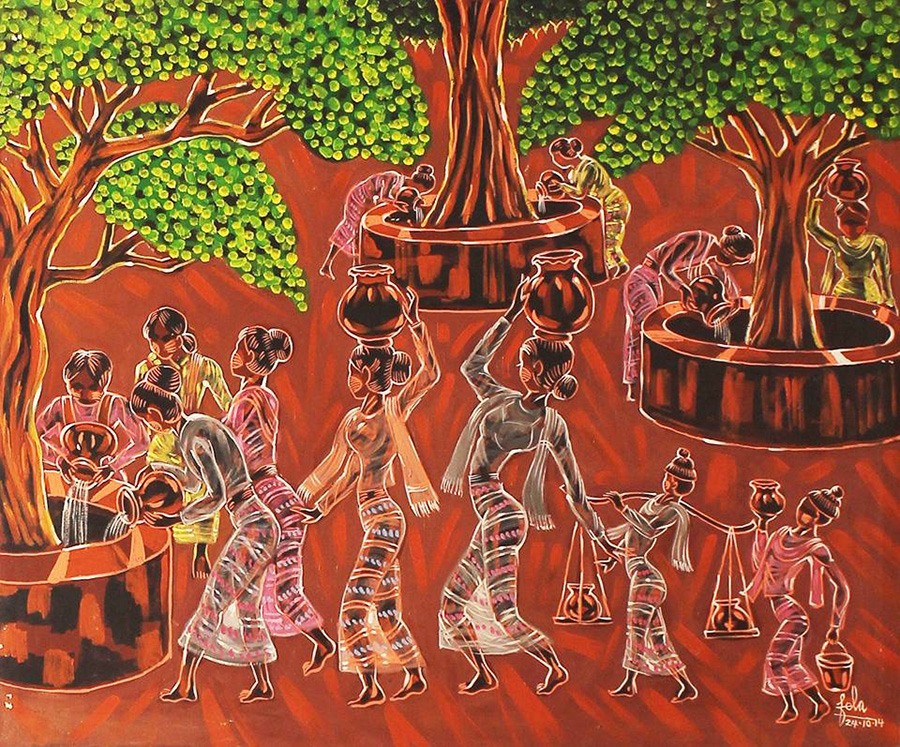
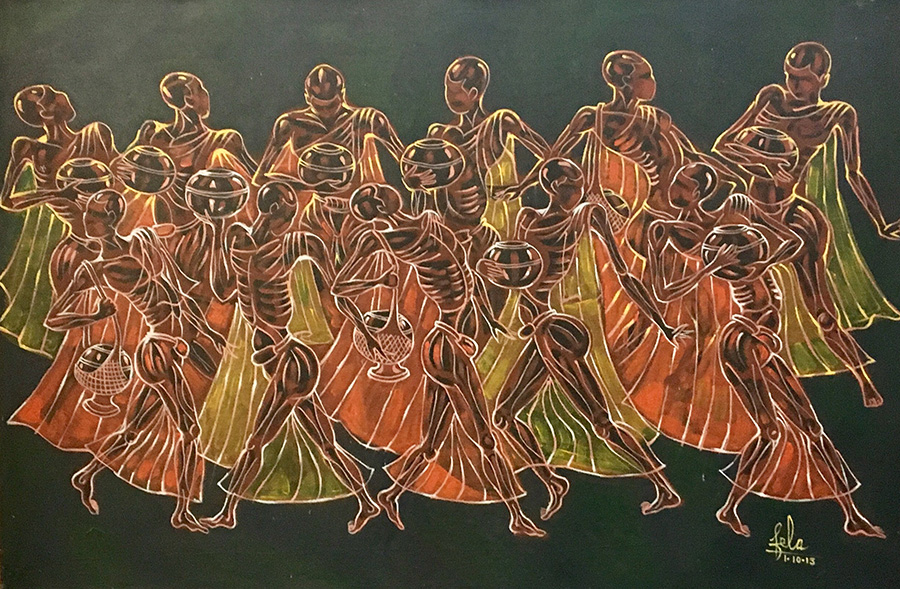
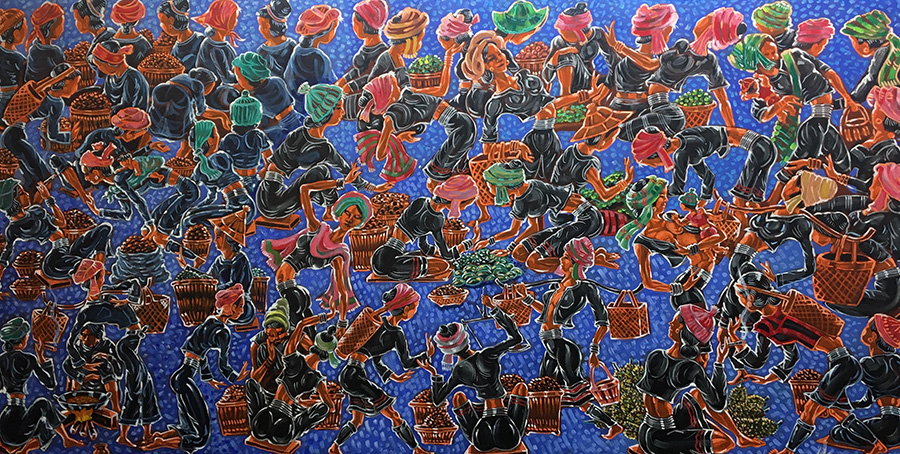
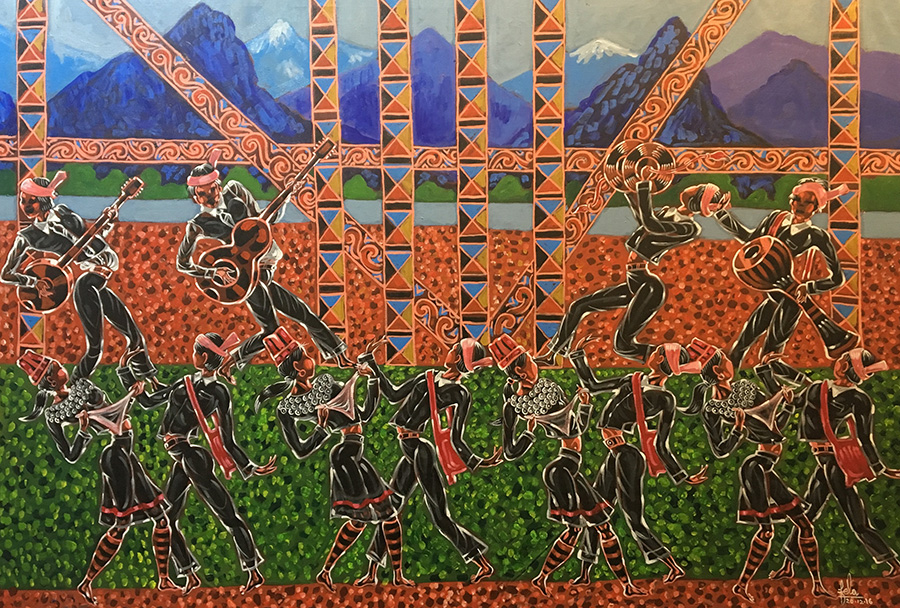
FELA’s Paintings of Myanmar’s Way of Life Find an Audience after His Death

Posted: 26 Feb 2018 01:03 AM PST

Young men dance to the accompaniment of traditional musical instruments in a painting depicting an ordination ceremony.

Unfortunately we cannot ask FELA, the creator of this picture, what he was feeling as he painted it. He passed away some five months ago after creating his last paintings of Myanmar's culture and customs, working beside U Bein Bridge and at the foot of Mandalay Hill.

FELA struggled his whole life, eking out a living from selling his Myanmar-modernist paintings for a pittance. He died at the age of 66, just months after his work finally came to the notice of art fans, and never reaped the rewards he deserved.

One of his fans, Ma Su, has organized an exhibition in his memory. Entitled "Lay Hsan Ngat", meaning "Bird Flying into the Wind", the exhibition will be open through Tuesday at OK Art Gallery at Aung San Stadium in Yangon.

"He lived his life for his cause and created his paintings boldly and independently, and hoped for nothing in return. He depicted Myanmar's culture and customs in a lovely way. His paintings offer a taste of Myanmar's culture and modernism, and are as real as life," Ma Su said.

FELA studied at Yangon School of Fine Arts, then lived in Mandalay until his death. His paintings mostly feature young women tending to rice plants and fetching water, traditional dancers, monks and novices on their alms rounds, young men playing caneball, markets and ethnic dances.

"He was an easygoing man. And his painting style was distinct from others'," said Mandalay artist Lu Eain.

"Some [buyers] from Europe have asked about his paintings since his death," he lamented.

Over 20 paintings are on display at the exhibition, and can be purchased for between $500 and $2,500.

The post FELA's Paintings of Myanmar's Way of Life Find an Audience after His Death appeared first on The Irrawaddy.

Apple Moves to Store iCloud Keys in China, Raising Human Rights Fears

Posted: 25 Feb 2018 09:15 PM PST

SAN FRANCISCO/BEIJING — When Apple Inc. begins hosting Chinese users’ iCloud accounts in a new Chinese data center at the end of this month to comply with new laws there, Chinese authorities will have far easier access to text messages, email and other data stored in the cloud.

That's because of a change to how the company handles the cryptographic keys needed to unlock an iCloud account. Until now, such keys have always been stored in the United States, meaning that any government or law enforcement authority seeking access to a Chinese iCloud account needed to go through the US legal system.

Now, according to Apple, for the first time the company will store the keys for Chinese iCloud accounts in China itself. That means Chinese authorities will no longer have to use the US courts to seek information on iCloud users and can instead use their own legal system to ask Apple to hand over iCloud data for Chinese users, legal experts said.

Human rights activists say they fear the authorities could use that power to track down dissidents, citing cases from more than a decade ago in which Yahoo Inc. handed over user data that led to arrests and prison sentences for two democracy advocates. Jing Zhao, a human rights activist and Apple shareholder, said he could envisage worse human rights issues arising from Apple handing over iCloud data than occurred in the Yahoo case.

In a statement, Apple said it had to comply with recently introduced Chinese laws that require cloud services offered to Chinese citizens be operated by Chinese companies and that the data be stored in China. It said that while the company's values don't change in different parts of the world, it is subject to each country's laws.

"While we advocated against iCloud being subject to these laws, we were ultimately unsuccessful," it said. Apple said it decided it was better to offer iCloud under the new system because discontinuing it would lead to a bad user experience and actually lead to less data privacy and security for its Chinese customers.

As a result, Apple has established a data center for Chinese users in a contractual arrangement with state-owned firm Guizhou – Cloud Big Data Industry Co Ltd. The firm was set up and funded by the provincial government in the relatively poor southwestern Chinese province of Guizhou in 2014. The Guizhou company has close ties to the Chinese government and the Chinese Communist Party.

The Apple decision highlights a difficult reality for many US technology companies operating in China. If they don't accept demands to partner with Chinese companies and store data in China then they risk losing access to the lucrative Chinese market, despite fears about trade secret theft and the rights of Chinese customers.

Broad Powers

Apple says the joint venture does not mean that China has any kind of “backdoor” into user data and that Apple alone — not its Chinese partner — will control the encryption keys. But Chinese customers will notice some differences from the start: Their iCloud accounts will now be co-branded with the name of the local partner, a first for Apple.

And even though Chinese iPhones will retain the security features that can make it all but impossible for anyone, even Apple, to get access to the phone itself, that will not apply to the iCloud accounts. Any information in the iCloud account could be accessible to Chinese authorities who can present Apple with a legal order.

Apple said it will only respond to valid legal requests in China, but China’s domestic legal process is very different than that in the US, lacking anything quite like an American “warrant” reviewed by an independent court, Chinese legal experts said. Court approval isn't required under Chinese law and police can issue and execute warrants.

"Even very early in a criminal investigation, police have broad powers to collect evidence," said Jeremy Daum, an attorney and research fellow at Yale Law School's Paul Tsai China Center in Beijing. "[They are] authorized by internal police procedures rather than independent court review, and the public has an obligation to cooperate."

Guizhou – Cloud Big Data and China's cyber and industry regulators did not immediately respond to requests for comment. The Guizhou provincial government said it had no specific comment.

There are few penalties for breaking what rules do exist around obtaining warrants in China. And while China does have data privacy laws, there are broad exceptions when authorities investigate criminal acts, which can include undermining communist values, "picking quarrels" online, or even using a virtual private network to browse the Internet privately.

Apple says the cryptographic keys stored in China will be specific to the data of Chinese customers, meaning Chinese authorities can’t ask Apple to use them to decrypt data in other countries like the United States.

Privacy lawyers say the changes represent a big downgrade in protections for Chinese customers.

“The US standard, when it’s a warrant and when it’s properly executed, is the most privacy-protecting standard,” said Camille Fischer of the Electronic Frontier Foundation.

Warned Customers

Apple has given its Chinese users notifications about the Feb. 28 switchover to the Chinese data center in the form of emailed warnings and so-called push alerts, reminding users that they can choose to opt out of iCloud and store information solely on their device. The change only affects users who set China as their country on Apple devices and doesn't affect users who select Hong Kong, Macau or Taiwan.

Apple doesn’t require an iCloud account to set up and use an iPhone. But if the user enables iCloud during set up, the default settings on the iPhone will automatically create an iCloud backup. Apple declined to comment on whether it would change its default settings to make iCloud an opt-in service, rather than opt-out, for Chinese users.

Apple said it will not switch customers' accounts to the Chinese data center until they agree to new terms of service and that more than 99.9 percent of current users have already done so.

Until now, Apple appears to have handed over very little data about Chinese users. From mid-2013 to mid-2017, Apple said it did not give customer account content to Chinese authorities, despite having received 176 requests, according to transparency reports published by the company. By contrast, Apple has given the United States customer account content in response to 2,366 out of 8,475 government requests.

Those figures are from before the Chinese cyber security laws took effect and also don’t include special national security requests in which U.S. officials might have requested data about Chinese nationals. Apple, along with other companies, is prevented by law from disclosing the targets of those requests.

Apple said requests for data from the new Chinese datacenter will be reflected in its transparency reports and that it won't respond to "bulk" data requests.

Human rights activists say they are also concerned about such a close relationship with a state-controlled entity like Guizhou-Cloud Big Data.

Sharon Hom, executive director of Human Rights in China, said the Chinese Communist Party could also pressure Apple through a committee of members it will have within the company. These committees have been pushing for more influence over decision making within foreign-invested companies in the past couple of years.


The post Apple Moves to Store iCloud Keys in China, Raising Human Rights Fears appeared first on The Irrawaddy.

Philippine Catholics Protest Drug Killings, Death Penalty

Posted: 25 Feb 2018 08:22 PM PST

MANILA — Around a thousand Catholics in the Philippines marched in Manila on Saturday to protest President Rodrigo Duterte’s bloody war on drugs and his efforts to reinstate the death penalty.

The protests come a day after students in the capital and provincial universities held demonstrations against Duterte, and a day before the 32nd anniversary of the “People Power” revolution that drove dictator Ferdinand Marcos into exile.

Catholic devotees prayed the rosary and sang hymns as bishops and the Philippines’ own cardinal read sermons against what they say are not “pro-life” policies in the government.

The protesters carried banners and placards with the massage “Protect and Defend the Sanctity of Life and Marriage,” “End Impunity” and “Stop the Killings.”

Despite criticism of the Philippine leader’s bloody war on drugs campaign, Duterte remains wildly popular and a trusted public official in the Southeast Asian nation.

The Social Weather Station’s (SWS) latest quarterly poll shows Duterte’s trust rating bounced back to “excellent” in December from “very high” three months before. Another survey by the privately run pollster gave his government the best rating so far for a Philippine administration since surveys started in the 1980s.

The Catholic Church protested the pending bills in Congress introducing divorce and re-imposing capital punishment.

The majority of the Philippines’ 105 million people are Catholic. Despite the popularity of the anti-drugs crackdown, some sectors of the church have become increasingly vocal on the drugs killings, with the church calling for justice and offering sanctuary to drug users.

“The threat is still there. We still hear news of extrajudicial killings. And still the bill of the death penalty is in Congress,” said Broderick Pabillo, Manila auxiliary bishop.

More than 4,000 suspected drug dealers have been killed since Duterte took office in June 2016. Police said the killings resulted from self-defense during raids and sting operations.

The post Philippine Catholics Protest Drug Killings, Death Penalty appeared first on The Irrawaddy.

Bangladesh Police Free Detained Foreign Aid Workers

Posted: 25 Feb 2018 08:16 PM PST

DHAKA — The Bangladesh police authority has freed all the foreign aid workers who had been detained near the city of Cox’s Bazar after failing to show their passports, visas or work permits, a senior police official said on Saturday.

The Rapid Action Battalion (RAB), the elite force of the Bangladesh police, had on Friday detained 11 aid workers with a number of different non-government organizations (NGOs) and handed them over to local police.

Mohammad Abul Khair, officer in charge of the police station in the Ukhiya sub-district, near Cox’s Bazar, said two of the aid workers were from the United Kingdom, two were from Italy, and one each were from Turkey, the Netherlands, Norway, Belgium, Brazil, Korea and Kenya.

"All of them were going to a refugees' camp from Cox's Bazar by their own vehicles, but they could not produce their passport, visa or work permit," Khair told Reuters.

"All of them were freed later after their written undertaking that in future they will not visit any camp or will not come out without a valid passport or visa," Khair added.

Nearly 700,000 Rohingyas have fled Myanmar’s Rakhine State and crossed into Bangladesh since August, when attacks on security posts by insurgents triggered a military crackdown that the United Nations has said amounts to ethnic cleansing.

The post Bangladesh Police Free Detained Foreign Aid Workers appeared first on The Irrawaddy.

Saturday, February 24, 2018

The Irrawaddy Magazine

The Irrawaddy Magazine


Three bombs rock Myanmar’s northwestern city Sittwe, policeman injured

Posted: 23 Feb 2018 10:04 PM PST

YANGON- Three bombs rocked the capital of Myanmar’s restive Rakhine State, Sittwe, early on Saturday, police said, adding that a policeman was slightly injured and the authorities were still working to determine who was behind the bombings.

The blasts come only three days after a large bomb killed two bank employees and injured nearly two dozen other people in the northeastern city of Lashio, where several ethnic insurgent groups are fighting the Myanmar military.

Sittwe is the capital of Myanmar’s violence-torn Rakhine where Rohingya Muslim insurgent attacks last year sparked a massive military response that pushed 688,000 Rohingya across the border into Bangladesh. Many of them recounted killings, rape and arson by Myanmar soldiers and police.

One of the Sittwe bombs – which went off around 4:30 a.m. – exploded in the backyard of an outspoken state government secretary, Tin Maung Swe, police said. He is one of the highest-ranking officials in the local administration. The other two bombs exploded near the high court and a land record office.

“There’re suspects, but now is not the time to talk. Police are trying to make sure about the suspects by analysing the structure of the bombs,” police spokesman Colonel Myo Thu Soe, told Reuters by phone.

Myo Thu Soe also said three other unexploded hand-made bombs were found in the city.

The United Nations and the United States have called the crackdown on the Rohingya ethnic cleansing, but the government of Nobel laureate Aung San Suu Kyi has blocked U.N. investigators and other independent monitors from the conflict zone.

Myanmar says its forces have been engaged in a legitimate campaign against Muslim “terrorists”.

No one has claimed responsibility for the Saturday blasts. The twitter account of the Rohingya insurgents, the Arakan Rohingya Salvation Army, did not post anything new as of Saturday mid-morning.

Rakhine is also home to the Arakan Army, an ethnic Rakhine armed group fighting against the Myanmar Army.

Tensions have increased in Rakhine since mid-January, when Myanmar police shot dead seven demonstrators, while 12 people were injured in Mrauk U township in the northern part of the state, after a local gathering celebrating an ancient Buddhist Arakan kingdom turned violent.

Rakhine police chief Colonel Aung Myat Moe told Reuters that security was being tightened in the city and police were inspecting exit roads out of Sittwe.

The post Three bombs rock Myanmar’s northwestern city Sittwe, policeman injured appeared first on The Irrawaddy.

This Week in Parliament (Feb. 19-23)

Posted: 23 Feb 2018 08:25 PM PST

Monday (Feb. 19)

Upper House lawmaker U Myat Nyana Soe submitted draft amendments to the Peaceful Assembly and Procession Law. The new provisions would require protest organizers to inform authorities of the estimated cost of their event and to identify the person or organization paying for it.

Tuesday (Feb. 20)

Seventeen Lower House lawmakers discussed a motion calling for the union government to adopt transparent long- and short-term projects designed to ensure the sovereignty and territorial integrity of northern Rakhine State and to fulfill the needs of local people to lead secure lives. The motion was submitted by lawmaker U Aung Thaung Shwe, of Rakhine’s Buthidaung Township.

A representative of Myanmar’s military said security forces were also troubled by the Arakan Army, accusing it of being unpatriotic and of launching an armed struggle to disrupt the peace process.

Union Minister for Social Welfare, Relief and Resettlement U Win Myat Aye added that it was necessary to handle the situation in Rakhine State cautiously and with foresight. He said the government’s actions in Rakhine State were meeting the locals’ needs and desires.

The motion was added to the record.

Wednesday (Feb. 21)

Upper House lawmaker Siang Awi asked the union government when it would release its figures on the country’s ethnic makeup. Union Minister for Population and Immigration U Thein Swe said the figures would be released after further negotiations and consultations with ethnic community leaders and representatives, historians, anthropologists and cultural experts in order to finalize the terminology and classifications of the ethnic groups.

Thursday (Feb. 22)

Parliament approved a proposal from the president to borrow 14.95 billion yen ($140 million) from the Japan International Cooperation Agency, which Deputy Minister for Planning and Finance U Maung Maung said would be used to issue loans to small and medium enterprises.

During the same session, Union Minister U Kyaw Lin sought approval for the president’s proposal to borrow 15 billion yen to develop housing for low-income families.

Friday (Feb. 23)

The Upper House Bill Committee advised replacing the phrase "the schedule for peaceful procession" with "the complete schedule for peaceful procession" in the Peaceful Assembly Law and the phrase "money or materials with a motive to damage the interest of public morality or to do so knowing of such damage to the interest" with "money or materials with the motive to damage the interest of public morality." The committee recommended approval of the bill.

Translated from Burmese by Myint Win Thein.

The post This Week in Parliament (Feb. 19-23) appeared first on The Irrawaddy.

How Do We Break the Silence on Rape?

Posted: 23 Feb 2018 08:18 PM PST

Nyein Nyein: Welcome to Dateline Irrawaddy! This week, we'll discuss punishing and deterring rapists of children as well as awareness campaigns with Daw Thandar Kyaw, child protection adviser at Save the Children, and Daw Nilar Tun, joint chairperson of the Gender Equality Network. I'm Irrawaddy English reporter Nyein Nyein.

Dateline Irrawaddy

Dateline Irrawaddy :အဓမၼျပဳက်င့္မႈေတြ ဘယ္လို တားဆီးကာကြယ္ၾကမလဲ။ဒီတပတ္ ဒိတ္လုုိင္းအစီအစဥ္ကေတာ့ ကေလးငယ္ေတြနဲ႔ အမ်ဳိးသမီးေတြအေပၚ အဓမၼျပဳက်င့္သူေတြကိုု အေရးယူမႈ၊ အဓမၼျပဳက်င့္မႈေတြ မျဖစ္ေအာင္ တားဆီးကာကြယ္မႈနဲ႔ လူထုအသိပညာေပးေရး ေတြအေၾကာင္း နဲ႔ပတ္သက္ၿပီး ဧရာဝတီ အဂၤလိပ္ပုုိင္း သတင္းေထာက္ ၿငိမ္းၿငိမ္း၊Save the children အဖြဲ႔က ကေလးသူငယ္ကာကြယ္ေစာင့္ေရွာက္ေရးဆိုုင္ရာ အစီအစဥ္ အႀကံေပး ေဒၚသႏၱာေက်ာ္ နဲ႔ က်ားမတန္းတူညီမ ွ်ေရး GEN က ပူးတြဲသဘာပတိ ေဒၚနီလာထြန္း တုုိ႔ကေဆြးေႏြးထားၾကတာျဖစ္ပါတယ္။

Posted by The Irrawaddy – Burmese Edition on Friday, February 23, 2018

Nyein Nyein: There have been more and more reported rape cases of women and children. There are rape cases almost every day and the age of the victims range from above 60 to below 2 years, which is quite disturbing. There has been a large number of rape cases since the beginning of 2018, and these have been reported in various areas including Yangon, Mandalay, Hpa-kant and Mawlamyine. What can we do to deter rape?

Thandar Kyaw: In addition to rape, there are other forms of sexual abuse. To cite one example I came across, a 26-year-old man put ash along with a spoon into the sex organ of a 4-year-old girl. Also, sexually touching children can be considered rape. It is very important to prevent this. Because of the economic conditions in our country, both parents usually have to work to earn a living and have to leave their children at home. They think that their children are safe with neighbors and acquaintances. But then, 90 percent of cases are "acquaintance rape". Only around 10 percent of rape cases are committed by strangers. In acquaintance rape, offenders are mostly cousins, uncles, friends of uncles, neighbors, grandfathers, fathers, and stepfathers. So, we would advise parents not to leave children alone with an acquaintance; don't leave [them] under a single pair of eyes.

NN: People our age grew up in a safe and secure environment. So, we think that our children are also safe. But we have been shocked by recent rape cases. We find these tragedies hard to believe. What are the weak points in the laws protecting women and girls?

Nilar Tun: Our country does have a law protecting women. But that law has a lot of shortcomings. The existing laws define rape as penetration only. But as Daw Thandaw Kyaw has pointed out, there have been cases of inserting fingers and spoons. So, I would say the definition of rape is not comprehensive enough. As a result, there have been many cases in which loopholes have been exploited. This means effective prevention can't be provided.

NN: There has also been criticism that the existing laws have not been properly enforced. What are the difficulties in enforcing the laws? What are the weaknesses of law enforcement organizations? Ma Thandar Kyaw, your organization handles a lot of cases and cooperates with law enforcement. Can you share your experiences?

TK: In our culture, rape is a source of shame, so it often goes unreported. In some cases, the offender is rich or powerful or has higher social status [than the victim]. An example is outside tuition teachers [those who teach to primary/secondary students outside of school hours]. In one case, an outside tuition teacher sexually abused their entire class, both boys and girls. But, [people] didn't believe it, and thought the children were talking nonsense. Later it was found to be true. There have also been [unreported] cases committed by rich people. For example, a 60-year-old neighbor sexually abused a 3-year-old girl. He was rich and the parents of the victim couldn't afford the trial expenses. So, they took compensation and settled the case. There are cases that go unreported because of shame. There are cases in which the daughter is raped by her step-father and the mother dare not report it. When a case is reported, it is important that the police who conduct the investigation are specially trained. If a child victim is sent to a hospital after being raped, hospitals refuse to give medical care if the case has not yet been reported to the police. The child is in urgent need of medical care, covered with blood, but the hospital refuses to give medical care without a police letter. We can improve this situation. Hospitals can give medical care first and ask for a police letter later. In one case I encountered, we lost the lawsuit at the first stage [township-level court] though the offender was guilty. We had to appeal to a higher level [court] as the offender was rich. As he was rich, he paid bribes and…

NN: Money talks.

TK: Yes, there are cases in which richer persons win lawsuits. This is still the case. We also need to improve this situation. This is also a challenge in handling child-rape cases.

NN: This issue involves public education. Speaking of public education, there have been campaigns, but not with clear policies outlined by all stakeholders.  In your experience, what is the response of the public to education campaigns?

NT: Lately, there has been wider media coverage of the issue, including calls for imposing the death penalty in rape cases. Given this, we can conclude that people don't accept [the increase in rape cases]. But as far as awareness-raising programs go, there are hardly any being conducted at the national level at present. It is fair to say that the concerned departments and organizations are doing small-scale activities on their own.

TK: There is a great need to raise awareness about this issue. But in the context of our culture, it is a difficult issue to talk about between parents and children. We have to overcome this. In order for children to be able to protect themselves, parents need to tell their children which of their body parts should not be touched by anyone; and that they can refuse if somebody tries to touch those parts and that they should tell their parents if somebody touches those parts. It is still difficult for parents to have a friendly talk to their children in this way. People still believe that such things are not appropriate to say to their children. But public awareness needs to be raised on a wider scale.

TK: As you have just said, similar measures should also be taken at schools and both parents and teachers should always monitor children's behavior and check to see if they have any injuries on their body. They should also know that they need to report it to the authorities if they find injuries. For example, if a teacher finds irregular behaviors and injuries on a child, that teacher should recognize that this is not natural and think about where to report it. Could they, for example, report it to the Social Welfare Department through its number for exploitation and sexual violence against children? When personnel from the Health Department visit schools, they should do the same if they find suspicious injuries, even if the visit was for a different purpose. In this way, we will be able to prevent rapes more effectively. If we can broadcast more television programs and debates on such issues through the media, awareness campaigns will be more effective.

NN: There have been cases in which younger teenage girls were raped by older teenage boys. In our society, boys are always taught to treat girls and women as their sisters. There are still such cases, however much we teach them. How important is the participation of men in the campaign?

NT: The participation of men is very important to prevent, reduce or eliminate sexual violence based on gender discrimination. This is because more men are involved in committing rapes than women, although not all men commit rapes. Therefore, their participation is very important. Although our society teaches them to treat girls of their own age as sisters, they too have to live in narrow boxes for too long. Teenage boys think they should have sexual experiences and they will be real men only when they have done so.

NN: It is said that law enforcement as well as awareness campaigners are important in prevention of rapes. Last week, the Ministry of Home Affairs announced that one of the reasons for rape is the wearing of revealing clothing by girls and women. This is a government ministry blaming rape on the way girls dress. This is victim blaming. What do you think of the statement from the ministry?

NT: We need to ask whether all victims dress like that. If we look at the world, rapes cases are abundant in places where every part of a girl or woman's body is wrapped up in clothing. Therefore, we think it is unacceptable to blame dress style for rapes. It depends on people's attitudes. A person with a rapist's mentality will commit rapes whether the victim is dressed "properly" or not. However, people who do not have such a mentality will never commit such crimes. It depends on the mentality, not on the dress.

NN: What's your opinion?

TK: I agree. I cannot accept blaming dress style for rape because even nuns have been raped. No one dresses as properly as nuns.  We need to do deeper research into it. We need data and statistics because everything needs to be based on evidence. In Myanmar, rapes are mostly committed in five states and regions. We need to do research into why most rapes were committed in these states and regions during a particular period under certain conditions and who committed the rapes. We need to know everything including whether the victims dressed "properly", whether a particular situation forced them to be victims, whether the rape was committed intentionally or not. It is necessary for us to know such things. Only then will we be able to adopt effective measures to prevent rapes against girls and women.

The post How Do We Break the Silence on Rape? appeared first on The Irrawaddy.