Friday, March 2, 2018

The Irrawaddy Magazine

The Irrawaddy Magazine


Specter of Jihadi Resurgence Arises in Bangladesh, says ICG

Posted: 02 Mar 2018 04:05 AM PST

YANGON – The International Crisis Group (ICG), which focuses on preventing deadly conflicts, has warned the Bangladeshi government that domestic political polarization could fuel a resurgence of militancy by local jihadist movements, threatening the state's security and religious tolerance of minority groups.

The group released a 34-page report entitled "Countering Jihadist Militancy in Bangladesh" via its website on Feb. 28. Based on interviews with security officials, members of the legal community and political and civil society groups, representatives from Islamic parties and umbrella groups, the analysis seeks to explore the roots of Bangladeshi's jihadist groups, their ultimate goals, organizational dynamics, recruitment patterns and links to regional and transitional networks.

Resurgent militancy

The ICG report states that two groups, Jamaat-ul Mjahideen Bangladesh (JMB) and Ansarul Islam (or Ansar), which both claim to represent Islamic State-Bangladesh and have sent large numbers of fighters to Iraq and Syria, dominate the jihadist landscape of Bangladesh. Both are linked with Islamic State (ISIS) and affiliated with al-Qaeda's South Asian branch.

Ansar describes itself as a defender of Islam, while JMB has a longer list of enemies, identifying anyone who does not subscribe to its interpretation of Islam as a legitimate target.

These two militant groups' attacks have targeted secular activists, foreigners, intellectuals as well as religious and sectarian minorities in Bangladesh since 2013. In the almost three years since an attack on a café in the heart of Dhaka's diplomatic district killed over 20 people, ICG reports a series of attacks have involved different Bangladesh Jihadist groups, including rural-based madrasa students and elite urban young men.

Successive governments have taken drastic and often brutal action against JMB, killing thousands of suspects, although the group has not been wiped out and has revived itself in a new form. Meanwhile, Ansar was born out of outrage over the ruling Awami League government's 2010 trials of senior leaders of the country's largest Islamist party, Jamaat-e-Islamic (Jel), who were accused of committing war crimes in the 1971 war of independence.

Jel is a close ally of the opposition Bangladesh Nationalist Party (BNP). The verdicts against Jel's senior leaders became a flashpoint within the Islamist community as the trial lacked transparency and was held against a background of intimidation and harassment of defence lawyers and witnesses. Ansar regards the trials as an insult to Islam and subsequently begun recruiting members from among both urban and rural educated youth.

The ICG says the ruling Awami League party's tactics against its political opponents, which have included accusing BNP and Jel of complicity in high-profile attacks in recent years, have opened a space for new forms of jihadist activism. The Awami League has repeatedly used the security forces to suppress rivals as it seeks a decisive victory in upcoming 2018 general elections in December.

The ICG suggested the Bangladeshi government "should adopt a counter-terrorism strategy anchored in reformed criminal justice and better intelligence gathering."

Ansar might be training ARSA militants today

Amid the silent threat growing within Bangladesh, an influx of hundreds of thousands of Rohingya Muslims from Myanmar's Rakhine State in late 2017 is fueling security concerns in the Bangladeshi government as jihadist groups including ISIS and Pakistani militants have shown an interest in taking advantage of the Rohingya's plight in an effort to mobilize support.

The ICG warns the Bangladesh government that jihadists might "exploit" nearly one million stateless Rohingya refugees, who are "particularly susceptible to jihadist recruitment." News reports suggest some Rohingya from refugee camps have already joined ARSA.

In April 2016, ISIS's online magazine Dabiq featured the Bangladesh ISIS commander sounding a rallying cry for Rohingya rights, while Al-Qaeda included Myanmar on a 2014 list of key targets.

Pakistan-based Jaish-e-Mohammed chief Masood Azhar, in one of the leading publications in that country, wrote in September 2017, "All Muslims of the world must unite for this cause" and "Myanmar's soil is earnestly waiting for the thumping sound of the footsteps of the conquerors."

In December 2017, Akayed Ullah, a Banlgadeshi immigrant to the United States detonated a homemade pipe bomb in a New York subway corridor, injuring five. US authorities apprehended the suspect and found he had an "allegiance to ISIS" and had visited Rohingya refugee camps three months before his violent attack in New York.

Although there is no concrete evidence to conclude that ARSA has ties to transnational jihadism, a previous Rohingya militant group, formally known as the Rohingya Solidarity Organization (RSO), set up small bases on the Bangladesh border in the past, and collaborated with Jamaat-ul Mujahideen on weapons and explosives training. Some counter-terrorism analysts believe that Ansar might be training and arming ARSA militants today.

Qazi Mehboob ul-Haq, left, the chief of Ansar ul-Islam, with supporters. (Photo: Radio Free Europe Radio Liberty)

The Institute for Policy Analysis of Conflict (IPAC) also noted in its report that "Indonesians and Malaysians are seeking to assist persecuted Muslims in Myanmar through contacts with Bangladesh-based Rohingya."

At their recent meeting in Singapore in February, ASEAN defence ministers issued a joint statement in which it stated: "We note with grave concern the rise of terrorism in our region, perpetrated by individuals and groups with increasingly sophisticated and deadly tactics and weapons."

Meanwhile on Feb. 27, the US Department of Treasury's Office of Foreign Assets Control (OFAC) added ISIS-Bangladesh and the Philippines-based Maute Group, aka Islamic State of Lanao, to its sanction list for global terrorism, along with ISIS-Egypt, Somalia, Tunisia and West Africa. It's unclear whether the US is also trying to verify the link between Bangladesh ISIS and ARSA.

Third picture: Myanmar soldiers on guard duty during a diplomatic tour to northern Rakhine’s strife-torn Maungdaw district in 2017. (Photo/ Moe Myint/The Irrawaddy)

Why is ARSA so silent?

After a series of attacks by ARSA on Myanmar forces in 2017, there have been no serious security incidents in northern Rakhine's Maungdaw region, although a couple of camp leaders were murdered on the Bangladesh side, which scared Rohingya from returning to Myanmar.

Home Affairs Minister Lt. Col Kyaw Swe and 11 fellow officials from relevant departments recently visited Bangladesh to discuss border security and collaboration on counter-terrorism operations but detailed information from the talks was not released.

During the visit, Bangladesh Home Affairs officials handed a list of over 8,000 potential Rohingya returnees to Lt. Col Kyaw Swe but the list provided only one ID photo of the head of each family and no other identifying information for family members or fingerprints in the applications. As a result, Myanmar authorities said they would send back the returnee list to Bangladesh authorities.

As for ARSA's silence, Myanmar ethnic affairs analyst U Maung Maung Soe concluded that the group is waiting to see the outcome of a campaign by some members of the international and human rights communities to have Myanmar army chief Sen Gen Min Aung Hlaing referred to the International Court of Justice for the Myanmar military's brutal campaign against the Rohingya in northern Rakhine.

In recent weeks, over 100 British MP urged its government to demand the Myanmar army chief be brought before the ICJ while three Nobel Peace Laureates, Yemen's Tawakkol Karman, Iran's Shirin Ebadi and Mairead Maguire from Ireland voiced a similar appeal after visiting refugee camps in Bangladesh.

According to Bangladesh news outlets, the Nobel Prize winners also warned Myanmar State Counsellor Daw Aung San Suu Kyi to "wake up", otherwise, she would be listed as a "perpetrator of this crime".  Moreover, they bluntly declared that "If she can't stop all this crime, then she has to resign, now."

"If ARSA stages further attacks against Myanmar, there could be backlash in terms of the international support for them (the Rohingya), and their political agenda would suffer a great loss," U Maung Maung Soe said.

The analyst noted Rohingya promoters in Europe had focused on raising the issue of indigenous rights for stateless people rather than protecting the basic rights of a persecuted community, which suggests it will be hard to reach a repatriation deal given the offer made by Myanmar to accept those who return voluntarily. Thus, ARSA's silence is very likely connected to the pro-Rohingya campaigners' lobbying, he said.

"It's hard to believe that they (lobbyists) don't have any connections with ARSA," U Maung Maung Soe said.

However, ARSA will probably carry out renewed attacks on Myanmar if the push for Sen Gen Min Aung Hlaing to be tried before the ICC fails to gain traction. In addition, the remaining Muslim population has indicated that ARSA would not be able to call on large numbers of militants to make attacks against Myanmar government targets as in 2017, U Maung Maung Soe said.

The post Specter of Jihadi Resurgence Arises in Bangladesh, says ICG appeared first on The Irrawaddy.

How Can the NLD Salvage Myanmar’s Diplomatic Affairs?

Posted: 01 Mar 2018 11:52 PM PST

Kyaw Zwa Moe: Welcome to Dateline Irrawaddy! This week, we'll discuss Myanmar and its international diplomacy. The diplomatic affairs of a country are critically important for its political, economic and social improvement. Myanmar has faced a lot challenges on the diplomatic front because of its rulers over the past five decades. Though it was expected that Myanmar's international diplomatic relations would recover after the elected National League for Democracy [NLD] government came to power, the conflict in Rakhine State last year and its consequences have reversed the country's political transition and diplomatic relations. Political analyst Dr. Yan Myo Thein and human rights activist Cheery Zahau will join me to discuss how the NLD government can salvage diplomatic relations.

Dateline Irrawaddy : သံေရးတမံေရး အက်ပ္အတည္းၾကားက ျမန္မာႏုုိင္ငံ

Dateline Irrawaddy : သံေရးတမံေရး အက်ပ္အတည္းၾကားက ျမန္မာႏုုိင္ငံ

Posted by The Irrawaddy – Burmese Edition on Wednesday, February 28, 2018

One of the problems facing our country is diplomacy. As I've said, it was thought that Daw Aung San Suu Kyi’s government would be able to foster diplomatic relations, but the Rakhine issue has taken [Myanmar’s] relations with the international community almost to the lowest level. The international community has blamed [the government] for human right violations and its handling of the issue. Ko Yan Myo Thein, what is your assessment of it?

Yan Myo Thein: As you have discussed, international diplomacy is quite weak under the government led by President U Htin Kyaw and State Counselor Daw Aung San Suu Kyi. We are in a transition, but there is still no sweeping institutional change in foreign relations. For example, most of the staff members at the Foreign Ministry are bureaucrats. And almost two-thirds of the ambassadors are retired military officers. Ambassadors play the role of [a football team’s] strikers in international diplomacy. They will be able to respond, discuss, represent their country on the front line. But the institution is weak. Another weak point is we are going with total defense in facing the international community. Sometimes it is really difficult to know exactly what is happening on the ground in areas of war and conflict. Under such circumstances there may be extrajudicial actions. When there are reports and allegations about those cases, the government should, rather than denying those cases, investigate and find out the truth. With such an approach, its relations with international countries would be better, I think.

KZM: So it is about its cooperation with international countries. Myanmar denied the UN human rights envoy access to the country. Again, it also rejected the investigation mission demanded by the UN and other western countries into the Rakhine issue.  Our country has been quite weak in international relations. While we call our country the Golden Land, we were called a weak state and a failed state because of continuous human rights problems associated with the Tatmadaw government. We were also called a rouge and a pariah state, and a thuggish state, and [a member of the] Axis of Evil by the US along with Iran, Iraq and North Korea. Following the outbreak of the Rakhine issue under the NLD government, they call us a country of rising nationalism. Ma Cheery, how do you assess it?

Cheery Zahau: The international relations landscape changed a lot before and after the outbreak of World War II and the emergence of the UN. The UN was established for the sake of people and democracy. Myanmar is one of the founding members. The UN has adopted norms, and there are descriptions, as Ko Kyaw Zwa Moe has mentioned, for countries that don't meet those norms. Our country has continuously ignored those norms of the international community, especially the norms for democratization and for the political and civil rights of the country. That's why the international community has given the country bad names. The international community had pinned very high hopes on the NLD government, because people expected that Myanmar would then be on the right path to democracy and that political and fundamental rights would be guaranteed. But then over the past two years there was not only the Rakhine issue, but also other issues such as the arrest of journalists, media censorship and the arrest of human rights activists. The world knows that. The international community is concerned that political and civil rights are being restricted more and more. So the perception of the international community is that Myanmar does not meet those norms. That perception is further reinforced by the Rakhine issue. Villages were reduced to ashes there. There are satellite images of them. We can't deny there was no arson. The international community is watching and we, especially those in Naypyitaw, can't turn a blind eye to it. That's why the international community is blaming us. Again, the world has seen serious problems since 2012. War is still going on in Syria, and problems still exist in Yemen. South Sudan and North Korea also have problems. Richer countries, especially in Europe, have been suffering the consequences of those crises. They are faced with a refugee crisis, and while they have a big burden to handle, the crisis in our country has sent more than 600,000 people to the neighboring country. Who will feed them? Bangladesh or our country? While those who earned their living from farming and fishing were forced to leave, the world already had crises, so the entire world got angry. To the international community it seems that our country, which has never met those norms, has worsened the crises. So the international community has a negative view of us.

KZM: Ma Cheery spoke about causes and effects. But Ko Yan Myo Thein, let's analyze the NLD's policy and Daw Aung San Suu Kyi's attitude toward international relations. According to its election manifesto, the policy of the NLD is to promote friendship with the world's countries with an active, independent and non-aligned foreign policy, and to stand firmly by the cause of genuine democracy in handling issues arising from engagement with the countries of the world. This is one of the points of the NLD's policy. As Ma Cheery pointed out, the whole world has blamed this country for not adhering to democratic norms in the past. On Monday, Daw Aung San Suu Kyi spoke about this issue [at the Myanmar Development Effectiveness Roundtable]. Ko Yan Myo Thein, how can you differentiate between her foreign policy and that of her government?

YMT: I think the NLD government believes it is critically important to cooperate with the international community on the current democratization of the country. She also spoke about expanding cooperation with the international community at the roundtable. But there are restrictions, I think. There are tough restrictions on the functions of the government and the Parliament because of the 2008 Constitution. In my view, no matter how tough the restrictions are, the leaders of the country, including the state counselor, should try to negotiate with the Tatmadaw leaders to be able to stabilize the democratization of the country. The support and trust of Western countries, including the USA and EU, are very important for our democratization process to gain momentum. Daw Aung San Suu Kyi has received that support and trust for many years. And the country needs support and trust now. And we need to utilize that support and trust effectively and wisely. Though the government's policy is to implement an active and independent foreign policy, that policy has restrictions, I think. It appears that our foreign policy always has to take our neighbor China into consideration. It is necessary to build broad trust and understanding between internal forces such as the government, Parliament, political parties, Tatmadaw and ethnic groups. In solving the Rakhine issue, the government has apparently neglected Arakanese lawmakers of the Arakan National Party elected by Rakhine people. Elected ANP lawmakers should participate in solving the issue. It is important to establish a practice in which all can find solutions for similar problems through negotiation.

KZM: Speaking of China's foreign policy toward Myanmar and Myanmar's foreign policy toward China, it seems that Myanmar’s government, even the NLD government, has to seek China's help when it has problems with Western countries over those norms. The entire social infrastructure of our country is deteriorating. Frankly speaking, we will need the support of Western and other countries that meet those norms in order to rebuild that infrastructure. Now, not only China, but also Russia protects us. We need to cooperate with them as they [the Chinese] are neighbors. But to build genuine democracy and a good society in the long run, Western countries can help a lot more than China and Russia. Ma Cheery Zahau, what do you think?

CZ: Our country is very weak in researching how to deal with each country. China has done very thorough research. It has researched even the small details of how to deal with our country. It has even researched the preferences of individual leaders. Our country has studied nothing about other countries. The leaders of our country apparently receive guests without preparation and pay visits without preparation.

KZM: They fail to do homework.

CZ: Yes, they don't do homework. They can't practice a foreign policy like that. I don't mean I oppose establishing ties with China; Myanmar has to maintain ties with China. But at the same time, it must be clear about the purpose of maintaining ties. For expediting democratization or what?  To promote democracy and civil rights in the society, maintaining ties with China won't work. We can't rely on it for that. But we must cooperate with it in other sectors like trade. A lot of institutional study is needed on how to deal with other countries — for example with ASEAN — and on what benefits we can get, and what they can give and what we can give. Our country has yet to do such research. As the government has no clear direction, it doesn't know what message to send the USA and what message to send the EU. It appears that our country starts to formulate a response only after those countries point out the problem. As a result, we don’t have a say in the international community. Maintaining ties with neighbors like China, Russia and ASEAN is inevitable. But from a security point of view, we buy weapons from Russia and China. They know all our military strengths as well as the technology we use. How can we be safe when our neighbors know all our possessions? And they will surely not look on us [highly]. So if we are to find other friends, we have to please them. We have to try to meet democracy and human rights norms to win those friends. We have to mend ourselves if we want to get good friends. This is the requirement we have to fulfill.

KZM: This is the weak point of Myanmar and the government. From the international community's point of view, Myanmar is an important country. Thinking about why the international community should support and have an interest in Myanmar, I found four or five factors. First, Myanmar has a strategic geopolitical position. It lies between China and India and is a member of ASEAN. The Malacca Straits are important for trade between the Middle East and East Asian countries. And Myanmar is rich in natural resources. And talking of public sentiment, people have fought for the cause of democracy for years. The country was under dictatorship for around 50 years and was in isolation for around 30 years. It was a British colony for around 100 years. To what extent should the international community have expectations of such a country?

YMT: My view is that the majority of our people are poor. The consequence of poverty is a decline in educational standards. Because of low education levels and severe poverty, people have to live a hand-to-mouth existence and do not bother to care about other issues. So both the international community and our government should educate the people, for example about fundamental rights, human rights and what the international community is about. There is a need for such education on a wide scale among the people. Another thing is that our people were ruled by various forms of dictatorship since 1962, so they have psychological trauma. As a result, I think, they will always be worried about something and have doubts. And they also have nationalism, or a nationalistic mindset, and psychological trauma has made that nationalistic mindset extreme. The international community should think about this, I think. So should the government, Parliament, the Tatmadaw and the educated. They should take these into serious consideration and think about how to heal them.

KZM: The international community has a lot of interests in Myanmar. The USA gained credit when Myanmar started democratizing. They said the Southeast Asian country of Myanmar had changed because of their engagement policy. What do you want to suggest to them? Myanmar is a fragile country. The government doesn't have absolute power. The Constitution provides a large space for the Tatmadaw. Under such circumstances, what do you want to suggest to the international community?

CZ: Before making any suggestions, the point I would like to make is that our country holds a strategic geopolitical position. We have to sell the benefits of establishing ties with us. Our country is not good at marketing. But the image we are selling to the international community now is that there are human rights violations and that the civil war has not ended. We should design a good plan to present our good points and resources. The democracy the people aspire to will go from strength to strength if we maintain ties with Western countries. The international community, especially the USA, should not ignore us, but continuously engage with us. By engagement I don't mean selling weapons to the Tatmadaw and ignoring human rights. But it should continuously engage with all the stakeholders — the NLD government, ethnic groups, political organizations and civil society. CSOs and the media are the key players in the burgeoning of democracy. The government may lose the election if it doesn't perform well. Then another government will take office. It is the media and civil society that will stay. Therefore, Western countries need to engage more with the media and civil society.

KZM: Ko Yan Myo Thein, what is your suggestion for the NLD government and Daw Aung San Suu Kyi to improve their diplomatic maneuvers?

YMT: There is a need to review the existing institution and policies in practice. There is a need to review their strengths and weaknesses. If the review is carried out promptly — and the necessary reforms can be made to the institution, policies and procedures — we will be able to breathe easy on the international stage in the next two years.

KZM: But what if the old guard is not changed while old policies are changed?

YMT: In my view, institutional reform should include changes in both policy and in people.

KMZ: You mean there is no problem if old personnel have changed their mindset?

YMT: Yes. But then, around two-thirds of ambassadors are retired military officers. For example, Myanmar’s ambassador to the UK. Our relations with the UK are very important. But what if the ambassador there is a retired military officer? Again, if we want to make some changes to ties with China, the ambassador should be a civilian ambassador with a political background. Only then will our reforms have greater effect in the international community.

CZ: It is very important that the right people are in the right places.

KZM: Thank you for your contributions!

The post How Can the NLD Salvage Myanmar’s Diplomatic Affairs? appeared first on The Irrawaddy.

Indonesian Police Question Luxury Yacht Crew in 1MDB Probe

Posted: 01 Mar 2018 10:30 PM PST

JAKARTA — Indonesian police on Thursday questioned the captain and crew of a luxury yacht seized in Bali at the request of US authorities, probing alleged money laundering at a Malaysian state fund, they said.

The yacht was impounded in Bali on Wednesday amid a multi-billion dollar corruption investigation launched by the US Department of Justice (DOJ) and tied to Malaysian state fund 1Malaysia Development Berhad (1MDB).

Police seized the yacht, Equanimity, after receiving a letter on Feb. 21 from the US Federal Bureau of Investigation (FBI) requesting help to enforce a court order, Indonesian National Police Spokesman Muhammad Iqbal Abduh said.

Police had questioned the captain and crew and would check their immigration papers and see if there was any evidence of a crime being committed, Abduh said in a statement.

Citing information provided by the FBI, he said the yacht’s Automated Identification System (AIS) had been switched off several times in waters around the Philippines and Singapore.

The AIS system uses satellites to pinpoint locations and switching it off would make it harder to detect the vessel.

Over the past 180 days, the Equanimity sailed from the northeast to the northwest of Malaysia and Singapore, and then from the Indonesian island of Bali to Papua and back again, according to shipping data on Thomson Reuters Eikon. There are several points where its movements are unclear.

1MDB is at the center of money-laundering probes in at least six countries, including the United States, Switzerland and Singapore.

A total of $4.5 billion was misappropriated from 1MDB by high-level officials of the fund and their associates, according to civil lawsuits filed by the DOJ in the past two years.

Malaysian Prime Minister Najib Razak set up 1MDB in 2009 and previously served as chairman of its advisory board. He and the fund have denied any wrongdoing.

In August 2017, the DOJ asked for a stay on its civil lawsuits seeking to seize more than $1.7 billion in assets allegedly bought with stolen 1MDB funds because it was conducting a related criminal probe.

Among the assets sought is Equanimity, cited as a $250 million luxury yacht bought by Malaysian financier Jho Low, named as a key figure in the US lawsuits.

The lawsuits said Low used proceeds diverted from 1MDB to buy Equanimity, which it described as a 91-meter yacht registered in the Cayman Islands.

The head of the National Police special crimes investigation unit said Indonesian authorities were not looking for Low.

“We have an obligation to search for all on the wanted list or [anyone] included on an Interpol red notice. But I have not seen the name,” Agung Setya told Reuters.

Low’s whereabouts are unknown and his Hong Kong company has not responded to requests for comment.

A spokesperson for Low was quoted by Malaysia’s New Straits Times daily on Thursday as saying it was “disappointing that, rather than reflecting on the deeply flawed and politically motivated allegations, the DOJ is continuing with its pattern of global overreach — all based on entirely unsupported claims of wrongdoing.”

The post Indonesian Police Question Luxury Yacht Crew in 1MDB Probe appeared first on The Irrawaddy.

Cambodian PM Denounces ‘Dogs’ for Burning His Effigy in Australia

Posted: 01 Mar 2018 09:34 PM PST

PHNOM PENH — Cambodian Prime Minister Hun Sen, criticized by rights groups for a crackdown on the opposition and media, denounced protesters in Australia as dogs on Thursday for burning his effigy, days after threatening to beat them up.

Hun Sen, who has ruled Cambodia for more than 30 years, has forced the closure of an English-language newspaper and the dissolution of the main opposition party and jailed government critics.

Rights groups and Western nations have decried the crackdown ahead of a general election set for July.

Hun Sen last week threatened to beat up protesters if they burned his image during an upcoming ASEAN-Australia Summit on March 17.

That prompted a Cambodian community in Australia to burn his effigy on Saturday and release images online.

“This is an insult,” Hun Sen said at a ceremony in Kompong Cham Province on Thursday. “It is tough to bite back when a dog bites our leg,” Hun Sen said, adding that his trip to Australia would go as planned.

Hun Sen’s threat to beat up protesters was met with condemnation in Australia.

“These are outrageous statements,” Clare O’Neil, an Australian MP, said in parliament on Thursday.

“We are living in this beautiful democratic country. Those rights need to be extended to all Australians, including those of Cambodian descent.”

Hun Sen has frequently said he wants to remain in power for at least another decade. The dissolution of the opposition Cambodia National Rescue Party eliminated a major obstacle to his re-election ahead of the July election.

The post Cambodian PM Denounces ‘Dogs’ for Burning His Effigy in Australia appeared first on The Irrawaddy.

Spice Up Your Evening With a Taste of Rakhine Cuisine

Posted: 01 Mar 2018 08:58 PM PST

Sule Shangri-La Yangon has re-launched and revamped its famous "Mad for Seafood" buffet, this time tempting diners with the spicy charms of Rakhine cuisine.

The buffet at the hotel's Café Sule features an array of soups, salads, fried dishes and curries, and is available from 6-10 p.m. on Saturday nights.

In Myanmar, Rakhine is famous for its spicy-sour flavors, achieved through the use of ingredients such as coriander, lemongrass, chilies and lemon juice.

The curries tend to be fresher in flavor and less oily and salty than other regional varieties. Most of the dishes involve seafood including prawns, crab, octopus, jellyfish, squid, cuttlefish, clams and lobster. These are served in a variety of ways including grilled, fried, steamed and boiled; all are available at the buffet.

The buffet includes a variety of fried dishes.

What I like most about this buffet is that I can stand there and have my dish cooked exactly as I want it, as it doesn't take long to do; I also love putting together a fresh seafood salad.

And the hotel hasn't forgotten that other famous Rakhine item: Moh Ti, a rice noodle dish which can be enjoyed as either a soup or a salad. As a soup it's served with a sour and spicy broth with fish slices. As a dry salad, the same ingredients are mixed with white-rice vermicelli into a colorful combination adorned with green chili paste, which lends it a greenish hue.

The buffet includes a Rakhine Moh Ti corner.

Other worthy Rakhine-style offerings include Ngar Ni Tuu Thoke (dried small fish salad), Gone Thauk Sann (hot and sour mussel stew) and Pinlalsar Mar Lar Shan Kaw (stir-fried spicy seafood and vegetables).

A variety of Rakhine-style dishes are served.

Rakhine cuisine is generally spicy, so ask the chef to go easy on you if you don't like it too hot!

The buffet also serves up Mongolian-style seafood. These dishes are also spicy; the grilled lobster had an awesome flavor — fresh and sweet at the same time.

Local street food is also represented here in the form of Wat Thar Doke Htoe (pork sticks), and these were yummy.

Other international favorites are also available at the buffet, including sushi, grilled beef, dim-sum and many others.


Boiled king crab, prawns and mussels are served at the 'Mad for Seafood' buffet.

The Rakhine-style "Mad for Seafood" night is offered on Saturday nights and the traditional international version is presented on Thursday nights, both priced at US$36 net per person.
If you're a seafood lover and you want to enjoy both traditional and international dishes in one place, look no further than the "Mad for Seafood" buffet.

For reservations and further information, call (95 1) 242 828 extension 6421 or 6422 or send an email to restaurantreservations.ssyn@shangri-la.com.

The post Spice Up Your Evening With a Taste of Rakhine Cuisine appeared first on The Irrawaddy.

Bangladesh Protests Against Myanmar Troops at Border Where Rohingya Shelter

Posted: 01 Mar 2018 08:41 PM PST

DHAKA — Bangladesh summoned Myanmar’s ambassador on Thursday over an increased security presence near their border where thousands of Rohingya Muslims have been sheltering just inside Myanmar, Bangladesh’s Ministry of Foreign Affairs said.

The United Nations refugee agency has expressed concern that thousands of people staying on the strip of land, dubbed “no man's land” because it is beyond Myanmar's border fence but on Myanmar's side of a creek that marks the international border, would be forcibly returned without sufficient consideration for their safety.

Nearly 700,000 Rohingya fled Myanmar for Bangladesh after insurgent attacks on Aug. 25 sparked a military crackdown that the United Nations has said amounted to ethnic cleansing, with reports of arson attacks, murder and rape.

About 5,300 people had been staying in a makeshift camp on the borderline since late August, but roughly half moved to camps inside Bangladesh after the two countries met to discuss possible repatriation on Feb. 20.

Several hundred of them have been moved back to the borderline, two border guards said.

On Thursday, Myanmar armed soldiers and police, estimated to number more than 200, came to the border fence and appeared to be moving heavy weapons including mortars to the area, said a Bangladesh army official and the two guards, all three of whom spoke on condition of anonymity.

Dil Mohammed, a community leader among the roughly 950 Rohingya families staying at the border, said Myanmar officials used loudspeakers to tell them to move from the area.

Protest Note

The movement of troops so close to the border violated international norms, an official of Bangladesh’s border guard, Brigadier General Mujibur Rahman, told Reuters.

“We are sending them a protest note. We have already asked for a flag meeting,” said Rahman, the force’s additional director general in charge of operations, referring to a meeting of border guards of both countries.

“They have removed heavy weapons, such as machineguns and mortars, from the area after our verbal protests.”

The Ministry of Foreign Affairs in Dhaka said Acting Foreign Secretary Khurshed Alam asked envoy Lwin Oo for Myanmar’s security forces to pull back from the border, warning “such military buildup will create confusion within Bangladesh and escalate tensions on the border.”

The action could also hamper the agreed repatriation of refugees, the ministry said in a statement, adding a diplomatic note was handed to the ambassador.

Myanmar military spokesman Myat Min Oo said he could not confirm there was any troop activity and declined to comment further, citing a public holiday in Myanmar.

A spokesman for the country’s Home Affairs Ministry, Myo Thu Soe, said he was unaware of the troop movements.

Myanmar’s main government spokesman, Zaw Htay, declined to comment on Thursday’s activity.

On Wednesday, he told Reuters that “terrorists” with links to the Arakan Rohingya Salvation Army, which had attacked 30 Myanmar police posts and an army base in August, were sheltering in the border area.

Zaw Htay said he believed people were staying there to put political pressure on Myanmar's government and “create a situation where Myanmar security forces and government officials will remove them.”

The post Bangladesh Protests Against Myanmar Troops at Border Where Rohingya Shelter appeared first on The Irrawaddy.

Thursday, March 1, 2018

The Irrawaddy Magazine

The Irrawaddy Magazine


How Painting Peacocks Brought an Artist Peace of Mind

Posted: 01 Mar 2018 06:39 AM PST

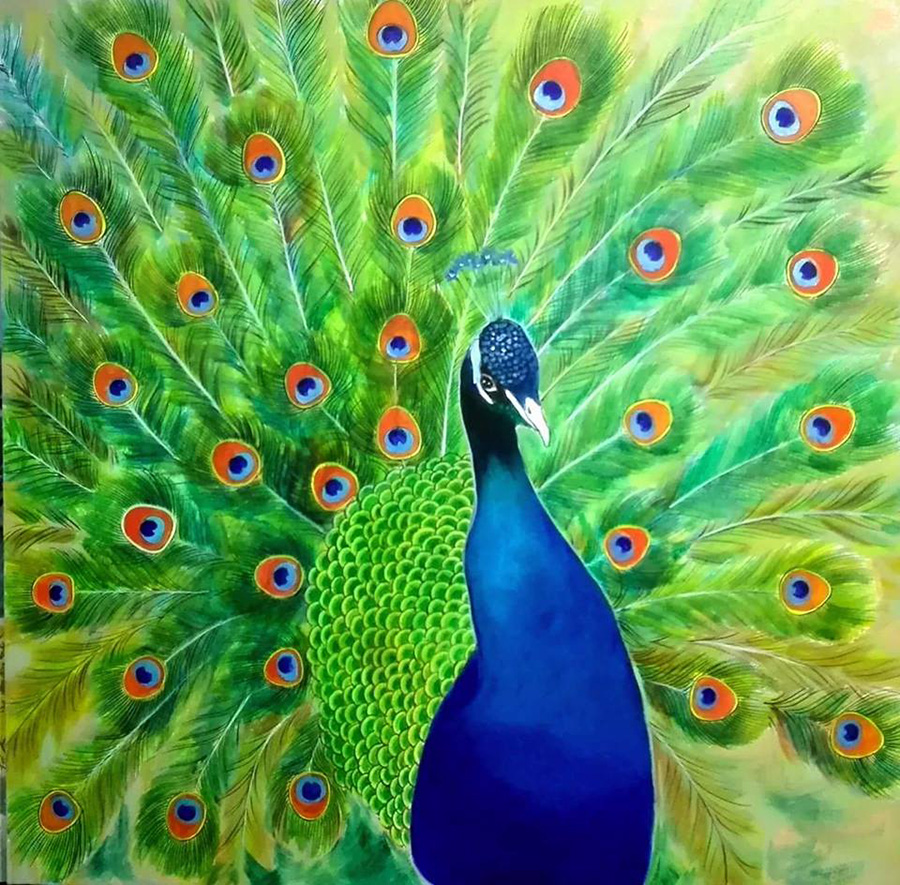
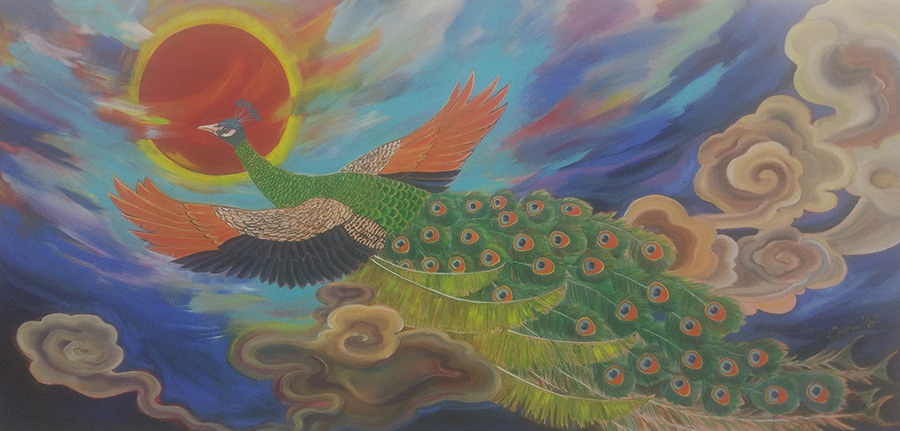
Myanmar artist Ko Su brought a peacock from his native Mandalay's Mingun as a gift for State Counsellor Daw Aung San Suu Kyi, whose party, the National League for Democracy, famously uses a fighting peacock as its symbol.

It's not a real peacock, but a painted one, to be exact, rendered in the Chinese style.

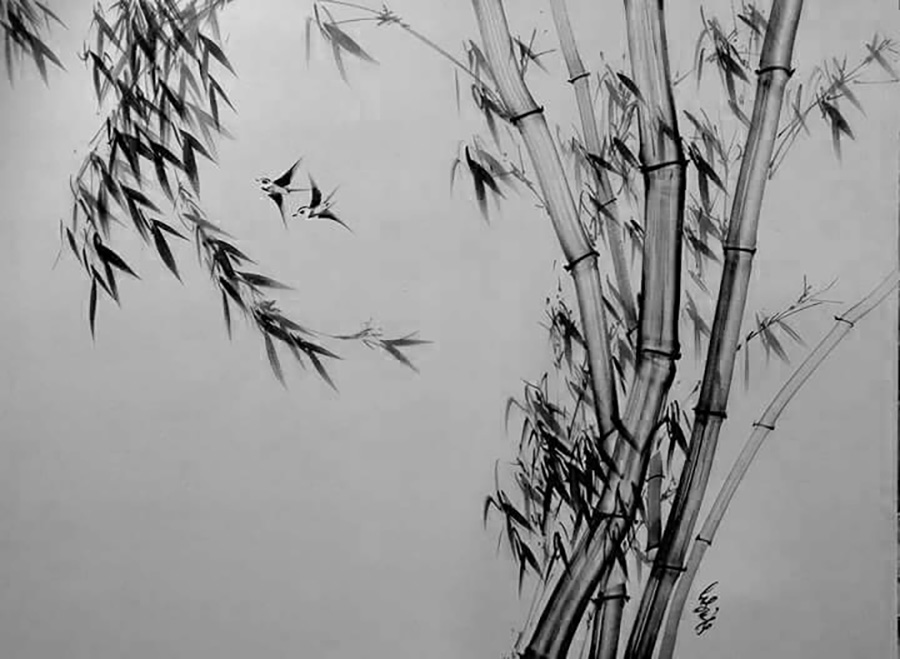
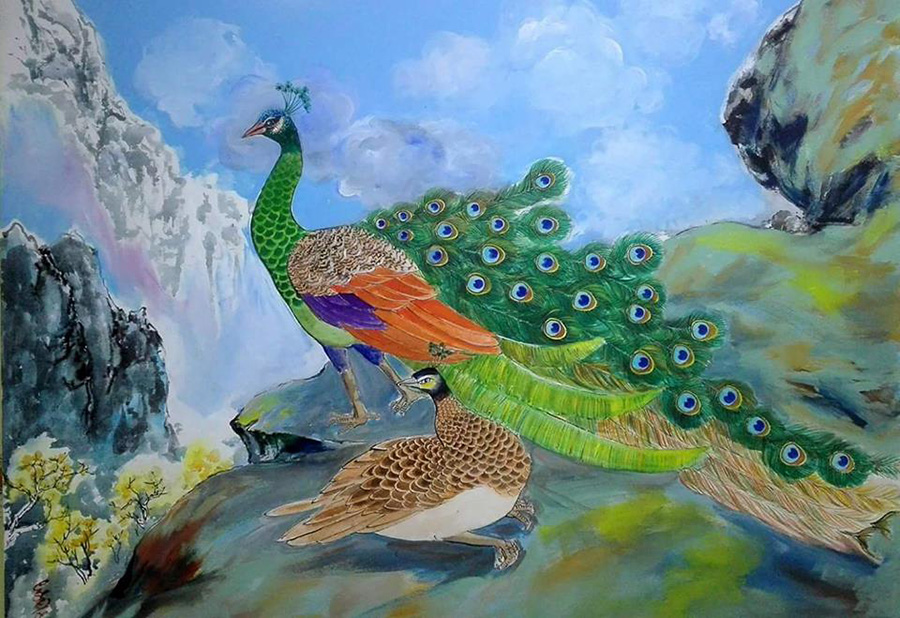
Ko Su is known for his Chinese-style paintings of bamboo plants and peacocks.

"In Chinese and Korean movies set back in imperial times, you see pictures that symbolize [the characters'] thoughts and stances. Similarly, I want Daw Aung San Suu Kyi to have paintings that symbolize her at work and at home," Ko Su said.

"I have always wanted to give her a painting of a fighting peacock. But, as she is leading the peace process now, I have created a peacock in a cool, blue color," Ko Su said.

Viewing Ko Su's swaying bamboo plants and paired birds creates a peaceful feeling in the viewer. "My mind is at peace when I paint bamboo groves," he said.

Over the past 35 years, Ko Su has taught himself to paint in the Chinese style from Chinese books, comics, and calendars.

Sometimes he orders books from Taiwan, and occasionally he travels to the border towns of Muse and Namhkam in Shan State, or to Ruili in China, to buy books.

"Now you can buy books easily. I remember traveling to that region when the border areas near Muse and Namhkam were still unstable, back in the 1980s. To get there, I paid a monk's travel expenses and pretended to be his disciple," the 58-year-old artist recounted.

Now, the fruit of Ko Su's decades of effort are on display at the "Peacocks in the Bamboo Forest" exhibition, his second solo show. The exhibition is being held through March 9 at OK Art Gallery at Aung San Stadium (North Wing) in Yangon.

Over 20 paintings will be displayed and can be purchased for $50-$1,000. Ko Su will also demonstrate his Chinese-style painting technique during the exhibition.

The post How Painting Peacocks Brought an Artist Peace of Mind appeared first on The Irrawaddy.

Third Session of Panglong Peace Conference Pushed Back to May

Posted: 01 Mar 2018 03:29 AM PST

CHIANG MAI, Thailand — Due to the delay in convening national level dialogues, the planned third session of the 21st-Century Panglong Union Peace Conference (UPC) has been moved to early May.

The tentative date was agreed at the Joint Implementation Coordination Meeting (JICM) on Wednesday, according to U Zaw Htay, a spokesman for the State Counsellor's Office.

The government's initial plan was to hold a session of the peace conference every six months, but the meetings have fallen behind schedule, with the last one held in May 2017.

Ethnic-based national-level dialogues have not yet been held in conflict-torn Rakhine and Shan states.

The New Mon State Party (NMSP), which recently signed the Nationwide Ceasefire Agreement, will hold the Mon National Dialogue in Yay Township, said Dr. Salai Lian Hmung Sakhong, vice chairman of the Union Peace Dialogue Joint Committee (UPDJC).

Nai Aung MaNge, a central committee member of the NMSP, told The Irrawaddy that the Mon National Dialogue will be held on March 23, after public consultations at five venues in areas under its control in Kawkareik and KyarInn Seik Gyi townships in Karen State and Yay Township and Three Pagoda Pass in Mon State.

In January, the Restoration Council of Shan State (RCSS) canceled the planned Shan National Dialogue after the Myanmar military (or Tatmadaw) obstructed the holding of public consultations. The government supported the Tatmadaw's actions.

U Zaw Htay said the UPDJC are discussing with the RCSS how to move forward. It has held 14 public consultations but has yet to hold the national dialogue (ND) in Longkho as it has five more consultations to conduct, in Taungyi, Kyauk Mae, Karli and Panglong townships in Shan State, and Mandalay.

On Tuesday, the UPDJC discussed possible approaches that the RCSS could take to conducting the ND, which is considered the key mechanism for gathering public recommendations to share at the UPC. U Zaw Hay said the government is awaiting a response.

According to Dr. Salai Lian Hmung Sakhong, the UPDJC has come up with two options for the RCSS to be able to convene the national-level dialogue. He did not provide details, but said the RCSS representatives would share the options with the organization's leadership and submit a response. "So we hope the current deadlock with RCSS will be broken and we can move forward," he said.

The Arakan Liberation Party, an NCA signatory, proposed holding its public consultations in Kyauk Phyu, Mrauk-U, Taunggup and Sittwe in Rakhine State, and in Yangon, U Zaw Htay said. "Because of the Rakhine State situation, we are not able to do it, even though the government, Tatmadaw and the Parliament gave their consent, and both UPDJC and JICM have agreed to conduct the ND in Rakhine. But we will keep trying our best," he told the reporters on Wednesday in Naypyitaw.

Stick to the deal, Tatmadaw says

The peace process is stalled due to a lack of adherence to the decisions agreed between the government, Tatmadaw and the ethnic armed organizations (EAOs), said Vice Senior General Soe Win, the deputy commander-in-chief of the Tatmadaw, on Wednesday.

He made the remarks while delivering the opening speech at the 7th JICM held at Naypyitaw's National Reconciliation and Peace Center.

The Tatmadaw deputy chief urged each signatory "to strictly follow the decisions" the parties have made together. He was referring to the terms of reference drafted and approved by all sides.

Vice Sen-Gen Soe Win said, "There was a misunderstanding, as there is no description of a prior-public consultation [process] in the decision made at the meeting. Thus the process has stalled and dragged on. If we just follow our JICM decisions, the issues will be solved."

He referred specifically to the cancelled Shan national-level dialogue led by the Restoration Council of Shan State (RCSS) in January, following the Tatmadaw's obstruction of the Shan public consultation process. At the last JICM meeting in November 2017, the decision to hold the Shan ND in Longkho (Linkhay) Township was made as the Tatmadaw opposed holding the talks in the Shan State capital, Taunggyi.

The Tatmadaw insisted there is no need to hold prior public consultations before the national-level political dialogues, pointing out that in the government-led dialogue process, participants shared their thoughts at the regional level without first holding prior consultations.

The EAOs have said the smaller prior public consultations are a crucial means of including local people's views, as the smaller consultations allow contact with the public and an opportunity to listen to their concerns and perspectives on federal Union-building.

The RCSS has already said that their public consultations are in accordance with the bilateral agreement and with a "gentlemen's agreement" on the process, adding that the prior national-level dialogues in Karen, PaO and Chin were done after holding public consultations.

Negotiations have faced setbacks and deadlocks due to the Tatmadaw's rigid stand on its six-point principles for the peace process and reluctance to allow public gatherings in ethnic states. The military commanders insist that the stakeholders follow their orders, instead of negotiating.

More delegates to NCA bodies

As there are now 10 EAOs that have signed the NCA, leaders at Wednesday's JICM decided that nine EAOs would be JICM representatives, excluding the Lahu Democratic Union (LDU), given its lack of military power. LDU leaders on Wednesday joined JICM as observers, according to JICM representatives.

Dr. Salai Lian Hmung Sakhong, vice chairman of the UPDJC, said both the LDU and NMSP had become full members of the UPDJC and could participate in its working committees.

The number of UPDJC members will be unchanged, as it has 16 members each from the government (including the Tatmadaw and lawmakers), EAOs and political parties. Seats are reserved for the 16 government-recognized ethnic armed groups.

In addition, Dr. Aye Maung, a UPDJC member from the Arakan National Party (ANP) — one of 16 members representing political parties — who is now detained and standing trial, was replaced by U Oo Hla Saw, a lawmaker representing the ANP. Dr. Aye Maung is also an Upper House lawmaker from Ann constituency. He won the by-election in April 2017.

State Counsellor Daw Aung San Suu Kyi, delivering the opening speech to the JICM, said both sides' armed forces need to listen to the government so that the government can act as a negotiator between them.

She urged senior decision-makers to join the talks and "to thoroughly discuss" the issues, noting that the chairmen of the KNU and RCSS were not present at the JICM, while KNU/KNLA-Peace Council secretary Dr. Naw Kapaw Htoo was absent due to illness.

KNU chairman Padoh Saw Mutu Say Poe is also ill, which is why he could not attend, according to KNU general secretary Padoh Saw Tadoh Moo.

Accord No. 1 approved

The government sought Parliament's approval of the number of EAO signatories rising to 10, as Parliament approved the text of the NCA in late 2015.

Attorney General U Tun Tun Oo, a member of the NRPC, explained to Parliament the recent progress on the NCA, and the lawmakers gave their approval of the new signatories.

In addition, the Union Parliament on Feb. 28 also approved the 37 basic principles toward building a federal Union (Union Accord No. 1) at its session, nine months after it was signed at the second session of the UPC in May last year.

At that meeting, when the EAOs established a set of basic principles, not all groups fully gave their consent, as they were not in line with federal principles such as autonomy and the right to draft state constitutions. Rather, it was merely a facsimile of the Union's current 2008 Constitution; that meeting also did not include the views of the Mon and Lahu, and they had not consented to Union Accord No. 1 (or the first part of the Union Accord).

"We have not been able to discuss the issue during the JICM," said Nai Aung MaNge, adding that this was because the talks mainly focused on efforts to convene the UPC and set a date. "We hope the challenges will be overcome through the talks," he said.

Htet Naing Zaw contributed to this report from Naypyitaw.

The post Third Session of Panglong Peace Conference Pushed Back to May appeared first on The Irrawaddy.

Philippines Says Any South China Sea Energy Deal Must be With Chinese Company, Not Govt

Posted: 28 Feb 2018 11:17 PM PST

MANILA — Any potential deals between Manila and Beijing on energy exploration in the South China Sea should be agreed with a company and not the Chinese government, the Philippines’ presidential spokesman said on Thursday.

China claims most of the South China Sea, a key route in global trade and resource-rich territory whose parts are subject to competing claims with Brunei, Malaysia, Taiwan, Vietnam and the Philippines.

“We might enter into an agreement with a Chinese-owned corporation, not the Chinese state itself,” Harry Roque, the spokesman of President Rodrigo Duterte, told ANC news channel.

The Philippines and China last month agreed to set up a special panel to work out how they can jointly explore oil and gas in a part of the South China Sea that both sides lay claim to without having to address the touchy issue of sovereignty.

Pursuing a joint project would be extremely complex and sensitive, as sharing oil and gas reserves could be seen as endorsing other countries’ claims.

“We are not entering into a sovereign agreement for exploration. It will be an agreement, if we do, between two corporate entities,” Roque said.

The Philippines suspended exploration in the Reed Bank in 2014 as it pursued international arbitration over territorial disputes with China.

In 2016, the Permanent Court of Arbitration in the Hague invalidated China’s claim over most of the South China Sea, though Beijing refused to recognize the ruling, which spelled out the Philippines’ sovereign rights to access offshore oil and gas fields, including the Reed Bank, within its 200 mile Exclusive Economic Zone.

Negotiations are ongoing with a Chinese state-owned company, Roque said, declining to name the entity.

The Philippines, China’s CNOOC Ltd. and state-owned PetroVietnam jointly surveyed the Reed Bank in 2003 to 2008.

“This will now actually entail joint exploration and possible exploitation of natural resources,” Roque said.

However, there are doubts a joint agreement will be approved because China does not favor activities that they have to undertake jointly with other people, Roque said.

Ties with China have warmed under Duterte, who has put aside territorial disputes with Beijing in exchange for trade opportunities and financing in key infrastructure projects.

The post Philippines Says Any South China Sea Energy Deal Must be With Chinese Company, Not Govt appeared first on The Irrawaddy.

India Approves “Historic” Law to Jail Traffickers For Life

Posted: 28 Feb 2018 09:51 PM PST

CHENNAI, India — India’s cabinet approved a tough new law that could jail human traffickers for life on Wednesday, giving a boost to efforts to crack down on the fast-growing crime.

The Trafficking of Persons Bill, which will go to Parliament for approval after it reconvenes this month, aims to prioritize survivors’ needs and prevent victims, such as women and girls found in brothel raids, from being jailed.

“It’s a victory of the 1.2 million people who participated in 11,000 km long Bharat Yatra [India March] for this demand,” Nobel Laureate Kailash Satyarthi said in a statement, referring to a month-long march he organized last year.

“Intrastate trafficking of children is a rapidly growing organized crime…. A strong anti-trafficking law in India will send a powerful message.”

Calling it a “historic” achievement in the campaign against trafficking, Satyarthi urged Parliament to pass the law.

The comprehensive bill unifies existing anti-trafficking laws and aims to make India a leader in the fight against such crimes in South Asia, one of the fastest-growing regions for forced labor, begging and forced marriage in the world.

Many poor victims from rural areas are lured by traffickers with promises of good jobs, only to find themselves forced to work in fields or brick kilns, enslaved in homes as domestic workers, or sold to brothels.

Indian government data shows reports of human trafficking rose by almost 20 percent in 2016 against the previous year, to 8,132 cases.

Acknowledging the magnitude of the crime, a government statement said the bill “addresses one of the most pervasive yet invisible crimes affecting the most vulnerable persons, especially women and children.”

Under the new law traffickers could be jailed for 10 years or for life. Conviction also includes a fine of at least 100,000 Indian rupees ($1,534).

“In order to break the organized nexus, both at the national and international level, the bill provides for the attachment and forfeiture of property and also the proceeds [from] crime,” the government said.

The legislation also provides for special courts to expedite trafficking cases, setting a deadline of one year for trial and repatriation.

Under the law, a rehabilitation fund will be set up to help victims rebuild their lives and they will be allowed to give evidence through video conferencing without being identified.

Anti-trafficking committees — at district, state and national levels — will be set up to oversee prevention, protection and victim rehabilitation.

The post India Approves “Historic” Law to Jail Traffickers For Life appeared first on The Irrawaddy.

“Forgetful” Myanmar Witness in Reuters Reporters’ Case Writes Key Detail on His Hand

Posted: 28 Feb 2018 08:58 PM PST

YANGON — A witness in the case of two Reuters reporters jailed in Myanmar told a courtroom on Wednesday that he wrote notes on his hand about where the pair was arrested to jog his memory while giving testimony.

The location of the arrests has emerged as a key point of contention in the proceedings to decide whether Wa Lone, 31, and Kyaw Soe Oo, 27, will be charged under the colonial-era Official Secrets Act, which carries a maximum penalty of 14 years in prison.

At issue is whether they were arrested immediately after a pre-arranged meeting with police, or at a routine traffic stop.

The reporters were detained on Dec. 12, after they said they were invited to dine with two police officers at a restaurant.

On Wednesday, prosecution witness Kyaw Shein, a civilian neighborhood-level local official, said he was present when they were arrested at a police checkpoint, several hundred meters from the restaurant.

His account of the arrest largely matched earlier testimony of police officers, who have told the court the reporters were arrested after they were stopped and searched at a checkpoint at the junction of No. 3 Main Road and Nilar Road, northern Yangon, by officers who were unaware they were journalists.

The reporters have told relatives and their lawyers they were arrested almost immediately after being handed some papers at the Saung Yeik Mon restaurant by two police officers they had not met before.

Show Judge His Hand

During cross examination, defense lawyer Than Zaw Aung asked Kyaw Shein to confirm that he had looked at his hand when asked by the prosecutor to state the place of arrest.

Kyaw Shein first told the court he had written the name of one of the reporters on his hand to aid his memory. Lawyer Than Zaw Aung then reached through the wooden bars of the witness stand and turned Kyaw Shein’s left hand over. The judge also asked the witness to show him his hand.

The defense lawyer then read for the record that the writing on his hand read: “Thet Oo Maung” — an alias for Wa Lone — and below it “No. 3 Road and Nilar Road junction”.

Asked if someone had told him to write the address where police say the arrest took place, Kyaw Shein said no. He wrote on his hand because he was “forgetful,” he said.

The government prosecutor, Kyaw Min Aung, declined to answer questions when approached by a Reuters reporter after the hearing on Wednesday. Government spokespeople have declined to comment on the case, citing the ongoing court proceedings.

During Kyaw Shein’s testimony, the judge asked the court stenographer to record that the witness was taking a long time to respond to questions.

Restaurant Owner Testifies

Earlier on Wednesday, another civilian witness, Htay Htay Myint, owner of the Saung Yeik Mon restaurant, testified that she did not recognize Wa Lone and Kyaw Soe Oo. She also said she was not aware of any dinner meeting, or of any arrest outside her restaurant that night.

On cross-examination, she said she did not see the two reporters in her restaurant on Dec. 12, although she also said that from her position at the cash desk she would not have seen guests sitting at tables outside the restaurant.

The two reporters had been working on a Reuters investigation into the killing of 10 Rohingya Muslim men who were buried in a mass grave in northern Rakhine State after being hacked to death or shot by ethnic Rakhine Buddhist villagers and soldiers.

The military excavated the shallow grave in December, days after the reporters’ arrests, saying they had received a tip-off. Authorities are taking action against 10 members of the security forces and six villagers, according to a government spokesman.

A handcuffed Wa Lone told reporters at the court that authorities would not have uncovered the killing if they had not got information from the reporters.

“The role of an independent media is crucial to solve the Rakhine crisis,” Wa Lone said. “If we are not reporting about the right information, the government will not know the real situation on the ground.”

Myanmar’s ambassador to the United Nations, Hau Do Suan, said this month that the journalists were not arrested for reporting a story, but were accused of “illegally possessing confidential government documents.”

The judge adjourned the proceedings until March 7.

The post “Forgetful” Myanmar Witness in Reuters Reporters’ Case Writes Key Detail on His Hand appeared first on The Irrawaddy.

Peace Can’t Be Bought

Posted: 28 Feb 2018 08:33 PM PST

A lot of time and money has been invested in Myanmar's 'peace industry', with questionable results. We revisit this topic in this commentary from Irrawaddy founder Aung Zaw first published in The Irrawaddy Magazine in December 2013.

The opening of Myanmar will not be complete until peace and stability are achieved in ethnic regions. But as those who have been following the country's long history of civil war know, that is still a distant and elusive dream.

Increasingly, however, political observers are not the only ones paying close attention to this issue. Jon Frederik Baksaas, CEO of Telenor—one of two telecom companies to win licenses to operate in Myanmar—was surely speaking for many other foreign investors when he said recently that the peace process was "very important" because tensions make working in "certain areas sensitive."

But while businesses, both foreign and local, certainly have a legitimate interest in Myanmar's unresolved conflicts, the growing trend in recent years to treat the peace process as if it were an industry in its own right should be a cause for concern.

Ever since he came to office in 2011, President U Thein Sein has prioritized peace in Myanmar's ethnic regions, and this focus has brought with it millions of dollars in funding and technical support from abroad. Institutions from the European Union to Norway, Switzerland, Sweden and Japan have all gotten involved in the government-led peace agenda, while opposition figures such as Daw Aung San Suu Kyi and several key leaders and civil society groups have been notably absent.

Much of the money now pouring into this process has gone to the Myanmar Peace Center, which was established with the president's blessings in October 2012 to engage in "confidence-building" activities. What this has meant in practice is a proliferation of meetings among government ministers, ethnic delegations and "peace brokers" around the country. Many of these have been little more than photo ops, seemingly aimed at giving those in attendance a chance to post amateurish propaganda on social media sites.

This lack of tangible progress on substantive issues might explain the growing urgency with which the president has been pushing for a dramatic breakthrough. During a visit to the United Kingdom in July, he told an audience at Chatham House, an influential British think tank, that nationwide ceasefire talks would be held "over the coming weeks" and boasted that "the guns will go silent everywhere in Myanmar for the first time in more than 60 years." Five months later, we're still waiting.

The closest we've come so far to a real turning point was in early November, when many of Myanmar's ethnic armed groups met with a government delegation in the Kachin State capital Myitkyina. It was the first time that multilateral talks had been held, and came a few days after the ethnic militias gathered in Laiza, the headquarters of the Kachin Independence Organization (KIO), to discuss their common stance for negotiations with the government.

The Myitkyina meeting ended in disappointment, however, when it became clear that the two sides still had fundamental differences on key issues.

A key demand of the government was for the ethnic armies to end their resistance, which many have continued for decades (although only one major group, the KIO, is still on a war footing with the government army since the collapse of a ceasefire in June 2011). In this, Naypyitaw was barely moving from the position of the former military junta, which had insisted in 2009 that the ethnic ceasefire groups disarm and form Border Guard Forces under the command of the Tatmadaw, or Myanmar armed forces—a demand that most rejected.

Myanmar still has 18 different armies, including major groups representing the Kayin, Kachin, Shan, Wa and Mon ethnic minorities. Each of these groups control parcels of territory of various sizes in the country's border territories. It is estimated that ethnic insurgents have a combined total of about 100,000 fighting forces. Several ethnic leaders are also involved in lucrative businesses, including mining, logging, border trade, taxation and, in some cases, illicit activities such as drug trafficking.

What these ethnic armies want is the formation of a federal army, one in which ethnic minorities are on a more equal footing with the Burman majority that now overwhelmingly dominates the Tatmadaw. But this is something the country's current military leaders won't accept.

In an interview with The Irrawaddy, Lt-Gen Myint Soe, the leader of the Armed Forces delegation to Myitkyina, said that the only armed forces Myanmar needed was the Union armed forces. But he also said there was no immediate plan to forcibly disarm the ethnic armies. Rather, he said, the goal was to gradually integrate them into mainstream politics.

Although neither side got what it wanted from the Myitkyina meeting, the good news is that they agreed to continue speaking to each other. Before that, however, the ethnic armies plan to meet again in Hpa-an, capital of Kayin State, to sort out some of their own differences.

Meanwhile, as the peace process moves forward with greater Western involvement, another major foreign influence also needs to be considered: Myanmar's powerful neighbor, China.

Beijing has long expressed a desire to see peace restored in Kachin State, where it has massive investments in the local jade trade, mineral exploration and hydroelectric power. It came as no surprise, then, that it sent observers to the talks in Myitkyina.

At the same time, however, Beijing has actively supported Wa insurgents in Shan State, which also borders China. The United Wa State Army, which didn't take part in the talks in Laiza or Myitkyina, was formed after the collapse of the Beijing-backed Communist Party of Burma in 1989, and is one of the most powerful armed groups in the country. According to a report last year by Jane's Intelligence Review, it is also the recipient of large quantities of military hardware from China, "including man-portable air defense systems [and] Chinese-made armored vehicles."

What this reflects, perhaps, is Beijing's concern that the West—and particularly the United States—is rapidly extending its presence in Myanmar right into China's backyard. Signaling Washington's keen interest in Myanmar's ethnic conflicts, US Ambassador Derek Mitchell has visited war-torn Kachin State twice in just one year, becoming the first top US diplomat to travel to this sensitive area in several decades.

It is clear, then, that the West and China are beginning to exercise considerable influence over Myanmar's still fragile peace process. Many remain skeptical, however, that foreign "peace experts" and other outsiders understand Myanmar's complex ethnic and political divisions well enough to be of any real help in ending more than half a century of conflict.

Although there are no easy answers to how Myanmar can achieve a lasting peace, it is important for all parties to realize that simply throwing money at the problem—or looking at it solely through the lens of their own commercial or strategic interests—will only make matters worse.

Aung Zaw is the founding editor-in-chief of The Irrawaddy.

The post Peace Can't Be Bought appeared first on The Irrawaddy.

Wednesday, February 28, 2018

The Irrawaddy Magazine

The Irrawaddy Magazine


Rakhine Conflict Primarily Political, Not Religious, Seminar Told

Posted: 28 Feb 2018 04:29 AM PST

CHIANG MAI, Thailand — The violence in Rakhine State is not essentially religious, but stems from the use of religion to achieve political goals, international scholars said on Wednesday.

To promote religious freedom and tolerance, and to inform the public about the ongoing conflict in Rakhine State, a public seminar titled Religions, Violence and Conflict in Rakhine State was held at Payap University in Chiang Mai, Thailand, on Wednesday with the support of the U.S. Consulate in the northern Thai city.

Acknowledging the complexity of the situation in Rakhine, the academics — many of whom have visited Myanmar and/or Bangladesh recently — shared their experiences and perspectives in an effort to better understand the conflict. The scholars participated in panels devoted to a number of topics including ethno-religious politics, the international relations dimensions of the conflict, and the Rohingya refugee crisis, as well as a follow-up discussion after a viewing of the documentary film Sittwe.

"Religion is not the problem per se [in Myanmar], but the political use of the religion" is fueling the conflict, said Dr. Rey Ty of the Christian Conference of Asia, who has visited the country multiple times in recent years.

In his talk to some 90 audience members, he laid out the different perceptions of the "Rohingya Refugee Crisis." Many in Myanmar, he said, prefer to refer to the group as "Bengali" Muslim interlopers from neighboring Bangladesh. While Myanmar sees the attacks by Muslim militant group Arakan Rohingya Salvation Army (ARSA) as acts of terrorism perpetrated by foreign-funded Islamic separatists, the international community sympathizes with the Rohingya as the "world's most persecuted minority" who are facing a "textbook example of ethnic cleansing," according to the UN. More than half a million refugees fled in the space of a few weeks as the Myanmar military, or Tatmadaw, conducted clearance operations in response to a coordinated series of ARSA attacks that killed nearly a dozen security personnel in August last year.

Due to the enormous displacement of the Rohingya, the international community has leveled a lot of criticism at State Counselor Daw Aung San Suu Kyi for remaining silent on the issue, despite her status as a Nobel Laureate and an icon of human rights and democracy.

The academics shared these concerns at the seminar but acknowledged that Daw Aung San Suu Kyi's hands are tied as she tries to reconcile with the Tatmadaw.

Dr. Rey Ty stressed the importance of achieving a "reconciliation of the opposite perceptions" of people inside and outside the country.

According to Daw Mon Mon Myat, a freelance journalist and graduate student at the Department of Peace Studies at Payap University who served as a moderator, the seminar's focus was on peace building, and the speakers' views reflected all sides.

She told The Irrawaddy that the conference came to a shared view that "the conflict is not based on religious differences between Muslims and Buddhists" as portrayed in the current international media. "It is not about religion, it is due to the opportunists who focus on their own benefits. It is due to contending between those who attempt to create political benefits and the oppressors, which led to the flight of over 600,000 [residents of Maungdaw and Buthidaung townships in northern Rakhine State]," she said.

As the participants at Wednesday's seminar included leaders of various religions such as Muslims, Christians and Sikhs and Buddhist monks, Daw Mon Mon Myat said she hoped "the message we obtain here can be disseminated to their communities through them."

US consul general in Chiang Mai Jennifer Harhigh said in her opening remarks that the United States supported advocating for religious freedom as "increasing religious tolerance can reduce the likelihood of armed conflict, violent extremism and atrocities."

"If we are not careful, religious belief, much like economic disparity, ethnicity or whole other elements, can be exploited to divide people, and to promote conflict," she said.

The seminar also screened the documentary "Sittwe" by Jeanne Hallacy, an American filmmaker and youth educator.

The film shows the views of two teenagers, a Muslim Rohingya girl and a Buddhist boy, both affected by the communal conflict in Rakhine State in 2012. The 20-minuute-long film – screened internationally in a slightly different version from the original planned for Burmese release – was blocked by government censors from being shown in Myanmar at the Yangon Human Rights Human Dignity Film Festival in June last year and to date remains banned in the country.

Nevertheless, It premiered in September at the Freedom Film Festival in Malaysia, where it won Best Southeast Asia Short Documentary, and was screened internationally in the US in November.

The organizers said their hope was that the screening of Sittwe would help raise awareness of the need for tolerance and reconciliation.

"It [Sittwe film] carries an important message, that educating our young people is absolutely critical to raise the awareness of the need for religious tolerance and to prevent the spread of religious conflict," Harhigh said.

The post Rakhine Conflict Primarily Political, Not Religious, Seminar Told appeared first on The Irrawaddy.

8 Shan Men Accused of Links to Armed Group Sentenced to Jail

Posted: 28 Feb 2018 04:19 AM PST

YANGON — A court in Shan State on Monday convicted eight Shan men accused of fighting for the Restoration Council of Shan State (RCSS), an ethnic armed group, and sentenced them to prison terms ranging from three to 10 years.

The Ho Pong Township court sentenced Sai San Sai to 10 years; Sai Peng Sa to eight; Seng Sai, Ohm Nut, Sai San and Sai Khun to seven; Sai Hla Tun to four; and Aike Ko to three.

All eight men hail from Nang Kut village in Mong Pyin district and were convicted on four charges: unlawful use of a firearm; unlawful use of a walkie-talkie, illegal import of a vehicle; and attacking the military.

The RCSS engaged the Myanmar military, or Tatmadaw, in Nang Kut in July, seizing weapons and killing some soldiers.

Sao Myawaddy, the eight men’s lawyer, claims that after the fighting the Tatmadaw went house to house seizing homemade guns and bullets. She says the Tatmadaw detained her clients in the process and beat them before handing them over to police after 10 days.

"They [authorities] did not consider any request from the victims. They even could not answer when I asked what they were being punished for in court,” she told The Irrawaddy on Wednesday. "Every local Shan has homemade guns. It is not something unusual that they should be punished for; it is their traditional practice.”

Sao Myawaddy said one of her clients was merely the driven for a Buddhist monastery where the army seized the car the court used as evidence to convict them of illegally importing a vehicle.

She said their lengthy trial, which lasted some seven months, was just theater.

"It was just a show, having public court appearances. But they had already decided how to punish these local villagers," she said.

"They tried to arrest members of the RCSS. When they could not arrest the RCSS they arrested whoever they could, so they arrested villagers," said Sai Naw Awng, a Ho Pong resident who has been in regular contact with the eight men since their arrest.

The RCSS was among the original eight armed groups to sign the Nationwide Ceasefire Agreement with the government in October 2015, but it has periodically clashed with the Tatmadaw since.

The post 8 Shan Men Accused of Links to Armed Group Sentenced to Jail appeared first on The Irrawaddy.

Conflict over Methods Stalls Restoration on Part of Historic Monastery

Posted: 28 Feb 2018 03:15 AM PST

MANDALAY – Restoration work on one portion of Mandalay's famed Shwe Nan Daw Kyaung monastery has stalled due to a conflict over the best method of reinforcing the weak and decayed floor of the building.

Experts from the World Monuments Fund (WMF) and the Department of Archaeology and National Museums have different ideas on how to proceed with the reinforcement, especially underneath the historic monastery's west veranda, causing the two teams to delay the start of restoration work.

The WMF experts have proposed using logs to reinforce the column underneath the west veranda, while department officials want to use steel pipes — an option the WMF strongly opposes.

"In general, wood and steel bracing are meant to be temporary. But they want to use these as permanent, which we cannot accept in restoration of historic wooden buildings," said Jeff Allen, the WMF's project director of preservation at Shwe Nan Daw Kyaung Monastery.

"I often try to figure out where this kind of steel pipes on historic buildings idea comes from. But in Myanmar it often is seen as the final solution for a monument. We can see examples in restoration in Bagan, done by the generals," he added.

The WMF said authorities from the department seem not to want to replace the wood, but would rather support the wooden building with steel pipes — something that violates the Fund's standards.

"Following international standards of preserving heritage [sites], we will only use wooden logs for wooden buildings, not steel pipes," Allen said.

"If we can finish Shwe Nan Daw Kyaung the correct way, it will be an example for all Burmese people about how important it is to preserve the knowledge of the past to help us solve problems today," he added.

According to the WMF, restoration of the Nayas, the mythical features that decorate the base of the monastery's columns, is ongoing. Only the reinforcement of the verandas has been halted. The standoff has been brought to the attention of the regional government, which plans to act as a negotiator between the two parties.

"If they decide to use steel pipes instead of wood, we will not do the restoration of those parts. I can understand that what we talk about and want to do is so foreign and alien, especially for conservative types of people; that is why we must be patient until they accept us," Allen said.

According to a regional government source, officials are examining the situation and plan to call a meeting of all parties involved in restoration projects at the monastery in March.

A restoration team works on wood carvings at the monastery in November 2017. ( Photo: Zaw Zaw / The Irrawaddy)

Restoration work on the monastery resumed in November after a delay of about a year due to a hold-up in grant money.

A joint project between the Culture Ministry, the WMF and the U.S. Embassy, restoration began in February 2014, funded by the WMF. The project was initially expected to take two years.

There were major delays in September 2014 due to hold-ups with the supply of teak logs that are to replace some of the monastery's decaying pillars.

Major restoration work began in January 2016, only to be suspended again due to the shortage of funds.

Further support for the preservation project came from the U.S. Ambassadors Fund for Cultural Preservation, which joined hands with Ministry of Culture.

At the time, U.S. Ambassador Derek Mitchell said the WMF, which is based in Washington, would implement the US$500,000 project, adding that the budget would also cover training for Myanmar officials and craftsmen in preservation techniques.

The Shwe Nan Daw Kyaung Monastery, a 19th-century traditional teak wood building, was originally covered with gold leaf and glass mosaics, and is known for the intricate wood carvings on its walls and roofs showing Buddhist myths. It was built as a royal chamber for King Mindon and located within the Mandalay Palace complex.

Under Mindon's son, King Thibaw, the building was moved to a site outside of the Mandalay Palace moat and turned into a monastery. During World War II, aerial bombardments destroyed most of the historic buildings inside the Mandalay Palace complex, leaving the Shwe Nan Daw Kyaung Monastery as the only remaining original structure from the 19th-century palace.

In 1996, Myanmar's Archaeological Department submitted the monastery for inclusion on Unesco's World Heritage List, where it remains under consideration by the UN body.

The post Conflict over Methods Stalls Restoration on Part of Historic Monastery appeared first on The Irrawaddy.

Arakan Group Says 7 Arrested Over Sittwe Bomb Attack

Posted: 28 Feb 2018 02:21 AM PST

YANGON — Police in the Rakhine State capital of Sittwe have arrested an executive committee member of the Arakan National Council (ANC) and six other locals over a bomb attack that injured a police officer over the weekend, according to an ANC official.

ANC general secretary U Tun Zaw said council college Ko Naing Soe, also known as Mae Lone, was arrested in Sittwe on Sunday.

Tun Zaw said the police have filed charges against Naing Soe under multiple articles of the Counter-Terrorism Law that carry a minimum prison sentence of 10 years. He said his first court hearing was scheduled for March 12.

Local police could not be reached for confirmation.

In a video of four men in handcuffs at the Sittwe courthouse on Monday, posted online by Naing Soe’s brother, some of the men say they were “unfairly charged with many articles” and that their rights were being violated.

"Arresting people with doubt [without evidence] will never bring us justice," says Naing Soe.

Naing Soe was previously arrested by the military in Sittwe in 2009 for the possession of explosive devices and sentenced to eight years in prison. He was granted an amnesty by former President Thein Sein and freed in 2013, according to Tun Zaw.

Naing Soe. / Tin Wong Mog / Facebook

He said Naing Soe is also a liaison officer for the Arakan Army, an ethnic armed group allied with the ANC, but not a combatant. With only 100 or so active fighters, the Arakan Army has been likened to more of a non-governmental organization by veteran journalist Bertil Lintner, who specializes in Myanmar’s ethnic armed conflicts.

Three remotely detonated bombs rocked Sittwe on Saturday. One of the bombs went off in the backyard of a state counselor’s office. The others exploded near a courthouse and a land records office.

Tun Zaw said authorities have detained about 20 locals in all since the attack. It is unknown how many of them remain in custody.

"In general we accept police detention for questioning when carried out in line with the law, but this arrest was unfair and nonsense," he said.

The motive for the attack, and who carried it out, remains unknown.

It follows the fatal shooting of seven ethnic Arakan protesters by police in the Rakhine State town of Mrauk-U in mid-January and the subsequent stabbing death of a government administrator who was transferred out of the town a few days after the protest.

It also follows the recent breakdown of efforts to see the ANC sign the Nationwide Ceasefire Agreement (NCA) along with two more ethnic armed groups on Feb. 13.

"We negotiated with the ANC to sign the NCA until the last minute. But when the time comes to sign the NCA, the ANC didn't come along," said U Zaw Htay, spokesman for the President’s Office.

A day before the signing ceremony, the ANC said discussions between the government’s Peace Commission and the ethnic armed groups’ Delegation for Peace Negotiations on Feb. 11 ended in deadlock. It said the commission refused to continue debate on eight contentious points and pressured the ANC to finish the negotiations after it signed the NCA.

Tun Zaw said Naing Soe had attended the 21st Century Panglong Peace Conference in 2016 as an ANC representative and was selected to join the group’s delegation to the Feb. 13 signing ceremony before negotiations with the government broke down.

He said his colleague has back problems and takes medicine to ease the pain, regularly traveling from Sittwe to Thailand for medical care.

He added that the ANC has sent State Counselor Daw Aung San Suu Kyi and the Peace Council, which she heads, letters insisting that Naing Soe was not involved in Saturday’s attack and asking for his release.

The ANC was established in Thailand in 2004 as an umbrella organization for several groups, including the Arakan Liberation Party, the All Arakan Students Youth Congress, the Arakan Women’s Welfare Association, the National United Party of Arakan, the Rakhine Women’s Union and the Democratic Party of Arakan. It is unclear whether all of them remain active.

The post Arakan Group Says 7 Arrested Over Sittwe Bomb Attack appeared first on The Irrawaddy.

EU Calls on Myanmar to Take Action to Save Shrinking Elephant Population

Posted: 28 Feb 2018 01:16 AM PST

YANGON—The European Union urged the Myanmar government to strengthen efforts to protect its wild elephant population, which is on the brink of extinction due to poaching to supply the illegal trade in ivory and skins, as well as to end the open sale of elephant and other illegal wildlife parts in markets in its major cities, at popular tourist sites and along its borders.

In a statement to mark World Wildlife Day on Saturday, more than two dozen ambassadors of the European Union and its member states warned that Myanmar's wild elephant population would be wiped out in a matter of years as poaching for tusks and other parts remains a huge challenge globally with Myanmar facing an "unprecedented elephant skinning crisis".

In recent years, the Myanmar government has been working on strengthening the Biodiversity and Protected Areas Law, establishing more than 40 protected areas for wildlife, developing action plans for elephants and tigers, training and deploying rangers, and instituting wildlife training for government staff about the illegal wildlife trade. The EU and its member states have supported some of these efforts through the provision of technical support and capacity building.

"In particular, we would recommend that the Government of Myanmar ends the open sale of elephant and other illegal wildlife parts, which today are widely sold in markets in Yangon, Mandalay, Kyeikhteeyoe and along Myanmar's borders," the statement said.

According to WWF-Myanmar, at least one elephant is killed by hunters in Myanmar every week. Elephant skin, tail hairs, teeth and ivory are sold at tourist sites such as the Golden Rock (Kyaiktiyo Pagoda in Bago Region), while ivory is sold in Yangon and Mandalay. Large markets also operate in the 'Golden Triangle' border area Myanmar shares with China, Laos and Thailand.

In such markets, elephant skin is sold dried for traditional 'medicine' or polished into beads and sold as lucky charm bracelets. The tail hairs are put into silver rings and worn for luck.

Last month, the WWF-Myanmar met with the trustee members of the Shwedagon Pagoda in Yangon to hold an awareness program for souvenir shop owners at the pagoda stairways to educate them on the harm done by selling ivory and other wild animal related objects.

The EU statement released on Wednesday added that as long as these markets continue to sell illegal wildlife products, Myanmar's wildlife will be at risk, and Myanmar's position as a global and regional illegal wildlife trade hub will continue and grow as other countries in the region close their domestic markets. China shut its domestic ivory market in January this year and Hong Kong has also committed to ban ivory trading.

"Concrete action, such as developing a more robust legal framework in line with global standards — and ensuring its effective enforcement — would send a clear message that Myanmar has a zero-tolerance approach to wildlife crime," the statement said.

The EU ambassadors also encouraged the government to take action now so that Myanmar can attend the 2018 London Conference on Illegal Wildlife Trade in October, not only to renew its commitments to the 2014 London Declaration on the Illegal Wildlife Trade, but also to take up its place as a regional leader in the fight against the illegal wildlife trade.

In mid-February, the government launched The Myanmar Elephant Conservation Action Plan (MECAP), a strategy for the next 10 years (2018–27) with the overall aim of securing viable and ecologically functional elephant populations in Myanmar for the next century and beyond with support from international and local organizations.

According to the Ministry of Natural Resources and Environmental Conservation, 18 wild elephants were poached in 2016, and 30 were killed last year. The current population is estimated at just 1,400-2,000, compared to 10,000 in 1997.

The post EU Calls on Myanmar to Take Action to Save Shrinking Elephant Population appeared first on The Irrawaddy.

Indian Officials Order Stop to Eviction of Tribal People from Tiger Reserves

Posted: 27 Feb 2018 09:25 PM PST

BANGKOK — An Indian government agency for indigenous people has asked the forest ministry to stop evicting tribal people from tiger reserves, highlighting the growing tensions over land use in the country.

The National Commission for Scheduled Tribes (NCST) asked the Ministry of Environment and Forests to ensure that its tiger conservation policy does not threaten the rights of indigenous people.

It also said that those who are asked to move from core tiger habitats must be adequately compensated and given land.

The environment ministry’s National Tiger Conservation Authority (NTCA) issued a notice last year asking 17 Indian states to suspend the granting of rights to tribal and other forest dwellers in all critical tiger habitats.

NTCA officials denied that their policy hurts tribal forest dwellers.

“It is a wrong notion that tribals are being evicted,” Debabrata Swain, an additional director general at the NTCA, said on Tuesday.

“It is entirely voluntary; we ask them if they would like to move from core tiger habitats and protected areas. If they agree to the rehabilitation terms, then they move,” he told the Thomson Reuters Foundation.

The NTCA is studying the NCST’s order, which it received on Monday, and will respond in time, Swain said over the phone.

India’s Forest Rights Act gives indigenous people and forest dwellers the right to harvest and use forest resources to maintain their traditional livelihoods.

More than a fifth of India’s 1.2 billion population was expected to benefit from the 2006 law covering vast areas of forest land roughly the size of Germany.

But implementation has been slow and conflicts between states and indigenous people have risen as more land is sought for industrial projects in one of the world’s fastest growing economies.

Wildlife tourism is also a growing money-spinner, and hundreds of tribal villagers have been evicted in sometimes violent clashes from land reserved for tigers, elephants and rhinoceros.

Last November, advocacy group Survival International asked tourists to boycott India’s tiger reserves until the rights of indigenous people in them are upheld.

Officials must ensure their forest rights are settled, and offer more compensation, said Rahul Choudhary, co-founder of non-profit Legal Initiative for Forest and Environment.

“These are people who have lived in the forest for generations. The government must offer better terms for their rehabilitation,” he said.

The post Indian Officials Order Stop to Eviction of Tribal People from Tiger Reserves appeared first on The Irrawaddy.

Rohingya Refugees Test Bangladeshi Welcome as Prices Rise and Repatriation Stalls

Posted: 27 Feb 2018 08:49 PM PST

KUTUPALONG REFUGEE CAMP, Bangladesh — The first Rohingya refugees who arrived on Jorina Katun’s farmland in Bangladesh last year were worn out and traumatized after fleeing violence in neighboring Myanmar. They wept and begged to stay, and Katun, moved by their plight, said yes.

“I really regret that,” she said. “They said they would stay for only a month. They’re still here and more are coming.” Katun now has 25 Rohingya families living on a patch of land where she used to grow rice and vegetables.

Since August, nearly 700,000 Rohingya have crossed from Myanmar’s Rakhine State into Bangladesh. Makeshift camps housing the Rohingya sprawl across thousands of acres of what was once a government forest reserve, butting up against — and sometimes overwhelming — Bangladeshi homes and land. Jorina Katun lives on the edge of the largest such camp.

Officials and aid workers fear that the welcome is wearing thin, due to the unprecedented number of refugees and growing doubts over whether Myanmar will ever take them back.

Repatriation was due to begin in January under an agreement signed by Myanmar and Bangladesh. But the plan has stalled due to safety and logistical concerns, and meanwhile Rohingya continue to flee across the border.

“We’ve accommodated them, but for how long?” said Kazi Abdur Rahman, a deputy district administrator in Cox’s Bazar. “Our crop fields are destroyed. Our forests are destroyed…It’s a huge impact for the whole community.”

So far, local people have been remarkably tolerant, with many feeling duty-bound to help fellow Muslims they see as being oppressed because of their religion. There have only been a handful of anti-Rohingya protests, all small and peaceful.

But many also blame the Rohingya for driving up food prices and stealing jobs, and officials worry that the refugees bring with them an increased risk of disease, militant activity and drug trafficking.

Residents have been told to report any Rohingya seen outside the camps, said Rahman. “It’s for our security, so they can’t get up to any terrorist activity,” he said.

He said he had no evidence that the Rohingya were involved in crime, but noted they were poor, desperate and “very vulnerable to evil forces.”

The Cheapest Worker

Before the current crisis, Bangladesh was already home to 300,000 Rohingya refugees who had fled previous bouts of violence in Myanmar. Now, in Ukhia and Teknaf, two sub-districts near the Myanmar border, Rohingya outnumber local people by about two to one.

Residents of Ukhia and Teknaf were already among Bangladesh’s poorest and by some measures as deprived as the refugees, according to ACAPS, a Geneva-based think-tank that analyses humanitarian responses.

Seven in 10 families — both Bangladeshi and Rohingya — struggled to get enough to eat, ACAPS found.

Little of the land around Cox’s Bazar is suitable for farming, so Bangladeshis have to buy about 80 percent of their food in local markets, said ACAPS.

The price of that food is rising, said Hamidul Hoque Chowdhury, a college principal who heads the Ukhia branch of the Awami League, the party of Prime Minister Sheikh Hasina.

Six months ago, 1 kg of potatoes cost 20 taka ($0.24); it has since tripled in price to 60 or 70 taka. The price of fish has doubled, he said.

“The local people are now silent. They’re not shouting now. But they’re not happy,” said Chowdhury. “Tensions will definitely rise.”

Chowdhury, who helped organize a small anti-Rohingya protest in Ukhia in January, said Rohingya were competing with Bangladeshis for unskilled labor jobs, the main source of income for about half the local population.

Faruk Ahmed, 73, a local farmer, said he hired Rohingya laborers because they were cheap, plentiful and hard-working.

“Bangladeshis want 500 taka ($6) a day, but Rohingya will take 300 taka,” he said. “I’ll hire the cheapest worker.”

Rohingya Island

Partly to ease the congestion at the camps, Bangladesh is accelerating a controversial plan to temporarily relocate 100,000 Rohingya on a remote island in the Bay of Bengal.

H.T. Imam, an advisor of Prime Minister Sheikh Hasina, said the refugees must be kept apart from Bangladeshis. “In the past the Rohingya spread out and caused serious law and order problems,” he said.

Humanitarian groups said they were also looking for ways to support the Bangladeshi community.

Of the $950 million budget currently being requested from donors for March to December, a quarter had been earmarked for projects that will directly benefit Bangladeshis, said UN host community liaison Maurice Dewulf.

There are “no major signals yet” of problems between Bangladeshis and locals in Cox’s Bazar, Dewulf said, but such problems become more likely the longer a refugee crisis lasts.

The Rohingya families camped out on Jorina Katun’s land are also doing what they can to keep the peace, paying Katun between 300 and 600 taka ($3.50 to $7) a month in rent, says refugee Bodi Alam.

The Bangladesh Army, which oversees security in the area, said it forbids local people to charge rent. “But we still pay,” said Alam.

Without such payments, there would be quarrels with the Bangladeshis. “They will say ‘go from here, this is our area, these are our houses, this is our land,'” he said.

The post Rohingya Refugees Test Bangladeshi Welcome as Prices Rise and Repatriation Stalls appeared first on The Irrawaddy.