The Irrawaddy Magazine |
- Babett Eatery & Bar Joins 4th Annual ‘Goût de France’
- Two Years of Effort but Not Many Results for President U Htin Kyaw
- KNLA, Tatmadaw Clash Again as Fighting Spreads in Hpapun District
- Myanmar’s Presidents Since Independence
- Son From Army Family Ordered to Leave Base After Joining Student Union
- Painter Embraces His Rebellious Streak
- General Who Ran Rakhine Operation Still Under Investigation, Govt Says
- Meikhtila Govt Warns Against Religious Practice in Unauthorized Buildings
- Myanmar Urged Not to Drag Out Case Against Reuters Reporters
- Myanmar Says it Has Verified Fewer Than 400 Rohingya for Repatriation
- Nobel Prize Winner Hospitalized, Wife Found Deceased in Illinois
| Babett Eatery & Bar Joins 4th Annual ‘Goût de France’ Posted: 15 Mar 2018 09:11 AM PDT The fourth edition of "Goût de France / Good France", a weeklong international celebration of French cuisine, starts on March 21. One of the participating venues is Babett, a trendy restaurant and bar in Yangon. The event will bring together over 3,000 restaurants around the world and 150 embassies on five continents are participating in a celebration of French gastronomy all this month. To mark the event this year, six participating restaurants in Yangon — Babett, Le Planteur, Alex's Gastro Bar, Orng Kitchen, Le Cellier and 369 Ibis Hotel Restaurant — will feature special set menus offering a taste of France.  Babett's head chef, Christophe Buzare, has put together a five-course set menu inspired by France's mountainous Auvergne region. "I chose this five-course set menu because those dishes are my personal favorites, and it's very traditionally French food — and healthy food too. Foie gras terinne is a French national dish — all French people like it. I would love to serve the experience of this type of food to Myanmar people," he said. All of the meats are imported from France. Other ingredients like strawberries, tomatoes and cabbage are sourced locally to ensure freshness. The starter, Foie Gras Terrine in Armagnac, is served with a small amount of onion marmalade and a mix of pear and dried grapes served chutney style with French bread. A menu like this with foie gras, wine and soft, pungent cheese is a rarity in Yangon but Babett will be serving it throughout March. Next comes the soup, which has a duck base mixed with cabbage and black mushrooms. It's deliciously sweet, but leave room because there are three more dishes to come. The fish course is Sea Bass Steak with Steamed Mussels. The salty sea bass fillet is served atop a butter reduction sauce with the delectable mussels, as well as asparagus. The main — Grilled Lamb, Braised Prunes — features charcoal-grilled lamb, lightly charred and roasted slow. The aroma of charcoal is mouthwatering. Both of the main dishes were delicious and attractively arranged on the plate. For those who have the taste for it, the lamb was exquisite. Finally, the dessert waitress emerged with her wooden board, on top of which sat a small glass dish. When I removed the cover, a cloud of applewood smoke rose, releasing a tantalizing aroma. The strawberries were very fresh but not super sweet. This dessert was Warm Strawberries in Red Wine, Toasted Brioche, and Gingerbread Ice Cream. The five-course menu costs 75,000 kyats per person. With the Ossau-Iraty — a sheep's milk cheese that is a specialty of the Basque country — it's an extra 7,000 kyats. French-born chef Buzare has lived in Myanmar for eight years. In 2010 he worked for Le Planteur restaurant in Yangon. Then he moved to the Strand Hotel and finally he joined Babett Eatery & Bar. He began his culinary career as junior chef at the Plaza Athenee in Paris. After seven years he joined the Michelin-starred La Cote St. Jacques in Joigny, central France. "My favorite cuisine is French and I cook French cuisine mostly in Babett, but I love to experience other cuisines as well," he said. The first "Goût de France / Good France" was held in 2015, following the inscription of the "French gourmet meal" on UNESCO's intangible heritage list. Every year on March 21 participating restaurateurs from all over the world offer their customers the experience of the French way of life and showcase French cuisine made with fresh and seasonal produce.
The post Babett Eatery & Bar Joins 4th Annual 'Goût de France' appeared first on The Irrawaddy. |
| Two Years of Effort but Not Many Results for President U Htin Kyaw Posted: 15 Mar 2018 08:00 AM PDT Thursday marks the second anniversary of President U Htin Kyaw's election by the Parliament. A comparison of photographs taken in March 2016 with those taken this year shows that he has aged markedly; he looks noticeably paler and bears the telltale signs of stress. His health is unmistakably in decline. The then 70-year-old was the first civilian head of state elected since 1962 — his five immediate predecessors were military officers. When his election was announced in Parliament, the National League for Democracy party's lawmakers erupted in applause. Among the party's supporters, there were scenes of jubilation across the country at the election of this confidant of State Counsellor Daw Aung San Suu Kyi. In his critics' eyes, this soft-spoken elderly man is merely a "puppet president". While he is formally the head of state and constitutionally the highest authority in the land, the amount of actual power he wields is questionable. "The Lady", as the State Counsellor is known, had already made it known during the election campaign that she would be "above the president", as the Constitution bans her from holding the office. It is an open secret in today's Myanmar who has the final say on matters of state. (Military power is another matter all together.) Inevitably perhaps, since he took office at the end of March 2016, U Htin Kyaw, along with Daw Aung San Suu Kyi, has ruled over a country in near total disarray after more than five decades of military rule that favored loyalty over competence. They have faced resistance from ministerial officials, most of them installed by the previous quasi-military government. One of the NLD's top men, U Win Htein, once expressed how "annoying" it was to deal with "horses trained by previous people". "We are the new jockeys riding old horses, trying very hard to take them in the direction we want. They do what we want in our presence but do something different when we turn our backs," he said. Apart from this resistance, peace with the ethnic armed groups that have been warring with the central government for decades remains elusive. The Rohingya issue in northern Rakhine State has been the biggest headache for U Htin Kyaw and Daw Aung San Suu Kyi so far, amid mounting international pressure of the kind Myanmar has never seen before. No wonder they both look weary. In his inauguration message, the president pledged that his government would try to meet the people's hopes while carrying out his obligation to implement, as the head of state, national reconciliation, the national peace process and a redrafting of a federal, democratic Union-oriented Constitution and to improve people's lives. Two years on, sadly, he still hasn't achieved any tangible results. This doesn't mean his government has been idle. Since the day his government assumed its duties, it has undeniably tried to make those things happen. But with few results to point to, it needs to come up with better implementation strategies. On the first anniversary of the NLD's government last year, Daw Aung San Suu Kyi claimed that "having a pure civilian government" was a significant change and boasted that during its first term, the NLD government has shown itself to be the least corrupt government Myanmar has ever seen. That's still true. But as time goes by, we need to see progress on more than those two fronts. There are few signs of any breakthroughs, however. As Myanmar prepares to ring in the traditional New Year next month, the majority of Myanmar's people, who heartily voted for the NLD, wish you a healthy and productive year, Mr. President! The post Two Years of Effort but Not Many Results for President U Htin Kyaw appeared first on The Irrawaddy. |
| KNLA, Tatmadaw Clash Again as Fighting Spreads in Hpapun District Posted: 15 Mar 2018 06:58 AM PDT CHIANG MAI, Thailand – Karen National Liberation Army (KNLA) and Tatmadaw troops exchanged fire near Wah Tho Kho village in Kama Maung sub-township, Hpapun district, Karen State on Thursday afternoon, local sources said. The clash, which broke out around 1 pm, lasted about 15 minutes after Myanmar Army soldiers under Military Division No. 22 came into contact with troops belonging to the KNLA's Brigade No.5. There were no casualties, according to the local source. Padoh Saw Shwe Maung, secretary of the Karen State Joint Ceasefire Monitoring Committee, told The Irrawaddy that the JMC was informed of the clash at 1:20 pm. Thursday's skirmish was separate from another standoff also involving KNLA Brigade 5 that has seen the two sides clash at least eight times since Mar. 4, most significantly on Mar. 8, after the Tatmadaw resumed construction of a road in Hpapun district, according to local sources. Until early March, there had been almost no fighting in those areas since the Karen National Union, the political wing of the KNLA, signed bilateral and national ceasefires with the government in Yangon five years ago. On Mar. 8, KNLA Brigade 5 sent a letter of complaint to the union-level JMC over the Myanmar Military Southern Command's deployment of troops in KNLA-controlled areas to resume the halted-road construction. The KNLA said in its letter that it viewed the Tatmadaw's plan to re-start the road building as preparation for military operations in order to expand the area under its control, as the local residents did not use the route. KNLA Brigade 5 said the action of the Southern Command was a violation of Clause 8 under Session 2 and Clause A under Section 3 of the Nationwide Ceasefire Agreement (NCA), and warned it could impact the peace process. Padoh Saw Shwe Maung said his group had raised the issue with persons of authority in both armed forces, in accordance with the principles of the NCA. In the 20 months since the JMC-s Karen State was established, the monitoring body has received over 100 complaints from the administrative body, the Tatmadaw and the KNU, according to the JMC-s secretary. The latter's objections have been fewer, as most of the complaints were related to administrative affairs, land and taxation issues, he said. The post KNLA, Tatmadaw Clash Again as Fighting Spreads in Hpapun District appeared first on The Irrawaddy. |
| Myanmar’s Presidents Since Independence Posted: 15 Mar 2018 06:18 AM PDT YANGON — Two years ago today, Parliament elected U Htin Kyaw — nominated by the National League for Democracy (NLD) after its 2015 election win — as the country's new president. It was a long-delayed victory for the NLD, after its 1990 election win was annulled by the military regime then in charge. With that historic vote in Parliament, which brought an end to decades of rule by a brutal military junta and its quasi-civilian successor, U Htin Kyaw becomes Myanmar’s ninth president and its first elected civilian leader since 1962.
Sao Shwe Thaik (1894 — 1962) Sao Shwe Thaik, an ethnic Shan, was the first president of the Union of Myanmar and the last Saopha — or hereditary prince — of Shan State's Yawnghwe. Sao Shwe Thaik served as the head of state alongside Prime Minister U Nu, from the date of Myanmar’s independence on Jan. 4, 1948 until March 12, 1952. Before he was President, Sao Shwe Thaik had served in the British army. When General Ne Win took power in a military coup in 1962, the Shan prince was arrested. He later died in prison.
Dr. Ba U (1887 — 1963) Dr. Ba U was the second president of Union of Myanmar and an ethnic Bamar. Ba U graduated with a law degree from the University of Cambridge and served as the chief justice of the Supreme Court of Myanmar before he succeeded Sao Shwe Thaik as president in March 1952. He served in the position for five years, until March 1957.
Mahn Win Maung (1916 — 1989) Mahn Win Maung was an ethnic Karen Buddhist and the third president of Union of Myanmar. As a former government minister, he was selected by Prime Minister U Nu for the presidency and succeeded Dr. Ba U in March 1957. Mahn Win Maung served until March 1962, when General Ne Win ousted U Nu's government in a military coup. He was then imprisoned for five years.
General Ne Win (1910 — 2002) Born as Shu Maung, U Ne Win briefly took control of Myanmar in 1958, during a period of military rule known as the Caretaker Government. He came to power more permanently in March 1962 through a military coup and would act as Myanmar’s head of state for nearly 20 years, until Nov. 9, 1981. A military commander of Bamar-Chinese descent, he founded the Burma Socialist Program Party (BSPP) in 1962 and served as its chairman until 1988, resigning during the student uprisings that year. Throughout this period, the BSPP was the only legal political party in the country, and through it U Ne Win championed the nationalization of business and ushered in a period of intense xenophobia. U Ne Win remained the commander-in-chief of the military for a total of 26 years. He later died while under house arrest in Yangon.
General San Yu (1918 — 1996) Gen. San Yu, also of Bamar-Chinese descent, was the commander-in-chief of Myanmar’s military and the fifth president of the country, which was then known as the Socialist Republic of the Union of Burma. He served from November 1981 until July 1988, a time during which U Ne Win was still the BSPP party chairman. Before Gen. San Yu became president, he played an integral role in drafting the military's 1974 Constitution.
Brigadier General Sein Lwin (1923 — 2004) Brig. Gen. Sein Lwin, an ethnic Bamar, served as the sixth president of Myanmar for only 17 days, during a period of intense pro-democracy uprisings. During his rule — from July 27 to August 12, 1988 — he was better known as the "Butcher of Rangoon" for giving the order on Aug. 10, 1988, to open fire on student demonstrators near Yangon General Hospital. The protests continued until Brig. Gen. Sein Lwin stepped down. He was reportedly taken care of by the government, and provided with cars, food and support for many years that followed.
Dr. Maung Maung (1925 — 1994) Dr. Maung Maung, an ethnic Bamar, was the seventh president of the Union of Myanmar and a well-known writer. He studied law at the Netherland's Utrecht University and at Yale University in the US, and served as chief justice under U Ne Win's BSPP government. He served as president for only one month — from Aug. 19 to Sept. 18, 1988 — before being ousted in a military coup led by General Saw Maung. Myanmar’s government would undergo name changes, from the State Law and Order Restoration Council (SLORC) to the State Peace and Development Council (SPDC), led by military men like Senior General Than Shwe. The country would not have another leader with the title of "president" until 2011.
U Thein Sein (1945 — ) Selected by the Union Parliament for the presidency in March 2011, the general-turned-politician became Myanmar’s eighth president after an election that was boycotted by the NLD and described by Western countries as "neither free nor fair." U Thein Sein served as the prime minister in the previous military regime from 2007 to 2011. In 2010 he retired from the military, where he had attained the rank of brigadier general, and instead led the military-backed Union Solidarity and Development Party. His tenure as the country's president ended on March 30, 2016.
U Htin Kyaw (1946 — ) Current President U Htin Kyaw was born in Yangon in 1946. The second son of respected national poet Min Thuwun, he graduated from the University of London, where he studied computer science. His family has a political pedigree: Min Thuwun was elected to Parliament in 1990 and U Htin Kyaw’s father-in-law, U Lwin, is one of the NLD’s founding members. U Htin Kyaw was a senior executive with the Daw Khin Kyi Foundation, a non-profit health and education charity named for Daw Aung San Suu Kyi's mother. He is believed to be one of The Lady's right-hand men and has a reputation within the NLD as an honest man. His wife, Su Su Lwin, was a Lower House NLD lawmaker and the chairwoman of the chamber's international relations committee. U Htin Kyaw is also an author who, being of both Mon and Burmese heritage, wrote under the nom de plume Dala Ban, the name of a famous Mon warrior chosen by his father. He published a book about his father in 2009. His term as president will end on March 30, 2021. The post Myanmar’s Presidents Since Independence appeared first on The Irrawaddy. |
| Son From Army Family Ordered to Leave Base After Joining Student Union Posted: 15 Mar 2018 05:42 AM PDT The son of a soldier serving with Myanmar Army Infantry Battalion 256, was banished from the base in Pakokku Township, Magway Division, apparently because of his involvement in the All Burma Federation of Student Unions (ABFSU). Thet Maung Maung, who had grown up on the base, said that before he was ordered to leave, battalion officers had called his mother and told her to warn him to cut his ties to the student movement. "My mother told me on the phone when I was at university. She said the battalion officers had told her to sign a piece of paper, but she did not know for what reason," Thet Maung Maung told a press conference held in Yangon on Thursday. "Then, I came back to the battalion base and asked them why they had told my mother to sign the paper," he said. "They asked me whether I was involved with the ABFSU and I told them I was a secretary for the group in Pakokku." The army then ordered him to immediately leave the base. That was on Feb. 13 and Thet Maung Maung said he was now staying at a monastery as he had no other place to go that would enable him to continue his studies at Pakokku University. "I did not violate the battalion rules. I did not plan to do anything against the army," he said. The student held the press conference along with some fellow members of the ABFSU. He said he wanted to give his side of the story after the Ministry of Defense issued a statement on March 13 claiming the Tatmadaw had the agreement of Thet Maung Maung's parents to kick him off the base. Thet Maung Maung said he tried to discuss the issue with the officers, but they demanded he sign a promise to end his involvement with the ABFSU. The statement from the Ministry of Defense said the Tatmadaw needed to have solidarity within its ranks as it was an armed group. The army has issued a standing order that all persons who stay with battalions have to show respect to the army, and they cannot communicate with any political parties, nor participate in any political movement or group discussions against the army or the government. All persons have to abide by these rules. If not, they can't stay with the battalion, the ministry said. The statement also claimed that the Tatmadaw had the agreement of Thet Maung Maung's parents to order him off the base, because he had violated the battalion's rules. Thet Maung Maung told the press conference that he was born into a military family and had grown up in the army. He said he would have face many difficulties as a result of being kicked off the base, but he would not return. "The ABFSU is not a political party or an armed group opposed to the army. It is a group for students to work for a better education system," he said. His parents had urged him to leave the ABFSU, but he made the decision to stay, he said. It is rare to see a person from an army family challenge the military in this way. Thet Maung Maung said he was within his rights to join the ABFSU based on the constitution. He said his constitutional right to associate with a group like the ABSFU had been violated. Speaking at the same press conference, Aung Khine Lin, chairman of the ABFSU in Pakokku said: "The need for discipline within the Tatmadaw should not be above the constitutional rights of citizens. Every citizen can make their own decision. Discipline in the army should not be above the rights of citizens." He said the case was evidence the Tatmadaw did not respect the constitution. "They just do whatever they want. They like to say this constitution is great, but they do not even follow it." Zay Yar Lwin, another member of the ABFSU, called the incident a clear case of rights abuse. "There are many other children who are from army families and their rights may have been violated but we do not hear about it," he said. "We can now prove it if we look at the Ko Thet Maung Maung case." The post Son From Army Family Ordered to Leave Base After Joining Student Union appeared first on The Irrawaddy. |
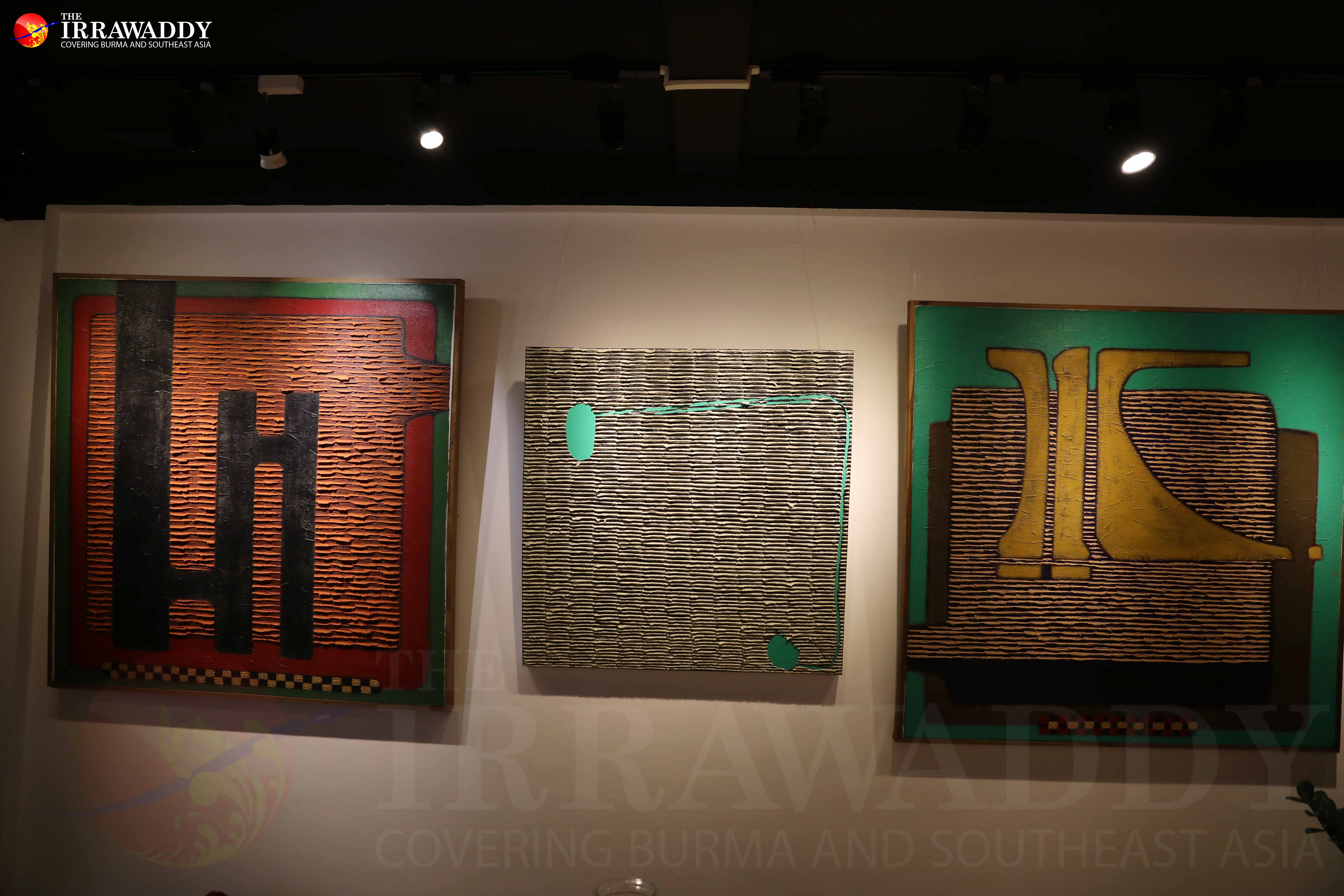
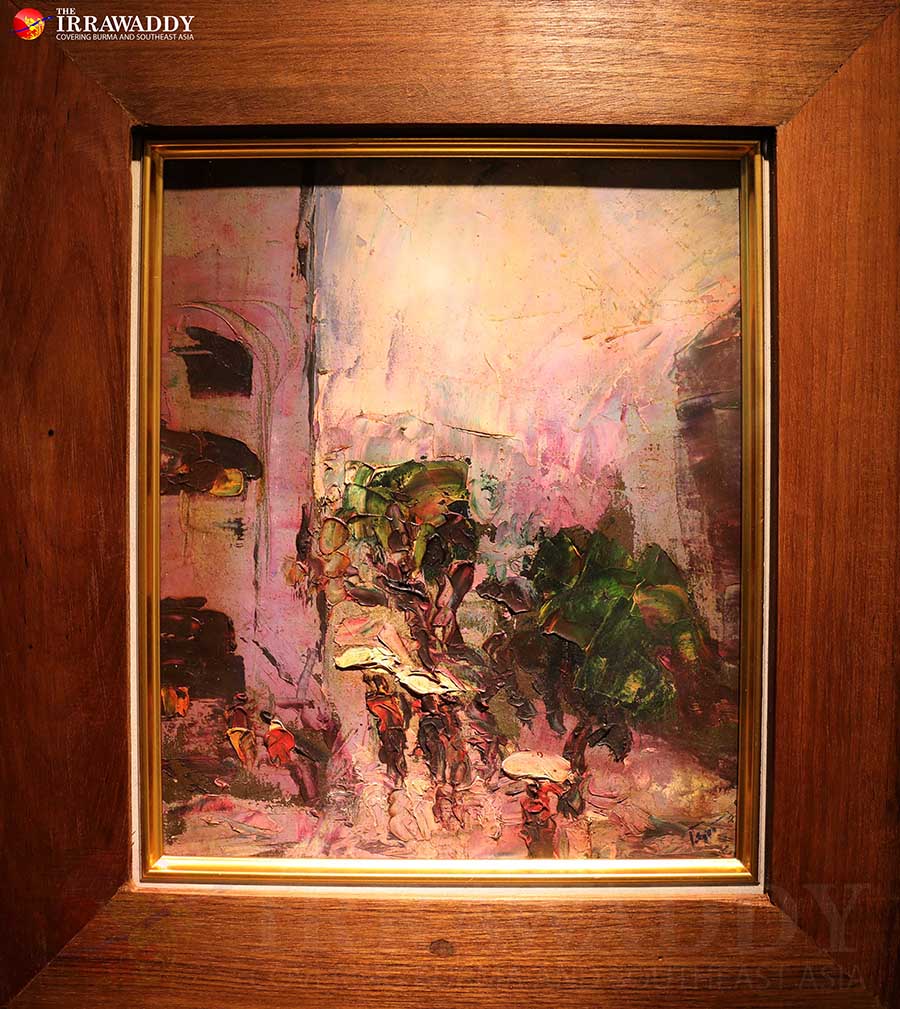
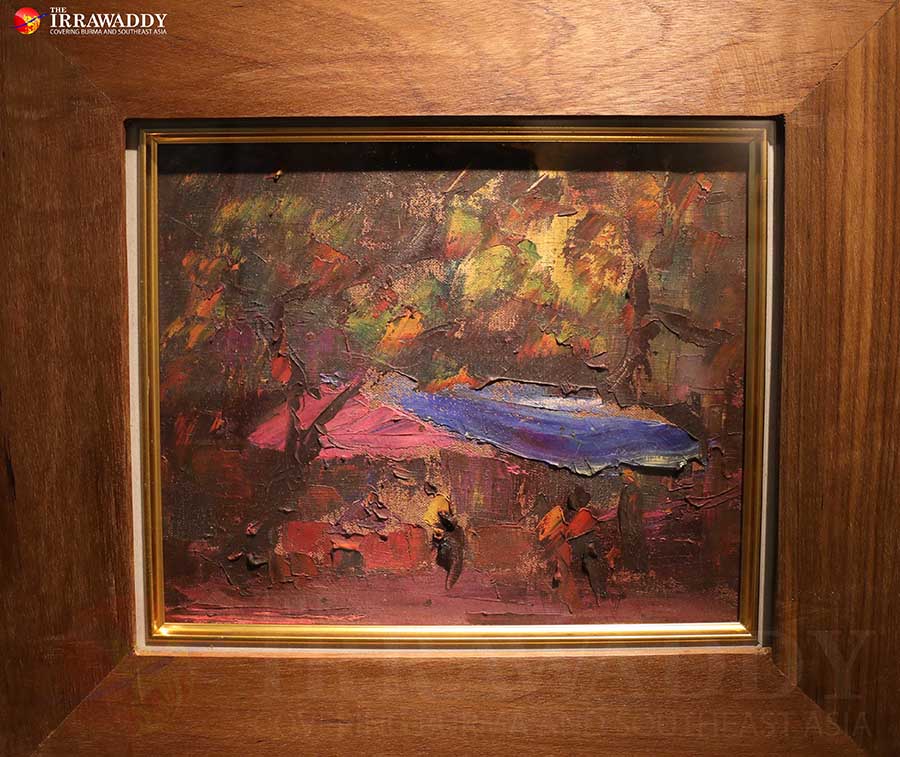
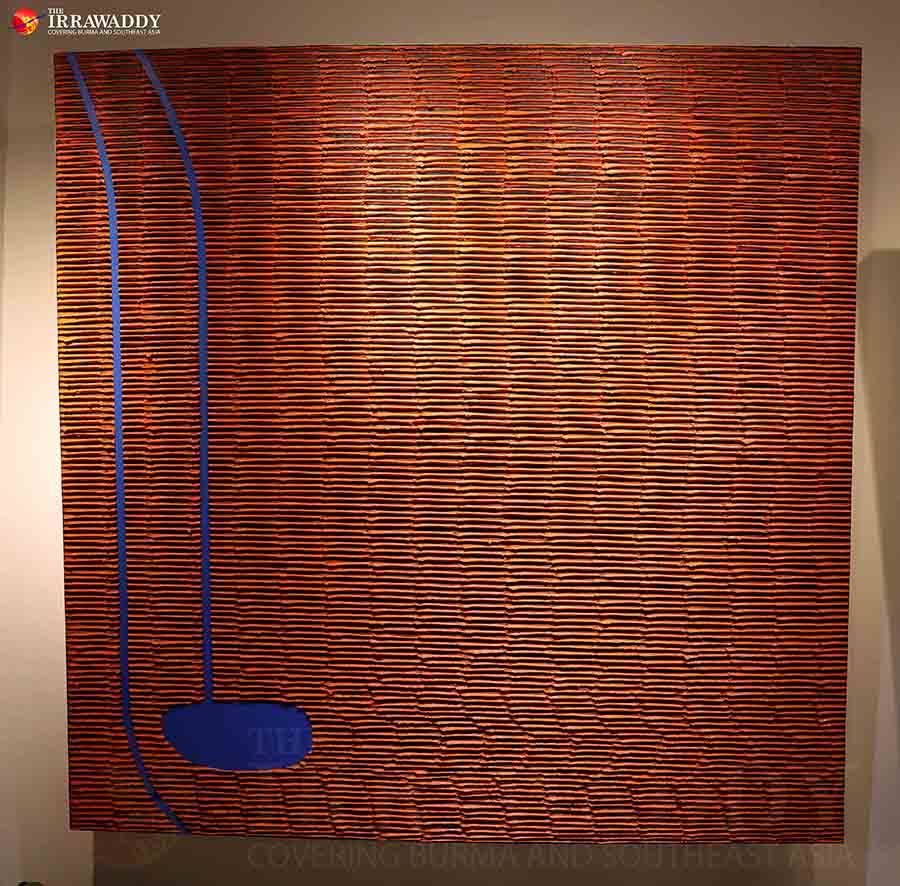
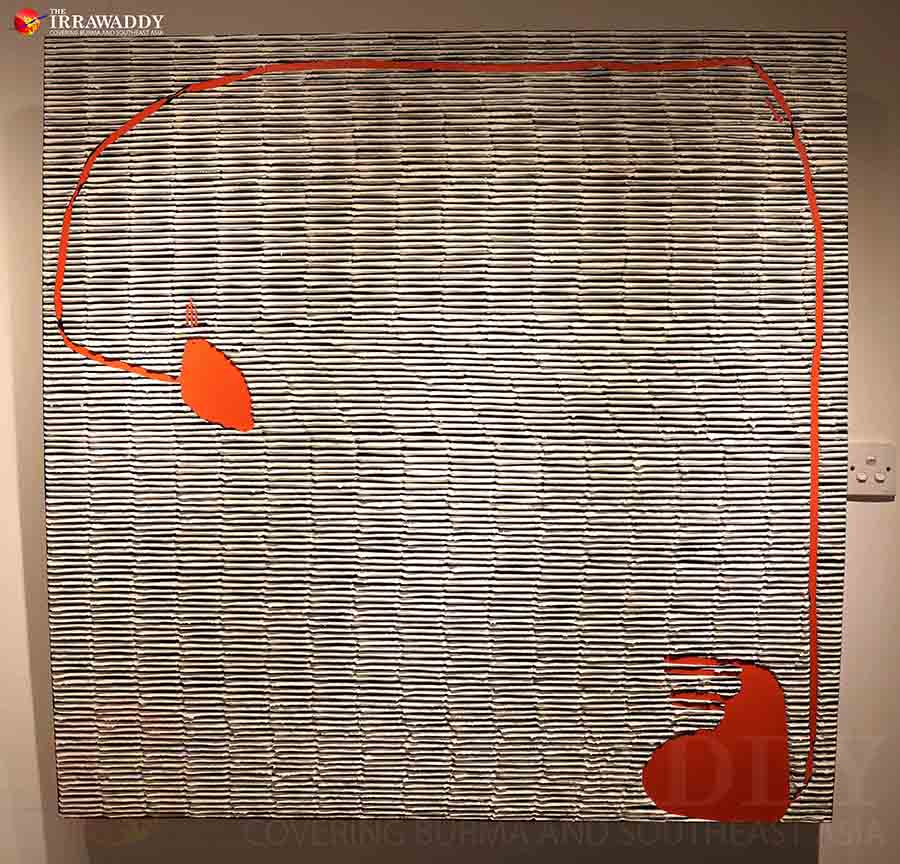
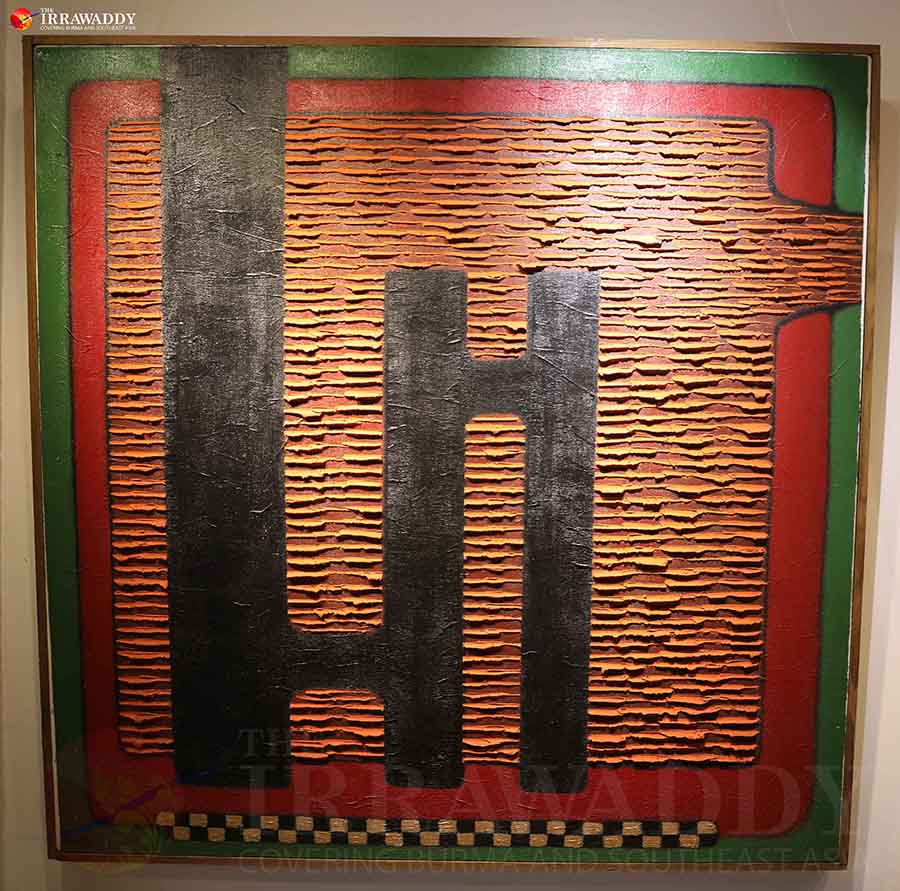
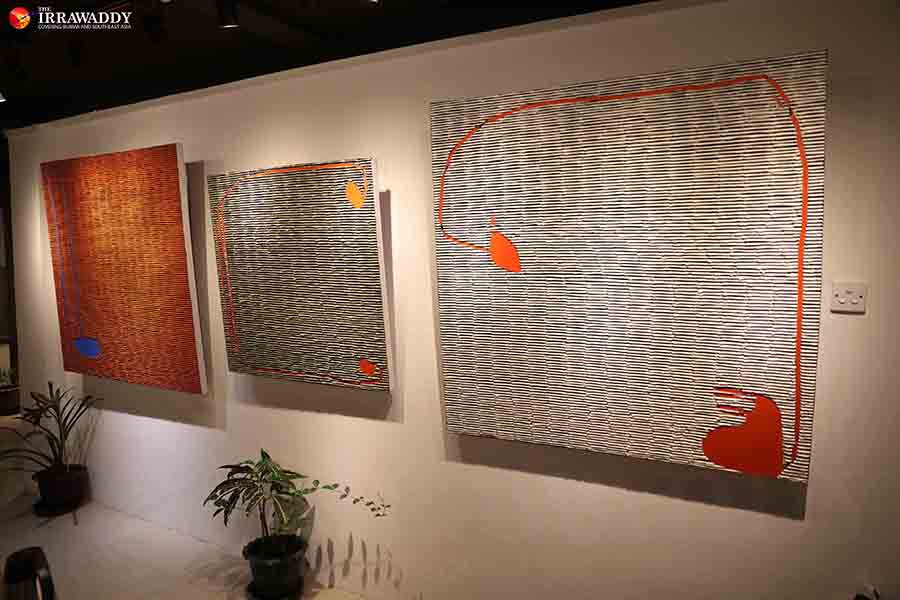
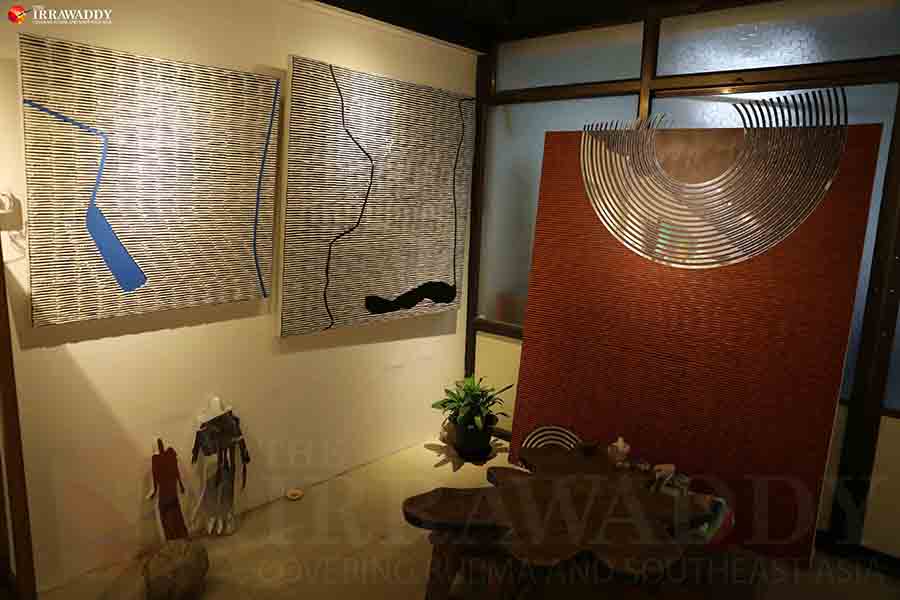
| Painter Embraces His Rebellious Streak Posted: 15 Mar 2018 04:32 AM PDT Thar Gyi stopped creating impressionist paintings, which are popular and sell well among art fans, in order to create a new style. "Artists must have a rebellious streak," he said. His new creation—paddy fields—was criticized for not celebrating Myanmar culture. "I don't want to be Myanmar or Chinese or Indian or British. I just want to be human," he replied. His paintings are of fiberglass collages, which provide a stunning visual texture with thick strokes depicting plow lines in the farm. Thar Gyi was born into a family of artists, his uncles being modernist sculptor U Win Myint, one of the founders of Lokanat Art Galleries, and artist U Maung Maung Ba.
He loves drawing with a knife instead of brush, and even after three decades as an artist, he is nowhere near satiated in his thirst for creating new things. He started his painter career before the 1988 pro-democracy uprising. "Foreigners from embassies came and bought dozens of paintings from us before the government of the Burma Socialist Program Party demonetized the 75 kyat banknote. The government demonetized the banknotes after they bought the paintings. But, later they came back and paid with other banknotes. We were so happy," he recalled. While working at the art gallery of his uncle in Yangon's Bogyoke Market, he got acquainted with the works of well-known artists. His early creations focused on realism, impressionism, and expressionism. A visit to Bagan changed his style of painting. He found his new love in the textured plow lines and carts that he saw beside Pya That Gyi Temple. Plow lines have since then become his new source of inspiration.
In the 2000s, he was asked by some, "Are your works art?" But now, his works have been collected by collectors and art museums in Thailand, Vietnam, Singapore, Indonesia, India, China, Korea, the US and Canada. Besides paintings, Thar Gyi also creates performances, sculptures and installations. His 9th solo exhibition is on display through March 21 at Thar Gyi Art Studio on Yaw Min Gyi Street, Dagon Township. The exhibition showcases 11 of his early and recent works, each priced at US$4,000. Apart from paintings, other objects in the gallery serve as installation art. "Art is not something that you have to travel far to find," said Thar Gyi. The post Painter Embraces His Rebellious Streak appeared first on The Irrawaddy. |
| General Who Ran Rakhine Operation Still Under Investigation, Govt Says Posted: 15 Mar 2018 04:05 AM PDT NAYPYITAW — The President’s Office on Wednesday said Major General Maung Maung Soe, the former head of the military’s Western Command, was still being investigated for his operations in northern Rakhine State. Action had also been taken against a brigadier general of the Myanmar Police Force while other officials of varying ranks were being investigated, U Zaw Htay, the office’s director general, said at a press conference in Naypyitaw. "The Tatmadaw has taken action against a military commander and a police brigadier general in accord with military regulations and procedures in response to military operations in northern Rakhine State," he said. Four other military officers, two policemen and three civilians were also found to have violated the law. Of the three civilians, he added, two were still at large. Maj-Gen Maung Maung Soe was replaced as head of the Western Command by Supply and Transport Directorate chief Brigadier General Soe Tint Naing in November, following militant attacks on security forces in northern Rakhine in August that triggered a massive military response that has sent nearly 700,000 Rohingya fleeing to Bangladesh. The major-general was transferred to the Defense Ministry without a new assignment and placed on a reserve list. The Tatmadaw, the common name for Myanmar’s military, gave no reason for the transfer, though it coincided with the disclosure of US plans to impose targeted sanctions on Myanmar's military leadership. The Tatmadaw also replaced Major General Min Zaw, the director general of the Supply and Transport Directorate, with Brigadier General Zaw Lwin Oo. Maj-Gen Min Zaw was also put on the reserve list. But U Zaw Htay refused to confirm speculation that the police brigadier general in question was Brigadier General Thura San Lwin, the chief of the border guard police force in Rakhine State’s Maungdaw Township. Brig-Gen Thura San Lwin was replaced by the former chief of Mandalay Region No. 3 Security Police Command, Brigadier General Myint Toe, in October. Brig-Gen Thura San Lwin had replaced Police Brigadier General Maung Maung Khin in the aftermath of attacks on border guard police posts in Maungdaw on October 9, 2016. Nine police officers were killed in the attacks and a large amount of ammunition was stolen. Brig-Gen Maung Maung Khin and two other police officers were imprisoned for negligence after those attacks. The government said seven military officers and soldiers were killed during the clearance operations that followed. The President's Office said in February that four military officers, three soldiers, three police and six villagers were involved in the killing of 10 Muslims in Inn Din village, in Maungdaw. Translated from Burmese by Thet Ko Ko. The post General Who Ran Rakhine Operation Still Under Investigation, Govt Says appeared first on The Irrawaddy. |
| Meikhtila Govt Warns Against Religious Practice in Unauthorized Buildings Posted: 15 Mar 2018 02:11 AM PDT MANDALAY — Authorities in Mandalay Region’s Meikhtila Township have issued a sweeping warning against the use of unauthorized buildings for religious purposes, calling the move a community safety precaution. The letter was signed by Meikhtila administrator U Ohn Htay on March 6 and has been shared with the area’s religious leaders. It says that Meikhtila, as a transport hub in central Myanmar where Buddhists, Muslims, Christians and Hindus all live, was a sensitive location that could erupt into violence at any moment. "To prevent instability, violence and threats to the lives of the people who live in Meikhtila, using unauthorized buildings for religious affairs must be avoided," the letter states. It adds that local authorities will take legal action against anyone who does not follow the order. And though the letter appears to be enforcing existing laws, it says the order would remain in effect for one year starting March 6. The letter says unauthorized buildings are those not authorized for religious practices by authorities and which lack a proper trustee committee. It does not elaborate on why Meikhtila was at risk of violence and instability. Meikhtila Township administrators could not be reached for comment. A local Islamic leader, who asked that his name not be used for his safety, said the administration office also issued a verbal order in February against Arabic summer schools. "Since then all of the Arabic schools were closed. We were sad when we got the warning because no reason was given,” he said. "The authorities told us to seek permission to run the schools. The Arabic summer schools never needed permission in the past and we do not understand why they want to close the schools." The man said the summer schools remained open even when Meikhtila was hit by past bouts of communal violence and never had to inform authorities, let alone seek permission. "The summer schools are just summer programs for the children to learn Arabic and the Quran. We submitted the letter to seek permission. However, we have received no word from the authorities yet," he said. He was worried of a repeat of the communal violence that rocked Meikhtila in March 2013, when at least 10 people were killed and hundreds of Muslims were displaced. "Since we received these warnings we have been worried that there will be violence in our town. We have suffered enough and all of our lives were affected. We just want to stay in peace," the man said. In July 2016, a Muslim prayer hall in Kachin State was burned down by ultra-nationalists. The Ministry of Culture and Religious Affairs later announced that the prayer hall was built illegally and said it would take legal action against those who built it. The following April, a nationalist mob forced the closure of two Islamic schools in Yangon accused of operating as mosques without official permission. The post Meikhtila Govt Warns Against Religious Practice in Unauthorized Buildings appeared first on The Irrawaddy. |
| Myanmar Urged Not to Drag Out Case Against Reuters Reporters Posted: 14 Mar 2018 09:49 PM PDT YANGON — Some international observers urged Myanmar on Wednesday not to drag out legal proceedings against two Reuters journalists, as they appeared in court for the 10th time since they were arrested in December and accused of possessing secret government papers. A Yangon court began preliminary hearings in January to decide whether reporters Wa Lone, 31, and Kyaw Soe Oo, 27, will face charges under the colonial-era Officials Secrets Act, which carries a maximum penalty of 14 years in prison. Denmark’s embassy in Yangon, which has closely followed the case, said ahead of the latest hearing that the journalists should be “thanked and not punished” for their reporting on northern Rakhine State – where they found evidence of security forces’ involvement in the killing of 10 Rohingya Muslim men. “Nor should they be subject to a dragged out trial that appears to be set to last for months while keeping Wa Lone and Kyaw Soe Oo incarcerated, away from their families and their work,” the embassy said in a statement. Two civilians that police brought to witness a search of Wa Lone’s family home the evening after the reporters were arrested gave testimony on Wednesday. Min Min, a neighborhood official in north Yangon, told the court he joined nine or 10 policemen searching the residence and signed a form to confirm a laptop with a charger and a bag, a hard drive and a notebook were discovered there. Asked by defense lawyer Than Zaw Aung during cross-examination whether any government papers were discovered in the search, he said no. Min Aung, a ward administrator who joined the search and gave testimony, said he could not remember seeing police find official documents. Lead prosecutor Kyaw Min Aung left the court building before Reuters was able to put questions to him after the hearing. Government spokespeople have declined to comment on the case, citing the ongoing court proceedings. The government prosecutor has now called 12 of 25 listed witnesses to hearings that have been taking place weekly. The court agreed to hear three witnesses at its next session on March 21. Held in Custody Wa Lone and Kyaw Soe Oo have been in custody since their arrest on Dec. 12. The pair had been invited by police officers to a restaurant in northern Yangon. They have told family members they were arrested by plainclothes officers almost immediately after being handed some rolled up papers by the policemen, whom they had not met before. Previous police witnesses have said they were stopped and searched at a traffic checkpoint by officers who were unaware they were journalists, and found to be holding in their hands documents relating to security force deployments in Rakhine. Wa Lone and Kyaw Soe Oo, wearing handcuffs, were rushed in and out of court by police on Wednesday, giving them only a brief opportunity to talk to their families or reporters. Kyaw Soe Oo was prevented by police from hugging his young daughter. Myanmar has denied accusations the two reporters were targeted over their reporting in Rakhine, where a security response to insurgent attacks has seen nearly 700,000 Rohingya Muslims flee to Bangladesh since August. Last week, responding to comments from UN human rights chief Zeid Ra’ad al-Hussein who said he strongly suspected “acts of genocide” had taken place in Rakhine, Myanmar’s national security advisor Thaung Tun said the country wanted to see “clear evidence” to support such allegations. Sean Bain, a legal adviser in Myanmar for the International Commission of Jurists, a human rights group made up of 60 senior international judges, lawyers and legal academics, called for the case against the reporters to be dropped. “The government has asked for ‘concrete evidence’ of alleged rights violations in Rakhine State,” said Bain, who attended Wednesday’s hearing. “These journalists produced it, but they remain imprisoned.” The post Myanmar Urged Not to Drag Out Case Against Reuters Reporters appeared first on The Irrawaddy. |
| Myanmar Says it Has Verified Fewer Than 400 Rohingya for Repatriation Posted: 14 Mar 2018 09:43 PM PDT YANGON — Myanmar has only been able to verify 374 Rohingya Muslim refugees for possible repatriation from Bangladesh, officials said on Wednesday, blaming their neighbor for not providing the correct information about the refugees. Nearly 700,000 Rohingya fled Myanmar after militant attacks on Aug. 25 sparked a crackdown led by security forces in the western Rakhine State that the United Nations and United States have said constituted ethnic cleansing. The administration of Nobel peace laureate Daw Aung San Suu Kyi has sought to counter the allegations by forging ahead with development in Rakhine and by readying reception centers and a camp for returnees. The two countries reached a deal in November to begin repatriation within two months, but repatriation has not begun, with stateless Rohingya, who face restrictions on their movements in Myanmar, still crossing the border. Myint Thu, permanent secretary at Myanmar’s Ministry of Foreign Affairs, said officials had checked documents handed over by Bangladesh in February relating to 8,032 refugees. “Out of 8,032, we verified 374. These 374 will be the first batch of the repatriation,” Myint Thu said at a news conference in the capital, Naypyitaw. “They can come back when it’s convenient for them.” It was unclear whether the 374 people had agreed to return to Myanmar. Myanmar was unable to confirm whether the rest of the refugees had previously lived in the country, he said, because some documents did not include fingerprints and individual photographs. The documents were “not in line with our agreement,” police Brigadier General Win Tun said at the same news conference. Myanmar had found three “terrorists” among the people Bangladesh was proposing for repatriation, Win Tun added. Bangladesh officials have expressed doubts about Myanmar’s willingness to take back Rohingya refugees. Abul Kalam, Bangladesh’s Refugee Relief and Rehabilitation Commissioner, said he could not comment in detail because he had not yet received Myanmar’s response. But he questioned how more than 300 people could have been verified if the documents were in the wrong format. At the Naypyitaw news conference, Myanmar officials sought to counter accusations heard at the UN Human Rights Council this week. The head of a UN fact-finding mission denied visas by Myanmar and a special envoy on human rights in Myanmar who has been blocked from visiting the country both spoke in Geneva on Monday. Yanghee Lee, the envoy, said atrocities against the Rohingya in Myanmar “bear the hallmarks of genocide.” “We have a clear conscience,” said Aung Tun Thet, coordinator of a public-private partnership set up by Aung San Suu Kyi to rehabilitate Rakhine. “There is no such thing in our country, in our society, as ethnic cleansing, and no genocide.” The post Myanmar Says it Has Verified Fewer Than 400 Rohingya for Repatriation appeared first on The Irrawaddy. |
| Nobel Prize Winner Hospitalized, Wife Found Deceased in Illinois Posted: 14 Mar 2018 09:34 PM PDT A Japanese Nobel-winning chemist was discovered wandering in rural Northern Illinois and his wife found dead nearby, some nine hours after they had been reported missing from their home 200 miles away, police said on Wednesday. Nobel Prize winner Ei-ichi Negishi, 82, was transported to a local hospital for treatment after he was spotted walking near Rockford, Illinois, at 5 a.m. on Tuesday, the Ogle County Sheriff’s Department officials said in a written statement. Deputies later found the couple’s car and the body of his wife, Sumire Negishi, at the nearby Orchard Hills Landfill, the sheriff’s department said. Rockford is about 100 miles west of Chicago. An autopsy was pending on the body of Sumire Negishi but foul play was not suspected in her death, the sheriff’s department said. No information was released on the condition of Ei-Ichi Negishi. The couple was reported missing to the Indiana State Police at about 8 p.m. central time on Monday. They were last seen at their home in West Lafayette, near the Purdue University campus where Ei-Ichi is a professor of chemistry. The scientist was awarded the Nobel Prize in chemistry in 2010. The post Nobel Prize Winner Hospitalized, Wife Found Deceased in Illinois appeared first on The Irrawaddy. |



| You are subscribed to email updates from The Irrawaddy. To stop receiving these emails, you may unsubscribe now. | Email delivery powered by Google |
| Google, 1600 Amphitheatre Parkway, Mountain View, CA 94043, United States | |

