Friday, June 22, 2018

The Irrawaddy Magazine

The Irrawaddy Magazine


Who is Dawei Gyi, aka U Aung Lwin, a key suspect in the Malaysia drug haul?

Posted: 22 Jun 2018 07:45 AM PDT

YANGON – Despite Myanmar police announcing on June 19 that they had arrested four suspects and were hunting three others following the seizure in Malaysia of 1.2 tons of methamphetamine and a quantity of heroin that had been shipped from Yangon port last month, authorities have still not released many details about the backgrounds of each of the suspects.

According to a police statement, authorities have apprehended four suspects: U Min Naing, the owner of Nice Guy Clearance Service Agency, Haj Yassin and his brother-in-law Zeyar Hein, and most recently U Aung Lwin, also known as Dawei Gyi, in Tanitharyi Division on June 12. Meanwhile, the other three suspects, Jia Wai, aka Hnin Oo Lwin, from Tachileik in Shan State and her husband, Ahko Gyi, aka Ka Tone, and Hussein, aka Muhammad Hussein, continue to evade police capture. The police also disclosed they had seized moveable property and assets worth over 18 billion from six of the suspects and urged the public to inform them on the whereabouts of Jia Wai and Hussein. The last of the at-large suspects, Ahko Gyi, is believed to be in Malaysia.

The four detained suspects were arrested in different locations around the country. The Irrawaddy has previously revealed that both Nice Guy Clearance Service Agency and an affiliate, U Kaung Trading, were owned by U Min Naing's family and that the company had acted as the shipper of the drug cargo, which was disguised in golden tea packages, for Haj Yassin. It also determined the two had been friends on Facebook for years. The initial police statement did not identify U Min Naing or U Kaung Trading's managing director, U Aung Soe Moe, as suspects. A second announcement from the Home Affairs Ministry officially identified U Aung Lwin and Jia Wai as suspects but provided few other details.

The Irrawaddy understands that U Aung Lwin is better known as U Pyin Poe in Dawei Township and that he had almost completed a six-storey building in the town located in front of the Mediland Hospital. The project is believed to be a hotel business and U Aung Lwin had mentioned several times that a "new hotel was coming soon" on his Facebook account. He also owns a resort on Maungmakan Beach, a popular tourist destination, and land in Myitta, a sub-township in Dawei.

Reliable sources, including those close to relatives of U Aung Lwin, or U Pyin Poe (which means "ant" in the Dawei language), told The Irrawaddy under condition of anonymity that he was a notorious drug lord in the region. U Aung Lwin was said to travel frequently, to Yangon, Thailand, Malaysia and Hong Kong. Sources from Dawei and the Facebook user history of "U Pyin Poe" indicate that he is close to Haj Yassin and the two had commented on each other's Facebook pages for years.

The arrest of U Aung Lwin shocked and puzzled Dawei residents, as several matters were not explained in the Home Affairs statement. According to Dawei sources, U Aung Lwin had returned to Dawei, which is close to the border with Thailand, after his bank account in the neighboring country were frozen. He was travelling with a locally well-known monk from the Zeyyawadi monastery and a couple of Dawei businessmen. U Aung Lwin was arrested at the Ma Hlwa Taung border checkpoint, which is situated between Mon State and Tanintharyi Division. Sources from Dawei said that the two businessmen were also taken in by police for questioning.

In an attempt to get confirmation of these reports from authorities, The Irrawaddy called police Col Nay Myo, who is the head of Tanintharyi division police, but no one answered the phone.

U Aung Lwin is listed as a shareholder and also one of the founders of Tanintharyi Public Company Ltd, which operates hotel and other development projects. Although U Aung Lwin is obviously a wealthy individual in Dawei, his riches are not considered to have been reputably earned within the community and he is widely regarded as a medium-level drug lord. The Irrawaddy found that U Aung Lwin also operates a home security business that provides surveillance cameras, smoke detectors and automatic gate systems. His company is located on Waizayandar Street of South Okkalapa Township with a factory in the South Okkalapa Industrial Zone.

The company is officially registered with the Directorate of Investment and Company Administration (DICA) as a "trading company" with a license that is due to expire in 2020. DICA's records show that he serves as the managing director and that his wife, Yee Yee Mon, and his sisters Aye Aye Lwin and Than Than Lwin serve as company directors. The Irrawaddy visited U Aung Lwin's office this morning but none of the directors named above were present and only two women employees were in the office. The Irrawaddy has seen a business license with U Aung Lwin's photo that was recently approved by the Yangon City Development Committee (YCDC) for 2018.

Police announced that they have confiscated a total of 2.7 billion kyat of moveable and immobile assets from U Aung Lwin. It's unclear whether this includes assets held by his home security services business.

The two employees confirmed that police came to the office a few days ago to question company officials.

The company's showroom displays security cameras, door sensors and interior decorations. According to staff, the products were all imported from Malaysia via international shipping containers and the company has been operating for at least 6 years. It's unclear whether the company has any links to Haj Yassin or U Kaung Trading in narcotics smuggling to Malaysia.

The Irrawaddy has learned the three men — Haj Yassin, Aung Lwin and U Min Naing — were friends on Facebook and had known each other for years. Some of them own at least two to three accounts with nicknames.

The Home Affairs statement also did not elaborate on the connection between U Aung Lwin and Haj Yassin, and it's unclear whether both of them had possibly been collaborating on illicit drugs dealing for a long time. According to police, Haj Yassin and Zeyar Hein both acknowledged they were friends with U Aung Lwin in Malaysia and had contacted Jia Wai, the wife of Ahko Gyi, about the drug shipment. It did not specify where they had allegedly packed the drugs or the origins of the drugs.

The Irrawaddy has viewed a police report that states a combined team of military officers and anti-narcotics police from Tachileik raided the house of Qin Jaimu (aka Jia Wai), that also served as a jewelry shop known as 3+1 U Kyaw Kyaw on June 13. The four-storey building is situated in Bogyoke Street, in the Mae Khaung quarter of Tachileik. Jia Wai fled before the police arrived at the building, leaving behind her four daughters and a son as well as four workers. The police seized four private cars, a Prado, Landcruiser, Toyota Alphard and Fortuner, 68.514 pounds of gold, 71.5 million Thai baht, over 110 million Burmese kyat, USD20,000 and CNY20,000. According to the Home Affairs statement, authorities said they had confiscated a total over 8 billion kyats in cash and valuables from Jia Wai.

The post Who is Dawei Gyi, aka U Aung Lwin, a key suspect in the Malaysia drug haul? appeared first on The Irrawaddy.

Study Warns of Public Backlash to China’s BRI Projects

Posted: 22 Jun 2018 06:28 AM PDT

YANGON — New research warns that China’s Belt and Road Initiative and the China-Myanmar Economic Corridor could face stiff public resistance in Myanmar if the projects fail to engage local communities, as other Chinese-backed projects have in the past.

"There is an explicit bias against Chinese investments in Myanmar," the researchers says, going on to warn both governments of “the potential local resistance they may face if their investment strategies do not consider the local context carefully."

The policy brief, "Public perception of Chinese investment in Myanmar and its political consequences," released Monday, is the work of the International Growth Center, an academic policy research organization supported by UK Aid, Oxford University and the London School of Economics and Political Science.

It concludes that the public in Myanmar has a strong general bias against foreign investment in the natural resource sector, but calibrated to its perceived impressions of the investor’s country of origin.

Their survey found that respondents had a better opinion of firms from Japan than China, even when they failed to directly engage with local communities and collaborated with companies linked to Myanmar’s military.

Myanmar nationals in Malaysia protest against the Myitsone dam project outside the Myanmar Embassy in Kuala Lumpur on Sept. 22, 2011. / Reuters

“Chinese investors should be wary of existing negative attitudes,” they said, “but can improve their image by carefully selecting their local partners and engaging directly and actively with the affected communities.”

Launched in 2013, the Belt and Road initiative, also dubbed the 21st century Maritime Silk Road, is Chinese President Xi Jinping's signature foreign policy project. Its aim is to build and improve trade and investment routes connecting China to Europe through central Asia, the Middle East and Russia.

Situated between Southeast Asia and the Indian subcontinent, and between the Indian Ocean and China’s landlocked southwest, Myanmar is often seen as a key piece in the Belt and Road Initiative puzzle. Many also see Myanmar as a safer route to the Indian Ocean for China than it’s other best option, Pakistan.

Earlier this year, Myanmar signed a memorandum of understanding with China to collaborate on the Economic Corridor project. The corridor would start out in China's Yunnan Province and pass through Mandalay in central Myanmar, from where one branch would head south to Yangon and another west to the Kyaukphyu Special Economic Zone in Rakhine State.

Anti-China sentiment in Myanmar had hardened over six decades of rule by a military junta that counted Beijing among its few international allies and turned to China for much of the hardware it used to suppress dissent, grab people’s land and exploit the country’s natural resources.

Protesters march in Yangon in December 2012 against the government’s crackdown on a sit-in at a Chinese-run copper mine in Sagaing Region. / The Irrawaddy

That sentiment started to find a voice in 2011, when a new quasi-civilian government began a democratic reform process that freed up some space for a civil society. Myanmar soon became a more difficult place for Chinese firms — which regularly failed to engage with local communities — to do business.

Under pressure from widespread public opposition, Myanmar suspended the $3.6 billion Myitsone dam project in 2011. Located below the confluence of the May Kha and Mali Kha rivers, the main tributaries of Myanmar’s most important waterway, the Irrawaddy, the dam would submerge important historic and cultural sites and was projected to cause irreversible damage to the country’s river system and to downstream farming communities.

The Letpadaung copper mine has become another flashpoint of public resentment of China. Operated by China’s Wanbao Mining company, the site has been the scene of alleged forced evictions, land grabs and violently suppressed protests.

The conflict gained national prominence in 2012 when police attempted to disperse protesting villagers and monks with smoke bombs, burning several people in the process and sparking a wave of public outrage. The project remains controversial as displaced locals continue to demand their land back.

Another Chinese-backed project, under the Belt and Road Initiative, is the Sino-Myanmar oil and gas pipeline, which lets the world's second-largest oil consumer bypass the busy Malacca Strait for its supplies.

Contracted during military rule and started in 2015, it can move 22 million tons of crude across the country, from the Rakhine coast to China. The pipeline also forced families off their land and sparked protests over safety and environmental concerns.

Local residents’ houses are seen in front of the buildings of a Chinese oil pipeline project (pink roof) on Madae Island, Kyaukpyu Township, Rakhine State, on Oct. 7, 2015. / Reuters

The Kyaukphyu Special Economic Zone, an important port project for China’s regional ambitions, has of late raised debt concerns as well.

Under the shareholder agreement struck in 2015 with the administration of then-President Thein Sein, China received an 85 percent stake in the project and Myanmar the rest. Since taking power in 2016, the National League for Democracy (NLD) has been in negotiations with China to raise its share. Public opinion in Myanmar is wary of the added debt the project will require the country to take on.

"The Belt and Road Initiative is not some kind of massive aid project to developing nations. Most of it consist of loans, which many of those countries cannot afford to pay back," said Bertil Lintner, a longtime Myanmar observer.

"China would then offer a debt-for-equity swap whereby China assumes control of important infrastructural projects in other countries. The Hambantota port project in Sri Lanka is a typical example of this, and Kyaukphyu may be next," he said.

The International Growth Center study said Chinese companies should consider a public engagement approach when investing in natural resource projects that might have strategic components and may trigger opposition. It singled out some parts of the country with large ethnic minority populations, such as Kachin and Rakhine states, that are abundant in natural resources but engaged in long-running conflicts with the central government.

"The China-Myanmar Economic Corridor project exists in the conflict areas, in Shan and Kachin state. China needs to consider that the project might provoke more conflict in the ethnic areas," said Khin Khin Kyaw Kyee, a lead researcher at the Institute for Strategy and Policy-Myanmar.

“Usually the effects of development projects are more negative than positive in sensitive conflict areas," she said.

Since the latest outbreak of violence in Rakhine State in August, some observers see Myanmar once again leaning toward China as Western governments and rights groups put pressure on the military over its alleged abuses. The International Growth Center’s policy brief warns that the shift could have economic consequences.

"Attracting FDI [foreign direct investment] remains a crucial strategy and urgent agenda for the NLD government to move the country towards a path of sustainable development and poverty alleviation," it said.

It added that the memorandum the government signed with China over the economic corridor earlier this year suggests China will continue to play an important role in Myanmar in the near future.

Lintner said that could cause old resentments to return.

"I would not be surprised if China’s very aggressive foreign policy would cause anti-Chinese sentiment in Myanmar to rise again," he said.

The post Study Warns of Public Backlash to China’s BRI Projects appeared first on The Irrawaddy.

Artist Paints Portraits of Longtime Heroes

Posted: 22 Jun 2018 03:17 AM PDT

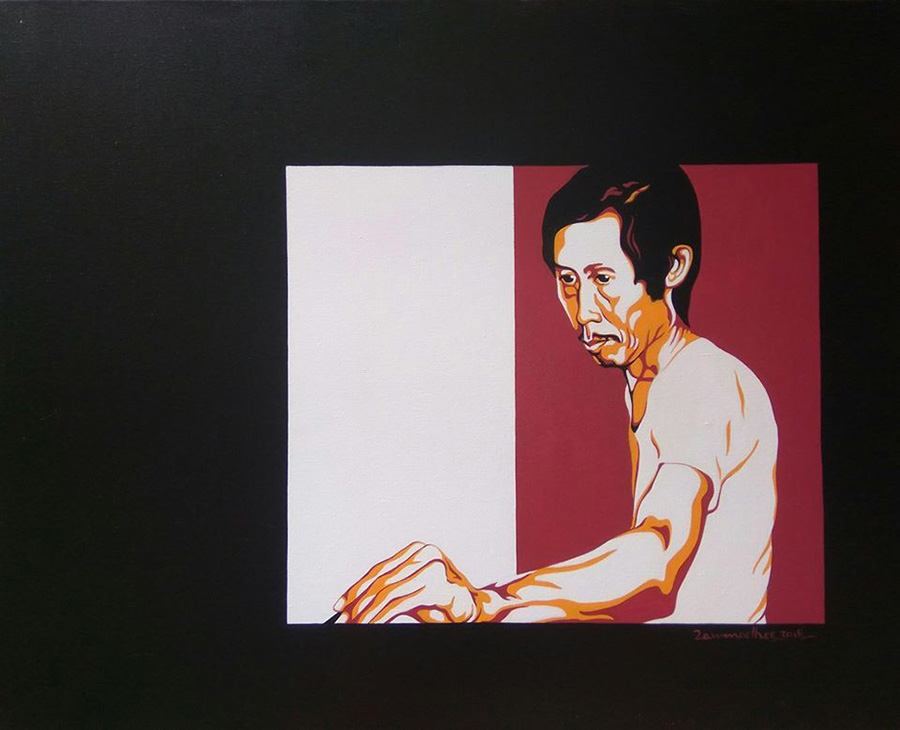
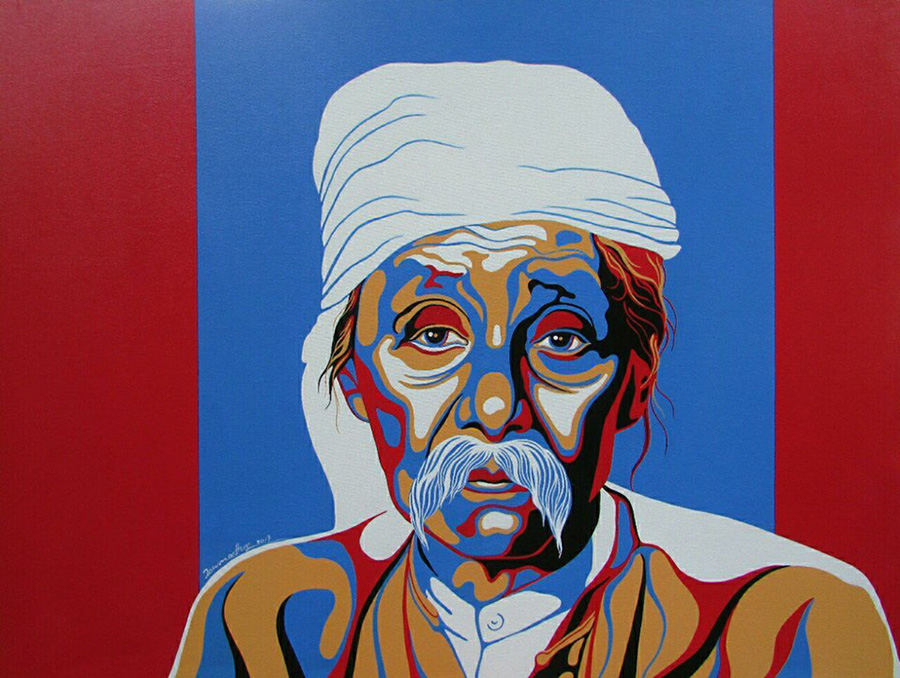
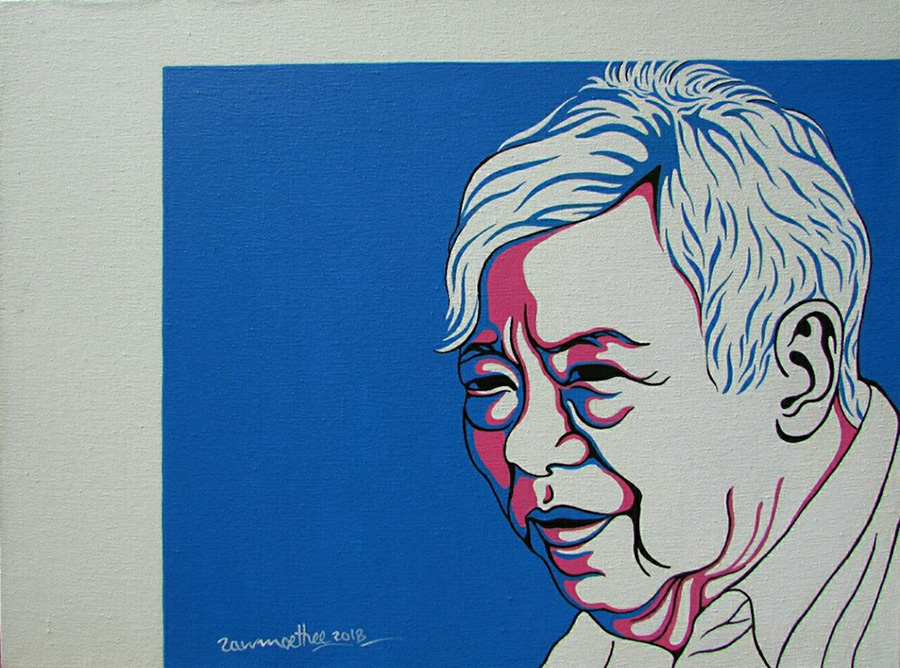
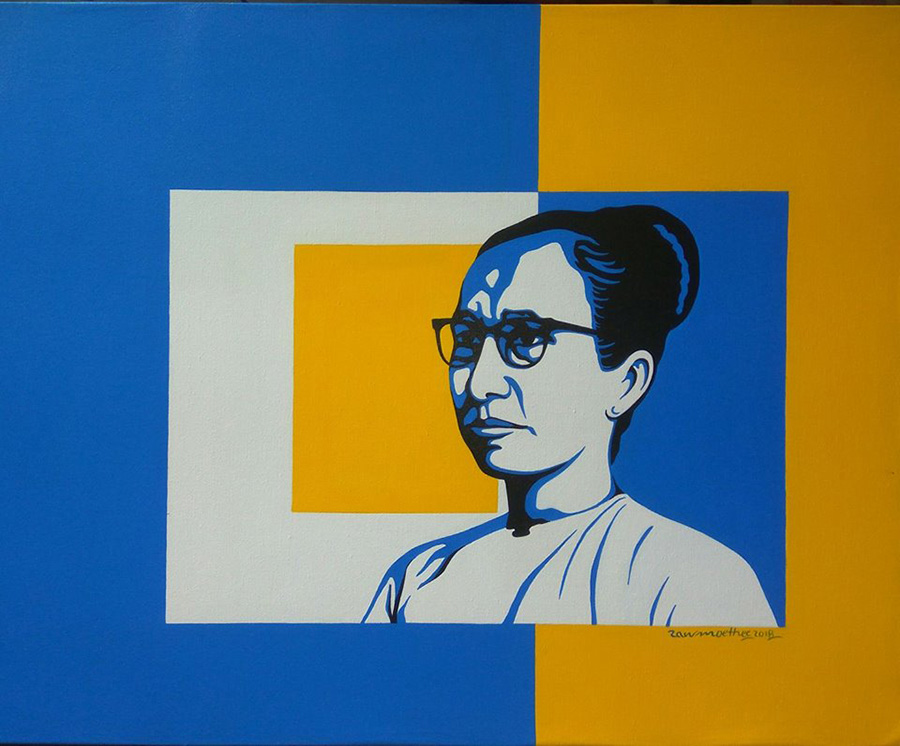
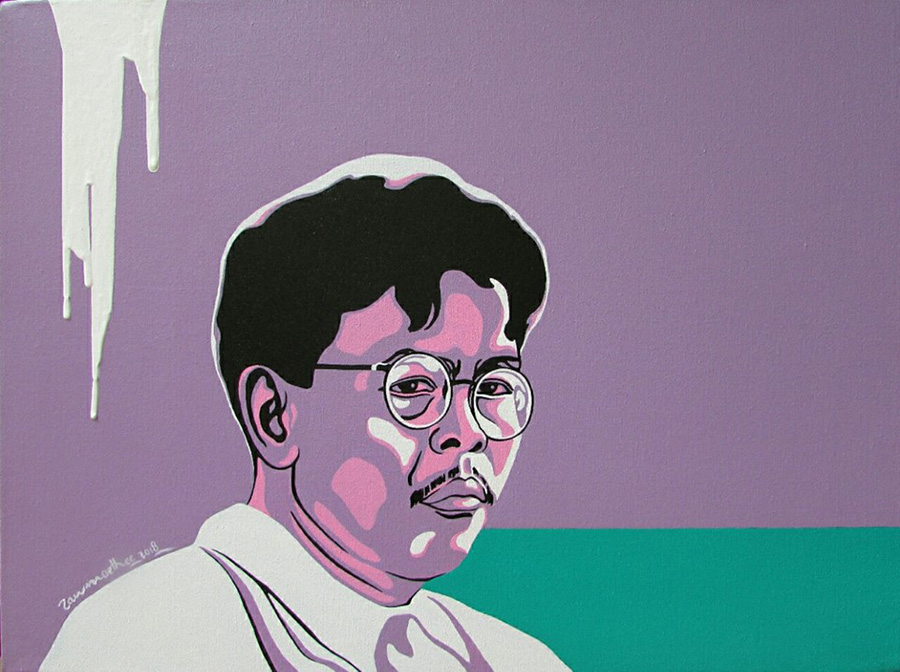
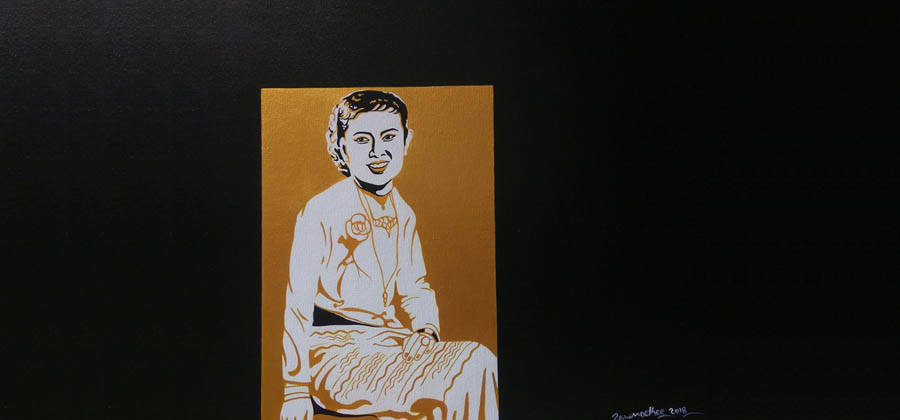
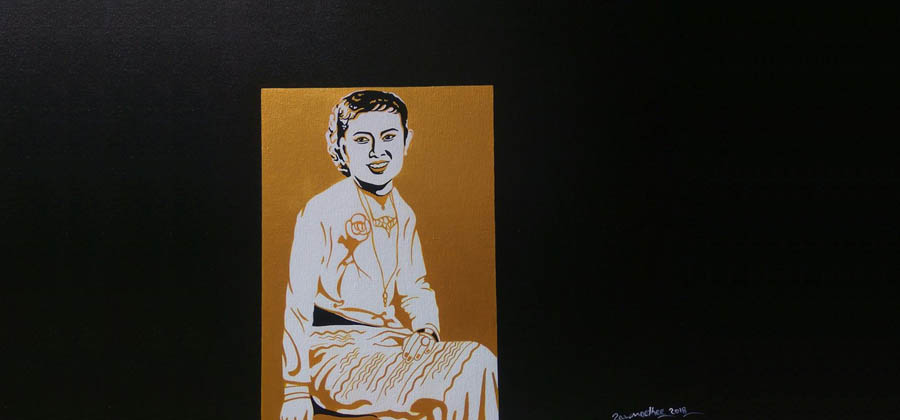
An artist has created portraits of people he admires for his first solo exhibition. He has never met these people in person, but knows them through books and bedtime stories told by his mother.

"These are the people I have admired since I was young," said artist Zaw Moe Thae, who was born in 1985. "I've wanted to draw them for a few years now."

His art exhibition features 27 prominent figures from politics, art and literature in Myanmar including Gen Aung San, the father of Myanmar's independence, and Thakhin Kodaw Hmine, the father of Burmese nationalist and peace movements.

"I fell in love with Thakhin Kodaw Hime from the books by Ludu Daw Amar about him," he said.
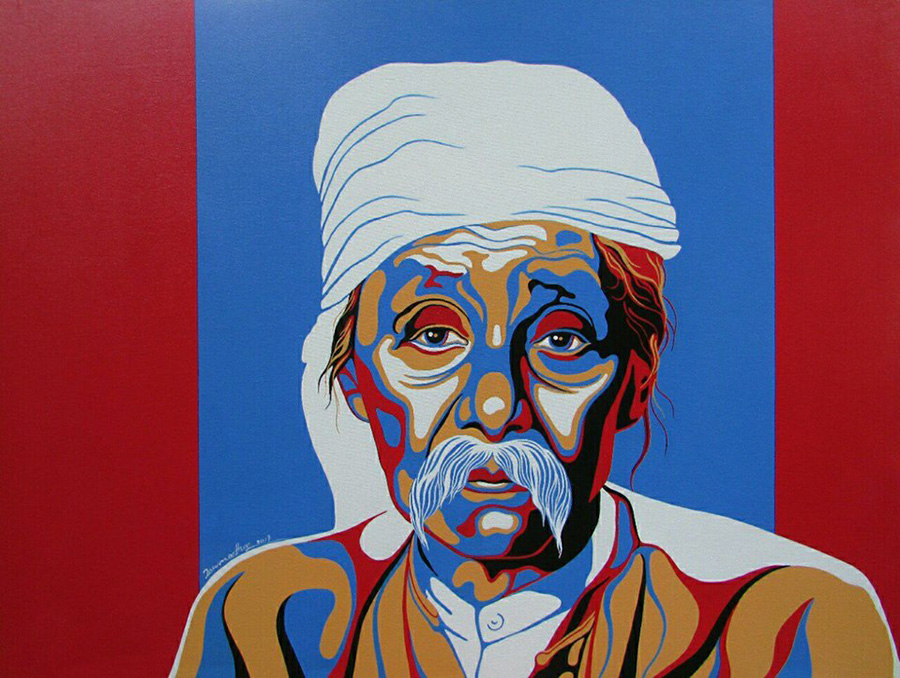
Thakhin Kodaw Hmine.

Other figures include Ludu Daw Amar, one of the most respected journalists and writers in Myanmar; musician and composer of Mandalay Myoma Nyein; writer Dagon Taya; painter Paw Oo Thet; writer Mya Than Tint and so on. All were renowned in their fields.

The graduate of the National University of Arts and Culture in Mandalay started his career as an illustrator for novels and magazines and had participated in several group shows before he made his debut solo this week.
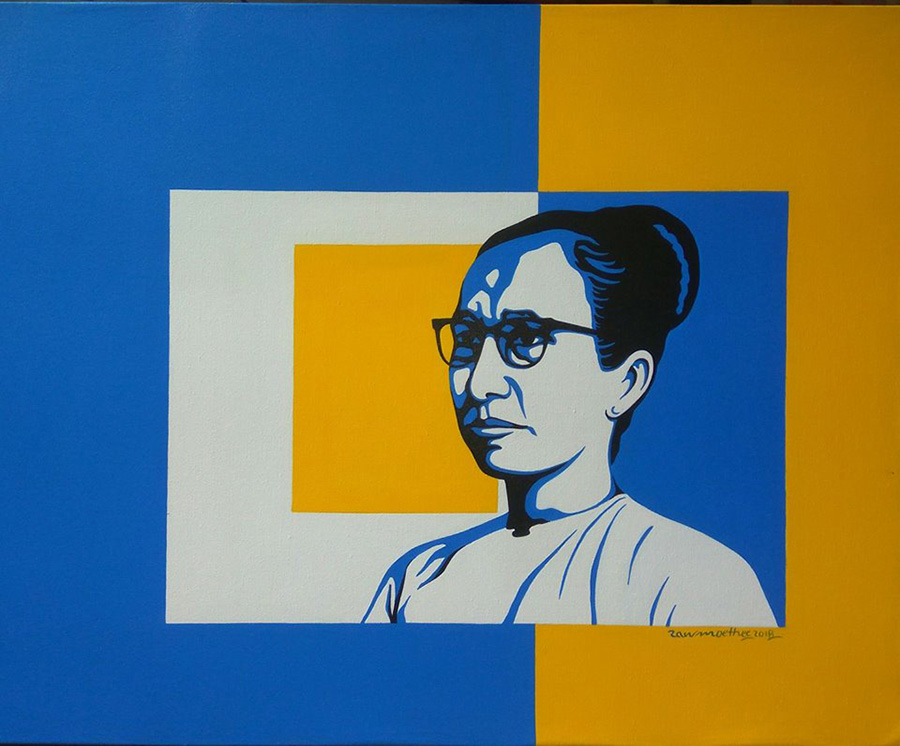
Writer Daw Khin Myo Chit

His art exhibition 'Always & Often' will be held at Ahla Thit Gallery on University Avenue Road in Bahan Township through Monday. Paintings are available for purchase for prices ranging from US$300 to US$900.

"I like to have a wide color spectrum in the background. I mean to make it look like space. I imagine what it would look like if I put these people that I admire in space," he said.

The post Artist Paints Portraits of Longtime Heroes appeared first on The Irrawaddy.

USDP Urges Govt to Rethink Naypyitaw Office for UN Envoy

Posted: 22 Jun 2018 03:07 AM PDT

NAYPYITAW — The opposition Union Solidarity and Development Party (USDP) has urged the government to reconsider its decision to let the UN’s new special envoy on Myanmar set up an office in the administrative capital, Naypyitaw, warning that it could leave the country vulnerable to international interference.

"We want our government to think about our sovereignty and our internal affairs. We do not want our sovereign nation to be divided, and our government needs to listen to the voices of our people," USDP spokesman U Thein Tun Oo told reporters in Naypyitaw on Thursday.

If the office is unavoidable, he added, the government should at least be transparent about it with the public.

UN Secretary-General Antonio Guterres appointed Switzerland’s ambassador to Germany, Christine Schraner Burgener, as special envoy to Myanmar in April.

Earlier this month, Myanmar signed a framework deal with the UN Development Program and the UN’s refugee agency aimed at creating the necessary conditions for the safe return of the 700,000 mostly Rohingya Muslims who fled Rakhine State for Bangladesh since August, when attacks by Muslim militants on police posts sparked a military crackdown.

The military-aligned USDP is staunchly opposed to international involvement in the Rohingya crisis and accuses the UN — which has called the military crackdown a "textbook case of ethnic cleansing" — of bias.

“Who played a role in attracting international attention to the Rakhine issue?” U Thein Tun Oo asked. “When they open an office in Naypyitaw, they will work not only on the Rakhine issue. They will even work on Shan and Kachin issues in order to bring our country before the ICC [International Criminal Court],” he said.

Last month the government announced the formation of an independent commission to investigate alleged rights abuses in Rakhine since the militant attacks in August. But the military objected to plans to include a foreign expert on the three-member team, and its representatives spoke against the quota in Parliament.

U Thein Tun Oo accused the UN and other international actors of causing the Rohingya crisis and putting the country’s stability at risk.

"Was any country stable after allowing the UN to interfere in its internal affairs to solve a conflict? We ask this question. Some countries split apart and became unstable after allowing the UN to interfere in their internal affairs, and in the end, those countries have had to share sovereignty," he said.

The spokesman did not say which countries he was referring to.

The post USDP Urges Govt to Rethink Naypyitaw Office for UN Envoy appeared first on The Irrawaddy.

Taxi Driver Sentenced to Death for Rape and Murder of FDA Worker

Posted: 22 Jun 2018 02:44 AM PDT

MANDALAY — A taxi driver convicted of raping and murdering an employee of the Ministry of Health's Food and Drug Administration (FDA) was sentenced to death on Friday, the final day of his trial at Yangon Eastern District Court.

Myo Zaw Oo, a.k.a Sedona, was arrested and charged under the Myanmar Penal Code for the rape and murder of Ma Shwe Yee Win, 26, a deputy supervisor of the FDA, in January. He was arrested three days after her body was found.

"The culprit was found guilty of the rape and murder of Ma Shwe Yee Win and the court handed down its decision according to the law," U Tun Tun Oo, the spokesperson of Yangon Eastern District court, told journalists after the court session.

Since the defendant has the right to submit an appeal to a higher court within seven days, his lawyer, U Maung Maung Soe, said he would talk to his client and submit the appeal in time.

Family members and friends of Ma Shwe Yee Win who were present at the court told journalists they were satisfied with the decision.

Ma Shwe Yee Win hailed Myo Zaw Oo's taxi to take her to her home in Dagon Township from the Hledan Center. After failing to hear from her, her family filed a missing person report and police found her naked body near Nga Moe Yeik Creek in North Dagon Township the next morning.

According to police statements, the two began to argue when the driver asked for a higher fare. Myo Zaw Oo then choked his passenger and stabbed her in the throat with a screwdriver.

The police statement says Ma Shwe Yi Win lost consciousness as Myo Zaw Oo drove her to North Dagon, where he raped her near a sports field and left her body after taking her belongings, including a platinum necklace, earrings and a mobile phone.

The death of Ma Shwe Yi Win raised public security concerns and triggered calls for rapists to be given the death penalty.

The Irrawaddy reporter Zue Zue contributed to this story from Yangon.

The post Taxi Driver Sentenced to Death for Rape and Murder of FDA Worker appeared first on The Irrawaddy.

Yangon’s Govt and Parliament at Odds

Posted: 22 Jun 2018 12:02 AM PDT

U Kyaw Zeya, the lawmaker representing Dagon Township in Yangon's regional Parliament, recently spoke to The Irrawaddy's Thazin Hlaing about the recent confrontation between the regional Parliament and government over the latter's proposal to purchase 10 Ford cars for government officials and invest nearly 7 billion kyats (US$5.1 million) in the city's municipal bank to engage in overseas banking services.

The regional government has proposed a number of long-term projects two and half years into taking office. Why does it want to implement so many projects?

We have been waiting for a long time to discuss the new Yangon city project, which people are interested in. The regional government finally presented it at the sixth regular session of Parliament. But it is presenting projects in an unreasonable manner.

It has proposed projects related to local and foreign investment, agricultural and development, a deep-sea port, and urban development. But none of the projects were acceptable to lawmakers. They were incomplete and we demanded additional details.

Why did lawmakers find those projects unacceptable?

We are halfway through our term and most of the proposed projects were long-term ones. We want short-term projects that can deliver tangible results to the people during our term. But the regional government keeps presenting long-term plans.

Considering how the Yangon Bus Service (YBS) upgrade went, some Yangon residents say that the regional government can't walk the walk. What is your assessment as a lawmaker?

This was a daydream from the start. When the YBS was introduced, the regional chief minister said that the YBS would be successful within one year. [Regional minister] Daw Nilar Kyaw also echoed this. Their dream was that wealthy people who owned their own cars would start using the YBS for daily transportation because the service would be that good. I'd love it if that were a reality.

But it has been a year and a half now. I don't want to say whether the YBS is a success. Just take a look. Are buses uncrowded during rush hour? Have private buses stopped operating? Change [for bus fare] is scarce. The card [payment] system still can't be used. There are still troubles. This is a project that was boldly implemented by the Yangon regional government. Its progress is slow because the management was not good from the very beginning.

What priorities do you think the regional government should set?

It has been more than two years and we are not yet on the right track. In the next two years, we have to double our stride on the right track. The Yangon regional government tried to do one thing. We declared in our election manifesto that we would make sure that people who are homeless either because of their economic conditions or disaster can live in proper dwellings with human dignity.

The regional chief minister made a list of squatters to provide them with proper housing. We lawmakers have time and again asked about this [at Parliament]. The regional security affairs minister replied that more than 2,000 apartments had been built for squatters.

However, how many squatters have been given those apartments so far? The regional government has issued smart cards and squatters are waiting with great expectations [to get an apartment]. If the government can address the problem successfully, it will win the support of the people in the next two years. It would also solve the problem of people squatting in factory compounds in industrial zones.

Is it that the regional government can't manage this project properly?

We need laws to bring about good management. There are a lot of difficulties facing those who are implementing this on the ground. It is easier said than done to implement projects. But speaking of the management of the regional government, you can see what it's like at just a glance.

It said it would establish industrial zones in 11 townships at the same time. Why doesn't it implement it one after another? If they are viable, foreign investment will come. But now, they are disappointed with the current situation. There is plenty of room for improvement in the management of the regional government. Its management is impromptu.

Do you think the regional government should continue with its city expansion project?

The previous governments established new satellite towns such as Hlaing Tharyar, Shwepyithar, and Dagon townships. Those townships still lack many utilities. There is not sufficient power or water supply. Plots of land were permitted for residential purposes, but houses still haven't been built there. And farming can't be done on those lands. The government should focus on fixing these problems. Even places like Shwepyithar and Hlaing Tharyar have wards and villages that do not have electricity, and the regional government says it will establish industrial zones on the outskirts of Yangon.

It should fulfill the requirements of those townships first, rather than undertake big projects just for show. People know what they want and what the government is providing.

There has been a lot of friction between the government and Parliament? Is this a good or bad sign?

There must be checks and balances between the government and Parliament.

It is good that Parliament boldly points out when the government needs to be checked and balanced. Mostly, people accept this.

What do you want to say about the regional government doing business?

The government has formed public companies. There is no such company in the other 13 regions and states. Only the Yangon regional government is running companies. Personally, I oppose this. The government should not do business. The job of the municipality [Yangon City Development Committee] is to deliver public services [not to operate overseas banking services].

Every year the municipality faces a budget deficit [its revenues from tax collection do not meet its expenditures], and additional funds are given from the Union budget [to meet the expenditures]. But it should operate with its own fund. This is the reason it gave for doing business – to increase its revenues.

If it wants to do business, it needs to do it in line with the law and with transparency.

People are frustrated that the government said one thing while it was the opposition, and another after it took office. What do you want to say to people about this?

The government has said it is time for change. Don't blame the legacy of the previous governments. The current government has to bear both good and bad legacies. Now, people are frustrated. Eighty percent of the people are frustrated. It is the same in Parliament.

We have not been able to accomplish what we had said. Our leaders also accept that we have yet to do so. There are many challenges. Our country still can't achieve peace. And there is also Rakhine issue to handle.

Take a look at the previous by-election. We won the vote, but the voter turnout was very low compared to that of the 2015 election. People didn't want to vote for the NLD or any party, so they didn't go to the polling stations and turnout was low. This is not good for the country or the party. It is a real cause for concern.

What result do you expect in 2020 election?

As for Yangon Region, the regional government has to double its efforts to present itself as acceptable to the people. Otherwise, its chances are not very good.

Some criticize that Parliament is deliberately going against the government. What would you want to say about that?

No, we don't deliberately defy them. Take a public poll and you will see that people support us. But the economy of our country is not good yet. We want our chief ministers to ride in Ford cars. That demand isn't unreasonable. If our economy were good, we would even agree to them traveling in helicopters and planes, not just Ford cars.

But their demand is unreasonable considering the reality of the country. There are other things we can consider if old vehicles are beyond repair. They could ask for funds from the Union budget. Although there is criticism that we defy Parliament, some 80 percent of the public supports our efforts.

This interview was edited for clarity and brevity.

Translated from Burmese by Thet Ko Ko.

The post Yangon's Govt and Parliament at Odds appeared first on The Irrawaddy.

ICC Gives Myanmar Deadline Over Rohingya Case Jurisdiction

Posted: 21 Jun 2018 10:15 PM PDT

AMSTERDAM — Judges at the International Criminal Court have given Myanmar a deadline to respond to a prosecution request that they consider hearing a case on the alleged deportation of Rohingya minorities to Bangladesh.

In a decision published on Thursday, the judges asked Myanmar to reply by July 27 to the request made in April that the ICC should exercise jurisdiction over the alleged crimes.

About 700,000 mostly Muslim Rohingya have fled largely Buddhist Myanmar to Bangladesh after a military crackdown in August that the United Nations has called ethnic cleansing.

“Considering that the crime of deportation is alleged to have commenced on the territory of Myanmar, the chamber deems it appropriate to seek observations from the competent authorities of Myanmar on the prosecutor’s request,” the decision said.

The world’s first permanent war crimes court does not have automatic jurisdiction in Myanmar because it is not a member state. However, the prosecutor asked the court to look into the Rohingya crisis and a possible prosecution through Bangladesh, which is a member.

Prosecutor Fatou Bensouda has argued that, given the cross-border nature of the crime of deportation, a ruling in favor of ICC jurisdiction would be in line with established legal principles. However, she acknowledged uncertainty around the definition of the crime of deportation and limits of the court’s jurisdiction.

The judges asked Myanmar to respond to the matter of jurisdiction and circumstances surrounding the crossing of the border by members of the Rohingya minority.

The post ICC Gives Myanmar Deadline Over Rohingya Case Jurisdiction appeared first on The Irrawaddy.

North, South Korea Discuss Reunion Meetings For Divided Families

Posted: 21 Jun 2018 10:00 PM PDT

SEOUL — Delegations from North and South Korea met on Friday for talks to arrange the first reunions in about three years for families separated by the Korean War, with the Red Cross paving the way.

The effort is among the steps promised by North Korean leader Kim Jong Un and South Korean President Moon Jae-in to improve relations that had deteriorated over the North’s nuclear and missile programs.

Friday’s meeting, which began at 10 a.m. in a hotel in North Korea’s tourist destination of Mount Kumgang, comes after the two sides agreed in April to pursue a reunion to mark a common national holiday in August.

“We should make active efforts for good results today by trusting and being considerate of each other,” said Pak Yong Il, the leader of the North’s delegation.

“We should also part with the past and go down the road our leaders have forged for us,” added Pak, the deputy head of the North’s agency to promote reunification, the Committee for the Peaceful Reunification of the Fatherland.

South Korean officials have called for the visits between separated families to resume as a “humanitarian and human rights issue,” especially since many individuals are now in their 80s.

Past reunions, some televised, have often unleashed floods of tears, with face-to-face encounters ending in painful separations. The last reunions were held in 2015.

The South has also sought to resume video conferences and the delivery of letters among families divided by the border.

Since 2000, about 23,676 separated Koreans, from both North and South, have met or interacted through videolink as part of the program, the Hyundai Research Institute thinktank said.

By March, 56 percent of the South’s 131,531 applicants for such reunions had died, it added.

It was unclear if Pyongyang had dropped a condition it had previously set for resuming the reunions, that Seoul return 12 North Korean women who worked at a North Korea-run restaurant in China and defected to South Korea as a group in 2016.

Several of the women said in May they were coerced into leaving, while South Korean officials said they were trying to verify their accounts.

As recently as May, the North Korean Red Cross organization urged South Korea to return the women “without delay.”

South Korean representatives to the Red Cross talks left on Thursday for the South’s eastern border town of Goseong and set out for the meeting venue in North Korea early on Friday.

“We’ll have good discussions on humanitarian issues with North Korea and how we’ll assuage the pain of the 57,000 family members separated,” Park Kyung-seo, the Korean Red Cross president in Seoul who heads the South’s delegation, said on Thursday.

Ties have warmed as relations between North Korea and the United States have improved after Kim met US President Donald Trump in Singapore last week in the two nations’ first summit.

The 1950-53 Korean War was concluded only with a truce, not a peace treaty, leaving the combatants technically still at war.

The post North, South Korea Discuss Reunion Meetings For Divided Families appeared first on The Irrawaddy.

‘Hate Narratives’ from Abroad Drive Myanmar Communities Apart, Suu Kyi Says

Posted: 21 Jun 2018 09:50 PM PDT

YANGON — “Hate narratives” from abroad have driven communities in Myanmar further apart, the Southeast Asian nation’s leader, Daw Aung San Suu Kyi, said in a social media statement on Thursday.

Patience and time are required to restore trust between the communities, Daw Aung San Suu Kyi told Christine Schraner Burgener, the United Nations special envoy on Myanmar on Wednesday, according to the statement on the Nobel Peace laureate’s Facebook page.

Since August, nearly 700,000 Rohingya Muslims from mainly Buddhist Myanmar’s northern Rakhine State have fled to Bangladesh following a military response to Rohingya insurgent attacks, the United Nations and aid agencies have said.

Many reported killings, rape and arson on a large scale.

The United Nations has called the campaign a textbook example of “ethnic cleansing," a charge Myanmar denies.

“The state counselor also pointed out that the hate narratives from outside the country have driven the two communities further apart,” the Facebook statement paraphrased Daw Aung San Suu Kyi as saying, without identifying the communities.

Daw Aung San Suu Kyi also stressed the need for a forward-looking approach to resolve the issue, it added.

Zaw Htay, a spokesman for the government, did not immediately respond to Reuters’ requests to clarify what narratives Daw Aung San Suu Kyi was referring to.

In Facebook and Twitter posts since August, Daw Aung San Suu Kyi’s government has shown support for non-Muslims displaced by the violence and blamed the international community for distributing “fake news” about alleged rights abuses.

Rohingya in Myanmar are denied citizenship, freedom of movement and access to services such as health care and education.

This month, Myanmar and UN agencies signed an outline deal on the return of Rohingya refugees, a warming of ties after a low point hit last year when the government suggested some agencies provided food to Rohingya militants.

The post 'Hate Narratives' from Abroad Drive Myanmar Communities Apart, Suu Kyi Says appeared first on The Irrawaddy.

Thursday, June 21, 2018

The Irrawaddy Magazine

The Irrawaddy Magazine


Upper House Backs Steps to Protect Moken People’s Way of Life

Posted: 21 Jun 2018 08:15 AM PDT

YANGON — The Upper House on Wednesday endorsed a proposal calling on the government to establish a protected cultural area for the ethnic Moken (or Salone) people in Tanintharyi Region's Myeik (Mergui) Archipelago.

An Upper House committee tasked with scrutinizing the work of the government's Guarantees, Pledges and Undertakings Vetting Committee on Monday submitted to the chamber a report in response to lawmakers' questions and motions on the issue. The panel's recommendations include providing urgent protection for the Moken, a semi-nomadic group who mostly live off the sea and are now considered a "vanishing minority" among Myanmar's 135 officially recognized ethnicities.

The parliamentary committee made field visits to Tanintharyi Region on May 8-17 and compiled its findings and recommendations for the government.

The report urges the government to designate specific islands as being exclusively for use by the Moken (Salone) and to control migration into their communities, warning that an influx of outsiders threatens the survival of the indigenous Moken people's way of life.

U Thein Swe, the chairman of the Scrutiny Committee, said on Wednesday, "Urgent steps are needed to protect the culture as well as the civil rights of the Salone people, who are in danger of disappearing."

He said the committee members listened to the Moken's concerns during the field visits, and at workshops with Moken people from Ma Gyone Galet village on Bo Cho Island. The 1,800-acre island is located opposite Lampi Island in the Lampi Marine National Park.

Some 2,000 Moken continue to live on some 800 islands in the southern Myanmar archipelago of Mergui. Along with protecting the Moken people, the lawmakers urged the government to consider steps to protect the islands' natural environment and reconsider some projects under way there.

"These islands are small and some of them are still pristine; thus we urged measures to preserve these natural environments," U Thein Swe said.

He told Parliament that, "The Moken residents of Ma Gyone Galet village were previously from the Pearl Islands, as the Moken practice a nomadic way of life, moving from one island to another. They don't have official land-ownership documents. Now, more people are settling in their villages and taking ownership of their land in the names of companies, organizations and individuals. We witnessed that the local indigenous Moken communities' lands are shrinking. Therefore, they need [the government's] protection in special zones to preserve their culture."

U Khin Win, an Upper House lawmaker for Magwe Region's Constituency No. 2, urged the government to take immediate action to halt the unchecked granting of land ownership to companies in the area as cited in the report.

Due to the loss of their way of life, according to the report, Moken have been migrating to Thailand, where they can find housing, education and healthcare support.

"The Salone or Moken are one of the nine sub-tribes of the Bamar, and if our country can help the Salone, it would not only protect them, but also have great benefits for our tourism sector," said military-appointed lawmaker Major Kyaw Soe Oo.

While lawmakers of all parties generally agree that the Moken's culture and population need protection, Maj. Kyaw Soe Oo said it was unnecessary to set aside special areas or bar outsiders from entering Moken communities. He said actions based on the committee's report must not violate Article 355 of the Constitution, which states that "every citizen can stay in any part of the country in accordance with the law."

However, Upper House Speaker Man Win Khiang Than decided the report's findings do not violate the 2008 Constitution and the report was eventually approved.

The post Upper House Backs Steps to Protect Moken People's Way of Life appeared first on The Irrawaddy.

Trailblazing Stylist Dedicates His Life to Making Others Look Great

Posted: 21 Jun 2018 05:44 AM PDT

YANGON — Getting paid to dress models and celebrities in the latest styles sounds like fun, right? But just exactly how does one go about getting into this line of work?

The fashion industry in Myanmar is still a small community, and there aren't that many really top-quality, hardworking fashion stylists. I caught up with Yoko San, who has established a reputation as a top local fashion stylist over the past decade, and asked him what stylists do and whether he had any tips on how to get into this line of work.

Yoko San (also known as Aung Sithu) is hard to miss. The tall, pale 29-year-old is always decked out in the latest fashions.

Since making a start in the fashion industry at age 19, he has worked with some of the biggest celebrities and models in Myanmar and done many fashion shoots, commercials, TV series and movies, along with countless fashion shows.

"When I was 18, 19 years old, I was still a student and Yangon only had a few local fashion magazines, but I'd wait for them to appear at the end of each month and read them all. Then, one of my cousins started working for a local magazine called People and that allowed me to establish some work connections," Yoko San said.

Yoko San gives supermodel Nang Kae Mar a new look. / Supplied

He joined the magazine but initially he was unhappy, as he was assigned to work in the sport section's marketing department.

"I was a rookie, so I couldn't choose my position, and I wasn't happy with my first job. I'm good at communicating with people but I don't know anything about sports and it wasn't interesting to me."

He added, "I was always visiting People's editorial office and was more friendly with the editorial staff."

He never lost interest in his hobby, fashion, and would set up his own photo shoots in his free time. His big break came when he got an offer to do a photo shoot for Mandalay Icon magazine. The publisher noticed his talent and offered him a job.

"I was shocked, happy and excited all at the same time when I heard the news. It was a risk for both sides: The idea of a 'fashion stylist' was still an unfamiliar concept to the local magazine industry at the time," Yoko San said.

A glimpse behind the scenes of an editorial shoot: Yoko San styles a local singer. / Htet Wai

But in the end the move worked out for both. Yoko San ended up working for the magazine as a stylist for two years.

"Those times were unforgettable and I learned many things. At first, my coworkers had many questions. They wanted to know what I was doing there, and what a stylist does, and so on. I put up with the gossip and the challenges because I loved my job. I did my best and I and the magazine built our reputations together," Yoko San said.

Yoko San said that when styling famous models and celebrities, he is faced with many different characters and patience is required.

"They are private people but they also have to spend most of their time doing shoots. So they want people around them whom they feel comfortable with. Stylists need to be flexible enough to deal with all kinds of people."

His was given his professional name by his mom, and most people only know him as Yoko San.

"My mom's favorite singer is John Lennon from The Beatles. His wife's name is Yoko Ono. When [my mom] was pregnant with me, she decided to give me the name 'Yoko San', even if her baby turned out to be a son. And she really did it!" Yoko San said.

Yoko San styles supermodel Nang Kae Mar. / Supplied

However, his grandfather insisted he have a Burmese name as well, so he was also named Aung Sithu.

After working for two years as a fashion stylist, Yoko San needed a new challenge and wanted to do something more creative, so he joined a new fashion magazine, MODA.

"As you know, MODA is now a famous local fashion magazine, but at that time it was still new. I like new challenges and I wanted people to see the new things I was doing," he said.

Two years later, the stylist had to make another difficult decision. It wasn't easy but looking back on it he believes it made him the person he is today. "Readers noticed me and the magazine; I was achieving my goals but the situation was changing at the company and I was getting bored with the magazine job. So I decided to work as a freelancer," Yoko San said.

"It was not that easy to make that decision and all my friends were worried about me. I asked myself so many questions, like 'Will it be okay?' and 'Will this work?' Finally, I chose to be a freelance fashion stylist, and I am still sitting in front of you today as a stylist."

The first three months were really hard and full of stress because prior to this he has been working with the support of a team, he said.

One of Yoko San's stylings created for supermodel M Seng Lu. / Supplied

"The difference is that I need to do everything by myself. There's no one who can help me. When customers offered me jobs I had to come up with an idea, and create a fashion style that suited that particular celebrity or model. So, freelancing brought more responsibilities, but I grew to love my job more and more."

While struggling to make a living, he still needed to catch up with all the latest fashions, and keep up with the latest trends in the business, and he tried never to miss a fashion show.

"I had to learn on my own by studying famous people and their individual looks, to see what fashion worked for M Seng Lu [a local supermodel], or what won't work with [Myanmar Academy Award-winning actress] Eaindra Kyaw Zin," Yoko San said.

"That kind of knowledge and study is important for a stylist."

Though he has faced many struggles and hard times, Yoko San has never thought of giving up his job—though he would like to get a few more hours of rest in.

"I love my job and I love what I do. So I won't give up and I will keep learning and trying as best I can. Sometimes, when I've got a full schedule, I wish I could have a normal office staff because they have public holidays off, annual leave and normal working hours, but those thoughts only last a minute or two," he said.

The fashion industry in Myanmar is still developing and there are few resources for aspiring stylists. Furthermore, there is a lack of educational opportunities for them. Stylists need to study and update their knowledge on their own. Yoko San hopes to see more opportunities develop for people in the fashion industry through fashion workshops and such things.

The concept of a "stylist" is becoming more familiar in Myanmar, and that's a positive development for the industry, Yoko San said.

"I always welcome newcomers. It's positive for the industry, but one problem is that many people confuse the words 'stylist' and 'stylish' in their working profiles. Please study the difference between these two words, and don't chase success only for the sake of being popular," Yoko San said.

Offering a final observation, Yoko San cautioned that "Stylists don't own their time; they need to run from place to place and must do all the little things, like ironing the clothes. Being a stylist is not easy but I love the clothes and love to change people's looks, so I will be a stylist for as long as I am able to do it."

The post Trailblazing Stylist Dedicates His Life to Making Others Look Great appeared first on The Irrawaddy.

Karenni Youth Groups Oppose Planned Statue of Gen Aung San in Downtown Loikaw

Posted: 21 Jun 2018 05:17 AM PDT

The chief minister of Karenni State said his government would push ahead with its plan to erect a large statue of Gen Aung San in the state capital of Loikaw despite opposition from some local ethnic people. Gen Aung San, who led the fight for national independence, was also the father of State Counselor Daw Aung San Suu Kyi, whose National League for Democracy leads the current Union government.

Seven local youth groups sent an open letter to the state government on June 18, asking for the statue-building project to be reviewed and for current construction of a statue in front of the city hall in Loikaw to be halted.

L Phaung Sho, the chief minister of Karenni State, told The Irrawaddy that other ethnic-majority states had built statues of Gen Aung San and his government would install similar monuments.

"Gen Aung San was the father of independence in our country.  We want ethnic people to pay respect to him and to cooperate with the government in the building of the statues," he said.

His office had not yet set a date yet for an official unveiling of the statue, for which the state has allotted a budget of 80 million kyats (US$58,000).

While Burmese people recognize Gen Aung San as a hero, ethnic people have their own historical figures who fought for their ethnic rights. As such, some ethnic groups do not want the current NLD government to build statues of Gen Aung San in their areas.

The NLD government has a policy to erect status of Gen Aung San in all states and divisions. Since the NLD came to power over two years ago, many statues have been built in ethnic states despite local opposition.

In their letter to the Karenni State government, the seven youth groups said they did not agree with the building of statues of Gen Aung San in their region.

Karenni State has a long history as an independent state and maintained a level of autonomy that was recognized by Britain during the colonial era. Gen Aung San visited Karenni State only once, in 1946, as part of a trip to encourage Karenni leaders to join an independent union.

It is not appropriate to erect statues of Gen Aung San in our state because he came here only one time," said Khu Tu Reh, chairman of the Farmers Union in Karenni State.

He complained that the state government did not listen to the voices of the local people. "They just listen to their top leaders," he said.

In their letter, the youth groups stated that if the government continued to wield its power in this fashion, opposition against the statue project would build.

The youth groups have also started a campaign to collect signatures against the project. Later, they plan to hold a protest, although they will wait first for a response from the state government to their open letter.

Meanwhile, construction of the foundation of the statues continues. When the base is finished, the government will install the statue, which is 15-feet high, according to the chief minister.

"There are well-known historical leaders in our Karenni State. But the government does not build statues of those leaders. Instead it is building statues of Gen Aung San," said a statement from the Union of Karenni State Youth (UKYS).

"Our state has its own identity and our own respected leaders. We want to build statues of our (historical) leaders, but that requires ongoing negotiations with the authorities," said Khun Bar N, a UKYS leader.

Locals feel they have lost political ground with the NLD government as a result of the statue-building project.

"We are worried that the statues will fuel tension among the local people. When we talk about a federal system, it implies equal rights. First, we need to build statues of our respected ethnic leaders, then statues of Gen Aung San can come second," Khun Bar N said.

The post Karenni Youth Groups Oppose Planned Statue of Gen Aung San in Downtown Loikaw appeared first on The Irrawaddy.

Suspected Chinese Sex Workers Face Additional Charges for Violating Visa Regulations

Posted: 21 Jun 2018 04:12 AM PDT

YANGON — Nineteen Chinese citizens arrested at a beauty parlor allegedly operating as a brothel in Yangon's South Okkalapa Township will face additional charges for violating visa regulations.

"They were on business visas. The Immigration Department has brought charges for violation of visa regulations. We have sought the remarks [of upper-level authorities] to establish the case. Then, we will charge them officially," said police captain Shwe Htay, head of the South Okkalapa Township police force.

Acting on a tip, police raided the Oriental Spa on Waizayandar Street on the morning of May 22.

A total of 28 people including 17 Chinese women and two Chinese men were arrested, and police have filed charges against the Chinese women under Article 3 (a) and (b) of the 1949 Suppression of Prostitution Law.

Eleven others including the Chinese managers of the beauty parlor were charged under Article 5 (1) for pimping. The charges carry jail terms of between one and three years in jail with hard labor.

Under Article 4 (2) of Myanmar's Immigration Emergency Provisions Act of 1947, they may be expelled from the country and under Article 13 (1), they may be punished by six to five years in prison and/or a fine.

The second trial took place on Wednesday and plaintiff police lieutenant Tint Lwin Oo appeared at the court.

"I recounted what I saw during the arrest," he said.

The owner of Oriental Spa is still at large, police captain Shwe Htay confirmed. "We've issued an arrest warrant for him. We've informed concerned police stations and airports," he said.

U Myint Than, a lawyer for four Myanmar women also on trial, said his clients were from Shan State and that they had seen Oriental Spa's job advertisement on social media and been working there for only a couple of days when they were arrested and accused of pimping under Article 5 (1).

He said they had come from Lashio and Kutkai and rented a house in South Okkalapa Township.

"They hadn't even received any money yet," he said.

Three men also arrested on May 22 were employees of a cleaning service and were cleaning the beauty parlor when police showed up.

The next trial is set for July 4.

Translated from Burmese by Thet Ko Ko.

The post Suspected Chinese Sex Workers Face Additional Charges for Violating Visa Regulations appeared first on The Irrawaddy.

Speculation of U Shwe Mann Party Grows

Posted: 21 Jun 2018 01:50 AM PDT

NAYPYITAW — Political circles are speculating that U Shwe Mann will establish a political party to contest the 2020 elections. The ex-general, who has close ties to State Counselor Daw Aung San Suu Kyi, has neither confirmed nor denied the idea.

When asked by a reporter in mid-May during the launching of his book “She, I and Myanmar's Politics,” about his political career, U Shwe Mann did not reject the suggestion that he would establish a party.

"What is the objective of establishing a party? We have to consider the objective. I will work as long as I am healthy if it is needed for the interests of the country and citizens. But what role I will play depends on the future situation," he replied.

U Shwe Mann, who was once considered the third most powerful man in the military regime, is a 1965 graduate of the No. 11 intake of the Defense Services Academy. He rose through the ranks to general in 2010 and was appointed chief of general staff for the army, navy and air force.

He contested the 2010 elections with the Union Solidarity Development Party (USDP) and was elected Lower House speaker by fellow lawmakers.

U Shwe Mann was purged as head of the USDP in August 2015 in a power struggle with then-President U Thein Sein.

He contested the 2015 general elections as a regular USDP member but lost to the National League for Democracy (NLD) candidate.

However, he was appointed by Daw Aung San Suu Kyi to head the Legal Affairs and Special Cases Assessment Commission of the Union Parliament in 2016.

In spite of widespread criticism of his political maneuverings to forge ties with Daw Aung San Suu Kyi ahead of the 2015 elections, U Shwe Mann has insisted that he was not a turncoat and said the alliance was necessary for the sake of the country and its citizens.

Despite being one of the key players in the military regime that kept Daw Aung San Suu Kyi under years of house arrest, the ex-general now calls her "big sister."

Sources close to the pair told The Irrawaddy that Daw Aung San Suu Kyi relies more on U Shwe Mann and his aides than on Religious Affairs and Culture Minister U Aung Ko and Lower House Speaker U T Khun Myat, both of whom held top positions in the USDP.

Former Major General U Ko Ko Naing, who has close ties with U Shwe Mann and serves on his parliamentary commission, said his political future was very much up in the air.

"So far, he has not said exactly what he will do and what he won't," he said.

Former Hsipaw Township lawmaker U Ye Htun said he thought U Shwe Mann would establish a political party because he has the financial resources to do so and enjoys some popularity with the people.

"As he knows the defects and shortcomings of the USDP, he can promise that his party would not have such defects. And if he is as good as his words, there may be a certain level of support for his political party," said U Ye Htun.

Yangon-based journalist U Thiha Thwe said some USDP members would join U Shwe Mann if he were to in fact establish a party, but added that his relationship with Daw Aung San Suu Kyi would suffer.

"The support of Daw Aung San Suu Kyi is important for him. If he establishes a party, the relationship between him and Daw Aung San Suu Kyi will become a party-to-party relationship. Daw Aung San Suu Kyi has no policy for party-to-party relationships," he said.

Supporters of U Shwe Mann said they were ready to help him and any party he formed.

Translated from Burmese by Thet Ko Ko.

The post Speculation of U Shwe Mann Party Grows appeared first on The Irrawaddy.

Naga Peace Process Hits Rough Patch: Indian Soldiers Killed in Ambush by NSCN-K Rebels

Posted: 21 Jun 2018 12:46 AM PDT

Even as the people of Nagaland await, believing that a solution to the decades-old conflict in the Naga hills is around the corner, the Indian government maybe be forced to do a rethink. This comes especially after the June 17 ambush on Indian security forces near Abhoi town in the Mon District of Nagaland bordering Myanmar, which left two soldiers of the 40th battalion of the Assam Rifles paramilitary force dead and four others critically injured.

The attack was carried out by the Khaplang faction of National Socialist Council of Nagaland (NSCN-K). It comes close on the heels of another attack in April this year by the NSCN-K, in which two Indian army soldiers were killed near lower Dibang valley district in the Arunachal Pradesh state of India, bordering Myanmar.

The outfit, which predominantly operates out of Lahe, Lay Shi and Nanyun in the Sagaing Region of Myanmar and shares borders with Nagaland and Manipur State of India, abrogated the bilateral truce with India (the truce was signed in 2001) in 2015 and has since been involved in offensives with Indian security forces. It attended the 21st Century Panglong peace process in Myanmar but has not signed the Nationwide Ceasefire Agreement (NCA).

While the ambush has been questioned by a number of Naga groups, it has also once again brought to fore a concern that has been repeatedly aired by a number of Naga organizations – that of involving the NSCN-K in the ongoing peace process which may prove to be disruptive.

Most of the organizations that spoke out after the ambush on June 17 reiterated the need for including the NSCN-K, as they fear the current peace process between the Indian government and six Naga groups could be derailed if incidents like the one at Abhoi continue to recur. Even senior Indian government officials who did not want to be named feel that New Delhi needs to be introspective and weigh its options if it is to renew a peace dialogue with the NSCN-K.

The Indian government and the leading Naga insurgent group the NSCN (Isak-Muivah faction) or NSCN-IM entered into peace negotiations on July 25, 1997, with the signing of a ceasefire agreement. The peace negotiations have over the years had their share of ups and downs and since then, there have been more than 80 rounds of talks paving the way for a "framework agreement" that was signed in August last year. The framework agreement was signed between the Indian government and the NSCN-IM on August 3, 2015.

Six other groups – the Naga Nationalist Council, Federal Government of Nagaland, NSCN (Kitovi Zhimomi), NSCN (Reformation), National People's Government of Nagaland (Non-Accord) and Government Democratic Republic of Nagaland (Non-Accord) have joined the peace process.

The framework agreement, which pledges to restore the "pride and prestige" of the Nagas, is based on the concept of "shared sovereignty" between the Nagas and the Indian government. While the contents of the framework agreement have been kept closely guarded and have not been revealed to the media, what is clear is that the NSCN–IM, which is at the forefront of the peace talks with the Indian government, is keen on finding a "final settlement" to the vexed Naga insurgency that has witnessed extreme forms of violence and human rights abuses by both the Indian armed forces and also cadres belonging to different Naga armed groups.

The aggression of the NSCN-K – which is supported by the anti-talk faction of the United Liberation Front of Assam (ULFA) – has raised serious concern. The anti-talk faction of the ULFA, which is also known as ULFA-Independent or ULFA (I), is headed by Paresh Barua and operates out of parts of Sagaing and Kachin State in Myanmar. The ULFA, which was formed as a separatist outfit in Assam in 1979, split into two factions following a decision by its chairperson Arabinda Rajkhowa to give up arms and become part of the pro-talk process in 2011. The Indian government outlawed the organization in 1990 citing it as a terrorist organisation, while the US State Department lists it under “other groups of concern."

President of the apex Naga tribal body – Nga Ho Ho – P Chuba Ozukum was of the opinion that talks between New Delhi and the NSCN-K were the only option to ensure that the current peace process is not disrupted. The Naga Ho Ho leader believes that New Delhi may be reluctant to enter into a dialogue with the NSCN-K because currently it is seen as a Myanmar based group. "But to continue the peace process the Indian government must bring out a certain mechanism where Khaplang faction can also join," he said, adding, "Let us not forget that earlier too, a ceasefire was signed with them."

Ozukum is also of the opinion that unless New Delhi "removes the bounty" it has announced on some of the NCSN-K leaders, asking the outfit to come for talks would be futile. The Indian government banned the NSCN-K in 2015 and declared it a terrorist organization following an ambush by the outfit near the India-Myanmar border in Manipur that left 18 soldiers of the Indian army dead.

The Naga Ho Ho leader is surprised that "instead of bringing them NSCN-K back to the ceasefire the government has announced a bounty on some of its leaders."

"Even if you want to renew the ceasefire they cannot come forward unless the bounty is removed. Why doesn't India give another chance by removing the bounty against the NSCN-K leaders and talking to them," he said, adding that all Naga organizations including the state government of Nagaland were ready to facilitate the process. "All of the Naga organizations are appealing to the NSCN-K to come and renew the ceasefire once again."

On the Naga Ho Ho's position on the recent killings of Indian security forces, the Naga leader had this to say: "Who likes killings? Nobody likes it. When people are fully focused on the peace process, I think this should not happen. That is what we feel." However, he was quick to also explain that in the absence of a ceasefire between the NCSN-K and the Indian government, the tribal body could not "blindly condemn, or say anything against them (the NSCN-K)," adding, "I don't mean I am supporting the killings or supporting the NSCN-K, all I am saying is that even when there was no ceasefire between the Indian government and the NSCN-IM there were so many killings. So the best option is how to convince the NSCN-K leaders and bring them under the fold of ceasefire once again."

Recent interviews with a cross-section of Naga local groups, civil society and those that are part of the peace negotiations seem to reflect the same concern—the involvement or the absence of the NSCN-K in the peace process. Surely any talks in which the NSCK-K are not involved are incomplete.

Indian media The Times of India in a report published on March 23 this year quoted the NTC secretary Theja Therieh as saying, "We have also sent feelers to the NSCN-K and it has been conveyed to us that they are not averse to peace talks. Last November, the government of India had told us that if they (the NSCN-K) are willing, it too is willing to invite them for talks. The government said that if there were no takers for its peace talk invitations, it would be an uncomfortable situation." The NTC has been successful in bringing the other six other Naga outfits to be part of the peace talks besides the NSCN-IM.

The NSCN-K on its part has not responded or issued any statement on the peace feelers that have been supposedly sent out to them. If what is being played out is that only after the "terror tag" or the "bounty" is removed from the outfit and its leaders will it show some interest, then perhaps it would be sensible for New Delhi to ponder this and prevent an Abhoi-like incident.

As of now, all that has been heard from the NSCN-K is what its 'deputy kilonser' (deputy minister) Isak Sumi has said (as was quoted by the New Indian Express in an article published on June 17), that the attack was part of the outfits "summer offensives to sanitize the land against illegal deployment of occupational Indian forces and reign in their illegal activities, provocative movements, perpetration of terror and disturbances of peace and tranquility in the Naga country."  On his Facebook page he wrote, "Wat a successful week…lesson teached to the illegal presence pf army in our homeland." [sic]

The author is a former senior journalist who has worked for national and international news media in India and elsewhere. Currently he is a contributing editor for The Irrawaddy.

The post Naga Peace Process Hits Rough Patch: Indian Soldiers Killed in Ambush by NSCN-K Rebels appeared first on The Irrawaddy.

China Warns Washington’s Trade Actions Will Hurt US Workers, Farmers

Posted: 20 Jun 2018 10:19 PM PDT

BEIJING — China’s commerce ministry on Thursday accused the United States of being temperamental over bilateral trade issues, and warned that the interests of US workers and farmers ultimately will be hurt.

China believes its previous trade negotiations with the United States were constructive, but because the US government is being unpredictable and challenging, Beijing has had to respond in a strong manner, commerce ministry spokesman Gao Feng said.

President Donald Trump threatened on Monday to hit $200 billion of Chinese imports with 10 percent tariffs if Beijing retaliates against his previous announcement to target $50 billion in imports. The United States has alleged that China is stealing US intellectual property, a charge denied by Beijing.

Washington’s accusations of forced tech transfers are a distortion of reality, and China is fully prepared to respond with “quantitative” and “qualitative” tools if the US releases a new list of tariffs, Gao said.

Financial markets are worried of an open trade conflict between the world’s two biggest economies after three rounds of high-level talks since early May failed to reach a compromise on US complaints over Chinese practices and a $375 billion trade deficit with China.

A Sino-US trade war could disrupt global supply chains for the tech and auto industries, sectors heavily reliant on outsourced components, and derail world growth.

China said it will impose additional tariffs on 659 US goods, with duties on 545 of them to kick in on July 6, after Trump said Washington will impose tariffs on $50 billion of Chinese products.

The US goods affected on July 6 include soybeans, fruit, meat products such as pork, autos, as well as marine products.

Beijing has yet to announce an activation date for its tariffs on the remaining 114 US products, which include crude oil, coal and a range of refined fuel products.

China will take action to defend its interests, and US unilateralism will ultimately damage the interests of its own workers and farmers, Gao told reporters.

Beijing could hit back at US firms listed on the Dow Jones Industrial Average if Trump keeps exacerbating tensions with China over trade, state-controlled Chinese tabloid The Global Times said on Thursday.

The Dow, which counts Boeing Co, Apple Inc and Nike Inc among its constituents, ended down 0.17 percent on Wednesday. The 30-stock share index has declined 0.25 percent year-to-date.

White House trade adviser Peter Navarro, who views China as a hostile economic and military power, said on Tuesday that Beijing had more to lose from a trade war.

China imported $129.89 billion of US goods last year, while the United States purchased $505.47 billion of Chinese products, according to US data

The post China Warns Washington's Trade Actions Will Hurt US Workers, Farmers appeared first on The Irrawaddy.

Chasing Shadows: Can Technology Save the Slaves it Snared?

Posted: 20 Jun 2018 10:02 PM PDT

LONDON — For Filipina teenager Ruby, a Facebook message offering a job in a cyber cafe across the country seemed too good to be true.

It was.

Days later, the 16-year-old orphan was dragged in front of a webcam by her new employers and forced to perform sex acts for clients – becoming another captive in the growing global slave trade to be lured, trapped and abused through technology.

“It was like a bomb exploded … I had been totally fooled,” Ruby, now 21, told the Thomson Reuters Foundation at the back of an empty church in Tagaytay city in the Philippines.

“I felt degraded and disgusted – I blamed myself,” she said. “I was forced to do things you could not imagine a 16-year-old having to endure.”

Modern technology – be it mundane messaging apps or complex cryptocurrencies – is fueling the modern-day slave trade by enabling traffickers to ensnare more victims, expand their illicit empires, and outfox law enforcement, insiders say.

With a click, tap or a swipe – it’s all at their fingertips.

Now experts wonder if the same high-tech toolkit can be used against the traffickers to rescue victims and stop slavery.

“Traffickers can obscure what they do, alter their tactics and change their codes,” said Wade Shen, program manager at the US Department of Defense’s research agency (DARPA).

“But we are good at keeping up with them despite these tricks,” he added. “This is a cat-and-mouse kind-of-game.”

Enticing people with jobs on Facebook, selling victims for sex on marketplace websites, tracking slaves via webcam and their phones: tech underpins an industry estimated to control 40 million people and generate annual profits of $150 billion.

From factories and fisheries to nail bars and migrant camps, more people are believed to be in slavery now than ever before.

The average modern slave is bought for just $90 – against a price tag of $40,000 about 200 years ago – researchers say.

“Technology has lowered the bar of entry to the criminal world, which has had an expansive effect on modern slavery,” said Rob Wainwright, a British ex-diplomat, who ran Europe’s policing agency Europol for nine years until this year.

Rising internet use – 4 billion people were online last year up from 2.5 billion in 2012 – means many more potential victims, as well as a widening worldwide pool of customers to be tapped.

The global spread of cheap, fast internet and surging smartphone ownership has taken slavery into a new age.

This high-tech leap leaves police and prosecutors chasing shadows in a virtual world as they strive to meet a United Nations goal to end forced labor and modern slavery by 2030.

“Technology is taking slavery into a darker corner of the world where law enforcement techniques and capabilities are not as strong as they are offline,” added Wainwright, now a senior partner at accountancy firm Deloitte’s cyber security practice.

With modern slavery now regarded as a major global threat, experts are asking if digital tools – from blockchain to satellites – can help turn the tide as law enforcement, civil society, banks, businesses, and techies take on the traffickers.

Www.wildwest

The world’s top police agencies, Europol and Interpol, are ramping up operations as slavery emerges in cities everywhere.

The former – which polices Europe – saw a 14 percent increase in cross-border slavery and trafficking cases in 2017, with more than 50 top priority operations against the crimes.

Interpol has rescued about 850 suspected victims of slavery and arrested at least 60 potential traffickers in major crackdowns in West Africa and Central America in the last year.

However, human traffickers are often at least one step ahead of police, who often lack computing expertise and experience, are unfamiliar with modern tech, and are hindered by limited international cooperation to crack cases, according to insiders.

“We have this online Wild West where people are exploiting others with impunity in plain sight,” said Nazir Afzal, a lawyer and former British chief prosecutor, who fought some of the biggest cases involving sex slavery and child abuse in Britain.

Yet technology may be a double-edged sword for slavemasters as law enforcement agencies get up to speed on the latest tools.

For human traffickers leave behind digital fingerprints that can be traced, while modern tech – from satellites and eye-scanners to blockchain and artificial intelligence (AI) – could boost global efforts to eradicate forced labor and sex slavery.

Blockchain’s digital ledger technology is being trialed to protect children in Moldova, and workers in Coca-Cola’s sugar supply chains, while Thailand has turned to satellites to tackle forced labor among fishermen in its lucrative seafood industry.

But it’s not all high-tech in the fight against traffickers.

Video conferencing is enabling trafficking victims to give evidence remotely in cross-border cases in India, Bangladesh and Nepal, while employment websites in southeast Asia are helping maids seeking work abroad avoid enslavement by abusive bosses.

Abused, hit and treated like an animal by her first employer in Hong Kong, discovering one such site afforded Filipino maid Genelie Millan options for the first time in her working life.

“When I first arrived (at the new employer), I felt at home straightaway – the kids kept hugging me and were very excited,” said the 39-year-old, who left the Philippines in 2010 for work.

“They treat me like their family, they trust me a lot.”

Modern technology has the potential to break the dominance of traffickers and slavemasters over their victims, said Luis deBaca, a US lawyer and former ambassador who led the government’s anti-trafficking efforts under President Obama.

“Early-stage technologies really helped traffickers to thrive in their business,” deBaca said. “Now, it’s our turn.”

Chain of Control

Technology has helped modern slave drivers reach out farther and faster to advance their lucrative trade in human beings.

Social media aids recruitment, stolen credit cards finance travel, victims can be monitored virtually and sold online before proceeds are laundered – electronically, of course.

Fresh victims can be recruited, transported worldwide and trapped in slavery in just days – compared to months in the past – with police often barely able to react, criminal analysts say.

About 600 trafficking routes globally have been identified – in every region of the world – an increase of almost a quarter between 2007 and 2014, according to the latest U.N. statistics.

Instead of lurking in malls, train stations, homeless shelters and brothels to find vulnerable people, traffickers have a plethora of digital tools to target potential victims.

“Take Moldova, for example, in the past you could visit any village or town, identify the middlemen and find out what was happening,” said Radu Cucos, an official at the Organization for Security and Cooperation in Europe (OSCE), a security watchdog.

“Now, you cannot do that … everything is hidden online.”

Every day, hundreds of billions of messages are sent, posts written and calls made over apps and websites such as Facebook, Whatsapp, and Skype – the perfect hiding place for traffickers.

“Facebook is really a primary social media medium for traffickers to engage susceptible and vulnerable victims into the trade,” said Kevin Campbell, vice president of global operations at US-based anti-trafficking group The Exodus Road.

Traffickers tend to advertise victims over listings and sexual services websites rather than the dark web – part of the internet beyond the reach of search engines – as this offers them a far bigger pool of potential buyers, according to police.

The vast reams of content online, and the encrypted nature of modern tech – police in many nations can intercept phone but not WhatsApp calls – provides cover and a cloak for traffickers.

“Traffickers can hide among the sheer volume online,” said Dan Parkinson, an officer at Britain’s anti-slavery police unit.

Tech is also helping criminals to evade detection in the offline world as they can plot and perform abuse from home – such as cybersex child trafficking where sexual exploitation is broadcast around the world to paying customers, charities say.

In the Philippines – a major source nation – local abusers and global clients from Australia to Canada are outsmarting police by mixing up payment methods, using cryptocurrencies, and streaming over encrypted livestreams that are tough to trace.

“Exploitation begins online … but often leads into offline physical sex exploitation, (and) trafficking,” said Lotta Sylwander, country head for the UN children’s agency (UNICEF) based in the Philippines. “And the victims are getting younger.”

“The Dark Side"

Facebook – which owns WhatsApp – said its security experts pull content relating to trafficking, and work with law enforcement, civil society and the UN Office on Drugs and Crime (UNODC) to share findings and report crime.

Microsoft – the parent of Skype – said it funds research to learn how criminals misuse tech, develops software to spot child sex exploitation, and collaborates with other tech firms and police to refer crimes for follow-up and prosecutions.

“While these efforts are not a perfect solution, we continuously invest in new ways to address the problem … child sexual exploitation is a horrific crime,” a spokesman said.

Teams from tech giants including Facebook, Twitter, Google, Microsoft, and Uber united last month for an annual hackathon to develop and test tools to combat online child sex trafficking.

Police and cyber security analysts say cooperation from web companies in tackling human trafficking is inconsistent – but that new U.S. legislation could change the landscape.

The law penalizes website operators that facilitate online sex trafficking, and makes it easier for prosecutors and victims to sue sites that keep exploitative material on their platforms – if they can be shown to have knowingly done so.

Yet this could simply spur traffickers to advertise their victims on sites run by overseas companies in countries which are out of the reach of US authorities, legal experts say.

“That is really scary,” said Maureen Guirguis Kenny, co-director of the Human Trafficking Law Clinic at Case Western Reserve University in Ohio. “That’s the dark side of this.”

Banks in the Battle

Internet giants aside, law enforcement agencies are also teaming up with banks, charities, and tech and data analysts to utilize diverse networks to identify and track the traffickers.

Financial institutions in the United States and Europe – which are required to report suspected illegal activity – are working together to share data and develop software to spot and disrupt human trafficking, and help police prosecute the crime.

“Traffickers use various accounts across several nations and transfer small amounts to move money through banks undetected,” said James Heinzman, an executive vice president at Israeli-based cybersecurity and big data analytics company ThetaRay.

“We are seeing unprecedented sophistication from traffickers in terms of laundering money,” the financial crime expert added.

A fearful customer, a flurry of late-night transactions or suspicious documents; banks look out for patterns among regular purchases, from cosmetics and rent to food and fuel, as traffickers often use victims’ accounts to run their businesses.

“So you don’t see normal activity for a woman – buying normal things like buying groceries and cosmetics … but advertising online, fast-food, travel, hotels, frequent taxis,” said Peter Warrack, formerly of Canadian-based Bank of Montreal.

“It’s not what you see, as much as what you don’t see,” added the former director of anti-money laundering at the bank.

Banks are using machine learning algorithms to look beyond transactions and examine how suspects access their accounts, the digital footprint of their device, and other less obvious signs.

But the odds of finding red flags are slim.

Less than 1 percent of the estimated $1.5 trillion plus laundered by criminals worldwide each year through the financial system is frozen or confiscated, according to UNODC statistics.

“This is not a case of looking for a needle in a haystack – it’s more like a needle in a stack of needles,” Heinzman added.

Innovation – at What Cost?

Data analysts are also testing software they hope will sift online sex adverts to find those posted by human traffickers.

The same contact number, username and blurb on multiple ads are possible signs, while descriptions such as ‘new’, ‘young’ and ‘fresh’ may mean a woman is underage or a slave.

Algorithms decode language, make links between seemingly unrelated posts and tie data underpinning bitcoin payments – the primary currency for buying sex online – to the adverts.

“Money doesn’t lie,” said Rebecca Portnoff, a research and data scientist at US-based tech anti-trafficking group Thorn, which was co-founded by actors Demi Moore and Ashton Kutcher.

“(An algorithm) can reduce the set of possible bitcoin transactions that paid for an online sex ad from millions to half a dozen, or even just one,” added Portnoff, who based her findings on the recently-seized sex marketplace site Backpage.

In April, US law enforcement agencies shut Backpage.com, a classified advertising site that some analysts believe accounted for 80 percent of online sex trafficking in the United States.

While the closure was hailed as a breakthrough, digital analysts say it may just drive slavemasters to other websites.

There are also fears that as the high-tech net closes in on traffickers, they will simply up their game and grow smarter.

“We want to innovate as quickly as the traffickers – with deep learning, algorithms and facial recognition to predict and foresee their tactics,” said Emily Kennedy, chief executive of Marinus Analytics, a US-based anti-trafficking tech startup.

“But we don’t want to spur change and innovation in their criminal practices … it is a fine line that we have to walk.”

Hacker collectives are also playing a role by helping police to gather digital evidence, or acting alone to trawl through data including sex ads, visa blacklists, and other databases.

These virtual vigilantes aim to stop traffickers before they exploit people, yet legal experts say they may obstruct justice if their self-gathered evidence proves inadmissible in court.

“We’re not here to save the world,” said Sergio Caltagirone, of the Global Emancipation Network (GEN), a tech anti-trafficking collective, which said one investigation resulted in the group identifying about 1,000 traffickers online last year.

“But we are here to make people who are saving the world even better at doing it,” the GEN’s technical director added.

Supply Chains to Blockchain

Businesses are also using tech amid rising regulatory and consumer pressure to ensure their supply chains are slave-free.

From cosmetics and clothes to shrimp and smartphones, supply chains are complex, often with multiple layers spanning several countries, making it tough to pinpoint and tackle exploitation.

But blockchain, the system tracking cryptocurrencies such as bitcoin, could prove a new frontier in the anti-slavery drive.

“Leading companies are beginning to recognize that blockchain provides a way to increase trust in their products,” said Dan Viederman, a managing director at US-based foundation Humanity United, set up by Ebay founder Pierre Omidyar in 2005.

It is being tested to trace cobalt’s journey from Democratic Republic of Congo to ensure metal in lithium-ion batteries for products from iPhones to Teslas has not been mined by children.

Coca-Cola and the US State Department are teaming up – in the government’s first major project on forced labor using blockchain – to protect workers in global sugar supply chains.

But abuse will only end if technology is backed with bold action by businesses, according to Danielle McMullan of Britain’s Business and Human Rights Resource Centre (BHRRC).

“Resolving workplace grievances or rights violations cannot lie with technology,” said Cindy Berman, head of modern slavery strategy at the Ethical Trading Initiative, a network of trade unions, companies and charities. “It is not a silver bullet.”

Beyond businesses, blockchain is being piloted by the United Nations in a world-first scheme in Moldova to give children a digital identity, based on eye scans and fingerprints, to guard against human traffickers who exploit lax border controls.

The scheme has critics, who say children are mainly exploited in Moldova or trafficked out with valid documents.

Yet the government says it has no choice but to innovate.

“Many times authorities are late in using latest technologies and innovations,” said Mihail Beregoi, state secretary for the Moldovan Ministry of Internal Affairs.

“We need to be alive and think about the future … any effort to secure at least one child is already worth trying.”

For Laura, a 36-year-old mother-of-one from Moldova who has twice been trafficked to work and sell sex in Russia, blockchain could save girls like her young daughter from a similar fate.

“I had a lot of suffering,” she said at a rehabilitation center for victims of violence in a village in northern Moldova. “I am very afraid of being sold again, afraid about my child.”

Tech Toolkit

But it’s not just bitcoin and blockchain on the front line. Everyday tools – be it Skype or job sites – can set slaves free.

From car wash to construction site, nail bar to refugee camp, modern slaves are hidden in plain sight the world over.

Different search and rescue tools fit different jobs.

In Thailand, satellites, optical scanning and e-payment services have been rolled out to prevent forced labor in its multibillion-dollar seafood industry, where many migrants work.

The raft of digital measures is intended to help labor inspectors identify victims, pinpoint slave vessels and ensure workers do not have their wages withheld. Yet such technology is impotent in isolation, said UN trafficking expert Ben Smith.

“You need good information, intelligence … (to know) where to look,” said Smith, a UNODC project coordinator in Southeast Asia. “(Tech) has to be a small part of a much bigger effort.”

At the other end of the spectrum, job matchmaking websites cut out middlemen and help domestic staff avoid abusive bosses in countries such as Hong Kong – often a trouble spot for maids.

“Recruitment is so mired in these unethical things is because there are too many players and no accountability,” said Victoria Ahn of the Fair Employment Agency (FEA), which offers a platform for employers and domestic helpers to connect directly.

“Technology will play a huge role in clearing that up and reducing the number of players,” said Ahn of the FEA, which has made 2,000 connections since 2015 and saved workers about $3 million – money that would otherwise have gone to recruiters.

Elsewhere in Asia, video calls could revolutionize the pursuit of justice in trafficking cases spanning India, Bangladesh and Nepal, allowing survivors to go home after being freed or rescued and to testify via software such as Skype.

Human trafficking convictions in India are rare as most victims drop cases if forced to testify in court, face their abusers, and stay in a shelter throughout often lengthy trials.

“When I was questioned by Indian authorities after I was rescued from near Mumbai, I lied because I was scared,” said Neha Maldar, who was trafficked from Bangladesh to sell sex.

“But during the trial, I was in my own country and there was no fear,” Maldar added. “I saw the people who had trafficked me on the screen and I wasn’t scared to identify them.”

“I was determined to see them behind bars.”

Disconnect

Modern slavery is increasingly dominating global headlines – from a landmark collective estimate on the number of slaves worldwide, to countries from Australia to India looking to follow Britain’s lead by adopting tough anti-slavery laws.

About 40 million people are living as slaves – in forced labor and forced marriages – and seven in 10 victims are female, according to research by the U.N. International Labor Organization (ILO) and human rights group Walk Free Foundation.

But despite growing international collaboration on anti-slavery laws, data and funding, law enforcement cooperation is often lacking, said UNODC’s Kristiina Kangaspunta.

“I’ve worked on human trafficking for 18 years and seen very few, if any, good practices on international cooperation,” said the chief of its crime research section, explaining how requests from poorer nations to major countries often get overlooked.

“Countries lack the capacity and training to tackle crimes online … so they aren’t capturing newer forms of trafficking.”

With more people falling into slavery each day – pushed by war and disaster, greed and inequality – experts fear technology has given human traffickers the edge over those giving chase.

“It’s like a game of cat and mouse,” said Afzal, the former chief prosecutor. “But the cat has two legs tied together.”

The post Chasing Shadows: Can Technology Save the Slaves it Snared? appeared first on The Irrawaddy.