Wednesday, October 3, 2018

The Irrawaddy Magazine

The Irrawaddy Magazine


Workers Strike for 44th Day at Chinese-Owned Garment Factory

Posted: 03 Oct 2018 06:43 AM PDT

CHIANG MAI, Thailand—More than 200 workers from the Fu Yuen garment factory in Yangon Region's Dagon Seikkan Industrial Zone continued their sit-in strike for a 44th day on Wednesday, vowing to stand firm in their demands for labor rights and the reinstatement of fired colleagues.

The workers walked out of the Chinese-owned factory to protest the dismissal of 30 coworkers, said Ma Thet Htar Swe, a leader of the factory's labor union who was among the terminated employees.

All of the expelled workers are members of the factory's labor union. The factory fired them after accusing them of instigating protests to demand better working conditions, and of violating their employment contracts (ECs). On Aug. 14, hundreds of workers staged a protest to demand a number of rights, including that overtime be fair and paid on time, and urging the company to hire enough workers so that their workload would be reasonable.

A week later, on Aug. 20, the 30 workers were terminated. The strike began the following day. The factory's announcement on Aug. 15 stated that the 30 terminated workers "violated the terms and conditions prescribed in the EC" but added that they had been "compensated."

The factory also said in a letter that productivity at the plant had declined due to an increase in the workers' minimum wage in May, while the owners faced greater expenditures. It said, "In the long run, [the factory] will become increasingly unprofitable and it will run at a loss."

The factory said the workers "do not work in line with the EC. The workers have taken many days off without pay. Some workers are inciting others to protest."

The factory finally agreed to seven of the workers' nine demands; however their demand that the fired workers be re-employed has not been settled, said Ma Thet Htar Swe. She started working at the factory a month after it was founded in October 2014, but was targeted for organizing the labor rights movement, she said.

The workers have also sent letters seeking help from the regional and Union governments since Aug. 29, but Ma Thet Htar Swe said they had received no response until a month later.

On Oct. 2, lawmakers representing Dagon Seikkan Township met with the striking workers and company representatives in an effort to settle the dispute, but the talks were unsuccessful.

U Zin Min Tun, a regional lawmaker, said the township authorities and the National League for Democracy's Labor Affairs Committee "are trying their best to resolve the dispute." But he added that the labor arbitration court is ultimately responsible for resolving disputes between workers and employers.

"We want our jobs back, as we were expelled for taking part in the labor union and leading the calls for workers' rights," Ma Thet Htar Swe told The Irrawaddy on Wednesday.

She said the workers want the factory to acknowledge their rights, adding that they wouldn't seek new employment at other factories. She said they "would keep up the protest until all of our demands are reached."

Fu Yuen garment factory's products include women's wear, children's wear and jackets for export. Their products have been consigned to the Lidl US Trading Company and Joules USA Inc. in the U.S. through Singapore port until August this year.

The post Workers Strike for 44th Day at Chinese-Owned Garment Factory appeared first on The Irrawaddy.

Sagaing Gov’t Cracking Down on Illegal Farm Workers and Pesticides, Minister Says

Posted: 03 Oct 2018 06:32 AM PDT

MANDALAY—At least 38 foreigners working illegally on fruit farms in Sagaing were deported in fiscal 2017-18, the divisional minister of agriculture, livestock and irrigation said on Wednesday.

The minister made the comment while answering questions during a session of the regional parliament in Monywa regarding the issue of foreigners working illegally on watermelon and melon plantations, and about the use of illegally imported pesticides and fertilizer.

"In fiscal 2017-18 there were at least 38 foreigners, most of them Chinese, who did not have valid visas, or did not have [appropriate visas for employment] and were deported. One was sued under the Immigration Law," minister U Kam Zamohn told The Irrawaddy.

The minister added that two agricultural companies operating in Sagaing Division were also sued under the Agriculture Law for using pesticides and fertilizer imported illegally from China. He did not disclose the names of the companies.

"The pesticides and fertilizer used on those plantations are not officially recognized by the ministry. In some cases, they over-used the fertilizers. We seized them and sued the companies under the Agriculture Law in order to protect consumers and farmers," U Kam Zamohn said.

Sagaing Division has more than 31,000 acres of watermelon and melon plantations. The fruit is mainly exported to China.

According to U Aung Kyaw, a local lawmaker who raised the issue of illegal foreign workers on Sagaing plantations, about a dozen foreign companies working in the region have brought workers from China illegally. They were also responsible for overusing the unrecognized pesticides and fertilizers, and the practice had affected the health of local farmers, he said.

The lawmaker urged authorities to take legal action against illegal foreign workers and to stop the use of illegal pesticides and fertilizers.

The minister explained that the regional government and the Immigration Department were handling the issue, adding that the Immigration Department did regular checks on foreigners working in the region.

"Our ministry is also doing regular checks and has issued warnings to sellers of agricultural supplies not to sell illegal pesticides and fertilizers," the minister added.

Sagaing is Myanmar's main region for growing watermelons and melons. Most of the produce grown in the region is exported to China via the Mandalay-Muse-Ruli inland border trade route.

In the past, melon plantations were worked by local farmers. As the export of melons to China has increased in the past five years, foreign agricultural companies, especially from China, have set up joint ventures with local farmers, offering them financial and technical support, and providing pesticides and fertilizers.

The post Sagaing Gov't Cracking Down on Illegal Farm Workers and Pesticides, Minister Says appeared first on The Irrawaddy.

Audit Says Long-Term Land Leases Costing Yangon Coffers Dearly

Posted: 03 Oct 2018 06:15 AM PDT

YANGON — The Yangon Auditor General’s report for 2016-17 shows that public spaces leased to private businesses under long-term contracts were costing the government billions of kyats.

The report says the city's municipal body, the Yangon City Development Committee, has been leasing out parts of the city's public parks since the previous administration using long-term contracts. In some case the prices were set as low as 32 kyats ($0.02) per square foot, far below the current average price of 1,000 kyats ($0.66), according to lawmakers.

In U Ottama Park, located by the foot of Shwedagon Pagoda’s southern stairwell, more than 180,000 square feet of land have been leased to five restaurants and an amusement park at 56.91 kyats per square foot.

National League for Democracy lawmaker U Zin Min Htwe told Parliament on Wednesday that, using the current average price of 1,000 kyats per square foot, the government has lost more than 2 billion kyats a year. He said if the money were managed properly, the government could put it to good use.

"There are more than 500 people living in the dark at night [in my constituency] because they live a few hundred feet away from a power line. It's very sad for them," he said.

The Auditor General’s report says more than 19 acres of land in Karaweik Park were leased to the Zay Kabar Company in 2010 for 30 years at 47.477 kyat per square foot, also far below the current average market price.

Zay Kabar, one of Myanmar's largest construction companies, is run by tycoon U Khin Shwe. His daughter is married to the son of U Shwe Mann, the third most influential person in the former military regime and now an important ally of State Counselor Daw Aung San Suu Kyi.

In another case, 76.36 acres of People's Park, near the western stairwell of Shwedagon Pagoda, were leased to Natural World in 2014 at 32 kyat per square foot.

The post Audit Says Long-Term Land Leases Costing Yangon Coffers Dearly appeared first on The Irrawaddy.

Mystery Disease Continues to Claim Cattle in Rakhine

Posted: 03 Oct 2018 05:48 AM PDT

SITTWE, Rakhine State — More buffalo have died in recent days of unknown causes in the Oh Pyin Htaung village tract of Minbya Township, Rakhine State, bringing the death toll to over 60 since late last month.

Local villagers have reported nine more deaths after more than 50 buffalo died of unknown causes in the second week of September while out to pasture in the Arakan Mountains.

Nearly 40 buffalo went missing at the same time, and it is not yet clear whether they were stolen or also died.

Locals still have no idea what is causing the deaths or whether it is something that can spread to other animals or humans.

"One more buffalo of mine died today. So far three have died. I have no idea what disease caused their deaths. Once they got sick their bellies became bloated. Some died within hours and some died the following day," Ko Tun Tun Win, an Oh Pyin Htaung resident, told The Irrawaddy by phone.

Locals also reported similar symptoms among buffalo on some of the farms in the village tract.

"It is a serious cause for concern that buffalo are dying in large numbers. Farmers in my village are planning to sell their buffalo for fear that they might also be infected," Maung Ni Che, another Oh Pyin Htaung resident, told The Irrawaddy.

Locals say symptoms also include breathing difficulty, lumps in the throat and constipation, and that buffalo have continued to die even after being given the vaccine recommended by the Livestock Breeding and Veterinary Department.

The department visited the affected areas on Sept. 23 and confirmed 46 deaths at the time. Samples from the dead animals and surrounding land and water sources were sent to Yangon for testing, said U Chit Oo Lwin, who heads the township’s Livestock Breeding and Veterinary Department.

"The lab test results are not out yet, but we suspect that they died of a throat disease," he told The Irrawaddy, adding that the symptoms were similar to those of hemorrhagic septicemia, an acute infection that can cause pneumonia.

Translated from Burmese by Thet Ko Ko.

The post Mystery Disease Continues to Claim Cattle in Rakhine appeared first on The Irrawaddy.

Death of a Politician and Life-Long Fighter of Ethnic Mon Rights

Posted: 03 Oct 2018 05:41 AM PDT

A veteran ethnic Mon leader who fought for equal rights for his people for over 70 years since Myanmar got independence, passed away in Yangon on Tuesday.

Nai Ngwe Thein was once a member of the security forces under Gen. Aung San's leadership. According to his family, he passed away at 6 p.m. in his home in Yangon aged 96 years old. His death was preceded by a long-term illness. His funeral will be held on Saturday, Oct. 6.

Before his death, Nai Ngwe Thein served as chairman of the Mon National Party and worked along with other ethnic groups as a member of the United Nationalities Alliance (UNA). His former political party, the Mon National Democratic Front (MNDF), won four seats in the 1990 elections.

He entered the world of politics when he was 25 years old, later working with the NLD, led by Daw Aung San Suu Kyi, as a member of the UNA fighting for human rights and democracy under the suppression of the military regime.

Many of his ethnic Mon comrades who worked with him over the years have expressed sadness at his passing, saying that though he worked hard for many long years, he didn't get to see freedom for his ethnic Mon people.

Min Kyi Win, Mon State's minister for the environment and natural resources, said Nai Ngwe Thein was a good leader who committed almost his whole life to serving his ethnic Mon people.

"He was the first person to start the fight for the freedom of the ethnic Mon. He served his people until he could not move from his bed," said Min Kyi Win.

Min Kyi Win, who once served as general secretary of the MNDF, said he and Nai Ngwe Thein once spent time in prison together after the Myanmar military regime arrested them in 1998.

He went on to say that Nai Ngwe Thein was responsible for the Mon ethnic people gaining official recognition as an ethnic group of Myanmar, at a time when the military regime refused to recognize them.

"The Burmese did not [officially] recognize the ethnic Mon. [Nai Ngwe Thein] fought for it until Burmese had to recognize our ethnic Mon are in the country of Myanmar," said Min Kyi Win.

Nai Ngwe Thein­ envisioned equal rights for the Mon, including their right to self-determination. He joined the Mon National Defense Organization (MNDO) an ethnic armed group and was an executive member for 10 years until 1958 when U Nu's government successfully persuaded the group to disarm and become a political entity.

When Gen. Ne Win's military dictatorship declared Mon State the official home of the ethnic Mon, Nai Ngwe Thein and his Mon comrades were not yet satisfied as they still desired self-determination.

"He died without seeing the fruits of his fight for rights. He could only see the skin [of the fruit]," said Min Kyi Win.

Other Mon politicians must carry on his foundations and fight for equal rights for the Mon, said Min Kyi Win.

Nai Ngwe Thein was born in Thong Ein Village, in Karen State in 1923 to parents Nai Thar Ton Aung and Mi Ngwe Sein. He attended Jackson College in 1942, and participated in the anti-fascist movement alongside the Burmese Independence Army (BIA). He served a member of the BIA's security forces in Kyaik Lat, Yangon Division.

When the BIA reformed as the Burma Defense Army (BDA), Gen. Aung San, the father of Aung San Suu Kyi, invited him to join cadet training and he served as a member of a guerrilla force in Dagon Township, Yangon in 1945 when the BDA attacked Japanese troops who had invaded the country. He resigned as a member of the group when Gen. Aung San was assassinated in 1947.

In his time, he dealt with many generations of Myanmar's military regime including the military governments of U Nu, Gen. Ne Win, Gen. Saw Maung, and Gen. Than Shwe.

Nai Ngwe Thein was sent to prison as a political prisoner four times during his lifetime. He was detained first in 1948 in Moulmein Prison. He was arrested for a second time in 1962 when U Ne Win orchestrated a military coup. After being arrested in 1990, he was sentenced to 21 years in prison. His fourth imprisonment, a sentence of seven years, came in 1998 for writing a letter to the New Mon State Party advising them against signing the ceasefire agreement.

The letter said that as long as the Mon didn't have equal rights or democracy, they should not sign a ceasefire with the military as it would only serve to prolong the success of their regime. After the letter was discovered, he and other Mon political leaders were detained and sentenced to imprisonment.

The post Death of a Politician and Life-Long Fighter of Ethnic Mon Rights appeared first on The Irrawaddy.

Oversupply of Drugs in Mekong, E. Asia Puts Younger Users at Risk, UN Says

Posted: 02 Oct 2018 10:46 PM PDT

BANGKOK—Production and trafficking of illicit drugs have reached unprecedented levels in Southeast Asia’s Mekong region and East Asia, the United Nations said on Tuesday, warning that oversupply increases the risks for younger users.

Even as authorities seize larger amounts of illicit drugs, oversupply pushes down prices, bringing some, such as methamphetamine, within reach, an official of the United Nations Office on Drugs and Crime (UNODC) said.

"The supply keeps growing as organized crime is ramping up supply and flooding the region with product," Jeremy Douglas, the body’s regional representative, told Reuters ahead of a meeting in the Thai capital to assess the trends.

In Thailand, for instance, the price of a methamphetamine tablet ranged between $1.5 and $4.5 in 2017, down from a range of $4 to $7 in 2014, UN data this year showed.

In the wealthy nearby city-state of Singapore, prices fell to below $6 in 2017, from $20 in 2014.

"The surge in 'yaba' tablet supply has pushed street prices down across the region, making them affordable to younger users who are being introduced to the drug," Douglas added, using a Thai term for the tablet form of methamphetamine.

Police seized more than 14 million meth pills worth $45 million in one of Thailand’s biggest drug busts in August.

Neighboring Malaysia made its largest seizure of crystal meth in May, intercepting nearly 1.2 tons of the drug disguised as tea in a shipment from Myanmar.

Much of Southeast Asia’s meth production comes from lawless parts of Myanmar, in particular Shan State, the UNODC said in 2017.

The post Oversupply of Drugs in Mekong, E. Asia Puts Younger Users at Risk, UN Says appeared first on The Irrawaddy.

No Name, No Rights: The Long Road to Thai Citizenship

Posted: 02 Oct 2018 10:06 PM PDT

MAE LA NOI, Thailand — When Noknoi attended high school in northern Thailand, she dreaded roll call every morning, when the teacher would call her first name and then say “nahm somut”, or “made up name” – the standard suffix for stateless children.

Thai students would snigger, and Noknoi and other so-called stateless children were often teased by students and teachers alike, she said.

“Being stateless meant having no identity,” she said.

“We were reminded of that every day, with even our names taken away – we were nobody,” she said.

Noknoi, who asked that her surname be withheld due to the sensitivity of the topic, was born in a Thai village near the border with Myanmar.

Her four siblings were also born in Thailand. But because their parents were from Myanmar, they were not recognized as Thai citizens until a few months ago – nearly three years after Noknoi applied for citizenship for all five of them.

They were among the 487,000 stateless persons registered with the Thai government this year, according to the United Nations refugee agency (UNHCR).

Activists say the actual number may be more than three million.

Stateless people include indigenous hill dwellers and children of migrants who were born in Thailand. They have limited work options and are barred from voting, travelling outside their province, and from buying land.

They are worse off than the tens of thousands of refugees from Myanmar who live in camps in Thailand where they are registered with the UNHCR and served by aid agencies, activists and analysts say.

“In a school uniform, stateless children can appear and feel undifferentiated to Thai citizen students,” said Janepicha Cheva-Isarakul at the Victoria University of Wellington.

“It is only around the teenage years that they become more aware of the limitations of their status and start learning about possible legal pathways to becoming Thai citizens. But it is a complex system of unevenly applied regulations,” she said.

Changing Borders

Many stateless people in Thailand are from areas where boundaries between its four neighboring countries have changed, or who have crossed the border for work or a better life.

About 100,000 refugees from Myanmar remain in camps along the border in Thailand, according to the UNHCR, after fleeing six decades of war between Myanmar’s military and ethnic armed groups.

“There are some refugees who have lived in a camp all their lives. They have no connection to Myanmar and nothing to go back to because they have lost their homes and land,” said Matcha Phorn-in, an activist who works with stateless people.

“Of those who were born here, few have birth certificates, land titles or other documentation for Thai citizenship, so they remain in limbo,” she told the Thomson Reuters Foundation.

In recent years, Thailand has amended its Nationality Act to make it easier for displaced Thais to get citizenship. But it is not a signatory to the 1951 Refugee Convention, which spells out legal obligations to refugees.

Since 2005, Thailand has given all stateless persons access to basic education and health care, and pledged to develop a screening system to curb trafficking, which is a major risk.

State hospitals now issue birth certificates to all children born in Thailand, and there are more job options for stateless people who were once limited to 27 low-skilled occupations.

Thailand’s military government, which took power in 2014, has committed to “zero statelessness” by 2024.

But applying for citizenship remains a “challenging and complex” process, said Janepicha, who has researched stateless people in northern Thailand.

While Thailand recognizes citizenship by descent and by territorial birth, applicants must present birth certificates, their parents’ identity papers, and get the village head to attest they are members of the community.

“A process that relies heavily on documents as absolute proof of identity risks placing blame on the people for not having the documents, rather than questioning why they did not have the documents to begin with,” Janepicha said.

‘Deservedness'

The documentation is comparable to that required in other countries, and applications are considered “on a case-by-case basis”, said Venus Srisuk, director of the Bureau of Registration Administration.

Thailand has given about 100,000 people citizenship since 2008, making it the regional leader, according to UNHCR.

Noknoi applied for citizenship about three years ago, when she started college.

It took her two months to get birth certificates for herself and her siblings, and several trips to the village and district offices to complete paperwork that ran into nearly 50 pages for each, she said.

“I could only do it because I was educated, was aware of my rights, and had help. Most others are not in that position,” she told the Thomson Reuters Foundation in Mae La Noi town.

“At times, I thought I would die before we got citizenship. Even now, I am afraid it can be taken from me,” she said.

Changes in the citizenship laws in 2016 opened up a path for some 80,000 stateless persons, with alternate requirements such as loyalty to the king, good conduct and educational achievement.

But the conditions are subjective and based on “deservedness” rather than a fundamental right, said Matcha.

The issue came into focus after the dramatic rescue in July of 12 boys and their soccer coach from a flooded cave in northern Thailand.

Three of the boys, as well as their 25-year-old coach, were stateless, though they were born in Thailand.

Just weeks later, they were granted citizenship after officials fast-tracked their applications.

“Congratulations to those who get citizenship by being deserving, but it is a double standard,” said Matcha, the activist.

“Should everyone have to be rescued from a cave to be found deserving?”

The post No Name, No Rights: The Long Road to Thai Citizenship appeared first on The Irrawaddy.

Myanmar’s Neighbors Urge Accountability for Rakhine Violence

Posted: 02 Oct 2018 09:58 PM PDT

SINGAPORE — Southeast Asian foreign ministers have urged Myanmar to give a full mandate to an inquiry commission to hold accountable those responsible for the violence in Rakhine State, Singapore said on Tuesday.

The ministers, who met informally on the sidelines of the UN General Assembly last week, expressed grave concern over the violence, Singapore Foreign Minister Vivian Balakrishnan told Parliament, calling it a “man-made humanitarian disaster."

Over the last year, more than 700,000 Rohingya Muslims have fled Buddhist-majority Myanmar to neighboring Bangladesh, according to UN agencies, following a military response to attacks on security posts by Rohingya insurgents.

A recent UN report accused Myanmar’s military of gang rapes and mass killings with “genocidal intent” in Rakhine and called for its commander-in-chief and five generals to be prosecuted under international law.

Myanmar has denied most of the allegations in the report, blaming Rohingya “terrorists” for most accounts of atrocities.

“We expressed our grave concern with these alleged acts of violence… This is a man-made humanitarian disaster and something which should not be happening in this day and age,” Balakrishnan said, referring to the meeting of the 10-member Association of Southeast Asian Nations, which includes Myanmar.

“The foreign ministers urged the Myanmar government that…an independent commission of inquiry…should be given a full mandate to investigate and to hold all those responsible fully accountable.”

Singapore chairs ASEAN this year and regional leaders will meet next month in the city-state.

Myanmar’s government spokesman, Zaw Htay, did not answer telephone calls on Tuesday. Last month, he said he would no longer speak to the media over the phone but only at a biweekly conference.

In July, Myanmar established a commission of inquiry to probe allegations of human rights abuses in Rakhine, which includes two local and two international members from Japan and the Philippines.

ASEAN, formed more than half a century ago, has historically struggled with challenges facing the region because it works only by consensus and is reluctant to get involved in any matter deemed to be internal to any of its members.

The group’s recent statements on Rakhine have focused on the importance of the repatriation of displaced persons to Myanmar and reconciliation among communities.

But amid the international condemnation, it appears to be taking a firmer stance.

Balakrishnan said that if left to “fester”, the situation in Rakhine could lead to the spread of terrorism which would threaten “Southeast Asia and beyond."

“They (the Myanmar government) do need to do the right thing…for all the vulnerable, defencsless and innocent victims,” said Balakrishnan.

In a recent interview, Malaysia’s Prime Minister Mahathir Mohamad criticized Myanmar’s de facto leader Daw Aung San Suu Kyi over her handling of the Rohingya crisis, saying, “We don’t really support her anymore.”

The post Myanmar’s Neighbors Urge Accountability for Rakhine Violence appeared first on The Irrawaddy.

More African Ivory Being Smuggled Into China Despite Ban: Report

Posted: 02 Oct 2018 09:51 PM PDT

NAIROBI — More African ivory is being smuggled into China from Myanmar and Beijing’s ban on trade in ivory has failed to dampen imports, a report by conservation group Save the Elephants said on Tuesday.

Wildlife activists said they welcomed China’s ban this year on the ivory trade, arguing the step by a country that is the world’s largest importer and end user of tusks was vital to reducing the slaughter of the endangered species.

But it has not stopped what Save the Elephants called the “prolific growth” in trading in a town in the “Golden Triangle” area, where Thailand, Laos and Myanmar meet at the confluence of the Ruak and Mekong Rivers, south of China.

There has been a 60 percent growth in new ivory items seen for sale in the Myanmar-China border town of Mong La in the past three years and 90 percent of buyers are Chinese wishing to smuggle the ivory home, the report said.

It gave no separate figures for the period since the ban was introduced.

Myanmar has the world’s largest population of captive elephants, 5,000 in all, but trade in tusks at Mong La and elsewhere increasingly comes from elephants of African origin, the report said.

Myanmar’s government spokesman Zaw Htay was not immediately available for comment.

“Demand is still very high in China … Myanmar has over 2,000 kilometers of borderline with China which is very easy for smugglers to bring ivory across,” said researcher Lucy Vigne.

She co-authored the report with Esmond Bradley-Martin, a prominent American investigator of the illegal ivory and rhino horn trade who was found dead in his home in the Kenyan capital with an unexplained stab wound in his neck in February.

He had spent decades tracking the movement of animal products, mostly from Africa to markets in Asia.

The post More African Ivory Being Smuggled Into China Despite Ban: Report appeared first on The Irrawaddy.

Tuesday, October 2, 2018

The Irrawaddy Magazine

The Irrawaddy Magazine


Analysis: Military Immunity Forgotten Amid Corruption Crackdown

Posted: 02 Oct 2018 08:12 AM PDT

CHIANG MAI, Thailand—Drafted by the former military regime, Myanmar's 2008 Constitution has been criticized as posing an obstacle to the country's democratic transition. It guarantees the military 25 percent of seats in Parliament and grants the military leadership control of three security-related ministries. What is less well known is that the charter also hinders the fight against one of Myanmar's most challenging issues: corruption.

While the country's Anti-Corruption Law states that "anyone found guilty of corruption" is subject to punishment, the Anti-Corruption Commission (ACC) would be toothless in the event of a complaint against the military, as the charter gives it immunity from prosecution by the ACC, which was formed in 2014.

According to anti-graft czar U Aung Kyi, corruption cases related to the military are beyond the mandate of the commission, because the Constitution grants the military the right to tackle corruption within its ranks using internal mechanisms.

The military, as an institution, not only takes part in politics, but also runs key businesses under its own companies, including the Myanmar Economics Cooperation (MEC) and the Union of Myanmar Economics Holding Limited (UMEHL). The public wants to know what can be done in cases where corruption complaints are filed against the military, and whether justice will prevail.

"When it comes to the military, they are constitutionally allowed to manage [corruption investigations] by themselves. We can't do it," he said during a recent interview with Radio Free Asia.

U Aung Kyi was referring to Article 293 (b) of the Constitution, which refers to the formation of Courts-Martial, and Article 319, under which "the Courts-Marital shall be constituted in accord with the Constitution and the other laws, and shall adjudicate Defense Services personnel."

Article 319 is one of the constitutional clauses whose amendment requires "prior approval of more than 75 percent of all the representatives of the Union parliament" and approval in a nationwide referendum by half of all eligible voters.

Myanmar has recently seen an increase in the number of investigations of graft charges, especially against civil servants, by the Anti-Corruption Commission.

Since its new chairman U Aung Kyi was appointed in November 2017, it has acted on more complaints. The most prominent so far has been a corruption charge against the former Yangon Attorney General involving a murder case.

The ACC accepts any kind of complaint, and follows up by either referring the case to the respective ministry, accepting it for further investigation, or rejecting it due to a lack of substantiating documents, said U Kyaw Soe, the agency's deputy director.

Most of the complaints involve land disputes, or judicial and administrative officers taking bribes to deliver services on time.

But he confirmed to The Irrawaddy that the ACC "has not yet received any complaints against defense services personnel."

In May, two high-ranking military officers were transferred to the military's auxiliary force for taking bribes from a jade mine operator without a license in Kachin State's Hpakant Township. It was the only case made public so far in which the military has taken action against its servicemen for corruption.

The military immunity has raised questions among the public about the need for constitutional amendment and why military and Defense Ministry officials are beyond the control of existing laws and regulations, while the 21 other ministries and Union administrative bodies are not exempt.

The Constitution and existing laws "are unjust", as the defense services personnel are excluded from the legal system's jurisdiction in cases where crimes are committed, said U Thein Than Oo, a prominent advocate and a co-founder of the Myanmar Lawyers Network.

"From a legal perspective, we have zero options and no hope of amending the Constitution within the Union Parliament, as described in Article 436. Even if all the elected MPs, who represent 75 percent of the total seats, unanimously agreed [considered an impossibility given the many parties they represent], and we got one vote from a military appointee who was either courageous or insane, it would only have passed half of the process," he explained—the other half being a referendum in which more than half of all eligible voters agreed with the change.

The National League for Democracy (NLD)-led government is approaching charter amendment cautiously, as it doesn't want to upset Myanmar's military (or Tatmadaw). It has continually said, however, that it stands by its policy to seek charter amendment; NLD government minister U Kyaw Tint Swe reiterated last month that negotiations on charter amendment are ongoing.

"The key player in amending the Constitution is the Tatmadaw. We all know that it needs at least one military appointee in the Parliament to approve the amendment of articles in the Constitution. That one military personnel is not a mere officer. It must be the commander-in-chief or one of his fellow top leaders," said U Myo Nyunt, a spokesman for the NLD.

The NLD spokesman said that only when the Tatmadaw's top generals are willing to change the Constitution would there be an opportunity "to move forward Myanmar's development" and "end the current civil war."

"Thus we need their voluntary changes," U Myo Nyunt said.

The NLD sees the 21st Century Panglong Union peace conferences as a second option, involving peace negotiations conducted among the government, Tatmadaw, the Ethnic Armed Organizations and the public. Dialogues are ongoing with the aim of reaching a Union accord, in order to ensure a democratic federal constitution.

"If we use this approach for changing [the Constitution], it could be better, quicker and more effective," added U Myo Nyunt.

Although it is hard to predict whether the military chief and his fellow generals have the political will to do so, U Myo Nyunt believes that the approach needs to be maintained.

The NLD pushed for charter change with a public signature campaign in 2014, in which over 6 million signatures were gathered calling for amendments to the Constitution, including of Article 59 (f), which prohibits State Counselor Daw Aung San Suu Kyi from becoming president.

But since it took power after the 2015 general election, it has switched its approach and tried to avoid publicly criticizing the Tatmadaw.

U Myo Nyunt said, they "don't want the Tatmadaw to feel that it is being pushed into a corner" while the NLD already has the public's support with 6 million signatures and its majority in Parliament.

The post Analysis: Military Immunity Forgotten Amid Corruption Crackdown appeared first on The Irrawaddy.

Yangon Government Borrowed Money Without Parliamentary Approval

Posted: 02 Oct 2018 08:09 AM PDT

YANGON—The Yangon government violated the Constitution by borrowing money from two private banks to provide bus services and by using public funds for its own companies without seeking the Union parliament's approval, lawmakers said on Tuesday.

In the Yangon Parliament, 11 regional lawmakers discussed the findings of the Yangon Region Auditor General's Office regarding the 2016-17 fiscal year. Lawmaker Daw Sandar Min said the city government borrowed 8 billion kyats from Ayeyarwady Bank to buy public buses and 5.5 billion kyats from Kanbawza Bank to buy 200 school buses. The government did not seek parliamentary approval, however.

Daw Sandar Min said, "If they want to take loans from others, they need Parliament's approval according to the Constitution."

According to the military-drafted 2008 Constitution, project budgets, including loans, to be spent by regional or state governments must be approved by the Union parliament.

She stressed that the Yangon bus companies are not responsible for repaying the loans, adding that the state and Union parliaments cannot guarantee loans borrowed on a personal basis.

However, she didn't say who had taken the loans from the banks.

In 2017, the Yangon government invested 70 billion kyats ($45 million) in two public-private partnership bus companies—Yangon Bus Public Co. Ltd. (YBPC) and Yangon Urban Public Transport Co. Ltd. (YUPT)—which are majority owned by the Yangon Region government. The government bought 1,000 new buses to upgrade the city's public transportation system.

In September, the Yangon Region Auditor General's Office revealed in the parliament that bus companies lost 3.5 billion kyats ($2.3 million) during fiscal 2017-18.

Lawmaker U Yan Shin pointed out that even though the government borrowed 5.5 billion kyats to buy 200 school buses, few of the city's schools could afford to buy one of the expensive vehicles.

The Yangon government should have taken the socioeconomic conditions into account, U Yan Shin said.

According to lawmakers, the Yangon Parliament approved a budget allocation of 64 billion kyats to Yangon Metropolitan Development Public Co. Ltd., which is 51-percent-owned by the state government.

The government then transferred 10 billion kyats of the 64 billion kyats to New Yangon Development Company—which is fully owned by the Yangon government—but did not seek the government's approval.

An audit found that New Yangon Development Company misused the budget for basic expenses – 53 million kyats for ceremonies and other costs, 195 million kyats for social events, 33 million kyats for an audit team — before major investment had even begun.

Daw Sandar Min requested the audit office investigate the details of the government's alleged misuse of public funds.

U Yan Shin said the Yangon Auditor General's Office also revealed that the government violated the Constitution by transferring two projects—one each from the Ministry of Construction and the Ministry of Hotels and Tourism.

"According to the Constitution, only Parliament has the authority to transfer or sell government-owned properties. The government must follow the Constitution," U Yan Shin said.

The lawmaker also pointed out that the government used 192.36 million kyats from Yangon Metropolitan Development Public Co. Ltd to renovate a historic building downtown.

"The government didn't follow the Constitution or the government budget's rules and regulations that they use the money from their company. It might lead to confusion over ownership in the future. I'd like to suggest the government follow the Constitution," U Yan Shin said.

"The Parliament isn't responsible for what they did because they didn't seek our approval," U Yan Shin said.

Lawmakers asked the government to take responsibility for mismanagement and spending public funds in a way that doesn't benefit the public.

Lawmaker U Nay Phone Latt said the lawmakers will check whether the government followed the audit's finding.

According to the audit, the government also lost billions of kyats due to mismanagement of land leases. A company leasing the old courthouse in downtown Yangon was supposed to pay the regional government 400 million kyats ($250,000) a year but has not paid since October.

The audit also revealed that the company that successfully bid for the Yangon Traffic Control Center failed to pay a penalty for not finishing the project. In Dagon Seikkan Township, a residential development company failed to pay its annual lease of more than 3 billion kyats ($1.87 million).

The Auditor General's Office revealed its findings in September. According to lawmakers, it included a total of 363 pages, two chapters, 28 cases and 52 tables.

The post Yangon Government Borrowed Money Without Parliamentary Approval appeared first on The Irrawaddy.

First Tourists Arrive on New Free-Visa System, 21 Western Countries to be Added

Posted: 02 Oct 2018 06:19 AM PDT

YANGON—As an initial phase of implementing its new tourism strategy, the tourism ministry launched a free-visa system for tourists from Japan, South Korean and China’s Hong Kong and Macau on Monday. The move is likely to be followed in the coming years by the lifting of visa requirements for citizens of another 21 countries—especially western countries—in an effort to counter the fall in tourist arrivals to the country since the 2017 Rohingya crisis.

Last year, the Myanmar army conducted months-long clearance operations in northern Rakhine State, a response to the Aug. 25 coordinated attacks perpetrated by the Arakan Rohingya Salvation Army (ARSA), which caused 700,000 Rohingya to flee to neighboring Bangladesh. A United Nations Fact-Finding Mission since declared that the mass devastation was committed with “genocidal intent” and urged for the army leaders to be referred to the International Criminal Court for alleged crimes against humanity.

As a consequence of the resulting boycott campaigns, Myanmar received 1.8 million visitors between January and June this year—a drop of roughly 38,000 tourists from the same period last year. Combined with an underdeveloped infrastructure system and a lack of proper guidance for tourist destination development, as well as visa restrictions, a majority of rooms in more than 16,000 hotels were empty for months.

To raise the number of foreign traveler arrivals, the tourism industry is targeting Asian tourists rather than westerners by offering these visa exemptions, as well as introducing a simplified visa-on-arrival process for mainland Chinese visitors to Myanmar. Most of the aforementioned nations also feature in the top-ten list of international investors in Myanmar. On Monday, a welcoming ceremony for the first visitors under the new scheme was held by members of the tourism ministry at Yangon International Airport. Ambassadors from the Japanese and South Korean embassies and officials from the Chinese embassy in Yangon also joined the event.

Yesterday alone, about 400 tourists from Japan, South Korea and China entered Myanmar. Tourists from South Korea, Japan, Hong Kong and Macau can now fly into Myanmar without filling any kind of online application form or going to the Myanmar embassies in their countries. They can now apply for tourist visas at the airport. However, visitors from mainland China have not yet been included in the exemption list.

Tourist visa fees for citizens from all other Asian countries are $50 per person and allow a stay of a maximum one month. Tourists who enter Myanmar on any type of visa are not allowed to over stay. This promotion period will last for one year, concluding next year on Sept. 30. Deputy director in the ministry of tourism U Myint Htwe who attended the welcoming ceremony on Monday told reporters that Myanmar's government expected to see an influx of Chinese tourists as approximately 125 million Chinese make trips around the world each year.

The relaxing of visa stipulations for visitors from western countries has been lobbied by the Myanmar Tourism Federation (MTF) to the National League for Democracy (NLD) government since early this year. MTF’s vice chairman U Khin Aung Tun told The Irrawaddy that included those from France, Germany, Spain, Italy, Switzerland, Australia, UK and US, Russia and India as well as a few Scandinavian countries. He said that as Myanmar is one of the least developed countries in the world, the government could not spend much money on digital advertisements on international broadcasting channels and so opted to offer this free visa system instead.

Daw Sabe Aung, managing director of Nature Dream Travels & Tours, pointed out that the government should have added Russia and India to the current visa-on-arrival list too, as Russia already has strong connections with Myanmar. Although Myanmar has adopted this new visa scheme, tourist arrival numbers are not likely meet last year's number.

“Tourists travel schedules don't just form within weeks; they normally plan a trip about six months in advance. It’s too late to recover the numbers for the 2018-19 fiscal year.”

U Khin Aung Tun said that his association has urged the government to shift visa application barriers for the aforementioned 21 countries starting from early 2019 and the new approach is under consideration at the Union government.

The government aims for 7 million annual tourist arrivals by 2020 but travel agencies speculate that this figure is very unlikely to be reached in such a short timeframe.

The post First Tourists Arrive on New Free-Visa System, 21 Western Countries to be Added appeared first on The Irrawaddy.

Modernist Painter Juxtaposes Sublime With the Scary

Posted: 02 Oct 2018 06:06 AM PDT

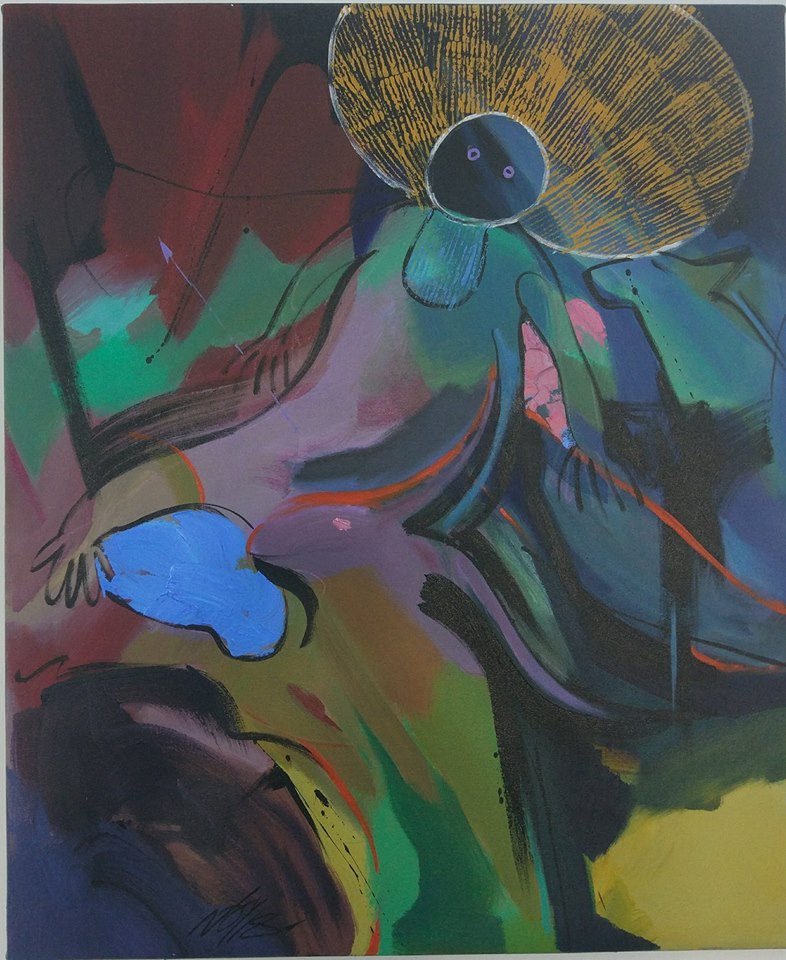
YANGON — For his latest solo exhibition, painter Ne Tun, who is known for combining traditional Myanmar art with modernist aesthetics, has brought together an unlikely pair of subjects — love and horror.

"I am showcasing what I have always wanted to create in this exhibition. People like the paintings I created before. Whether my latest works will be successful is completely out of my control," he said.

While Ne Tun was creating the paintings for the exhibit, his recalled, his family asked him, "Are you sure about showcasing these paintings?" He said his answer was a resounding "Yes."

The result, “Inner Mind,” showing at Yangon’s Lokanat Gallery through Sunday, is a collection of horrifyingly surrealist paintings and minimalist nudes in stark contrast to depictions of parental love.

Paintings entitled “Family,” “Affection,” “Womb” and “Cultivation” and the like hang next to others depicting horrifying figures rendered in bright, bold colors.

"Those paintings perfectly match the title of the exhibition. I grasped the images that popped into my mind, and they became horrifying figures. To the eyes of most Myanmar people, [the paintings] do not have pleasant colors or subjects. I am satisfied and glad that I could do what I wanted to do," said Ne Tun.

"An artist has to search and take risks. And Ne Tun has searched his unique style. He has Myanmar sensibilities. If he can combine them with a modernist style, the painting will be good. He is passionate about his work, and if he searches he will find," said veteran modernist artist Pe Nyunt Wai, who visited the exhibition.

The exhibition showcases more than 40 works in watercolor and acrylic priced from $200 to $600.

Ne Tun is a 1976 graduate of the Yangon School of Fine Arts and has participated in more than 100 exhibitions.

Translated from Burmese by Thet Ko Ko.

The post Modernist Painter Juxtaposes Sublime With the Scary appeared first on The Irrawaddy.

Bangladesh Delays Plans to Move Rohingya Refugees to Flood-Prone Island

Posted: 02 Oct 2018 05:59 AM PDT

DHAKA — Bangladesh has indefinitely postponed plans to relocate Rohingya refugees from Cox’s Bazar to a flood-prone island fronting the Bay of Bengal starting November after cancelling a visit by Prime Minister Sheikh Hasina.

The premier was scheduled to visit Bhasanchar Island and inaugurate the camp, whose construction is being led by the navy, on Wednesday. But Inter-Services spokesman Rashedul Alam said the trip was put off.

"The program is postponed. We will let you know the new date when it is fixed," he told The Irrawaddy.

Photos of the camp seen by The Irrawaddy show a two-story building and several single-story structures.

A construction worker on the project told The Irrawaddy that work was still in progress.

Bangladesh formed a joint 10-member inspection team with the UN earlier this year to advise the government on whether the island and camp are suitable for settlement, headed by Muhammad Mohsin, an additional secretary at the Ministry of Disaster Management and Relief.

The team is preparing a report for the government and visited the island, located in the estuary of the Meghna River where it meets the Bay of Bengal, on Sept. 23.

Mohsin and Mohammed Abul Kalam Azad, Bangladesh's Rohingya relief and repatriation commissioner in Cox's Bazar, declined to comment on the issue.

A spokesman for the UN’s resident coordinator in Bangladesh did not immediately reply to a request for comment.

In August, the resident coordinator, Mia Seppo, told The Irrawaddy that discussions with the government about the UN’s concerns with the island’s safety, sustainability and vulnerability to extreme weather were ongoing.

In June, a report by the Special Branch of the Bangladesh police force said that only 13 percent of surveyed Rohingya refugees wanted to move to the island from Cox's Bazar. Among their main concerns were the island's isolation, which they worry will limit their access to medicine and other relief supplies, and being separated from relatives.

Bangladeshi officials have said they plan to show the island facilities to Rohingya camp leaders in Cox’s Bazar before any relocations begin in hopes of winning them over.

Authorities first proposed resettling Rohingya refugees in Cox's Bazar to the island in 2015 to cope with a recent influx from Myanmar.

Bangladesh asked the UN to help fund the plan after the sudden arrival of another 700,000 refugees in late 2017 pushed the population of the Cox's Bazar camps past 1 million.

The post Bangladesh Delays Plans to Move Rohingya Refugees to Flood-Prone Island appeared first on The Irrawaddy.

Yangon Gov’t Abused Its Power by Investing in Controversial New City Project: Lawmaker

Posted: 02 Oct 2018 05:53 AM PDT

YANGON—The Yangon Regional government was accused of abusing its power by investing 10 billion kyats ($6.5 million) in a controversial new city project on the western bank of the Yangon River without the parliament's prior approval.

In March, the Yangon government launched New Yangon Development Company (NYDC) which is to be the developer of the New Yangon City project to be built on 20,000 acres of farmland across the Yangon River from downtown Yangon. At the launching ceremony in Yangon in March, Chief Minister U Phyo Min Thein said "it is expected that the new city will create two million jobs" while claiming that NYDC is fully owned by the government.

NYDC is headed by the Yangon government's Electricity, Industry, and Roads and Communications Minister Daw Nilar Kyaw, along with property mogul Serge Pun of Yoma Strategic Holdings, a Singapore-listed outfit with real estate holdings in Myanmar. Former Singaporean Foreign Minister George Yoe is "Independent International Director" of the NYDC.

So far, the project remains in its planning phase.

It was revealed in the auditor general's report on the Yangon government's budget for the 2016-17 fiscal year that the government transferred 10 billion kyats to NYDC from Yangon Metropolitan Development Public Company Limited's 64-billion-kyat ($41.6 million)fund without the parliament's knowledge. The public company was founded by the Yangon government last year to promote development in the region. The Yangon government owns 51 percent of shares in the company and the 64-billion-kyats spent in shares was approved by the parliament. The company's board of directors includes Daw Nilar Kyaw and Yangon's Planning and Finance Minister U Myint Thaung.

During a discussion among lawmakers about the auditor general's report at the Yangon parliament on Tuesday, an NLD lawmaker Daw Sandar Min pointed out that the parliament had no idea about the 10 billion kyats transfer to NYDC and it has never been discussed in the parliament.

Constitutionally, projects to be carried out by regional or state governments have to be approved by the relevant parliament.

She also highlighted that the company has already spent 93 million kyats out of  the 10 billion kyats fund: 50 million kyats has been spent on staff salaries, 32 million on city design planning, seven million on general expenses, three million on the company's launch ceremony and one million on the signing of a framework agreement in April with Hong Kong-listed China Communications Construction Co. Ltd. (CCCC) to provide infrastructure for the first phase of the development.

"They have spent 93 million kyats. It is an act of spending state money as if it is their own and the regional government is acting beyond the authority it has been granted," said the lawmaker.

Daw Sandar Min also warned during the discussion at the parliament that the Yangon government's improper use of money from capital investment through the Yangon Metropolitan Development Public Co. Ltd. could be a waste of state money coming from public taxes.

"If there is a loss, the board of directors of Yangon Metropolitan Development has to take responsibility on behalf of the Yangon government," she added.

NYDC plans to develop 20,000 acres of land in the first phase of the project. This will include five village townships, two bridges, power plants, water and wastewater treatment plants and a 10-square-kilometer industrial estate. The company says the cost of initial infrastructure work in the first phase is expected to exceed $1.5 billion.

The project's location has come under criticism due to the low-lying topography of the area, which is prone to flooding as it has a maximum elevation of just 5 meters above sea level. The company said it has kick-started a flood-risk assessment (FRA) for the New Yangon City project area in coordination with Royal HaskoningDHV, a Dutch FRA consultant.

Last month, the company released a socio-economic master plan for New Yangon City. The master plan was drafted by US management firm McKinsey & Company. Serge Pun said during a technical roundtable discussion about the development last month that the NYDC didn't need to pay for the drafting of the master plan as it was financed by the British government.

"Luckily, we didn't have to pay for it. It would have cost us nearly seven or eight hundred thousand dollars," he said.

The post Yangon Gov't Abused Its Power by Investing in Controversial New City Project: Lawmaker appeared first on The Irrawaddy.

Female Officers Now Make Up 20 Percent of Police Force

Posted: 02 Oct 2018 01:10 AM PDT

NAYPYITAW — The Myanmar Police Force (MPF) has increased its gender ratio of women to men, with female police officers now making up 20 percent of the entire police force, said the director of the MPF Headquarters Police Colonel Aung Myint Naing.

"We have been able to increase the percentage of policewomen in the existing force to 20 percent," said Police Colonel Aung Myint Naing in response to media questions during an event to mark Myanmar Police Force Day on Monday in Naypyitaw.

According to him, female police officers are not just serving in low positions, but many hold high-level positions with some even holding colonel positions. The drive to recruit more policewomen began in 2012, and they are performing not only office work but also policing activities like crime prevention and detection shoulder to shoulder with their male counterparts, said Police Colonel Zaw Khin Aung of the Shan State Police Force.

"They perform a variety of duties including arresting suspects and investigations. There is also a principle that women can only be searched by women [police] in security issues. They also do office work and are assigned to respective special task forces," said Police Colonel Zaw Khin Aung.

Female police officers can perform their duties on par with their male counterparts, and have no difficulty in performing their duties because of their gender, said a female police officer working at the Naypyitaw Police Headquarters.

"There are no challenges or difficulties. We underwent training together with policemen and did the same training as them. Women can work as well as men," she said.

Female police officers are necessary as the Article 1,364 of the Myanmar Police Force handbook states that only women can search the body of female suspects in order not to harm their modesty, said advocate U Khin Maung Zaw.

"According to Article 1,368, female suspects must be held separate [from men] in police cells. And if there is only one female suspect in the cell, two older and respected women must keep her company," said U Khin Maung Zaw.

According to strict criteria recently developed by the MPF, women aged between 18 and 25, with a minimum height of 5 feet 2 inches, who have passed the first year examination of a bachelor degree course are eligible to apply. They will have to undergo six months' police training and receive a starting salary of 190,000 kyats per month.

Myanmar has a population of over 51 million people, and according to the data as of December 30, 2016, the police-people ratio was 10 to 650.

According to international norms, the standard ratio should be 10 to 400. Based on that ratio, Myanmar should have 127,500 police, said deputy home affairs minister Maj-Gen Aung Soe.

The existing police force can only cover the 61.5 percent of the national population, said the deputy minister.

The deputy minister added that the MPF is working to recruit new members for the police force across all regions and states.

Translated from Burmese by Thet Ko Ko.

The post Female Officers Now Make Up 20 Percent of Police Force appeared first on The Irrawaddy.

Marred by General, Myanmar’s Famed Dome-Shaped Pagoda to be Restored to Former Glory 

Posted: 02 Oct 2018 12:06 AM PDT

MANDALAY — Sagaing is planning to repaint the famed Kaunghmudaw Pagoda white, a dome-shaped stupa once marred by a former military leader with gold paint, as the pagoda trustee committee in the upcountry town received the green light from the regional government.

The trustee committee told The Irrawaddy that it had a preliminary meeting with influential abbot Sitatu Sayadaw and that it will receive support from experts.

"With the guidance of Sayadaw, we will collaborate with experts to repaint the pagoda, making sure the original structure is not affected," said U Tin Myo Lwin, the chairman of the Kaunghmudaw Pagoda Trustee Committee.

According to the trustee committee, the permission from the regional government was dated Sept. 18 and received on Sunday.

"We are targeting to finish repainting by the end of this year, however, it will depend on how we have to strip the gold paint in order to not damage the structure," explained U Tin Myo Lwin.

"If there is damage after removing the gold paint, it will take more time. We will have to make sure that we repaint safely and effectively after getting suggestions from experts," he added.

Since January, Sagaing city elders, along with local religious affairs and civil society groups, held a signature campaign to raise the issue of repainting the pagoda.

The previous pagoda trustee committee had been told that the pagoda would be repainted white once the gold began to fade. Later reports that it would be repainted gold sparked the signature campaign.

After the current pagoda trustee committee was elected in June, the uncertainty faded when the regional government granted permission to repaint it white.

"We are very glad to receive permission so that we can see Kaunghmudaw Pagoda painted white again. We are happy to restore Sagaing's heritage," said U Tin Myo Lwin.

Kaunghmudaw Pagoda, more than 380 years old, was originally painted white. In December 2010, after a visit by former Snr-Gen Than Shwe, the pagoda was painted gold. Rumors spread during that time that the senior-general ordered it painted gold according to an astrologist's suggestion in order to bring prosperity.

At that time, about 7 billion kyats were received in donation for gold paint. Only about 350 billion kyats were used. The remaining donations were used for repair, maintenance and gold plating.

Locals, historians and visitors criticized the gold paint, but no efforts to repaint it white were taken under former President Thein Sein's administration.

When the National League for Democracy party was elected, local lawmakers from the party took the issue to the Sagaing regional Parliament.

The 46-meter high pagoda is a major tourist attraction in Sagaing, located on the outskirts of the town. It was built by King Thalun in 1636. It was originally painted white and surrounded by greenery.

Buddhists believe that golden pagodas are a sign of prosperity and that donating for gold paint or gold plates will bring good merit and prosperity.

But experts believe the pagoda should be returned to its original color to restore the heritage value.

"There are those who believe in painting pagodas gold, but preserving the original color will not curse people. I am glad to see Kaunghmudaw Pagoda returned to white, which was glamorous and grand," said Tampawaddy U Win Maung, a famed historian and Myanmar traditional art expert, who will be on the team to restore the original paint color to Kaunghmudaw Pagoda.

"It should be easy to scrape the paint and repaint. I hope there will not be a delay," he added.

The post Marred by General, Myanmar’s Famed Dome-Shaped Pagoda to be Restored to Former Glory  appeared first on The Irrawaddy.

Thailand Struggles to Win Back Chinese Tourists During Golden Week Holiday

Posted: 01 Oct 2018 09:34 PM PDT

BANGKOK — As China kicked off its “Golden Week” holiday on Monday, Thailand said it was struggling to lure back visitors from its biggest source of tourists, after a boat accident in July that killed dozens.

Lured by Thailand’s proximity and plentiful attractions, visitors from China accounted for nearly a third of last year’s record 35.38 million arrivals in the Southeast Asian nation.

But a Thai tourism official said he expected arrivals during the Chinese holiday to dip 1 percent this year.

“The decrease is because the boat incident has affected our safety image,” said Yuthasak Supasorn, governor of the Tourism Authority of Thailand.

The agency has rounded down its forecast of Chinese arrivals for the year to 10.5 million from 11 million, he added.

Thailand has tried to lure back Chinese tourists by offering special immigration lanes at key airports and is also considering offering them a double-entry visa.

In July, Chinese arrivals fell 0.9 percent from a year earlier for their first drop since the start of 2017, when the government cracked down on cheap tour packages.

Tourism experts blamed a July boat disaster off the coast of Phuket that killed 47 Chinese in Thailand’s worst tourist-related disaster in years, underscoring concerns over the kingdom’s lax attitude to safety.

Chinese tourist arrivals continued to fall in August, plunging 11.77 percent from a year earlier, tourism ministry data showed.

Industry experts had hoped that Golden Week, which runs from Oct. 1 to Oct. 7 this year and is one of China’s most popular holidays, would bring back its tourists, but that appears not to be the case.

The government said it had cut by 11.5 percent its forecast for the number of Chinese arrivals for the six months from July to 5.1 million.

The post Thailand Struggles to Win Back Chinese Tourists During Golden Week Holiday appeared first on The Irrawaddy.

America’s Image Worsens Under Trump

Posted: 01 Oct 2018 09:29 PM PDT

BERLIN — The image of the United States has deteriorated further among its traditional allies after a year in which President Donald Trump ratcheted up his verbal attacks on countries like Canada and Germany, a leading survey showed.

The survey of 25 nations by the Pew Research Center also showed that respondents from across the globe have less confidence in Trump’s ability to lead than they do in Russia’s Vladimir Putin and China’s Xi Jinping.

Since taking office in January 2017, Trump has pulled the United States out of international agreements like the Paris climate accord and Iran nuclear deal, cozied up to authoritarian leaders like Putin and North Korea’s Kim Jong Un, and criticized his neighbors and NATO allies.

In June, after a G7 summit in Canada, Trump refused to sign a joint statement with America’s allies, deriding his host, Canadian Prime Minister Justin Trudeau, as “very dishonest and weak”. He has repeatedly attacked Germany for its trade surplus, low defense spending and reliance on Russian gas.

Last week, when giving a speech at the UN General Assembly in New York, Trump drew laughter from world leaders when he claimed to have achieved more in his two years in the White House than almost any other US administration in history.

The survey showed that America’s image, which took a big hit in 2017, Trump’s first year in office, continued to deteriorate in many countries in 2018, particularly in Europe.

Just 30 percent of Germans have a favorable view of the United States, down five points from last year and the lowest score in the entire survey after Russia, on 26 percent.

Only 38 percent of French and 39 percent of Canadians said they had a positive view of the United States, both down from last year. Mexico inched up slightly to 32 percent.

Faith in Merkel Highest

The countries with the most positive views of the United States were Israel, the Philippines and South Korea, all at 80 percent or above. Across all countries, the US got positive marks, with 50 percent saying they had a positive view, compared to 43 percent who were negative.

Just 7 percent of Spanish, 9 percent of French and 10 percent of Germans said they had confidence in Trump’s leadership. In 20 of the 25 countries surveyed, a majority said they had no confidence in Trump.

Across all countries, an average of 27 percent of respondents said they had confidence in Trump. That compared unfavorably to Putin, on 30 percent, and Xi, on 34 percent.

German Chancellor Angela Merkel was the only leader in which a majority of those surveyed, 52 percent, expressed confidence. French President Emmanuel Macron was just behind at 46 percent.

Despite Trump’s low ratings, 63 percent of respondents said the world was better off with the United States as the leading power, compared to 19 percent who preferred China in that role.

Allies took a dim view of the Trump administration’s position on civil liberties, with majorities in Canada, the United Kingdom, France, Germany, Australia and Mexico saying the government did not respect the personal freedoms of its people.

Reflecting Trump’s “America First” stance, substantial majorities in 19 of the 25 countries surveyed said the United States did not take their interests into account when making international policy.

The survey was conducted between May and August, and based on interviews with over 900 people in each of the surveyed countries.

The post America’s Image Worsens Under Trump appeared first on The Irrawaddy.

UN Rights Expert Urges Malaysia to End Child Marriage

Posted: 01 Oct 2018 09:24 PM PDT

KUALA LUMPUR — Malaysia should ban child marriage immediately, a United Nations human rights expert said on Monday, stepping into a controversy that has raged since reports in July that a 44-year-old Malaysian man had married an 11-year-old Thai girl.

Prime Minister Mahathir Mohamad’s government, in power since May, has promised to raise the legal age of marriage to 18, provoking a backlash from some conservative Islamic leaders who argue that early marriage provides an answer to social ills like premarital sex and pregnancies out of wedlock.

Maud de Boer-Buquicchio, the UN special rapporteur on the sale and sexual exploitation of children, urged Malaysian authorities to protect the rights of minors, particularly young girls.

Married underage girls were at higher risk of domestic violence, and are often denied the chance to pursue an education, she told reporters.

"By marrying them, you are denying these girls their basic human rights," said de Boer-Buquicchio, who was on an eight-day visit to mostly-Muslim Malaysia.

In Malaysia, the legal minimum age for marriage under civil law for both genders is 18. However, girls can marry at 16 with the permission of their state's chief minister, while Islamic law sets a 16-year minimum age for girls and allows even earlier marriages with the permission of the sharia court.

The UN official called on Malaysia to remove exemptions that allowed underage children to marry, saying “there can be no exceptions.”

More than 5,000 applications for marriages involving minors were made at the sharia court between 2013 and 2017, government statistics show.

But many child marriages remained unreported, particularly among indigenous groups on Borneo, in Malaysia’s east, de Boer-Buquicchio said.

“It is time to be firm,” she said, adding that Malaysia’s government should engage religious and customary leaders on the issue.

“The political will is there, but the question is how you can reach out to all the different entities."

Last year, Malaysia passed a law on sexual offences against children but did not criminalize child marriage.

The post UN Rights Expert Urges Malaysia to End Child Marriage appeared first on The Irrawaddy.

Ten Things to Do in Yangon This Week

Posted: 01 Oct 2018 07:51 PM PDT

Takhaga Photo Exhibition

The popular photography exhibition continues until October 4 at 43 Art Gallery.

Sept. 29 to Oct. 4, 9 a.m. to 5 p.m. 43 Art Gallery, 43rd Street, Bohtataung Tsp.


Inner Mind

The 8th solo show of artist Nay Tun will open at Lawkanat Gallery this week.

Oct. 1 to 7, 9 a.m. to 5 p.m. Lawkanat Gallery, Corner of Pansodan St. and Merchant Rd.


Duo Art Exhibition

Sculptures and works on paper by Merete Sejersted Bodtker and Sonny Nyein will be displayed at the Beikthano Art Gallery.

Oct. 4 to 5. Beikthano Art Gallery, 113/3 Kaba Aye Pagoda Rd., Bahan Tsp.

Solo Art Exhibition 2018

This is an exhibition by Artist Tin Maung Oo.

Oct. 5 to 9, 9 a.m. to 5 p.m. OK Art Gallery, Gyoe Phyu Rd., Dagon Tsp.

Affliction3

This is the third solo exhibition by artist Nyi Tun.

Oct. 6 to 8, 10 a.m. to 5 p.m. 43 Art Gallery, 43rd Street, Bohtataung Tsp.

Orange College Music Night

This music concert is being held to raise funds for healthcare and a homage-paying ceremony for former teachers of No. 2 Regional College and Yangon University (Hlaing campus).

Famous music bands Success and Emperor will perform with vocalists Bo Bo Han, Victor Khin Nyo, Sein Win Tun, Kaizer, Zaw Win Htut, J Maung Maung, Tu Tu, Chit Kaung, Aung Naing, S Kenneth, Mon Aung, San Lin, Sithu Lwin, Zaw Paing, May Sweet, Corney, She, Yadana Oo and Chaw Su Khin.

Oct. 6, 12 p.m. Thuwunna Stadium (1), Thingangyun Tsp.

Employment Fair Q3 2018

MyJobs.com.mm Myanmar will organize an employment fair to connect job seekers with top employers directly.

Oct. 6, 9 a.m. to 5 p.m. Rose Garden Hotel, Upper Pansodan Rd.

NITAR Pop and Rock Night

Nitar will perform at Yangon Yangon rooftop bar with special guests including Yadana My, Chan Chan, Athen Cho Swe and Chaw Nge will join Nitar.

Oct. 6, 8 p.m. Yangon Yangon, Sakura Tower rooftop, Bogyoke Aung San Rd. 

TEDxYangon

This local version of the international TED Talks, will feature talks and group discussions with inspirational figures from varying backgrounds in a day-long event at Strand Hotel.

Oct. 6, 8 a.m. to 8 p.m. The Strand Ballroom, The Strand Hotel, Strand Rd.

The Taste of Kachin

This is a fund-raising event organized by Kachin youth and sponsored by The Envoy featuring traditional Kachin dishes, music and crafts.

Oct. 6, 3 p.m. to 11 p.m. The Envoy Restaurant & Bar, Bo Aung Kyaw St. Tickets: 30,000 kyats.

The post Ten Things to Do in Yangon This Week appeared first on The Irrawaddy.