Monday, December 18, 2017

The Irrawaddy Magazine

The Irrawaddy Magazine


Despite High Operating Costs, CEO of Yangon’s New Bus System Remains Optimistic

Posted: 18 Dec 2017 12:34 AM PST

YANGON— Dubbed one of the first big reforms made by the National League for Democracy government in Myanmar's financial hub Yangon, a new public transport system known as the Yangon Bus System (YBS) will turn one next month.

The new system was aimed at replacing the former capital's old bus service—the Rangoon Motor Vehicles Supervisory Committee, also known as Ma Hta Tha—notorious for its worn-out fleets, unruly drivers, and conductors known for verbally and physically challenging any passengers who dared complain about their services.

Blessed by Yangon Regional Government head Chief Minister U Phyo Min Thein, YBS was heartily welcomed by the city's commuters who had grown weary of Ma Hta Tha's poor services despite its successor's bumpy start. The early days of YBS saw an insufficient number of buses traversing the routes, resulting in overcrowding at bus stops, as some buses scheduled to start on the first day of the service were not ready due to insufficient planning.

Nearly 12 months later, with newly imported yellow and red city buses plying the busy roads of Yangon, the regional government seems committed to making the new system a success.

At the helm of YBS is its CEO, Saw Bo Bo. A former cooperate banker at Citi and KBZ banks, the 35-year old has more than 10 years of international business experience. At Citibank, he closely followed Myanmar's economic and political transformation as part of his job grading the country's credit rating in 2014 and 2015. One of his areas of expertise is mergers and acquisitions, an aspect of strategic management that involves combining companies and unlocking synergies to help the new entity grow in a sustainable manner—making Saw Bo Bo a good choice for YBS, a public company made up of 15 units, including government firms.

On the eve of YBS's first anniversary, Saw Bo Bo responds to The Irrawaddy's questions about the bus system that is currently used by the city's 2.5 million commuters on a daily basis.

What is your assessment of YBS today?

The most visible thing is commuters are enjoying the new buses. You can say our bus fare—200 kyats—is probably the cheapest in the world. The government has imported 1,000 new buses. Another 1,000 will join the fleet next year. We have also taken serious action against those (drivers, bus owners, operators) who violate our regulations. As we have opened a diverse range of complaint channels—social media, call center and a mobile reporting app—passengers can now file their complaints much more easily than before. As a result, we have had some 5,000 reports. We take action on those complaints—in a real time manner if needed—lest we disappoint our passengers. Mobile teams are now in action to check to see if bus operators follow the regulations.

How many buses are running under YBS? Please tell me in detail how the government invests money in the system.

So far, there are 95 lines. The number of buses approved by the government is nearly 3,000. Under YBS, there are 15 bus companies and 17 individual operators. The Yangon Regional Government has provided 80 percent of the needed investment, or 35 billion kyats each in Yangon Urban Public Transportation Public Co., Ltd (YUPT) and Yangon Bus Public Co., Ltd. (YBPC). We imported 1,000 yellow buses—500 for each company—at a cost of US$56 million from China. Currently, both companies are running fleets of 700 buses. Another 300 will hit the road soon.

Why Chinese buses? There has been criticism that those buses are about half the price of international rivals and they will wear out and need to be replaced sooner than international standard vehicles.

We had to think holistically before the purchase. The price gap is true. On the other hand, we also had to think how much we could invest and the number of buses we would need. Whether they wear out sooner depends on the road conditions as well as the maintenance they get. If we reach breakeven in the next five or six years and manage to turn a net profit in another four years, I think we'll have a sustainable business with those buses.

The grandson of former dictator Ne Win is also an operator of YBS. There are also reports that another tycoon, U Zaw Zaw of Max Myanmar, is joining in. Please explain their involvement?

Omni Focus Company run by U Kyaw Ne Win has applied to run 500 red buses. So far, more than 100 buses owned by the company are on the road. Max Myanmar will operate as Ludu Mateswe (People's Friend) in cooperation with Power Eleven Company. They will run 500 red buses as well soon.

What are the challenges YBS is facing?

Bus operators still can't manage the operational cost. It has impacted their profit margins as 75 percent of the revenue goes to covering costs. If we could raise operational efficiency, it would be OK. With the guidance of the chief minister and cooperation from the operators, this problem can be overcome.

Has Daw Aung San Suu Kyi made any comments about YBS?

I just met her on Friday at a Karen New Year Day celebration event. She told me to make YBS successful. Given the system's outreach—2.5 million commuters mostly at the grass root level— all of Myanmar's leadership will surely want to see it as a success story.

YBS is under the Yangon Region Transport Authority (YRTA), an umbrella organization for transportation in Yangon. We learned that an YRTA law has been drafted. Any updates?

Yes, it's now underway with input from JICA (the Japan International Cooperation Agency) and the ADB (Asian Development Bank) based on models other countries are using. It will lay a foundation for self-sustainability for the future of Yangon's transportation as it will include organizational structures, roles and responsibilities in detail. For YBS, for example, the law will help provide a more systematic approach when it comes to job scopes and contract terms for the operators.

How is it running currently in absence of the law?

The YRTA is chaired by Chief Minister U Phyo Min Thein. The president is Electricity, Industry and Transportation Minister Daw Nilar Kyaw. For YBS policies, they are discussed at YRTA meetings and implemented with the endorsement by the Yangon Region Government.

The post Despite High Operating Costs, CEO of Yangon's New Bus System Remains Optimistic appeared first on The Irrawaddy.

Young Filmmaker Counters LGBT Stereotypes

Posted: 17 Dec 2017 08:17 PM PST

Hnin Pa Pa Soe was about 12 when she realized she was more interested in girls than boys. But it would be more than 10 years before she would come out to anyone.

Social norms surrounding female behavior were so strong that, even as a child, she sensed that telling anyone about her feelings could have negative consequences.

"I kept it to myself to avoid mockery," she said, referring to the most common reaction in Myanmar toward lesbian, gay, bisexual and transgender (LGBT) people, whose image tends to be shaped by the stereotyped characters in comedy shows and movies.

These days the 26-year-old uses documentary film as a tool to tell the stories of people who have shared her struggle. Her films counter the mischaracterization of LGBT people in mainstream entertainment in Myanmar.

"I want to show that LGBT people everywhere contribute to society," she said.

Social Outcast

Transgender women and gay men in particular are usually portrayed as wacky and flamboyantly dressed characters who shamelessly hit on men and use vulgar language. Lesbians are shown as relentless pursuers of women, Hnin Pa Pa Soe said.

In Hnin Pa Pa Soe's hometown in Mon State, movies and traditional dance shows were the mediums through which most people encountered LGBT "people." Growing up, she feared being lumped in with these characters and called a "dyke."

She had very few friends at school. Her childhood memories are mostly of discrimination and being left out.

"Teachers told us that tomboys dressed like boys and hung out with boys, but that eventually they all fall pregnant and 'turn into' girls," Hnin Pa Pa Soe said. She recalled how tomboys, too, were generally viewed through the prism of movies. "I hid my feelings," she said.

Her boyish taste in clothing saw her singled out. "I was constantly being called 'tomboy' and 'bull dyke'. After a while I withdrew," she said.

During school fairs or ceremonies, her teachers told her that there was no role or place for her and left her to take care of the empty classroom.

Panel discussion about freedom of expression at Wathann Film Festival in September. Left to right: Festival co-founder Thaid Dhi, director Hnin Pa Pa Soe, Hla Myat Tun of Colors Rainbow and writer Han San. (Photo: Tin Htet Paing/ The Irrawaddy)

Journey of Self-Discovery

Nearly two years ago she came out—but only to a few trusted people. Most importantly, she took an important step on her journey of self-discovery when she found a way to tell "a simple love story" about two transgender friends.

In 2016, having realized she was an LGBT person while interning for Equality Myanmar, a human rights advocacy group, she felt a desire to show the public that LGBT people are not the way they are portrayed in comedies.

Thanks to documentary filmmaking workshops organized by Colors Rainbow, the biggest LGBT organization in Myanmar, Hnin Pa Pa Soe was able to make her debut short film, "A Simple Love Story." The piece won the Best Documentary Film prize at the Wathann Film Festival, which showcases local independent film, in September. Despite the award, however, the film was not screened at the festival because Hnin Pa Pa Soe refused to bow to the Censorship Board's demand that the ending be changed.
At the center of the film is a love story between a transgender woman and a transgender man that challenges norms surrounding gender identity and love. The censor was unhappy with the final line of the film: "Does love recognize 'man', 'woman', 'tomboy' or 'shemale'?"

The censor advised that the closing line be re-edited for screening at the festival, but Hnin Pa Pa Soe decided that if it were not her version, she would rather not show it.

"The Censorship Board's demand really upset me," she said. "The line [the board] wanted me to modify does not involve vulgar language of the kind they routinely allow in comedies," she said.

Being LGBT herself, she said, she would never insult her own community and was willing to accept full responsibility for her portrayal of LGBT people.

"My stance was firm," she said. "I won't show it if [the original version] is not allowed. I won't modify it."

Hnin Pa Pa Soe is currently making a documentary about the struggles of LGBT people in the workplace. She said LGBT employees are left out of the conversation whenever gender disparity in the workplace is discussed, because they don't conform to gender norms.

Hnin Pa Pa Soe said her goal now is to try to represent the many diverse faces of the LGBT community in Myanmar, to show that they exist in places where many people wouldn't expect to find them.

Hnin Pa Pa Soe poses for a portrait. (Photo: Tin Htet Paing/ The Irrawaddy)

Coming Out to Parents Is Something Very Different

Asked what she would have done with her life if she had not become a human rights trainer and filmmaker, Hnin Pa Pa Soe said she might have continued her studies to obtain a master's degree or become a teacher, which is what her parents wanted her to do. The only reason she didn't do these things was the regulation that female students must wear the traditional female garment, the longyi, at high schools and universities—something she was very uncomfortable with.

As a young woman who liked to wear T-shirts and pants, Hnin Pa Pa Soe struggled with the issue of clothing throughout high school and university.

"When I wore longyi at university, I would try to stay seated," she said. "All day I was just waiting for class to finish. I couldn't concentrate on my lessons."

She tried to alter her clothing, but it was impossible, and she ended up transferring into a distance-learning program that didn't require her to attend daily classes. Importantly, she could wear what she liked during the rest of the time.

"When I am wearing something I don't feel comfortable with, I withdraw, feeling inconsequential," she said.
She rarely visits her hometown, which she left in 2016 to participate in an internship program at Equality Myanmar's office in Mandalay.

"There is no place for me there," she said.

While she has come out to colleagues and a few liberal-minded people, she remains emotionally distant from her family. Her parents just think that she likes wearing boys' clothing; they don't know that she likes women.

Hnin Pa Pa Soe wants her parents to understand her gender identity, but also thinks it's better not to tell them at this time, as she knows how hard it would be for them to accept her.

"There would be conflict if I told them who I am," she said. "I am not necessarily hiding it from them; they will know when they know."

Hnin Pa Pa Soe plans to keep advocating human rights and LGBT issues. She believes that the more people she reaches out to, the fewer people will have to experience the kind of resistance she has.

"When people are able to accept their own identities, they are empowered to improve their lives," she said.

The post Young Filmmaker Counters LGBT Stereotypes appeared first on The Irrawaddy.

Myanmar Wields Colonial-era Law Against Reuters Journalists

Posted: 17 Dec 2017 08:04 PM PST

Myanmar has accused Reuters reporters Wa Lone, 31, and Kyaw Soe Oo, 27, of breaching the country’s Official Secrets Act, a little-used hangover from colonial rule. Sam Zarifi, secretary general of the International Commission of Jurists (ICJ), said the law can ensnare working journalists “at any time”.

The two reporters were arrested on Tuesday evening after they were invited to meet police officers for dinner in the north of Yangon.

The Ministry of Information said they had “illegally acquired information with the intention to share it with foreign media”, and published a photo of the pair in handcuffs standing behind a table with documents laid on it.

ORIGINS OF THE OFFICIAL SECRETS ACT

The law dates back to 1923, when Myanmar, then known as Burma, was a province of British India. At the time British administrators worried that rival powers could seek to exploit anti-colonial unrest in its South Asian empire.

The act, which amended earlier anti-spying legislation, was controversial in India even at the time, according to a history published in 2009 by the United Service Institution of India, a New Delhi-based think tank.

British military officers pushed for the stronger law over concerns about an “increase in Bolshevik activity”, along with geopolitical threats including “the possibility of racial war between Japan and the USA affecting India”, the history said.

WHAT THE ACT SAYS

The Official Secrets Act covers trespassing in prohibited areas, handling documents deemed secret and communicating with “foreign agents”. It carries a maximum penalty of 14 years in prison.

Zarifi of the Geneva-based ICJ – a human rights group made up of 60 senior international judges, lawyers and legal academics – said the definition of an official secret in the act is “incredibly broad”.

“Just about anyone in possession of unpublished government documents could find themselves facing prosecution and the harsh penalties a conviction may carry,” Zarifi said. “Under this law many good journalists could be prosecuted at any time.”

In India, where the same law also remains on the statute book, courts have ruled that it even applies to parliamentary papers such as budget proposals if they are leaked before they are presented in the legislature.

USE OF THE ACT

Legal experts say prosecutions under the act have been rare in Myanmar in recent decades.

The military junta that ruled until 2011 frequently used other laws or the Penal Code – also inherited from the colonial era – to lock up its critics alongside common criminals. The sprawling code was drafted in 1860, and gives magistrates more than 500 sections under which to charge alleged offenders.

In 1990, a military court sentenced two leaders of the then opposition National League for Democracy (NLD) to 10 years in prison under the Official Secrets Act after they passed an official letter to foreign embassies. The prosecution was part of a broad crackdown following an election won by the NLD that the junta ignored.

They were freed in 1992, in an amnesty, according to a New York Times report at the time.

Reports of at least two other cases brought under the act are recorded in the online archives of the Asian Human Rights Commission in 2009 and 2010.

The first case involved a man jailed for trespassing on military land and recording video footage to allegedly send abroad. He had been helping a farmer file a land grab complaint against the military. The second concerned a former army officer who was jailed in 2010 for allegedly having secret information on his laptop that he passed to foreign news agencies.

The most well-documented recent case involving the Official Secrets Act came in January of 2014, when the Yangon-based weekly, Unity Journal, published a front page article it said exposed a secret chemical weapons factory run by the military in central Myanmar.

Police arrested the newspaper’s CEO and four journalists involved in publishing the story, raided its offices, and attempted to seize all copies of the edition from newsstands.

A civilian court in Pakkoku, near the alleged factory, sentenced them in July 2014 to 10 years in prison with hard labour – later reduced to seven years. The case was widely seen by the domestic media as a warning that military affairs remained off-limits even though direct military rule had ended.

The Unity five were released in an amnesty in April 2016, soon after the NLD, led by Nobel laureate Aung San Suu Kyi, had come to power following an election in 2015.

The Unity Journal subsequently closed.

Reuters was unable to reach government legal officials over the weekend to request details of any other past cases in which the Official Secrets Act was used.

THE LATEST CASE

Little is known of the allegations against the two Reuters journalists, other than that police said they were “arrested for possessing important and secret government documents related to Rakhine State and security forces” and are charged under Section 3 of the Official Secrets Act.

Two policemen are also being investigated in the case, according to police.

Section 3 covers entering prohibited places, taking images or handling secret official documents that “might be or is intended to be, directly or indirectly, useful to an enemy”.

Human Rights Watch in 2016 said Section 3 “defines the offence of 'spying' extremely broadly”.

“Where a military establishment is involved, section 3(2) of the statute effectively places the burden on the defendant to prove that they are not guilty,” the group said.

The post Myanmar Wields Colonial-era Law Against Reuters Journalists appeared first on The Irrawaddy.

UN Human Rights Official Toughens Warning of “Genocide” in Myanmar

Posted: 17 Dec 2017 07:55 PM PST

GENEVA — The top U.N. human rights official has said he would not be surprised if a court one day ruled that acts of genocide had been committed against the Rohingya Muslim minority in Myanmar, according to a television interview to be shown on Monday.

U.N. High Commissioner for Human Rights Zeid Ra’ad al-Hussein told the BBC that attacks on the Rohingya had been “well thought out and planned” and he had asked Myanmar’s leader Daw Aung San Suu Kyi to do more to stop the military action.

Zeid has already called the campaign “a textbook example of ethnic cleansing” and asked rhetorically if anyone could rule out “elements of genocide”, but his latest remarks put the case plainly, toughening his stance.

"The elements suggest you cannot rule out the possibility that acts of genocide have been committed," he said, according to excerpts of his interview provided in advance by the BBC.

"It's very hard to establish because the thresholds are high," he said. "But it wouldn't surprise me in the future if the court were to make such a finding on the basis of what we see."

Myanmar denies committing atrocities against the Rohingya and has previously rejected U.N. criticism for its “politicisation and partiality”. The Myanmar military says the crackdown is a legitimate counter-insurgency operation.

Zeid said Myanmar’s “flippant” response to the serious concerns of the international community made him fear the current crisis "could just be the opening phases of something much worse".

He told the BBC he feared jihadi groups could form in the huge refugee camps in Bangladesh and even launch attacks in Myanmar, perhaps targeting Buddhist temples there.

He did not say, in the excerpts provided, which court could prosecute suspected atrocities. Myanmar is not a member of the International Criminal Court, so referral to that court could be done only by the U.N. Security Council. But Myanmar’s ally China could veto such a referral.

The United Nations defines genocide as acts meant to destroy a national, ethnic, racial or religious group in whole or in part. Such a designation is rare under international law, but has been used in contexts including Bosnia, Sudan and an Islamic State campaign against the Yazidi communities in Iraq and Syria.

Almost 870,000 Rohingya have fled to Bangladesh, including about 660,000 who arrived after Aug. 25, when Rohingya militants attacked security posts and the Myanmar army launched a counter-offensive.

U.N. investigators have heard Rohingya testimony of a “consistent, methodical pattern of killings, torture, rape and arson”.

Zeid said he had phoned Daw Aung San Suu Kyi in January, asking her in vain to stop the the military operation.

The Nobel peace laureate's less than two-year old civilian government has faced heavy international criticism for its response to the crisis, though it has no control over the generals it has to share power with under Myanmar's transition after decades of military rule.

The post UN Human Rights Official Toughens Warning of “Genocide” in Myanmar appeared first on The Irrawaddy.

Saturday, December 16, 2017

The Irrawaddy Magazine

The Irrawaddy Magazine


Dateline Irrawaddy: Sexual Abuse and Stigma

Posted: 16 Dec 2017 12:27 AM PST

Kyaw Kha: Welcome to Dateline Irrawaddy! This week, we'll discuss an alarming increase in child rape cases in Myanmar. Daw Myat Sandar Thet, the founder of Myintmo Mitta, a refuge for single mothers, and Lway Poe Ngeal, general secretary of the Women’s League of Burma (WLB), which is a coalition of 13 women's ethnic organizations, will join me for the discussion. I'm Irrawaddy Burmese reporter Kyaw Kha.

The situation of sexual abuse of children is bad in Myanmar, and I'm sure no one wants to see such news. According to official government figures, there were 85 reported cases of molestation of girls between 6 and 10 years old in 2016. That number is currently at 79 for 2017, so it is not declining.

Mya Sandar Thet: You said the situation was bad based on government data but the situation on the ground is likely much worse. According to my experience as a volunteer, only one in four child rape cases is reported to the police and a trial is ordered. We should understand that sexual abuse of children is much worse [than the government data shows] in Myanmar. That data also only includes girls older than six. In reality, there are cases of abuse to girls of one and two years of age. If we include those ages and the cases that go unreported, the situation is much worse. We need to alert people to this. If you ask me when child rape cases are likely to occur, it is when there is not close contact between parents and children.

KK: How bad is the situation in ethnic areas?

Lway Poe Ngeal: It is not safe for women and girls anywhere. Girls fall victim amid clashes in conflict areas in ethnic regions but they also fall victim to those in power in non-conflict areas. According to our survey, child victims include girls above three. No matter how we protect ourselves, there is no security. We are seeing that cases happen almost every day in Myanmar. In the past, most rape cases were committed by the Tatmadaw and armed ethnic groups. Today, such cases have not declined and what's worse is that the number of rape cases committed by civilians has also increased.

KK: In child rape cases, victims and their families might not be willing to report to authorities because of humiliation. What are the difficulties to bringing those cases to court as well as throughout the trials?

MST: Before a case is brought to court, the child victim will be brought to the hospital and police station first. The police station will bring the victim to the hospital. There the doctor will check whether there was a rape. The psychological trauma of the child will be eased if the doctor can consult skillfully to help them avoid reliving the ordeal. And when the case is brought before the court, the public perception is that awkward questions will be asked at the trial. In fact, lawyers can ask the victims questions in writing on paper. Psychological trauma to the young victims can be largely prevented at the hospital and at court. I think these two places can help a lot in easing the psychological trauma of child victims.

KK: What do you think Lway Poe Ngeal?

LPN: I would like to point out two points. Daw Myat Sandar Thet talked about going to court. But not every place in Myanmar has a court, especially in ethnic areas. According to the Penal Code, there must be a medical report [forensic evidence] for a rape case. But in ethnic areas, women are raped, for example while chopping sugar cane and firewood in the forest. There is no clinic or doctor. So, how can we get forensic evidence? I am talking about difficulties rape victims experience before and after their cases are brought before a court. As I've said, it is difficult to get forensic evidence for legal proceedings. In ethnic areas we can't report directly to police. As there are no police, we have to report to the village head or administrator. Once the case is brought to them, it usually disappears there, and is never brought to the court.

Another thing is the court is in the town and transportation is very difficult. There are villages that have not seen newspapers and radio, far from knowing what media is. Victims from such remote areas can't afford to go to the town or stay in the town during the trial. They have a lot of difficulties. Again, it is very difficult to take action against rapes and sexual abuses committed by those in power such as the Tatmadaw and armed ethnic groups.

KK: We've barely seen efforts or action to address this issue. What remedial actions should be taken? Who should be involved in remedial efforts and to what extent do you think the government should be involved?

MST: Most child rape cases are acquaintance rapes committed by those who are close to the victims—either their family members or neighbors. According to my experience, there is hardly a case in which a stranger grabs a girl by the roadside and rapes her. As most of the cases are committed by family members and neighbors, I think pulling the child victim out of her community for a while would help a lot to ease psychological trauma.

Then, the victim can be sent to another place to receive schooling, perhaps to a boarding school. Myanmar people typically are easy to forget and forgive, so if the child comes back to her home with some achievement, for example after finishing university, she should be able to live a normal life again. Otherwise, suppose a child were raped by her own father and continued to live in that house. It would make the mother and child feel very uneasy. And, the father will feel too guilty to look at his daughter, and the daughter dare not look at the father, who is her rapist.

I have seen some incest cases in which a brother raped his sister. I was terribly shocked by such cases, wondering how the parents could face them. Under such circumstances, those children should be pulled out of that environment temporarily and a new environment should be created for them. If the concerned family can't take that responsibility, then the government should take it. If not the government, associations and agencies connected with the government such as the Maternal and Child Welfare Association or the Myanmar Women Entrepreneurs Association should focus their attention on child rape.

Though this responsibility falls on the government, it would be inadvisable for it to gather child rape victims and send them to a particular school. If the government does so, it will only create a closed community of child rape victims. And I don't want them to grow up amid trauma. If possible, victims from hilly regions, for example Christian children, should be able to come to the plains and start a new life. The government should create new families and safe environments for them and enable them to purse school and vocational education.

But if it gathers the victims at a particular place, they will be viewed by the people as a group of child rape victims and it will be very hard to erase that view. We should therefore create a comfortable and supportive environment that resembles a new family for them. This issue seems to be easy to handle, but we must be aware that it is delicate.

LPN: There are laws that prevent child rape and provide support to rape victims. There are international laws. Myanmar has ratified, for example, CEDAW, but has not implemented it. The international community is responsible for this. It should keep putting pressure on this country to implement the agreements it has signed. The government is responsible to implement what is has signed.

We also need to have awareness and knowledge. Besides knowledge about reproductive health, we should also be aware of gender issues and have some knowledge about international laws and what laws our country has ratified. If individuals have such knowledge, then we'll be able to reduce rape cases gradually, and of course, on condition that there is rule of law.

KK: Lway Poe Ngeal has talked about how to prevent child rapes. What actions do you think should be taken to prevent them?

MST: I would educate the men first. Then, I'd give sex education. And thirdly, there is a need to correct a popular misconception of mothers. In our society, usually mothers tell their young daughters that their private parts are a source of shame. But when the child has grown up, then the mother tells her to value it. So the child is confused, and she can't consult the problem with her mother. So, pregnancies occur as a result. Therefore, we need to rebuild the relationships between mothers and daughters, and fix the morals and ethics of males. And sex education should be last. People think sex education is important. But personally, I think it is not as important as the morals of men. If males have high morals, sex education is the last thing to do.

KK: Thank you for your contributions.

The post Dateline Irrawaddy: Sexual Abuse and Stigma appeared first on The Irrawaddy.

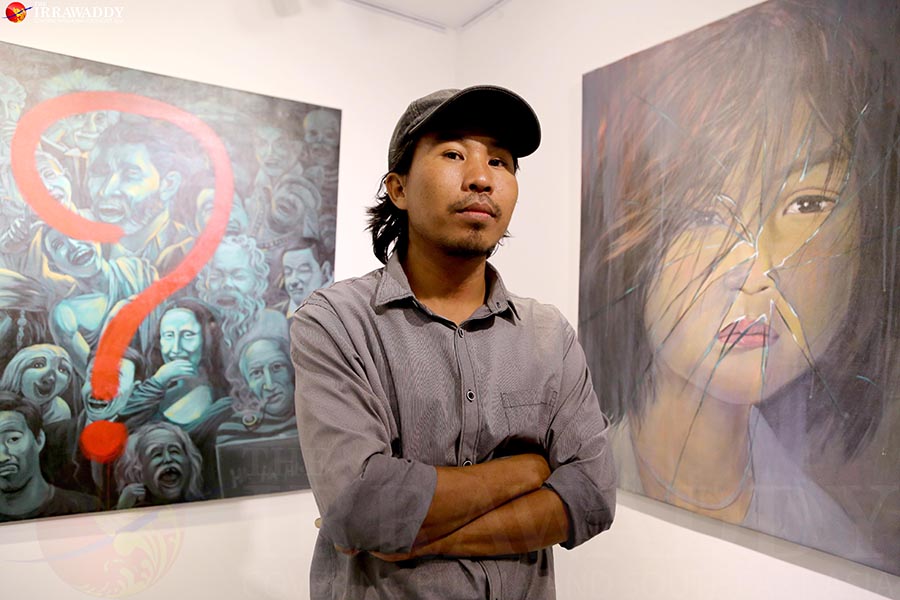
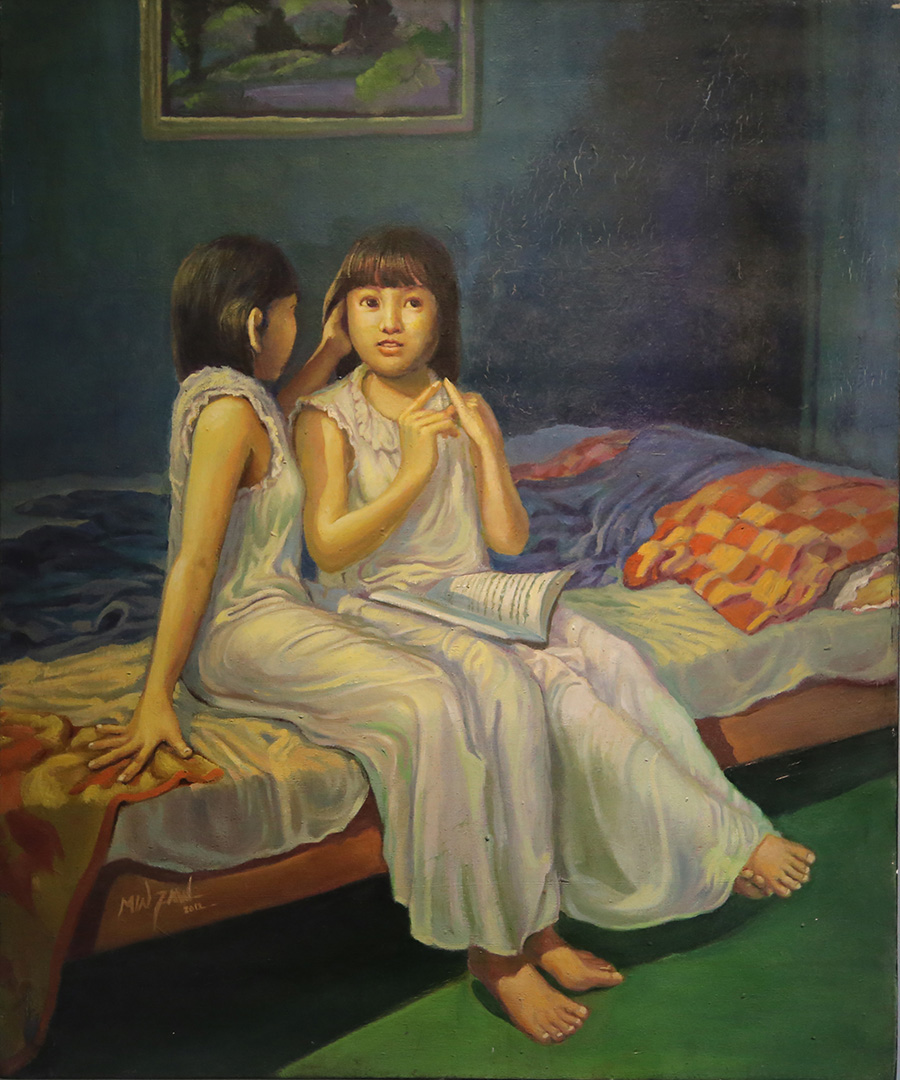
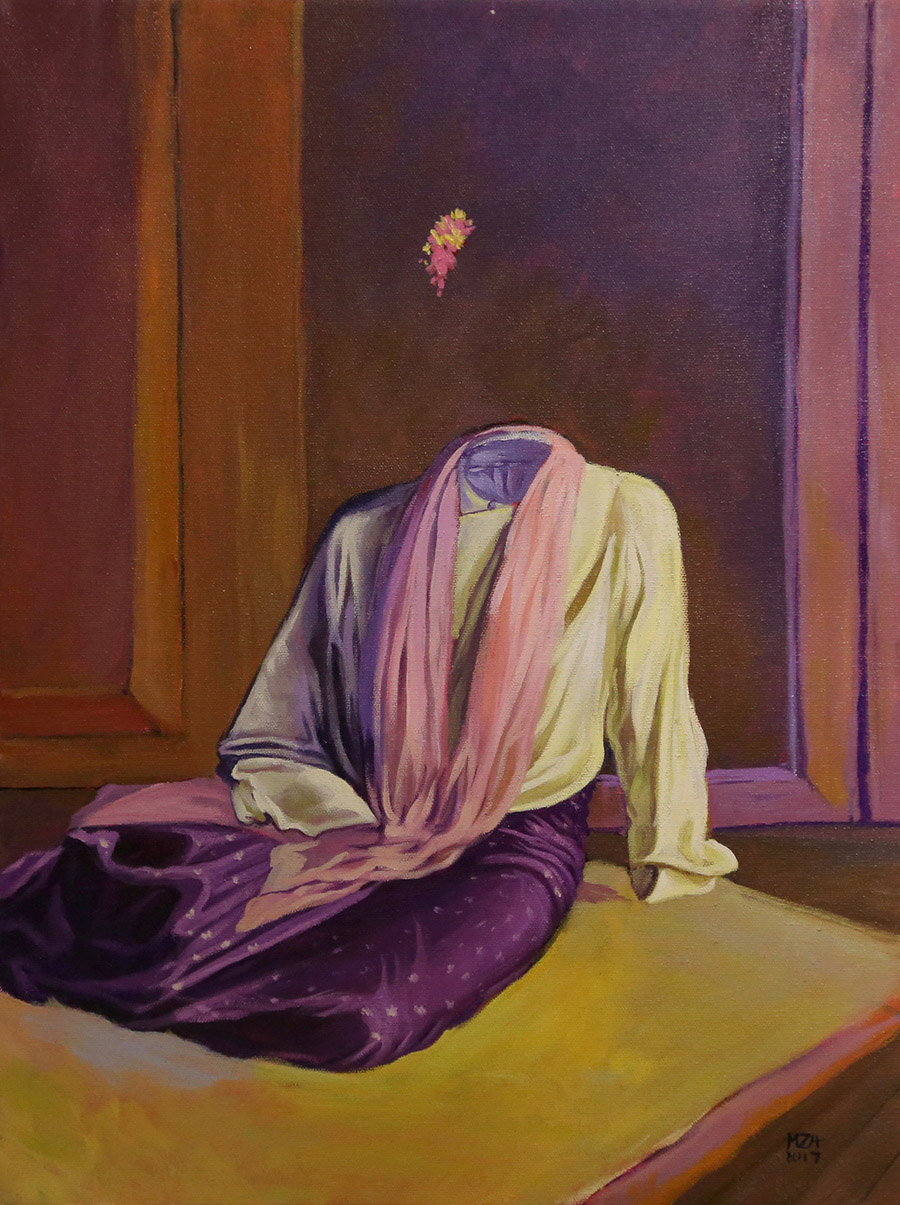
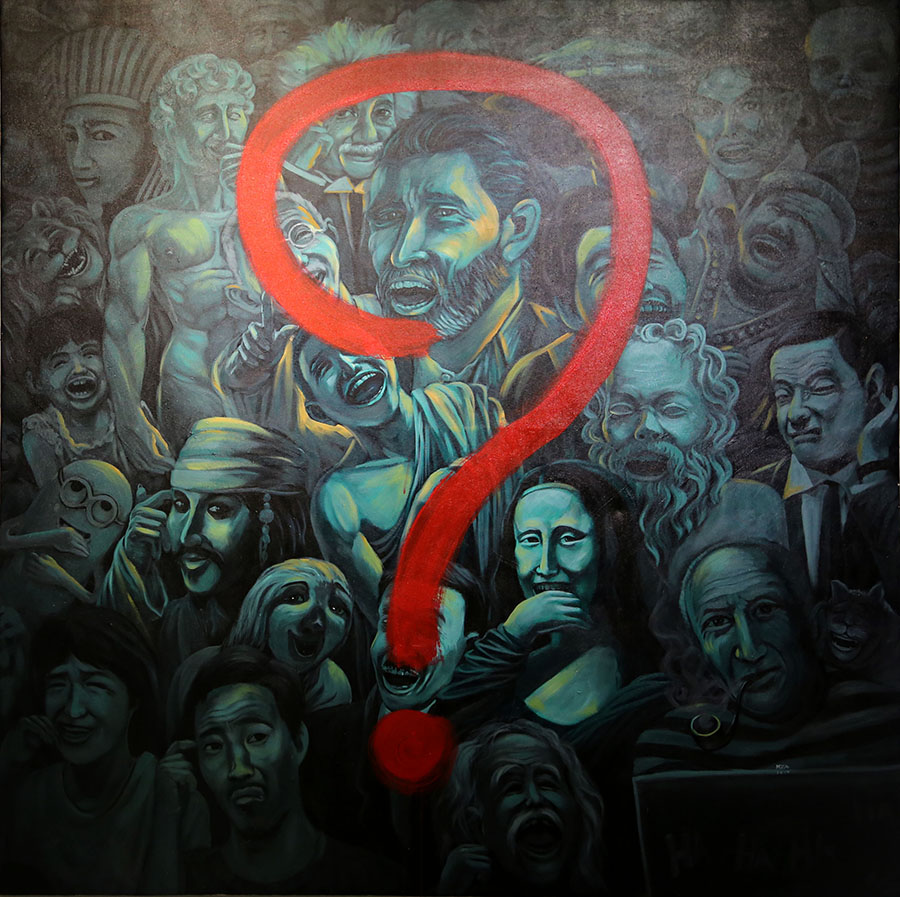
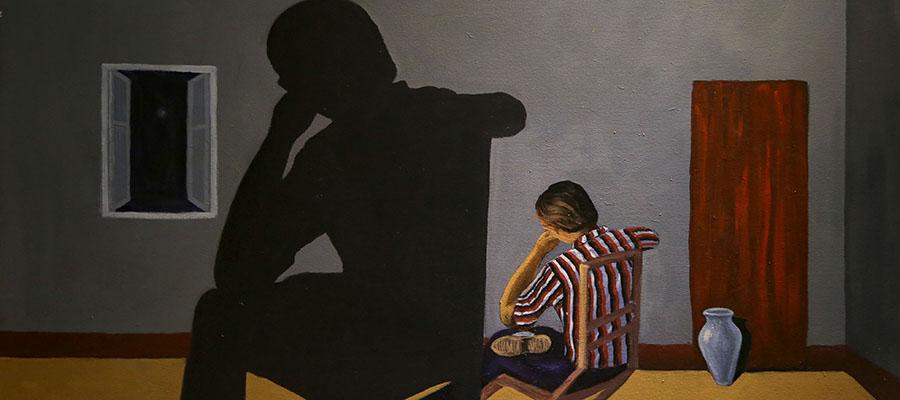
Artist Min Zaw Aung Inspires Viewers to Think Outside the Box

Posted: 15 Dec 2017 09:47 PM PST

Min Zaw Aung has grown to hate ordinary creations and has looked for something different. He has painted a girl but was not satisfied. So, he changed her eyes to those of a snake and dressed her in snakeskin.

"The eyes of this girl resemble those of a snake. They captivate," he said.

In another painting, a person is holding a flower but in his reflection in a mirror, a gun is in his hand instead.

"In social interaction, people think other people will respond the same way if they are good to them. But not every person will be good back to you even though you are nice to them," he said.

"I don't want to draw complete figures like in realism. I want to leave something to the imagination for viewers. I want inspire them to think beyond," said Min Zaw Aung, the 32-year-old artist from central Myanmar.

Though he is particularly keen on surrealism, most of his paintings describe Buddha's philosophies, as he used to live in a monastery with his relative monks for many years.

Since graduating from Yangon National University of Art and Culture in 2007, he has participated in several group art exhibitions.

But he has organized his first exhibition only recently at Bo Aung Kyaw Street Art Gallery.

About a sitting man whose shadow is much larger than his actual physical body, he said: "Sometimes, the real is small and placed in the back seat."

The artist is displaying most of early works at the exhibition 'In My Memorial,' which will be held through Tuesday. More than 20 paintings are on display and can be purchased for US$150 to $1,600.

"Min Zaw Aung has created his works with boldness, confidence and great creativity, and I found no fear or nervousness in his paintings unlike the works of surrealist painters in the past," said artist Myat Kyat.

The post Artist Min Zaw Aung Inspires Viewers to Think Outside the Box appeared first on The Irrawaddy.

Friday, December 15, 2017

The Irrawaddy Magazine

The Irrawaddy Magazine


Analysis: Government Turning Back the Clock on Press Freedom

Posted: 15 Dec 2017 06:55 AM PST

On the evening of Dec. 13, an image of two detained reporters appeared on the Ministry of Information's Facebook page. It showed the two men handcuffed to each other and made to stand behind a table. In a departure from the ministry's usual practice, their faces were clearly visible. The photo has prompted an angry reaction on the part of many Myanmar journalists toward the MOI. On the table in front of the pair are two mobile phones and a number of documents found in their bags. To many observers, the ministry's treatment of the pair as common criminals — or worse, given that it did try to conceal their identities — is a step too far.

According to the MOI, Reuters reporters Wa Lone and Kyaw Soe Oo were detained on Tuesday night in Yangon after approaching police who had recently participated in clashes against the Arakan Rohingya Salvation Army in Maungdaw, about obtaining documents to assist in their coverage of the conflict.

The MOI claims the reporters tried to steal documents in order to sell them to international media. In fact, as reporters for an international news agency, they were planning to share the information with senior editorial staff, which is part of their job. The MOI, which has been criticized as a government propaganda arm, deliberately distorted the facts of the case.

On social media, some people posted messages urging a boycott of state-run newspapers. Some people even said the MOI violated media ethics by posting the photos without obscuring the reporters' identities. The Yangon Journalism School has stopped training MOI personnel to protest the dissemination of the photograph.

U Than Oo, editor of the state-run Myanmar News Agency, said that the MOI cannot change the facts it receives from the Interior Ministry. "We report the news according to journalistic ethics and based on the facts. We can't change the facts."

Regarding the decision not to black out the reporters' faces, U Than Oo suggested The Irrawaddy consult the news editors of the newspapers that ran the picture. At any rate, he added, "Everyone knows who the perpetrators were, so it was unnecessary to black out their faces in the photo."

He said the MOI usually blacks out the faces of people who have been accused of a crime but not yet convicted.

"We know [the reporters] were the perpetrators. This is my understanding," he said.

The MOI initially posted the image online, without obscuring the faces. It later blacked them out after the post drew harsh criticism. On Thursday, however, the image appeared with the faces visible in two state-run newspapers, Myanmar Alin and The Mirror Daily.

The MOI normally blacks out the faces of arrested people in photos posted online.

The director of the Yangon Journalism School said the MOI's action had damaged the reporters' reputations. In protest, two trainers from the school had decided to cancel a weeklong training session for MOI staff in Naypyidaw.

"This wasn't a joint training program with the MOI, but they had asked us for help. Some of our trainers had agreed to help by holding a training session this month. But, when we saw the report attacking Ko Wa Lone and Ko Kyaw Soe Oo, and the way the photo of the pair was used, in our view this offends their dignity.

"Our trainers felt bad, so they decided not to provide the training, which was supposed to have lasted for a week in Naypyidaw," YSJ director U Ye Naing Moe told The Irrawaddy.

The MOI is trying to create problems between the people and the media. It uses taxpayers' money but makes propaganda for the government," said U Zay Yar Hlaing, editor of Maw Kun (Archive) magazine.

"The MOI's action was inappropriate and aimed at turning the people against the media. Their report was an act of government propaganda," he said.

Direct censorship of news media no longer exists in Myanmar, but journalists come under pressure in other ways as they try to fulfill the two aspects of their job; gathering and publishing facts. Instead of censoring articles as in the past, these days authorities are more likely to, for example, block reporters from traveling to areas like Maungdaw to report.

Another form of censorship is charging reporters with serious offenses. This is censorship through intimidation. Authorities also publish false information in order to mislead the public about the media.

"Parliament cannot control the government. So when the media tries to exert pressure, the government acts against it," said U Zay Yar Hlaing.

This shows that Myanmar is still subject to serious censorship, he said, adding that things were occurring on the ground in Maungdaw that the government did not want the domestic or international media to know.

Myanmar appears to be turning back the clock on press freedom, critics say, with authorities using various charges to prosecute journalists, just as previous military governments did. The government has used articles including 66 (d) (defamation law), 17 (1) (unlawful association), the trespassing law, and, as in the case of the Reuters reporters, the Official Secrets Act.

The arrest of the two reporters showed that the media in Myanmar is under threat, said Mratt Kyaw Thu, a reporter from Frontier Myanmar.

"Personally, I didn’t expect much in the way of media reform from this government, especially for our journalism industry, much less the Army. But when I saw [the arrested journalists] in the paper and on government social media, I was just….damn!” he said.

The post Analysis: Government Turning Back the Clock on Press Freedom appeared first on The Irrawaddy.

Press Freedom and the Invisible Line

Posted: 15 Dec 2017 06:38 AM PST

Do we have press freedom in Myanmar? Yes, we do, but with an invisible line. No one can know where that line is because it's unseen. When you touch or cross it, you're finished.

Two journalists, Wa Lone and Kyaw Soe Oo, crossed that line, and they found themselves in custody on Tuesday.

Police charged the pair of Reuters reporters under the Official Secrets Act because they possessed leaked internal security reports related to fighting between border guard forces and a Muslim militant group called the Arakan Rohingya Salvation Army in August. If found guilty, they could face up to 14 years in prison.

Myanmar's Official Secrets Act, enacted in 1923 under British colonial rule, is just one among many elements of the invisible line being used against the press and its practitioners.

The invisible line is now a threat to press freedom — a staple of democracy — just as the draconian censorship mechanism was under the former military regime.

In 2017 alone, 11 journalists from different publications were arrested after running critical and satirical stories about military and government officials. They crossed the invisible line.

They were charged with different laws, including Article 66(d) of the Telecommunications Law, Article 17(1) of the Unlawful Associations Act, the Aircraft Act and now the Official Secrets Act. The previous administration used other laws, such as Article 502 of the Penal Code for defamation and Article 131 for abetting mutiny or attempting to seduce military officers and soldiers.

The prosecutors ranged from police officers to high-ranking military and government officials and nationalists. Their victims include journalists from different publications such as The Irrawaddy, Democratic Voice of Burma, Myanmar Now, The Voice, 7Days and Reuters.

Judging from the pattern, many more laws could be added to the invisible line whenever prosecutors feel the need to extend it. That is, the line can be moved to reach any journalist if needed, especially when someone in power feels annoyed with their reporting.

Back in September, when the military withdrew its cases against six journalists and two activists, clearing the way for the journalists' release, we felt as though the press environment might be improving.

I personally hoped there would be no ugly cases like those again.

But the arrest of the two Reuters journalists on Tuesday signaled that Myanmar is still an unsafe environment for journalists to do their job – even simply to gather information.

Worse, the cases happened with a democratic government led by Daw Aung San Suu Kyi's National League for Democracy (NLD) is power.

In 2015, the NLD clearly stated in its election manifesto: "The news media is the eyes and ears of the people. We will ensure that the media has the right to stand independently in accordance with self-regulation of matters relating to ethics and dignity, and the right to gather and disseminate news."

It's a shame for the NLD government to have let nearly a dozen journalists be arrested — less than two years after coming to power. We haven't seen any tangible attempt by the NLD government to stop such attacks against the media, which has played an important role in the country's transition from military rule.

We are eager to find out how democracy icon Daw Aung San Suu Kyi and her government will respond.

For now, we feel more vulnerable in doing our job professionally and properly than we did under military rule. In those days, with pre-censorship in place, we knew if we were crossing the line. The worst-case scenario was that our story would be scrapped by the then-censorship board.

This is the reality that we Myanmar journalists are facing in doing our job. The question now is whether the democratic government is truly aware of the risks journalists are facing and interested in getting rid of that invisible line.

The post Press Freedom and the Invisible Line appeared first on The Irrawaddy.

Timeline: Journalists Under Attack

Posted: 15 Dec 2017 04:50 AM PST

YANGON — The recent arrest of two Reuters journalists, Ko Wa Lone and Ko Kyaw Soe Oo, under the British colonial-era Official Secrets Act has raised anxieties about shrinking press freedom in Myanmar.

Local journalist networks and news organizations strongly criticized the arrest as the latest attack on the press and called for the pair's immediate release.

"We journalists absolutely believe that journalists have the right to travel to conflict zones as well as gather information from relevant sources in order to produce accurate reports," a joint statement from 12 journalists networks said.

The pair's arrest is but the latest in a growing list of cases of journalists being taken to court by some of the country's most powerful institutions, including the military.

A total of 11 journalists were arrested this year under various repressive laws, including the Official Secrets Act and the Unlawful Associations Act, and on defamation charges for gathering information or travelling to conflict areas for their work and for criticizing officials.

Here, The Irrawaddy has compiled a list of the reporters arrested in 2017.

Reuters journalists Ko Kyaw Soe Oo (left) and Ko Wa Lone.

Official Secrets Act

Two Reuters journalists, Ko Wa Lone and Ko Kyaw Soe Oo, were detained on Tuesday night after being invited to meet with police officials on Yangon's outskirts for possessing police reports containing detailed information about the fighting between government troops and the Arakan Rohingya Salvation Army in late August 2017.

Two policemen were also arrested for allegedly providing the documents to the reporters.

The police opened the case under the Official Secrets Act's Article 3, which allows for prison sentences of up to 14 years. The policemen were charged under both the Official Secrets Act and the Myanmar Police Force Maintenance of Discipline Law.

A screenshot of the two foreign TRT journalists and their local fixer. (Photo: TRT News)

Drone Case

Turkish state broadcaster TRT World Producer Mok Choy Lin, from Malaysia, freelance camera operator Lau Hon Meng, from Singapore, and two Myanmar citizens — their interpreter Ko Aung Naing Soe and driver U Hla Tin — were detained on Oct. 27 for attempting to fly a drone near Myanmar's Parliament in Naypyitaw.

They were sentenced to two months in jail by a Naypyitaw court on Nov. 1 under the 1934 colonial-era Myanmar Aircraft Act for filming with a drone. They were also charged under the 2012 Export and Import Law for illegally bringing the drone into the country — which carries a penalty of up to three years in prison.

The two foreign journalists were also charged with violating Section 13 (1) of the 1947 Immigration Act on Nov. 27, after their visas expired while in custody.

The three detained journalists attending their trial in Hsipaw Court on Aug. 11. (Photo: Zaw Zaw / The Irrawaddy)

Unlawful Associations Act

The Irrawaddy's senior reporter Lawi Weng, also known as U Thein Zaw, and Democratic Voice of Burma reporters U Aye Nai and Ko Pyae Phone Aung were arrested by the Myanmar Army on their way back from a reporting trip to northern Shan State on June 26. They traveled to an area controlled by the Ta'ang National Liberation Army to cover a drug-burning ceremony marking a UN-designated day against drug abuse. The military filed the lawsuit against the journalists under Article 17 (1) of the Unlawful Associations Act and transferred them to Hsipaw Prison in Shan State on June 28, after they had been detained at an undisclosed location for nearly three days.

After detaining the journalists for more than two months, the military withdrew its case against them on Sept. 1.

The Voice Daily Chief Editor Ko Kyaw Min Swe (left) and columnist Ko Kyaw Zwa Naing arrive for a court hearing in Bahan Township on June 16.(Photo: Thet Htun Naing / The Irrawaddy)

Satirical Article

The Voice Daily Chief Editor U Kyaw Min Swe and satirical columnist Ko Kyaw Zwa Naing, also known by his pen name British Ko Ko Maung, were arrested by police on June 2 after the Myanmar Army filed a lawsuit against them. The pair was charged under Article 66 (d) of the Telecommunications Law and Article 25 (b) of the Media Law for allegedly defaming the military in a satirical article. Ko Kyaw Zwa Naing was later released and then acquitted of violating Article 66 (d) on June 16.

The military withdrew its case against them on Sept. 1.

The Maha Aung Myay Township Court releases Myanmar Now Editor-in-Chief Ko Swe Win on bail on July 31. Z(Photo: aw Zaw / The Irrawaddy)

Airport Arrest

Myanmar Now Editor-in-Chief Ko Swe Win was arrested at Yangon International Airport on July 30 on his way to Bangkok for a short work trip ahead of a court hearing in Myanmar and transferred to Mandalay to face defamation charges. He was released on bail the next day.

Ko Swe Win had two related cases filed against him in March. One was filed by a follower of ultranationalist monk U Wirathu in Mandalay. The other was filed by a nationalist in Yangon. Both accused him of insulting U Wirathu after he shared a Myanmar Now news story quoting a senior abbot saying the monk was no longer in the monkhood because he had praised the assassins who killed National League for Democracy legal adviser U Ko Ni. The latter case was later dismissed by a judge. The former is currently at trial.

The post Timeline: Journalists Under Attack appeared first on The Irrawaddy.

Ava Tailor Shop Family Sentenced in Abuse Case 

Posted: 15 Dec 2017 03:39 AM PST

YANGON — Yangon's western district court sentenced four family members who own the Ava Tailor Shop to 13 years and up for torturing two young domestic workers. Two other family members were acquitted.

The verdicts came after more than one year of testimony from both sides totaling some 20 witnesses since October 2016.

The case of the two abused teenagers was first reported by Myanmar Now editor Ko Swe Win. The girls were freed from the home of their abusers, and the family was arrested after a widespread public outcry.

In May, six family members were charged. Tin Thuzar, her daughter Su Mon Latt and son Tin Ko Latt, and son-in-law Yar Zar Tun were charged under the Anti-trafficking in Persons Law, Penal Code 326 for voluntarily causing grievous hurt by dangerous weapons and means, and the 1993 Child Law.

Tin Thuzar and Su Mon Latt received 16 years and one month each, Yar Zar Tun was sentenced to 13 years and one month and Tin Ko Latt received nine years and one month.

Father and husband U Ko Latt and daughter Thiri Latt were charged under the first two laws but they were acquitted as the court found no evidence tying them to the case.

Lawyer Daw Hnin Su Aung said she shared mixed feelings as her client, Thiri Latt, was freed but the others were sentenced with harsh punishments.

The district judge said the culprits could appeal at the regional court in regard to the Friday verdicts.

Daw Thandar, the mother of Yar Zar Tun, told The Irrawaddy that she would file an appeal to a higher court.

"My son is not guilty and I will appeal at higher courts as long as possible," she said.

The two victims, Ma San Kay Khaing 17, and Ma Thazin, 18, had to undergo numerous operations for injuries sustained from years of torture, but they are recovering. The pair is from a village on the outskirts of Yangon. They had worked for the Ava Tailor Shop family since they were 10.

Prior to hearing the case, the Myanmar National Human Rights Commission tried to intervene in the case by telling the victims' families to accept monetary compensation. Due to public outrage, commission member U Zaw Win left his position.

The Ava case has highlighted widespread inhumane treatment of housemaids, especially those who are underage in Myanmar. The case drew public condemnation and set an example for others to report similar cases in the future.

The post Ava Tailor Shop Family Sentenced in Abuse Case  appeared first on The Irrawaddy.

Mandalay Govt to Confiscate Plots Granted by Prior Administration

Posted: 14 Dec 2017 11:02 PM PST

MANDALAY — The Mandalay regional government will take back control of 135 plots of land that were granted or leased by the previous government during last year's power transfer and believed to have violated procedures.

Mandalay Region Chief Minister Zaw Myint Maung announced the plan in response to a report reviewing the division government's land grants during the power transfer. The review was carried out by Mandalay government officials and lawmakers and submitted to Parliament on Tuesday.

"We should terminate the contracts that were awarded in violation of leasing procedures, national land use policy, and laws and regulations, and take the plots back," the chief minister said.

Parliament gave the regional government the green light to proceed.

"We found that up to 20 grants were issued in a single day, as well as other suspicious things involving leasing procedures. So there are reasons to believe that there was some dishonesty," Mandalay Division Planning and Finance Minister U Myat Thu, who led the investigation, told The Irrawaddy.

The government will confiscate the plots and pay the owners back what they paid the previous government in rent. Most of the plots are in Pyi Gyi Tagun, Chanmyathazi and Maha Aungmyay townships.

"Some paid the right price for rent, but some paid much less. We are still calculating the market price of the plots now," said U Myat Thu.

U Zaw Myint Maung said his government would also take action against department staff who were involved in the deals. He said the confiscated plots would be used for public projects.

In June last year, lawmaker U Myint Aung Moe, of Chanmyathazi Township, submitted a proposal to the regional Parliament suggesting a review of unused plots granted by the previous government during the power transfer. Parliament formed a team to investigate.

Translated from Burmese by Thet Ko Ko.

The post Mandalay Govt to Confiscate Plots Granted by Prior Administration appeared first on The Irrawaddy.

Companies Law to Take Effect August 1: DICA

Posted: 14 Dec 2017 10:37 PM PST

YANGON — Myanmar's new Companies Law replacing the colonial-era Myanmar Companies Act of 1914 will come into effect as of August 1 next year, according to the Directorate of Investment and Company Administration (DICA).

"All the preparations to apply the law should be completed before next August. So, the law will be brought into effect on August 1," said director-general of DICA U Aung Naing Oo at the briefing of the law on Wednesday in Yangon.

Until then, DICA will conduct a trial for electronic registration of companies, hold discussions with stakeholders and educate the public about the new piece of legislation, according to U Aung Naing Oo,

The new law combines elements of the Myanmar Companies Act of 1914 and the Special Companies Act of 1950, reworked in hopes of attracting foreign investment, Deputy Minister for Planning and Finance U Maung Maung Win told Parliament as he submitted the draft law in July.

The eight-part law was formulated with input from the attorney general's office, concerned ministries and economic partners plus technical assistance from the Asian Development Bank (ADB).

There are more than 60,000 companies registered with DICA under the old law, and those companies will have to register online under the new law over the next six months, he said.

"Online registration is not complicated. It is just filling out forms," said U Aung Naing Oo.

The new law no longer defines any company in which a foreigner holds a minimum 1 percent of shares as a foreign-owned company, but only those where foreign ownership exceeds 35 percent, said U Aung Naing Oo.

The new law will also allow foreigners to own condominium flats and moveable property, according to U Aung Naing Oo.

"The old law requires two persons to set up a private company. But the new law only requires one. The old law requires seven persons to set up a public company, now it only needs three. And companies with 35 percent of foreign ownership will be treated as citizen-owned companies," U Kyaw Thu, chairman of Myanmar Fruit, Flower and Vegetable Producers and Exporters Association, told The Irrawaddy.

The deregulation in the new law will allow Myanmar citizen businesspeople to gain technology and from foreign investors, according to DICA.

The post Companies Law to Take Effect August 1: DICA appeared first on The Irrawaddy.

At Least 6,700 Rohingya Killed in ‘Horrific’ Myanmar Violence, Charity Says

Posted: 14 Dec 2017 08:23 PM PST

KUALA LUMPUR — At least 6,700 Rohingya Muslims, including many children, were killed in the first month of violence that erupted in Myanmar's troubled Rakhine State in August, Medecins Sans Frontieres (MSF) said on Thursday.

The medical charity said the first major survey on the scale of mortality was the "clearest indication yet of the widespread violence" that began on August 25, which has driven more than 600,000 Rohingya across the border to Bangladesh.

Based on interviews at refugee settlements in Bangladesh's Cox's Bazar region, MSF estimated at least 6,700 Rohingya – including some 730 children below the age of five – were killed by violence between August 25 and September 24.

The charity, also known as Doctors without Borders, said the figures were "the most conservative" estimates.

"We met and spoke with survivors of violence in Myanmar, who are now sheltering in overcrowded and unsanitary camps in Bangladesh," MSF's medical director Sidney Wong said.

"What we uncovered was staggering, both in terms of the numbers of people who reported a family member died as a result of violence, and the horrific ways in which they said they were killed or severely injured."

Gunshots were the cause of death in most cases. Others were beaten or burned to death in their houses.

"We heard reports of entire families who perished after they were locked inside their homes, while they were set alight," Wong said in a statement.

Mainly Buddhist Myanmar denies atrocities against Rohingya, and said in September that nearly 400 people died in the fighting, mostly Rohingya insurgents.

A top United Nations human rights official said last week that Myanmar's security forces may be guilty of genocide against the Rohingya.

Bangladesh and Myanmar have agreed to cooperate on the repatriation of the displaced Rohingya but rights groups have cautioned against any hasty return before peace and stability is restored.

Responding to MSF's findings, the charity Save the Children said it was appalled by the loss of life.

"The international community must work to end the violence, bring perpetrators to justice and insist on immediate, full and unfettered humanitarian access to all people in need in Rakhine State," Bangladesh director Mark Pierce said in a statement.

"Violence against children cannot be tolerated and cannot remain unpunished."

The post At Least 6,700 Rohingya Killed in 'Horrific' Myanmar Violence, Charity Says appeared first on The Irrawaddy.

Finance Minister Admits Economy is Underperforming

Posted: 14 Dec 2017 07:58 PM PST

NAYPYITAW — Planning and Finance Minister U Kyaw Win has admitted that Myanmar's economy has not improved as well as expected, six months after he compared the country's economy to a jet plane about to take off.

"There are suggestions that the country's economy has not picked up as we expected. Considering the current situation, we have to accept that it is true," the minister said in his address to a meeting on small and medium enterprise (SME) development in Naypyitaw on Wednesday.

The address was a sharp contrast to his remarks at the Myanmar Investment Forum in June. "We see that last year the country's economy was like a plane moving on the runaway," he said at the time. "Now this year we will defy gravity with jet power, meaning this is the year economic development will take off."

However, the minister declined to answer questions about exactly what was holding the economy back.

His address on Wednesday followed the recent release of a report stating that business confidence among entrepreneurs in Myanmar dropped drastically this year. The report was based on a survey conducted by the German consultancy Roland Berger and the Union of Myanmar Federation of Chambers of Commerce and Industry.

Roland Berger published the results of the first Myanmar business survey in December 2016. It found an enormous sense of optimism among both local and international investors  — 73 percent of businesspeople expected the country's business landscape to improve. This year, those expectations were shared by only 49 percent of them.

The main reason for the drop in confidence was a lack of clear economic policies and plans from the government; of the roughly 500 local and international business owners in Myanmar surveyed, 77 percent of them flagged it as a significant or very significant concern.

Frustration with the National League for Democracy (NLD)-led government's management of the economy has grown over the past year as the administration has largely failed to flesh out its 12-point plan.

The International Monetary Fund has lowered its forecast for the growth of Myanmar's gross domestic product this year from 7 to 6.7 percent.

"The lack of clear policies and guidelines shows that leaders have no capacity. The NLD is also wrong to have continued with policies that were introduced by the previous government, before the power transfer, to increase taxes," said U Than Lwin, an adviser to Kanbawza Bank.

"It doesn't make a difference to do what its predecessor has done. It needs to see if it is right or wrong," he added.

He suggested that the government establish economic think tanks and appoint advisers to ministries and to the chief ministers of the regions and states.

"The government thinks that it will get more tax revenues if it increases the tax rates. It is wrong. While the economy is slow, taxes just increase the burden on the people," he said.

"People don't want to pay high taxes and so they evade them. The government also needs to make sure taxpayers want to pay the tax," he added.

U Aung Hlaing Win, a former member of the Lower House Economic Committee, blamed longstanding monopolies for the country's poorer-than-expected performance.

"It is one of the legacies of the previous government that small businesses are not in a position to compete with much bigger businesses," he said.

Myanmar's economy will not improve unless and until those monopolies are ended, he argued, citing the example of Yangon Bus Service (YBS).

"In the case of YBS, in the past any bus owner could join the service. But then it was monopolized by individual companies. There are many monopolies in the country like this," he said.

The SME development meeting, proposed by State Counselor Daw Aung San Suu Kyi, was attended by relevant Union ministers, chief ministers and department heads.

At the meeting, U Kyaw Win criticized the provision of 90 million kyats ($66,000) to a beauty parlor under an SME loan scheme. Yangon Division Chief Minister U Phyo Min Thein argued that true SMEs do not get government loans.

Edited from the Burmese by That Ko Ko.

The post Finance Minister Admits Economy is Underperforming appeared first on The Irrawaddy.

Thursday, December 14, 2017

The Irrawaddy Magazine

The Irrawaddy Magazine


Govt eases some restrictions on Bagan locals

Posted: 14 Dec 2017 07:51 AM PST

YANGON—The government has eased some restrictions on locals living within the heritage monument zone around the Bagan archaeological site, while maintaining its plan to seek a Unesco World Heritage listing for the site.

In late November, locals from five villages petitioned the Ministry of Religious Affairs and Culture demanding their villages be demarcated within a buffer zone instead of the current monument zone, which is also known as the "property zone". Locals have expressed concern that the many restrictions expected to be imposed on their villages in order to comply with Unesco's standards for World Heritage Site listing would hurt their livelihoods and businesses.

The villages have existed in this area for generations and locals living there are known as "Bagan natives."

The temples of Bagan, dating from between the 9th and 13th centuries—when the Kingdom of Bagan ruled over much of lowland Burma—are considered Myanmar's biggest tourist draw and on par with Cambodia's Angkor Wat. Despite its historical, archaeological and cultural value, the ancient capital has yet to be granted World Heritage Site status, reportedly due to officials' inability to present plans to deal with inauthentic restorations and controversial hotel developments in the archaeological site completed under previous governments.

Despite its historical, archaeological and cultural value, the ancient capital has yet to be granted World Heritage Site status. (Photo: The Irrawaddy)

The ministry submitted a draft nomination dossier to Unesco's World Heritage Site Committee in September and the final version is required to be delivered by Feb. 1, 2018. It has to provide thorough plans to fix previous mismanagement issues, including a master plan for the archaeological site in the dossier.

"Regarding the locals' petition, the [ministry] will negotiate and make amendments giving serious consideration to locals' concerns," the ministry said in a statement Tuesday. It emphasized that the ancient villages would remain within the property zone since ancient temples surrounding the villages have high heritage value and need to be conserved.

The ministry stated that traditional businesses, expansion and construction of locals' houses, and tourism businesses such as restaurants and homestays in the villages would be allowed. It also said that buildings in the villages would be permitted according to the same regulations as in the new Bagan and Nyaung-U cities.

Construction and installation of telecommunications towers and satellite dishes would be allowed in accordance with the Heritage Impact Assessment if such infrastructure does not hinder the view of the heritage monuments, it added.

The temples of Bagan are Myanmar's biggest tourist draw. (Photo: The Irrawaddy)

U Aung Aung Kyaw, director of the ministry's Department of Archaeology, National Museum and Library in Bagan, told The Irrawaddy that collaboration between locals and authorities is an essential element in the process of listing Bagan as a Unesco World Heritage site, adding that the ministry would not sacrifice the interests of local residents in order to achieve heritage status.

"I don't believe this will harm locals' livelihoods. We have taken employment opportunities for them into consideration," U Aung Aung Kyaw said.

He also expressed concern that business people and hotel developers were encouraging local opposition in order to further their own plans for development projects within the archaeological site.

U Aung Soe Linn, administrator of Myin Ka Bar, one of the five villages that petitioned the ministry, rejected this claim.

"There are no cronies behind us," he told The Irrawaddy, insisting that local residents were just trying to protect their own interests.

He explained that villagers' lifestyles and livelihoods would be affected over time. They are particularly concerned about restrictions inside the property zone and an increase in the number of people living in the area.

Hot air balloons over Bagan. (Photo: Zaw Zaw/ The Irrawaddy)

In the 1990s, one of the then-ruling military junta's most powerful leaders, Gen Khin Nyunt, oversaw the forced relocation of about 6,000 local residents of the old Bagan area away from the archaeological zone to make way for hotel projects. Local people are concerned that something similar will happen again, according to several Bagan residents The Irrawaddy talked to this week.

Unesco's national project officer for Myanmar Ma Ohnmar Myo was not available to comment for this article. However, she told The Irrawaddy in late November that sustainable conservation of the Bagan archaeological site is not only about ancient temples and monuments, but also about the livelihoods of the local community.

Authorities have to make sure that heritage properties are preserved while at the same time protecting the interests of local communities, she said.

The post Govt eases some restrictions on Bagan locals appeared first on The Irrawaddy.

Army Shelling Seen Signaling Start of New Offensive in Kachin, Shan States

Posted: 14 Dec 2017 06:17 AM PST

The Myanmar Army on Wednesday shelled at least four positions held by the Kachin Independence Army in northern parts of the country in a move rebel leaders are interpreting as a signal that fighting will soon escalate in areas under their control.

Col. Naw Bu, a KIA spokesperson, told The Irrawaddy today that the four places were in Laiza, Mansi and Tanai townships. "Looking at their shelling, we understand that they are preparing to do something to us," he said, suggesting a military escalation was imminent.

Col. Naw Bu said the Myanmar Army fired three artillery shells at a forward security post for a KIA base in Mung Lai Hkyet at 2 pm local time, adding there had been "no fighting in the area on previous days."

Clashes have also broken out around Tanai township where the Myanmar Army has blocked public roads out of the town. The army has also shelled nearby mining villages and dropped leaflets from helicopters ordering people to move out of these areas before May.

"They block all the roads. No one dares travel back to their villages. They have even shelled amber mining areas," said Yui Che Le, a member of the Kachin Baptist Convention in Tanai township, which provides help to Kachin IDPs.

In its account of the hostilities, the Ministry of Defence said there had been landmine incidents on an almost daily basis around Kachin state with a dozen people being wounded by devices it said were planted by the KIA. The ministry said there had been landmine explosions in at least five places: Bhamo, Karmine, Hpakant, Mohnyin and Tanai townships.

The Myanmar Army had had taken people wounded by the landmine blasts to hospital for treatment and has posted photos of the victims on the Ministry of Defence's Facebook account to support its version of events.

As for three small blasts in Hpakant yesterday, Col. Naw Bu denied army charges that the shells came from the KIA. "The Tatmadaw (Myanmar Army) said the bombs were from us. But, we stand by our accusation that the bombs were from them. There are Tatmadaw, KIA, and even Red Shan militia based in the areas," he said.

Military Offensive

The Burmese Army typically launches its military offensives against rebels groups in October with the onset of the dry season in Kachin and northern Shan states, but their offensive started late this year. Some observers believe the Army is seeking to keep a lower profile after coming under intense pressure from the international community after it launched a sweep in Rakhine state in August that forced more than 620,000 Rohingya to flee to Bangladesh. As a result, they have delayed their annual military offensive in Kachin and northern Shan states.

The Myanmar Army launched a heavy offensive last year at about this time in Kachin state and northern Shan. Claiming they had no place to hide in the jungle, the rebels launched a counter offensive, attacking army bases in a number of places in northern Shan state including Muse, Kutkai, and Mongko townships and forcing hundreds of IDPs to flee to China.

Kachin State is rich in of natural resources and the Myanmar Army has a keen interest in grabbing control of these areas, according to the rebels. Earlier this year, an army lawmaker in the Lower House proposed the army be given approval to launch military operations to take over mining areas. But, Parliament rejected the proposal. Also, a military MP in Kachin asked the state Parliament to authorize curfews in some parts of the state, but the state parliament voted that plan down too.

Many Hpakant jade mining areas are already under the control of the army, while mining areas in Tanai are controlled by the KIA.

Refugee Situation in Kachin

The Myanmar Army has not allowed humanitarian agencies from the UN to deliver aid to Kachin IDPs. UN officers reported that they have asked the Myanmar Army several times for permission but they have not been denied on each occasion.

Local Kachin rights activists and international rights groups have called the blocking of humanitarian aid deliveries to the IDPs a war crime, but the army has ignored the criticism. It apparently believes the KIA will able to resist a long offensive if it lets international humanitarian aid cross into KIA-controlled areas. The Myanmar Army has deployed a "four cuts" counter-insurgency strategy that aims to cut off food, funds, intelligence and popular support for the KIA's armed resistance.

A 17-year-long ceasefire between the KIA and Myanmar Army broke down in 2011. The resulting fighting has caused 120,000 people to flee from their homes and they are now living in 167 IDP camps in Kachin State. They have not been able to go back home since the fighting erupted.

The post Army Shelling Seen Signaling Start of New Offensive in Kachin, Shan States appeared first on The Irrawaddy.

UN Chief Says Arrest of Reuters Journalists Shows Erosion of Press Freedom in Myanmar

Posted: 14 Dec 2017 06:09 AM PST

TOKYO/YANGON — The arrest of two Reuters journalists in Yangon this week was a signal that press freedom is shrinking in Myanmar and the international community must do all it can to get them released, UN Secretary-General Antonio Guterres said on Thursday.

Guterres said his main concern over Myanmar was the "dramatic violations of human rights" during a military crackdown in Rakhine State that forced more than 600,000 Rohingya Muslims to flee the country for southern Bangladesh, and the arrest of the journalists was probably related.

"It is clearly a concern in relation to the erosion of press freedom in the country," he told a news conference in Tokyo, referring to the detention of Wa Lone and Kyaw Soe Oo, who had been working on stories about the strife in Rakhine State.

"And probably the reason why these journalists were arrested is because they were reporting on what they have seen in relation to this massive human tragedy," he added.

Myanmar's Ministry of Information said in a statement on Wednesday that the Reuters journalists and two policemen faced charges under the British colonial-era Official Secrets Act. The 1923 law carries a maximum prison sentence of 14 years.

The reporters "illegally acquired information with the intention to share it with foreign media," the ministry said in its statement, which was accompanied by a photo of the two reporters in handcuffs.

Reuters President and Editor-in-Chief Stephen J. Adler said in a statement on Wednesday: "We are outraged by this blatant attack on press freedom. We call for authorities to release them immediately."

Wa Lone and Kyaw Soe Oo went missing on Tuesday evening after they had been invited to meet police officials over dinner on the outskirts of Yangon.

The authorities have not confirmed where the journalists are being held and, as of Thursday morning, Reuters had not been formally contacted by officials about their detention.

Britain Raises Concern

The British Embassy in Yangon expressed deep concern about the arrests, and said in a statement that journalists "must be allowed to work freely and without intimidation."

"We have raised our concerns with the Burmese government, urging them to explain these arrests and allow immediate access to the two journalists," it said.

Myanmar is also known as Burma.

The Foreign Correspondents Club of Myanmar said it was "appalled" by the arrests and "gravely concerned" about the state of press freedom in the country. In a statement, it called on the authorities to ensure the safety of the reporters and allow their families to see them.

The Foreign Correspondents Club in neighboring Thailand said it was "alarmed by the use of this draconian law with its heavy penalties against journalists simply doing their jobs."

"Wielding such a blunt legal instrument has an intimidating effect on other journalists, and poses a real threat to media freedom," the Foreign Correspondents Club of Thailand said in a statement, calling for the journalists to be released.

It said journalists should be given access to Rakhine State so that they can report accurately on developments there.

Rohingya refugees in Bangladesh say their exodus from the mainly Buddhist nation was triggered by a military offensive in response to Rohingya militant attacks on security forces at the end of August.

The United Nations has branded the military's campaign "a textbook example of ethnic cleansing" of the minority Rohingya.

Guterres said the international community should do everything possible to secure the journalists' release and freedom of the press in Myanmar.

He called for aid to be delivered, violence contained and reconciliation promoted in Rakhine State, and for the Rohingyas' right of return to be fully respected and implemented.

The post UN Chief Says Arrest of Reuters Journalists Shows Erosion of Press Freedom in Myanmar appeared first on The Irrawaddy.

Settling Scores in Northern Rakhine

Posted: 14 Dec 2017 04:24 AM PST

YANGON — In order to implement the recommendations of the Kofi Annan-led Advisory Commission on Rakhine State, the President's Office announced the creation of a ten-member implementation committee on Monday including international and local experts alike.

The country's de facto leader, State Counselor Daw Aung San Suu Kyi, had already formed the Union Enterprise for Humanitarian Assistance, Resettlement and Development in Rakhine (UEHRD). Dozens of businesspeople have separately formed yet another group to accelerate infrastructure development in the state's north.

However, there appears to be little collaboration between the Union government and local civil society groups or the Rakhine State Parliament. And as the central government works out a strategy to deal with the crisis, those groups and lawmakers have already begun trying to permanently reshape local demographics by drawing in ethnic Arakanese from elsewhere.

Not long after armed clashes broke out on Aug. 25 in the state's Maungdaw Township, Arakanese historian Aye Chan, a professor at Japan's Kanda University of International Studies, joined nationalists and a few lawmakers to establish the Ancillary Committee for Reconstruction of Rakhine National Territory in the Western Frontier (ACRRNT), known locally as the CRR.

Searching for Settlers

In its counter-offensive against the militant Muslim group the Arakan Rohingya Salvation Army (ARSA), which sparked the Aug. 25 clashes, government security forces have driven more than 620,000 Rohingya to neighboring Bangladesh with clearance operations UN officials have called a "textbook example of ethnic cleansing."

Nearly 30,000 non-Muslims were also displaced, though most of them have now returned to Maungdaw.

Independent Rakhine State lawmaker Than Maung Oo revealed that over the weekend the CRR brought in 13 families from Thandwe Township's Sin Khaung village and about 40 people from Ramree and Manaung islands, each located hundreds of kilometers from Maungdaw in southern Rakhine.

CRR members say they have been looking for potential settlers for months among poor families both within Rakhine and farther away among Arakanese communities in the Irrawaddy delta.

On social media, some CRR members have been offering to shower settlers with cash and set them up with new homes, fishing nets and land, celebrating them as Rakhine's "western gate keepers."

Aye Chan said the CRR would loan them the cash, nets, boats and other supplies but expects to be repaid in regular installments once the new arrivals have settled in.

He said his group has not received any financial support from abroad, drawing instead on both Arakanese and non-Arakanese private businesses in Myanmar.

Some of the recent arrivals have already raised modest houses within Arakanese villages in southern Maungdaw. It is unclear whether the state government has officially granted them land.

The Irrawaddy's Sittwe correspondent interviewed some settlers who were stopped briefly at a jetty on the way to Maungdaw on Sunday. They said they would have to learn how the locals make a living in order to get by.

Sin Khaung villager Shwe Thein Maung said, "The group [CRR] organized us and we will work on land that belonged to the Rakhine, but I don't know exactly what kind of business we will do yet."

Paddy fields near a burned village in southern Maungdaw in early October. (Photo: Moe Myint / The Irrawaddy)

Yearning for the Past

The group says its aim is to return the numbers of Buddhist and Muslim villages in Maungdaw to pre-World War II proportions.

In May 1942 Japan invaded Myanmar, then under British control. In response the British organized Muslims communities into an armed V Force to sabotage and attack the Japanese. But the force attacked Arakanese communities, killing many and burning villages to the ground. Only 60 Arakanese villages have been rebuilt in the region since, according to former Information Minister Ye Htut, who spoke on the history of the Rohingya crisis in Singapore in October.

In 1947, after the Japanese were defeated, Aye Chan writes in his book on Rakhine history, the Muslim Liberation Organization, led by the Chittagonian Zaffa Kawal, asked Myanmar to recognize what is today Mayu district in Rakhine as a territory of East Pakistan, now Bangladesh. The request was denied.

The CRR believes that rebalancing the Muslim and Buddhist populations could prevent further attacks.

"There are many abandoned Arakanese villages that were ruined by the mujahedeen before the independence of Myanmar," Aye Chan said, referring to the V Force. "We want to relocate our people in all of those areas."

He said his group has already informed the state government of its activities and has not been told to stop. According to Myanmar's land laws, farming, building housing on or otherwise using virgin, fellow and vacant land requires a permit from authorities.

"If there is any contradiction with existing laws, then we have to negotiate with authorities," Aye Chan said.

Repeating History

The CRR's plans are reminiscent of the Development of Border Areas and National Races — or Natala — village project set up in the early 1990s under the regime of former General Than Shwe.

The project provided housing, land and cattle to those who moved from Yangon and other regions to Maungdaw under the protection of the Nasaka, Myanmar's border security force, but was terminate under President Thein Sein.

Although the project established dozens of villages, locals complained that many of them vanished almost immediately as the settlers sold their new farm plots to Muslims and returned to where they came from, said lawmaker U Than Maung Oo.

Aye Chan insists the CRR's plans are different. The professor said the Natala project merely provided land and housing to squatters and vagrants from Yangon who knew little about farming. He explained that the CRR was promoting both farming and fishing as southern Maungdaw's coastline has many fishing areas.

U Than Maung Oo said some fishing families from Thandwe tried to settle in the region about a decade ago but left because they were threatened by Rohingya villagers.

A Muslim village reduced to ashes in northern Maungdaw in early October. (Photo: Moe Myint / The Irrawaddy)

More Segregation?

The Irrawaddy asked Aye Chan whether the CRR was promoting segregation, but he declined to comment.

The Rakhine Parliament has urged the Union government to set up a "Bengali Free Zone" in Maungdaw. Most people in Myanmar refer to the Rohingya as 'Bengali,' implying that they are illegal immigrants.

During a meeting between state legislators and the UEHRD last week, lawmakers suggested splitting the township, reserving the north for Muslims and the south for everyone else.

The previous government enacted a similar plan. When communal riots between Muslims and Arakanese erupted in 2012, authorities evacuated thousands of Rohingya from their quarters in Sittwe Township to Muslim villages on the outskirts of town. The rest of those displaced by the violence have spent the past five years in camps and are yet to be allowed back.

Than Maung Oo has repeatedly urged the government to ignore pressure from international aid groups in dealing with the latest crisis.

"We don't care at all if they boycott us. We expect nothing because we have learned enough about their activities over the years", he said.

U Mg Tun, a primary school teacher, lives in southern Maungdaw's Kin Chaung village. He said there were about 50 Muslim villages in the region before the Aug. 25 attacks and that only 10 remain intact. He said both Arakan and Muslim villagers are not harvesting their rice paddy for fear of more clashes.

He said local civil society groups support the CPP's plan and a call among many Arakanese for the government not to resettle Muslims in southern Maungdaw.

"If the government allows Muslims in the southern part, all of us Arakanese will leave this region forever," U Mg Tun said.

Police patrol near Norula Mosque in southern Maungdaw in early October.(Photo: Moe Myint / The Irrawaddy)

A Home for the Rohingya

But there is no guarantee the Rohingya who fled their homes will return any time soon. Abdul Wahid (not his real name), from Zay De Pyin village in Rathedaung Township, said his family was currently sheltering in southern Buthidaung Township because his village was destroyed during the security forces' clearance operations. He has asked authorities to let him visit his village to assess the damage to his property.

"We told the authorities that we did not betray the nation, and we did not join those fleeing to Bangladesh, but our requested was ignored," he said.

According Abdul Wahid, about 40 families from Zay De Pyin have sought refuge in Buthidaung's Du Oo Thayma village and have yet to receive any humanitarian assistance from either the government or international aid groups. He said they were running short of food and have been forced to beg from neighbors.

He said their century-old mosque in Rathedaung, built in 1910 during British control, was destroyed with a local business owner's bulldozer and that their entire village was reduced to ashes in front of government security forces. He said their plantations were ruined.

"No one stopped it," Abdul Wahid said. "It's deliberate torture, a tactic to prevent us from returning."

The Irrawaddy could not independently verify his claims.

The post Settling Scores in Northern Rakhine appeared first on The Irrawaddy.

The Crackdown on the Media Must Stop

Posted: 14 Dec 2017 03:40 AM PST

The detention of two reporters, Wa Lone and Kyaw Soe Oo from Reuters, is a reminder that much praised reform and the democratic transition in Myanmar are still a distant dream. What is worrying now is that the media is being targeted.

The two reporters were arrested under the Official Secrets Act for allegedly possessing internal security reports related to fighting between border guard forces and Muslim militants the Arakan Rohingya Salvation Army (ARSA) in August and if found guilty, the reporters could be imprisoned for up to 14 years. The Ministry of Information said in a statement the reporters "illegally acquired information with the intention to share it with foreign media."

The military's brutal response to ARSA militants and Muslim villagers in the area received international condemnation and the United Nations held several UN Security Council meetings and called on the government to allow an independent investigation. Moreover, the media should be allowed to visit these areas and operate freely, urged the authorities.

US Secretary of State Rex Tillerson criticized the Myanmar government’s actions against the Rohingya Muslim population in the country, labeling its actions "ethnic cleansing" after he visited the country in November. The United States is considering imposing targeted sanctions on the Myanmar military and has asked countries not to sell arms to Myanmar.

The US embassy in Yangon issued a statement that read: "We are deeply concerned by the highly irregular arrests of two Reuters reporters after they were invited to meet with police officials in Yangon last night. For a democracy to succeed, journalists need to be able to do their jobs freely. We urge the government to explain these arrests and allow immediate access to the journalists."

In the wake of the arrest, Reuters' editor-in-chief Stephen J. Adler said: "We are outraged by this blatant attack on press freedom.  We call for authorities to release them immediately," in a statement.

It is an outrage to see the Ministry of Information release a police record photo of reporters handcuffed – as police normally do to criminals – on its website soon after the detention. It is chilling to see that MOI has suddenly brought us back to the olden days of a repressive regime. The reporters are not criminals nor should they be charged under any laws or acts. Newsgathering and investigation are meant to seek the truth but these arrests indicate that government is now clearly curtailing those practices. The arrest demonstrates an attack on press freedom and the work of journalists. There is no way to justify the arrest and detention.

We ask the government to free Wa Lone and Kyaw Soe Oo immediately.

The post The Crackdown on the Media Must Stop appeared first on The Irrawaddy.

Equitable Dialogue Will Encourage Reconciliation: KNU Chairman

Posted: 14 Dec 2017 12:56 AM PST

CHIANG MAI, Thailand — An equitable platform for political dialogue and successful negotiation would encourage other ethnic armed organizations (EAOs) to sign the nationwide ceasefire agreement (NCA), said the chairman of the Karen National Union this week.

KNU chairman General Saw Mutu Say Poe noted during his opening speech to his peace partners at a meeting on Thursday the importance of the negotiation process, as it could change sway non-signatories despite their differing political opinions.

He said, "The political dialogue must be genuine and equitable and we have to prepare so that the basic principles that we raise reflect democracy and federalism. Our discussions need to take into account both current and future issues.

The KNU is one of the eight EAOs that signed the NCA in Oct. 2015 and has participated in the political dialogue process outlined by the agreement. Non-signatories include the five-member bloc the United Nationalities Federal Council based in the southeast and led by the New Mon State Party (NMSP), and the seven-member alliance the Federal Political Negotiation and Consultative Committee (FPNCC), based in the northeast and led by the United Wa State Army (UWSA). The Shan State Progressive Party/Shan State Army-North has been a member of both blocs.

The eight signatories of the NCA gathered in Chiang Mai, northern Thailand for a five-day preparatory meeting starting on Dec. 14, 2017, before the third session of the 21st Century Panglong Union Peace Conference (UPC) slated to be held in late January next year.

The members from five sectors: political, economic, social, security, and land and environment – and the senior leaders of each signatory group will review each issue.

Saw Mutu Say Poe said everyone's effort is needed to have substantive political negotiations. He urged his fellow men and peace partners to prepare strong arguments and learn technical skills regarding the negotiations.

The political dialogue process has to be implemented based on "mutual respect, thorough discussion as well as an adequate timeframe," so that these dialogues can lead to national reconciliation.

He said that as they have been pushing to solve political problems through political means, and as they now can participate in these political dialogues after more than 60 years of civil war, the opportunity for dialogue should not be underestimated or given little regard.

The post Equitable Dialogue Will Encourage Reconciliation: KNU Chairman appeared first on The Irrawaddy.

Media Corps Calls for ‘Unconditional Release’ of 2 Reuters Reporters 

Posted: 13 Dec 2017 10:16 PM PST

YANGON – A dozen Myanmar news organizations demanded the government immediately release two Reuters journalists who have been detained by police in Htauk Kyant since Tuesday after being found in possession of classified reports related to the conflict in northern Rakhine State.

The two journalists, Kyaw Soe Oo and Wa Lone, were charged under the Official Secrets Act Article 3 – which was enacted during the British colonial era to oppress Myanmar citizens for political purposes — for possessing police reports containing detailed information about the fighting between government troops and the Arakan Rohingya Salvation Army (ARSA) in late August 2017. If found guilty, the reporters could be imprisoned for up to 14 years.

Both journalists had been covering the flight of about 620,000 Rohingya refugees to Bangladesh triggered by a military "clearance operations," which the UN has characterized as a "textbook example of ethnic cleansing." Two policemen were also arrested for allegedly providing the documents to the reporters.

The 12 organizations, including the Myanmar Journalist Network (MJN), Myanmar Journalist Association (MJA), Myanmar Journalists Union (MJU), Burma News International (BNI), Myanmar Media Lawyers' Network (MML), and the Myanmar Women Journalists Society (MWJS), which are based in Yangon, and other regional organizations such as the Arakan Journalist Association and Taunggyi Journalist Association, issued a joint statement regarding the detention of Wa Lone and Kyaw Soe Oo and urged the government to process the case transparently.

"We journalists absolutely believe that journalists have the right to travel to conflict zones as well as gather information from relevant sources in order to produce accurate reports," the joint statement from the journalist groups states.

Further, it says that while the media corps can accept it was possible the two reporters were in possession of important information that may not have been suitable for general publication because of its potential to damage the state's dignity or for security reasons, accusing the journalists of violating the state secrets act for possessing police reports should be regarded as "threatening the freedom of the press."

The groups' letter said that applying an outdated law to prosecute journalists could harm the reputation of the country's fragile elected government, while the arrest of the journalists could fuel growing international criticism of Myanmar, especially with regard to those who are covering the Rohingya crisis.

"We are deeply concerned about the citizen's rights of the detained journalists as their family members have not been allowed to meet them since they were seized," the statement said.

Earlier today, Reuters President and Editor-in-Chief, Stephen J. Adler, issued a statement via the Reuters Press Blog, calling on the authorities to release the two reporters without delay.

"Reuters reporters Wa Lone and Kyaw Soe Oo have been reporting on events of global importance in Myanmar, and we learned today that they have been arrested in connection with their work. We are outraged by this blatant attack on press freedom.  We call for authorities to release them immediately," Adler said.

The US Embassy also expressed its concern about the detained journalists in a statement released shortly after news of the arrests broke on social media.

"We are deeply concerned by the highly irregular arrests of two Reuters reporters after they were invited to meet with police officials in Yangon last (Tuesday) night," the embassy said in a statement.

The Committee to Protect Journalists and U.S. embassy urged the government to explain the arrests and demanded the unconditional release of the detainees.

The post Media Corps Calls for 'Unconditional Release' of 2 Reuters Reporters  appeared first on The Irrawaddy.

Indonesia Court Rejects Petition to Bar Consensual Sex Outside Marriage

Posted: 13 Dec 2017 09:22 PM PST

JAKARTA — Indonesia's constitutional court on Thursday narrowly rejected a controversial petition to bar all consensual sex outside of marriage in the world's biggest Muslim-majority country.

Five of nine judges voted for the case to be thrown out, in a victory for rights activists who had feared the petition brought by a conservative group would spur moral policing and further discrimination, particularly targeting the gay community in Indonesia.

Chief justice Arief Hidayat said existing laws on adultery did not conflict with the constitution and that it was not the authority of the constitutional court to create a new policy.

"The plaintiff should submit their petition to lawmakers, and there it should be an important input in the ongoing revision of the national criminal code," Hidayat said.

"Based on that view, the constitutional court is of the opinion that the petition is not legally sound."

Indonesia's parliament is currently deliberating revisions to the national criminal code.

The Southeast Asian country has seen a rise of a hardline, politicized Islam in recent years, which until recently had stayed on the fringe of the nation's politics.

The petition put forward by the Family Love Alliance (AILA), a group of conservative academics and activists, called for the definition of adultery to apply not just to married couples but to anyone in a marriage or outside it – effectively making all sex outside of marriage a crime.

In their complaint, AILA said certain articles in the national criminal code "threaten the resilience of families and therefore of Indonesia itself."

Some rights activists said the petition was partially aimed at criminalizing gay sex, which is currently not regulated by the law, except in the ultra-conservative province of Aceh and in cases of child abuse.

The post Indonesia Court Rejects Petition to Bar Consensual Sex Outside Marriage appeared first on The Irrawaddy.

Red Cross Says Life Has Stopped in Myanmar’s Rakhine

Posted: 13 Dec 2017 09:12 PM PST

GENEVA — Life has stopped in its tracks in Myanmar's northern Rakhine State where an estimated 180,000 Rohingya remain, fearful after violence drove 650,000 to flee to Bangladesh, the International Committee of the Red Cross said on Wednesday.

Dominik Stillhart, ICRC director of operations, speaking after a three-day mission to the remote area, said continuing tensions in the Muslim and dominant Buddhist communities were preventing Muslim traders from reopening shops and markets.

The ICRC is one of the only aid agencies to operate in northern Rakhine after Myanmar's military waged a campaign the United Nations has called "ethnic cleansing" in response to Aug. 25 attacks by Rohingya militants on security posts.

"The situation in the northern Rakhine has definitely stabilized, there are very sporadic incidents, but tensions are huge between the communities," Stillhart told reporters.

"You get a sense, especially of the two main communities being deeply scared of each other. What surprised me is the fact that not only the Muslim communities are scared, but that the others are actually scared as well," he said.

Stillhart went to Maungdaw, Buthidaung and Rathedaung in northern Rakhine, where the ICRC is providing food, water and other aid 150,000 people. By year-end, it hopes to reach all of the 180,000 Rohingya it estimates remain in the "politically-sensitive" region, among 300,000 throughout Rakhine, he said.

"You travel through the countryside and you really see on both sides of the road, villages that are completely destroyed. It just gives you a bit of a sense of the scale of destruction. There is also this pervasive sense of absence."

"It is as if life has stopped in its tracks, people do not move, markets are closed in Maungdaw town," Stillhart said.

Myanmar's army released a report last month denying all allegations of rapes and killings by security forces.

No Significant Returns

"The main problem for the Muslim communities today is not that they are being attacked, or that there are incidents," Stillhart said.

Rather it is fear and uncertainty, and "the very limited possibilities for them to access their own livelihoods like fields, and especially markets and services," he said.

Myanmar and Bangladesh signed an agreement last month for the voluntary repatriation of hundreds of thousands of Rohingya within several months.

The returns must be voluntary and safe, Stillhart said.

"But for now we really don’t see a significant return movement and I'm also not expecting that we will see massive return anytime soon," he said. About 300 Muslims still flee daily, he added, citing UN figures.

The ICRC visits detainees held in Rakhine, including Rohingya arrested since Aug 25, he said.

"What I can tell you is there are very few people who have been rounded up, surprisingly few people have been rounded up."

"So it’s not as if we met like hundreds or thousands of people rounded up in these detention centers."

The post Red Cross Says Life Has Stopped in Myanmar's Rakhine appeared first on The Irrawaddy.