Saturday, February 3, 2018

The Irrawaddy Magazine

The Irrawaddy Magazine


No Mass Graves Found During Official Inspection of Gutar Pyin, Government Says

Posted: 02 Feb 2018 08:39 PM PST

YANGON – No mass graves were found in Gutar Pyin village of Buthidaung Township in northern Rakhine State during an inspection of the area on Friday by officials and Muslim community leaders, the government's Information Committee said.

On Feb. 1, The Associated Press published an article stating that mass graves had been found in Gutar Pyin. The report was based on video footage provided by Rohingya refugees now living in a refugee camp in Bangladesh. The AP said it had interviewed at least two dozen refugees.

The following day, the Union government ordered the Rakhine State government to investigate the claims. It immediately established a 17-member team comprising border police officers, township administrative officials, a deputy superintendent of Buthidaung Hospital, immigration officials, township police and legal officials, fire service department members and five community leaders.

While it stopped short of issuing a blanket denial of the existence of mass graves, the Information Committee said in a statement that the team had inspected locations identified in the AP report but found nothing. The community leaders and local residents said there had been no mass killings, but reported that heavy clashes had erupted between government security forces and the Arakan Rohingya Salvation Army (ARSA) militants in Gutar Pyin on Aug. 28.

Military offensives in the area have driven out at least 650,000 Rohingya since late last year in an operation the United Nations has described as a "textbook example of ethnic cleansing". The Bangladesh and Myanmar governments agreed in January to start voluntary refugee repatriation but that has been delayed until Friday.

According to the government's statement, 19 ARSA militants were killed in fighting after about 500 militants attacked security officials with firearms, knives, slingshots, and darts. Officials buried the bodies of the dead militants systematically and opened a criminal case under counter-terrorism Article 50 (i) at Nyaung Chaung police station. The statement did not elaborate on whether security forces buried the ARSA casualties in the Gutar Pyin graveyard or in other locations.

The press released stated that the government was not necessarily denying the allegations and would investigate further if reliable new information comes to light. If any rights violations were found to have occurred, action would be taken against the perpetrators in line with existing laws, it said.

However, Rakhine State government secretary U Tin Maung Swe insisted that "Muslim community leaders say there was no mass killing in Gutar Pyin village as has been reported by media outlets. It's all based on groundless information."
The state secretary accused the AP of deliberately publishing a report based on hearsay and rumors in order to pressure Myanmar into allowing an international fact-finding mission in northern Rakhine's Maungdaw district.

He said seven Muslim men from Gutar Pyin village assisted government officials in Friday's inspection.

No journalists from independent media were invited to join Friday's trip, though employees of state-owned newspapers and a member of the Press Council participated.

At least one local resident said he had heard stories similar to those reported by AP, however. Muslim civil servant U Tun Thar (name changed to protect his safety), who lives in Rathaedaung Township, said Gutar Pyin village is located a 15-minute drive from the downtown area. Approximately 3,000 people lived there before government security forces launched clearance operations against ARSA after it ambushed police border outposts in Maungdaw district in late 2017.

Locals described Gutar Pyin as a tract comprising three villages — Muslim, Daingnet and Arakanese — but said the vast majority of the population had been Muslim. However, the Muslim part of the village had since been reduced to ashes while the two Arakanese villages remain intact following the security forces' operations, he said.

According to U Thun Thar, one-third of Gutar Pyin's former Muslim population has been sheltering in neighboring villages or with relatives in Buthidaung Region, while the rest fled to Bangladesh by boat. He said he had also heard about several burial sites having been found in Gutar Pyin village recently but Muslim residents had not been able to produce the actual bodies as they were not allowed to enter the area, which is restricted. Residents speculate that around 400 Muslims were butchered at Gutar Pyin.

"No one [among the Muslim population] dares to visit the burned villages; only the Rakhine residents, because only the two Rakhine villages are left," he said.

Rakhine government secretary U Tin Maung Swe acknowledged that the village was previously dominated by Muslims, adding that some are currently still living in the village. Asked about claims of arson, he said some parts of Gutar Pyin village were set alight by ARSA militants. He declined to provide specific information about the remaining Muslim homes in Gutar Pyin.

The post No Mass Graves Found During Official Inspection of Gutar Pyin, Government Says appeared first on The Irrawaddy.

This Week in Parliament (Jan. 29-Feb. 2)

Posted: 02 Feb 2018 07:26 PM PST

NAYPYITAW — Lower House Speaker U Win Myint rebuked the Construction Ministry for what he said was its poor oversight of construction companies that win tenders for state-funded road projects, claiming that "public funds are being wasted" as a result.

In the Upper House, U Kyaw Ni Naing of Shan State Constituency (11) asked the government whether it planned to designate a Kokang National Day for ethnic Kokang people in the Kokang Self-Administered Zone. Union Ethnic Affairs Minister Nai Thet Lwin replied that ethnic Kokang people in Myanmar and elsewhere can agree to designate such a day themselves, adding that this doesn't require designation by the government.

U Ye Htut of Sagaing Constituency (5) proposed that the Information Ministry grant tax-exempt status for the book publishing industry's supply chain, ranging from printing and publishing to importing and distribution of books and publications. Deputy Information Minister U Aung Hla Tun said he agreed with the idea of reducing taxes on book publishing, but added that his ministry had no authority over taxation issues. He urged lawmakers to participate when the Parliament debates tax law this year.

Tuesday (Jan. 30)

The Lower House recorded a proposal from Oktwin Township lawmaker Daw Cho Cho urging the government to do more to attract foreign investment and spur development of labor-intensive industries in Myanmar.

Wednesday (Jan. 31)

The Union Parliament discussed the government's annual debt report for fiscal 2016-17. Lower House lawmaker Daw Thet Thet Khaing of Dagon Township asked the Central Bank of Myanmar to reduce its interest rate on deposits from 8 percent to 7 percent and the rate on credit from 13 percent to 11 percent. The lawmaker argued that the current rates had caused the interest rate on government bonds to rise from 9 percent to 9.2 percent, which had in turn increased the government's debt burden.

The vice governor of the Central Bank of Myanmar agreed that reducing interest rates would be friendly to businessmen, but around 80 percent of savers at private banks are grassroots and middle-class families and pensioners, who do not own businesses.

However, the lawmaker urged the government to consider whether it is better to cater to the large pool of savers who do not engage in business activity, or encourage more people to invest their savings in enterprises.

Thursday (Feb. 1)

State Counselor Daw Aung San Suu Kyi addressed the national legislature on the second anniversary of its election, urging the executive, legislative and judicial branches of government to work together with a sense of comradeship.

The Upper House expressed condolences on the passing of Daw Sheila Nang Tawng, 64, chairperson of the Upper House Ethnic Affairs Committee and National League for Democracy (NLD) lawmaker from Kachin State Constituency (2), who died on Jan. 31. Lawmakers also agreed to contribute from their daily allowances to assist families when a lawmaker dies.

In the Lower House, lawmaker U Min Thein of Taungdwingyi Township asked whether the Health Ministry would recruit more psychiatrists to district-level government hospitals. Health Minister Dr. Myint Htwe replied that his ministry is taking steps to fill the shortages, but added that the number of people suffering from psychiatric disorders remained high in Myanmar.

Friday (Feb. 2)

In the Upper House, U Aung Kyi Nyunt of Magwe Region (4) asked what actions the government planned to take against selling foods prohibited by and not registered with the Food and Drug Administration. Health Minister Dr. Myint Htwe replied that his ministry would make the issue its top priority in 2018.

The post This Week in Parliament (Jan. 29-Feb. 2) appeared first on The Irrawaddy.

Friday, February 2, 2018

The Irrawaddy Magazine

The Irrawaddy Magazine


Gunman Was Blackmailed into Killing U Ko Ni, Lawyer Says

Posted: 02 Feb 2018 06:53 AM PST

YANGON — A defense lawyer for the accused gunman in the shooting death of prominent Muslim lawyer U Ko Ni said his client was blackmailed into carrying out the murder and didn't know the mastermind behind the assassination.

U Kyaw Kyaw Htike, a defense lawyer for accused gunman Kyi Lin, told the media after a hearing at Yangon's Northern District Court on Friday that an individual named Myint Swe had threatened his client with harm if he did not kill U Ko Ni, the late legal adviser to the ruling National League for Democracy.

"If he didn't do it, who would take responsibility for his and his family's survival?" U Kyaw Kyaw Htike asked, adding that Kyi Lin had never met U Ko Ni before the incident and had no personal motive for murdering him.

U Kyaw Kyaw Htike, a defense lawyer for accused gunman Kyi Lin, talks to the media after a hearing at Yangon's Northern District Court on Friday. (Photo: Myo Min Soe / The Irrawaddy)

U Ko Ni was gunned down outside Yangon International Airport on Jan. 29 last year. Taxi driver U Nay Win was also fatally shot as he tried to apprehend the assassin.

Police have detained four suspects: Kyi Lin and alleged co-conspirators Zeya Phyo, Aung Win Zaw and Aung Win Tun. Police allege that former military Lieutenant-Colonel Aung Win Khaing, who remains at large, masterminded the assassination.

At Friday's hearing, prosecutors presented judges with their closing arguments, capping 10 months of witness testimony in the murder trial of the four accused.

Defense lawyer U Aung Khaing, who represents Aung Win Zaw and Aung Win Tun, told the judges that the prosecution had failed to present any evidence connecting his clients and the gunman.

While airport CCTV footage showed that Aung Win Zaw was present at the airport before the murder took place, no one had been able to show that he shared Kyi Lin's intent to kill U Ko Ni, U Aung Khaing said.

"Prosecutors said the accused took time to plan the murder, but not a single piece of evidence was put forward to prove it," U Aung Khaing said in his rebuttal of the plaintiff's case.

Daw Pa Pa Win, a defense lawyer for Zeya Phyo, also told the judges that the prosecution had not presented any witnesses to corroborate the Home Affairs Ministry's claim, made at a press conference, that her client was a conspirator who financed the assassination.

"The information [police] offered at the press conference was obtained during the interrogation process, but not at the court," she told the judges.

"There was no proof presented by the plaintiff side that he financed the murder, either," she added.

U Nay La, a lawyer representing the family of slain lawyer U Ko Ni at the trial, told the media that asking for explicit evidence of a connection between the suspects was "unacceptable", adding that the court had been furnished with all the evidence it needed.

"Why were they at the airport [before the murder]? Why were they communicating with each other via phones?" U Nay La asked, citing police testimony including records of phone calls between the accused.

"In short, they need to answer these questions once the court charges them," he added.

The court will decide next Friday which legal provisions the accused will be charged under. Defense lawyers for Aung Win Zaw, Zeya Phyo and Aung Win Tun have asked that their clients be released before the court brings charges.

Before the hearing, a group of fewer than 10 nationalists appeared at the court to show their support for the four defendants, wearing T-shirts reading: "Eat Well (Before You Are Killed)!"— a threatening phrase in Burmese used when someone is angry and warning of revenge.

At one of the hearings last month, Robert San Aung, a lawyer for slain taxi driver U Nay Win, alleged that the defendants had shouted the phrase at reporters and plaintiff lawyers outside the courtroom. Aung Win Zaw denied the allegation.

The nationalists said they had gotten to know Kyi Lin in prison after being jailed unjustly.

"It is to show that we stand with them. We came here solely out of personal respect for them," said Myint Phoe Muu, one of the nationalists. He said they were not acting on behalf of any organization.

The nationalists added that they supported Kyi Lin because, in their opinion, he did what needed to be done.

Additional reporting by Min Min.

Tin Htet Paing is a freelance journalist and photographer based in Yangon. She previously worked at The Irrawaddy as a reporter for three years.

The post Gunman Was Blackmailed into Killing U Ko Ni, Lawyer Says appeared first on The Irrawaddy.

KNU Wants Talks with Govt Before Work on Tenasserim Road Resumes

Posted: 02 Feb 2018 05:10 AM PST

YANGON — The Karen National Union (KNU) has asked the government to hold negotiations before construction of a highway from the Dawei Special Economic Zone in Tenasserim Region to the Thai border resumes.

In a statement issued Thursday, the ethnic armed group said the government must negotiate with it on the implementation of such development projects as per the Nationwide Ceasefire Agreement (NCA), which it signed in 2015.

The road project is in an area controlled by the armed wing of the KNU, the Karen National Liberation Army. The road has already been partially built, but has yet to be laid with cement. The government hopes the upgrade will attract more Thai investors in the special economic zone, where construction has also halted according to some locals.

The road runs 150 km from the special economic zone to the ethnic Karen village of Htee Khee on the border with Thailand, which has offered Myanmar a 4.5 billion baht ($143 million) loan for its construction.

"We want their project to be presented to the public for free, prior and informed consent. The project they are going to do needs to have environmental and social impact assessments. If they do this, they will have good security for the project," KNU Secretary-General P'Doh Saw Tah Doh Moo told the Irrawaddy on Friday.

He said the NCA also requires that the government consult with locals, ethnic armed groups and nongovernmental organizations whenever planning a development project in a contested area.

When the project originally began the KNU let it proceed, thinking it would be a small road that would not damage the environment and have little impact on the properties of local residents.

But once heavy equipment started arriving in December in preparation for work to resume, the KNU realized the road would be bigger than it expected and now believes it is likely to encroach on many properties.

"We know their project will have benefits for our local people. But we want them to negotiate with our local people in order to have peace," said P'Doh Saw Tah Doh Moo.

Some local Karen are also upset because they have not yet been fully compensated for when the original dirt road was built.

The KNU says the government has to conduct the impact assessments and show that the project will not damage the environment or local properties before accepting Thailand's loan. However, it says the government is breaking with the rules by planning to ask the national Parliament to accept the loan first.

"If they do not do it [the assessments], there will be unnecessary problems on the ground," P'Doh Saw Tah Doh Moo said.

In its statement, the KNU made three requests of the government: that it negotiate with stakeholders; proceed only with free, prior and informed consent; and design the road to minimize environmental damage. It also asked that Japan and Thailand, which back the special economic zone, carry out impact assessments adhering to international standards, Myanmar law, and the KNU's forestry policy.

The post KNU Wants Talks with Govt Before Work on Tenasserim Road Resumes appeared first on The Irrawaddy.

Survey Finds High Numbers Of People Suffering From Mental Illness

Posted: 02 Feb 2018 05:04 AM PST

NAYPYITAW — A survey conducted by the Ministry of Health and Sports has found that a high number of people are suffering from psychiatric disorders in Myanmar, Union Health Minister Dr. Myint Htwe told the Union Parliament on Thursday.

"We discovered a high number of depression cases. Maybe it is just a recent trend or maybe it has long existed but we only just found it out," the minister told the Lower House.

The minister made the remark in response to a question by Taungdwingyi Township lawmaker U Min Thein, who asked if the government would recruit more psychiatrists at district-level government hospitals across the country.

According to Dr. Myint Htwe, his ministry surveyed a township near Yangon in October 2016 and found that nine in every 1,000 people were suffering from depression while nine others were mentally ill.

The ministry also surveyed two other townships near Yangon last year and found that more than 90 in every 1,000 people were suffering from some form of psychiatric disorder, the minister said, without identify the townships on the grounds of medical ethics.

"Not all of them get necessary treatment because the number of psychiatrists is quite low. People don't give much attention to mental problems in Myanmar, unlike in America. Even Thailand has a Department of Mental Health overseen by a director-general," Dr. Myint Htwe noted.

U Min Thein said people suffering from depression and mental disorders often commit suicide or crimes including homicide.

"The only effective treatment for depression is consultation with mental health specialists. But people have only very limited knowledge about mental health, and there are only a few psychiatrists. So, it is quite difficult for them to seek treatment," the lawmaker said.

"People from all walks of life and in different age groups are suffering from depression," he said, citing the recent example of a sixth grader in Bago Region who hanged himself.

Lawmakers also pointed out that there are few social organizations helping people suffering from psychiatric disorders in Myanmar.

The Ministry of Health is taking steps to produce more psychiatrists to meet the requirements, Dr. Myint Htwe said.

But at present, he said, only 51 government hospitals are staffed with a psychiatrist—two mental health hospitals, nine central-level teaching hospitals, nine 500-bed hospitals, 29 200-bed hospitals, and two drug-rehabilitation hospitals.

According to organizational structure, there should be 133 professors, specialists and assistant specialist psychiatrists employed by the Medical Services Department of the Health Ministry, but there are only 59 at present. And there are only 23 teachers of psychiatry at medical universities although there are positions for be more than 110, Dr Myint Htwe said.

"We'll expand the organizational structure in the next few years. We have 24 psychiatrists who graduated in December. They will be recruited by hospitals," Dr. Myint Htwe told Parliament.

The post Survey Finds High Numbers Of People Suffering From Mental Illness appeared first on The Irrawaddy.

Myanmar to Host First Tour for ASEAN Travel Bloggers, Writers

Posted: 02 Feb 2018 03:56 AM PST

YANGON — The Myanmar Travel Bloggers Club will host media and bloggers from across Southeast Asia for the first "ASEAN Media Bloggers Familiarization Trip to Myanmar" starting Feb. 12.

"The main purpose of this trip is to try to promote the beauty of Myanmar as well as our traditional products," said event organizer Ma May Zune Win, who won Myanmar Influencer of the Year 2017 in the travel category and runs the blog I Love Travelling.

She got the idea for the event after attending similar programs in other countries.

"When I went to other ASEAN countries, the host country promoted everything about themselves, bloggers could meet at the same place and share their culture, and media could write about the host country. So I decided to try to hold this kind of event in Myanmar," she said.

Being the first event of its kind in Myanmar, Ma May Zune Win said it had been a challenge to organize.

"First I asked the marketing department of the Ministry of Hotels and Tourism, but they said they didn't have enough of a budget. But I don't want to give up. So I contacted the Union of Myanmar Travel Association and they also said they didn't have the budget, but they helped by using their letterhead to invite all the media and bloggers from ASEAN."

Then she looked for sponsors among airlines, hotels and other Myanmar businesses.

The main sponsors of the event include Shwe Pyi Nann Myanmar Thanakha, Chatrium Hotel, Sedona, Aureum Bagan, Aureum Inle and Air KBZ.

Media and bloggers will arrive in Yangon on Feb. 12 and start their tour of Myanmar the next day, returning to the commercial capital by the 18th.

"The first day we will show them around Yangon and we will have activities like riding the trishaw, eating traditional Myanmar food and going to Shwedagon Pagoda. It might be fun. Then we will leave Yangon on Feb. 14 and head up to Bagan and Inle for one week," Ma May Zune Win said.

"We will host a thank you party on Feb. 18 and play traditional Myanmar games like Shwe Soon Nyo, Kyatpha Khoot and so on," she added.

Media guests will include the New Straits Times from Malaysia, Spring News from Thailand, GMA TV from the Philippines, the Phnom Penh Post from Cambodia and others.

Bloggers scheduled to attend include Jatiewpainai from Thailand, Rosie on the Road from Vietnam, Deegee Razon from the Philippines and more.

Local bloggers set to join the event include Travel by Naw Htike, Nu Myat Around the World, My Khayee and THIHA.

The post Myanmar to Host First Tour for ASEAN Travel Bloggers, Writers appeared first on The Irrawaddy.

Chief Minister Promises to Accommodate Yangon Homeless in Next Three Years

Posted: 02 Feb 2018 03:43 AM PST

YANGON — Yangon Region Chief Minister U Phyo Min Thein has promised to accommodate the homeless in the region in the next three years before the National League for Democracy (NLD) government's term expires in 2020.

The chief minister revealed the plan at the 14th meeting between Vice President U Myint Swe and businesspeople, at the office of the Union of Myanmar Federation of Chambers of Commerce and Industry in Yangon on Thursday.

According to the chief minister, a housing board will be established to sell apartments "not only to squatters but also to those who come and work in Yangon."

The housing board will be opened at the former office of the Human Settlement and Housing Department on Bogyoke Road, he said.

The chief minister also promised to upgrade the industrial zones, besides implementing housing projects.

"It is very difficult to achieve immediate results in making those changes. Big projects need systematic management. But, we'll complete them within the next three years," said U Phyo Min Thein.

The housing board will be modeled after Singapore's Housing and Development Board, and will sell apartments to working people in installments.

According to U Phyo Min Thein, the apartments will be sold for monthly installments of around 80,000 kyats for a period of 20 to 25 years.

"We are negotiating with international investors to build low-cost housing projects. The government will provide land and the developers will be responsible for construction," he said.

The regional government has signed memoranda of understanding with some developers for low-cost housing projects, and will also invite more investment, he added.

The post Chief Minister Promises to Accommodate Yangon Homeless in Next Three Years appeared first on The Irrawaddy.

Bangladesh Tightens Security in Rohingya Camps

Posted: 02 Feb 2018 03:01 AM PST

Police in Bangladesh's Cox's Bazar have imposed tight security in Rohingya refugee camps following an increase in crime, including the killing of a refugee leader.

With no clear timetable in sight for the physical repatriation of the Rohingya, police are building five permanent camps to cater to the refugees, who are considered by Muslim-majority Bangladesh to be displaced Myanmar nationals.

Since Aug. 25, 2017, an estimated 688,000 Rohingya have fled Myanmar to escape a reported military offensive.

According to Cox's Bazar police headquarters, at least 106 cases were filed against 186 Rohingya people between Aug. 25 and Jan. 25. About half of those were murder and firearms cases, and half were drug related.

This week, Bangladesh's elite Rapid Action Battalion (RAB) arrested three Rohingya — Nur Muhamed, Ataur Rahim, and Mohibullah — in Cox's Bazar in connection with the Jan. 20 shooting death of Rohingya community leader Muhammed Yusuf, 35, in the Thaingkhola camp in refugee-populated Ukhiya sub-district.

RAB Cox's Bazar chief Major Ruhul Amin said, "The motive for the killing is not entirely clear but during interrogation [the suspects] said they committed the crime as they were unwilling to return to Myanmar without recognition as 'Rohingya.'"

The victim, Muhammed Yusuf, had assisted local authorities in compiling the list of refugees and was motivating others to do the same, the official added. "We currently have five makeshift camps and have taken steps to upgrade them into permanent structures.  Five watchtowers will also be built to further enhance security," said Cox's Bazar deputy police chief Afruzul Haque Tutul.

In a 10-day period from Jan. 14, at least four Rohingya people were killed inside the camps set up by the government for the refugees.

A police officer who has been dealing with Rohingya for a long time told The Irrawaddy that the leaderless community is now split over three possible courses of action. "One group wants to return to their homeland [Myanmar] with due dignity; another group wants to stay in Bangladesh as they are afraid to return; and the third group wants to be to repatriated [to third countries]." The official added that "these disagreements are causing tension."

Thyangkhali Rohingya camp chairman Muhamed Ali, who is responsible for nearly 70,000 refugees, admitted that a section of the refugee population was trying to create trouble over how the repatriation process should proceed.

"The situation has improved… We will discuss [the repatriation process] with them," said Bangladesh refugee relief and repatriation commissioner Muhammad Abul Kalam.

However, Arakan Rohingya Human Rights and Peace Society organizer Mohib Ullah said, "We want protection by the UN security force. The protection is needed not only during the repatriation process, but until we are completely resettled."

Rights defender Nur Khan Liton, who has been working in the Rohingya camps since Aug. 30, 2017, shared the view that the community lacks leadership and that tension persists over the repatriation process.

Under the verification process laid out by Myanmar, each Rohingya national must voluntarily declare their intent to be repatriated. The UNHCR also maintains that any repatriation must be based on each individual refugee's informed and voluntary decision.

"We want equal rights [in Myanmar] and we believe the Bangladesh government will understand our position," said Mohib, a refugee who was briefly detained, quizzed and released by law enforcement officials after helping to mobilize a campaign in Kutupalang camp advocating for safe repatriation.

Kalam, the refugee relief and repatriation commissioner, said the UN body would be engaged in the repatriation process "on time."

Last week, however, he said that there was no set timeframe for the repatriation as it was "an open-ended process."

Joint Effort on Data Collection

Bangladesh authorities signed a memorandum of understanding with the United Nations refugee agency on Jan. 26 agreeing to compile family-based bio-data collected from Rohingya refugees registered by the country's Home Affairs Ministry. The move is aimed at facilitating the repatriation process agreed between Dhaka and Naypyitaw on Nov. 23.

Multiple Bangladesh officials confirmed the signing of the MoU. Authorities are currently struggling to meet Myanmar's requirements for the repatriation of Rohingya refugees.

The UNHCR has been working to link data from a family counting operation with individual refugee bio-data collected by Bangladesh's Home Affairs Ministry to create a stronger database to improve the delivery of assistance to refugees.

The ministry has registered over 1 million displaced Rohingya from Myanmar since it started collecting individuals' data in mid-September. However, Myanmar has provided a new verification form that requires family details instead of the individual data collected by Bangladesh.

In addition, the Bangladesh government is drafting another MoU with the UNHCR that will involve the UN body in the entire repatriation process.

Muktadir Rashidis a Dhaka-based journalist contributing to The Irrawaddy.

The post Bangladesh Tightens Security in Rohingya Camps appeared first on The Irrawaddy.

Daw Aung San Suu Kyi Urges Lawmakers to Treat Each Other as ‘Comrades’

Posted: 02 Feb 2018 01:20 AM PST

NAYPYITAW — State Counselor Daw Aung San Suu Kyi urged the country's executive, legislative and judicial branches to work together as comrades in the interests of the country during the 2nd anniversary of the NLD-led legislature on Thursday.

Speaking on the government's checks and balances, Myanmar's de facto civilian leader preached the merits of comradeship and advised against rivalry.

"When it comes to the interests of our country, there should never, ever be fighting between different groups or an unwillingness to cooperate.  Everyone should be able to cooperate with anyone for the interests of the country. All the citizens must be able to join hands," she said.

She also assured the military, or Tatmadaw, which is guaranteed 25 percent of the seats in Parliament by the military-drafted 2008 Constitution, of its role.

"When I say elected lawmakers, I am not excluding the Tatmadaw representatives. We must work together collaboratively," she said. "It is crucially important that all the lawmakers in Parliament treat each other as friends and comrades. Only then will they be able to effectively serve the interests of the country and the people."

She also expressed her dislike of the term "opposition." The opposition is not about opposing the ruling party, she said, adding instead that "opposition parties should join hands with [the ruling party], point out and criticize as necessary" for the sake of the country.

"You don't need to view parties and groups that are different from you as the enemy. The true democratic mindset is about being able to work together despite differences and different views, and about building unity based on diversity," she said.

Over the past two years, there has been an apparent lack of cooperation between civilian lawmakers and the Tatmadaw's representatives in the national legislature, and the ruling party should engage more actively with the Tatmadaw and ethnic minorities, said political analyst U Yan Myo Thein.

"The ruling party needs to heed the voices of the minority parties in Parliament, and it also needs to initiate open and intense debate with the Tatmadaw representatives in order to build an equilibrium in civil-military relations," he said.

He suggested that Parliament should form a parliamentary committee to smooth out civil-military relations.

Lawmaker U Sai Thiha Kyaw, of the Shan Nationalities League for Democracy, said NLD lawmakers do cooperate with their peers from other parties such as the Union Solidarity and Development Party and various ethnic parties in carrying out the work of parliamentary committees. But he said there was still a lack of cooperation when lawmakers from other parties submit proposals or ask questions in Parliament.

"If lawmakers from other parties submit a proposal, they don't usually get support. That is the case when we put forward bills. Maybe it is the policy of the ruling party. And we have not yet seen an opposition in Parliament that can objectively evaluate the policies of the government," said U Sai Thiha Kyaw.

Daw Aung San Suu Kyi also stressed the importance of moral courage and unity in overcoming the challenges facing Myanmar.

"We aren't a very physically strong country. So it is critically important that we stand by our country with our mental strength in unity," she said. "If we stand united with great mental strength, we will be able to overcome any challenge."

Translated from Burmese by Thet Ko Ko.

The post Daw Aung San Suu Kyi Urges Lawmakers to Treat Each Other as 'Comrades' appeared first on The Irrawaddy.

Reuters Reporters Accuse Police Witness of Falsely Testifying at Their Trial

Posted: 01 Feb 2018 11:14 PM PST

YANGON — Two Reuters reporters arrested for illegal possession of state secrets accused police of falsely testifying against them at their trial on Thursday.

On Thursday, the court heard testimony from prosecution witness Police Major Min Thant, the former chief of the Mingalardon Township Police Force, whom the two Reuters reporters claimed gave a false account of their arrest.

Meanwhile, the judge denied bail to Ko Wa Lone, 31, and Ko Kyaw Soe Oo, 27, saying that those charged under Article 3.1(b) of the Official Secrets Act are not eligible for bail.

The Official Secrets Act is a colonial-era law that dates back to 1923 and carries a maximum prison sentence of 14 years.

"He said we were arrested by uniformed police. But those who arrested us were not wearing uniforms," Ko Wa Lone told reporters about the police witness's account of the moment he and Ko Kyaw Soe Oo were detained.

The pair was arrested on Dec. 12 after they had been invited to meet police officers for dinner in Yangon's Mingalardon Township. The reporters have told relatives they were seized almost immediately after being handed some documents at a restaurant by two policemen they had not met before.

"His account is different from what really happened," said Ko Kyaw Soe Oo, referring to the testimony of Pol. Major Min Thant.

Min Thant was transferred to the Dagon Township Police Force after the arrest of the two reporters, said defense lawyer U Than Zaw Aung.

A government document listing casualties, lost weapons and ammunition was submitted to the court as evidence.

The police witness acknowledged that the details in the documents found in the possession of the reporters when they were arrested had already been published in newspaper reports, said U Than Zaw Aung.

"[The government] had explained the details of the Maungdaw incident, including the casualties and lost weapons and ammunition to news media, and diplomats. The public already knew about it, so I don't think it was a secret," he said.

Police also gave a false account of the location where the reporters were arrested, and could not explain satisfactorily why they were there, said U Than Zaw Aung, adding that police must have had a pre-meditated plan to arrest the two.

The trial is scheduled to reconvene on Tuesday.

Translated from Burmese by Thet Ko Ko.

The post Reuters Reporters Accuse Police Witness of Falsely Testifying at Their Trial appeared first on The Irrawaddy.

Are You OK, Aunty May? China Warms to UK Prime Minister

Posted: 01 Feb 2018 10:13 PM PST

SHANGHAI/BEIJING — British Prime Minister Theresa May landed in China earlier this week fending off questions about her future amid mounting accusations of poor leadership, boring policies, and weakness over Brexit.

By Friday the 61-year-old leader was basking in a warm reception from the leaders of the world's second-largest economy, while concerned Chinese citizens affectionately nicknamed her "Aunty May" and worried if her legs were warm enough in the Beijing cold.

"What's past is prologue," said President Xi Jinping during his one-to-one meeting with May, quoting British playwright William Shakespeare to signal his hopes for strengthening ties.

The three-day trade visit has seen May earn assurances from China that Brexit will not affect the country's enthusiasm for the so-called "golden era" of relations and a promise to open up Chinese markets to new British business.

While words will mean little if not backed up with action, and there are scant details about the headline announcement of 9 billion pounds of trade deals signed during the trip, the mood music for May’s visit pointed to a Chinese state seeking to rally support around her.

"Her political style is known for being pragmatic and strong and deft at decision making. She’s Britain’s Iron Lady," said the Hubei Daily, an official regional newspaper, referring to the nickname of former British Prime Minister Margaret Thatcher.

There was no sign of a hangover from the 2016 diplomatic spat between the two nations caused by May’s decision to delay a part Chinese-funded nuclear plant over concerns about foreign investment in key British infrastructure.

"China really respects Britain," said the influential Global Times tabloid — the same newspaper that in 2013 dismissed Britain as "just an old European country apt for travel and study" in a scathing editorial during a visit by May's predecessor David Cameron, who had infuriated China by meeting the Dalai Lama.

One Chinese official remarked dryly to Reuters: "Nobody would call him Uncle Cameron."

Asked by Chinese state television about her new moniker — a common Chinese term of endearment for respected women — May said she was honored, and her officials were privately thrilled that the name had stuck.

By contrast, the front page of this week's Spectator, a British political magazine, reads "Lead or go" above a stark, unflattering cartoon of May, hunched and bow-legged.

Rival Suitors

But Britain is not the only state looking to woo China.

Last month France's energetic young President Emmanuel Macron arrived in Beijing with an attention-grabbing gift, a rare horse, although his tough words over Xi's signature plan to create a trillion-dollar modern-day Silk Road raised eyebrows.

Diplomatic sources say while China has expressed concern about Brexit, it has also been reassured by messages that Britain’s door is wide open to Chinese investment — a marked contrast to the suspicious reception Chinese companies have recently received in Germany.

May brought up awkward issues like democracy in Hong Kong, human rights and ethical concerns about Xi’s Belt and Road initiative, but was praised as "pragmatic" by the Global Times for not pressing the issue in public.

"For the prime minister, the losses outweigh the gains if she appeases the British media at the cost of the visit's friendly atmosphere," the paper wrote in an editorial on Friday.

On Chinese social media, concern about May's visit focused on less weighty issues, including whether her exposed legs were warm enough following publication of a photograph of her inside Beijing’s Forbidden City.

"Theresa, you really know how to stand up to the cold," wrote one of over 17,000 users to comment on her official Chinese-language Weibo account.

The post Are You OK, Aunty May? China Warms to UK Prime Minister appeared first on The Irrawaddy.

Myanmar Tells UN Security Council: Time Not Right for Visit

Posted: 01 Feb 2018 09:06 PM PST

UNITED NATIONS — Myanmar told the United Nations Security Council not to visit during February this year because it was "not the right time," Kuwait's UN Ambassador Mansour Ayyad Al-Otaibi said on Thursday, adding that the country did not completely reject the proposed trip.

Nearly 690,000 Rohingya Muslims have fled to neighboring Bangladesh since Aug. 25 last year after the Myanmar military cracked down on insurgents in Rakhine State.

The security forces have been accused by Rohingya witnesses and rights activists of carrying out killings, rapes and arson in Rakhine in a campaign senior officials in the United Nations and United States have described as ethnic cleansing. Myanmar rejects that label and has denied nearly all the allegations.

Al-Otaibi said he tried to organize a visit to Myanmar during Kuwait’s presidency of the Security Council in February.

"This visit will not happen in February. Other members of the council might organize such a visit at a later stage, maybe in March or April," Al-Otaibi said. "They did not reject it…. They just think this is not the right time for the visit."

"They are currently organizing a visit for the diplomatic corps in Myanmar to the Rakhine State. They also said that tensions are high in the Rakhine State at the moment. These were the reasons given to us by the Myanmar authorities," he said.

In November the 15-member Security Council urged the Myanmar government to stop the excessive use of military force in Rakhine State and expressed "grave concern over reports of human rights violations and abuses."

The statement by the council also called on the Myanmar government to give media organizations full and unhindered access throughout the country to ensure the safety and security of medial personnel.

Two Reuters reporters, Wa Lone, 31, and Kyaw Soe Oo, 27, were detained on Dec. 12 and accused of violating the country’s Official Secrets Act. They had worked on Reuters' coverage of the crisis in Rakhine State.

The post Myanmar Tells UN Security Council: Time Not Right for Visit appeared first on The Irrawaddy.

Thailand Bans Smoking, Littering at Popular Tourist Beaches

Posted: 01 Feb 2018 08:59 PM PST

BANGKOK — Thailand banned smoking and littering at 24 beachside locations that are popular with tourists over environmental concerns on Thursday, the ministry of natural resources and environment said.

The Southeast Asian country has been a tourist magnet for decades, from its backpacker heyday in the early 1990s to its current popularity with tourists from mainland China. It expects to welcome a record 37.55 million tourists in 2018.

Environmental rights groups have urged successive governments to protect Thailand's palm-fringed beaches, which are frequently voted among the world's most beautiful, from unregulated development and littering, among other things.

A law that came into force on Thursday is aimed at tackling this problem, said Bannaruk Sermthong, a director at the Office of Marine and Coastal Resources Management.

"Starting today, smoking and cigarette-butt littering are prohibited on beach areas," Bannaruk told Reuters.

"Anyone who wants to smoke must do so in designated smoking areas, not on the beaches."

The law protects 24 beaches in 15 provinces located along the Andaman coast and the Gulf of Thailand.

Anyone who violates the law will be taken to a criminal court and could face up to one year in jail, or a fine of up to 100,000 baht ($3,190), or both.

Thailand has 357 beaches nationwide.

The post Thailand Bans Smoking, Littering at Popular Tourist Beaches appeared first on The Irrawaddy.

US Says ‘Deeply Troubled’ by Reports of Myanmar Mass Graves

Posted: 01 Feb 2018 08:48 PM PST

WASHINGTON — The US State Department said on Thursday it was "deeply, deeply troubled" by new reports of mass graves in Myanmar's Rakhine State, where the military has been accused of atrocities against minority Rohingya Muslims.

The Associated Press reported earlier it had confirmed the existence of more than five previously unreported mass graves in the Myanmar village of Gu Dar Pyin, through interviews of survivors in refugee camps in Bangladesh and through time-stamped cellphone videos.

"We are deeply, deeply troubled by those reports of mass graves," State Department spokeswoman Heather Nauert told a regular news briefing. "We are watching this very carefully. We remain focused on helping to ensure the accountability for those responsible for human rights abuses and violations."

Nauert said the reports highlighted the need for authorities in Myanmar to cooperate with an independent, credible investigation into allegations of atrocities in northern Rakhine state.

The post US Says 'Deeply Troubled' by Reports of Myanmar Mass Graves appeared first on The Irrawaddy.

Thursday, February 1, 2018

The Irrawaddy Magazine

The Irrawaddy Magazine


KIA, Tatmadaw Hold Peace Talks in China

Posted: 01 Feb 2018 07:03 AM PST

CHIANG MAI, Thailand – Amid a weeks-long surge in fighting in parts of Kachin State under the control of the Kachin Independence Army, the KIA and leaders of Myanmar's military, or Tatmadaw, met for talks in China's Yunnan province on Thursday.

The talks are at the military-to-military level and being conducted with the support of China, according to sources close to the peace process who spoke on condition of anonymity.

The two sides were headed by Lieutenant-General Tun Tun Naung, the head of the Defense Ministry's Bureau of Special Operations 1, and Kachin Independence Organization/Army (KIO/KIA) chairman N'Ban La, according to Kachin News.

No one from the government's Peace Commission, which handles most peace negotiations, was present at the talks, as the KIA reportedly requested that the talks be limited to representatives of the two sides.

Renewed fighting flared up between the Tatmadaw and KIA in areas controlled by the latter's Brigade 2 in Tanai Township, and Brigade 3 in Mansi Township. The Tatmadaw recently seized the KIA's in Nam Gun, at the confluence of the Tanai tributary and the Nam Gun tributary.

The fighting trapped about 3,000 people in the Nam Gun gold mining area of Tanai. Of those about one-third have been able to leave for more secure areas. Sr. Naw Tawng, a member of the local emergency relief provision committee for IDPs, told The Irrawaddy that the Tatmadaw checkpoints have been permitting civilian travel since Tuesday.

To exit Tanai, the trapped gold and amber mine workers must pass through checkpoints where they are subject to lengthy inspections by soldiers. So far around 1,000 civilians have arrived at temporary shelters outside the township, according to local relief workers.

About two-thirds of them remain stranded in Nam Gun and are facing shortages of food and drinking water, Sr. Naw Tawng said, citing testimony from those arriving in Tanai.

"They told us they had not had enough food or water [in Nam Gun] since Jan. 28," he said. With many still stranded there, health problems are becoming a serious concern.

On Tuesday, mostly women, children and older men were allowed to pass, but on Wednesday a few young men were among the arrivals in Tanai. Only after being checked were they allowed to take the ferry to Tanai. The journey costs 10,000 MMK per person, Sr. Naw Tawng said.

Since Sunday, some of those who are stranding without shelter nor enough food had been risking their lives by walking through the jungle, which is strewn with land mines, according to Father Vincent Shawng Lwan of the Sumprabum Justice and Peace Commission.

Four miners were reportedly killed in Tatmadaw bombing raids a week ago.

The sound of artillery shelling and aerial bombardment could still be heard coming from Tanai as recently as Wednesday, local relief workers said

The post KIA, Tatmadaw Hold Peace Talks in China appeared first on The Irrawaddy.

NMSP Says Pledge To Sign Peace Deal Is Not An Agreement To Lay Down Its Arms

Posted: 01 Feb 2018 06:14 AM PST

Signing the Nationwide Ceasefire Agreement (NCA) is not an agreement to disarm, the New Mon State Party (NMSP) said in a statement issued to mark the 71st Mon National Day.

Thousands of ethnic Mon in Myanmar and abroad celebrated their national day today in Mon State and other parts of the country including Yangon, where NMSP leaders explained their decision to formally participate in the peace process.

"To participate by signing the NCA does not mean we will disarm or that it is even our goal," said the statement from the NMSP.

The NMSP intends to walk down the road of political dialogue by attending the upcoming Panglong peace conference, as only by working together with other ethnic political groups and democracy forces can we amend the 2008 constitution, which has written by the former military regime, be successfully amended to reflect the interests of all, the statement said.

NMSP leaders promised the government at a meeting in Napyitaw last month that they would sign the NCA in February. The Lahu Democratic Union (LDU), another ethnic group, also pledged to sign the accord at the same time.

Some ethnic Mon have voiced disagreement with the decision by the NMSP leadership to commit to the NCA instead of waiting to sign it with the four other members of the United Nationalities Federal Council (UNFC). Because of this, the NMSP wanted to take the opportunity to explain its political stand on Mon National Day.

In its statement, the group's leaders said they tried to stand with their UNFC allies but some of the members had opted to side with the Northern Alliance armed groups, insisting on their inclusion in the peace process as a condition for signing the NCA. Furthermore, the NMSP's base is in an isolated area in southern Myanmar, making it difficult to cooperate with other ethnic armed groups in the alliance.

"Our goal is to have democracy and a federal system under which all ethnic people have equal rights and self-determination," the statement said.

The NMSP signed its first ceasefire agreement in 1995 under the military dictatorship of U Than Shwe. They then signed a second ceasefire in 2012 during the time of the U Thein Sein's government.

But dealing with the NLD government and the two former governments was different, party leaders said. The NLD government and the military have the same view that all ethnic armed groups need to sign the NCA. Therefore, it is difficult to deal with them, said Nai Ong Ma-Nge, an NMSP leader, who gave a speech at the 71st Mon National Day held in Mahachai, just outside Bangkok.

Some ethnic Mon questioned why the NMSP had agreed to sign the NCA without first seeking the opinions of the Mon people.

Nai Ong Ma-Nge said that if the NMSP does not sign the NCA those who deal with the party can be charged with unlawful association at any time. Therefore, he said, his group went to meet the government in Naypyitaw on Jan. 23, and told administration representatives they would call a public meeting before signing the NCA.

Yesterday, the Myanmar government released five NMSP members who had been imprisoned in Kyaikmayaw town ahead of the NMSP signing the NCA.

The Office of State Counselor Daw Aung San Suu Kyi also sent a letter to the NMSP to express her government's best wishes on Mon National Day. Her letter expressed the desire that the Mon would cooperate with other ethnic groups to work toward a federal system in the country.

The post NMSP Says Pledge To Sign Peace Deal Is Not An Agreement To Lay Down Its Arms appeared first on The Irrawaddy.

Yangon Police Arrest 4 Suspects in Murder of Former Mrauk-U Official

Posted: 01 Feb 2018 05:51 AM PST

YANGON — Yangon police have arrested four suspects in the murder of a government official who had recently been transferred from his post in a Rakhine State township where police shot and killed seven protesters earlier this month, the Ministry of Home Affairs announced Wednesday.

Bo Bo Min Theik was found dead with multiple stab wounds to his chest near the highway running through Rakhine's Ponnagyun Township on Tuesday evening. He was a government official in Rakhine's Mrauk-U Township when local authorities there ordered a violent crackdown on a protest on Jan. 16 that resulted in the fatal shooting of seven people. Amid public outrage over the shootings, Bo Bo Min Theik was transferred to the state capital Sittwe three days later.

The ministry's report says police received a tip that one of the suspects, Ko Min Than Htay, 20, son of the former administrator of Mrauk-U Township's Tein Nyo village, U Kyaw Myint, was planning to visit his youngest brother on Wednesday in Yangon, where they arrested him at a bus stop.

The same day, at 7:40 p.m., Yangon police arrested U Kyaw Myint, who now runs a local furniture shop, along with his wife Daw Kyi Kyi Win and daughter-in-law Ma Khine Zar Hlaing, 20, at a Buddhist nunnery.

The police also confiscated two cars belonging to the suspects, along with 75 million kyats ($56,476), and have been questioning them.

The ministry report did not say whether Bo Bo Min Theik was murdered over a personal dispute with U Kyaw Myint's family or whether they even had a relationship. It also did not say whether the victim or any of the suspects owned the car in which the body was found.

Rakhine residents are demanding that the union government launch an independent investigation into the police shootings in Mrauk-U with the help of recognized human rights experts, civil society representatives, lawmakers and other relevant government officials.

The Rakhine State Parliament has already established an investigation team of local lawmakers.

State government Secretary U Tin Maung Swe told The Irrawaddy that Bo Bo Min Theik had been summoned by the Mrauk-U police inspector for questioning over the deadly police crackdown on Jan. 25 and was returning to Sittwe on the afternoon of Jan. 30 in his friend's car. It is not clear who was driving.

Some Mrauk-U residents say Bo Bo Min Theik and U Kyaw Myint were once close friends and even celebrated the Water Festival together last year.

U Kyaw Moe Oo, the administrator of Tein Nyo village, said U Kyaw Myint's daughters, who live in the village, also claim that their father had been on a trip to Yangon since Jan. 28. That would place him outside of Rakhine State at the time of the murder.

U Hla Maung Gyi, a farmer in Yoe Ngu village, said he witnessed the car Bo Bo Min Theik was in get into an accident and saw three people flee the scene into the surrounding forest.

"Three people entered the forest but I have no idea who they are," he said.

Once informed of the incident, Ponnagyun police arrived at the crime scene at 6 p.m. and identified the body based on documents inside the car. While they were transporting the body to the Ponnagyun hospital, a group of people arrived at the car by motorbike and torched it, according to the ministry report.

Bo Bo Min Theik's funeral is being held in Sittwe this afternoon. Rakhine State Chief Minister U Nyi Pu and some cabinet members paid their respects.

Min Aung Khine contributed reporting from Sittwe.

The post Yangon Police Arrest 4 Suspects in Murder of Former Mrauk-U Official appeared first on The Irrawaddy.

How the Suu Kyi-Richardson Clash Unfolded 

Posted: 01 Feb 2018 05:24 AM PST

YANGON — When State Counselor Daw Aung San Suu Kyi and former New Mexico governor Bill Richardson met again late last month, a public row was probably the last thing these two old friends expected.

Their friendship dates back to 1994, when she was under house arrest and he was one of the first visitors outside of her immediate family that she received. Since 2012, Richardson's Center for Global Engagement has conducted multi-party political and governance training in Myanmar.

When Richardson was among five prominent international figures appointed to the Advisory Board for the Committee for Implementation of the Recommendations on Rakhine State last year, the 71-year-old was a natural choice. Given his long involvement with and apparent knowledge of Myanmar, his credentials seemed sound.

So expectations were high when the Advisory Board and State Counselor Daw Aung San Suu Kyi met for the first time on Jan. 22 at the Ministry of Foreign Affairs in Naypyitaw.

The board members, five local and five international, were meeting on the basis that all would come with an open mind, ready to listen to all perspectives and learn from them in order to formulate collective recommendations for the Implementation Committee over the next few months. The recommendations were to be made in the best interests of conflict-torn Rakhine State.

In a statement released after the meeting, the government said simply that "matters relating to the implementation of the recommendations on Rakhine State and the work plan of the Advisory Board were discussed." The accompanying photographs show everybody apparently at ease, with Daw Aung San Suu Kyi in the center surrounded by the Advisory Board members, including Richardson, beaming warmly at the camera.

Daw Aung San Suu Kyi (center), Bill Richardson (second from right) and other Advisory Board members meet on Jan. 22 in Naypyidaw. (Photo: State Counselor Office / Facebook)

Behind the smiles, however, there was anger, surprise, recrimination and a sense of disrespect following an angry complaint from the former New Mexico governor to Daw Aung San Suu Kyi over the last-minute cancellation of his meeting with the home affairs minister, at which he had sought to discuss the fate of two Reuters journalists detained over alleged violations of the Official Secrets Act.

The board members, unaware that he had requested the meeting, were taken aback by Richardson's complaint, diplomatic sources with knowledge of the meeting told The Irrawaddy.

"Adopting an angry manner towards Daw Aung San Suu Kyi, he protested that his meeting with the home affairs minister was not going ahead, as though she had something to do with it," one of the sources said.

"No one should show disrespect or rudeness to a national leader, even when disagreeing with them," this source added.

While she is not the president of Myanmar as she is ineligible for the office under the Constitution, Daw Aung San Suu kyi has been the de facto leader of Myanmar since her National League for Democracy party won a landslide victory in the 2015 general election.

At the advisory meeting, Richardson participated in the conversation but seemed preoccupied with the journalists, one of the sources said.

The State Counselor responded in a firm and clear way that the case of the reporters was not within the scope of the advisory board's work.

"If he knew Myanmar well, he would know who controls the Home Affairs Ministry," said the same source, referring to the fact that the ministry is one of the three military-controlled institutions in Myanmar over which the government has little or no authority.

Advisory Board chairman Dr. Surakiart Sathirathai told state media on Thursday that Richardson might have come with the preconceived goal of securing the release of the Reuters reporters.

"He did not raise that in the Advisory Board at all, but he raised it with the State Counselor. It is not in the mandate of the advisory board. The board was not consulted formally in the three meetings that we had," he said.

After the meeting, Daw Aung San Suu Kyi invited the four other international board members — Richardson was excluded — to her home to say she was sorry that the exchanged had happened.

At a dinner later that night at Shwe San Eain Hotel, Richardson behaved badly and appeared drunk, according to three sources. He verbally attacked Dr. Surakiart, accusing him of not standing up for him. The State Counselor was present at the dinner.

Daw Aung San Suu Kyi hosts a dinner for members of the Advisory Board for the Committee for Implementation of the Recommendations on Rakhine State at the Shwe San Eain Hotel on Jan. 22 in Naypyitaw.  (Photo: Myanmar News Agency)

"Richardson's behavior at the dinner table was unacceptable," said someone who attended the dinner.

"Daw Suu didn't respond to his behavior at the dinner," the source added.

Witnesses told The Irrawaddy that Dr. Surakiart found Richardson's behavior unacceptable and told him to calm down.

After the dinner, Myanmar National Security Adviser U Thaung Tun was seen visiting the former governor's room at the Thingaha Hotel for talks.

When the Advisory Board members left for Rakhine on Jan. 24, Richardson was nowhere to be seen. In fact, he was on his way to Yangon. On Jan. 25, he released a statement announcing his resignation from the board, which in his view was "likely to become a cheerleading squad for government policy" and adding that he was "extremely upset" at the State Counselor's reaction to his request that she address the situation of the two Reuters journalists swiftly and fairly. He adds in the statement that "the absence of Daw Suu's moral leadership on this critical issue is of great concern."

"The board members heard of his statement after the visit to Rakhine State, which he didn't attend," one of the sources said.

In response to the statement, the Ministry of the Office of the State Counselor announced that evening that it appeared Richardson's intent had not been to provide advice to benefit Rakhine State, "but to pursue his own agenda."

"In view of the difference of opinion that developed, the government decided that his continued participation on the Board would not be in the best interest of all concerned," the announcement reads.

Dr. Win Myat Aye, the chairman of the Committee for Implementation of the Recommendations on Rakhine State, told The Irrawaddy that Richardson raised an issue not directly related to the Implementation Committee's work.

"The advisory board is supposed to advise our committee, not on other things. We want people who can advise and help our implementation," he said.

Richardson's branding the panel as an instrument of "whitewashing and cheerleading" also prompted responses from the board members. At an urgently arranged press conference on Thursday, panel member Roelf Meyer said the meeting had been the first by the board members in Myanmar and they had not yet agreed to submit any advice to the implementation committee.

Advisory Board member Roelf Meyer talks to the media at a press conference in Yangon on Jan. 25 in the wake of Bill Richardson's resignation. (Photo: Thet Tun Naing / The Irrawaddy)

"Therefore, any statement about the Advisory Board 'whitewashing' or 'cheerleading' for anyone lacks complete legitimacy," the former South African minister of constitutional development and provincial affairs said. A statement issued at the press conference said the board would offer its preliminary reflections as advice to the Implementation Committee.

On the same day, Surakiart said he thought Richardson's characterization of the Advisory Board — which the governor had shared with international media — as "whitewashing", representing or protecting the Myanmar government, was unfair.

"We don't intend to be the cheerleader of the government or the lead cheerleader of the international community," Surakiart said.

The Advisory Commission on Rakhine State led by former UN Secretary-General Kofi Annan released its final report with 88 recommendations in August 2017. The Committee for Implementation of the Recommendations on Rakhine State comprising representatives from the relevant ministries headed by the Union minister for social welfare, relief and resettlement has been implementing the recommendations. The Advisory Board was formed with national, regional and international experts on Dec. 14, 2017 to support the work of the Implementation Committee.

In comments that seem to backtrack from his accusations against Daw Aung San Suu Kyi, the former New Mexico governor said on Jan. 26 that she remains Myanmar's best hope for change, and advised Western governments to continue to engage with her.

The post How the Suu Kyi-Richardson Clash Unfolded  appeared first on The Irrawaddy.

Tax Rate to Export, Import Jewelry Remains Unclear

Posted: 01 Feb 2018 01:41 AM PST

YANGON — The Ministry of Commerce gave the go-ahead for the legal import and export of jewelry items on Jan. 22, but local gems merchants are still unclear about the tax rate.

"It is good that importing and exporting jewelry has been legalized, but at the moment, we are still not sure about the tax rate," U Aung Hsan Win, owner of Aung Thamardi Gold Shop, told The Irrawaddy.

For more than a decade, Myanmar's gold has been smuggled into China and India across the border, he said, adding that the government should set an appropriate tax rate in consultation with gold miners, transporters and gold merchants.

"I welcome both the export and import of gold and gems. But if the tax is too high, there will be tax evasion. Merchants will be willing to pay if the government levies small tax amounts over numerous instances rather than a high tax all at once," said central executive committee member U Win Myint of the Myanmar Gems and Jewelry Entrepreneurs Association (Yangon).

The Myanmar government has lost large sums of money in tax revenue from the smuggling of gems over the border, he said. "If the tax rate is low, merchants will export legally rather than smuggle."

Though the export/ import license is issued by the Commerce Ministry, other ministries such as the Mines Ministry and Customs Department under the Ministry of Planning and Finance should also collaborate in the process, he suggested.

The government should also adopt an insurance system for the export and import of gold and jewelry items, he said.

Meanwhile, Myanmar is also establishing its first official market for gold, gems and metal trading in commercial capital Yangon.

The official gold market has been in the works for three years, and various ministries and agencies, including the Ministry of Planning and Finance, Ministry of Natural Resources and Environmental Conservation, Ministry of Commerce, Central Bank of Myanmar, Myanmar Federation of Mining Association and Myanmar Gold Entrepreneurs have been collaborating in its creation.

Translated from Burmese by Thet Ko Ko.

The post Tax Rate to Export, Import Jewelry Remains Unclear appeared first on The Irrawaddy.

Molotov Cocktail Thrown at Daw Aung San Suu Kyi’s Residence

Posted: 31 Jan 2018 11:47 PM PST

YANGON — The Yangon residence of Myanmar's State Counselor Daw Aung San Suu Kyi in Bahan Township came under attack on Thursday morning while she was in Naypyitaw.

According to initial reports, a man threw a bottle of petrol into the compound of Daw Aung San Suu Kyi's residence No. 54 on University Avenue Road between 6 a.m. and 6:30 a.m. on Thursday.

"It took place around 6:30 at dawn. As far as I know, he threw a Molotov cocktail over the wall into her compound and ran away," U Thaung Htut, a Bahan Township lawmaker, told The Irrawaddy.

Police issued a culprit wanted photo. (Photo: Yangon Police/ Facebook)

Police said a water pipe near a guard's house was burned in the attack, the lawmaker said, adding that three or more people might be involved according to CCTV records. Police have opened a case under Article 436 of Penal Code. The culprit(s) shall be punished with transportation for life, or with imprisonment up to 10 years and also a fine if found guilty for mischief by fire or any explosive substance with intent to destroy property.

"Police are looking for the suspects according to procedure. There were security guards [when the attack happened]. Police are investigating and checking CCTV records," said U Zaw Htay, spokesperson of the President's Office.

Meanwhile, Daw Aung San Suu Kyi was in Naypyitaw attending the second anniversary of the national legislature.

Police have sketched out the appearance of a suspect and urged members of the public to inform them of any information. According to the police, the suspect is a stout man, about 40 years old and 5 feet 6 inches tall, with black hair and a dark complexion.

Debris from a water pipe and petrol bottle. (Photo: Yangon Police/ Facebook)

The post Molotov Cocktail Thrown at Daw Aung San Suu Kyi's Residence appeared first on The Irrawaddy.

Dutch Porcelain Artist Finds Endless Inspiration in Myanmar People, Culture

Posted: 31 Jan 2018 09:59 PM PST

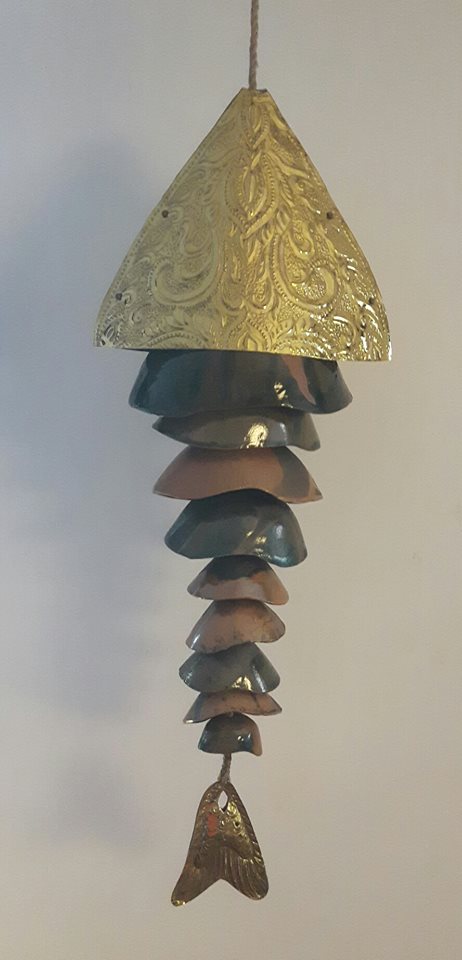
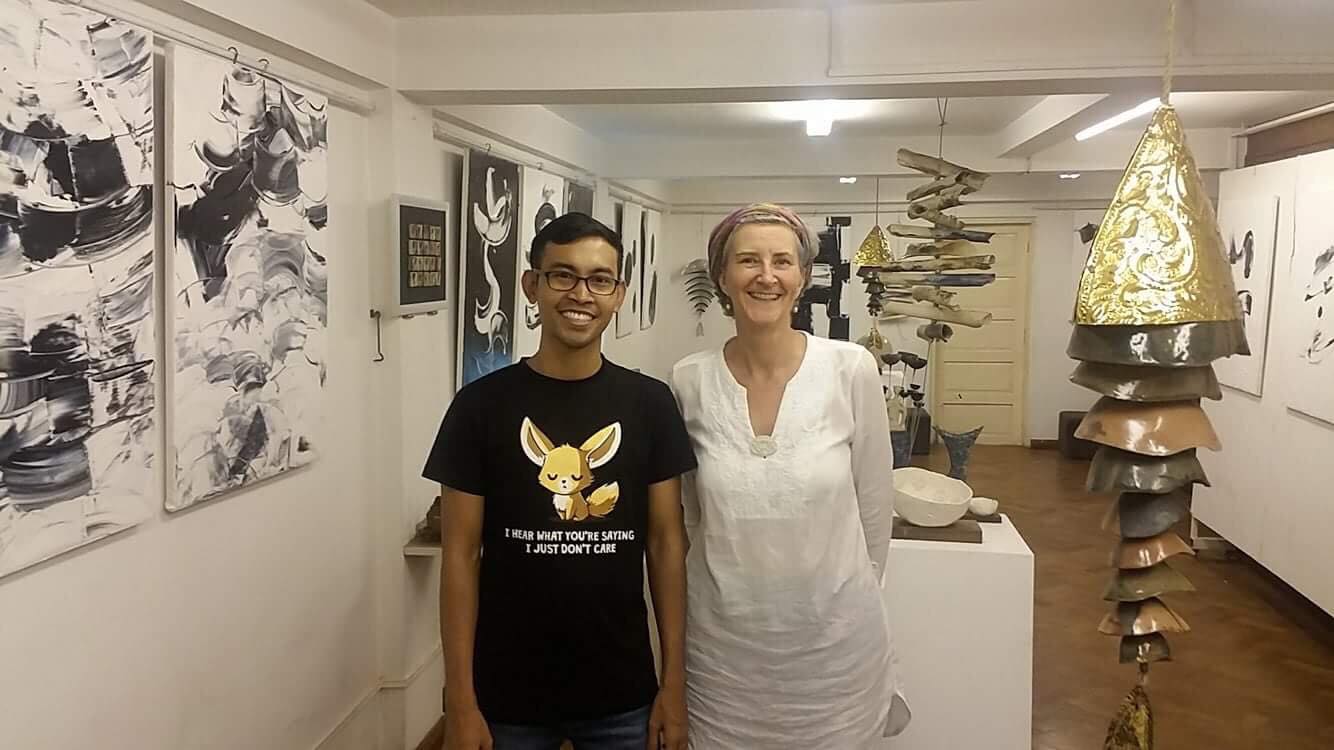
Ceramist Ilona Van de Braak is not content to study Myanmar's people and culture by reading books and surfing the Internet. The Dutch artist has traveled extensively across the country, meeting and talking to people first hand.

She respects Myanmar artists, collects cultural objects, and interviews local artists in their studios.

"There is not a day that goes by that Myanmar does not inspire me; the people, the colors and its nature. I feel fortunate to be part of it," she said.

As a ceramist, she has visited the pottery workshops in Yangon's Twante Township monthly for two years, and shared her techniques with local potters and ceramists.

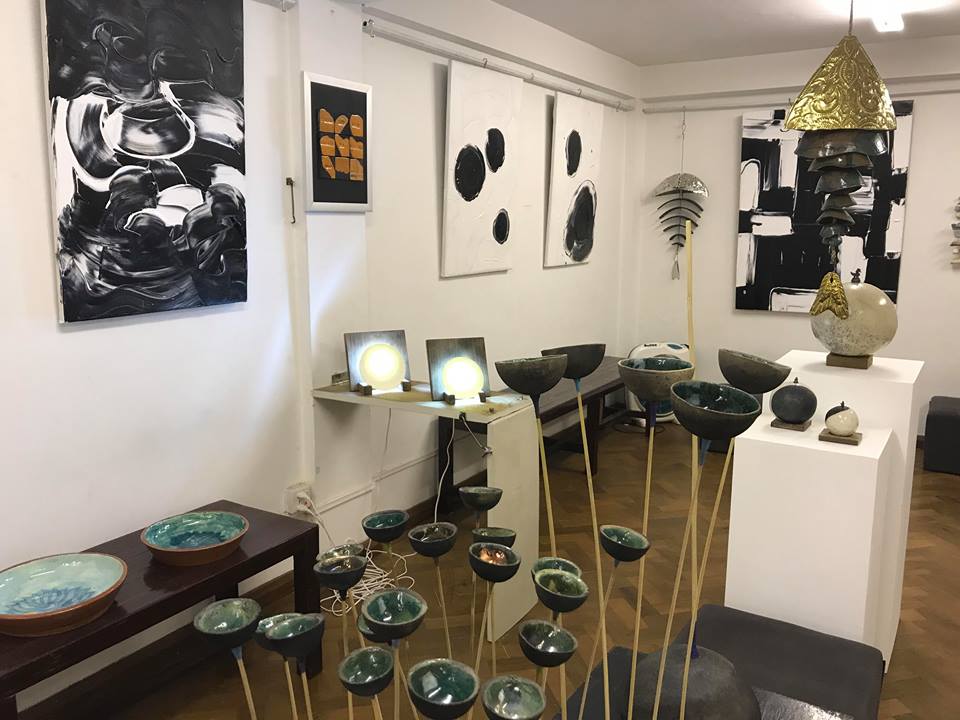
The art exhibition "Certain Interactions" is the outcome of a meeting between Ilona and artist Ko Pyay Way, curator and founder of the Nawaday Tharlar Art Gallery.

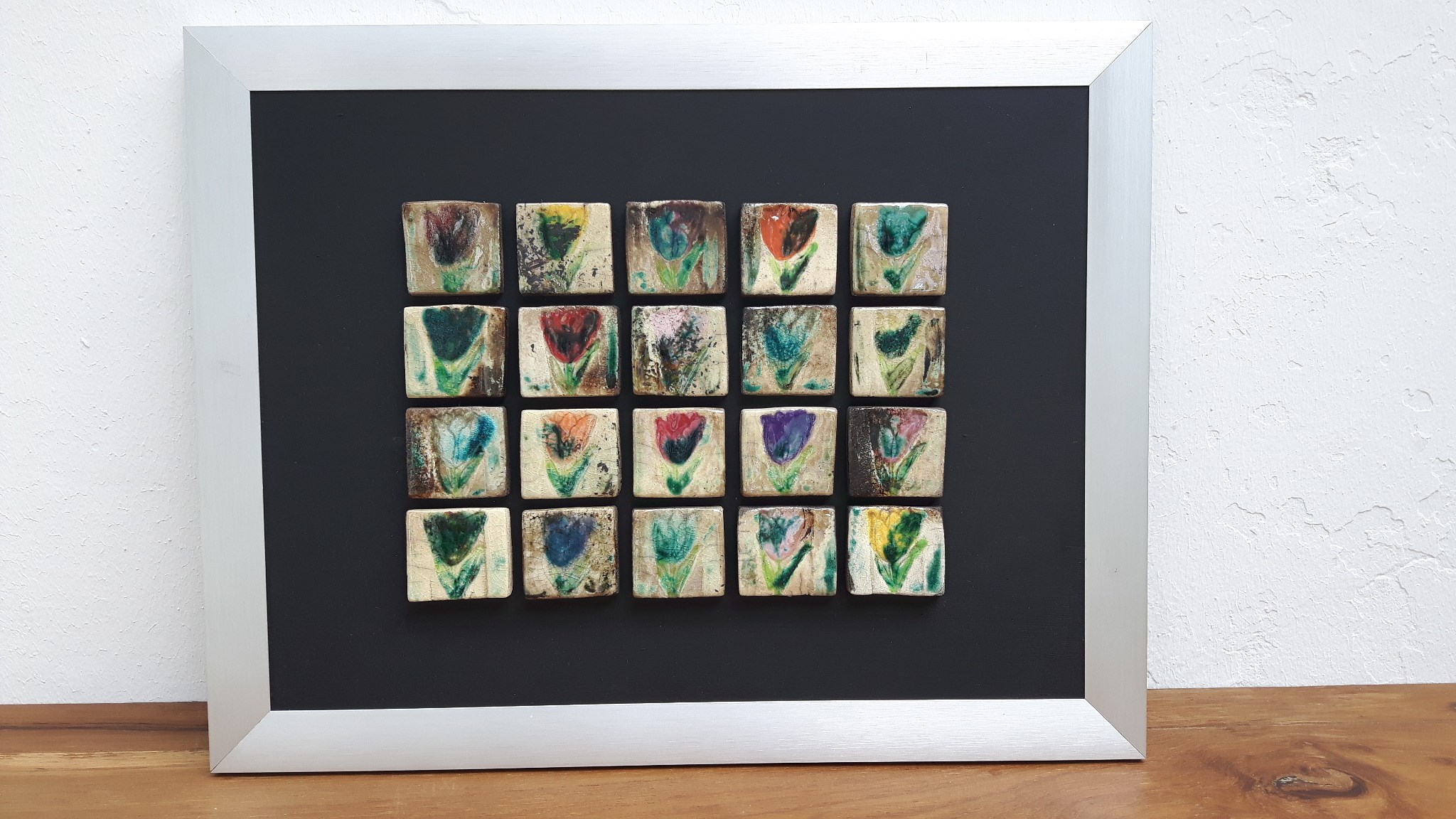
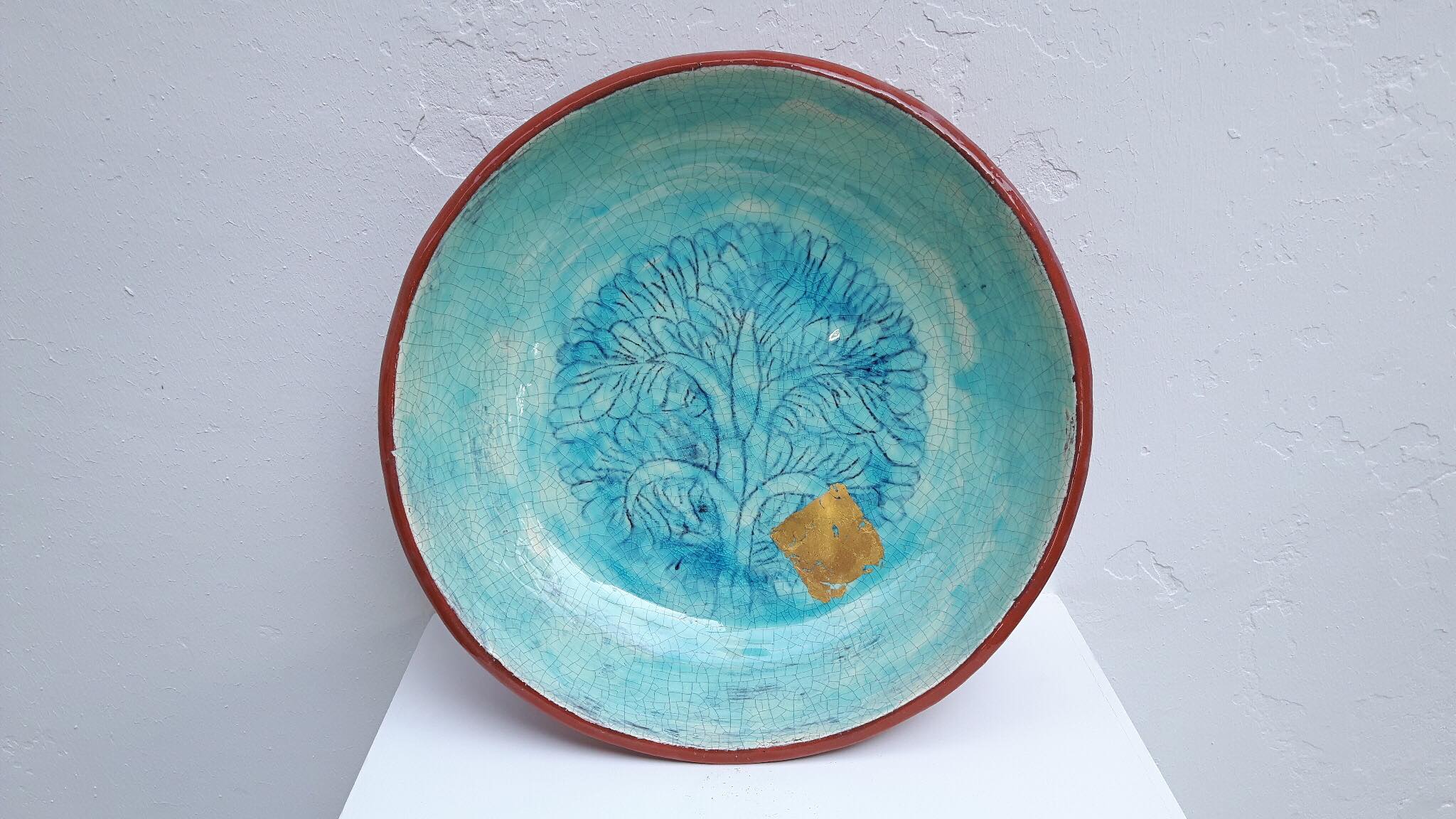
The exhibition features simple and exquisite Myanmar-style ceramics and Western-style minimalist black-and-white paintings by the two artists.

Ilona makes most of her porcelain pieces out of clay from Twante, and applies the ancient Japanese "raku" technique in her works.

Of her work "Full Moon", she said: "There is a lot of talking about the moon in Myanmar. Here we live by the lunar calendar."

"In January we even have two full moons," she said, referring to the Super Blue Blood Moon on Jan. 31.

"The symbolism around me fascinates me. So that is why I used the ancient Hintha [a mythological bird] to complete this piece," she said. Her works also incorporate lotus shapes and rare Myanmar postcards.

"This is interaction between me and Myanmar people," she said.

The exhibition features 16 paintings by artist Pyay Way, priced from $200 to $600, and around 50 ceramics by Ilona, priced at $35 to $985, from Feb. 2 to 11 at Nawaday Tharlar Art Gallery on Yaw Min Gyi Street, Dagon Township.

The proceeds will be used to benefit pottery workers in Yangon's Twante Township and Sagaing’s Swekar village.

"You can see two arrows converge on the exhibition catalogue. This represents the convergence of East and West," said Pyay Way.

The post Dutch Porcelain Artist Finds Endless Inspiration in Myanmar People, Culture appeared first on The Irrawaddy.

Beijing Treated to Super Lunar Eclipse Not Seen Since Qing Dynasty

Posted: 31 Jan 2018 09:46 PM PST

BEIJING — Millions of people across the Chinese capital were treated to a “super blue blood moon” eclipse on a cold but clear night on Wednesday, a phenomenon not seen since the late Qing dynasty more than 150 years ago.

The eclipse coincided with a so-called blue moon — or the second full moon in a calendar month — and a super moon, when the moon is at, or near, its closest to Earth.

About 400 super-keen skywatchers dressed in thick coats queued patiently outside the Beijing Planetarium to peer into eight telescopes mounted on tripods.

Beijing was among a number of locations in the country and on the Pacific Rim that witnessed the total lunar eclipse.

The entire passage took more than three hours, during which the moon turned a coppery red as sunlight going through Earth's atmosphere bounced off its surface.

The rare eclipse was also visible across western North America and in Australia, Japan and Southeast Asia.

The "lunar trifecta," as it is described by NASA, last took place in the Western hemisphere on March 31, 1866, when the second dome of the United States Capitol had just been completed and HG Wells, author of "The Time Machine," was born.

The post Beijing Treated to Super Lunar Eclipse Not Seen Since Qing Dynasty appeared first on The Irrawaddy.

Southeast Asia a “Hotspot” for Antibiotic Abuse, FAO Official Says

Posted: 31 Jan 2018 09:11 PM PST

BANGKOK — Overuse and misuse of antibiotics in food is rife in Southeast Asia, a Food and Agriculture Organization (FAO) official said on Wednesday, warning of serious risks for people and animals as bacterial infections become more resistant to treatment.

The official from the United Nations' food agency issued the warning on the sidelines of an international meeting in Bangkok focused on antimicrobial resistance (AMR).

FAO's Chief Veterinary Officer Juan Lubroth told Reuters in Bangkok that threat of antimicrobial resistance (AMR) was magnified in places, like Asia’s megacities, where there was high population growth and intense food and agriculture production.

"Here in Southeast Asia … we would consider it a hotpot because of the population growth, urbanization dynamics, the production of food," Lubroth told Reuters.

A report published on Monday by the World Health Organization said that a new global surveillance system had found widespread occurrence of antibiotic resistance among 500,000 people with suspected bacterial infections across 22 countries.

"Some of the world’s most common – and potentially most dangerous – infections are proving drug-resistant," Marc Sprenger, director of WHO's Antimicrobial Resistance Secretariat, said in a statement.

A 2016 report by economist Jim O'Neill, commissioned by the British government, projects $100 trillion in losses by 2050 if nothing is done to reverse the trend, and estimated that the annual toll resulting from AMR will climb to 10 million deaths in the next 35 years.

"Ninety percent of those deaths would be in the developing world, and that is scary," Lubroth said.

He said the FAO advocates educating farmers about the dangers of using antibiotics to promote growth in animals, and stronger enforcement of rules governing food production.

"It's not only about having the rules in black and white, they need to be applied."

The post Southeast Asia a "Hotspot" for Antibiotic Abuse, FAO Official Says appeared first on The Irrawaddy.

Myanmar to Double Electricity Capacity by 2021 to Fill Power Shortages

Posted: 31 Jan 2018 08:59 PM PST

YANGON — Myanmar is planning to double its electric power capacity by 2021 by building natural gas-fired power plants, two senior officials told Reuters on Wednesday, in an ambitious move to tackle chronic power shortages in the energy-starved country.

With only one-third of the country's 60 million people connected to the electrical grid and cities experiencing blackouts, Myanmar needs to boost its power supply to attract much-needed foreign investment.

The plan is the most impressive attempt yet to tackle the energy problem since the government led by Daw Aung San Suu Kyi swept to power in March 2016. However, experts cautioned that it remains to be seen how the government would strike power purchase agreements with the investors.

Four gas-fired power plants would be built by 2021 at a total cost of $5.16 billion in several parts of Myanmar, said two officials from Myanmar’s Ministry of Electricity and Energy.

They said the plants will raise generation capacity by 3,100 megawatts (MW) and would double the current capacity of around 3,000 MW.

"We will need another 3,000 megawatts by 2021. That's why we speed up the process in order to quickly meet the demand," said Soe Myint, deputy permanent secretary at the energy ministry.

Myanmar's government has signed agreements to "start preliminary engineering work," such as environmental assessments, with six companies, said Zaw Win Naing, assistant secretary at the ministry.

The companies include TOTAL, Siemens AG, Zhefu Holding, TTCL Public Company Ltd , Sinohydro Corporation and Myanmar-based Supreme Trading.

The four plants will be in areas including the western state of Rakhine and Myanmar's largest city of Yangon, with the government purchasing electricity from the six firms, said Zaw Win Naing.

He said Myanmar is in talks with the individual companies to work out the power purchase agreements. The plants would mostly use imported liquefied natural gas (LNG).

Myanmar has gas reserves, but exports most of its existing offshore production. Several floating gas storage and regasification units would be deployed to store the LNG for the projects, said Soe Myint.

Wa Than Oo, an analyst from Myanmar Energy Monitor, said the projects are "ambitious in scope" but there are uncertainties.

"There have been negative experiences in the past where electricity generation projects have been announced but no power purchase agreement has been signed, and as a result they haven’t been built."

Myanmar aims to increase its power generation more than fourfold by 2030 to meet demand, though that could be difficult to achieve.

The post Myanmar to Double Electricity Capacity by 2021 to Fill Power Shortages appeared first on The Irrawaddy.