Monday, February 26, 2018

The Irrawaddy Magazine

The Irrawaddy Magazine


Analysis: Proposed Amendment Raises Fears About Rights to Free Expression

Posted: 26 Feb 2018 06:39 AM PST

YANGON— Myanmar's controversial protest law has again been tabled in parliament with two major amendments scheduled to be debated this week. The changes include a requirement that the sources of protest funding be identified and the stipulation of jail terms for people using such assemblies to instigate unrest.

The bill, which seeks to amend the Peaceful Assembly and Peaceful Procession Law, was submitted by the Upper House Bill Committee last week.

The legislative push is being viewed as the latest attempt by the NLD-dominated parliament to deter those with hidden agendas from masterminding protests and to reduce the risk of racial and religious violence.

"It seems they want to expose the dark elements [behind protests]," outspoken former Yangon region lawmaker and legal expert Daw Nyo Nyo Thin said, citing the requirement that would-be organisers of peaceful assemblies and processions inform police in advance not only of their agenda and the estimated numbers of people involved, but also the expected costs and the identity of the persons or organizations that would cover the costs.

Several mass rallies have been held against the government in recent months to protest a string of actions by authorities including the imposition of a one-year preaching ban on the ultranationalist monk U Wirathu, the arrest of nationalists and a ban on the country's biggest religious nationalist group, the Association for Protection of Race and Religion, or Ma Ba Tha, from operating under its name.

Following a protest against Religious Affairs Minister U Aung Ko in May last year, the ministry released a statement that the alleged protesters were paid sums ranging from 7, 000 to 30, 000 kyats (US$5-$22) to participate.

More recently, nationalists appeared at the court hearing for slain lawyer U Ko Ni in early February wearing T-shirts printed with the slogan "Eat well (before you die)" to show support for the four men accused of involvement in the murder. The phrase in Burmese is considered a threat to show one's anger and to warn of impending revenge.

Daw Nyo Nyo Thin said she personally agreed with the amendment seeking disclosure of the funding sources.

"We ask the government for accountability and transparency. So I personally believe we, the organizers should also be OK revealing the funding sources and estimated costs," she said.

She added, however, that it would be more convenient to present the information after the demonstration, as, for example, in student demonstrations, individual residents often donate to the protestors as they march by.

Free speech advocate Maung Saungkha wrote that the proposed requirement wouldn't impact protests funded by a party or political cronies but would complicate the organization of protests by farmers, workers and students, as the public helped fund participation in such rallies with contributions of 500 kyats or 1000 kyats per person.

He added that the amendment could cause these donors to hesitate as their names would be given to the police for supporting the protest.

Despite the disagreements over to the proposed requirement to identify funding sources, the most controversial part of the draft bill is the stipulated jail terms for using protests to instigate unrest.

The amendment states that anyone who provokes or exhorts others to organize or participate in demonstrations by bribing or paying them or doing anything else with the intention of "harming the stability, rule of law, peace and tranquility of the community and public morality would face a prison sentence of up to three years."

Daw Nyo Nyo Thin said the clause "harming the stability, rule of law, peace and tranquility of the community and public morality" is too vague and broad, as is the phrase "doing anything else".

"How will they define which act harms the stability or peace and tranquility of the community?" she asked.

The clause, which has its origins in the military-drafted 2008 constitution, was broadly used in the past to crack down on political activists, Daw Nyo Nyo Thin said.

She said the legislators and the government should keep in mind that the Ministry of Home Affairs, which is under the control of the military and not the government, is the body that would implement the law after it is approved.

She added that if the bill were approved, it would make worse the state's repression of dissidents.

"It will not be good for the image of the country's democracy or the government," she said.

The same phrase was added to Article 4 of the law under the amendments, stating that demonstrators who want to exercise their right to peaceful assembly and procession are required to inform the police at least 48 hours before the intended day of the rally and to ensure the rally is "not contrary to the existing laws, stability, rule of law, peace and tranquility of the community and public morality".

Free speech advocate Maung Saungkha wrote on Friday that the changes would give the police total authority to ban a protest if they judged it to be potentially harmful to the stability and peace and tranquility of the community.

The Upper House lawmaker Daw Ei Ei Pyone from Irrawaddy Division said the parliament would discuss the precise wording of the legislation in upcoming parliamentary sessions.

"I think it is necessary to prevent the intentionally created problems by some while the country is already struggling with many problems and challenges," she said.

She added that she believed the amendments wouldn't have an impact on free expression.

It is not good having those who pay money to people to participate in protests with the intention of creating instability or racial and religious violence at a time when the country is facing challenges, the MP said.

"It is obvious that the government wants to amend the law to take action against those who mastermind demonstrations and exploit the right to free expression and peaceful assembly to create a crisis situation for the government, as well as instability," human rights activist U Aung Myo Min wrote on his Facebook account.

Still, he said, the law shouldn't be prescribed or amended with the intention of preventing groups taking to the streets, adding that free expression and peaceful assembly were fundamental human rights.

The draft bill will be debated later this week.

The post Analysis: Proposed Amendment Raises Fears About Rights to Free Expression appeared first on The Irrawaddy.

Nationalist Monks Crash Press Conference Called by Critic of U Wirathu

Posted: 26 Feb 2018 06:24 AM PST

Nationalist monks forced the cancellation of a press conference yesterday at which a monk had planned to call on religious and civil authorities to prevent the firebrand monk U Wirathu from spreading hate speech.

The event planned by Buddhist monk Ashin Issariya, also known as Ashin Min Thu Nya, at the Myanmar Journalist Network (MJN) was called off after dozens of monks and laymen who support U Wirathu arrived and took seats at the venue an hour before the scheduled start of the press conference.

Ashin Min Thu Nya had planned to call on the government and State Sangha Maha Nayaka Committee (known as Ma Ha Na), to take action against U Wirathu in order to purify the Buddhist religion and to serve justice.

The nationalist monks said they had come to hear what Ashin Min Thu Nya had in mind when he spoke of "purifying" the religion.

As the room grew more and more crowded, organizers canceled the press conference, fearing the situation would escalate once Ashin Min Thu Nya and his monk supporters arrived.

Initially, it was agreed that five monks from each side would be allowed to attend the press conference. This agreement later collapsed, however, prompting Ko Zarni, the MJN secretary, to cancel the press conference.

The nationalist monks who had taken seats all stood up and angrily castigated Ashin Min Thu Nya for disrespecting them by failing to acknowledge their presence.

The monks began to exit the three-story building, but a group of U Wirathu supporters including some monks soon returned and demanded an explanation for the cancellation of the press conference.

Kaung Htet San, an MJN official, said he was not involved in the decision, and told them to ask the event's organizers for the reason. Some nationalists pressed Kaung Htet San to explain how the organization had selected the invitees, and began to threaten him. In response, he angrily told them to get out of his office.

Outside the building, monks expressed their dissatisfaction with the cancellation to members of the media.

The crowd eventually swelled to about 200 people, including supporters of both sides.

Some nationalist monks stopped event organizers and asked why they had canceled the press conference, with a few even displaying physically aggressive behavior.

Local residents expressed concerns that violence would erupt during dhamma talks that were due to be held on the street. Representatives of the community asked people to leave so that they could clean the street and arrange for carpeting to be rolled out. Eventually the crowd dispersed, but not before the owner of the building asked MJN officials to move out for fear of being targeted by nationalist monks.

'Secret' Press Conference

With tensions so high, Ashin Min Thu Nya was forced to return to his monastery in Yangon. He invited media to a conference at the monastery at about 5pm.

Ma Ha Na earlier banned U Wirathu from delivering sermons for a year, but he used a variety of strategies to get around this, including delivering his message via social media. Wearing a mask to symbolically represent his lost speech rights, he made shooting gestures in public and warned lawyers to "eat their last meals". He even said that he was a teacher of Kyi Lin, the accused gunman in the 2017 murder of prominent Muslim lawyer U Ko Ni.

Ashin Min Thu Nya, who comes from Karen State, has asked the government and Ma Ha Na to take action to limit the nationalist monk's hate speech.

"I want our country to have justice. I do not want him to destroy our Buddhist religion. I do not want other people to look down on Buddhism," he said.

Ashin Min Thu Nya said he had been threatened by nationalist monks on the phone, but added he could not be sure if the threats were serious. However, he said, "We all have a duty to protect our Buddhist religion. We all need to work together to stop [U Wirathu]. If we do not, we will not be able to stop him. If we keep ignoring his actions, our country will not have justice."

He added that it was mainly the responsibility of the Interior Ministry and higher court judges to take action against U Wirathu.

"I want to tell the world that his action reflects his personality alone. Our Buddhist monks do not support him," he said.

"U Wirathu violated the law. We want to know what action the government plans to take against him," said Ashin Min Thu Nya.

He said he had called the press conference in order to explain this to the international community and to people inside the country. He said that if the government and Ma Ha Na failed to act, the country's monks would be divided. Monks had already lost respect among the people, he said.

No Action from Authorities

Sources from the Religions Ministry said they had collected evidence in all cases in which U Wirathu had violated the law, but the higher court had not given the order to arrest him.

When a local court in Rangoon issued an order that action be taken against four nationalist youth who made threats outside a court last month, the police did not arrest them, the sources said.

Union Religions Minister U Aung Ko told reporters Monday at Parliament in Naypyidaw that Ma Ha Na had the responsibility to control monks who did not respect morality.

If the Sangha could not control those monks, then it could delegate authority to do so to his ministry, he said, and action would be taken. If action were taken against them, he said, they would fear authorities.

"We need to be united in taking action against these monks. If we are not, we cannot take action," he said, warning that authorities should not limit their actions to minor cases.


The post Nationalist Monks Crash Press Conference Called by Critic of U Wirathu appeared first on The Irrawaddy.

Women Photographers Own Yangon Photo Night 2018

Posted: 26 Feb 2018 05:45 AM PST

YANGON — Women photographers won big at Saturday’s Yangon Photo Night, the awards event for this year’s Yangon Photo Festival.

At this year’s festival, its 10th running, the night featured 16 nominated photo essays on everything from human rights to animals from both professional and amateur photographers from across the country.

"There are over 100 photo stories submitting for this year. It wasn't easy to choose this nominated 16 stories and it's the hardest part of this event," said festival director Christophe Loviny.

The Yangon Photo Festival team. / Chanson / The Irrawaddy

The essays — six from professionals and 10 from amateurs — were judged by a jury of photographers and others before a public audience at the Institut Français de Birmanie.

A photo essay about female soldiers fighting for the Kachin Independence Army (KIA) by Seng Mai, a Kachin woman and editor-in-chief of the Myitkyina News Journal, won first prize among the professionals.

"I'm so happy to win this first prize and I’m much happier that I can show the abilities of Kachin's female soldiers in front of the ambassadors and the international and professional photographers," Seng Mai, 28, told The Irrawaddy.

"There's a war happened in Kachin State and I would like to show the struggle of female soldiers participating in the war and what their life is like, how they survive," she said.

"I started this project in November 2017. I went to Laiza and asked authorities for permission to take pictures, but [at first] they refused. Finally the authorities gave me a chance to take pictures but only for 24 hour. Their rules are very strict and mostly they don't want to show their faces."

But she did manage to find one girl who was willing to have her face photographed because she had no plans to leave the KIA.

"I'm not very satisfied with this photo essay myself because I got only one day and I didn’t get really good shots. But it still shows the real life of Kachin’s female soldiers, and I think I won the prize because not everyone gets the opportunity to take photos of the KIA," she said.

Seng Mai also won at last year’s festival for a photo essay about female drug addicts.

Su Su Mon accepts the top award for amateur photographers. / Chanson / The Irrawaddy

Among the amateur nominees, Su Su Mon won first prize for a collection of self-portraits.

"I didn't expect to win the prize and I can't express with words how happy I am right now," the 21-year-old said on stage through tears of joy.

Her photo essay focuses on her life growing up with five siblings and no parents and overcoming a physical disability.

Nyan Zay Htet accepts the second-place award for professional photographers. / Chanson / The Irrawaddy

Nyan Zay Htet won second place among the professional nominees and with it a trip to Amsterdam for the World Press Photo Awards.

Among the 16 nominees, nine walked away with awards in all.

The 10th Yangon Photo Festival opened on Feb. 16 and will run until March 4. Admission to the exhibits is free. For more information visit www.yangonphoto.com.

The post Women Photographers Own Yangon Photo Night 2018 appeared first on The Irrawaddy.

Nine Children Die in Kachin State Boat Accident

Posted: 26 Feb 2018 04:09 AM PST

MANDALAY — Nine children died in Mohnyin Township, Kachin State, in a boat accident on Inn Daw Gyi Lake on Sunday.

A group of eighth-grade students was visiting a pagoda on the lake for a festival when their boat was hit by heavy winds and waves.

According to local officials, the boat was overloaded with 18 people: 15 students, their teacher, the boat driver and his daughter.

"It was in the evening, when we usually have heavy winds and waves on the lake. The boat was overloaded and it seems it could not be controlled properly in the heavy waves," said U Kyaw Kyaw Win, a state lawmaker representing Mohnyin.

Rescue teams arrived soon after the boat sank and were able to save nine people, including the teacher and boat driver. The bodies of the eight students and the driver’s daughter were recovered on Monday morning.

"It seems the teacher wanted her students to be happy and refreshed before the exam. But the teacher has been traumatized by the sad incident. We are also saddened by the incident because these students have to enter the year-end exam today," U Kyaw Kyaw Win said.

According to officials, the rescued students were receiving medical care at a local hospital as of Monday.

"Such incidents are common on Inn Daw Gyi. However, the death of nine people is tragic. We advise every visitor to wear a life jacket and the boat drivers not to overload and to be careful in the evening when there are usually heavy winds. If everyone follows the safety measures, there will be no such sad incidents," the lawmaker said.

The post Nine Children Die in Kachin State Boat Accident appeared first on The Irrawaddy.

Finance Ministry Seeks Approval for Low-Cost Housing Plan

Posted: 26 Feb 2018 03:59 AM PST

Naypyitaw—The Ministry of Planning and Finance sought approval from the Union Parliament on Thursday to construct almost 12,000 low-cost apartment units over the next three years with financial support from Japan.

The so-called affordable and fairly priced housing projects—405 buildings with 11,914 apartments—will be built in Yangon, Irrawaddy, Magwe and Sagaing regions from the 2017-18 to 2019-20 fiscal years, said Deputy Minister for Planning and Finance U Maung Maung Win.

"Those wishing to buy affordable apartments with mortgages must have a minimum household income of 300,000 kyats per month, and those wishing to buy fairly priced apartments must have a minimum household income of 500,000 kyats per month," the deputy minister told the Parliament.

Buyers will have to put down 20 percent of the price of the apartment in cash, and pay the remaining 80 percent over a 10-15-year period at an interest rate of 8.5 percent.

The proposed three-year plan was met with criticism from some lawmakers for its lack of scope, prolonged development schedule and high interest rates.

Lower House MP U Aung Hlaing Win of Mingalardon Township said the project did not come close to covering the whole country's needs, noting that according to a Yangon regional government survey there are more than 700,000 squatters in Yangon alone.

"Rental housing projects in China will benefit millions," said the lawmaker, adding that three years was also an unnecessarily long period to build just 10,000 apartment units.

In September, China announced a pilot program in 13 major cities, including Beijing, Shanghai and Guangzhou, to build rental housing on rural land in order to provide a long-term solution to a housing supply shortage. Most of the projects are scheduled to be finished by 2021.

To support the project, Myanmar will receive an official development assistance (ODA) loan of ¥15 billion from Japan that will carry an annual interest rate of 0.01 percent, with the interest due to be paid back in the first 10 years, and the principal in the following 30 years.

The loans will be borrowed by the Ministry of Planning and Finance, with Myanma Economic Bank acting as an intermediary. Construction and Housing Development Bank will use the funding to provide mortgages to apartment buyers at an interest rate of 8.5 percent.

"The Ministry of Planning and Finance will take one percent of interest, Myanma Economic Bank and Construction and Housing Development Bank three percent each. The remaining 1.5 percent will be kept in a reserve account in Myanma Economic Bank," said U Maung Maung Win.

Lawmakers criticized the high interest rate charged by the government bodies compared with the low interest rate being charged by Japan.

"There were previous cases of funds being borrowed at low interest rates [from foreign lenders], and then extended at high interest rates [to people]. We discussed those cases, but then could do nothing and the parliament had to approve them," said U Aung Hlaing Win.

Members of the public also complained that the housing projects were in unattractive locations and lacked easy transport access.

"Those apartments are out of the town," said an official with the Education Ministry in Sanchaung Township who declined to be named. "But our offices are inside the town, and it is not convenient. People will be interested in them if they are really affordable," he said.

During State Counselor Daw Aung San Suu Kyi's goodwill visit to Japan in November 2016, the Japanese government promised to oversee an infusion of $8 billion in funds to Myanmar including private investment.

One of the agreements reached during the visit was a Housing Finance Development Project to be developed by the Construction Ministry with ODA loans from Japan.

The post Finance Ministry Seeks Approval for Low-Cost Housing Plan appeared first on The Irrawaddy.

More than 100 Prisoners to Sit Matriculation Exam This Year

Posted: 26 Feb 2018 03:47 AM PST

NAYPYITAW — More than 100 prison inmates across the country will sit matriculation examinations in March, according to the Prisons Department.

"106 inmates have applied through the relevant prison departments to do the exam. There may be more who have applied on their own, but we don't know yet," Naypyitaw-based Prisons Department Deputy Director U Min Tun Soe told The Irrawaddy.

The matriculation examination is the major university entrance test administered in Myanmar. It is used to determine which field of study new students will pursue.

Yangon's Insein Prison started allowing inmates to take matriculation exams in the 2012-13 academic year, and Obo Prison in Mandalay followed suit in 2016-17. The Prisons Department has announced that beginning in the current academic year (2017-18), all inmates across the country will be allowed to apply to sit the exam.

Taking the exam this year are inmates from Insein, Obo, Karen State's Hpa-an and Taninthayi's Myeik prisons.

According to U Min Tun Soe, Insein and Obo prisons launched wide-scale personal development programs for inmates in 2016, aimed at teaching illiterate inmates the "three Rs" — reading, writing and arithmetic — as well as religious and health lessons, and vocational training.

Inmates preparing for the exam are being taught by other inmates and on weekends by outside teachers, he said.

"It is a very good system to allow the young persons who are behind bars for various reasons [to sit exams]," said U Than Htike Lin, who teaches the Swan Ye Htet spoken-English class in Pyinmana.

The matriculation examinations will be held from March 7-16. This year will see the most inmates sitting for the exam since permission was first granted in 2012-13.

From 2012-13 to 2016-17, a total of 29 inmates from Insein Prison passed the matriculation examination. Last year at Obo Prison, nine inmates passed, with five earning one distinction each, and one prisoner earning three distinctions.

According to the Education Ministry's Department of Examinations, more than 840,000 students registered to take the matriculation examination nationwide this year, up from 767,442 last year.

The post More than 100 Prisoners to Sit Matriculation Exam This Year appeared first on The Irrawaddy.

Myanmar Delegation Barred From Genocide Conference In Berlin

Posted: 26 Feb 2018 03:40 AM PST

YANGON—A Myanmar delegation was blocked from joining an international genocide conference being held in Berlin to push European leaders to do more to help the beleaguered Rohingya.

The conference, which started on Monday, is being attended by international scholars, human rights activists and Rohingya lobbyists based outside of Myanmar. Participants include Yanghee Lee, the UN's special envoy on human rights in Myanmar, who has been banned from returning to the country on the grounds that her reporting on the crisis in Rakhine State has been biased in favor of the Rohingya.

The eight-member group from Myanmar — who are part of the Strategies for Peace, Harmony and Development Workshop — comprised Dr Aung Tun Thet, the chief coordinator of the government's Union Enterprise for Humanitarian Assistance, Resettlement and Development in Rakhine and Daw Pyone Kaythi Niang, an NLD lawmaker and member of the International Relations Parliamentary Committee as well as others from the private and public sectors.

The workshop was set up by the Ministry of Foreign Affairs-affiliated Myanmar Institute of Strategic and International Studies (Myanmar ISIS). Established in 1992 by the State Law and Order Restoration Council (SLORC) with the then minister of foreign affairs as its chairman, Myanmar ISIS was restructured in 2013 and is now run by members with foreign-service experience. As a research and policy analysis institute working on international relations and Myanmar foreign policy, it continues to exchange views with the Myanmar Ministry of Foreign Affairs while also engaging in track-II, or backchannel, diplomacy.

According to a press briefing organized by the members on Monday in Yangon, the objective of joining the conference in Berlin was to "listen and engage with the participants of the event."

The group said all members had successfully registered on Thursday for the 'Berlin Conference on Myanmar Genocide' via the Eventbrite online platform and received confirmation that their registration had been successful with tickets being issued.

However, the members were informed via email at around midnight on Friday that their registrations for the conference had been cancelled, with the organizing team claiming they couldn't offer the seats "due to overbooking of the event."

Daw Pyone Kaythi Naing told the press conference on Monday that the members had hoped to attend the conference to get a better understanding and appreciation of external views.

The delegation members told the press briefing that they were disappointed to be denied the chance to participate in the conference as their attendance would have created a well-rounded audience that brought in independent voices. However, they now shared genuine concerns that the organizers of the Berlin conference had deliberately sought to exclude participants from Myanmar.

"This leads us to question the real intention behind this particular event as well as fuel our concerns that the conference will create more complexities, which in turn will be very counter-productive to finding a long-lasting solution for the people from all communities in Rakhine," the members told the briefing.

Since Muslim militant attacks in August in northern Rakhine State last year, hundreds of thousands of Rohingya have fled to neighboring Bangladesh following the Myanmar military's clearance operations. Myanmar has been internationally criticized for human rights abuses against the Rohingya. While the country categorically rejects that there is genocide taking place in the state, it had acknowledged that the situation in Rakhine is in dire need of attention and collaboration with all stakeholders.

The post Myanmar Delegation Barred From Genocide Conference In Berlin appeared first on The Irrawaddy.

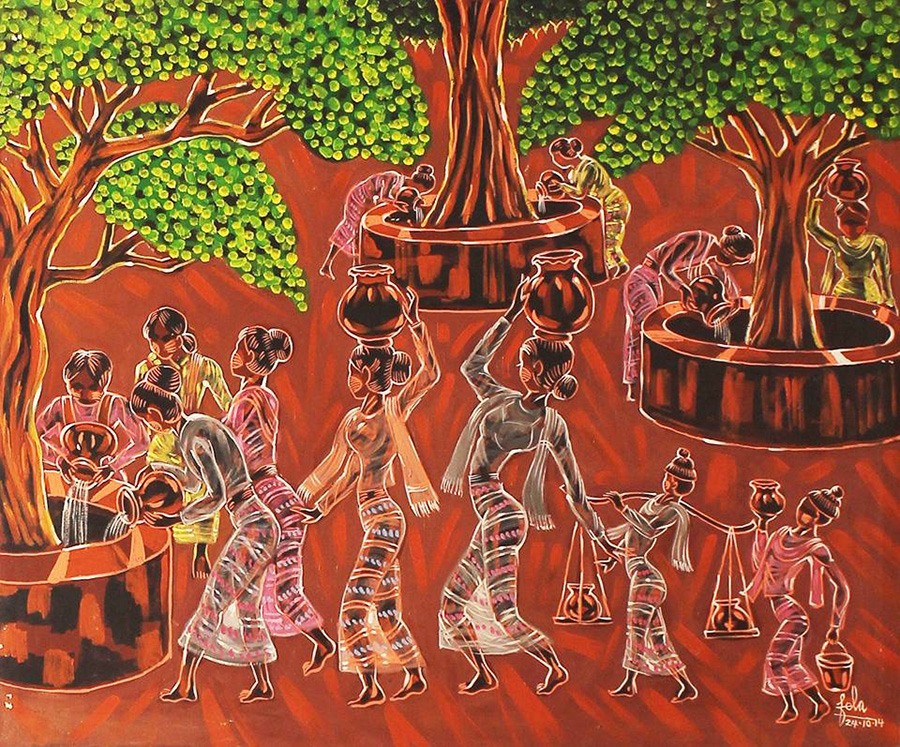
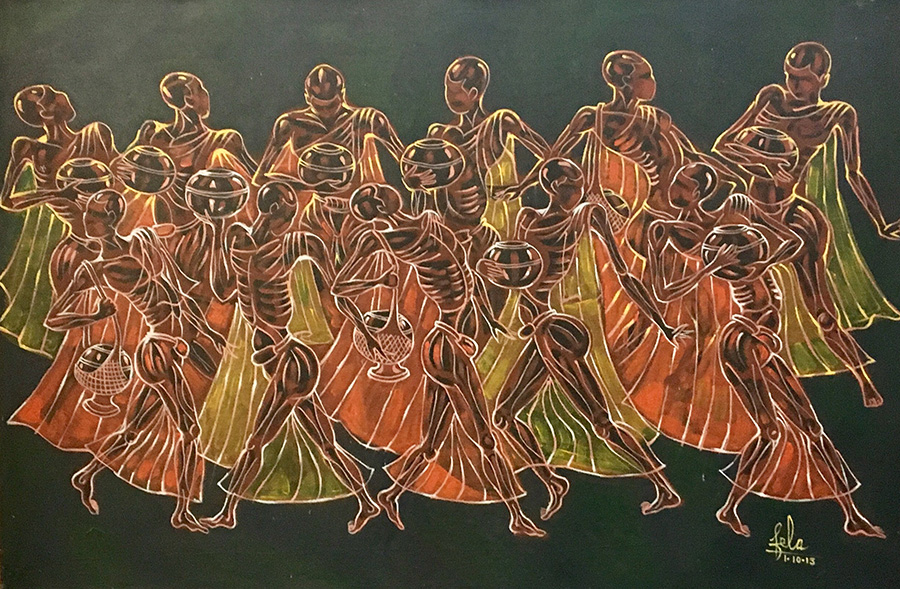
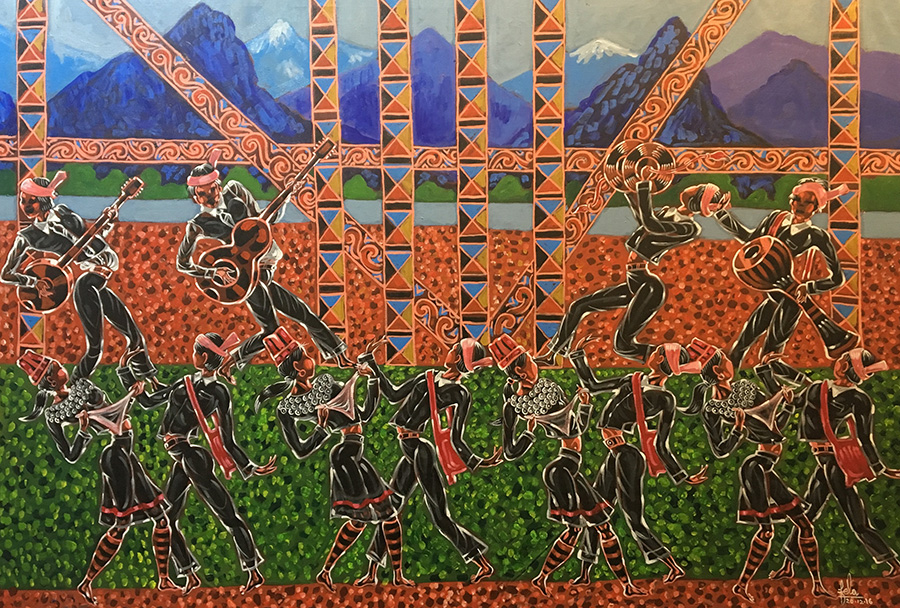
FELA’s Paintings of Myanmar’s Way of Life Find an Audience after His Death

Posted: 26 Feb 2018 01:03 AM PST

Young men dance to the accompaniment of traditional musical instruments in a painting depicting an ordination ceremony.

Unfortunately we cannot ask FELA, the creator of this picture, what he was feeling as he painted it. He passed away some five months ago after creating his last paintings of Myanmar's culture and customs, working beside U Bein Bridge and at the foot of Mandalay Hill.

FELA struggled his whole life, eking out a living from selling his Myanmar-modernist paintings for a pittance. He died at the age of 66, just months after his work finally came to the notice of art fans, and never reaped the rewards he deserved.

One of his fans, Ma Su, has organized an exhibition in his memory. Entitled "Lay Hsan Ngat", meaning "Bird Flying into the Wind", the exhibition will be open through Tuesday at OK Art Gallery at Aung San Stadium in Yangon.

"He lived his life for his cause and created his paintings boldly and independently, and hoped for nothing in return. He depicted Myanmar's culture and customs in a lovely way. His paintings offer a taste of Myanmar's culture and modernism, and are as real as life," Ma Su said.

FELA studied at Yangon School of Fine Arts, then lived in Mandalay until his death. His paintings mostly feature young women tending to rice plants and fetching water, traditional dancers, monks and novices on their alms rounds, young men playing caneball, markets and ethnic dances.

"He was an easygoing man. And his painting style was distinct from others'," said Mandalay artist Lu Eain.

"Some [buyers] from Europe have asked about his paintings since his death," he lamented.

Over 20 paintings are on display at the exhibition, and can be purchased for between $500 and $2,500.

The post FELA's Paintings of Myanmar's Way of Life Find an Audience after His Death appeared first on The Irrawaddy.

Apple Moves to Store iCloud Keys in China, Raising Human Rights Fears

Posted: 25 Feb 2018 09:15 PM PST

SAN FRANCISCO/BEIJING — When Apple Inc. begins hosting Chinese users’ iCloud accounts in a new Chinese data center at the end of this month to comply with new laws there, Chinese authorities will have far easier access to text messages, email and other data stored in the cloud.

That's because of a change to how the company handles the cryptographic keys needed to unlock an iCloud account. Until now, such keys have always been stored in the United States, meaning that any government or law enforcement authority seeking access to a Chinese iCloud account needed to go through the US legal system.

Now, according to Apple, for the first time the company will store the keys for Chinese iCloud accounts in China itself. That means Chinese authorities will no longer have to use the US courts to seek information on iCloud users and can instead use their own legal system to ask Apple to hand over iCloud data for Chinese users, legal experts said.

Human rights activists say they fear the authorities could use that power to track down dissidents, citing cases from more than a decade ago in which Yahoo Inc. handed over user data that led to arrests and prison sentences for two democracy advocates. Jing Zhao, a human rights activist and Apple shareholder, said he could envisage worse human rights issues arising from Apple handing over iCloud data than occurred in the Yahoo case.

In a statement, Apple said it had to comply with recently introduced Chinese laws that require cloud services offered to Chinese citizens be operated by Chinese companies and that the data be stored in China. It said that while the company's values don't change in different parts of the world, it is subject to each country's laws.

"While we advocated against iCloud being subject to these laws, we were ultimately unsuccessful," it said. Apple said it decided it was better to offer iCloud under the new system because discontinuing it would lead to a bad user experience and actually lead to less data privacy and security for its Chinese customers.

As a result, Apple has established a data center for Chinese users in a contractual arrangement with state-owned firm Guizhou – Cloud Big Data Industry Co Ltd. The firm was set up and funded by the provincial government in the relatively poor southwestern Chinese province of Guizhou in 2014. The Guizhou company has close ties to the Chinese government and the Chinese Communist Party.

The Apple decision highlights a difficult reality for many US technology companies operating in China. If they don't accept demands to partner with Chinese companies and store data in China then they risk losing access to the lucrative Chinese market, despite fears about trade secret theft and the rights of Chinese customers.

Broad Powers

Apple says the joint venture does not mean that China has any kind of “backdoor” into user data and that Apple alone — not its Chinese partner — will control the encryption keys. But Chinese customers will notice some differences from the start: Their iCloud accounts will now be co-branded with the name of the local partner, a first for Apple.

And even though Chinese iPhones will retain the security features that can make it all but impossible for anyone, even Apple, to get access to the phone itself, that will not apply to the iCloud accounts. Any information in the iCloud account could be accessible to Chinese authorities who can present Apple with a legal order.

Apple said it will only respond to valid legal requests in China, but China’s domestic legal process is very different than that in the US, lacking anything quite like an American “warrant” reviewed by an independent court, Chinese legal experts said. Court approval isn't required under Chinese law and police can issue and execute warrants.

"Even very early in a criminal investigation, police have broad powers to collect evidence," said Jeremy Daum, an attorney and research fellow at Yale Law School's Paul Tsai China Center in Beijing. "[They are] authorized by internal police procedures rather than independent court review, and the public has an obligation to cooperate."

Guizhou – Cloud Big Data and China's cyber and industry regulators did not immediately respond to requests for comment. The Guizhou provincial government said it had no specific comment.

There are few penalties for breaking what rules do exist around obtaining warrants in China. And while China does have data privacy laws, there are broad exceptions when authorities investigate criminal acts, which can include undermining communist values, "picking quarrels" online, or even using a virtual private network to browse the Internet privately.

Apple says the cryptographic keys stored in China will be specific to the data of Chinese customers, meaning Chinese authorities can’t ask Apple to use them to decrypt data in other countries like the United States.

Privacy lawyers say the changes represent a big downgrade in protections for Chinese customers.

“The US standard, when it’s a warrant and when it’s properly executed, is the most privacy-protecting standard,” said Camille Fischer of the Electronic Frontier Foundation.

Warned Customers

Apple has given its Chinese users notifications about the Feb. 28 switchover to the Chinese data center in the form of emailed warnings and so-called push alerts, reminding users that they can choose to opt out of iCloud and store information solely on their device. The change only affects users who set China as their country on Apple devices and doesn't affect users who select Hong Kong, Macau or Taiwan.

Apple doesn’t require an iCloud account to set up and use an iPhone. But if the user enables iCloud during set up, the default settings on the iPhone will automatically create an iCloud backup. Apple declined to comment on whether it would change its default settings to make iCloud an opt-in service, rather than opt-out, for Chinese users.

Apple said it will not switch customers' accounts to the Chinese data center until they agree to new terms of service and that more than 99.9 percent of current users have already done so.

Until now, Apple appears to have handed over very little data about Chinese users. From mid-2013 to mid-2017, Apple said it did not give customer account content to Chinese authorities, despite having received 176 requests, according to transparency reports published by the company. By contrast, Apple has given the United States customer account content in response to 2,366 out of 8,475 government requests.

Those figures are from before the Chinese cyber security laws took effect and also don’t include special national security requests in which U.S. officials might have requested data about Chinese nationals. Apple, along with other companies, is prevented by law from disclosing the targets of those requests.

Apple said requests for data from the new Chinese datacenter will be reflected in its transparency reports and that it won't respond to "bulk" data requests.

Human rights activists say they are also concerned about such a close relationship with a state-controlled entity like Guizhou-Cloud Big Data.

Sharon Hom, executive director of Human Rights in China, said the Chinese Communist Party could also pressure Apple through a committee of members it will have within the company. These committees have been pushing for more influence over decision making within foreign-invested companies in the past couple of years.


The post Apple Moves to Store iCloud Keys in China, Raising Human Rights Fears appeared first on The Irrawaddy.

Philippine Catholics Protest Drug Killings, Death Penalty

Posted: 25 Feb 2018 08:22 PM PST

MANILA — Around a thousand Catholics in the Philippines marched in Manila on Saturday to protest President Rodrigo Duterte’s bloody war on drugs and his efforts to reinstate the death penalty.

The protests come a day after students in the capital and provincial universities held demonstrations against Duterte, and a day before the 32nd anniversary of the “People Power” revolution that drove dictator Ferdinand Marcos into exile.

Catholic devotees prayed the rosary and sang hymns as bishops and the Philippines’ own cardinal read sermons against what they say are not “pro-life” policies in the government.

The protesters carried banners and placards with the massage “Protect and Defend the Sanctity of Life and Marriage,” “End Impunity” and “Stop the Killings.”

Despite criticism of the Philippine leader’s bloody war on drugs campaign, Duterte remains wildly popular and a trusted public official in the Southeast Asian nation.

The Social Weather Station’s (SWS) latest quarterly poll shows Duterte’s trust rating bounced back to “excellent” in December from “very high” three months before. Another survey by the privately run pollster gave his government the best rating so far for a Philippine administration since surveys started in the 1980s.

The Catholic Church protested the pending bills in Congress introducing divorce and re-imposing capital punishment.

The majority of the Philippines’ 105 million people are Catholic. Despite the popularity of the anti-drugs crackdown, some sectors of the church have become increasingly vocal on the drugs killings, with the church calling for justice and offering sanctuary to drug users.

“The threat is still there. We still hear news of extrajudicial killings. And still the bill of the death penalty is in Congress,” said Broderick Pabillo, Manila auxiliary bishop.

More than 4,000 suspected drug dealers have been killed since Duterte took office in June 2016. Police said the killings resulted from self-defense during raids and sting operations.

The post Philippine Catholics Protest Drug Killings, Death Penalty appeared first on The Irrawaddy.

Bangladesh Police Free Detained Foreign Aid Workers

Posted: 25 Feb 2018 08:16 PM PST

DHAKA — The Bangladesh police authority has freed all the foreign aid workers who had been detained near the city of Cox’s Bazar after failing to show their passports, visas or work permits, a senior police official said on Saturday.

The Rapid Action Battalion (RAB), the elite force of the Bangladesh police, had on Friday detained 11 aid workers with a number of different non-government organizations (NGOs) and handed them over to local police.

Mohammad Abul Khair, officer in charge of the police station in the Ukhiya sub-district, near Cox’s Bazar, said two of the aid workers were from the United Kingdom, two were from Italy, and one each were from Turkey, the Netherlands, Norway, Belgium, Brazil, Korea and Kenya.

"All of them were going to a refugees' camp from Cox's Bazar by their own vehicles, but they could not produce their passport, visa or work permit," Khair told Reuters.

"All of them were freed later after their written undertaking that in future they will not visit any camp or will not come out without a valid passport or visa," Khair added.

Nearly 700,000 Rohingyas have fled Myanmar’s Rakhine State and crossed into Bangladesh since August, when attacks on security posts by insurgents triggered a military crackdown that the United Nations has said amounts to ethnic cleansing.

The post Bangladesh Police Free Detained Foreign Aid Workers appeared first on The Irrawaddy.

Saturday, February 24, 2018

The Irrawaddy Magazine

The Irrawaddy Magazine


Three bombs rock Myanmar’s northwestern city Sittwe, policeman injured

Posted: 23 Feb 2018 10:04 PM PST

YANGON- Three bombs rocked the capital of Myanmar’s restive Rakhine State, Sittwe, early on Saturday, police said, adding that a policeman was slightly injured and the authorities were still working to determine who was behind the bombings.

The blasts come only three days after a large bomb killed two bank employees and injured nearly two dozen other people in the northeastern city of Lashio, where several ethnic insurgent groups are fighting the Myanmar military.

Sittwe is the capital of Myanmar’s violence-torn Rakhine where Rohingya Muslim insurgent attacks last year sparked a massive military response that pushed 688,000 Rohingya across the border into Bangladesh. Many of them recounted killings, rape and arson by Myanmar soldiers and police.

One of the Sittwe bombs – which went off around 4:30 a.m. – exploded in the backyard of an outspoken state government secretary, Tin Maung Swe, police said. He is one of the highest-ranking officials in the local administration. The other two bombs exploded near the high court and a land record office.

“There’re suspects, but now is not the time to talk. Police are trying to make sure about the suspects by analysing the structure of the bombs,” police spokesman Colonel Myo Thu Soe, told Reuters by phone.

Myo Thu Soe also said three other unexploded hand-made bombs were found in the city.

The United Nations and the United States have called the crackdown on the Rohingya ethnic cleansing, but the government of Nobel laureate Aung San Suu Kyi has blocked U.N. investigators and other independent monitors from the conflict zone.

Myanmar says its forces have been engaged in a legitimate campaign against Muslim “terrorists”.

No one has claimed responsibility for the Saturday blasts. The twitter account of the Rohingya insurgents, the Arakan Rohingya Salvation Army, did not post anything new as of Saturday mid-morning.

Rakhine is also home to the Arakan Army, an ethnic Rakhine armed group fighting against the Myanmar Army.

Tensions have increased in Rakhine since mid-January, when Myanmar police shot dead seven demonstrators, while 12 people were injured in Mrauk U township in the northern part of the state, after a local gathering celebrating an ancient Buddhist Arakan kingdom turned violent.

Rakhine police chief Colonel Aung Myat Moe told Reuters that security was being tightened in the city and police were inspecting exit roads out of Sittwe.

The post Three bombs rock Myanmar’s northwestern city Sittwe, policeman injured appeared first on The Irrawaddy.

This Week in Parliament (Feb. 19-23)

Posted: 23 Feb 2018 08:25 PM PST

Monday (Feb. 19)

Upper House lawmaker U Myat Nyana Soe submitted draft amendments to the Peaceful Assembly and Procession Law. The new provisions would require protest organizers to inform authorities of the estimated cost of their event and to identify the person or organization paying for it.

Tuesday (Feb. 20)

Seventeen Lower House lawmakers discussed a motion calling for the union government to adopt transparent long- and short-term projects designed to ensure the sovereignty and territorial integrity of northern Rakhine State and to fulfill the needs of local people to lead secure lives. The motion was submitted by lawmaker U Aung Thaung Shwe, of Rakhine’s Buthidaung Township.

A representative of Myanmar’s military said security forces were also troubled by the Arakan Army, accusing it of being unpatriotic and of launching an armed struggle to disrupt the peace process.

Union Minister for Social Welfare, Relief and Resettlement U Win Myat Aye added that it was necessary to handle the situation in Rakhine State cautiously and with foresight. He said the government’s actions in Rakhine State were meeting the locals’ needs and desires.

The motion was added to the record.

Wednesday (Feb. 21)

Upper House lawmaker Siang Awi asked the union government when it would release its figures on the country’s ethnic makeup. Union Minister for Population and Immigration U Thein Swe said the figures would be released after further negotiations and consultations with ethnic community leaders and representatives, historians, anthropologists and cultural experts in order to finalize the terminology and classifications of the ethnic groups.

Thursday (Feb. 22)

Parliament approved a proposal from the president to borrow 14.95 billion yen ($140 million) from the Japan International Cooperation Agency, which Deputy Minister for Planning and Finance U Maung Maung said would be used to issue loans to small and medium enterprises.

During the same session, Union Minister U Kyaw Lin sought approval for the president’s proposal to borrow 15 billion yen to develop housing for low-income families.

Friday (Feb. 23)

The Upper House Bill Committee advised replacing the phrase "the schedule for peaceful procession" with "the complete schedule for peaceful procession" in the Peaceful Assembly Law and the phrase "money or materials with a motive to damage the interest of public morality or to do so knowing of such damage to the interest" with "money or materials with the motive to damage the interest of public morality." The committee recommended approval of the bill.

Translated from Burmese by Myint Win Thein.

The post This Week in Parliament (Feb. 19-23) appeared first on The Irrawaddy.

How Do We Break the Silence on Rape?

Posted: 23 Feb 2018 08:18 PM PST

Nyein Nyein: Welcome to Dateline Irrawaddy! This week, we'll discuss punishing and deterring rapists of children as well as awareness campaigns with Daw Thandar Kyaw, child protection adviser at Save the Children, and Daw Nilar Tun, joint chairperson of the Gender Equality Network. I'm Irrawaddy English reporter Nyein Nyein.

Dateline Irrawaddy

Dateline Irrawaddy :အဓမၼျပဳက်င့္မႈေတြ ဘယ္လို တားဆီးကာကြယ္ၾကမလဲ။ဒီတပတ္ ဒိတ္လုုိင္းအစီအစဥ္ကေတာ့ ကေလးငယ္ေတြနဲ႔ အမ်ဳိးသမီးေတြအေပၚ အဓမၼျပဳက်င့္သူေတြကိုု အေရးယူမႈ၊ အဓမၼျပဳက်င့္မႈေတြ မျဖစ္ေအာင္ တားဆီးကာကြယ္မႈနဲ႔ လူထုအသိပညာေပးေရး ေတြအေၾကာင္း နဲ႔ပတ္သက္ၿပီး ဧရာဝတီ အဂၤလိပ္ပုုိင္း သတင္းေထာက္ ၿငိမ္းၿငိမ္း၊Save the children အဖြဲ႔က ကေလးသူငယ္ကာကြယ္ေစာင့္ေရွာက္ေရးဆိုုင္ရာ အစီအစဥ္ အႀကံေပး ေဒၚသႏၱာေက်ာ္ နဲ႔ က်ားမတန္းတူညီမ ွ်ေရး GEN က ပူးတြဲသဘာပတိ ေဒၚနီလာထြန္း တုုိ႔ကေဆြးေႏြးထားၾကတာျဖစ္ပါတယ္။

Posted by The Irrawaddy – Burmese Edition on Friday, February 23, 2018

Nyein Nyein: There have been more and more reported rape cases of women and children. There are rape cases almost every day and the age of the victims range from above 60 to below 2 years, which is quite disturbing. There has been a large number of rape cases since the beginning of 2018, and these have been reported in various areas including Yangon, Mandalay, Hpa-kant and Mawlamyine. What can we do to deter rape?

Thandar Kyaw: In addition to rape, there are other forms of sexual abuse. To cite one example I came across, a 26-year-old man put ash along with a spoon into the sex organ of a 4-year-old girl. Also, sexually touching children can be considered rape. It is very important to prevent this. Because of the economic conditions in our country, both parents usually have to work to earn a living and have to leave their children at home. They think that their children are safe with neighbors and acquaintances. But then, 90 percent of cases are "acquaintance rape". Only around 10 percent of rape cases are committed by strangers. In acquaintance rape, offenders are mostly cousins, uncles, friends of uncles, neighbors, grandfathers, fathers, and stepfathers. So, we would advise parents not to leave children alone with an acquaintance; don't leave [them] under a single pair of eyes.

NN: People our age grew up in a safe and secure environment. So, we think that our children are also safe. But we have been shocked by recent rape cases. We find these tragedies hard to believe. What are the weak points in the laws protecting women and girls?

Nilar Tun: Our country does have a law protecting women. But that law has a lot of shortcomings. The existing laws define rape as penetration only. But as Daw Thandaw Kyaw has pointed out, there have been cases of inserting fingers and spoons. So, I would say the definition of rape is not comprehensive enough. As a result, there have been many cases in which loopholes have been exploited. This means effective prevention can't be provided.

NN: There has also been criticism that the existing laws have not been properly enforced. What are the difficulties in enforcing the laws? What are the weaknesses of law enforcement organizations? Ma Thandar Kyaw, your organization handles a lot of cases and cooperates with law enforcement. Can you share your experiences?

TK: In our culture, rape is a source of shame, so it often goes unreported. In some cases, the offender is rich or powerful or has higher social status [than the victim]. An example is outside tuition teachers [those who teach to primary/secondary students outside of school hours]. In one case, an outside tuition teacher sexually abused their entire class, both boys and girls. But, [people] didn't believe it, and thought the children were talking nonsense. Later it was found to be true. There have also been [unreported] cases committed by rich people. For example, a 60-year-old neighbor sexually abused a 3-year-old girl. He was rich and the parents of the victim couldn't afford the trial expenses. So, they took compensation and settled the case. There are cases that go unreported because of shame. There are cases in which the daughter is raped by her step-father and the mother dare not report it. When a case is reported, it is important that the police who conduct the investigation are specially trained. If a child victim is sent to a hospital after being raped, hospitals refuse to give medical care if the case has not yet been reported to the police. The child is in urgent need of medical care, covered with blood, but the hospital refuses to give medical care without a police letter. We can improve this situation. Hospitals can give medical care first and ask for a police letter later. In one case I encountered, we lost the lawsuit at the first stage [township-level court] though the offender was guilty. We had to appeal to a higher level [court] as the offender was rich. As he was rich, he paid bribes and…

NN: Money talks.

TK: Yes, there are cases in which richer persons win lawsuits. This is still the case. We also need to improve this situation. This is also a challenge in handling child-rape cases.

NN: This issue involves public education. Speaking of public education, there have been campaigns, but not with clear policies outlined by all stakeholders.  In your experience, what is the response of the public to education campaigns?

NT: Lately, there has been wider media coverage of the issue, including calls for imposing the death penalty in rape cases. Given this, we can conclude that people don't accept [the increase in rape cases]. But as far as awareness-raising programs go, there are hardly any being conducted at the national level at present. It is fair to say that the concerned departments and organizations are doing small-scale activities on their own.

TK: There is a great need to raise awareness about this issue. But in the context of our culture, it is a difficult issue to talk about between parents and children. We have to overcome this. In order for children to be able to protect themselves, parents need to tell their children which of their body parts should not be touched by anyone; and that they can refuse if somebody tries to touch those parts and that they should tell their parents if somebody touches those parts. It is still difficult for parents to have a friendly talk to their children in this way. People still believe that such things are not appropriate to say to their children. But public awareness needs to be raised on a wider scale.

TK: As you have just said, similar measures should also be taken at schools and both parents and teachers should always monitor children's behavior and check to see if they have any injuries on their body. They should also know that they need to report it to the authorities if they find injuries. For example, if a teacher finds irregular behaviors and injuries on a child, that teacher should recognize that this is not natural and think about where to report it. Could they, for example, report it to the Social Welfare Department through its number for exploitation and sexual violence against children? When personnel from the Health Department visit schools, they should do the same if they find suspicious injuries, even if the visit was for a different purpose. In this way, we will be able to prevent rapes more effectively. If we can broadcast more television programs and debates on such issues through the media, awareness campaigns will be more effective.

NN: There have been cases in which younger teenage girls were raped by older teenage boys. In our society, boys are always taught to treat girls and women as their sisters. There are still such cases, however much we teach them. How important is the participation of men in the campaign?

NT: The participation of men is very important to prevent, reduce or eliminate sexual violence based on gender discrimination. This is because more men are involved in committing rapes than women, although not all men commit rapes. Therefore, their participation is very important. Although our society teaches them to treat girls of their own age as sisters, they too have to live in narrow boxes for too long. Teenage boys think they should have sexual experiences and they will be real men only when they have done so.

NN: It is said that law enforcement as well as awareness campaigners are important in prevention of rapes. Last week, the Ministry of Home Affairs announced that one of the reasons for rape is the wearing of revealing clothing by girls and women. This is a government ministry blaming rape on the way girls dress. This is victim blaming. What do you think of the statement from the ministry?

NT: We need to ask whether all victims dress like that. If we look at the world, rapes cases are abundant in places where every part of a girl or woman's body is wrapped up in clothing. Therefore, we think it is unacceptable to blame dress style for rapes. It depends on people's attitudes. A person with a rapist's mentality will commit rapes whether the victim is dressed "properly" or not. However, people who do not have such a mentality will never commit such crimes. It depends on the mentality, not on the dress.

NN: What's your opinion?

TK: I agree. I cannot accept blaming dress style for rape because even nuns have been raped. No one dresses as properly as nuns.  We need to do deeper research into it. We need data and statistics because everything needs to be based on evidence. In Myanmar, rapes are mostly committed in five states and regions. We need to do research into why most rapes were committed in these states and regions during a particular period under certain conditions and who committed the rapes. We need to know everything including whether the victims dressed "properly", whether a particular situation forced them to be victims, whether the rape was committed intentionally or not. It is necessary for us to know such things. Only then will we be able to adopt effective measures to prevent rapes against girls and women.

The post How Do We Break the Silence on Rape? appeared first on The Irrawaddy.

Friday, February 23, 2018

The Irrawaddy Magazine

The Irrawaddy Magazine


Ninety Percent of Rohingya Population Ejected from Rakhine

Posted: 23 Feb 2018 08:16 AM PST

YANGON – At least 90 percent of the Rohingya population of conflict-torn northern Rakhine State has fled to neighboring Bangladesh in the wake of the government's clearance operations following Muslim militant attacks last year, according to The Irrawaddy's calculations based on government and INGOs' statistics.

Following the attacks in August, majority-Muslim Maungdaw and Buthidaung townships, as well as nearby Rathedaung township, all in northern Rakhine State, saw an exodus of Rohingya to refugee camps in the neighboring country. Rohingya in the camps have recounted arbitrary killings, rapes and arson by Myanmar security forces.

The Irrawaddy analyzed recent updated regional statistics reports from the General Administrative Department for the three townships. The reports are dated October 2017. The GAD is under the military-controlled Ministry of Home Affairs.

Along with the GAD reports, The Irrawaddy's tally also takes into account figures on the number of Rohingya in Bangladeshi camps collected by the United Nations Office for the Coordination of Humanitarian Affairs. OCHA said that between Aug. 25 and Jan. 27, 688,000 new arrivals were registered.

Only 79,000 Rohingya remain

The GAD reports on Maungdaw, Buthidaung and Rathedaung put the total Rohingya population before the latest crisis at 767,038. A senior official from Maungdaw District's General Administration Department told The Irrawaddy that the statistics were collected in 2016. The official spoke on condition of anonymity as he was not authorized to talk to the media. (Maungdaw District comprises Maungdaw and Buthidaung townships.)

A border police officer crouches near a burned Muslim village in southern Maungdaw during a government guided-tour for journalists in 2017.(Photo:Myo Min Soe/ The Irrawaddy)

A comparison of the GAD's population figures with OCHA's camp registration numbers shows that around 90 percent of the Rohingya population fled into Bangladesh and merely 10 percent (79,038) remained in the three townships in western Myanmar. That 90 percent does not include people who died, went missing or were arrested.

While the reports were dated October 2017, they do not include figures on people with internally displaced person (IDP) status, Rohingya fatalities, Hindu or Rakhine victims, or damage caused by both military and security officials. The Myanmar Army, or Tatmadaw, announced on Aug. 31 that it had killed 370 suspected militants of the Arakan Rohingya Salvation Army.

According to the GAD's numbers, Rohingya accounted for 93 percent of the Maungdaw population, and 84 percent in Buthidaung. The number was significantly lower in Rathedaung Township, at just 6 percent.

Muslim militants' attacks also displaced nearly 30,000 non-Muslims in Maungdaw district — mainly from the Mro, Thet and Daingnet Arakanese sub-ethnic groups, as well as Hindus. However, the majority of the displaced non-Muslims including Buddhists have already arrived back in Maungdaw, while hundreds of Hindu IDPs await government resettlement.

To get a clearer idea of the population ratios of Rakhine, Rohingya and Hindu groups before Aug. 25, see the following infographic pie chart created by The Irrawaddy, accompanied by footage of the exodus originally posted on OCHA's website.

See the total population of each town by clicking on the appropriate color in the following infographic:

Emotive terms avoided

Neither of the terms "Bengali" or "Rohingya" are used in the GAD reports. Nor is there any mention of the "Muslim community from Rakhine State", the term coined by Daw Aung San Suu Kyi when she requested that the U.S. Embassy refrain from applying the controversial term "Rohingya" in 2016. In line with her instruction, the final report issued by the Kofi Annan-led Advisory Commission on Rakhine State avoided using the emotive term.

In place of any of the above terms, the GAD report simply says "foreigner" or "Bangladeshi", implying that they are illegal immigrants from Bangladesh. GAD officials from Maungdaw and Buthidaung confirmed that the term "Bangladeshi" in the reports refers to the Rohingya.

It's not clear whether Daw Aung San Suu Kyi sent an internal memo to ministries instructing them to use the term "Muslims in Rakhine State" instead of "Bengali" and "Rohingya".

The GAD report also avoids mention of burned Rakhine and Hindu villages. The Irrawaddy witnessed some burned sites at Buddhist villages like Khone Daing and a village from Kha Maung Seik village tract while accompanying a tour of Maungdaw for foreign diplomats in October 2017.

The GAD reports do not clearly mention the number of Rakhine or Muslim villages in each township. They only list the total number of villages. According to GAD officials from Maungdaw and Buthidaung, Maungdaw comprises 364 villages, of which 272 are Muslim (or 74 percent of the villages in Maungdaw). Nearly 70 villages were spared arson attacks after the months-long clearance operations by government security forces, they said.

Buthidaung comprises 339 villages, including 173 Rohingya villages, or 51 percent. A senior GAD officer in Buthidaung said 30 of the township's 173 villages were burned to the ground. He requested anonymity due to the sensitivity of the issue.

Rathedaung region is dominated by ethnic Rakhine; it had just 22 Muslim villages before the conflict. Rohingya sources said that only two or three villages remain intact; the rest were completely torched. See specific village numbers by clicking on the different colored areas of the graphic.

Mosques reduced to rubble

Maungdaw Township had 836 Muslim religious buildings but it's unclear whether GAD included both madrassas and mosques in this figure. On the other hand, there are 84 Buddhist monasteries, and 61 pagodas and temples.

The GAD reports state that there were 442 Muslim religious buildings in Buthidaung and 87 in Rathedaung, while the number of Buddhist monasteries is nearly 400, plus 110 stupas and temples in the two townships. The Hindu community has a mere 17 temples in Maungdaw district, which also houses one Christian church.

Some religious buildings of both the Rakhine and Rohingya communities were destroyed in 2017, but this is ignored in the report. But U Khin Maung Than, the chairman of the Arakan National Party's Maungdaw Chapter, told The Irrawaddy that a Buddhist monastic school with hundreds of students in Nantha Taung Village and a pagoda in Shwe Yinaye village in Maungdaw were burned by Rohingya militants. The Irrawaddy was unable to reach Maungdaw district administrative official U Ye Htut for comment on Thursday.

A Muslim civil servant from Buthidaung Township told The Irrawaddy that at least 20 mosques have been demolished since late 2017. A senior Buthidaung Township official said, "They were probably destroyed during the [August-December] conflicts. As far as I know there have been no new incidents in the area."

Buthidaung resident U Tun Thar (name changed for his safety) told The Irrawaddy that every single Muslim village has at least one mosque or place of worship.

Contradicting the GAD official's claim that there have been no new incidents, U Tun Thar alleged that in early February, five decades-old mosques in abandoned villages in Taung Bazar, located near a border police outpost, had been torn down by local Buddhist mobs and looters. He said another one in Ale Chaung village, which was recently designated as the site of a new border police regimental base, was also destroyed by residents of neighboring villages.

Displaced Rohingya Adul Wahid (not his real name) from Rathedaung Township said that the century-old Zay Di Pyin mosque was also completely pulled down by locals. The Irrawaddy independently verified this during a visit there last December.

Adul Wahid recently heard that two mosques in Oo Daung and Myin Hlut villages in southern Maungdaw were also bulldozed very recently. A Buddhist relief worker who has close ties with the government's resettlement program there told The Irrawaddy on condition of anonymity that the rest of the Muslim villages in southern Maungdaw were bulldozed between January and early February.

He recounted that Muslim villages that had been situated along the highway between downtown Maungdaw and Taung Pyo Letwei in northern Maungdaw had been cleared out.  He estimated that at least two-thirds of the Muslim villages had disappeared. See details below.

Burned-out sites flattened

When The Irrawaddy visited last December, most of the villages in southern Maungdaw and some in northern Maungdaw remained as burned-out sites. The smoldering remains of one of the biggest Muslim enclaves, Myo Thu Gyi, which previously had a population of about 8,600 living in 1,230 houses, had already been bulldozed, as had the Ka Nyin Tan Muslim quarter.

At that time, locals told The Irrawaddy that heavy machinery such as bulldozers, dump trucks and steamrollers had been hired by the local authorities. On Friday, Human Rights Watch (HRW) issued an urgent release regarding government mass demolitions in northern Rakhine. Its satellite images showed that at least 55 Rohingya villages partially destroyed by arson since Aug. 25, 2017 have subsequently been bulldozed.

HRW's Asia director Brad Adams was quoted in a statement as saying, "Bulldozing these areas threatens to erase both the memory and the legal claims of the Rohingya who lived there."

The statement agrees with the facts cited above by Abdu Wahid. Myin Hlut village tract was partially burned in the late 2017 attacks, but was bulldozed between January and Feb. 13.

On Dec. 1, 2017, the government's information committee announced that houses had been built in over 20 villages across the state in an effort managed by the Union Enterprise for Humanitarian Assistance, Resettlement and Development (UEHRD), led by Dr. Win Myat Aye. He told Agence-France Presse a couple of weeks ago that the bulldozing of burned sites was part of a plan to rebuild villages.

He was quoted in an AFP report as saying, "When [the refugees] come back they can live in their place of origin or nearest to their place of origin."

HRW urged the UN Security Council and international aid agencies to demand the government immediately stop the demolition projects, saying the sites should be preserved until a UN fact-finding mission is granted permission to enter the area.

Adams said, "Deliberately demolishing villages to destroy evidence of grave crimes is obstruction of justice."

A bird's-eye view of a burned village in northern Maungdaw.(Photo: Moe Myint/ The Irrawaddy)

Distrust grows on both sides

During a trip by Home Affairs Minister Lt.-Gen Kyaw Swe to Bangladesh last week, the Bangladeshi government handed him a list of 8,032 returnees. Myanmar officials have been scrutinizing the profiles of refugees to screen for anyone involved in ARSA's serial attacks.

Meanwhile the flight of the Rohingya from rural areas of Buthidaung and Rathedaung continues. According to the Ministry of Home Affairs' updated headcount of new arrivals at the Gawdu Thara shore in southern Maungdaw Township, at least 3,206 people fled between the beginning of January and Feb. 21, and 804 new arrivals were encamped near the seaside.

Although the Rohingya exodus continues, some Muslims are determined to stay in abandoned villages. Abdul Wahid is one of them. He has been sheltering in Du Oo Thay Ma village of Buthidaung Township — after his home was set on fire by Rakhine vigilantes — in the hope of being granted access to a government rehabilitation project.

He said, "We are not traitors and have been faithfully living in Rathedaung for generations. We are keen to go back to our native place."

He and 160 others have been struggling to survive in Du Oo Thay Ma village, which once comprised 700 homes but from where nearly 400 households joined the exodus in recent months. Displaced Rohingya from Rathedung Township are currently occupying some of the homes. According to Abdul Wahid, they have received food only twice in six months, once from the ICRC and once from local authorities.

He has requested rations from Buthidaung Township authorities but the response was vague; they said the social welfare process is directly handled by UEHRD. He demanded the authorities look beyond the refugee repatriation process and not ignore the daily needs of IDPs who remain in Myanmar.

Although police have not banned Rohingya from entering forests, Rohingya fear surprise arrests should Arakanese villagers complain or supply false information to the police about seeing ARSA members in the forest.

"We don't have any problem with them so far. We just want to go and find food to survive but they [Rakhine villagers] might misunderstand. Thus we decided to avoid hunting and searching food in the forest. It's too risky."

He said that even if they were able to cut bamboo and firewood and collect seasonal fruits and vegetables, and fish in nearby waterways and creeks, there is no market to sell goods.

"We are in a very difficult situation here. Could you tell the authorities please?" Abdul Wahid requested.

The post Ninety Percent of Rohingya Population Ejected from Rakhine appeared first on The Irrawaddy.

Wa Political Parties Call for Government to Lift Travel Curbs on Their People

Posted: 23 Feb 2018 05:14 AM PST

Two Wa political parties have asked the government to allow their people to move freely in northern Shan State after authorities blocked members of the ethnic group from traveling to Kyaingtong and Tachilek.

Ethnic Wa in the two major towns have also been stopped from returning to their homes near Pangsang Township. Meanwhile, ethnic Wa students who have just finished exams at government schools have also been prevented from going back to their homelands, according to a joint statement released by the Wa Democracy Party and the Wa National Unity Party.

"Blocking them from traveling benefits no one. We are asking the government to let our civilians travel," said Nyi Palote, chairman of the Wa National Unity Party.

He pointed out that there are two tribes – the La and Loi La — who are ethnic Wa and live in the region but whose members have been allowed to travel freely, but not other Wa people.

"This action from the authorities is intended to divide these tribes and the Wa," said Nyi Palote.

"Peace is important in our lives, as we all know. We all expect to have peace. But restricting the ethnic Wa from traveling around the country is not building peace. Instead, it will block peace and national reconciliation and it is discrimination against the Wa," the parties said in the joint statement.

The Myanmar Army's action appears to have been born out of its animosity toward the United Wa State Army (UWSA), which is a leading member if the Federal Political Negotiation and Consultative Committee (FPNCC).

The FPNCC, also known as the Northern Alliance, consists of seven ethnic armed groups – the UWSA, the National Democratic Alliance Army (NDAA), Ta'ang National Liberation Front (TNLA), Arakan Army (AA), Myanmar National Democratic Alliance (MNDAA), Kachin Independence Army (KIA), and Shan State Army (SSPP/SSA). But the army appears to have singled out the Wa.

"There are other ethnic armed groups in the FNPCC, not only the UWSA. They should not target the Wa by blocking only them from traveling," Nyi Palote told the BBC's Burmese language service.

The UWSA signed a ceasefire agreement with the government in 1989, but it has yet to sign the Nationwide Ceasefire Agreement (NCA) despite the government urging it to do so.

The UWSA's territory borders China and traded goods flow over the frontier daily. The UWSA also shares a border with Mongla Township in Special Region 2, which is run by the NDAA.

The two armed groups have agreed to allow all trade and citizens to cross their border and there are some UWSA troops based at a port on the Mekong River near Mongla.

The NDAA has agreed to let the UWSA take care of the river port and nearby areas. But the Myanmar Army wants the UWSA troops to withdraw from the port.

"The travel restrictions on the ethnic Wa relate to the UWSA troops based in Mongla," U Zaw Htay, director of the President's Office, told reporters in Naypyidaw earlier this week, noting there were about 4000 UWSA troops based in Mongla.

"The Tatmadaw (Myanmar Army) is negotiating with the UWSA over this issue," he said.

The UWSA has asked the Myanmar Army several times not to interfere in Mongla, according to Nyi Rang, a UWSA spokesperson based in Lashio.

"We will take care of this with our brothers," he said, referring to the NDAA.

Some leaders of the NDAA also want the UWSA troops to leave their region, but they do not dare say so publicly. As such, they have sought help from the Myanmar government and the military to pressure the UWSA to pull out of Mongla.

This dispute flared after the first Panglong peace conference was held in 2016. Some NDAA leaders who joined the conference asked the Myanmar government for help. But the information was leaked to the UWSA, who have deployed thousands of troops in Mongla and taken control of several mountain bases.

The UWSA agreed to withdraw some of the troops from Mongla last year with some units of the UWSA and NDAA posting shared photos on social media to show their improved relationship.

The UWSA is the largest ethnic armed force in Myanmar with an estimated 40,000 troops. The UWSA has influence and power, and some NDAA leaders are not happy about its presence in their territory.

"My understanding is that (NDAA) invited the UWSA to set up bases in their region," said Nyi Rang, the UWSA spokesperson.

The post Wa Political Parties Call for Government to Lift Travel Curbs on Their People appeared first on The Irrawaddy.

Four Rohingya Sentenced to Death for Deadly 2016 Attack in Rakhine

Posted: 23 Feb 2018 05:01 AM PST

SITTWE — Four Rohingya involved in an attack on a police outpost in northern Rakhine State in October 2016 were sentenced to death on Friday by a special court in the state's Maungdaw District.

The four were among 30 people found guilty of involvement in an attack on Nga Khura Police outpost in northern Maungdaw Township on Oct. 9, 2016 that killed two security officials. The other 26 convicts earned prison sentences ranging from 10 to 20 years. Another 15 suspects were released, according to Deputy District Judge U Nyo Lwin Oo.

"The court sentences the four to death for the crime of homicide," said the deputy judge, adding that the 45 people were initially charged under articles 303, 326, 33 and 34 of the Penal Code.

Separately, another 34 Rohingya accused of involvement in the attack were sentenced to 18 years' imprisonment each on Wednesday.

The deputy judge said hearings in the cases of another 294 Rohingya were under way at the special court and verdicts would be announced soon.

Additionally, 76 Rohingya villagers accused of involvement in a series of attacks on security outposts on Aug. 25, 2017 have been charged with committing acts of terrorism, according to the Rakhine State Attorney General's Office.

The Arakan Rohingya Salvation Army, which has been denounced by the government as a terrorist organization, claimed responsibility for the attacks, which killed 11 security members.

"Since it has been declared a terrorist organization, anyone arrested in relation to the attacks was charged with terrorism," said Rakhine State Attorney General U Kyaw Hla Tun.

Maungdaw District Court also declared as fugitives 509 Rohingya accused of involvement in the attacks but who are not in custody.

The post Four Rohingya Sentenced to Death for Deadly 2016 Attack in Rakhine appeared first on The Irrawaddy.

Generals Prep $15M of New Fencing For Border With Bangladesh

Posted: 23 Feb 2018 03:56 AM PST

NAYPYITAW — The Upper House of Parliament on Thursday heard the Home Affairs Ministry’s 20 billion kyats ($15 million) plan to raise several more kilometers of fencing along Myanmar’s border with Bangladesh and carry out other related work.

Home Affairs Deputy Minister Major General Aung Soe told the Upper House session that the money would come from the president’s emergency fund and be handed over to the Ministry of Defense to carry out the work in Rakhine State. He asked the session to make a record of the project, which it did.

With the president’s approval, the fund can be appropriated without approval from Parliament.

Fencing was built along 204 km of Myanmar’s 295-km border with Bangladesh in three phases between 2009 and 2015.

"In phase four, an 11.5-mile [18.5-km] fence was put up along the border during the 2016-17 fiscal year. Another 3.2-mile Y-shaped fence topped with barbed wire coils is being built during the 2017-18 fiscal year. Fencing will have been put up along 14.7 miles of border when that work is completed," Maj-Gen Aung Soe said.

The 20 billion kyats from the president's emergency fund will be used to build a Y-shaped fences topped with barbed wire coils along an additional 18.5 km this fiscal year along with other related infrastructure including a 12.2-meter-wide patrol route along the fence, 161 reinforced concrete conduits and eight buildings including three warehouses.

"The old fences are not strong enough and people can cross over them or remove them. However, we don’t yet know about [the quality of] the new fences. We want better fences so that people from the other side cannot enter illegally. If the fence cannot prevent people on the other side of the border from entering illegally, it will be a waste of money to build a fence. It is the responsibility of the ministries to spend the funding effectively," said lawmaker U Pe Than, of Rakhine State’s Myebon Township.

U Pe Than, a central executive committee member of the Arakan National Party, said the project would be adequately funded but stressed that the ministries had to spend the money effectively because the fence was key to preventing illegal immigration and the threat from the Arakan Rohingya Salvation Army.

The Upper House also made a record of another 1 billion kyats from the president’s emergency fund that the Border Affairs Ministry will use to upgrade two gravel roads connecting Ngakhuya to Zetipyin and the Kyikanpyin junction to the Kyaukpyinseik camp in Rakhine State’s Hla Phoe Khaung Village. The two roads are a combined 18.5 km in length.

Border Affairs Deputy Minister Major General Than Htut told the session that the road upgrades would contribute not only to the border area’s security but also to transportation, health, social affairs and the education of local people.

The Implementation Committee for Recommendations of the Rakhine State Advisory Commission led by Kofi Annan had instructed authorities to upgrade the roads.

Defense Deputy Minister Major General Myint New said his ministry would also spend 5 billion kyats from the emergency fund on renovating 882 buildings belonging to the military’s Western Command that were damaged by Cyclone Mora.

"The damage caused by the natural disaster was inspected by proper teams and 882 out of 1,009 buildings hit by the cyclone will be repaired in the first phase during the 2017-18 fiscal year," he said.

"The president's emergency fund was known as the reserve fund in the past,” explained U Khin Cho of the Lower House Public Accounts Committee. “If the president approves, the fund can be spent without seeking the approval of Parliament. However, it is necessary to inform Parliament of the spending.”

Translated from Burmese by Myint Win Thein.

The post Generals Prep $15M of New Fencing For Border With Bangladesh appeared first on The Irrawaddy.

Two Men Arrested in Mandalay Over Foiled Attempt to Send 52 Illegal Workers to China

Posted: 23 Feb 2018 01:55 AM PST

Mandalay – Police on Friday charged two men under the overseas employment law for attempting to illegally send a group of 52 workers, including five women, to China.

The workers, all from Myingyan District, were detained on Wednesday at the Ohn Chaw checkpoint on the Mandalay-Lashio Highway on the outskirts of Mandalay, as they were being sent to Guangzhou in southern China.

"We've arrested Kyaw Soe Lin and Aung Lin from Myingyan for working as employment agents without a business license for overseas employment and sending workers abroad illegally," Police Lieutenant Zaw Myint told The Irrawaddy.

The two men are currently being detained at the central prison in Mandalay as police continue their investigation.

Police told The Irrawaddy that each of the workers paid about 500,000 kyats to the agents, who promised to find them work with a furniture factory in Guangzhou, where they could earn 8 yuan (US$1.25/1,670 kyat) per hour.

"We received a tip-off about human trafficking and checked the bus. Then we found out the workers were about to be sent cross the border illegally," explained Police Lieutenant Zaw Myint from the Ohn Chaw police station. "They have no passports and no proper employment documents. If something happened to them at their destination, there would be no one to help them."

The police officer said that even though the workers were not being trafficked, they still faced employment security risks and being arrested for entering another country illegally.

"We explained to them that they could be arrested in a foreign country and there would be no one to help them for they have no proper documents. We've told them not to trust the agents so easily and not to just see the money," he said, adding that the workers had been sent back to their homes in Myinchan on Thursday and asked to spread word of their experience to others.

Lack of employment opportunities and low salaries in Myanmar encourage local workers to seek work in factories and on plantations in neighboring countries such as China and Thailand.

According to police, the incident on Wednesday was the first such large-scale one Mandalay in recent year.

In 2007, police were able to stop two girls who are about to be trafficked to China, and return them to their parents.

"There have been at least five incidents of people being trafficked and being sent illegally to work in China that were halted here at Ohn Chaw. However, this is the first time in several years we've found such a large group," the police lieutenant said.

In contrast, he said, there was at least one such incident every day in Muse on the Myanmar–China border, with Chinese authorities sending back workers who had crossed the border illegally.

"In Muse, Myanmar workers are being handed over to us almost every day. When we check, we find they were cheated by illegal agents who promised them they would get jobs in China. We are trying to educate the locals, but the locals also need to open their eyes and ears, not just focus on the money," Zaw Myint said.

The post Two Men Arrested in Mandalay Over Foiled Attempt to Send 52 Illegal Workers to China appeared first on The Irrawaddy.

Chiming with History

Posted: 23 Feb 2018 12:06 AM PST

The Dhammazedi Bell, believed to be the world's largest, has rested stubbornly at the bottom of the Yangon River since 1599. Periodically it floats to the surface of the national consciousness as a source of pride, longing, superstition, fear and – inevitably, perhaps – conflict. We look back at this most fraught of national symbols by revisiting this article from The Irrawaddy magazine's May 2014 issue.

YANGON — "Multi-beam Echo Sounding Survey."

"3D Seismic Survey."

"GPR–Ground Penetrating Radar."

The language in an official method statement proposing the recovery of Myanmar's famed Dhammazedi Bell owes everything to technology and science.

But this is a story in which star billing goes not to science but to superstition, and a supporting cast of dreamers, schemers and assorted would-be heroes.

Superstitious government leaders are just some of those who believe that the discovery of a bell said to have sunk to the bottom of the Yangon River off Monkey Point more than 400 years ago could be the key to the country's rise from its current status as one of Asia's poorest nations.

Believers' romantic desires to tie the Dhammazedi Bell with the national destiny has resulted in several failed missions over recent decades to reclaim the bell, believed to be one of the biggest in the world.

Hollywood star Richard Gere's purported interest in the bell was never more than a rumor. But over the years a motley crew of individuals and companies from the United States, Australia, Japan and Singapore has expressed interest in joining a search that for Myanmar Buddhists would be the equivalent of a quest for the Holy Grail.

Non-believers, including former political dissidents, once thundered that any attempt to salvage the bell (reckoned to lie in the mud under 40 feet of water in a strong current), would only serve to legitimize an illegal military regime.

The former junta, for its part, decreed that only citizens of the country had the right to search for the bell because finding it was a "national issue."

Why such a frenzy? For answers, we need to look at the bell's fabled history.

A Bad Foreigner

The bell was named after King Dhammazedi, who ruled the Mon-speaking Hanthawaddy Kingdom from 1471 to 1492. A devout Buddhist, Dhammazedi had the bell cast in 1490 as a donation to Shwedagon Pagoda, Myanmar's most sacred shrine. Made from more than 290 tons of copper, gold, silver and tin alloy, it is said to have been more than twice as heavy as the Bell of Good Luck, a Chinese temple bell that at 116 metric tons has held the world record since it was cast in 2000.

The bell remained at its intended home until 1608, when the ruler of Thanlyin, on the opposite shore of the Yangon River from Yangon (then called Dagon), decided he had a better use for all that metal.

At the time, Thanlyin (or Syriam) was under the control of Filipe de Brito e Nicote, a Portuguese mercenary who in 1599 had led a Rakhine force that had sacked Thanlyin and Bago, then the capital of Lower Myanmar. De Brito (better known in Myanmar as Nga Zinga) had already earned the ire of local people by melting down several bells to forge cannons. But it was his decision to steal the Dhammazedi Bell for this purpose that ensured his infamy in this country for centuries to come.

Using elephants and forced labor, he had the bell moved to the Yangon River, where it was placed on a raft for transport to Thanlyin. However, much to the satisfaction of onlookers, de Brito's plan to turn a sacred object into weapons of war failed when the raft fell apart and deposited the bell far below the river's surface.

Five years after this episode, King Anaukpetlun of the Taungoo dynasty recaptured Thanlyin and had de Brito impaled on a stake—a punishment reserved for defilers of Buddhist temples. But 400 years after the Portuguese governor of Thanlyin met his ignominious end, the story of how he tried, and failed, to steal the Dhammazedi Bell continues to resonate in the imaginations of Myanmar citizens and foreigners alike.

King Dhammazedi donated this much smaller bell to the Shwe Maw Daw Pagoda in Bago. (Photo: JPaing / The Irrawaddy)

Gong-Ho

Since then, there have been many attempts to retrieve the bell, but poor visibility, silting, nearby shipwrecks and four centuries of shifting currents have so far made the task impossible.

But everybody "knows" that it is still there—as late as the 19th century, some claimed that it was visible at low tide—and so the search continues.

Some who have tried and failed, including tycoons and powerful generals, now say the quest is cursed. Jim Blunt, an American diver from California, was told as much when he made his own attempt in 1995 with the cooperation of the Myanmar authorities.

"Several divers had already died looking for the great bell, including two Myanmar Navy divers who became trapped inside a wreck and died horribly. Consequently, the search [began] for outside expertise," Mr. Blunt told the London-based newspaper The Independent.

Mr. Blunt carried out 116 dives over a period of two years. In a documentary film about his experiences, he claimed that he banged his fist on the bell and was rewarded by a metallic sound.

Historian U Chit San Win has made it his mission in life to relocate this lost artifact of Myanmar's past. Since 1987, he has led a number of searches, including one in 1996 that was supported by then Military Intelligence chief Gen. Khin Nyunt.

During one attempt in the 1990s, U Chit San Win lost a son to rabies. However, when asked what he thought about the curse that many believe is on the bell, he declined to give a direct answer.

Others have been less reticent about their concerns. At a recent meeting between U Chit San Win and a government minister that was observed by a senior member of The Irrawaddy's staff, the minister attentively listened to a detailed method statement and proposal to launch another search, but in the end declined to back the project because, he said, he feared for the safety of his family.

Saving the Nation

Despite such misgivings, some remain determined to find the bell that they believe will save the nation.

In October, U Khin Shwe, a leading Myanmar businessman and politician, announced a plan to fund another hunt for the bell, saying that he would spend more than US$10 million if necessary to return it to the glittering Shwedagon Pagoda.

"We've already hired big ships to salvage the bell. If we succeed, we will put it on display at Shwedagon," he told The Irrawaddy. "One foreign expert predicted that the whole operation would cost between $5 million and $10 million. Whatever the cost, I'm ready to spend it."

Some suspect U Khin Shwe's agenda. As a powerful member of the ruling Union Solidarity and Development Party sitting in the Amyotha Hluttaw, or Upper House of Parliament, he is regarded as a controversial figure. Both he and his Zaykabar Company, a conglomerate with interests in the construction and telecommunications industries, have been on the US sanctions list since 2007, and more recently he was involved in a highly publicized land rights dispute with farmers on the northern fringes of Yangon.

U Khin Shwe first came to the attention of policy makers in the West in the 1990s, when he paid the Washington, D.C.-based public relations firm Bain and Associates more than $20,000 a month to help burnish the image of Myanmar's military junta. To return the favor, state media proudly proclaimed him to be a "doctor" with an honorary Ph.D. from "Washington University of the United States," which turned out to be an unaccredited degree-mill incorporated in Hawaii but operating from a post office box in Bryn Mawr, Pennsylvania.

Never one to miss a chance to improve his public image, U Khin Shwe (who is related to powerful Pyidaungsu Hluttaw, or Union Parliament, Speaker U Shwe Mann through his son's marriage to the daughter of the former top general) has more recently joined other junta cronies in attempting to cozy up to opposition leader and Nobel laureate Daw Aung San Suu Kyi.

Many suspect, then, that his high-profile plans to find the Dhammazedi Bell are little more than just another PR exercise designed to enhance his personal status.

Mystical Powers vs. High Tech

In any case, if he is serious about finding the bell, he has no shortage of people willing to offer words of encouragement.

One well-known monk from Mon State has suggested that his mystical powers could ensure the success of the mission.

But as a veteran of the quest, U Chit San has more practical advice: Go high-tech.

"I don't believe the bell can be recovered without the use of the latest technology, because according to my experience, using local technology won't work," he told The Irrawaddy last year.

Nearly two years ago, it looked like U Chit San Win's dream might finally come true. At a seminar held in Yangon in June 2012, a Singapore-based trading company, SD Mark International LLP Co., said it was willing to spend up to $10 million to finance a non-profit project to find the bell and convey it back to Shwedagon.

The search was expected to take 18 months to complete. But since it was first announced, nothing has come of it. According to a source familiar with the project, it was quietly shut down by the Ministry of Culture, which had planned to participate, because of concerns about a lack of funding.

U Chit San Win said he has no intention of giving up. "It has to be out there somewhere," he said.

Even as he said these words, however, he looked somber, as if he were reflecting on his past failures and on the loss of his son. Now in his late sixties, he seemed resigned to the possibility that he might not be around to witness the day the bell is restored to its former glory.

One hurdle, he acknowledged, is that many in the country don't want the bell to be found by foreigners. That's why he supports U Khin Shwe's mission, he said.

The bell, he says, is a beacon of hope. "Our country is so poor and plagued with conflict. Many people believe that if the bell is found, it will bring us peace and prosperity," he said.

But will the spirits that many believe saved the Dhammazedi Bell from being turned into cannons now allow it to fall into the hands of shady businessmen?

Many might argue that if that is to be its fate, perhaps it is better off where it is—submerged in mud, far from the grasp of mortal men and their schemes and dreams.

Kyaw Hsu Mon contributed reporting.

This article first appeared in The Irrawaddy's May 2014 print edition.

The post Chiming with History appeared first on The Irrawaddy.

Eat Till You’re Full:  Brunch at Babett

Posted: 22 Feb 2018 11:33 PM PST

YANGON — Babett, a mainly Spanish and Mediterranean-themed restaurant at Hotel G, is offering a new brunch set menu for those who like to combine their breakfast and lunch.

The restaurant was busy when I arrived on a recent day at noon.

Babett’s interior is a perfect match for its name, which means ‘a young lady,’ with its colorful theme, comfy couches and a combination of regular and high tables. It also has an outdoor area.

The interior of Babett. / Supplied

Inside, the walls are decorated with vintage Burmese artwork and antiques.

The five-course brunch set menu is available on Sundays from 11 a.m. to 3 p.m. and runs 40,000 kyats ($30) per person.

Each course includes a selection of items to choose from, and customers can pick up to two items per course.

For the Starters, I went with the tealeaf salad and the Spanish ham croquetas. These items didn’t take long to prepare and reached the table in 15 minutes.

Tealeaf salad is on of my favorite-foods list and I was dying to know how they prepare traditional Burmese dishes in this Spanish-themed restaurant.

They did not disappoint. The salad was very good because it wasn’t too oily and they used good quality leaves.

The Spanish ham croquetas, a cooked ball of potato and ham, tasted rich, sweet and so soft.

The mimosa eggs. / Supplied

The next category was Eggs, and I asked for recommendations. The staff chose the mimosa eggs and the 64-degree egg with espuma of grilled bread.

Their chef visited the tables asking customers if they wanted anything else and explaining the ingredients and how the items were cooked. I thought the service was cool and friendly.

He said the mimosa eggs were a customer favorite, even with kids.

True to his word, the eggs were very good but a little bit too salty for my taste.

I preferred the 64-degree egg, which was served with spinach and tasted rich. I wondered at how carefully they must have had to cook the egg and place it on top of the bread and vegetables.

The 64-degree egg. / Supplied

For Pizzetta & Pastas, I chose their signature G pizza. Topped with tomato sauce, Serrano ham, pepperoni, mozzarella and olives, it smelled amazing and was one of my favorites of the brunch.

It was then time for the main course, Babett’s Sunday Special, and I ordered the Mediterranean sea bass papillote. Even though I was nearly full, I still wanted to try a bit of each course I had left.

By this time the restaurant was super busy and the orders took a little too long. On the other hand, the wait gives you more time to chat with friends and digest the last course.

The sea bass arrived and I could tell the fish was fresh after just one bite. It tasted sweet and the raw tomato gravy was not sour, pairing perfectly with the fish. This dish was really something special and I would go back to have it again.

The Deserts were still left, but I was already full, having also had a glass of wine.

The brunch set menu includes a free flow of juice, cocktails and sparkling wine. So if you love sparkling wine, this set menu is perfect for you.

The exterior of Babett. / Supplied

Their brunch is not a buffet, but it has many items to choose from and you are sure to leave super full. The food is very good and the staff is friendly and willing to help you with your orders.

The brunch set menu is served every Sunday at Babett, located at the top of Yawmingyi Road, beside the Park Royal Hotel Yangon. The menu items may vary from week to week.

The post Eat Till You’re Full:  Brunch at Babett appeared first on The Irrawaddy.

Chinese Paper Says US Should Learn From China, Restrict Guns, Protect Rights

Posted: 22 Feb 2018 09:00 PM PST

SHANGHAI — The United States should learn from China and “genuinely” protect human rights by restricting gun ownership, an editorial in a widely read state-run Chinese newspaper said on Friday.

The editorial in the Global Times newspaper was published after a massacre at a high school in Florida last week, in which 17 students and staff were killed, reignited a long-running debate about gun control in the United States.

“Washington has been pointing an accusing finger at other countries over human rights … However, more Americans have been killed by gunfire in the country than American soldiers being killed in all US wars,” the Global Times said.

“Gun ownership in China is strictly regulated, which helps reduce gun-related crimes and deaths. The US should learn from China and genuinely protect human rights,” it said.

Human rights have long been a source of tension between the world’s two largest economies, especially since 1989, when the United States imposed sanctions on China after a bloody crackdown on pro-democracy demonstrators around Beijing’s Tiananmen Square.

China rejects criticism of its rights record, pointing to its success at helping millions escape poverty, and regularly attempts to deflect the issue by calling attention to its critics’ own problems.

However, the ruling Communist Party brooks no political dissent and President Xi Jinping’s administration has seen a sweeping crackdown on rights lawyers and activists.

The Global Times, a hawkish news outlet run by the ruling Communist Party’s top propaganda organ, the People’s Daily, called it “inhumane” to turn a blind eye to gun violence after the shooting at Florida’s Marjory Stoneman Douglas High School.

Gun violence is rare in China because private gun ownership is restricted.

“The US has no other choice but to adopt gun control. The right of life is the most fundamental [of] human rights. The right to bear arms cannot overpower the individual’s right to live,” the Global Times editorial said.

The post Chinese Paper Says US Should Learn From China, Restrict Guns, Protect Rights appeared first on The Irrawaddy.

EU Set to Prepare Sanctions on Myanmar Generals — Diplomats

Posted: 22 Feb 2018 08:29 PM PST

BRUSSELS — The European Union will start preparing sanctions against Myanmar generals over killings of Rohingya Muslims by formally calling on the bloc’s foreign policy chief next week to draw up a list of possible names, two diplomats said.

Any new travel bans and asset freezes would be the EU’s toughest measures yet to try to hold the military accountable for the abuses, likely joining US and Canadian sanctions already in place.

“Ministers will call on (Federica) Mogherini to propose restrictive measures on senior members of the Myanmar military for systematic human rights abuses, without delay,” one diplomat said on Thursday, referring to EU sanctions.

Foreign ministers will also ask Mogherini and the EU’s foreign service, the EEAS, on Monday to look at ways to strengthen the bloc’s 1990s-era arms embargo on the Southeast Asian country that remains in place.

In a statement expected to be released on Monday at a regular gathering of EU foreign ministers, the bloc is also expected to reiterate its call for the release of Reuters reporters detained on Dec. 12 over accusations that they violated Myanmar’s Official Secrets Act.

The two had been working on a Reuters investigation into the killing of 10 Rohingya Muslim men who were buried in a mass grave in Rakhine State after being hacked to death or shot by ethnic Rakhine Buddhist neighbors and soldiers.

No names of generals to be targeted for sanctions have been yet discussed, the diplomats said, but the United States said in December it was sanctioning Major General Maung Maung Soe, who is accused of a crackdown on the Rohingya minority in Rakhine.

EU sanctions lists are often coordinated with Washington.

The EU’s decision to consider sanctions reflects resistance to such measures in the UN Security Council, where veto-wielding powers Russia and China said this month they believe the situation in Rakhine was stable and under control.

The United States and United Nations have described the military crackdown in Myanmar as “ethnic cleansing.” About 655,000 Rohingya have fled Rakhine for shelter over the border in Bangladesh, according to the United Nations.

The post EU Set to Prepare Sanctions on Myanmar Generals — Diplomats appeared first on The Irrawaddy.

Ending Debt Bondage is Key to Eradicating Child Labor, Says ILO

Posted: 22 Feb 2018 05:30 PM PST

YANGON-Myanmar needs to eliminate the practice of bonded labour and develop a social protection program in order to tackle the problem of illegal child labor, which has ensnared more than 1.2 million children aged 5-17, according to the International Labour Organization.

These children work an average of 51 hours per week, with most of them toiling in the agriculture, forestry and fishing industries (60.5%), followed by the manufacturing (12%), trade (11.1 %) and other services sectors (5%).

The practice of bonded labour impacts a lot of low-wage workers in Myanmar, especially children employed in other uncategorized services such as in small enterprises run as family businesses, as domestic workers, and in beauty and massage parlours.

"It is the bonded-labour practices where the employers somehow offer part of the salary to the family of the child six months in advance, and you transfer the person to work with the employer without knowing what kind of conditions there are at the (place of) work and little other necessary information. And there is no contract whatsoever," said Ms. Piyamal Pichaiwongse, the deputy liaison officer of the ILO.

"Once you get into that relationship, you start working and you end up working ludicrous hours. The condition are indescribable and now you face the reality, which is very bad," she said.

As Myanmar also does not have social protection programs in place, it is yet another hurdle to eliminating the problem of child labor, the ILO official said.

Specifically she mentioned the case of child domestic workers. Ms. Piyamal suggested that the stronger the network of civil society and trade unions the better position society would be in to address this issue.

Government initiatives 

The government has recently taken new steps to eradicate child labour in Myanmar and has called on the public to implement the initiative as a "national duty", starting this month.

A National Committee on the Elimination of Child Labour was officially established on Feb. 5. Under its purview, eight working committees and a secretariat will be formed to implement a national-level program as part of the Myanmar child labour eradication project. The national action plan will include policy drafting, assessment of the committees' work with reviews every six months, coordinating between the relevant ministries and sub-national governments and self-administrative zones and cooperating with international organizations.

U Thein Swe, the union minister for Labour, Immigration and Population, said on Monday that his office had began to update data collected on child labour in the country "in order to help them improve their livelihoods." This data gathering marks a second phase, following the first surveys done in 2017 with the technical support of the ILO.

U Thein Swe is also the vice chairman of the National Committee on the Elimination of Child Labour, headed by Vice President U Myint Swe.

He highlighted raising public awareness, providing children with free basic education, supporting the families of the child workers who are removed from the workforce and creating job opportunities as the keys to eradicating child labour.

Hazardous work by children

Half of those 1.2 million child laborers in Myanmar are believed to work in hazardous jobs such as in the construction, electricity and gas, agriculture, and mining and quarrying sectors, according to the Myanmar Labour Force, Child Labour and School-to-Work Transition Survey conducted between January and March 2015.

Therefore, the ILO in Myanmar has been pressing this issue, and specifically the development of a hazardous work list for all children below the age of 18. Addressing this issue is an obligation of every signatory of ILO Convention 182, which Myanmar ratified in 2013.

Regarding the hazardous work list, Mr. Selim Benaissa, the chief technical advisor to the ILO's Myanmar Program on Elimination of Child Labour Project (My-PEC), said it needs to be linked with existing legislation like the 1993 Child Law.

U Pe Chit, a member of both the parliament's Women and Child Rights Committee and the Human Rights Committee, said specific legislation is needed to prevent children being drafted into the workforce.

"We cannot tackle the problem without a law. Whatever the number of child workers is, we have to limit these actions under the law," he said. However, he said the eradication of child labour is a difficult task and noted that the draft Labour legislation had not even been tabled in parliament yet.

"If you don't stop the hazards now, there will be no workforce in the future, because they would have all died," said Ms Piyamal.

"It also reflects the approach to handling the child labour situation, because that is the priority when you are working to eradicate child labour. You are not going to tell the factory to remove child labour, because that is destroying their livelihoods as well. The family depending on them, in the meantime, you do not want them on a daily basis to face something that would be to the detriment of their health," she said.

Removing the children from hazardous workplaces, she said, is "the very first and most important step to take" and then preparing an alternative program to assist the children to get back into education or vocational training.

Myanmar has over 18 million children under the age of 18, according to the 2014 census.

From the 2015 Labour Force Survey, 10% of the more than 12 million children aged 5-17 are engaged in economic activities, mostly in rural areas.

In the 2016 amendment of the 1951 Factories Act, children under 14 years of age must not be employed, except as family help, while those who employ children under this age are violating the law and could face prosecution.

Moe Moe contributed to this report from Naypyitaw. 

The post Ending Debt Bondage is Key to Eradicating Child Labor, Says ILO appeared first on The Irrawaddy.