The Irrawaddy Magazine |
- Myanmar Pledges to Fight Discrimination in HIV Prevention
- Myanmar’s Religious Leaders Judge Papal Visit a Success
- Military Dissents as Rakhine Parliament Demands Fair Budget from Union Govt
- Mon Army Reassessing Costs of War and Peace
- Beauty vs. the Beast: The Ongoing Battle for a True Democracy
- Gold Mine Operator Demands Fairer Payments to State, Reopening of Mine
- Tanintharyi Chief Minister Sues Local Newspaper over Satirical Article
- Locals Seek Police Assistance to Deter Rampaging Elephant
- Animal-loving Artists Showcased in Exhibition of Pet Portraiture
- Magwe Govt Closes Coal Mine Indefinitely After Deadly Explosion
- Pope Urges Decisive Measures for Myanmar Refugees, Avoids ‘Rohingya’
- Cambodia Revokes Diplomatic Passports of Banned Opposition Members
- As DASSK Eyes Election Triumph, Beijing Goes Courting
- Same Game, Different Tactics: China’s ‘Myanmar Corridor’
| Myanmar Pledges to Fight Discrimination in HIV Prevention Posted: 01 Dec 2017 06:58 AM PST YANGON — Myanmar has pledged to implement policies to fight discriminations in HIV prevention as it aims to end AIDS as a public health threat by 2030. At a commemorating ceremony for World AIDS Day at the University of Nursing in Yangon on Friday, Dr. Kyaw Zin Thant, director-general of the Ministry of Health and Sports' department of medical research, told the audience that the ministry believes it will achieve the goal of ending the epidemic by 2030. "To be able to do [HIV] prevention activities more effectively, we will set and supplement procedures and policies to eliminate major obstacles such as discriminations," the director-general said. According to the United Nations Program on HIV/AIDS (UNAIDS), Myanmar has some 230,000 people living with HIV, giving the country the second highest number of people living with HIV in Southeast Asia. With about 7,800 AIDS-related deaths and a 0.8 percent prevalence rate among adults, over half of the country's HIV-infected people are on antiretroviral treatment, according to UN data. While the number of deaths from the virus in Myanmar has halved in six years, health experts said discrimination against HIV-infected people and populations that have the highest risk of contracting and transmitting HIV — female sex workers, men who have sex with men (MSM), and injecting drug users —deters people from seeking medical help. Ko Tin Ko Ko, chairman of lesbian, gay, bisexual and transgender-friendly healthcare center Aye Nyein Myittar, told The Irrawaddy that there are still shortcomings in the government's prevention efforts despite the decrease in HIV prevalence. "Discrimination will not just disappear by telling people not to discriminate. We must consider what causes discriminations in the first place," he said, including the portrayal of HIV-infected people and key populations. This year's World AIDS Day theme is "My Health, My Right," which aims to raise awareness of the right of everyone, including people living with HIV, to access health services, make decisions about their own health and be treated with respect and dignity. UNAIDS Myanmar will also be raising awareness about key HIV issues this weekend with a walkathon on Saturday morning at Kandawgyi Nature Park in Yangon, where participants will be provided with information material about HIV. A performance contest will be organized on Sunday afternoon in front of Mahabandoola Park in downtown Yangon. Shwe Lay contributed to this report. The post Myanmar Pledges to Fight Discrimination in HIV Prevention appeared first on The Irrawaddy. |
| Myanmar’s Religious Leaders Judge Papal Visit a Success Posted: 01 Dec 2017 06:48 AM PST YANGON—While the international community is disappointed with Pope Francis' failure to use the word "Rohingya" to underline his criticism of the crackdown on the Muslim group in western Myanmar, interfaith leaders in the country described the papal visit—which ended on Thursday—as "successful" and "significant". The pope was in Myanmar for a four-day visit this week, becoming the first pontiff to tour the Buddhist-majority country where only 1 percent of the 42 million population is Roman Catholic. Francis is now in Bangladesh. During the trip, Francis met with the country's civil, military and religious leaders and celebrated a mass in Yangon, which drew hundreds of thousands of the country's Catholic faithful. To the dismay of human rights groups in the West, he didn't use the word "Rohingya" at any of his appearances. Father Soe Naing, who served as information officer for the papal visit, told The Irrawaddy he was very satisfied with the visit. "I have to say the trip was a success. I really thank everyone involved in making it happen," he said. The priest said he believed the pope based his decision not to refer to the Rohingya by name on his conscience, rather than outside pressure. "Before the trip, he had a meeting with Kofi Annan. So he seemed to be informed about the situation on the ground and based his decision on whether to use the term on his own judgment — not outside warnings," he added. The Vatican on Wednesday defended Pope Francis' decision not to use the word "Rohingya" in public during his visit to Myanmar, saying his moral authority was unblemished and that his mere presence drew attention to the refugee crisis, Reuters reported. Prior the trip, Pope Francis was urged by Myanmar's Cardinal Charles Bo and others to avoid using the term "Rohingya" during his visit so as not to upset the host country or trigger a backlash against Christians. Myanmar's government and military and the majority of its people reject the term and instead refer to the Rohingya as "Bengali," implying they are immigrants from Bangladesh. Even in comments he made Thursday in Bangladesh, which is now giving shelter to more than 600,000 Rohingya, the pope declined to use the term, referring to "refugees from Rakhine State" while calling for decisive measures to resolve the political problems that caused the mostly Muslim refugees in Myanmar to flee to Bangladesh. He urged countries to help Dhaka deal with the crisis. Myawaddy Mingyi Sayadaw, one of the senior Buddhist figures who met Francis on Tuesday, said the papal visit was a major force for religious harmony between Buddhists and Christians in Myanmar. "In the past, Christians felt discriminated against, as they are a minority here. But the fact that hundreds of thousands of Catholics turned out to welcome the pope showed the world they have freedom in the Buddhist-dominated country of which they are a part," the Buddhist monk said. While in the country's capital Naypyitaw on Tuesday, Francis said in his address to government authorities, civil society groups and members of the diplomatic corps that "religious differences need not be a source of division and distrust but rather a force for unity, forgiveness, tolerance and wise nation building." U Aye Lwin, a Muslim interfaith leader who is also a member of the Kofi Annan-led Rakhine Advisory Commission, said the visit was significant as the Pope didn't only talk about his own faith, despite being the leader of the world's Roman Catholic community. "He beautifully warned us that peace comes only when there is diversity, loving kindness and justice in conflict," U Aye Lwin said, adding that the message offered spiritual encouragement to those who work for peace. The Muslim leader said he was really impressed by the seating arrangement at the mass. On the orders of the Catholic Bishop Conference of Myanmar, the front row at the mass was reserved for poor people who have been involved in volunteer work for the Church. "It signals that we should care for those in need and who are suffering," he said. Asked about the pope's avoidance of the term "Rohingya," U Aye Lwin said he thought the pope had just dropped it to avoid controversy. "To him, I don't think nomenclature matters as much as root causes," he said. Correction: A previous version of this story said the Pope’s comments in Dhaka were made on Friday. In fact they were made on Thursday. The post Myanmar's Religious Leaders Judge Papal Visit a Success appeared first on The Irrawaddy. |
| Military Dissents as Rakhine Parliament Demands Fair Budget from Union Govt Posted: 01 Dec 2017 06:34 AM PST YANGON – A proposal calling on the Union government to increase its budgetary allocation to Rakhine State was approved by the state's Parliament over the objection of Myanmar Military representatives during a vote on Thursday. Arakanese regional lawmaker U Aung Kyaw Htwe of Paukttaw constituency submitted the proposal urging the Union government to increase funding for Rakhine in the coming years. He told The Irrawaddy that while the Union government received huge annual revenue from the oil and gas sector—a reference to China National Petroleum Corp's (CNPC) pipeline project, which travels 480 miles across Myanmar from China's Yunan province—Rakhine State's budget had shrunk in fiscal 2017-18 from the previous year. Last year, the National League for Democracy (NLD)-led government allocated 142 billion kyats to Rakhine State for fiscal 2017-18, compared to 532 billion kyats allocated to Yangon, Myanmar's commercial capital. "As funding for the development of the whole of Rakhine State, 142 billion kyats is a ridiculous sum; that's about the cost of building a flyover in Yangon," said U Aung Kyaw Htwe, referring to the 130-billion-kyat Tamwe junction flyoverconstructed during ex-president Thein Sein's administration. He said 11 military representatives in Rakhine Parliament expressed their opposition to the proposal by standing up while 26 MPs from various political parties voted in favor and one NLD lawmaker and regional minister abstained. "As you know, the military representatives follow orders, not their hearts. So they have to follow orders. I can sympathize with the situation of the Army representatives," U Aung Kyaw Htwe said. The speaker of the parliament approved the result of the vote, but the Union government—as the ultimate owner of all lands, natural resources above and below ground, and the atmosphere under the 2008 constitution's Section 37 (a)—has the option of ignoring it. U Aung Kyaw Htwe argued that although the Constitution does not extend resource governance rights to the State government, the NLD-dominated Union parliament and government could easily increase the State budget without violating existing laws. In 2008, state-owned Myanmar Oil and Gas Enterprise (MOGE) and the Chinese government-owned conglomerate CNPC signed off on a$2.4532-billion joint venture pipeline project. Construction was completed in 2015. Myanmar holds a 49.1 percent stake and China holds 50.95 percent. Oil transmission began in April 2017 and is expected to reach up to 20 million tons annually. Under a shareholders agreement signed last year, Myanmar will receive an annual right-of-way fee of US$6.905 million, a pipeline usage fee of $1 per metric ton of crude oil, a crude oil duty fee of $31.56 per metric ton and a further share of the venture's profits. Myanmar is also home to a twin natural gas pipeline owned jointly by Chinese, Myanmar, Indian and Korean firms. Located in Rakhine State's Kyaukphyu Township, and known locally as the SHWE gas project, it pumps more than 1 billion cubic meters of natural gas to China annually, along with millions of tons for domestic use. In the near future, China plans to develop the USD10 billion Kyaukphyu Special Economic Zone in the township. The post Military Dissents as Rakhine Parliament Demands Fair Budget from Union Govt appeared first on The Irrawaddy. |
| Mon Army Reassessing Costs of War and Peace Posted: 01 Dec 2017 04:47 AM PST An AK-47s bullet costs 40 baht, about 1,671 kyat. An RPG goes for 1,500 baht. A new M16 is 60,000 baht. The price of arms is high along the Thai-Myanmar border. Prices are lower along Myanmar's frontier with China, said the commander-in-chief of the Mon National Liberation Army (MNLA), the armed wing of the New Mon State Party (NMSP). The MNLA used to get free weapons and ammunition from Cambodians at the border via Thailand. The price of war with the Myanmar Army used to be low; it will be different if the MNLA has to fight with government troops again. Major General Nai Layi Gakao estimated that the NMSP used to spend between 100 million and 300 million kyat on military expenses a year. Now, he said, "We can buy AK-47 bullets from China, but it will cost a lot for travel and for transportation." The United Wa State Army has its own factory to manufacture weapons. Even the Kachin Independence Army has one. Both have easy access to the necessary raw materials. But for the MNLA, material for manufacturing weapons is not so easy to come by in Thailand. The MNLA is an ethnic armed group based in Mon State in southern Myanmar. It has not signed the Nationwide Ceasefire Agreement (NCA), and both the Myanmar Army and the NLD government are putting pressure on the group to do so. In deciding whether to sign, the leaders of the MNLA are weighing the costs of war and peace. Maj-Gen Nai Layi Gakao complained about the high costs of war to a group of Mon singers who came to MNLA headquarters two days ago to donate food. "You can imagine how much it will cost to have one fight," he told one of his visitors. Some NMSP leaders led by Nai Hong Sar, the party's vice chairman, met with Mon State Chief Minister Aye Zan on Tuesday to discuss the NCA in Ye Township, where the minister wants the NMSP to sign on. Internally, the NMSP wants to work toward peace based on the NCA, said its chairman, Nai Htaw Mon. But the NMSP chairs the United Nationalities Federal Council (UNFC). And as a part of the alliance, the party cannot sign the ceasefire agreement alone and will only join once all members are in agreement. "We cannot decide to do it on our own as the chair of the group. We will negotiate with our alliance members, then we will sign it when we all agree to do it," Nai Htaw Mon said. The UNFC says it wants to pursue peace via "federalism to democracy." The Myanmar Army used to be in agreement but changed course at a meeting last month between the Delegation for Political Negotiation — a group of representatives from the UNFC — and the National Reconciliation and Peace Center, suddenly insisting on "democracy to federalism." Judging by the sea change, Nai Htaw Mon believed the army does not want the UNFC to sign the NCA because it does not want the NLD to take credit. "If we look at their disagreement, they do not want us to sign it. They want to take credit on their own, not the NLD government," he said. Aye Zan asked the NMSP to sign the ceasefire agreement as soon as possible. After signing, he said the party could start working closely with the NLD government for reform the country. Using Roads as Bait To develop Mon areas, the Border Affairs Ministry started building roads and bridges in NMSP-controlled areas in 2014. In one case, however, work crews have laid rocks over an old road leading to NMSP headquarters but are yet to finish pouring the cement. Many ethnic Mon living along the road have complained. Authorities told them they would get a better road once the NMSP signs the NCA. "If the NMSP signs the NCA today, they will come the next day to build a better road," said Nai Chen, an NMSP member. The unfinished road has made travel far more difficult. "They come to build it sometimes, but they have built very little of it in a year," Nai Chen said. "It is politics, but some local people do not understand that. They want to have a better road for traveling, so they want the NMSP to sign the NCA," he said. Training the Troops The Myanmar Army does not want the MNLA recruiting and training new troops. It has tried, and failed, to stop the MNLA from training its forces many times. The MNLA usually trains in Moulmein, Thaton, and Tavoy districts, all near areas controlled by the Tatmadaw. Whenever the Myanmar Army learns of a training session, it tries to stop it, each time raising tensions. The MNLA is holding its latest training session at its headquarters, away from those areas, in part to avoid a repeat. The training has been joined by 151 soldiers, including a dozen women. The two-and-a-half month session will end next week. Most of the soldiers are young and have come from across Mon State; some have returned from Thailand to take part. The MNLA has held over 100 such training sessions, but this time has been different. Video footage of the force on Facebook has attracted a flood of food donations. Ethnic Mon living overseas have sent money. Some Mon musicians have came to entertain the troops, many of whom joined in the singing and dancing. "We are very happy to see our people came to support us. In fact it should have been like this for a long time," said Nai Htaw Mon. The post Mon Army Reassessing Costs of War and Peace appeared first on The Irrawaddy. |
| Beauty vs. the Beast: The Ongoing Battle for a True Democracy Posted: 01 Dec 2017 04:33 AM PST Here in Myanmar, a game is being played by one woman and all of the generals. Some call it "The Beauty vs. The Beast," and it has been going on for almost 30 years. In fact, it's a longstanding battle between the people of Myanmar and military rule. The woman, Daw Aung San Suu Kyi, happens to have led this battle from dictatorship to democracy with the mandate of the people, who resolutely voted for her party National League for Democracy in landslide victories in both the 1990 and 2015 general elections. This battle seemed totally impossible looking back at its start – the pro-democracy uprising in 1988, when we students took to the streets facing troops and machine guns. Pro-democracy activists fought military rule with their bare hands. And the military clamped down. Activists bounced back and then were crushed again. This has been the cycle of "revolution." Anyone who goes up against a concrete wall will be crushed. Among dissident families in Myanmar, there is a common saying: "Your head will be crushed if you hit the concrete wall." And yes, countless heads were crushed. Yet there has been clear progress thanks to those who sacrificed and their dedication. It has been an evolution rather than a revolution over 30 years. And it's not over yet. The generals from dictator General Ne Win of an authoritarian regime to Snr-Gen Saw Maung and his predecessor Snr-Gen Than Shwe of a military regime to Thein Sein, a general-turned president for a so-called civilian regime, were unified against the woman and her supporters who constitute the majority of Myanmar's population of 54 million – a democratic force when taken as a whole. Daw Aung San Suu Kyi and thousands of pro-democracy activists faced lengthy prison sentences under the generals. Today, 29 years later, the scenario is quite different. Instead of a political prisoner, she has become the de facto leader of the democratic government. Hundreds of ex-political prisoners are sitting lawmakers in parliament, and some hold executive positions in central or regional governments. Civil society groups have more room to strengthen society and the media is enjoying more press freedom after leaving behind the draconian censorship of before. But there is a radical change left to happen – to remove the military from the political arena. This has been an impossible task from the beginning and it still proves to be so. In past decades, the military held power by force. Today, the military holds power thanks to the constitution. Drafted by the ex-junta in 2008, it protects the military's place in the political arena. The military protects the constitution. Twenty-nine years later, the battle remains the same: the people vs. military rule. The strategies and tactics have changed as the country's political structure has changed from absolute military rule to partial military control in sectors from executive to legislative to economic. Now, the NLD runs the country. But the reality is that while the NLD government is still overwhelmed by the mechanisms of the old system, Daw Aung San Suu Kyi is stunted by former and current generals in day-to-day governing as well as long-term policy planning. With the fundamental political structure remaining to be fixed, issues ranging from the nationwide ceasefire agreement to the Rakhine conflict to updating laws remain more complicated than expected. And these critical issues, given the political situation, have challenged the fledging democratic government. These issues are unavoidable. And to fix these issues, an overhaul of the system and a political transformation must continue. But the question is whether the current military leadership will let this political liberalization, which stated in 2011, go further. It all depends on their political will. The political transformation to this point would not have happened without the generals' will – the transfer of power to a quasi-civilian government in 2011, the by-election in 2012 that allowed Daw Aung San Suu Kyi and her NLD members to contest, and the free and fair election in 2015 that made the NLD a landslide victor and saw the party assume power. But it's unlikely that the generals will allow Daw Aung San Suu Kyi and her government to take further steps to amend the constitution of implement a new one – which has been a stated goal of the party since before the 2015 election. In today's state-run newspapers, the NLD-government announced its national objectives for the 2018, 70th Anniversary of Independence Day. One of the main objectives is "to strive hard to draw up a constitution suitable for the Union in accordance with democratic principles and norms for the emergence of a Democratic Federal Union." It is another hurdle in the unfinished battle between the military and the NLD government going forward. To read the generals' minds, they will be tolerant if this political transformation continues to take place within the framework of their 2008 constitution, which guarantees them executive and legislative privileges, plus full autonomy on security matters. The military leadership seems intolerant to accept any further structural changes that will undermine their role in political arena. To make it happen, they will need some convincing. Thus, Daw Aung San Suu Kyi has emphasized national reconciliation, especially between her government and the military, to build trust with the generals. But for that, there is no formula. For her as de facto leader, playing the game with both current and former generals is the art of politics. The post Beauty vs. the Beast: The Ongoing Battle for a True Democracy appeared first on The Irrawaddy. |
| Gold Mine Operator Demands Fairer Payments to State, Reopening of Mine Posted: 01 Dec 2017 03:31 AM PST MANDALAY — A gold mine operator in Mandalay Division's Yamethin Township on Thursday staged a protest urging the government to renegotiate the payments the company is required to make to the state. Representatives of the National Prosperity Gold Production Group Ltd (NPGPGL), which conducts mining operations in Moehti Moemi region, were joined by about 400 laborers in a march in Yamethin on Thursday to demand a renegotiation of contract terms and to protest against the Department of Mining's suspension of mining in the area. Early last month the department, under the Ministry of Natural Resources and Environmental Conservation, issued an order suspending gold mining in the region. "The department said mining was suspended because we had failed to hand over the proper amount of gold. But we were unable to produce gold in the expected amounts, so how can we submit the amount cited in the contract with the ministry?" NPGPGL chairman U Soe Tun Shein told The Irrawaddy. The department's order suspended mining operations at NPGPGL and two other gold mining companies from Nov. 8. The gold mining firm said the suspension has affected laborers, whose livelihoods depend entirely on mining. The department did not specify the duration of the suspension. "Since the mine has to stop, how can we feed our workers? Also, suspending gold mines for a long time can affect conditions in the mines themselves and make it difficult to mine in the future," U Soe Tun Shein said. "We appealed to the department to renegotiate [the contracts]. But they refused and suspended mining instead. We just want to negotiate," he said. According to an official from the Department of Mining, the two other gold mining companies — one in Yamethin, and another in Shan State — have promised to submit the gold payments as required. "We will discuss the situation with NPGPGL soon. We understand their situation and we plan to hold discussions with them," said a Department of Mining spokesperson. "But, before an agreement can be reached, and during negotiations, gold mining has to be suspended." NPGPGL began mining for gold in Yamethin in 2011. The department says it has already eased the amount of gold the company is required to hand over to the state, during negotiations in 2013 and 2014. According to the department, in fiscal year 2016-17, NPGPGL was required to pay 160 viss (260 kilograms) of gold. Gold mining companies are required to submit a contracted amount of gold to the department every year. If a gold mining company fails to submit the contracted amount of gold to the ministry, it can suspend mining or terminate the contract. The post Gold Mine Operator Demands Fairer Payments to State, Reopening of Mine appeared first on The Irrawaddy. |
| Tanintharyi Chief Minister Sues Local Newspaper over Satirical Article Posted: 01 Dec 2017 03:23 AM PST NAYPYITAW — Police have summoned the executive director of the Tanintharyi Journal after Tanintharyi Region Chief Minister Daw Lei Lei Maw filed a complaint over a satirical piece published in the paper. In the complaint filed with the Dawei Township Court, the chief minister alleged that her name and that of her family had been sullied in an article headlined "Electioneering Smile," which appeared under the byline "Mu Say Ooh" in the journal's Nov. 20 issue. "Police asked me by phone to appear after the regional chief minister filed a complaint. I am currently in Yangon, so I have to return to Dawei now," Tanintharyi Journal executive director U Myo Aung told The Irrawaddy. He acknowledged that the chief minister, who is a member of the National League for Democracy (NLD), had objected to the article but declined to comment further on the complaint. The executive director said he would not provide police with any information about the writer. "I won't tell them anything about Mu Say Ooh. We have a responsibility. Mu Say Ooh writes satirical pieces for our journal occasionally — not often," U Myo Aung said. In the newspaper's defense, he cited State Counselor Daw Aung San Suu Kyi's comment that all citizens must have the courage to speak out if they don't like something the government has done. The satirical piece refers to an incumbent female administrator, "Shin Gwan Gwep," who plans to contest an upcoming election for ward and village administrators. It mocks orders made by the woman in her capacity as a local administrator, as well as her promises and efforts to get re-elected. "Nobody cared who 'Shin Gwan Gwep' was when the satirical piece was published in the journal. It only came to the attention of the broader public after the regional chief minister filed the complaint," said U Than Win of Dawei Human Rights Watch. By filing the complaint, Daw Lei Lei Maw essentially identified herself as Shin Gwan Gwep, he said, describing the complaint as a threat to press freedom. In an earlier discussion of her administration's limited experience of handling the heavy burden of government, Daw Lei Lei Maw once admitted to local media that she did not know "how to run a regional administration". The satirical piece in the Tanintharyi Journal describes the ridicule Shwin Gwan Gwep is subjected to by villagers after she makes a similar comment. In another apparent similarity with Daw Lei Lei Maw, the article describes Shin Gwan Gwep as having banned tractor-trailers and ox-driven carts from passing in front of her office. The regional chief minister allegedly imposed a similar ban, restricting certain vehicles from passing in front of her government's offices. "The worst part," writes Mu Say Ooh, "is that she talked a lot about electricity. When she took office, she said she would reduce electricity prices by two-thirds. It has been more than two years now and she still has not been able to do it." Daw Lei Lei Maw has promised to bring down Tanintharyi's high electricity prices. Residents of the region have to buy electricity mostly from private electricity suppliers, but prices have yet to be reduced. "So, are we supposed to say nothing even if it is necessary to speak out? Daw Aung San Suu Kyi herself has said we should boldly speak up against those we disagree with. This is the democracy that we want. I think the complaint was unwarranted," U Than Win said. The Irrawaddy attempted to contact the Tanintharyi Region chief minister several times, but the phone was only answered once, by her personal secretary, who said the chief minister was attending an event and not available to speak. NLD spokesperson U Nyan Win told The Irrawaddy that it was too early to comment on the chief minister's complaint. The lawsuit is the second filed this year in response to a satirical media article. The Myanmar Army, known as the Tatmadaw, sued The Voice Daily chief editor U Kyaw Min Swe and satirist Ko Kyaw Zwa Naing (known by his pen name, "British Ko Ko Maung") for a satirical piece about clashes between the Tatmadaw and armed ethnic groups. The Myanmar Army later dropped the charges three months into a trial during which the pair were detained by authorities. The post Tanintharyi Chief Minister Sues Local Newspaper over Satirical Article appeared first on The Irrawaddy. |
| Locals Seek Police Assistance to Deter Rampaging Elephant Posted: 01 Dec 2017 01:57 AM PST PATHEIN — A wild elephant has been on a rampage through several villages in the west of Pathein Township in Irrawaddy Region as of Tuesday, and locals are afraid. "That elephant is really wild and not afraid of humans. It stamped a pig to death in Kyun Kalay village and also destroyed a house in Ywathit village. We locals are scared that it could hurt us," U Hla Htay, the administrator of Kyaukphya village tract, told The Irrawaddy. Forestry police and personnel of the Pathein Township Forestry Department arrived in the village tract on Friday after locals sought help. The forestry department brought four tamed elephants to help drive it back to the forest. Wild elephants visit farms for food usually from the paddy harvest in November to around May before the rainy season starts, according to locals. "As people cut down trees excessively, it causes deforestation, and elephants are devoid of foods. They are losing their habitats. So, they come to human settlements to eat paddy, banana and other crops grown by the people, resulting in human-elephant conflict," said Sai Zaw Oo, a supervisor of the Myanmar Elephant Lovers Association, a local community-based organization based in Ngapudaw Township. "At the same time, this has given elephant poachers the opportunity to hunt wild elephants that come and search for food," he added. Last year, a herd of wild elephants came and ate crops grown by locals around Ngwe Saung Beach in the west of Pathein Township, and four local villagers were killed in resultant human-elephant conflicts, according to the Ngwe Saung Beach police station. In June this year, non-governmental organizations, forestry police and Myanma Timber Enterprise formed a team tasked with scaring away elephants from human settlements and preventing them from being hunted by poachers. The team carries out regular patrols across the forests with tamed elephants. According to the Ministry of Natural Resources and Conservation, 18 wild elephants were poached in Myanmar in 2016 whereas about 30 elephants have been hunted as of Aug. 31 this year. The elephant population of the country is now estimated to be between 1,400 and 2,000—a significant decrease from about 10,000 in the 1940s, according to the Forestry Department. The post Locals Seek Police Assistance to Deter Rampaging Elephant appeared first on The Irrawaddy. |
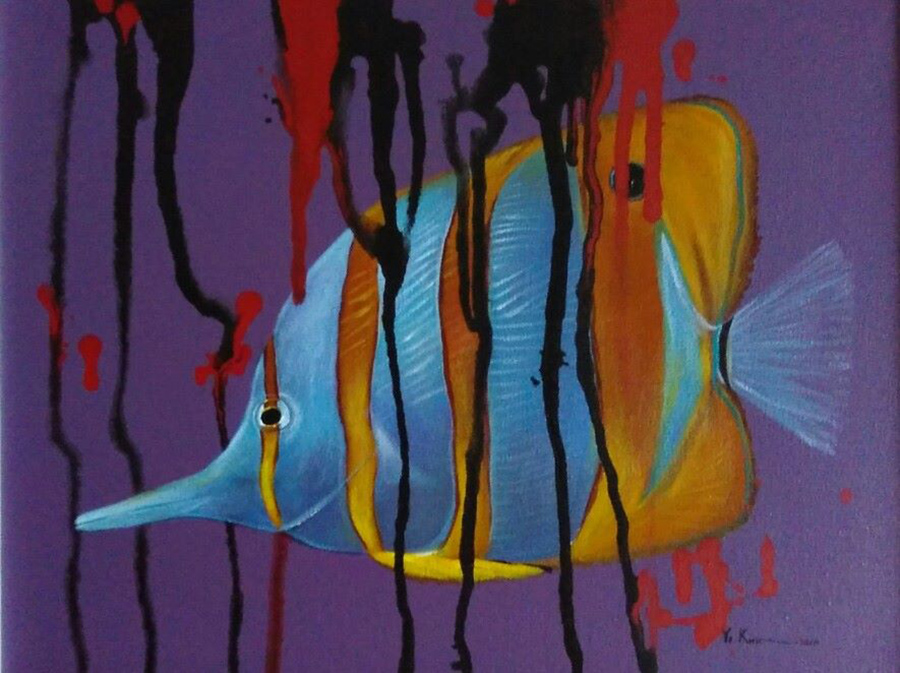
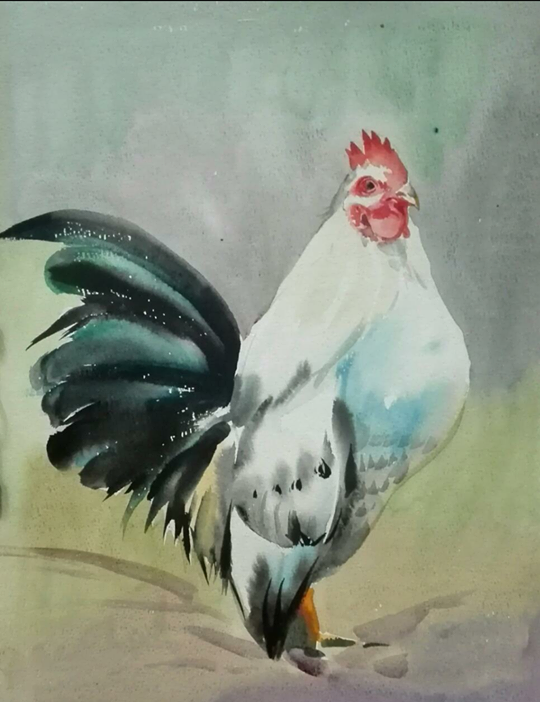
| Animal-loving Artists Showcased in Exhibition of Pet Portraiture Posted: 01 Dec 2017 01:00 AM PST An unusual exhibition of paintings currently on display in commercial capital Yangon showcases three artists' talents for depicting animals, or what they collectively refer to as their "Innocent Models." The "models" depicted here are all companions of the artists, but not of the human variety. Rather, the works all show pets of various kinds, or in the words of artists KM Kyaw Oo, Nyein Nyein Ei and Yi Yi Khin, their "little creatures" and "cute characters."  "This is a gathering for those who love pets. We want to show that domestic animals have feelings and a consciousness that people aren't aware of," KM Kyaw Oo said. A common theme in these paintings is the concept that the eyes are "windows to the soul." The artists show that, just as with humans, the eyes of animals convey much about their emotional lives.  "I love his eyes. He seems to be deep in thought," KM Kyaw Oo said of the canine subject of his painting "His Thought." Among KM Kyaw Oo's other animal subjects are roosters. While these animals are not commonly kept as pets by residents of urban areas in Myanmar, they are found in many rural households. "They're lovely, especially with their combs and tail feathers," the artist said.  Like KM Kyaw Oo, cat lover Nyein Nyein Ei focuses on the eyes of her subjects. "I have tried to interpret the feelings reflected in their eyes. My paintings are mainly about capturing that gaze," she said. Yi Yi Khin's preferred subjects are colorful fish. "I love their movements, and colors. My favorite are goldfish. I think their colors are captivating and I love replicating them in my paintings." 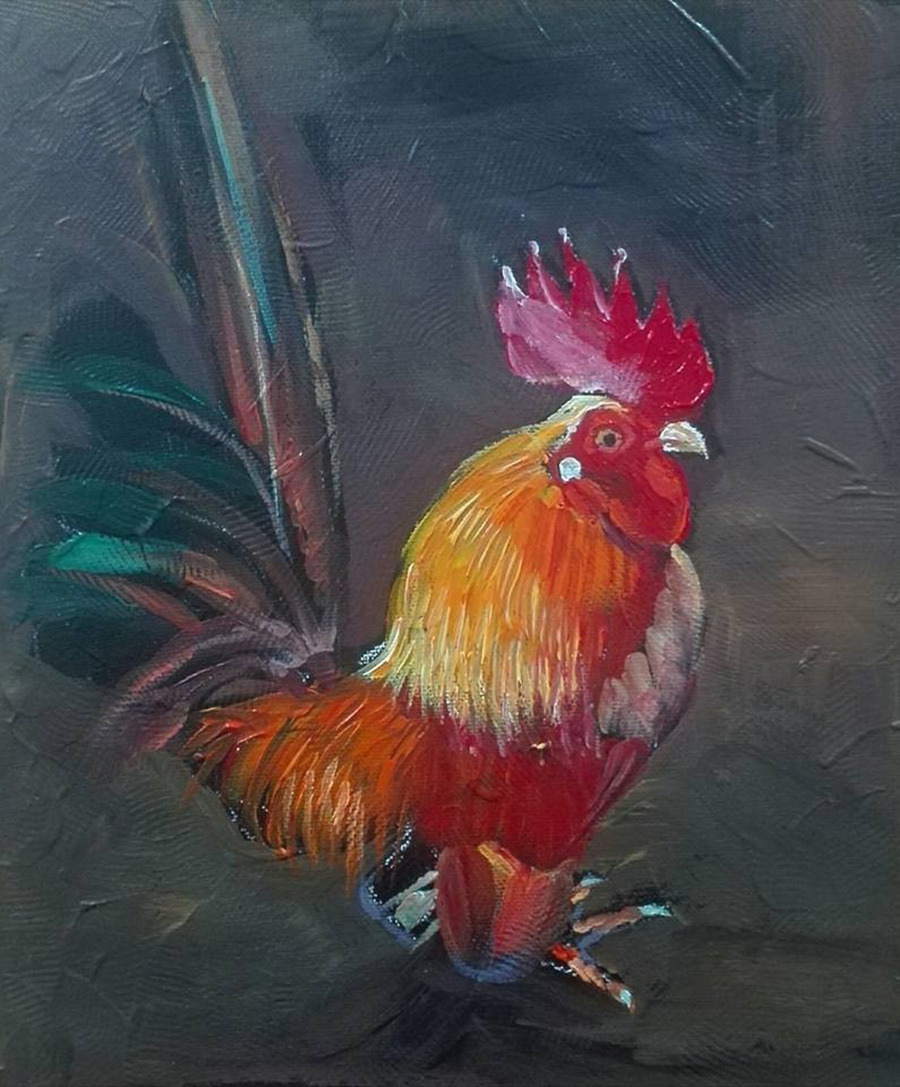 The exhibition, which runs through Sunday at 43 Art Gallery on 43rd Street, Botahtaung, features around 60 paintings, which can be purchased for between US$100 and $400. The post Animal-loving Artists Showcased in Exhibition of Pet Portraiture appeared first on The Irrawaddy. |
| Magwe Govt Closes Coal Mine Indefinitely After Deadly Explosion Posted: 01 Dec 2017 12:13 AM PST YANGON — The Magwe regional government has shut down a coal mine in Minbu Township after eight people were killed in a mine blast on Monday. Police have also opened a case against the company owner and manager of the mine for the deaths, U Aung Win Sein, head of the regional fire services department, confirmed to The Irrawaddy. The accident happened after a pipe used for injecting oxygen into the tunnel of the coal mine exploded. The blast took place at a depth of about 45 to 90 meters in the mine, which is owned by Han Htet Co. All of the bodies were recovered on Wednesday, after which the mine was closed, said U Aung Win Sein. The funeral for the victims was held on Thursday, and authorities have summoned the company management and employees to negotiate compensation, said U Khin Maung Lwin, a lawmaker representing Ngape Township in Magwe regional parliament. "They said the collapse was caused by the oxygen pipe explosion. So, experts will come and investigate. The coal mine will be closed until the investigation is complete," said the lawmaker. Among the victims are four miners from Ngape Township, two Chinese supervisors and two interpreters. The Magwe Region government permits 40 coal mines in the region and imposes a tax of 3,000 kyats per ton for production. The post Magwe Govt Closes Coal Mine Indefinitely After Deadly Explosion appeared first on The Irrawaddy. |
| Pope Urges Decisive Measures for Myanmar Refugees, Avoids ‘Rohingya’ Posted: 30 Nov 2017 09:09 PM PST DHAKA — Pope Francis called on Thursday for decisive measures to resolve the political reasons that caused mostly Muslim refugees in Myanmar to flee to Bangladesh and urged countries to help the Dhaka government deal with the crisis. However, just as on the first leg of his trip, in Myanmar, he did not use the word Rohingya to describe the refugees, which is contested by the Yangon government and military. In a speech before Bangladeshi President Abdul Hamid and diplomats hours after arriving under heavy security in Dhaka, the chaotic and dusty capital of 14 million people, Francis instead spoke of "refugees from Rakhine State." In his speech, Francis, who used the term Rohingya twice this year in appeals from the Vatican, praised impoverished Bangladesh’s "spirit of generosity and solidarity" in helping "a massive influx of refugees from Rakhine State." The exodus of some 625,000 Muslim Rohingya people from Rakhine state to the southern tip of Bangladesh was sparked by a military crackdown in response to Rohingya militant attacks on an army base and police posts on Aug. 25. Scores of Rohingya villages were burned to the ground, and refugees arriving in Bangladesh told of killings and rapes. The United States has said the campaign by mainly Buddhist Myanmar's military included "horrendous atrocities" aimed at "ethnic cleansing." The military denies the accusations. "None of us can fail to be aware of the gravity of the situation, the immense toll of human suffering involved, and the precarious living conditions of so many of our brothers and sisters, a majority of whom are women and children, crowded in the refugee camps," Francis said at the presidential palace. "It is imperative that the international community take decisive measures to address this grave crisis, not only by working to resolve the political issues that have led to the mass displacement of people, but also by offering immediate material assistance to Bangladesh in its effort to respond effectively to urgent human needs." Even though his calls for justice, human rights and respect in Myanmar were widely seen as applicable to the Rohingya, who are not recognized as Myanmar citizens or as members of a distinct ethnicity, rights groups such as Amnesty International said they were disappointed he did not defend them by name. In studiously avoiding the highly charged term, the pope has so far followed the advice of church officials in Myanmar, who feared it could set off a diplomatic incident and turn Myanmar’s military and government against minority Christians. Francis is due to meet a group of Rohingya refugees in Dhaka on Friday. In his address to the pope, the president of Bangladesh, which is predominantly Muslim, used the term Rohingya several times and accused the Myanmar army of committing "ruthless atrocities." He called for a "safe, sustainable and dignified return" of the refugees to their homes. Myanmar and Bangladesh signed an accord last week on terms for the return of Rohingya, though rights groups are skeptical Myanmar will follow through on the deal and have called for independent observers for any repatriation. There are concerns about protection for Rohingya from further violence if and when they go home, and about a path to resolving their legal status – most are stateless – and whether they would be allowed to return to their old homes. The pope's visit to the South Asian country unfolded under heavy security. While Francis stuck to his custom of using a simple car, he was escorted by many armored military and police vehicles. The country was shocked on July 1, 2016, when gunmen stormed a café in Dhaka's upscale Gulshan neighborhood, killing 22 people, most of them foreigners, in an overnight siege. Islamic State militants claimed responsibility. The post Pope Urges Decisive Measures for Myanmar Refugees, Avoids 'Rohingya' appeared first on The Irrawaddy. |
| Cambodia Revokes Diplomatic Passports of Banned Opposition Members Posted: 30 Nov 2017 09:02 PM PST PHNOM PENH — Cambodia has cancelled the diplomatic passports of some opposition members weeks after a Supreme Court ruling dissolved their political party, senior government officials said on Thursday. The court outlawed the Cambodia National Rescue Party (CNRP) this month at the request of authoritarian Prime Minister Hun Sen's government in a move that prompted the United States to cut election funding and threaten more punitive steps. Huy Vannak, undersecretary of state at the Interior Ministry, said 56 diplomatic passports of former members of the CNRP had been revoked. "Legally, they are just ordinary citizens, they are no longer special officials who receive diplomatic passports," Huy Vannak told Reuters. "They can no longer use them and it means that they can use normal passports." The move comes after a warning this week from Hun Sen that former members of the CNRP who have fled to Thailand may be sent back to Cambodia. Government spokesman Phay Siphan told Reuters on Thursday he was unaware whether there was any attempt to bring back to Cambodia those in hiding in Thailand. Rights groups and some Western governments have voiced concern over what they say is the deterioration of Cambodia's political landscape ahead of a 2018 election that had looked set to be the biggest challenge to Hun Sen's 32-year rule. CNRP leader Kem Sokha was arrested in September and charged with treason over an alleged plot to take power with American help. Washington has rejected the accusations as baseless. The Nov. 16 Supreme Court ruling ordered a five-year political ban for 118 members of the CNRP, including Kem Sokha. The 55 parliamentary seats the CNRP won in the last election in 2013 were allocated to smaller parties after the ruling. The post Cambodia Revokes Diplomatic Passports of Banned Opposition Members appeared first on The Irrawaddy. |
| As DASSK Eyes Election Triumph, Beijing Goes Courting Posted: 30 Nov 2017 06:50 PM PST Ahead of Myanmar’s historic 2015 general election, Daw Aung San Suu Kyi made her first visit to China at the invitation of the Chinese government. Now the lady is on her fourth visit to China, which also marks her second trip this year. The Irrawaddy revisit this story from The Irrawaddy Magazine's July 2015 Viewpoint story about her first visit. Beijing's recent courting of Daw Aung San Suu Kyi was deliberate and well-calculated. At a time when the political maneuvering in Myanmar is heating up ahead of elections later this year, "The Lady" flew to Beijing in June to meet Chinese president Xi Jinping in the Great Hall of the People. Should her visit surprise anyone? In the minds of Chinese leaders, Daw Aung San Suu Kyi's invitation letter was effectively penned after she made visits to the White House and other Western capitals in 2012. Beijing could not simply sit back and watch the influential opposition leader be subsumed exclusively into the Western orbit. The government invited senior members of the National League for Democracy (NLD) to China for discussions over the last two years, laying the groundwork for last month's high-level meeting. On Daw Aung San Suu Kyi's part, she sent a signal of appeasement to China in 2013 when she led a commission that green-lighted the controversial Chinese-backed Letpadaung copper mine project despite significant local opposition. "We have to get along with the neighboring country, whether we like it or not," she said amid the wave of ensuing criticism. Once dubbed the "darling of the West," Daw Aung San Suu Kyi recently accused the US and others of complacency on Myanmar policy. "The United States and the West in general are too optimistic and a bit of healthy skepticism would help everybody a great deal," she said. While the US and its allies have seemingly become more tolerant of the Myanmar government, the relationship between Naypyitaw and Beijing has soured since the 2011 suspension of the US$3.6 billion China-backed Myitsone hydropower project in northern Kachin State. Needless to say, China was not happy with the decision and has sought to have the project revived. Tensions have also recently arisen over conflict in the Kokang Special Region along the Sino-Myanmar border which has spilled over into Yunnan, leaving several Chinese villagers dead or injured. China's People's Liberation Army carried out a live-fire drill along the border last month that was widely viewed as a warning to the Myanmar government. Interestingly, the day after Daw Aung San Suu Kyi's plane landed in Beijing, the Kokang group that has been battling the Myanmar Army since February declared a unilateral ceasefire. Yang Houlan, China's outgoing ambassador to Myanmar, told Snr-Gen Min Aung Hlaing that the Chinese government had contacted Kokang leaders to stop military operations and solve problems through political means. Was the timing a coincidence? Sending Signals Despite friction, China remains Myanmar's largest investor, accounting for about US$14.6 billion in cumulative investments—nearly a third of all FDI. The country has invested in just about every sector of Myanmar's budding economy, with a particularly strong foothold in hydropower, gas and oil and with grand plans, such as a railway line linking Yunnan and Rakhine State, still in the offing. China views Myanmar as crucial to securing strategic access to the Indian Ocean. But seeing the rise of Western influence in the country once dubbed a Chinese "client state" has given Beijing pause. What if Western companies ramp up their investment in Myanmar, where resentment toward Chinese firms runs deep? What if US-Myanmar relations continue to improve? Chinese leaders realize the country could lose the advantage it once had when Myanmar was internationally ostracized and cut off from Western investment. Beijing knew that inviting Daw Aung San Suu Kyi to China, with its history of support for Myanmar's previous military junta, was complicated, but could also win the hearts and minds of many Myanmar citizens. In reaching out to the NLD leader, China was bypassing the Myanmar generals, whom it senses harbor a degree of anti-Chinese sentiment. The visit also sent a signal to the West that China remains a key player in Myanmar affairs, even as the US, the EU and others step up their engagement with the once pariah nation. In an English-language editorial, the state-run Xinhua News Agency said Daw Aung San Suu Kyi's visit was a sign that the Communist Party not only communicates with parties with "the same ideology, but also those with a different political vision." "China welcomes anyone with friendly intentions and it bears no grudge for past unpleasantness," the editorial said. In fact, China has been courting four potential post-election leaders in Myanmar. President Xi Jinping has separately hosted President U Thein Sein, Myanmar Army chief Snr-Gen Min Aung Hlaing and Union Parliament Speaker U Shwe Mann in Beijing. Many are curious to know what the Chinese president and the Myanmar opposition leader spoke about during their meeting in Beijing. Daw Aung San Suu Kyi has been tightlipped about the visit, telling the Washington Post only that it was "a good discussion" and that "we all understand neighbors have to live in peace and harmony." Many activists called on the NLD leader to speak up for imprisoned Chinese dissident, writer and fellow Nobel Peace prize winner Liu Xiaobo during her meetings in China. Sadly, this was always wishful thinking. Like other seasoned politicians around the world, Daw Aung San Suu Kyi is guided by pragmatism; she is no longer an icon of democracy and human rights. China knows this and hence felt comfortable inviting her to Beijing. Daw Aung San Suu Kyi's shrewd political pragmatism may come from her father, Gen. Aung San, who led an alliance with the Japanese in order to drive out the British colonialists. He later switched sides, back to the British, in order to dislodge the Japanese. In the view of many Myanmar, Gen. Aung San is respected as a leader willing to cut a deal with either friends or enemies to achieve his goal: the nation's independence. Beijing may view Daw Aung San Suu Kyi as the best chance of securing its stake in the country. She is bound to be an influential political player after the elections and, if properly courted, might be willing to endorse Chinese investments and calm rising anti-China sentiment among the public. Whether supporting China-backed development projects and large-scale investment is in the best interests of the nation is, however, an open question. This is a new ball game, where China has decided to make a move with one eye on the November poll. The invitation to Myanmar's opposition leader may hint that China has already placed a first bet on where political influence will lie in Myanmar's post-election landscape. Although it would publically state the exact opposite, for Beijing, the coming election in its troubled neighbor is much more than an "internal affair." This article originally appeared in the July 2015 issue of The Irrawaddy magazine. The post As DASSK Eyes Election Triumph, Beijing Goes Courting appeared first on The Irrawaddy. |
| Same Game, Different Tactics: China’s ‘Myanmar Corridor’ Posted: 30 Nov 2017 06:08 PM PST Daw Aung San Suu Kyi's visit to China, the second by a Myanmar leader in a matter of weeks, prompts us to revisit this story by Bertil Lintner in The Irrawaddy Magazine from July, 2015. Much has been said and written about Daw Aung San Suu Kyi's recent visit to China, and some commentators have even suggested that it may signal a shift in Beijing's policy toward Myanmar—away from the government and toward a more favorable view of the pro-democracy opposition. It would be more accurate, however, to say that China's long-term strategic and geopolitical interests in Myanmar remain the same while its tactics vary, depending on the political climate in its troubled neighbor. This became clear to me when, in June 2002, I had lunch with a senior adviser to Hu Jintao, the leader who later that year became Chinese president. It was a private meeting, so it would be unethical to mention his name, but I can relate the gist of our conversation without violating any trust or confidence. I wanted to hear his opinion on my theory about Beijing's interests in Myanmar: that China's landlocked provinces needed an outlet for exports through Myanmar territory in order for these regions to catch up with the then-rapidly developing coastal areas. Rail and road links to China's own ports were too long, and those ports would in any case be clogged with export items produced in the coastal provinces. Disparity in the development between the coast and the vast hinterland could threaten China's national security and internal stability. This was not a wild guess on my part. In fact, China made its intentions clear as early as 1985. In an article published in the official newsmagazine "Beijing Review" on Sept. 2 of that year, Pan Qi, a former vice minister of communications, outlined the possibilities of finding such an outlet from Yunnan and Sichuan through Myanmar down to the Indian Ocean. The article mentioned the Myanmar railheads of Myitkyina and Lashio in the north and northeast, and the Ayeyarwaddy River, which flows through almost the entire length of the country, as possible conduits for Chinese exports. Therefore, I surmised, China was keen to maintain the status quo in Myanmar—friendly relations with the military junta. To my surprise, the Chinese official answered without hesitation: "Absolutely. Those are our interests in Myanmar, we do not want to see any regime change. And Myanmar is not only a potential outlet for us but also an inlet." A strange choice of words and I asked, "an inlet for what?" His reply startled me: "We are no longer self-sufficient in oil … Most of our imported oil comes from the Middle East, and in case of a future conflict with the United States, they can block the Straits of Malacca. Therefore, we are going to build another pipeline, through Myanmar to Yunnan." He didn't specify what kind of potential conflict he was envisioning with the Americans, but it could have been an invasion of Taiwan. The United States is treaty-bound to defend Taiwan—also known as the Republic of China—but not even the most hardline hawks in the Pentagon would, in such an eventuality, consider lobbing missiles into Shanghai or Beijing. But blocking the Straits of Malacca to cut vital oil supplies to China would be an option. And he was right about the pipeline. In November 2008, China and Myanmar agreed to build a US$1.5 billion oil pipeline and a $1.04 billion natural gas pipeline along exactly the route this official had mentioned to me several years before. Our conversation took place shortly after East Timor had become independent, a prospect that few could have predicted 10 years before. In the spirit of this unexpected outcome, I asked: "What would you do if Daw Aung San Suu Kyi became the president of Myanmar?" (This, of course, was before the implementation of the 2008 constitution, which barred her from assuming the presidency). He gave me another amazing reply: "But we admire Daw Aung San Suu Kyi! We think she is a fantastic woman!" The conclusion was obvious: Beijing would not want to see any drastic changes in Myanmar, but if they occurred, the Chinese would adjust accordingly to protect their long-term interests. And that is exactly what is happening today. The Chinese do not want to put all their eggs in one basket. The government in Myanmar may or may not survive in its present shape and form, but the Chinese are prepared for all eventualities. This is not by any stretch of the imagination a policy shift. Exporting Revolution With its strategic location between South and Southeast Asia, and between the Chinese hinterland and the Bay of Bengal, Myanmar has long been important to China. Forget about empty Chinese talk about "non-interference" and "respect for Myanmar's sovereignty." That is pure nonsense. China has always interfered in Myanmar's internal affairs and most probably always will. In the past it was to export world revolution; today it is trade and commerce. With a different emphasis, "the Myanmar corridor" remains of utmost importance to China's policy makers. During the decade of 1968 to 78, the Chinese poured more aid into the Communist Party of Burma (CPB) than into any other communist movement outside Indochina. A new 20,000 square kilometer base area was established along the Chinese border in Myanmar's northeast. Unlike the old CPB units, then mainly in the BagoYoma mountains north of Yangon, these new troops were equipped with modern Chinese assault rifles, machine-guns, anti-aircraft guns and mortars. Radio equipment, jeeps, trucks, petrol and even rice and other foodstuffs, cooking oil and kitchen utensils were sent across the frontier. The Chinese also built two small hydroelectric power stations inside the CPB's new northeast base. A clandestine radio station, "The People's Voice of Burma," began transmitting from the Yunnan side of the border in April 1971. It was later moved to the CPB's headquarters at Panghsang inside Myanmar—now also the headquarters of its successor, the United Wa State Army (UWSA). Among the items China sent to the CPB was a truckload of newly printed, detailed contour maps of Myanmar. The plan was to push down from the northeast to the BagoYoma mountain range, and eventually capture Yangon. That failed, however, as government forces launched a major offensive against the CPB in the BagoYoma in 1975. After the loss of other central base areas in the mid-1970s, the CPB became isolated in the northeast, far away from the Myanmar heartland, and nominated a new chairman, Thakin Ba Thein Tin, who had spent years in exile in China in the 1950s and 1960s. The area under its control was almost exclusively populated by various ethnic minorities such as the Wa, Kokang Chinese, Kachin, Akha and Lahu. Only the top leadership and most of the political commissars came from central Myanmar. Most Western scholars have suggested that China's post-1968 support for the CPB was prompted by anti-Chinese riots in Yangon in June 1967. But it was not a knee-jerk reaction to those events. Preparations for the push into Myanmar began shortly after the military takeover in 1962. China had enjoyed cordial relations with the government that was overthrown, led by U Nu, and had little confidence in the new regime led by Gen. Ne Win. China also had grander plans for the entire region. It was going to export revolution to Southeast Asia, and the CPB was a vital link in that strategy. The CPB was, in turn, expected to link up with communist parties in Thailand, Malaysia, Indonesia and as far away as Australia. The 1967 anti-Chinese riots were merely an excuse for implementing a plan that had been drawn up years before by China's intelligence chief, Kang Sheng, a master strategist who worked closely with Thakin Ba Thein Tin and other Southeast Asian communist leaders as well as Ted Hill, the chairman of a tiny pro-Chinese communist party in Australia. In March and April 1989, the hilltribe rank-and-file of the CPB's army, tired of fighting for an ideology of which they understood very little, rose in mutiny against the party's ageing Bamar leadership. Thakin Ba Thein Tin and the other party veterans fled across the border to China, where they were allowed to settle and retire—and eventually died. After the 1989 mutiny, the CPB broke up into four different armies, all based along ethnic lines. Of these, the UWSA was by far the most numerous and powerful. The 1989 mutiny actually suited China's interests, and there are strong suggestions that China's clandestine services actually encouraged the Wa and others to rise up against their Bamar bosses. Following the death of Mao Zedong in 1976 and Deng Xiaoping's return to the political fold, China changed its policy towards the region. Now, the emphasis was on trade and economic expansion, not Maoist-style world revolution. Securing the 'Corridor' The CPB's leaders were aware of China's new policies and in internal party documents dated before the mutiny and seen by this contributor, Thakin Ba Thein Tin accused the Chinese of having become "revisionists." In a desperate last attempt to save the party, Thakin Ba Thein Tin had in early 1989 decided to send a leading cadre to Laos, a Soviet ally, to contact Moscow. That was pure lunacy since the Soviet Union was then ruled by Mikhail Gorbachev, a reformer who would have no interest whatsoever in lending support to the CPB. In any event, the mutiny broke out before the CPB emissary could reach Laos, so even he had to escape to China. But Beijing was not going to give up the secure position it had cultivated inside Myanmar since the late 1960s. In May 1989, the UWSA entered into a ceasefire agreement with the Myanmar government, which, on the one hand, suited China's new commercial interests. But it was also imperative to strengthen the UWSA. After all, the Chinese had had a long-standing relationship with most of the leaders of the UWSA, dating back to their CPB days. Thus, the UWSA was able to purchase vast quantities of weapons from China and, according to the April 26, 2013 issue of the prestigious military affairs journal "Jane's Defence Weekly," even armed transport helicopters: "The acquisition of helicopters marks the latest step in a significant upgrade for the UWSA, which has emerged as the largest and best-equipped non-state military force in Asia and, arguably, the world," the journal wrote. In the second half of 2012, the UWSA had acquired armored vehicles for the first time. These included both Chinese PTL-02 6×6 wheeled "tank destroyers" and an armored combat vehicle that IHS Jane's identified as the Chinese 4×4 ZFB-05. Furthermore, the UWSA has obtained from China huge quantities of small-arms and ammunition—and around 100 HN-5 series man-portable air defense systems (MANPADS), a Chinese version of the first-generation Russian Strela-2 (SA-7 "Grail") system. The UWSA today is better armed than the CPB ever was. It can field at least 20,000 well-equipped troops apart from thousands of village militiamen and other supportive forces. Moreover, the top leaders of the UWSA are usually accompanied by Chinese intelligence officers who provide advice and guidance. So what is China up to? Why this arming of a non-state military force at the same time as Beijing has had cordial relations with the Myanmar government since it abandoned its policy of supporting communist insurrections in the region? It is no doubt a way of putting pressure on Myanmar at a time when its relations with the United States are improving. As China sees it, it cannot afford to "lose" Myanmar to the West. A strong UWSA provides China with a strategic advantage and is also a bargaining chip in negotiations with Naypyidaw. When President's Office Minister U Aung Min visited Monywa in November 2012 to meet local people protesting a controversial Chinese-backed copper mining project, he openly admitted: "We are afraid of China… we don't dare to have a row with [them]. If they feel annoyed with the shutdown of their projects and resume their support to the communists, the economy in border areas would backslide." By "the communists" he clearly meant the UWSA and its allies, among them the Myanmar National Democratic Alliance Army (MNDAA) in Kokang, another former CPB force, which resorted to armed struggle in February this year. China, predictably, has denied any involvement in that conflict, but the fact remains that most of the MNDAA's weaponry and vast quantities of ammunition have been supplied by the UWSA. According to one well-placed source, China is indirectly "teaching the Myanmar government a lesson in Kokang: move too much to the West, and this can happen." At the same time, China is playing another "softer" card by being actively involved in so-called "peace talks" between the Myanmar government and the country's multitude of ethnic rebel armies. Whether China wants to export revolution or expand and protect commercial interests, it apparently feels that it needs to have a solid foothold inside Myanmar. There is no better and more loyal ally in this regard than the UWSA and its affiliates. Inviting Daw Aung San Suu Kyi to China essentially serves the same purpose: Put pressure on the government in Naypyidaw and keep its options open for the future—all with the aim of securing the vital "Myanmar corridor." This article originally appeared in the July 2015 issue of The Irrawaddy magazine. The post Same Game, Different Tactics: China's 'Myanmar Corridor' appeared first on The Irrawaddy. |






| You are subscribed to email updates from The Irrawaddy. To stop receiving these emails, you may unsubscribe now. | Email delivery powered by Google |
| Google, 1600 Amphitheatre Parkway, Mountain View, CA 94043, United States | |