Thursday, February 22, 2018

The Irrawaddy Magazine

The Irrawaddy Magazine


Lashio Stable but Tense after Yoma Bank Bombing

Posted: 22 Feb 2018 07:04 AM PST

Local residents in Lashio reported that the situation there had stabilized Thursday following a bomb blast at a Yoma Bank branch on Wednesday that killed two people and wounded 21, though many residents expressed concerns about security as authorities conducted checks and patrols around the town in northern Shan State.

A witness to the blast, U Kyaw Aung, told The Irrawaddy, "Just after I parked my car, I was walking toward the public market when I heard a loud blast. The windows from the bank were blown out and there was glass all over the street. The windows of my car were also shattered."

The market was busy as usual on Thursday, he said, adding there was no sign of tightened security inside the town. However, local residents reported that authorities were checking vehicles on roads leading in and out of the town, and had tightened security in the surrounding areas.

Lashio police said Thursday that the bomb appeared to be a locally made device.

Two women were killed in the blast. Of the 21 people injured, four men and two women remained in hospital Thursday, said Lashio police officer Colonel U San Win.

According to U San Win, the bomb had been placed against a wall of the bank building. When it detonated, it partially destroyed the wall, damaging the interior of the bank and causing casualties, he said.

Both Yoma Bank and Ayeyarwady Bank were struck by the blast, but the latter suffered only minor damage.

While the situation appeared to have stabilized, some local people said they didn't feel secure in the town and were thinking about leaving in case other blasts occurred.

Authorities said they were investigating who was responsible for the bombing, but had yet to release any information on possible suspects, saying only that they were preparing charges.

The Myanmar Army (Tatmadaw) said a month ago it had distributed flyers warning local residents that the Kachin Independence Army and Ta'ang National Liberation Army were planning a bombing campaign against the city. Public places, government buildings and bus stations were being targeted, and the KIA and TNLA had infiltrated about 10 and 20 people into the town, respectively, the Army said.

Maj. Khaing Zaw Win from the Military Security Department told The New York Times in a report published Wednesday that the Tatmadaw had received information that the two armed groups had prepared bombs a long time ago, prompting the distribution of the fliers a month ago.

TNLA spokesman Colonel Tar Aike Kyaw denied the accusation when contacted by The Irrawaddy.

"It is not our policy to bomb public properties. We were not involved in it," Col. Tar Aike Kyaw said.

He said the Tatmadaw fliers referred to by Maj. Khaing Zaw Win were distributed last year, not a month ago. The Tatmadaw was using Wednesday's blast to revive its claims against the armed groups on social media, he said.

Police and Army personnel were patrolling around the town in vehicles and army tanks night and day to maintain security in Lashio. Some residents were asking how the KIA and TNLA could have managed to stage an attack on a bank.

The TNLA spokesmen echoed these comments, saying, "They [officials] have tightened security in this area as it houses government and police buildings. So how could we stage such an attack?" Col. Tar Aike Kyaw said.

"It could be a personal dispute or it could be politically motivated, with the aim of threatening the people in the town," Col. Tar Aike Kyaw said.

The Army and the government typically point the finger at rebels when there is a bomb blast in the country. However, neither have issued any official statement regarding who is to blame for the bombing. Meanwhile, the Army and police investigation is ongoing.

Local residents offered various theories on the bomb blast. One resident said that because the conflict in Arakan had quietened down recently, the Tatmadaw may be planning to launch a big military offensive in northern Shan State. Therefore, they planted the bomb to make it look like the work of the rebels, according to this theory.

Others believed the bombing was related to a recent drug raid in Kutkai in which Army and police seized nearly 10 billion kyat worth of illegal drugs.

Some locals even suggested Yoma Bank was bombed because it failed to pay taxes to the rebel groups. Other Lashio sources downplayed this idea, saying all banks based in northern Shan have to pay taxes to rebels, with the exception of Myanmar Economic Bank.

Lashio is home to communities of Shan, Palaung, Wa, Kokang, Kachin and Burmese. Just a four-hour drive from the town of Muse on the Chinese border, Lashio's economy has boomed in recent years due to cross-border trade with China.

The Myanmar government and Army have entered into a peace process with 10 ethnic armed groups, most of them from the south of the country. At least seven other armed groups, who are members of the Northern Alliance based in northern Shan, have declined to sign the Nationwide Ceasefire Agreement.

The KIA, TNLA, Arakan Army, Myanmar National Democratic Alliance Army and Shan State Progress Party are all members of the Northern Alliance. They are all based in northern Shan, and often engage in fighting against the Tatmadaw.

The post Lashio Stable but Tense after Yoma Bank Bombing appeared first on The Irrawaddy.

Evolution of Myanmar Art On Display in New Exhibit at National Museum

Posted: 22 Feb 2018 06:13 AM PST

YANGON — You can't go to the Myanmar Art Museum to study the evolution of Myanmar art because there is no such thing as an art museums in Myanmar.

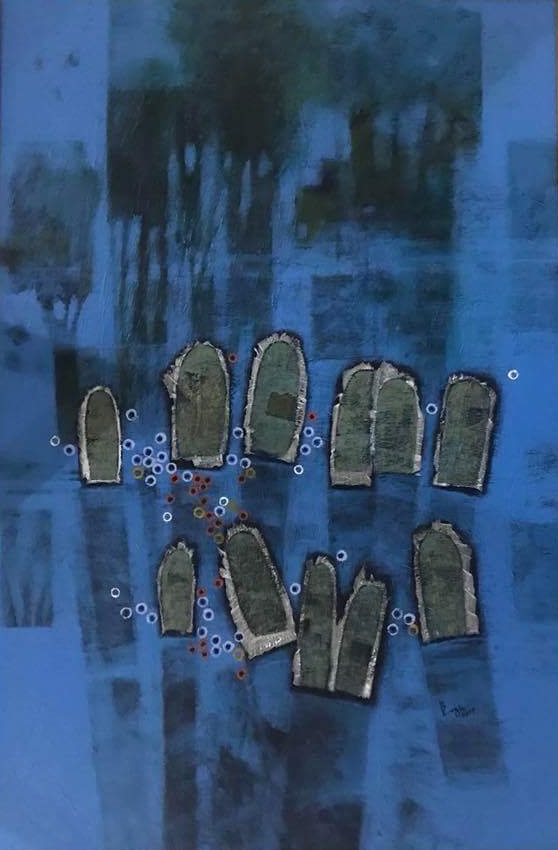
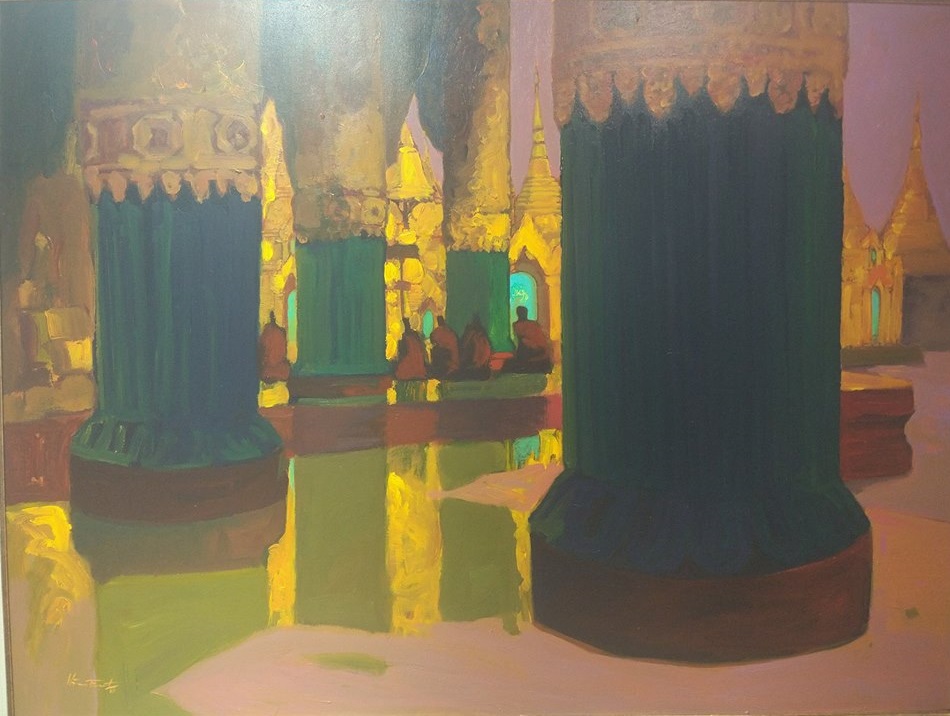
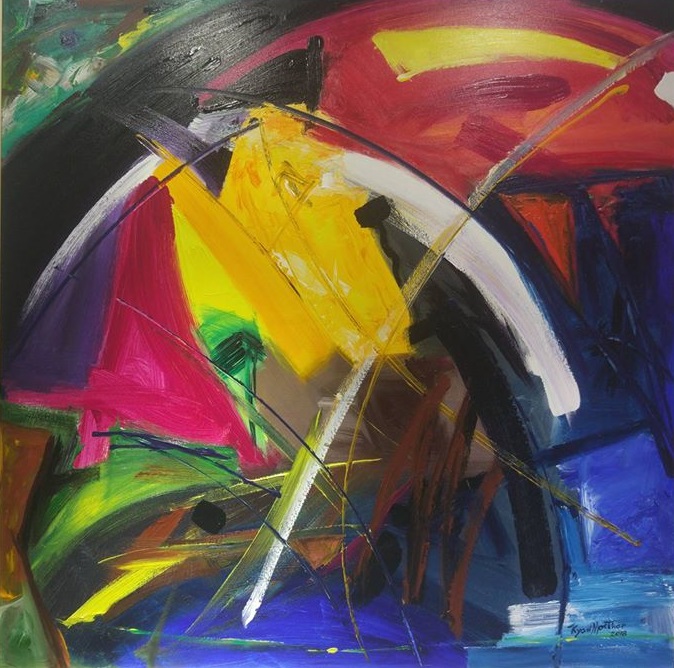
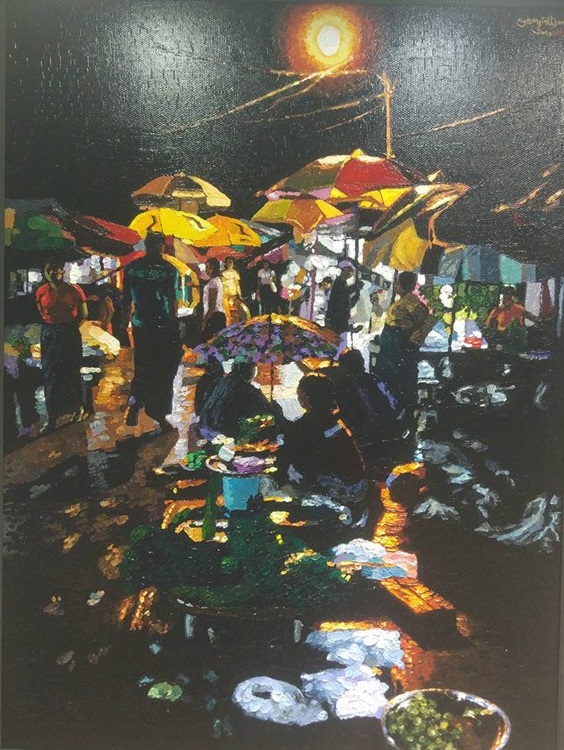
Some even fail to notice that there is an art booth at the National Museum, which has been in existence for 66 years. Paintings in the booth by ancient artists have been waiting for visitors in complete silence. That’s why the museum is sometime called “the graveyard of paintings.”

Now, officials from the museum are collaborating with collectors and contemporary artists to help bridge the gap.

The Museum Activity Art Exhibition, the first of its kind organized by the National Museum, opened to the public on Tuesday and will run until Wednesday.

The National Museum’s assistant director, U Kyaw Shin Naung, brought together contemporary artists with elderly colleagues who had lost touch with the museum to organize the exhibit.

"I want people at the museum to be able to appreciate art. Frankly, I want to get rid of the notion that all the museum pieces are things that have been in existence for centuries or that they have been excavated. I want people to understand the importance of art," he said.

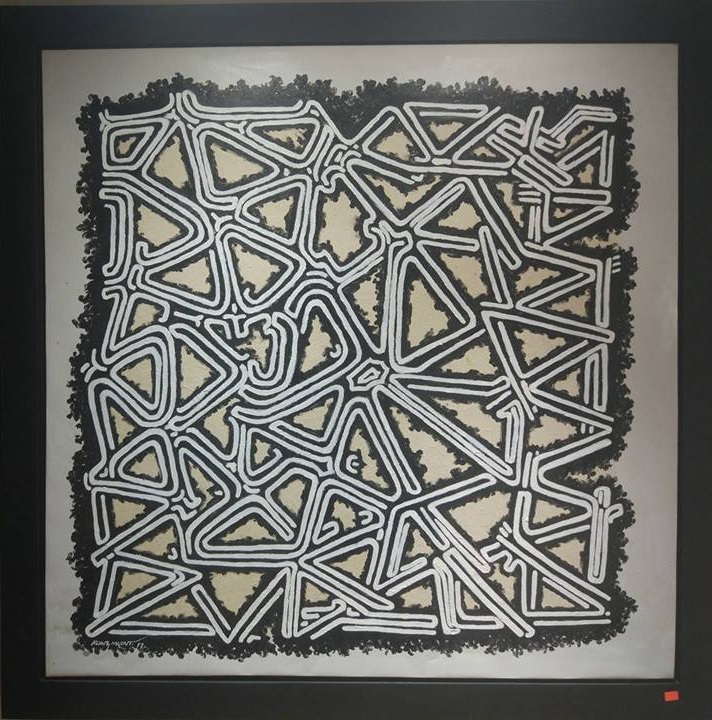
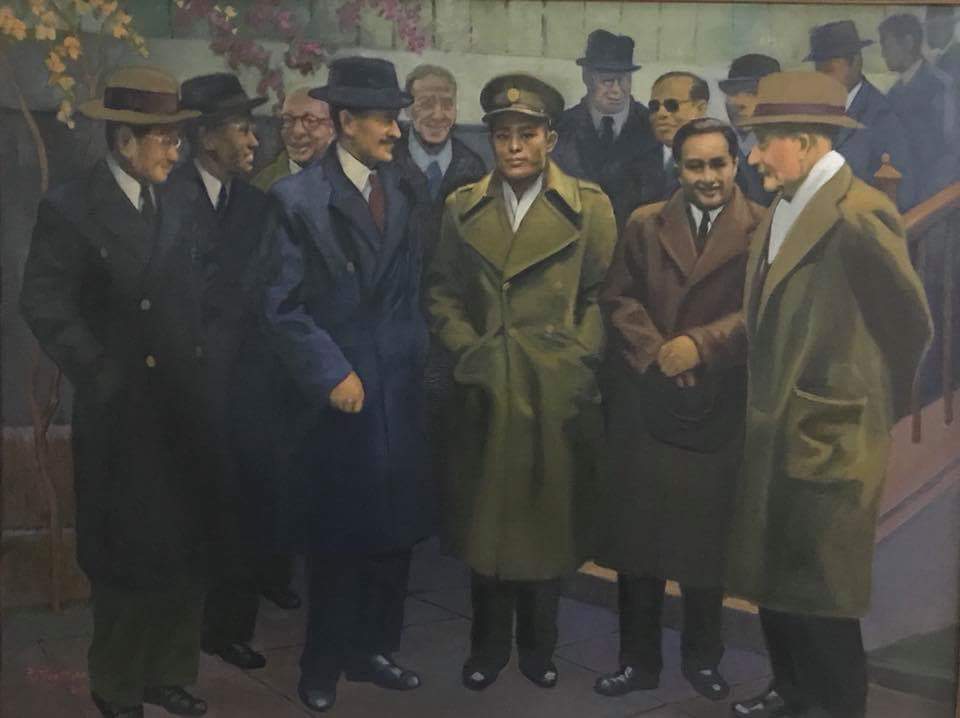
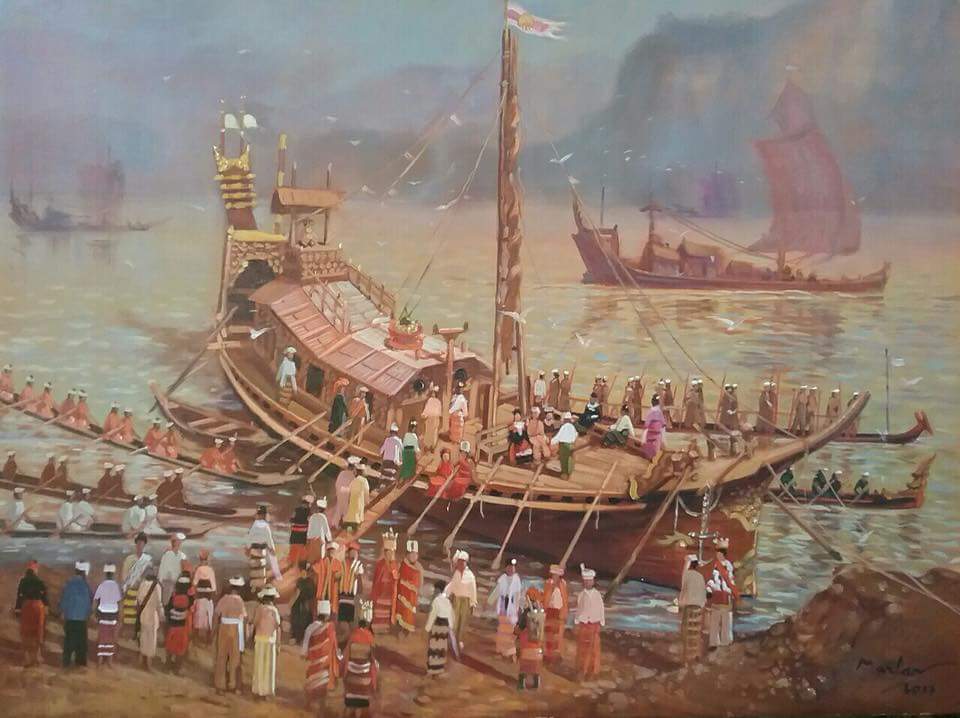
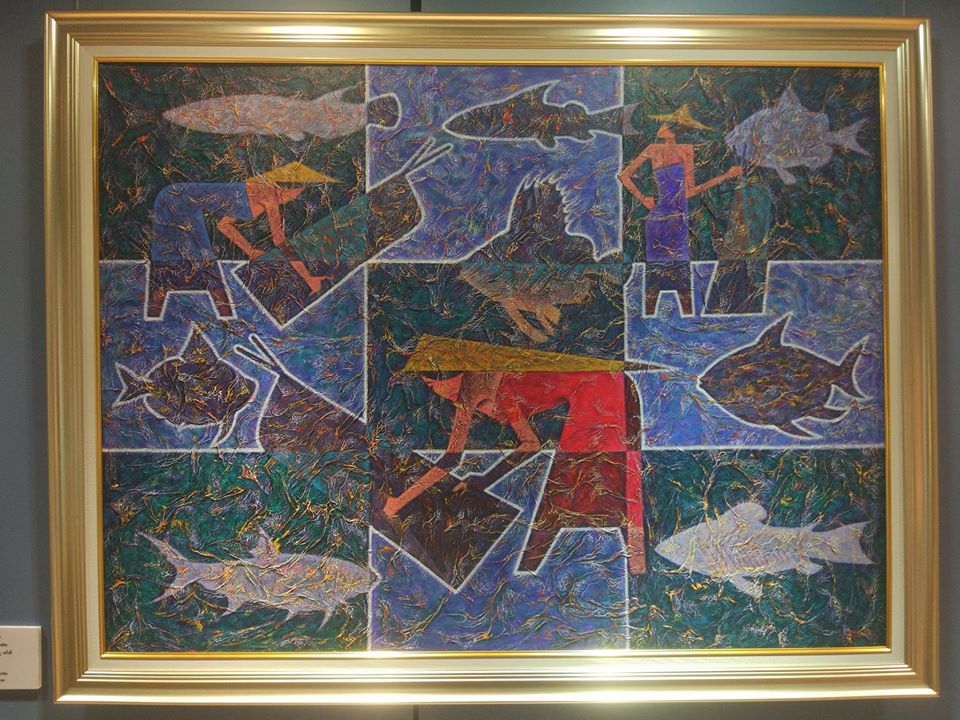
The exhibit features paintings by various contemporary artists, such as former prisoner San Min, alongside the works of their elder colleagues. The show was opened by Culture Minister Thura U Aung Ko.

San Min donated a piece to the show priced at $4,000. "I am glad to participate in the exhibition. I donated my painting because they don't have a budget for the art museum," he said.

The exhibit features 73 pieces in all by 70 traditional and modern artists ranging in price from $500 to $9,000.

Other art exhibits at the National Museum are in the pipeline.

"Museums and artists have been moving apart for a long time.” said Saya Aung Min, who writes about modern art. “Now they [museum authorities] have started to take action after sitting still for some time."

Translated from Burmese by Myint Win Thein.

The post Evolution of Myanmar Art On Display in New Exhibit at National Museum appeared first on The Irrawaddy.

Anti-Corruption Commission Hands List of 12 Suspects to Police

Posted: 22 Feb 2018 05:04 AM PST

YANGON— In the latest move to tackle the country's deep-rooted corruption problem, the new anti-graft commission handed over to the police a list of 12 fugitives wanted on corruption charges, most of whom worked in the law-enforcement sector. The list, which includes two judges, a lawyer, a public prosecutor, the head of a police station, and two administrators, was published on the Myanmar Police Force website and Facebook page on Wednesday.

U Han Nyunt, a member of the anti-corruption commission, said the agency would now turn the cases over to the Ministry of Home Affairs, which has the power to issue arrest warrants for the suspects, as the 12 were on the run and they had been publicly identified.

The police force's announcement stated that the charges were brought against the 12 under Articles 56, 57 and 63 of the anti-corruption law and called for public cooperation.

The charges carry up to 10 years' imprisonment for taking bribes while holding a political post or being in position of competent authority.

The anti-corruption commission was formed in February 2014 under the previous U Thein Sein government to enforce the 2013 anti-corruption law. It was on Nov. 23, 2017 with 11 members and chaired by retired minister of information U Aung Kyi.

Between then and the end of last month, the new commission has received a total 949 cases.

Despite Myanmar rising slightly in transparency rankings in recent years, it continues to face challenges in fighting corruption and is consistently ranked among the worst countries for the problem every year.

It ranked 130 out of 180 nations in a new report from graft watchdog Transparency International that was released on Wednesday. In 2016, it ranked 136th out of 176 nations, while in 2015 it ranked 147 out of 168.

"I would like to urge all of our citizens not to neglect and forgive the act of taking a bribe. We do need to work together with all of you to combat this malpractice. Fighting corruption is the duty of every citizen," U Aung Kyi said at a "Promote Integrity to Counter Corruption" paper-reading ceremony held in Yangon on Jan. 22 and 23.

He also said that the commission aimed to engage with civil society in order to work together in combating bribery.

Under the current anti-corruption law, the anti-graft commission is not authorized to take action against officials suspected of wrongdoing unless someone files a complaint.

The post Anti-Corruption Commission Hands List of 12 Suspects to Police appeared first on The Irrawaddy.

U Ko Ni Murder Suspect Freed on Bail

Posted: 22 Feb 2018 04:10 AM PST

YANGON—A court on Thursday granted bail to one of five men accused of conspiring to kill National League for Democracy legal adviser U Ko Ni, who was gunned down in early 2017.

Yangon Northern District Court in Insein Township allowed Aung Win Tun to walk free after he paid bail of 50 million kyat and produced two guarantors.

Aung Win Tun is accused of harboring his brother and co-conspirator Aung Win Zaw. Prosecutors allege Aung Win Tun drove his brother to Hpa-an, Karen State, after the killing was carried out in Rangoon on Jan. 29.

However, neither the Home Affairs Ministry nor the police mentioned Aung Win Tun's name in connection with the case at their press conference on Feb. 25, nor did they state exactly when he was arrested. There were no references to Aung Win Tun by the President's Office in its public updates on the case.

Authorities have so far named five suspects in the assassination of U Ko Ni: Gunman Kyi Lin, co-conspirators Aung Win Tun, Aung Win Zaw and Zeya Phyo, and the alleged mastermind, Aung Win Khaing, a former lieutenant-colonel in the Myanmar Army who remains at large.

Aung Win Khaing was charged with homicide under Article 302 of the penal code, but has so far eluded capture. He is also a brother of Aung Win Tun.

The court granted bail over prosecutors' objections, saying they had failed to submit evidence backing up their calls for Aung Win Tun to remain behind bars.

Zeya Phyo, one of the accused, told the media: "Finally, the truth is revealed."

Prosecutor Robert San Aung said, "I hope there will not be any [negative] consequences from this; Aung Win Tun is the brother of fugitive Aung Win Khaing."

The post U Ko Ni Murder Suspect Freed on Bail appeared first on The Irrawaddy.

Banned UN Envoy, Rohingya Activists to Join Conference on ‘Myanmar Genocide’

Posted: 22 Feb 2018 02:52 AM PST

YANGON — The UN’s special envoy on human rights in Myanmar will deliver a keynote address at an international conference in Berlin on Monday to push European leaders to do more for the beleaguered Rohingya.

According to a description of the event by its organizers, “The Berlin Conference on Myanmar Genocide aims to inform German civil society and European public about the ongoing genocide of Rohingya people in Myanmar.

“It is hoped that the conference will help influence public opinion, which in turn will demand the EU leaders take their shared political and human responsibility in order to make the call ‘never again!’ a reality."

The conference will be joined by international scholars, human rights activists and Rohingya lobbyists based outside of Myanmar.

Yanghee Lee, the UN’s human rights  envoy to Myanmar, was barred from returning to the country in December after the civilian government and the military accused her of biased reporting on the crisis in Rakhine State in favor of the Rohingya.

The special rapporteur's mandate requires two visits to Myanmar a year in order to report to the UN Human Rights Council and General Assembly. Since taking up the post in June 2014, Ms. Lee has visited Myanmar six times.

She recently told the UK’s Channel 4 News that there were grounds for bringing Myanmar's de facto leader, Daw Aung San Suu Kyi, before an international tribunal for failing to intervene in the "clearance operation" the military launched in Rakhine following militant attacks on several police posts and an army base on Aug. 25 that killed 11 security personnel. The military crackdown that followed the attacks has driven some 690,000 Muslim Rohingya to seek refuge in neighboring Bangladesh amid reports of arson, murder and rape targeting their communities.

Others joining the Berlin conference for discussions on a multicultural society and ending genocide in Myanmar will include Harn Yawnghwe, executive director of the Brussels-based Euro-Burma Office, and Maung Zarni, a Buddhist Rohingya lobbyist.

Harn Yawnghwe is the son of Myanmar's first president, Sao Shwe Thaike. His organization provides funding to ethnic and civil society organizations in Myanmar.

He attracted criticism from within Myanmar last year for suggesting that the government hold talks with the Arakan Rohingya Salvation Army, which organized the August attacks.. He was also attacked for being a Rohingya lobbyist based on pictures of him with other Rohingya and members of the Organization of Islamic Cooperation at a meeting on the Rohingya crisis in Saudi Arabia.

In an interview with The Irrawaddy last year, Harn Yawnghwe said that meeting was in 2010 and that it was meant to persuade the Rohingya to eschew terrorism and seek a political solution to their problems.

The conference will also be joined by other Rohingya activists including Ro Nay San Lwin, editor of Rohingya Blogger, Ro Hla Kyaw, of the European Rohingya Council in The Netherlands, and Ro Tun Khin, president of the Burmese Rohingya Organization UK.

Separately, more than 100 UK parliamentarians have called on their government to declare that Myanmar’s military should be referred to the International Criminal Court for its “security operations” in Rakhine, which the UN’s human rights office has described as ethnic cleansing and possibly genocide.

They wrote to UK Foreign Secretary Boris Johnson on Wednesday seeking measures in line with their call, according to Bangladeshi media reports.

“It’s time for the British government to unequivocally state that the situation in Myanmar should be referred to the International Criminal Court,” they said.

The post Banned UN Envoy, Rohingya Activists to Join Conference on ‘Myanmar Genocide’ appeared first on The Irrawaddy.

Floating Island: New Home for Rohingya Refugees Emerges in Bay of Bengal

Posted: 21 Feb 2018 10:48 PM PST

DHAKA/BHASAN CHAR/COX’S BAZAR, Bangladesh — Bangladesh is racing to turn an uninhabited and muddy Bay of Bengal island into home for 100,000 Rohingya Muslims who have fled a military crackdown in Myanmar, amid conflicting signals from top Bangladeshi officials about whether the refugees would end up being stranded there.

Bangladesh Prime Minister Sheikh Hasina said on Monday that putting Rohingya on the low-lying island would be a “temporary arrangement” to ease congestion at the camps in Cox’s Bazar, refuge for nearly 700,000 who have crossed from the north of Myanmar’s Rakhine State since the end of August last year.

However, one of her advisers told Reuters that, once there, they would only be able to leave the island if they wanted to go back to Myanmar or were selected for asylum by a third country.

“It’s not a concentration camp, but there may be some restrictions. We are not giving them a Bangladeshi passport or ID card,” said H.T. Imam, adding that the island would have a police encampment with 40 to 50 armed personnel.

British and Chinese engineers are helping prepare the island to receive refugees before the onset of monsoon rains in April, which could bring disastrous flooding to ramshackle camps further south that now teem with about 1 million Rohingya.

Hasina’s adviser, Imam, said the question of selecting Rohingya in Cox’s Bazar to move to the island was not finalized, but it could be decided by lottery or on a volunteer basis.

The United Nations High Commissioner for Refugees said in a statement: “We would emphasize that any relocation plan involving refugees would need to be based on and implemented through voluntary and informed decisions.”

Frenetic Construction

Humanitarian agencies criticized the plan to bring Rohingya to the island when it was first proposed in 2015. Aid workers who spoke to Reuters said they remain seriously concerned that the silt island is vulnerable to frequent cyclones and cannot sustain livelihoods for thousands of people.

But work on the project has accelerated in recent months, according to architectural plans and two letters from the Bangladesh navy to local government officials and contractors seen by Reuters.

A year ago, when Reuters journalists visited Bhasan Char — whose name means “floating island” — there were no roads, buildings or people.

Returning on Feb. 14, they found hundreds of laborers carrying bricks and sand from ships on its muddy northwest shore. Satellite images now show roads and what appears to be a helipad.

Floating Island, which emerged from the silt only about 20 years ago, is about 30 km from the mainland. Flat and shape-shifting, it regularly floods from June to September. Pirates roam the nearby waters to kidnap fishermen for ransom, residents of nearby islands say.

The plans show metal-roofed, brick buildings raised on pylons and fitted with solar panels. There will be 1,440 blocks, each housing 16 families.

Chinese and British Companies

Chinese construction company Sinohydro — better known for building China’s Three Gorges Dam — has begun work on a 13-km flood-defense embankment for the $280-million project.

A Sinohydro engineer on Bhasan Char, reached by telephone later, said the company had “confidentiality agreements” and that questions about construction on the island should be referred to the Bangladesh government.

HR Wallingford, a British engineering and environmental hydraulics consultancy, is advising the project on “coastal stabilization and flood protection measures,” the company told Reuters in a statement earlier this month.

“The coastal infrastructure design is expected to include a flood defense embankment protecting the development area to international standards, set back from the shoreline,” it said. The company referred further inquiries to the Bangladesh Navy.

Omar Waraich, Deputy South Asia Director for rights group Amnesty International, said there was “no one in the humanitarian community we spoke to who thought this was a good idea.”

“This is a silt island that only emerged into view recently,” he said.

Residents of nearby Sandwip island, which is larger and less remote, say monsoon storms regularly kill people, destroy homes and cut contact with the mainland.

However, a senior member of the prime minister’s staff, Director General Kabir Bin Anwar, said humanitarian organizations critical of the plan were “absolutely wrong because they don’t understand the topography” of Bangladesh.

The government was building cyclone shelters on the island, he said, adding that there were salt-tolerant paddies and people living there could fish or graze cows and buffalo.

Anwar also dismissed concerns about delivering basic aid to the island.

“We don’t need help from any foreign NGOs or local NGOs. We can feed them,” he said.

Bangladeshis living on nearby islands are critical of their government’s efforts for the Rohingya.

Belal Beg, 80, who was born on Sandwip island, said there was resistance to settling Rohingya on Bhasan Char because huge numbers of Bangladeshis are displaced by coastal erosion each year with no measures taken to protect them.

“We should first care for our own people, but the government is deciding to give shelter to immigrants,” Beg said.

Many Rohingya also reject the idea of moving to an island even further from Myanmar, which many of them have called home for generations.

Jahid Hussain, a Rohingya refugee at the Chakmakul refugee camp in Bangladesh, said he had fled Myanmar to save his life and would not risk it by living on Bhasan Char.

“I would rather die right here,” he said.

The latest unrest in Myanmar’s Rakhine State began on Aug. 25, when Rohingya insurgents attacked dozens of police posts and an army base, prompting an army counter-offensive that forced entire villages to flee. They joined about 300,000 Rohingya already in Bangladesh, one of the world’s poorest and most crowded nations, who had fled previous bouts of violence.

Daw Aung San Suu Kyi, Nobel peace laureate and leader of Buddhist-majority Myanmar, has been heavily criticized by Western nations for not speaking out against what the United States and the United Nations have branded ethnic cleansing.

Myanmar denies that ethnic cleansing has taken place and says it has been conducting legitimate operations against terrorists in northern Rakhine.

Describing the island, Hasina told a news conference in Dhaka that “from a natural point of view it is very nice” and said although the initial plan was to put 100,000 people there, it had room for as many as 1 million.

The post Floating Island: New Home for Rohingya Refugees Emerges in Bay of Bengal appeared first on The Irrawaddy.

Two Dead, 22 Hurt by Bomb Blast in Shan State

Posted: 21 Feb 2018 10:16 PM PST

YANGON — A bomb blast killed two bank employees and injured 22 other people in Myanmar’s northeastern city of Lashio on Wednesday, the government and the military said.

Police said an investigation was under way but would not elaborate on whether there were any suspects in the attack. Lashio is in Myanmar’s restive Shan State, where several ethnic insurgent groups are fighting the Myanmar military.

“We just received a [local] police report about the bomb blast in Lashio [on Tuesday] evening,” police spokesman Colonel Thet Naing said in Myanmar’s capital, Naypyitaw.

The two dead were both women, government spokesman Zaw Htay said in a post on Twitter linked to a government statement on the Lashio explosion.

The military said in a statement 22 people were injured.

Another police spokesman, Colonel Myo Thu Soe, said no suspects could be identified at this stage. “We’re still investigating,” he told Reuters.

A Lashio resident, 27-year-old Lway Dehnin, said she heard the explosion around 4:30 p.m. near two banks close to the regional Health Ministry building in the heart of the city of 170,000 people.

“The explosion happened near Aya and Yoma banks. The windows in the buildings were broken. Also the windows of the Ministry of Health and some nearby houses were broken,” said Lway Dehnin.

Yoma Bank said two of its Lashio branch employees were killed and that both of its branches in the city would be temporarily closed. Unverified photographs and video clips posted on social media by local residents and journalists showed the bank buildings with blasted windows and damaged signboards. A wall of a Yoma Bank building also showed signs of damage.

Lashio is one of the largest cities in Myanmar’s northeast, straddling the main road connecting the central city of Mandalay with the main crossing on Myanmar’s border with China at Muse, about 110 km to the north.

Bomb explosions in cities in Shan are not unusual, but they are typically much smaller than Wednesday’s blast. Civilian fatalities and injuries are rare.

Myanmar’s de facto leader, Daw Aung San Suu Kyi, wants to revive a stuttering peace process to end decades of ethnic wars. Two armed groups signed a ceasefire with the government last week.

Ending near-perpetual civil war has been Aung San Suu Kyi's stated top priority, but the Buddhist-majority Southeast Asian country has seen the worst fighting with rebels in years since she took office almost two years ago.


The post Two Dead, 22 Hurt by Bomb Blast in Shan State appeared first on The Irrawaddy.

Civilian Witness Contradicts Police on Reuters Reporters’ Arrest — Defense

Posted: 21 Feb 2018 09:50 PM PST

YANGON — The first civilian to testify in the case of two Reuters reporters accused of violating Myanmar’s Official Secrets Act contradicted police and prosecutors on Wednesday about where the pair was arrested, a defense lawyer said.

Wa Lone, 31, and Kyaw Soe Oo, 27, were detained on Dec. 12 for allegedly possessing confidential documents, after they had been invited to meet police officers over dinner in the northern outskirts of Yangon.

Win Lwin Oo, 50, a neighborhood chief from another part of north Yangon, was the latest prosecution witness to give evidence in proceedings to decide whether they should be charged under the colonial-era law.

He said he was accompanying police as they conducted traffic searches and witnessed the reporters’ detention.

The exact location of the arrests has emerged as a point of contention in the proceedings.

The reporters have told relatives they were arrested almost immediately after being handed some papers at the Saung Yeik Mon restaurant by two police officers they had not met before.

The prosecution and earlier police witnesses have testified the journalists were arrested after they were stopped and searched at a checkpoint at the junction of No. 3 Main Road and Nilar Road, several hundred meters from the restaurant, by officers who were unaware they were journalists. The prosecution has made no reference to a meeting with police prior to their detention.

“We kept arguing about it and during the examination today the witness Win Lwin Oo said it is not No.3 road but Sin Gyi restaurant, which is beside Saung Yeik Mon,” defense lawyer Khin Maung Zaw told reporters after the hearing.

Prosecutor Kyaw Min Aung declined to answer questions from reporters. Government spokespeople have routinely declined to comment on the details of the case, citing the ongoing court proceedings.

Earlier on Wednesday, police corporal Kyaw Lwin gave evidence about a discrepancy in police paperwork. He said Kyaw Soe Oo’s arrest was recorded as taking place in front of Saung Yeik Mon because the journalist had otherwise refused to sign the form, but like the other police insisted they were arrested at the checkpoint.

Previously Published


At previous hearings, the court has been told that one police officer had burned his notes from the time of the arrest. Another police witness said he was not familiar with police procedures for recording arrests.

Another police witness, Major Min Thant, agreed that the information in the documents Wa Lone and Kyaw Soe Oo were holding in their hands at the time of their arrest had already been published in newspaper reports.

On Wednesday, as the reporters left court during the lunch break, Wa Lone, speaking in English, told reporters: “I should be in the newsroom. I am a journalist. I never did anything wrong. So, I am trying to be strong.”

The two reporters had been working on a Reuters investigation into the killing of 10 Rohingya Muslim men who were buried in a mass grave in northern Rakhine State after being hacked to death or shot by ethnic Rakhine Buddhist neighbors and soldiers.

After Reuters published its report on the killings on Feb. 8, calls have mounted for the release of the two reporters.

The United States told a recent meeting of the United Nations Security Council that Myanmar had “the gall to blame the media” for the situation in Rakhine and demanded that the reporters be freed.

Myanmar’s UN ambassador, Hau Do Suan, said the country recognizes freedom of the press and the journalists were not arrested for reporting a story, but were accused of “illegally possessing confidential government documents.”

Nearly 690,000 Rohingya have fled Rakhine and taken refuge in neighboring Bangladesh since the Myanmar military launched a crackdown on insurgents at the end of August, according to the UN.

The UN has said the military campaign against the Rohingya may amount to genocide. Myanmar says its security forces mounted legitimate counter-insurgency clearance operations.

UN Secretary-General Antonio Guterres has urged the international community “to do whatever it can” to secure the release of the two Reuters journalists.

The date of the next hearing was set for Feb. 28.

The post Civilian Witness Contradicts Police on Reuters Reporters’ Arrest — Defense appeared first on The Irrawaddy.

Govt Asks Buddhist Leaders to Act Against Badly Behaved Monks

Posted: 21 Feb 2018 08:53 PM PST

Religious Affairs and Culture Minister U Aung Ko has urged the nation's highest religious authority to take action against monks who disgrace Buddhism through their activities or speech.

The State Sangha Maha Nayaka Committee (known by its Burmese acronym Ma Ha Na) held its annual meeting on Wednesday in Yangon. The meeting was attended by all 47 of the senior Buddhist monks who sit on the committee, as well as the minister and other senior government officials.

Problems with bogus monks harassing passersby for money and reports of monks engaging in gambling have become increasingly common recently.

In his request to the council, U Aung Ko said some monks showed a lack of respect toward the religion while abusing the goodwill of the laymen who support them.

"Their actions not only damage the dignity of their fellow monks, but also threaten the existence of Buddhism," the minister said.

He called on the senior clergy to collaborate with administrative bodies to enforce the authority's directive No. 72.
The directive lists basic rules of behavior for monks, such as not asking for donations in the afternoon, or engaging in entertainment or commercial activities.

The chairman of the committee, Bhaddanta Kumara Bhivamsa, said at the meeting that religious laws needed to be more stringently enforced to address a decline in the morality of monks.

Ma Ha Na was set up by the government as a governing body for the country's monks. The government appoints senior monks to enforce the rules governing monks' behavior. Under the law, Ma Ha Na is the only agency with the authority to take action against monks. Ma Ha Na must give its consent before civilian authorities can arrest them, for example.

Last year, the committee banned nationalist monk U Wirathu from preaching for one year for spreading hate speech that it said could lead to religious conflict.

The ban expires next month.

Some 87 percent of Myanmar's more than 50 million citizens are Buddhist. According to the Ministry of Religious Affairs and Culture, there are more than 500,000 Buddhist monks in the country.

The post Govt Asks Buddhist Leaders to Act Against Badly Behaved Monks appeared first on The Irrawaddy.

Wednesday, February 21, 2018

The Irrawaddy Magazine

The Irrawaddy Magazine


Exhibition Looks Back on 120 Years of Photography in Myanmar

Posted: 21 Feb 2018 06:12 AM PST

An ongoing exhibition in Yangon tells the history of photography in Myanmar through a display of images taken over the past 120 years.

The "Burmese Photographers" exhibition, curated by Austrian artist Lucas Birk, is being shown as part of the Yangon Photo Festival 2018, which opened last Sunday in the former Yangon Secretariat building.

The exhibition displays the history and development of Burmese photography, showcasing the way it has changed through different eras and offering a more personal record of movements and events that are already familiar to us from history.

"I got the idea for this exhibition while I was doing the Myanmar Photo Archive project, that is collecting Myanmar photographs and researching Myanmar photographic history," Birk said.

He started the project in 2013 with the goal of archiving the work of Burmese photographers both during and after the colonial period.

The photographs collected by Birk include studio portraits, amateur shots from personal collections, as well as press and advertising materials. So far he has gathered more than 100,000 photos by meeting antique traders, going to flea markets, and searching through the collections of photographers.

A visitor looks at display posters at the exhibition.(Photo:Chan Son/The Irrawaddy)

"It wasn't easy to collect the photos, but it's worth it," Birk said, adding, "Some I needed to buy from traders, because that's their job."

The "Burmese Photographers" exhibition includes around 300 photos from Birk's archive. For some of the photographs, the identity of the photographers is unknown.

"We can't know all of the photographers and it's not easy to give them credit. Some photos include a photo studio name or [other] remarks," he said.

The exhibition offers a photographic tour through Myanmar's history, from the first room, which features images from the colonial era, to the last, which displays shots from the 1970s that capture the culture and fashions of that time.

In the first room, we see the Ahuja family's photo postcards and other photos taken between 1910 and 1940. Director Thet Oo Mg's documentary "The Old Phot

The first room of the exhibition showcases photographs taken during the colonial era.(Photo:Chan Son/The Irrawaddy)

D.A. Ahuja and his family operated a photography business in Myanmar for over 120 years (1885-2007), and their photo postcards form an important part of the aesthetic legacy of the colonial period in Myanmar. The family probably has its origins in what is now Pakistan, according to Birk's research.

Photography was first brought to Myanmar by British Army physician John McCosh in 1852. From then into the 20th century, albumen paper was the most important material used to make photographic prints. At that time, it wasn't easy to obtain albumen paper. The very time-consuming and labor intensive process of making it was taken over by McCosh's Burmese assistants.

In 1915, U Ohn Maung, an assistant to the photographer D. A. Ahuja, opened his own photo studio, the London Art Studio, which according to Birk was probably the first Burmese-owned photo studio.

Soon after, U Pu opened the first Burmese-owned studio in Mawlamyine, named National U Pu. After that, many photo studios including Ko Lay Photo Studio, Sandah Art, Them Jin Studio and Oriental Studio were established in and around Yangon, Mandalay, Pyay and Mawlamyine.

"The main point of this exhibition is to show the development of Burmese photographers' skill, standards and technology [by displaying their photographs] in the one place. So all of these photos were taken by Burmese photographers," Birk said.

Photographic portraits are displayed on the walls of Yangon's former Secretariat Building.(Photo:Chan Son/The Irrawaddy)

The next stage of the exhibition focuses on the period of World War II, which ended in 1945, and the struggle for Burmese independence. The photos are shown in the form of still images and through short films.

In another room, filmed photo essays, mostly by young local photographers, are shown.

The exhibition includes a replica of a colonial-era photo studio. This installation is a popular place for visitors to the exhibition to use as a backdrop for their own photographs.

The last room houses a series of photos taken since independence, including images documenting the country's economic development and the photo IDs people needed to obtain work.

After Independence, citizens were required to have ID photographs taken.(Photo:Chan Son/The Irrawaddy)

During this era, photo technology changed and many people opened photo studios or began to take fashion photography seriously. This marked the beginning of an image-conscious culture that remains with us.

Portraits are displayed in the last room of the 'Burmese Photographers' exhibition(Photo:Chan Son/The Irrawaddy)

This last room also houses examples of the work of contemporary photojournalists, which serve as evidence of how much the standards of photography in Myanmar have improved.

"This is a really great exhibition for me. I'm also interested in photography — that's why I came here. I learned a lot about the history of Myanmar photography that I didn't know before," said Ko Khant, one of the visitors.

Photographer Zicky Le, 21, echoed those comments, saying, "As a young photographer, this event has left me inspired and given me the chance to acknowledge the history of the photography of my country. It was a remarkable experience."

He saw the event advertised on Facebook and immediately told himself: "I’m so going there!” — and he did. "I feel overwhelmed, inspired and motivated by the history and all the works displayed," he said.

A companion book to the "Burmese Photographers" exhibition is on sale at the show along with a selection of postcards.

The book contains many more historic photographs and further information on the history of photography in this country, making it of interest to history researchers, or anyone else who is looking for more information on this topic.

"I hope many people come and see this Burmese cultural archive, which we didn't have until recently. I hope through this exhibition people will get inspired to collect old photos in their private archives, or I will be happy [to oblige] if they want to save their photos in my Myanmar Photo Archive project," Birk said.

The exhibition is open and runs until March 11 at the former Yangon Secretariat building. Admission is free.

The post Exhibition Looks Back on 120 Years of Photography in Myanmar appeared first on The Irrawaddy.

Karen Group Doubles Up on Young Leader Award for 10th Anniversary

Posted: 21 Feb 2018 05:38 AM PST

YANGON — Two Karen have won the Padoh Mahn Sha Young Leader Award for 2017 for their contributions to their community by the Phan Foundation, established in memory of slain Karen leader Padoh Mahn Sha Lah Phan.

"Normally only one person is given the Padoh Mahn Sha Young Leader Award each year, but an exception has been made to mark the 10th anniversary of the assassination of Padoh Mahn Sha Lah Phan," the foundation announced in a statement on Wednesday.

The award comes with a $2,000 grant — paid for with public donations — to support the winner’s work. Recipients must report back to the foundation on how they have used the money, which must be spent in line with UK charity laws.

Both recipients — Saw Than Kyaw Soe, also known as Saw Eh Tho, and Naw Hser Hser — told The Irrawaddy that the award was recognition of their commitment, passion and contributions to the advancement of both their peers and the next generation.

Naw Hser Hser, 28, said the award has inspired her to "take more responsibility" for her community. She is the Standing Committee member of Karen Women Organization (KWO) and has worked with the group for the past decade. In 2017 she also became joint general secretary 1 of the Women’s League of Burma.

"I am really proud to be recognized with this award because Padoh was a great leader," said Naw Hser Hser, who spent her childhood displaced by the fighting between the Karen National Union (KNU) and the Myanmar military, or Tatmadaw.

"He was very committed to the youth. He supported and encouraged the young generation and he put great expectations on the youth. He knew that the Karen revolutionary struggle would not end in the short term, even under his leadership, so he focused on empowering youth," she said.

"He believed that only when the youth understood could they take the leading role in the Karen's fight [for autonomy and equality]. Therefore, his contributions still reach many dedicated youth even though he is not with us in person any longer," she added.

Padoh Mahn Sha Lah Phan was gunned down by Tatmadaw agents in his home in 2008. He was the KNU’s general secretary at the time.

Naw Hser Hser provides capacity-building trainings to her peers and advocates for the Karen abroad. More recently she has provided technical assistance to the KNU in its peace negotiations with the government, helping conduct public consultations with the Karen community since the KNU signed the Nationwide Ceasefire Agreement in 2015.

Saw Eh Tho, 34, said there were still many more outstanding Karen youth who deserve the award for their own contributions to the community.

He said the award has made his "dream become reality," having been inspired by the dedication of past winners to the Karen national cause.

Saw Eh Tho is the second secretary of the Overseas Karen Refugee Social Organization (OKRSO) and has been working with the group since 2007. Based in Bangkok, it was formed in 1992 to provide relief, education and healthcare to the Karen community and to promote Karen culture.

"The Padoh Mahn Sha Award is influential,” he said. “This is not just a recognition of my 10 years of social work, but also the work of my mother organization, the OKRSO, and the work of many others in the social development sector who have been working so hard for our people. This Young Leader Award is indeed prestigious for Karen youth."

He urged Karen youth "to show great perseverance" in the Karen national cause, wherever they were and whatever field they were in, and "to use our time wisely."

The awards will be presented to the winners on April 5 in Htantapin Township, Pegu Region.

The post Karen Group Doubles Up on Young Leader Award for 10th Anniversary appeared first on The Irrawaddy.

Still No Date for Release of Census Findings on Ethnic Populations

Posted: 21 Feb 2018 04:43 AM PST

YANGON— There is still no timeframe for the release of long-withheld ethnic population data from the 2014 census, Minister of Labor, Immigration and Population U Thein Swe told lawmakers on Wednesday.

Replying to a question from Upper House lawmaker Siang Awi about when the government would reveal the figures, U Thein Swe said further negotiations and consultations with ethnic community leaders and representatives, historians, anthropologists and cultural experts were needed to finalize the terminology and classifications of the ethnic groups.

The country's first nationwide census in more than 30 years allowed the respondents to choose from among 135 officially recognized ethnicities that were grouped under eight major "ethnic races" — Kachin, Kayah, Karen, Chin, Mon, Burman, Rakhine and Shan.

It is doubtful there really are 135 ethnic groups, Siang Awi, an ethnic Chin, said, noting that while there were 53 tribes listed under the Chin group, there were actually only six.

"The public is eager to know the figures for the ethnic populations as this was the first census since 1983," he told the parliament.

Due to the sensitivity of the data, publication of the findings on the country's religious and ethnic populations was initially delayed while most of the other census results were released in May 2015, revealing Myanmar's total population to be more than 51 million.

The data on religion was released in late July 2016 but the ethnic population figurers continued to be withheld.

Even before the census was conducted in March and April of 2014, the question about ethnicity was one of the most controversial elements in the survey.

U Thein Swe said the ministry had received complaints about the terminology, classifications and spelling of the names of the ethnic groups, before and after the census was conducted.

He said for example, there were those who claimed there aren't 12 tribes in Kachin State, but only six, while in Karen State there were also claims that no 12 tribes existed.

He also added that in Chin State, some claimed there are not 53 tribes.

"Only after we have settled the controversies, will we release the findings," the minister said.

The post Still No Date for Release of Census Findings on Ethnic Populations appeared first on The Irrawaddy.

Nationalist Monk Gets 3-Month Jail Term for Incitement

Posted: 21 Feb 2018 02:10 AM PST

YANGON — Yangon's Kamayut Township Court sentenced nationalist monk U Parmaukkha to three months in jail on Wednesday for incitement over his comments about the Rohingya during a protest outside the US Embassy in April 2016.

U Parmaukkha served a one-month prison sentence late last year for helping stage the protest without permission from authorities but was kept in detention once the term expired to be tried for incitement. With time served, his new jail term will expire next month.

The sexagenarian’s lawyer, U Aung Thu Rein Tun, said his client, who could have been sentenced to two years, received the minimum jail term allowed “as the judge took into consideration that he was an elder and a monk."

He insisted that the monk was innocent, citing provisions of the Penal Code’s Section 505 (b) that exempt comments that are true and made without the intent to incite.

U Parmaukkha came to prominence as a supporter of pro-democracy activists under the military regime. Since 2013, however, he has increasingly been identified with nationalist groups, including the former Ma Ba Tha.

His lawyer said the lawsuit was illegitimate because the plaintiff did not sign the complaint and that the monk was countersuing those who endorsed it: two judges, two police lieutenants, a prosecutor and a township administrator. He said the court has already accepted lawsuits against the two police lieutenants and U Than Tun Aung, the deputy administrator of Kamayut Township, and that he was preparing suits against the other three.

"The abbot did not use any obscene language. Actually, he tried to calm the public. He said there is no such term as ‘Rohingya,’ which has been widely used," U Tin Htut Zaw, one of the monk’s supporters, said on Wednesday of U Parmaukkha’s comments at the 2016 protest.

U Parmaukkha was among seven hardline nationalists, including three monks, sued soon after the protest, which followed the US mission’s use of the term ‘Rohingya,’ though four of them have since been released.

Many in Myanmar deny that the Rohingya are a distinct ethnic group and claim they are illegal Bengali immigrants from Bangladesh.

The post Nationalist Monk Gets 3-Month Jail Term for Incitement appeared first on The Irrawaddy.

Computer Shops Embrace Lucrative Business: Outfitting Cryptocurrency Miners

Posted: 20 Feb 2018 10:36 PM PST

HONG KONG/SINGAPORE — Some of the biggest electronics bazaars in Asia are being flooded with customers looking for the latest piece of technology: cryptocurrency mining rigs.

Scores of miners from around the world are travelling to places like Hong Kong’s Sham Shui Po and Singapore’s Sim Lim Square to buy the rigs, which the shops’ hardware geeks expertly build behind counters in their cramped boutiques.

Some miners only buy components: a motherboard, graphic processing units, fans, power adapters, a display card and a memory card. But even if the vendors assemble them on the spot for a small fee, the finished product is usually still a relative bargain.

“It’s 30-50 percent cheaper to buy equipment related to cryptomining in Hong Kong than in Europe,” Russian bitcoin miner Dima Popov said. Hong Kong, for instance, has no sales tax and is closer to component suppliers.

Popov buys display cards, motherboards and power supplies in Hong Kong and mines cryptocurrencies in Russia, where electricity is cheaper and the climate is more suitable.

The demand for the rigs has added a new dimension to Asia’s tech shopping hubs whose once bustling business fizzled out in recent years hit by waning demand for personal computers. Storefronts that once catered mostly to locals, selling phones and other consumer gear, are now greeting foreign visitors searching for hardware that might make them rich.

Digital Mining

The rigs are often stacked in warehouses as large as airplane hangars and are monitored constantly.

Each unit contains energy-intensive processors that solve complex mathematical computations. When they do so, they are awarded the right to validate a blockchain transaction, earning them a “mining” fee.

One cryptocurrency expert said anecdotal evidence suggests on average miners would get their money back in about three months. But those with small, home-based operations might have to wait much longer for a payoff.

In Hong Kong, shopkeepers say most buyers come from Russia, but they have had clients from western Europe, Africa and South Korea. Singapore sees visitors from neighboring countries with cheaper operation costs.

Their mining machines’ parts are mostly manufactured in China using chips from Advanced Micro Devices and Nvidia, which are looking for export customers amid fears that Beijing will crack down on cryptocurrency miners.

“We’ve been selling more these few months and we often run out of stock” as miners move elsewhere and components flood out of China, said Grant Mak of C. Base Computer.

Jerry Wu, shop manager of Wisetek Digital Technology Co Ltd, says selling cryptocurrency mining equipment is 50 percent more profitable than selling computer parts and brings him HK$50,000 to HK$60,000 ($6,400 to $7,673) a month in profits.

“The revenue is large,” Wu said.

Chipmakers Capitalize

As miners hunt for deals on gear, chipmakers see opportunity. Rigs can cost anywhere from a few thousand dollars to tens of thousands or more — and processing chips are the priciest component.

Samsung Electronics, the world’s biggest microchip producer, said “explosive” demand for the graphics processors used in mining cryptocurrencies is driving fresh growth.

“A share of clients from the virtual currency industry is expected to grow dramatically this year in our foundry customer base,” Lee Sang-hyun, vice president of Samsung’s foundry business, said during a conference call.

Taiwan’s Advanced Semiconductor Engineering predicted an upswing in demand this year for chips used for mining rigs.

And Taiwan Semiconductor Manufacturing Co Ltd (TSMC), the world’s No.1 foundry by revenue and volume, has embraced cryptocurrency mining as a business venture.

But they know how fast that could change.

“The urge to mine cryptocurrency is very strong. The incentive, of course, depends on the price of cryptocurrency. And the price of cryptocurrency is very volatile. But the demand right now or for the last year has been very strong, and we expect it to continue to be strong,” TSMC’s chairman, Morris Chang, said on an earnings call last month.

‘They Trust Singapore’

Singapore’s smaller version of Sham Shui Po, the electronics shopping center at Sim Lim Square, is also seeing increased demand for mining equipment.

Anuj Agarwal, a 39-year-old consultant for his brother’s shop, Bizgram, said he has dealt with buyers from Vietnam, Malaysia, Indonesia and Russia.

“Foreigners come to Singapore as there is immediate supply of mining rigs here, and they trust Singapore as a country,” he said, adding that some were as young as 16 and came with their parents.

Nearby at Video-Pro, Liu Xiao Yu said he could not keep up with the demand.

“There was a customer who asked for a rig with 500 GPU cards, which amounted to over S$350,000 ($262,700),” Liu said. “There was another who came by last week asking for 1,000 GPU cards, but I am afraid to accept the offer as supplies are low now.”

One rig with GPUs usually has six to 12 such cards.

Vendors say the 60 percent drop from an all-time high of close to $20,000 did not deter their regular customers, who tend to own large mining operations.

“Individual players may be freaked out, but the big players do not really mind. Big players are our major customers,” said Roy Chan, shop manager of BNW Technology in Hong Kong.

In Singapore, some sellers saw a 40 percent drop in revenue as Bitcoin prices tanked. But the shops are unfazed.

“Once the value of Bitcoin increases again, we will receive multiple calls and emails from customers all over the world,” Agarwal from Bizgram said.

The post Computer Shops Embrace Lucrative Business: Outfitting Cryptocurrency Miners appeared first on The Irrawaddy.

Trial of Mrauk-U Riot Suspects Opens in Special Jailhouse “Court”

Posted: 20 Feb 2018 10:21 PM PST

SITTWE, RAKHINE – Local authorities conducted a makeshift hearing of eight detainees in Sittwe prison instead of the local courthouse amid concern about security and the health of the suspects, who all suffered gunshot wounds during a riot in Mrauk-U in northern Rakhine State last month.

On Jan. 16, thousands of Mrauk-U residents staged a protest after officials banned a memorial event to mark the 233rd anniversary of the end of the Arakan dynasty. Local police opened fire on the crowd, killing seven and severely wounding 12.

Authorities quickly transferred eight of the wounded protestors to Sittwe General Hospital from Mrauk-U, while the other four received medical treatment at Mrauk-U Hospital. A few days later, authorities shackled the eight patients in the prison ward of Sittwe hospital, before moving them to Sittwe prison in early February.

The lawyers of the accused explained that although authorities had initially planned to bring the eight suspects to Mrauk-U township court, four of the suspects' bullet wounds had not healed sufficiently as of Feb. 20 so it was decided to hold the court session in the Sittwe prison.

U Tun Aung Kyaw, an Arakan National Party (ANP) lawyer for the defendants, said that he went to Mrauk-U Township to attend the court hearing but the session was abruptly canceled and so he came back to Sittwe prison. As for the arrest of the eight Mrauk-U residents, former ANP chairman U Aye Maung and author Wai Han Aung, he said the ANP has established a six-member group to provide them with legal assistance.

In mid-January, U Aye Maung and Wai Han Aung were detained by Sittwe police on charges of delivering racially motivated hate speech during a Rathedaung literary talk, which authorities said could cause disunity among the majority Bamar and Rakhine communities.

Family members of the accused told The Irrawaddy that they were not allowed to treat the wounds of the detainees.

"My son was severely wounded by the unexpected opening of fire by police and also arrested," said U Aye Maung Thein, the father of a suspect. "I have no idea about court procedure or law. At the same time, we have to take care of our daily lives as well. I feel overcome with grief whenever I think about the charges against my son."

Eight Arakanese were charged under article 6 (1) of destroying government property and public assets. The next court hearing for the eight suspects is scheduled for March 6.

The post Trial of Mrauk-U Riot Suspects Opens in Special Jailhouse "Court" appeared first on The Irrawaddy.

Indonesia Seizes Record 1.6 Tons of Crystal Methamphetamine

Posted: 20 Feb 2018 09:40 PM PST

JAKARTA — Indonesia seized a record 1.6 tons of crystal methamphetamine from a ship off the northern island of Batam on Tuesday, a narcotics official said, the second major drug bust this month.

President Joko Widodo’s government has cracked down on trafficking in an effort to contain soaring consumption of crystal meth and other narcotics. But there has been no bloody war on drugs as in the neighboring Philippines, where thousands of people have been killed in anti-drugs operations.

Indonesia has among the world’s strictest anti-narcotics laws and drug trafficking is punishable by death.

“It’s an estimated 1.6 tons and yes, this is a record seizure for us,” said Sulistiandriatmoko, adding that details of its origin and destination were still under investigation.

The United Nations Office on Drugs and Crime estimates that Southeast Asia's trade in methamphetamines and heroin was worth $31 billion in 2013.

Earlier this month, Indonesian authorities confiscated just over 1 ton of crystal meth, known locally as ‘shabu-shabu,’ also in Batam, a small industrial hub a short ferry ride from Singapore.

Budi Waseso, head of the anti-narcotics agency, said authorities had acted on a tip from Chinese and Thai authorities and that the shipment had come from Myanmar in a vessel disguised as a fishing boat.

“It had been to Australia…and in and out of Indonesian waters several times. This means this ship had repeatedly entered Indonesia carrying large quantities of narcotics,” Waseso said.

Myanmar is part of the so-called Golden Triangle where it meets Thailand and Laos and where drug production and trafficking is booming.

The post Indonesia Seizes Record 1.6 Tons of Crystal Methamphetamine appeared first on The Irrawaddy.

Tuesday, February 20, 2018

The Irrawaddy Magazine

The Irrawaddy Magazine


Travel Curbs Imposed on Ethnic Wa in Shan State

Posted: 20 Feb 2018 05:11 AM PST

Government authorities are restricting ethnic Wa people who live in northern Shan State from traveling to Kyaingtong and other major towns in eastern parts of the state, according to local sources.

There are two main roads for ethnic Wa traveling to Kyaingtong in eastern Shan State and Tachilek on the Thai-Burmese border. But since early this month, authorities have been checking the ID cards of travellers and barring further travel along the routes if the holder is ethnic Wa, according to complaints lodged with the United Wa State Army.

"They still cannot travel. We haven't heard anything about them being allowed to travel," said Nyi Rang, a UWSA spokesperson based in Lashio in northern Shan State.

There are about 900,000 ethnic Wa living in Special Region 2 in northern Shan State. In the past, they have freely traveled to Kyaingtong and Tackhilek for medical treatment or to trade goods, using ID cards issued by Myanmar immigration.

The authorities, including the police, army, and immigration, have not offered any detailed explanation as to why they have restricted Wa people from traveling, including those in need of urgent medical treatment.

"Immigration issued the ID cards for our Wa people to travel. But they are useless now," said Nyi Rang.

"We are starting to think they view our Wa people as foreigners," he added.

The UWSA is the largest ethnic armed force in Myanmar with over 40,000 men under arms in the Wa region, although it currently has a ceasefire agreement with the Myanmar Army, or Tatmadaw.

The government and military have urged the UWSA to sign the Nationwide Ceasefire Agreement (NCA), but the group has asked for the NCA to be amended to bring it in line with an agreement it signed with members of the Northern Alliance. The UWSA also wants to bring all Northern Alliance members into the peace process.

Meetings to discuss the peace process have been held several times between the Myanmar military and UWSA leaders in Panghsang the capital of Wa State, and also in China. However, no agreement could be reached.

The Irrawaddy asked U Aung Soe from the National Reconciliation and Peace Centre (NRPC) why Wa people were being restricted from traveling and he said the order had come from the Tatmadaw. "They allowed local people to travel before, but now they are blocking them."

"Our country is working to have peace, but this action will damage peace," said Nyi Rang. "It is totally different from their slogans about seeking peace. Instead, their actions will destroy peace."

The UWSA's position is that political conflict can be solved only by political dialogue, he said.

UWSA leaders have asked the authorities why Wa people were being preventing from traveling, but the officials have simply said the order came from the top, while providing no further explanation.

"It is very clear to see they are passing the ball from one to another, and they will not give us the full reason. They put restrictions on our people, and they discriminate against them. Their actions could have many bad consequences in the future," Nyi Rang said.

The post Travel Curbs Imposed on Ethnic Wa in Shan State appeared first on The Irrawaddy.

88 Activist Says Awareness, Not Execution, is Key to Tackling Rape

Posted: 20 Feb 2018 04:34 AM PST

The sexual abuse of women and children in Myanmar has been on the rise for the past few years. There were 1,405 reported rape cases across the country last year alone, 897 of them involving girls less than 16 years old, the highest number on record.

On Feb. 15, in response to the rising numbers, the Home Affairs Ministry asked the public to cooperate with police to combat rape, listing alcohol and drug abuse, ignorance and easy access to internet porn among the main drivers.

The ministry also urged parents, elders and media to encourage women and girls to dress modestly, a recommendation that quickly drew criticism for victim blaming.

There have also been mounting calls for capital punishment for rapists following the rape of multiple children since January, including an attack that resulted in the death of a 2-year-old girl.

Daw Nilar Thein, who oversees women’s and children’s affairs for the 88 Generation Peace and Open Society, spoke recently with The Irrawaddy's Nyein Nyein about options for deterring and punishing rapists.

The number of child rape cases has increased significantly, and there have been calls for capital punishment for rapists. Do you think that’s the right answer?

The most important thing in our country is to have the rule of law. Maximum punishment should be imposed in child rape cases. But the death penalty is not an answer. We need to consider the reasons behind the high number of rape cases.

We need to impose harsh penalties on rapists. The punishment must be an effective deterrent. Though the death penalty is applied in our country, there are many cases in which death sentences are commuted with amnesty.

When rapists return to society, they continue to commit crimes and harm society. So we need to think about how to make sure the punishment handed down is strictly administered. Second, there is a need for society to take good care of children. Even if the social welfare departments at different levels can't do that, civil society organizations and society need to take great care of children.

Because people today have fewer job opportunities and have to struggle for their livelihoods, they can't bother to pay attention to things happening around them. Much of society has an onlooker's attitude and society is largely deteriorating, so rape cases occur as a consequence.

Some blame the victims for being raped. They criticize the way women dress. How urgently does public perception about this need to change?

The lack of knowledge is a real problem in society. We can't blame attire as the main cause. The mind of a rapist is not normal. We need to think about it. But I don't want people to do victim blaming.

In our society, there are many people who molest women, whether they are in Myanmar clothes [longyi] or long pants or short pants, or on board a public bus. They are people who ignore social ethics.

A lack of morals is a pressing issue we are facing. Many women today face being molested on buses, not to mention other places. The main reason is poor morals.

More women victims are now reporting their experiences on social media, so we know about them. But what are the dangers of social media?

In our country people now have mobile phones, and many tend to watch porn movies online rather than studying good things. It used to be difficult to rent porn movies. Not every movie rental shop rented porn movies, and harsh action was taken against movie rental shops that did rent porn movies.

But now, with access to the internet, [potential rapists] can watch [porn movies] easily on the internet, and the consequence is that [women] of any age living near them fall victim.

Now we have easy access to sexual information, where before there was hardly any sexual and reproductive health education. How long will it take our society to accept reproductive education in the school system?

It is not easy for everyone to accept sexual education. It is a taboo subject in our country. We have yet to get rid of the entrenched attitude that girls should not listen to sexual education. This attitude is deeply rooted in our country. I'm afraid it will be quite difficult to change in the next 10 years.

Speaking of child rape, people usually focus on prevention for girls. But aren't boys also vulnerable to rape? How worrying is it?

Speaking of child rape, it concerns both boys and girls. You can't neglect it because it is a male-on-male offense. And you shouldn't think that there won't be male-on-male rape cases. We need to make it clear that there are harsh punishments for offenders whether they abuse a boy or a girl. If parents keep silent about male-on-male sexual offenses because of shame or fear or because they think it doesn't matter, the situation will get worse, as with the rape of girls.

Though there have been calls to change existing laws, the civilian government has yet to change them. What do you want to say about that?

We understand that there are a lot of difficulties with chancing those laws. Mainly we have been calling for constitutional change. We can't just sit and do nothing, thinking that we can't change it because of that 25 percent of seats [held by the military in Parliament]. We have to try to change the Constitution as best we can.

Another thing is that any existing law and amended law must take effect. Any change to the letter of the law doesn't matter. A major problem in our country is that laws are inactive. Therefore, there is no rule of law, and consequently it is easy to hit and kill people. It is very easy for people to commit crimes.

We have to make sure people are aware of the punishments and that they are afraid of those punishments. Laws must be active. Otherwise, not everyone is reluctant to hit and kill other people. This is the main reason for child rape cases.

Some organizations are conducting campaigns to broaden knowledge and awareness. What are the challenges to raising awareness on a wider scale?

Public interest is important in conducting awareness campaigns. As I have said, when people think the topic is not their concern, the campaign will not be successful no matter how keen the educators are. So we need to find ways to attract their attention. We have to work with great patience to make the entire society understand that they should know about this, that it is not a shameful subject and that it concerns them all.

For example, we need to start [awareness campaigns] at the ward and village levels, and then the township level and so on. Awareness in Yangon alone is not enough. I want the entire society to know about this issue. When everyone knows and understands it, they will join hands to prevent it. The bigger the prevention effort, the lower the number of offenders.

In Myanmar, people forget whatever was the talk of the town after six months or a year. What attitude do we need to get things done?

We should not focus on temporary issues that pop up. Our association mainly engages in human rights. People are very unhappy about going to court. Why? The rule of law in our country doesn't protect citizens. In many cases the aggrieved party gets discouraged. Those who have more money win lawsuits. It is quite sad. But there have been cases where justice was served.

To put it in a nutshell, we must always be aware of certain things such as human trafficking and the sexual abuse of children.

Some cases have gone unreported and ended in tragedy. But when a particular issue is highlighted, we need to have political awareness. It would be very good if the entire society were to join hands in good faith to address this issue.

But it is very important that [certain groups] not play with those issues in a political ploy. Now, most people can look at both sides of a story and make their judgements, and they are not easily swayed.

Translated from Burmese by Thet Ko Ko.

The post 88 Activist Says Awareness, Not Execution, is Key to Tackling Rape appeared first on The Irrawaddy.

Protesters May Be Required to Identify Funding Sources

Posted: 20 Feb 2018 04:09 AM PST

YANGON — A newly proposed amendment to the country's protest law would require protesters to inform authorities of the estimated cost of any planned demonstration, and designate the person or organization who will pay for it.

Upper House Bill Committee secretary Dr. Myat Nyana Soe submitted a bill proposing the amendment during Monday's parliamentary session.

The Peaceful Assembly and Procession Law was originally enacted in 2011 under the previous military-backed government. Critics of the legislation say it has been used by authorities as a tool to crack down on peaceful protest by imprisoning demonstrators.

Amid calls by rights groups for its abolition, the controversial law was amended in 2014 and again in 2016. The latter change was made under the current National League for Democracy (NLD)-led government.

Under the draft bill distributed to lawmakers on Monday, Article 4 (d) of the legislation would require would-be protesters planning peaceful assemblies and processions to inform police in advance of not only their agenda and estimated numbers, but also the estimated costs and the identity of the person or organization who will cover the cost.

It also adds a new provision to the Offenses and Penalties chapter of the law prescribing a prison sentence of up to three years for provoking or exhorting others to organize or participate in demonstrations by bribing or paying them money or doing anything else with the intention of harming the stability, rule of law, peace and tranquility of the community and public morality.

Lawmaker U Ba Myo Thein told The Irrawaddy he believed the amendments would not impact peaceful protesters. He said it was aimed at those who would mastermind demonstrations with hidden agendas.

"There are some who exploit people's rights to peaceful assembly and processions. I think [the aim of the amendments is] to prevent that," the lawmaker said.

The bill will be debated during the upcoming parliamentary sessions.

The post Protesters May Be Required to Identify Funding Sources appeared first on The Irrawaddy.

10-Year Plan Aims to Save Myanmar’s Wild Elephants from Poachers

Posted: 20 Feb 2018 04:00 AM PST

YANGON — Amid a rise in illegal poaching of wild elephants in Myanmar, the government last week launched an action plan to protect the animals, supported by international and local organizations.

The Myanmar Elephant Conservation Action Plan (MECAP) lays out a focused elephant conservation strategy for the next 10 years (2018–27) with the overall aim of securing viable and ecologically functional elephant populations in Myanmar for the next century and beyond.

MECAP, led by the Forest Department under the Ministry of Natural Resources and Environmental Conservation (MONREC), was developed in collaboration with eight government departments and agencies, including the Myanmar Timber Enterprise, the largest owner of elephants in the country.

The development process was supported by international and local experts and organizations including the Wildlife Conservation Society, WWF, Fauna & Flora International, the International Elephant Foundation, Elephant Family, Friends of Wildlife, and the Smithsonian Conservation Biology Institute.

According to a press release, the action plan is focused on the protection of the country's wild elephants and their habitat; mitigation of human and elephant conflict; combating illegal trade in elephants and their body parts; and management of captive elephants and captive-wild elephant interactions.

The action plan's launch comes at a time when wild elephants have been pushed to the brink of extinction by poaching to fuel the trade in the animals' body parts, especially in China.

The issue was raised in Parliament on Wednesday by National League for Democracy lawmaker Naw Susana Hla Hla Soe, who urged the government to take serious action against elephant poaching, particularly for the purpose of supplying materials for elephant skin beads in China.

"Their skin and other body parts are in high demand so that elephants are … targeted," she said.

The lawmaker said male elephants are targeted for their ivory, while females and calves are now targeted for their skins, adding that there is a danger of Myanmar's wild elephant population disappearing within a few years.

According to the Ministry of Natural Resources and Environmental Conservation, 18 wild elephants were poached in 2016, and 30 were killed last year. The current population is estimated at 1,400-2,000, compared to 10,000 in 1997.

"According to estimates, one of Myanmar's elephants is killed every week in the wild. If this pace continues, Myanmar will lose its wild elephants within a few years," said Christy Williams, country director of WWF-Myanmar.

In a foreword to the action plan, U Ohn Winn, MONREC minister, said the government is committed to fully implementing MECAP. "Time for action is short, but we owe it to history and future generations to show that we took responsibility for our elephants and other wildlife through carrying out the actions and recommendations of the MECAP," he writes.

In support of MECAP and in response to elephant poaching in Myanmar, local and international organizations including WCS, WWF, Friends of Wildlife and SCBI launched an awareness-raising campaign, "Voices for Momos", in Myanmar in November last year. The campaign is named after a popular 64-year-old elephant in the Yangon Zoo whose name has become virtually synonymous with elephants among Myanmar children. It calls on individuals and organizations to use their voices to speak up for the animals.

The post 10-Year Plan Aims to Save Myanmar's Wild Elephants from Poachers appeared first on The Irrawaddy.

Ten Things to Do in Yangon This Week

Posted: 20 Feb 2018 12:33 AM PST

One Championship

Hometown hero Aung La N Sang will fight Brazilian Alexandre Machado for the light heavyweight world championship.

Feb. 23, 7 p.m. Thuwunna Indoor Stadium. Tickets are 10,000 to 200,000 kyats here.

Mun Awng Solo

The Kachin singer will perform for his fans.

Feb. 24, 7 p.m. National Museum, Myoma Kyaung Street. Tickets are 10,000 to 50,000 kyats. Tel: 09-790144158.

Japan-Myanmar Pwe Taw 2018

Burmese singers and Japanese bands will perform at this event.

Feb. 24, 12 p.m. to 10 p.m. Thuwuna Bumi Event Park. Free admission.

The Showcase

Yangon's rising musical talents will perform their original compositions. A night on which a variety of genres and arts will meet on the same stage under the same sky.

Feb. 22, 8.30 p.m. to 11.30 p.m. Atlas Rooftop Bar & Lounge, 84 Pan Hlaing Road, Sanchaung Township. Tel: 09-767419413.

Exhibition: Burmese Photographers

More than 10,000 images will be on display — a mix of studio photographs, amateur and private photos, and press and advertising materials dating back more than 100 years.

Feb. 18 to March 11, 10 a.m. to 5 p.m. The Secretariat Building (east wing), Theinbyu Street. Free Admission.

Comedy Night at Jazz in Time

Jazz In Time Music Bar & Comedy Club Yangon presents the very first Standup Comedy Night of 2018.

Feb. 21, 8 p.m. Jazz In Time Music Bar, G-01 Bo Myat Tun Tower, Bo Myat Tun Street, Botahtaung Township. Tel: 09-454500447. Free entry.

Yangon Book Street

Theinbyu Street turns out piles of books for bookworms.

Every weekend. Theinbyu Street.

10th Yangon Photo Festival

The works of nine Myanmar photographers under the supervision of Beatrice Minda will reveal the lives of old buildings and their memories.

Feb. 22 to March 25. River Gallery, Chindwin Chambers, 33/35, 37th and 38th streets. Free admission.

FELA's Art Exhibition

This art exhibition features the Myanmar-style modernist works of the late artist FELA.

Feb. 23 to 27. OK Art Gallery, Aung San Stadium (north wing).

Centenary of Myanmar Contemporary Art

This event will feature the classic works of legendary artists and the award-winning works of young artists.

Feb. 27 to 28. National Museum, Myoma Kyaung Street. Free admission.

The post Ten Things to Do in Yangon This Week appeared first on The Irrawaddy.

State Companies Holding About $9 Billion in Cash

Posted: 20 Feb 2018 12:02 AM PST

NAYPYITAW — According to the 2018 budget proposed by the government to the Union Parliament last week, there are 25 state-owned economic enterprises (SEEs) in Myanmar authorized to keep other accounts (OAs), which hold around $9 billion.

The government retains exclusive rights to conduct business in certain sectors, including the extractive industry. These are outlined in the State-Owned Economic Enterprises Law enacted in 1989 under the military regime. The law allows local and foreign investors to conduct business in these sectors through contracts or joint venture agreements with the government.

The Lower House on Nov. 23 approved a proposal to ensure transparency in the country's extractive industries and transfer revenue of enterprises under the Ministry of Natural Resources and Environmental Conservation into the Union budget.

During the debate, lawmakers pointed out that the ministry has more than 10 trillion kyats (US$7.3 billion) in its accounts — far more than the combined budgets for health and education in fiscal 2017-18.

They said that only about half of the ministry's revenue goes to the Union budget, while the rest is kept by the ministry in a manner that lacks transparency.

"Enterprises that have other accounts will no longer be allowed to use that money as they like. They will need to seek the approval of the cabinet," said Lower House MP U Lwin Ko Latt.

According to lawmakers, this is the first time the issue of OAs has been discussed during debate on the budget bill, allowing them to be informed about how many accounts there are and how much money is kept in them.

"But we have yet to try to return all that money into the Union budget," Pobbathiri Township MP U Yi Mon told The Irrawaddy.

"The government will explain to the parliament how that money was used in a few days," he said.

According to Parliament's Joint Public Accounts Committee, the News and Periodicals Enterprise of the Information Ministry, Myanmar Posts and Telecommunications, Myanma Timber Enterprise, No. 1 Mining Industry, No. 2 Mining Industry, Myanma Gems Enterprise, Myanma Pearl Enterprise, and Myanma Oil and Gas Enterprise have other accounts and operate with their own funds.

Other government enterprises that have OAs while also spend Union funds include Inland Water Transport, Road Transport Services, Myanma Railways, Myanmar Post, Electricity Supply Enterprise, Myanma Petrochemicals Enterprise, No. 3 Heavy Industry, No. 2 Heavy Industry, No. 3 Heavy Industry, and Myanmar Pharmaceuticals Enterprise.

Despite having OAs, Inland Water Transport reported a loss of over 4 billion kyats last fiscal year, Myanma Railways over 38 billion kyats, Road Transport Services over 1 billion kyats, Myanmar Post over 2 billion kyats, Electricity Supply Enterprise over 300 billion kyats, No. 1 Heavy Industry over 21 billion kyats, No. 2 Heavy Industry over 7 billion kyats, and No. 3 Heavy Industry over 14 billion kyats, totaling over 400 billion kyats.

"If those SEEs can be transformed into PPPs [Public Private Partnerships], it would benefit the country," said lawmaker U Yi Mon.

The Lower House Economic and Investment Committee has also recommended to the government that loss-making state-owned enterprises be privatized.

"If you ask me in which sectors the money should spent, we have requirements in every sector. And we have a lot of international debts. We need to thoroughly discuss in which sectors we can make the best use of the money," lawmaker U Yi Mon said.

Dagon Township lawmaker Daw Thet Thet Khaing, who submitted the proposal in November, said: "It is the government's responsibility [to recover the money from the OAs of state-owned extractive industries], as my proposal has been approved by the parliament. Now, the government has made public the amount of money in the OAs. This is an improvement."

The post State Companies Holding About $9 Billion in Cash appeared first on The Irrawaddy.

Property Developers Welcome Bill Proposing Hefty Tax Cut

Posted: 19 Feb 2018 10:27 PM PST

YANGON — Leading developers say a proposed tax cut in the union Tax Bill for the 2018-19 fiscal year will provide much-needed breathing room for the struggling construction industry.

Developers met with the government on Saturday in Yangon to explain the difficulties facing the industry.

The 2017-18 Tax Law prescribed a 15- to 30-percent tax rate on property transactions based on the value of the property for those who did not pay income tax. The 2018-19 Tax Bill proposes a tax rate of only 3 to 5 percent.

Developers hope the reduced tax rate will encourage sales in a sluggish property market and attract investors.

"We want the bill to come into law as soon as possible. The sooner the better. I think nearly half or a third of developers may come back into operation," said developer U Maung Weik.

The property market saw its worst year in 2017 since political and economic changes took effect in 2011, according to developers.

The market started to struggle in 2016 after the NLD-led government imposed a 30-percent tax rate on property transactions and tightened regulations on money laundering, noting that property prices had increased exorbitantly because large sums of money were being laundered through the property market.

Many developers have gone into debt as a result and suspended building projects, causing employment uncertainty for many construction workers and prompting developers to ask the government for meetings to discuss their problems.

Developers in Mandalay presented their concerns to regional government officials on Jan. 26.

During both meetings, developers called for a reduction in the tax rate on property transactions from 30 percent to 5 percent for two years, bank loans for construction projects with repayment periods of three to 10 years, and a reduction of the interest rate on bank loans from 13 percent to 9 percent.

They also called on the government to provide home mortgages with 15- to 20-year terms.

At Saturday’s meeting, Yangon Chief Minister U Phyo Min Thein said: "When we took office, the construction industry bubble was about to burst, and there was a need to review the regulations of the construction industry. We have made changes, and in the future you will see the healthy development of the property market."

The deputy minister of national planning and finance, U Maung Muang Win, shared the 2018-19 Tax Bill with the union Parliament on Feb. 13. The union Parliament’s Joint Bill Committee will share its findings on Feb 23. Lawmakers will then debate the bill before voting on it on April 1.

Translated from Burmese by Thet Ko Ko.

The post Property Developers Welcome Bill Proposing Hefty Tax Cut appeared first on The Irrawaddy.

Indonesia Raises Aviation Warnings After Sumatra Volcano Emits Ash Cloud

Posted: 19 Feb 2018 09:15 PM PST

JAKARTA — Indonesia on Monday raised flight warnings around the Mount Sinabung volcano on Sumatra island to their highest level after it sent a towering plume of ash more than 7 km into the air, its biggest eruption this year.

Areas around the crater of the volcano, located about 1,900 km northwest of the capital, Jakarta, have been off-limits for several years because of frequent volcanic activity.

The Bureau of Meteorology’s Volcanic Ash Advisory Centre, in Australia’s northern city of Darwin, issued maps on Monday showing an ash cloud heading in three directions from Sinabung, to the north, northwest and south-southeast.

Indonesia also upgraded its Volcano Observatory Notice for Aviation to red, its highest warning, and said the ash-cloud top had reached 23,872 feet, according to a ground observer.

Sinabung is about 75 km southwest of Kualanamu International Airport in Medan.

Nur Isnin Istianto, head of the regional airport authority, said Kutacane airport in Aceh province had been closed, but the wind direction allowed the airports of Kualanamu, Meulaboh and Silangit to remain open.

Sutopo Purwo Nugroho, a spokesman for Indonesia’s Disaster Agency, said the eruption began on Monday morning, accompanied by multiple earthquakes and showering surrounding villages with small rocks.

“In five districts it became dark with a visibility of about 5 meters,” he said in a statement.

No casualties were reported. The agency urged the public to stay out of a 7-km exclusion zone around the crater and watch for further warnings, which could cover floods.

The 2,460-meter tall volcano is among Indonesia’s most active. When Sinabung erupted in 2014, more than a dozen people were killed and thousands were evacuated. Prior to recent times, its last known eruption was four centuries ago.

The post Indonesia Raises Aviation Warnings After Sumatra Volcano Emits Ash Cloud appeared first on The Irrawaddy.

Bangladesh Says it will Meet with Myanmar on Trapped Rohingya

Posted: 19 Feb 2018 09:00 PM PST

DHAKA — Representatives from Bangladesh and Myanmar will meet on Tuesday to discuss the repatriation to Myanmar of more than 6,500 Rohingya Muslims trapped on a strip of unclaimed land between the two countries, Bangladeshi officials said.

“It is about taking them back to Myanmar,” Relief and Refugee Repatriation Commissioner Mohammad Abul Kalam told Reuters on Monday. “They are on the zero line and actually on the Myanmar side.”

However, several officials contacted in neighboring Myanmar said they were not aware of plans for a meeting, which Kalam said would take place on the “zero line” near a place called Gundum.

A spokeswoman for the United Nations High Commissioner for Refugees (UNHCR), which will not be involved in the talks, said the agency was concerned the Rohingya may be forcibly returned to Myanmar without due consideration for their safety.

Nearly 700,000 Rohingya have fled Myanmar’s Rakhine State and crossed into Bangladesh since last August, when attacks on security posts by insurgents triggered a military crackdown that the United Nations has said amounts to ethnic cleansing, with reports of arson attacks, murder and rape.

Buddhist-majority Myanmar denied the charge and says its security forces are fighting a legitimate campaign against “terrorists” it blames for the attacks on the security forces.

The vast majority of Rohingya who fled are in camps at Cox’s Bazar on the southern tip of Bangladesh, but several thousand who arrived in a buffer zone along the border are now stuck.

Bangladesh security forces have been instructed not to let these Rohingya cross the border, and many of them have said they would rather stay there to avoid becoming refugees in Bangladesh.

The no-man’s land, which is about the size of 40 soccer pitches, used to be an area of paddy fields, but is now dotted with the tarpaulin and bamboo shacks of displaced Rohingya.

No Timeline for Returns

“We are concerned about the reports of pressures directed at this group of people at the border,” said Caroline Gluck, UNHCR Senior Public Information Officer at Cox’s Bazar.

“People who fled violence and discrimination in Myanmar should not be forced to return against their will,” she told Reuters in a message sent on Saturday.

Bangladesh’s Kalam said there was no timeline for repatriations, that anyone going back must do so voluntarily and that Myanmar must provide a safe environment for their return.

“We cannot send them forcibly,” he said.

Most Burmese consider the Rohingya as unwanted immigrants from Bangladesh, and the army refers to them as “Bengalis.”

Myanmar has said it will accept back people holding “national verification” registration cards. This card, which falls short of offering citizenship, has been rejected by Rohingya community leaders who say it treats life-long residents like new immigrants.

A leader of the Rohingya group in the buffer zone, Dil Mohammed, told Reuters in a text message: “Our no-man’s land camp demands are that there must be a safe return, we need security and all basic rights, including citizenship.”

He said the group would never accept the national verification card, that its members must be allowed to return to their own homes, paid compensation for losses and damage, and provided with protection from a UN mission.

Gluck said the UNHCR was concerned that conditions in Rakhine State were not yet safe for voluntary returns, adding, “We urge both governments to ensure that any return is based on informed consent and takes place in safety and dignity.”

The post Bangladesh Says it will Meet with Myanmar on Trapped Rohingya appeared first on The Irrawaddy.