The Irrawaddy Magazine |
- Two Years After Election, a Mixed Report Card for NLD
- Myanmar Documentaries Head to Southeast Asian Festival
- Yangon Art Expo Showcases Decades of Myanmar Art
- Tatmadaw Troops Killed and Wounded in Arakan Army Ambush
- Lower House Approves Internet-monitoring Body to Curb ‘Fake News’, Hate Speech
- Trump to Talk Trade and North Korea with Chinese Leader Xi
- Myanmar Cardinal Urges Pope Francis to Avoid Use of the Term ‘Rohingya’
- China Says Will Keep Talking to Myanmar Over Stalled Dam Scheme
- Lonely Planet Founder Urges Myanmar Youth to Travel
| Two Years After Election, a Mixed Report Card for NLD Posted: 09 Nov 2017 06:46 AM PST YANGON — Two years ago, on Nov. 8, 2015, a majority of Myanmar voters gave the National League for Democracy (NLD) led by Daw Aung San Suu Kyi a mandate to form a new government, amid much speculation over what changes the party would bring to the country after nearly six decades of rule by the military and its proxy party. That mandate saw an NLD-dominated Parliament convene on Feb. 1, 2016, and the country's first NLD-led government sworn in on March 30 of the same year. The NLD got off to a good start, releasing hundreds of political prisoners — including detained student activists — downsizing ministries, scrapping oppressive laws that had long been used by military rulers to jail political dissidents, amending other controversial laws and issuing guidelines limiting the gifts civil servants may receive. Well-known human rights activist U Aung Myo Min from the rights group Equality Myanmar said the legal amendments introduced during the period were mostly satisfactory. "In the legislature, we have seen lawmakers become more active, with more discussions on how to change repressive laws and enact new laws in Parliament," the activist said. Parliament revoked the 1975 State Protection Law and the 1950 Emergency Provisions Act — which were widely used to jail individual political dissidents under successive military administrations. It also abolished provisions of the Ward or Village Tract Administration Law requiring citizens to report overnight guests to authorities. The measures had been used to hunt down political activists. Parliament is also working to revise the 1993 Child Law and to enact a long-awaited bill that would take steps to protect women against violence. Ko Htin Kyaw Aye, a research director at Open Myanmar Initiative, a think-tank and research center monitoring Parliament, told The Irrawaddy last month, "The NLD's political objective seems to be to increase citizens' rights in general." The researcher cited the party's enactment of a new law protecting citizens' privacy and security, and an amendment to the telecoms law enacted in response to calls from the media and rights groups. Ma Mie Mie, a former political prisoner and member of student activist group 88 Generation Peace and Open Society, credited the executive branch with achieving some improvements in health care. The NLD has increased health spending since taking office. On her government's first anniversary, State Counselor Daw Aung San Suu Kyi cited this significant progress in the public health care sector, adding that the international community had acknowledged it. She said significant progress had been made in the fight against three diseases: tuberculosis, malaria, and HIV/AIDS. Myanmar, once ranked near the bottom in terms of global efforts to fight against the three diseases, is now near the top, Daw Aung San Suu Kyi said. The Global Fund established to fight the three diseases has commended Myanmar's achievements in this area and pledged US$500 million to fund the effort for the next three years. During the government's first year, the State Counselor said that the aspect of the administration's track record she was most proud of was the fact that her ministers were free of corruption. The country's de facto leader has repeatedly spoken out publicly against corruption and called for the public to submit complaints against corrupt government officials, ensuring the confidentiality of all submissions. However, former Yangon Regional lawmaker Dr. Nyo Nyo Thin has accused the government of failing to effectively tackle corruption, with graft reportedly still rampant in the lower levels of the administration. "Despite their vow to tackle bribery, the new government has yet to replace members of the anti-corruption commission whose terms expired along with that of the ex-president," Dr. Nyo Nyo Thin said. Political commentator Dr. Yan Myo Thein added that the NLD-led government had failed to improve the economy during the past more than one-and-a-half years. U Ye Min Oo, a member of the NLD's economic committee, responded that the economy had been in decline since 2014. Between 2015 and 2016, as the election was held and the new government assumed power, investors and business owners adopted a wait-and-see approach, he said. In 2016 and 2017, the new government was preoccupied with downsizing the number of ministries from 36 to 21, and couldn't focus much on economic development, and thus the economy continued to deteriorate, he said. He added that the unexpected escalation of unrest in Rakhine State, where the Arakan Rohingya Salvation Army launched organized attacks against military targets on Aug. 25, had some economic consequences as well. While the crisis hasn't had a direct impact on businesses, as the area affected by the conflict was limited, it had influenced international opinion and that had consequences for investment flows into the country, he said. "[The economic decline] didn't just start under the NLD. It has been going on for years. Commodity prices didn't fall; they increased every year. But we need to manage the increases to support income generation for businesses in the country," U Ye Min Oo said. At the same time, he acknowledged the need to strengthen the rule of law in the country, saying that economic development required the support of a robust legal system. "The rule of law needs to be the same for all, including for those who have a duty to maintain it, and action needs to be taken against those who break it. But I have seen an inconsistent approach to this issue among those [in positions of authority]." NLD Yangon Regional lawmaker Ma Kyi Pyar lamented there had been no significant improvement in the judicial system. She said the Rakhine crisis had also slowed the government's work in other sectors. She stressed that the country "is still in a period of struggle," noting how cabinet ministers had to cope with an old bureaucracy inherited from former governments while trying to strictly follow the new government's policies. "If you asked me whether I am satisfied, I am and the nation is too. Because the party that [the people] wished to see win, won," U Ye Min Oo said. He said people enjoyed more freedom under the civilian government than during the years of military rule, which could be seen in both the mainstream media and social media, where people are not afraid to criticize government officials. Several people interviewed by The Irrawaddy shared the view that the Constitution remained a major barrier to developing the country's democracy. Dr. Nyo Nyo Thin said the NLD-led government had failed to deliver on election promises to the people, including amendments to the Constitution. Political analyst U Maung Maung Soe concurred: "I don't see much to be satisfied with — only the fact that a civilian government took power," he said. "It is good to see a civilian government after the junta had ruled for so long. But in reality, the military remains a powerful influence under the 2008 Constitution." Constitutional reform is no easy task for the NLD, as the military — the country's most powerful institution — sees its main duty as safeguarding the charter, which guarantees that it maintains an important leadership role. Constitutionally, 25 percent of seats in all national and regional parliaments are reserved for the military. It also holds three key ministerial portfolios — Defense, Home and Border Affairs — and appoints a vice president. Prior to the election the NLD pushed to amend the undemocratic, military-drafted Constitution through a nationwide signature campaign that collected more than 5 million signatures. In Parliament, it has proposed changes to the constitutional article that gives the military veto power over proposed amendments to the charter and to the article barring Daw Aung San Suu Kyi from the presidency. Both of these efforts have been thwarted by the military. Nonetheless, the NLD has vowed to reform the Constitution before the current government's term expires in 2020. Myanmar still has many hurdles to overcome to achieve full-fledged democracy, U Maung Maung Soe said, adding that without constitutional amendments to bring the charter in line with democratic norms, it will be hard to move forward to the democratic federal union the NLD promised to establish. The post Two Years After Election, a Mixed Report Card for NLD appeared first on The Irrawaddy. |
| Myanmar Documentaries Head to Southeast Asian Festival Posted: 09 Nov 2017 05:35 AM PST Thursday, November 9, 2017 YANGON — Two documentaries that shine light on the struggles faced by Myanmar people both in and outside the country will be shown at the Unesco town of Luang Prabang, Laos in December as part of a Southeast Asian cinema showcase. In Exile directed by Myanmar filmmaker Tin Win Naing, and Burma Storybook directed by Czech-born Petr Lom will form part of the eighth Luang Prabang Film Festival, where 32 feature films from 10 regional countries will be screened from 8-13 December. In Exile (Pyi Pye in Myanmar) documents the plight of Myanmar refugees and migrant workers who fled civil war and political persecution to Thailand. The festival will be its second Southeast Asia screening following its home premiere in September at the Wathann Festival. The documentary was also shown at several international film festivals including Busan and Toronto last year. Director Tin Win Naing said showing his film in Laos is important, as the majority of Thailand's migrant workers are from there, as well as Myanmar and Cambodia. "I want the audience [in Laos] to know how badly those who are in exile for many different reasons and working in foreign countries want to go home," he told The Irrawaddy. He also stressed that the film would help people understand the extent of labor exploitation migrant workers face in Thailand. Another film, Burma Storybook, highlights the resilience of people in Myanmar emerging from years of dictatorship. It features the works of several Burmese poets along with their brief portraits and expressions of struggle through poetry.  Produced by Dutch filmmaker Corinne van Egeraat, the film focuses on 70-year-old dissident poet Maung Aung Pwint, who has been suffering from Parkinson's disease after spending several years behind bars. The film gives a glimpse into the world of contemporary Myanmar, touching on many issues the country faces during its transition from total military rule, including outdated public transportation and booming Internet use. Petr Lom told The Irrawaddy that he and his partner are honored that their film was recommended for the festival and delighted to show the film in another regional country at one of the most important festivals in Southeast Asia. Luang Prabang Film Festival motion picture ambassadors picked the festival's selections. Thaiddhi, an independent filmmaker and co-founder of Myanmar's pioneering film festival Wathann, chose two documentaries focusing on contemporary political and social issues in Myanmar and the region, the festival's statement said. Thaiddhi said both documentaries reflect on political themes through a personal lens. Burma Storybook weaves together the personal life of a poet and the challenge of freedom of expression in Myanmar, he said. In Exile director Tin Win Naing has fled political persecution and was once an illegal migrant worker in Thailand. Because of these experiences, the director intimately presents the struggles of Myanmar migrant workers on the country's border with Thailand, added Thaiddhi. Box office hits and successful independent films such as Bad Genius and Railway Sleepers from Thailand and Die Beautiful from Philippines will also be shown at the film festival. The post Myanmar Documentaries Head to Southeast Asian Festival appeared first on The Irrawaddy. |
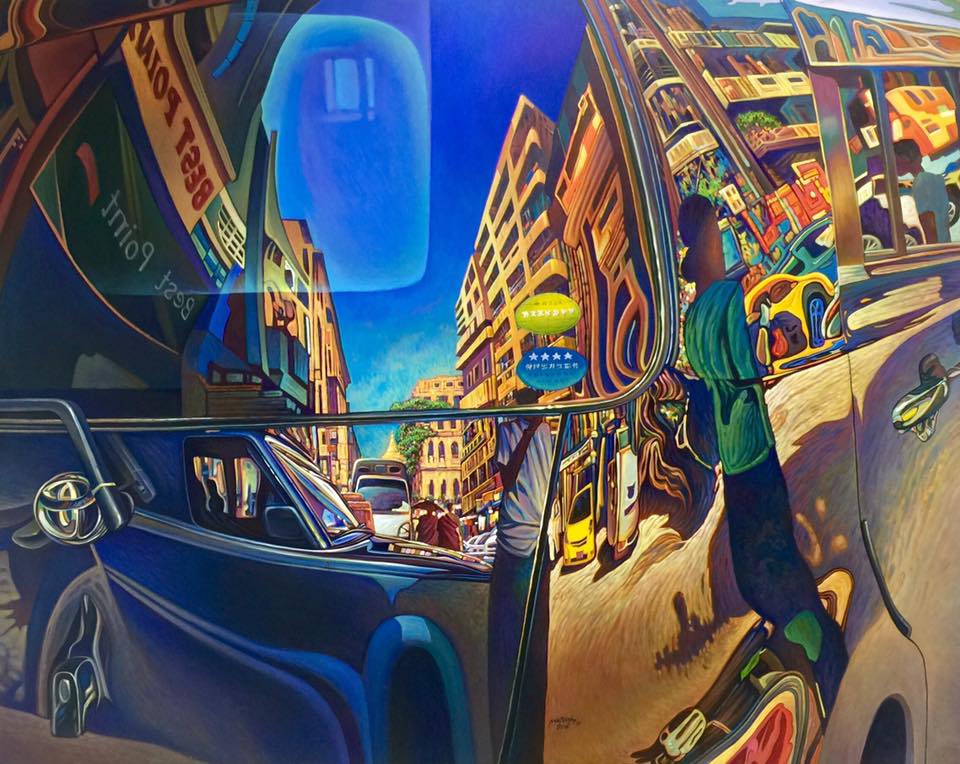
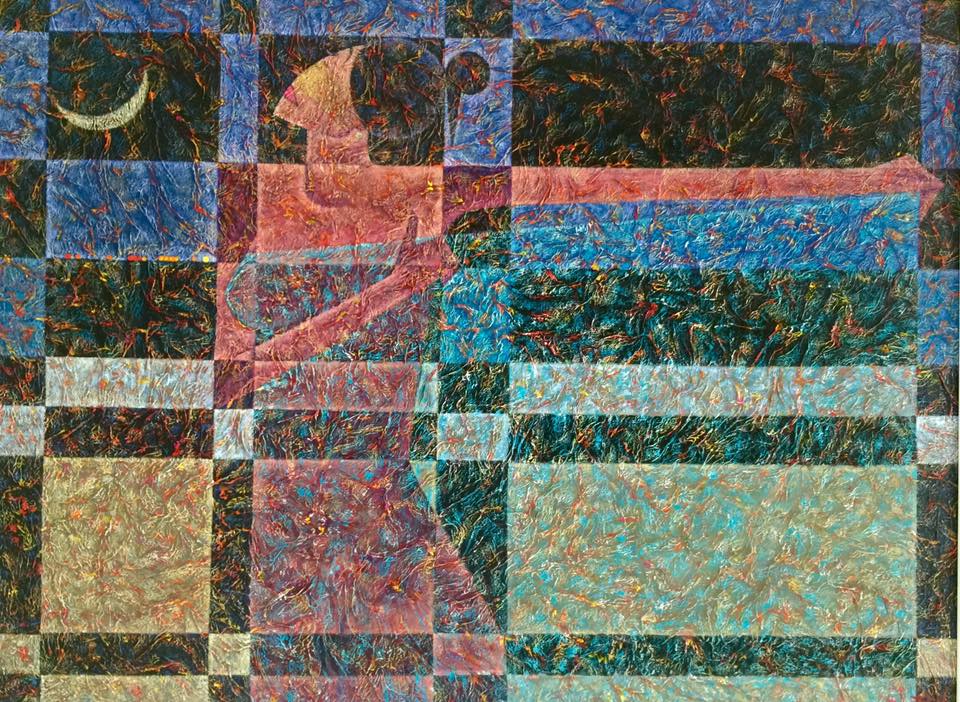
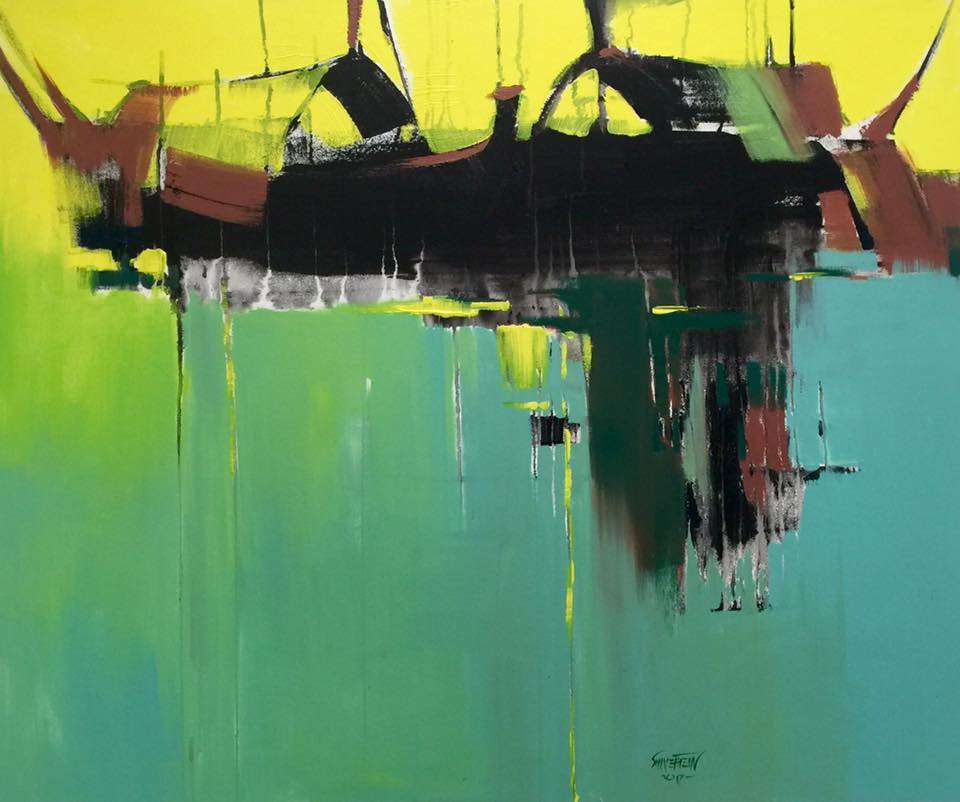
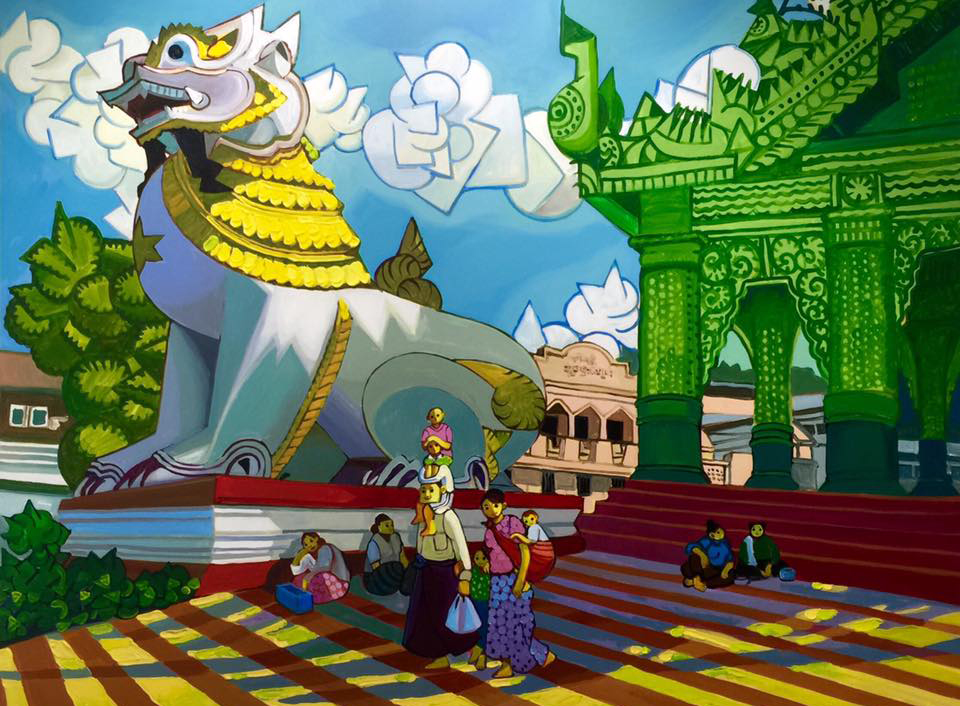
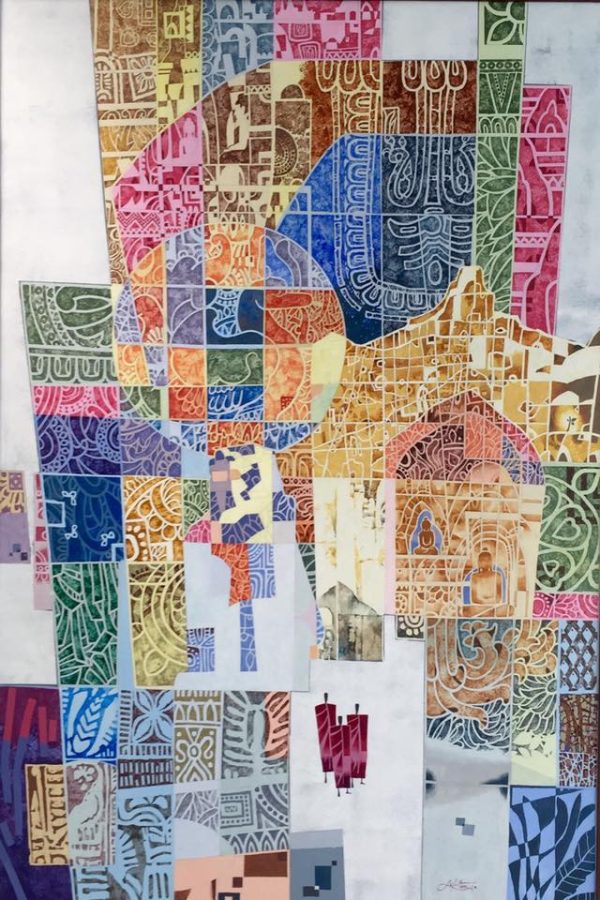
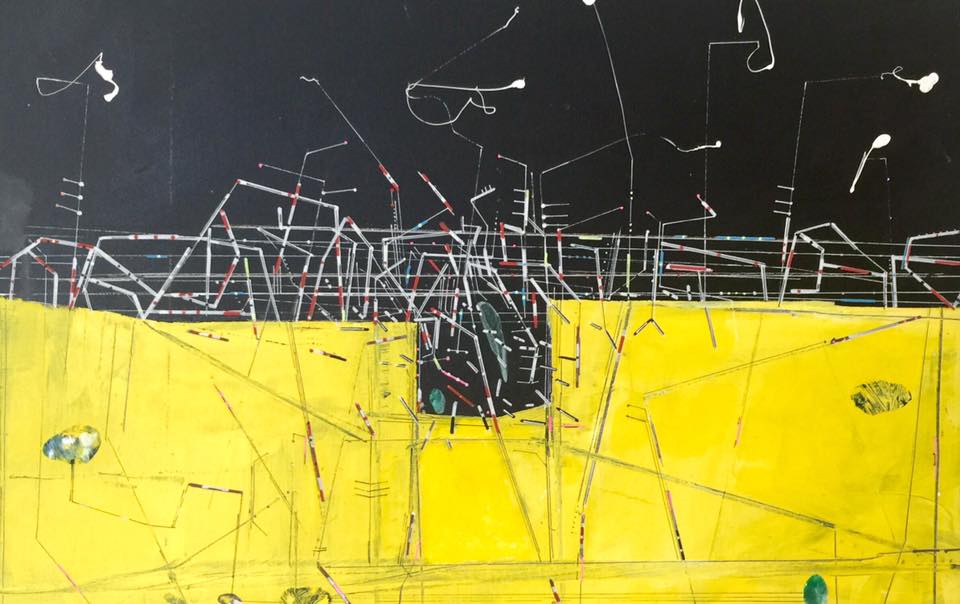
| Yangon Art Expo Showcases Decades of Myanmar Art Posted: 09 Nov 2017 04:47 AM PST YANGON — Yangon, the commercial capital of Myanmar, has hosted various expos from building materials and furniture to automobiles and industrial machinery. But an ongoing expo on the 21st floor of Junction City is the first of its kind—an art expo. Yangon Art Expo 2017 has gathered the works of 72 artists from the past 60 years. This is a rare opportunity for art lovers to observe how Myanmar's art movement changed over time. The exhibition organized by Culture 2 All, an Italy-based cultural promotion organization, showcases the trademark impressionist works of U Lun Gywe, typical Myanmar cultural works by celebrated watercolor artist U Marlar, paintings of Sandar Khaing, who is known for her nude series, installation works by Myat Kyawt, and street art by Ko Ko Maung. 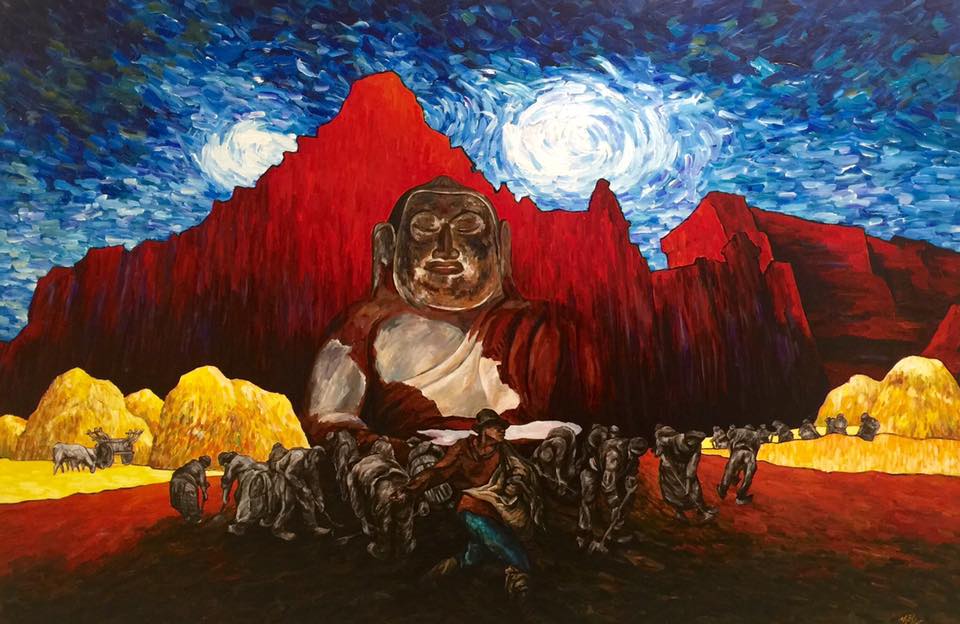 "This expo intends to provide aesthetic delight by creating a vibrant, open and independent urban environment," said Mauro Salvemini, chairman of Culture 2 All, at the opening ceremony of the expo on Saturday, which was also attended by the Italian ambassador to Myanmar, and Union minister for Religious Affairs and Culture U Aung Ko. Culture 2 All also curated the works of 10 Myanmar artists in Milan last year. 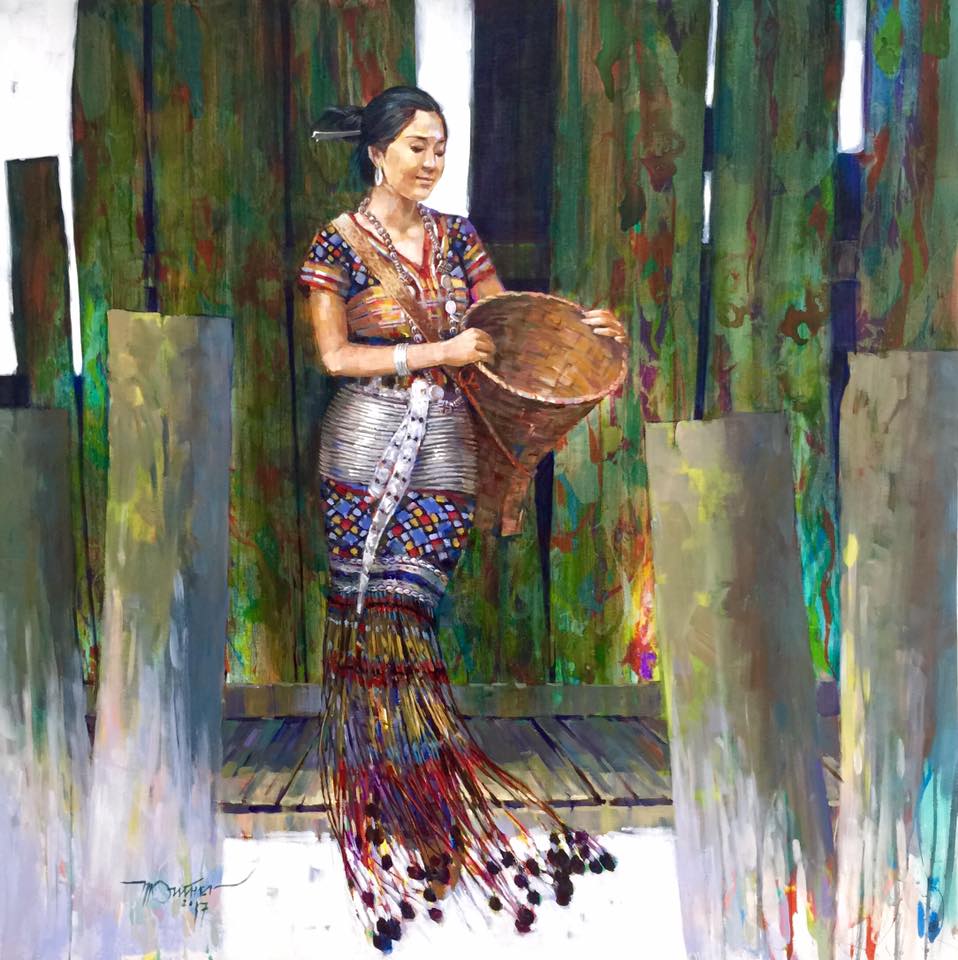 "People barely collect contemporary art in our country while even our neighbor Thailand has a contemporary art museum. I am pleased with this expo, which comes at a time when we are trying to showcase our contemporary artistic creations to the world. I want the government to collect those paintings and establish a museum," said artist Ni Po Oo. The exhibition will be held until Nov. 12. A total of 144 paintings are on display, priced between US$500 and $15,000. The painters receive 70 percent of the proceeds and the remaining 30 percent will be spent on a cultural heritage and villages program, one of the projects of Culture 2 All to be carried out next year. The post Yangon Art Expo Showcases Decades of Myanmar Art appeared first on The Irrawaddy. |
| Tatmadaw Troops Killed and Wounded in Arakan Army Ambush Posted: 09 Nov 2017 02:26 AM PST YANGON — At least 11 Myanmar Army troops were killed and 14 wounded during a clash with the Arakan Army (AA) in the western township of Paletwa in Chin State, according to military sources in Parliament. Retired Myanmar Army Lt-Gen Thaung Aye, a Lower House lawmaker, confirmed the causalities and injured. Two army officers and nine troops from other ranks died, he said. "It was not a good situation," he added. Lt-Gen Thaung Aye explained the troops were ambushed while traveling by boat along the Kaladan River, which runs through Chin and Rakhine states from east India. One university student was killed and four women were injured in the attack, as they were also on board the military boat, according to local sources. "[The AA] should not act like that. It is time for the government to make a strong decision to eliminate them," said Lt-Gen Thaung Aye. Fighting between the two sides has escalated since the first week of November, with clashes on Wednesday north of Paletwa in Nom Bu and Nge Chest villages, where the AA issued a message to locals on Nov. 5. It said the Tatmadaw has intensified offensives in the area and warned people only to travel if necessary. The AA attacked three Myanmar Army, or Tatmadaw, boats on Wednesday, according to a statement posted on the AA Facebook page, but the message did not mention any casualties or wounded. The ethnic armed group targeted the Tatmadaw's Light Infantry Battalion 563 under the control of the Western Command, based in Rakhine State, according to the statement, adding that clashes have broken out in several places on the India-Myanmar border. "We heard 10 Tatmadaw battalions were coming as reinforcements. They came by boats," said lawmaker U Kwe Thang of Kanpetlet constituency in Chin State. The Irrawaddy was unable to verify reports of ground fighting. Defense ministry spokesperson Gen Aung Ye Win declined to comment. About 300 civilians in Paletwa fled the clashes on Nov. 3, according to local sources, and sought shelter at a Buddhist monastery. Paletwa is an ethnic Chin township that borders Rakhine State. The AA uses the area as a base, crossing the Kaladan River to enter Rakhine. Many Chin locals dislike the AA using the township as a base, but the area has become a strategically important location for the group, which mainly stays in Kachin State's Laiza town—the headquarters of the Kachin Independence Army. The AA has not signed the nationwide ceasefire agreement nor does it have a bilateral ceasefire agreement with the Tatmadaw. It is part of ethnic bloc the Northern Alliance and bases itself in Kachin and northern Shan states. The Tatmadaw does not officially recognize the AA and in statements refers to it as a "Northern Alliance member." The ethnic armed group has joined conflicts against the Tatmadaw in Kokang territory and Kachin State, where the AA recruited many members in the jade mining area of Hpakant. Arakanese migrant workers in Mongla near the Chinese border and northern Shan State are also a source of recruitment for the group. The post Tatmadaw Troops Killed and Wounded in Arakan Army Ambush appeared first on The Irrawaddy. |
| Lower House Approves Internet-monitoring Body to Curb ‘Fake News’, Hate Speech Posted: 09 Nov 2017 12:03 AM PST NAYPYITAW — Myanmar's Lower House approved a motion on Wednesday establishing a body to monitor racial and religious hate speech online, and curb the spread of disinformation on social media. The body will be overseen by the Ministry of Transportation and Communications. "We'll form a monitoring body in coordination with the President's Office and the Attorney-General's Office. We will ensure that the monitoring doesn't infringe on the privacy or fundamental rights of citizens as enshrined in the [2008] Constitution," minister U Thant Sin Maung told lawmakers. Facebook is the most popular social media platform in Myanmar, with nearly 14 million users, according to a ministry estimate. Concerned that the site is becoming an organ for disseminating hate speech, the ministry has been negotiating with Facebook officials to find a way to monitor use of the platform, the minister said. The minister said that everyone has an obligation to use social media responsibly, adding that the government cannot fight hate speech alone. Facebook claims users in Myanmar do not properly read the platform's terms and conditions of use before creating accounts, and has urged the government to educate the public on the proper use of social media. The motion to establish the monitoring body was brought before the Lower House late last month by Daw Yin Min Hlaing, the National League for Democracy (NLD) lawmaker for Magwe Region's Gangaw Township. The lawmaker argued that irresponsible use of the Internet could disrupt law and order and corrupt morals—a view shared by the transportation and communications minister. "It is not about levying a tax [on Facebook users], invading people's privacy, or denying the right to information. It is about limiting the spread of disinformation, hate speech and racial and religious incitement," the NLD lawmaker told reporters on Wednesday. NLD lawmaker U Win Win of Minbu Township stressed the need for safeguards to ensure Internet surveillance does not violate the law protecting citizens' privacy and security, which was enacted by the previous session of Parliament. According to data released by the Transportation and Communications Ministry, as of September Myanmar's SIM card usage stood at 56.127 million, equivalent to 108.56 percent of the population. Internet usage was 46.39 percent, with the vast majority of that occurring on social media platforms including Facebook, Messenger, Viber, and Twitter. "Attempts to blacken the name of individuals or organizations or instigate racial and religious sentiments disrupt law and order and destabilize the country," the minister said. Translated from Burmese by Thet Ko Ko The post Lower House Approves Internet-monitoring Body to Curb 'Fake News', Hate Speech appeared first on The Irrawaddy. |
| Trump to Talk Trade and North Korea with Chinese Leader Xi Posted: 08 Nov 2017 10:06 PM PST BEIJING — North Korea and trade will likely top the agenda when US President Donald Trump and Chinese President Xi Jinping sit down for formal talks on Thursday, a day after Trump warned Pyongyang of the grave danger of developing nuclear weapons. In a show of the importance China puts on Trumps first official visit, Thursday mornings welcoming ceremony outside Beijing's Great Hall of the People overlooking Tiananmen Square was broadcast live on state television – unprecedented treatment for a visiting leader. Trump and Xi hit it off at their first meeting in April at Trump's Mar-a-Lago resort in Florida and continued their "bromance" on Wednesday with an afternoon of sightseeing together with their wives. However, deep divisions persist over trade and North Korea. And while Xi is riding high after consolidating power at a twice-a-decade Communist Party Congress last month, Trump comes to China saddled with low public approval ratings and dogged by investigations into Russian links to his election campaign. Trump has ratcheted up his criticism of China's massive trade surplus with the United States – calling it "embarrassing" and "horrible" last week – and has accused Beijing of unfair trade practices, fuelling worries of increased tension between the world's two largest trading countries. For its part, China says US restrictions on Chinese investments in the United States and on high-tech exports need to be addressed. Roughly $250 billion in deals with US companies are expected to be announced during the visit, people familiar with the matter said, with several corporate CEOs in Beijing as part of a delegation led by US Commerce Secretary Wilbur Ross. Some in the US business community have expressed worry that contract wins could come at the expense of resolving long-standing complaints over market access restrictions in China. "This shows that we have a strong, vibrant bilateral economic relationship, and yet we still need to focus on leveling the playing field because US companies continue to be disadvantaged doing business in China," said William Zarit, chairman of the American Chamber of Commerce in China. Trump railed against China’s trade practices during the 2016 US presidential campaign and threatened to take action once in office. But he has since held back on any major trade penalties, making clear he was doing so to give Beijing time to make progress reining in North Korea. A US official said both sides are "in sync" about wanting to minimize friction during the visit and recreate the positive tone of the Mar-a-Lago summit. Trump is principally pressing China to tighten the screws further on North Korea and at least modest progress is hoped for, although there are no immediate signs of a major breakthrough, the official said. Trump was not expected to put much emphasis in his talks with Xi on thorny issues like the disputed South China Sea and self-ruled Taiwan, claimed by China as its own, although the two presidents' aides may deal with those matters privately, the official told Reuters, speaking on condition of anonymity. Tough Language China has repeatedly pushed back at suggestions it should be doing more to rein in North Korea, which does about 90 percent of its trade with China, saying it is fully enforcing UN sanctions and that everyone has a responsibility to lower tensions and get talks back on track. Trump used some of his toughest language yet against North Korea in a wide-ranging address in Seoul on Wednesday that lodged specific accusations of chilling human rights abuses, although he offered no evidence to support the accusations. There was no immediate public mention of North Korea from either Trump or Xi as they wrapped up their festivities on Wednesday at the Forbidden City, where Xi gave Trump the rare honor of a personal tour of the UNESCO World Heritage site. "Looking forward to a full day of meetings with President Xi and our delegations tomorrow. THANK YOU for the beautiful welcome China! @FLOTUS Melania and I will never forget it!" Trump said on Twitter after the visit and dinner there. Twitter is blocked in China, and his use of the service prompted many people to comment on Chinese social media how he managed to evade China's tough internet controls. Many people use VPNs to skirt the restrictions. Chinese state media praised the tone of the initial get-together on Thursday, part of what China has promised will be a "state visit plus" for Trump. "Trump seems to be pragmatic on his Beijing policy, and has no interest in ideological diplomacy. He hasn't used the issue of human rights to make trouble for China so far, and this means the Sino-US relationship can focus on substantive matters," influential tabloid the Global Times said in an editorial. The post Trump to Talk Trade and North Korea with Chinese Leader Xi appeared first on The Irrawaddy. |
| Myanmar Cardinal Urges Pope Francis to Avoid Use of the Term ‘Rohingya’ Posted: 08 Nov 2017 09:13 PM PST YANGON — Myanmar's most senior Catholic prelate has urged Pope Francis to avoid using the term 'Rohingya' during a visit this month, when he is expected to raise the humanitarian crisis faced by the Muslim minority after a Myanmar Army offensive in August. The pope is set to visit largely Buddhist Myanmar from Nov. 27 to Nov. 30, before going to Bangladesh, a predominantly Muslim neighbor where more than 600,000 Rohingya have fled to take shelter in refugee camps. In the first visit by a pope to Myanmar, Francis will meet Daw Aung San Suu Kyi, the Nobel peace laureate who leads a civilian administration that is less than two years old, the generals it has to share power with, as well as leading Buddhist monks. Cardinal Charles Maung Bo told Reuters the pope would raise the need to provide assistance to the Muslim minority, saying, "These are people who are suffering and these are the people in need of help now." Francis has used the term Rohingya when he has spoken about their suffering in the recent past. But Daw Aung San Suu Kyi has asked foreign leaders not to use the term Rohingya, because in her view it is inflammatory. Bo, appointed by Pope Francis in 2015 as Myanmar's first and only cardinal, said church leaders in the country had advised him to sidestep the divisive issue of the name. "We have asked him at least to refrain from using the word 'Rohingya' because this word is very much contested and not acceptable by the military, nor the government, nor the people in Myanmar," Bo said in an interview in Yangon Many people in Myanmar regard the largely stateless Rohingya as illegal immigrants from Bangladesh, and they are excluded from the 135 "national races" recognized by law. Regardless of Myanmar's sensitivities, however, the United Nations and United States continue to call them Rohingya, upholding their right to self-identify. Importance of Dialogue Francis will highlight the importance of resolving the refugee crisis through dialogue between Myanmar and Bangladesh and with the help of the international community, Bo added. Myanmar has said Rohingya who can prove they were residents would be allowed to return, but the two countries have still to agree how the repatriation should be carried out. "These are the people who do not enjoy the citizenship and are somewhat unwanted in both countries," said Bo, referring to Myanmar and Bangladesh. "They are also human beings, they have a human face and they also need human dignity, so eliminating or killing any one of them, that’s not justified…," Bo said, referring to the group as "our brothers and sisters." Francis will celebrate a mass in Yangon that is expected to draw around 200,000 people, Bo said, adding that Buddhists, Muslims, and those of other faiths were welcome to attend. Myanmar has about 700,000 Roman Catholics, said Bo, from among a population of more than 51 million. The United Nations has denounced the violence in Myanmar's northwest over the past 10 weeks as a textbook example of ethnic cleansing, a charge Daw Aung San Suu Kyi's administration has denied, while saying accusations of rights abuses should be investigated. Myanmar's military says its counter-insurgency clearance operation was provoked by Rohingya militants' attacks on about 30 security posts on Aug. 25. In the following days, the pope spoke about "the persecution of our Rohingya brothers and sisters" and asked Catholics to pray for them, adding that they should be given "their full rights." The post Myanmar Cardinal Urges Pope Francis to Avoid Use of the Term 'Rohingya' appeared first on The Irrawaddy. |
| China Says Will Keep Talking to Myanmar Over Stalled Dam Scheme Posted: 08 Nov 2017 09:04 PM PST BEIJING — China said on Wednesday it will continue to talk to Myanmar about a controversial stalled dam project, after Myanmar's new energy minister cast doubt over the scheme. Valued at US$3.6 billion, the Myitsone dam project in the north of Myanmar has been a sticking point between the two countries since the previous military-backed government suspended work in 2011. Reuters reported in April that officials in China and Myanmar were discussing alternative options that would allow Myanmar to scrap the massive project amid environmental concerns. Big hydropower dams are not a priority in Myanmar's strategy to tackle chronic power shortages, Energy Minister Win Khaing told Reuters on Tuesday. Speaking in Beijing, Chinese Foreign Ministry spokeswoman Hua Chunying said China's position on the Myitsone dam had not changed, which was that China had always upheld deepening cooperation with Myanmar on a mutually beneficial basis. "The Myitsone hydropower station is a commercial cooperation project both sides have already agreed upon, and has already been through a complete approval process," Hua told a daily news briefing. "We will continue to maintain communication with the Myanmar side and proactively and appropriately handle the problems or difficulties which arise during cooperation on the project, to allow relevant cooperation to continue to develop healthily and stably," she added. The proposed dam, on the upper reaches of the Irrawaddy River in Kachin State, would have sent most of its power across the border to China's Yunnan province, which now has an oversupply of electricity as it switches to less energy-intensive industries amid an economic slowdown. A government panel set up in August 2016 was still reviewing the dam, Myanmar's energy minister said, adding the government was in dialogue with the Chinese operator, State Power Investment Corp subsidiary Yunnan International Power Investment. The post China Says Will Keep Talking to Myanmar Over Stalled Dam Scheme appeared first on The Irrawaddy. |
| Lonely Planet Founder Urges Myanmar Youth to Travel Posted: 08 Nov 2017 08:58 PM PST Lonely Planet founder Tony Wheeler first wrote about Myanmar (then Burma) in the massively successful Southeast Asia on a Shoestring, released in the 1970s. The Irrawaddy's Zarni Mann met him at the fourth Irrawaddy Literary Festival in Mandalay held from Nov. 3-5, where they discussed Myanmar's developing tourism industry. Tell me about your first time traveling to Myanmar. In 1974, me and my wife Maureen flew into from Bangkok because flying was the only way in. It was when I was traveling around Southeast Asia. Back then, we could only get a seven-day visa. We weren't allowed to go to many places as well. There weren't many places to stay, too. In a week, there are only a few things we could do. So, we took a train to Mandalay from Yangon, and traveled to Bagan from Mandalay by bus. We were there for a couple of days and took a train back to Rangoon. What I remember is that the train took an incredible amount of time to reach Rangoon: it was about 24 hours or something. That was a terrible train. We took the wrong train. We should have taken another way so that we could have visited other places. In Bagan, during that time, there were lots of little guest houses in the center of the old city. All the back packers stayed in those small guest houses. They were very nice and people were friendly. Then, the military government moved them away. They were all shifted out from central Bagan to the new area. That happened during my second visit. Traveling around the city and other places back then, there was little transportation. The roads were empty. And most of the cars running were very old—old English cars and some Japanese cars, I think. And there were old Chevrolets. During that time, nobody wanted to fly, because the only airline, Union Airline, was always crashing. There were so many crashes, nobody wanted to risk their lives. So people used to take the train or busses, but they are very slow and take a long time. Are there any memorable moments from traveling during that time? On the second visit, I heard there was a possibility of getting a small truck and to travel that way. It seemed a very good way for me, because I didn't want to wait for the trains. It was in 1983. I arrived late in Rangoon and everything was closed. I walked to my hotel, the tourist office building by Sule Pagoda. Somebody just walked in and offered me a truck for hire, late at night. We hired it to travel to Rangoon, Prome, Bagan, Mandalay, Maymyo [now Pyin Oo Lwin] and Inle Lake. Since it was difficult to buy petrol outside of Rangoon, there were lots of petrol containers at the back of the truck. When we got to Prome, it was getting late and that man, the driver, said we were not allowed to go as Prome was not open to foreigners. But once you are inside Prome it is okay, he said. There were soldiers at the check points on the way into Prome, so he told us to lie down on the floor of the back of the truck and put a sheet of tarpaulin over us. It was quite an adventure. Since you are also a board member of the Heritage Trust Foundation, what do you think about the conservation and restoration work of earthquake-impacted pagodas and temples in Bagan? Bagan received very bad restoration during the military government. They wanted to paint it all gold. There are already many suggestions and messages on what is good restoration and what is bad. Hopefully the responsible person will listen and not repeat the same mistake. If people try to ruin the ancient monuments such as by writing and painting with white inks, people need to shame them. If they keep doing it, the monuments should not be allowed to be touched and would be better fenced off. Or someone has to watch it and clean them off as soon as people put their names on them with white inks. There was an example of a Chinese youth, who wrote something on the monuments in Egypt. People wrote about him on social media to shame him and when he was back in his country, he got into a lot of trouble. There are rules and regulation on what people should wear visiting certain monuments. Some of the tourists do not want to follow that. We see that in many countries. If people are so stupid not to know that, you have to keep telling them or occasionally arrest them. How does it feel to be the author of the first edition of Lonely Planet and to have traveled through so many countries over the years? I wrote the first edition of the book, and other editions. There were also other people who helped write the books. In that first edition, there was very little information. I look back on it now and I find it wasn't very good because there was nothing else. There was only about a little bit of history, and about the limited number of the places you could stay. We could only go to Mandalay, Bagan and Yangon. I didn't even know whether they allowed people to go to Inle Lake back then. It was very restricted to travel around [the country]. I was very proud to be the first one who could do the introduction of this country through Lonely Planet. Since there was not much information, I thought I was opening doors to the world. And I believe my articles and my travel experiences have somehow brought the interest of travelers. Now, there are lots of books and the country is also open to visitors. I enjoy visiting Burma very much. Because, there is that feeling that you are going to something unknown. In your opinion, what is needed to boost Myanmar's tourism industry? There are still many places where people do not visit. For example, I've been to Mrauk-U and it is a very nice place. Until now, there are only a few people who visit there, maybe because there is some unrest in Rakine State. It is the same in the other places like Karen, Kachin and Chin states. If there is peace in the country, transportation and communication will be better. And if there is easy access to visit through borders this will attract more visitors. And people who are doing business have got to be honest with the people. To be more attractive to people, there should be easy access for visitors. I'm talking about visas. Making visas easy is the biggest step for tourism. What is your opinion on suggestions not to visit a country like Myanmar because of the sanctions, and now, the humanitarian matters relating to the unrest in Rakhine State? There are two things: one thing is that there is not as much danger as people say there is, but sometimes where the government says it is dangerous. If you want to visit a place, you have to decide whether it is safe for you. I'm not going to tell people you should go there. But if you wanted to go there, you should look out there for stories on what has happened and what is happening there. Generally, I go. I've been to Pakistan, which people said I should not go. But when I arrived there, things were not so bad as they said. I would also like to say to the Burmese youth who start traveling, to go out there. See the world. You have to be wealthy to travel, of course. Travel needs a lot of money. If you do, you are going to understand more. You are going to explore more about the different aspects of people, you will learn more about other cities and countries. And from that you will enrich your knowledge. This interview has been edited for clarity and brevity. The post Lonely Planet Founder Urges Myanmar Youth to Travel appeared first on The Irrawaddy. |




| You are subscribed to email updates from The Irrawaddy. To stop receiving these emails, you may unsubscribe now. | Email delivery powered by Google |
| Google Inc., 1600 Amphitheatre Parkway, Mountain View, CA 94043, United States | |
