SS Khaplang, the Naga rebel leader of the National Socialist Council of Nagaland-Khaplang (NSCN-K), passed away aged 77 on Friday, according to the Council of Naga Affairs (CNA) based in Zingkaling, Hkamti in Sagaing region, northwest Burma.
Recognized by the Naga people as a great Naga national and legendary leader, Shangwang Shangyang Khaplang (also spelled Sangwang Sangnyu Khaplang) died at his residence at around 7:30 p.m. local (Burma) time in Taka (also spell Taga), the headquarters of the NSCN-K in Sagaing division.
The CNA said in its condolence statement released on Saturday that "[SS Khaplang]'s sacrifice, leadership, unflinching spirit for the freedom of the Naga Nation will always remain a leading and inspiring torch in the hearts of Nagas for generations to come."
He was the president of the NSCH-K since its formation in 1988 and the chairman of its government-in-exile—The Government of the People's Republic of Nagaland (GPRN).
SS Khaplang took part in the Naga revolutionary movement begun in the 1960s and led various leadership roles: He was a vice chairman of the Eastern Naga Revolutionary Council from 1965 and President of the Naga National Council from 1979.
NSCN-K, formed in 1988, demands the "independence of Nagaland." Prior to that, ethnic Naga fought for independence of Nagaland—both in Burma and India—under the National Socialist Council of Nagaland formed in 1980. But eight years later, the council was split into two fractions: One became the NSCN-K and another fraction, known as NSCN-IM, mostly fighting the Indian government, was led by Isak Chishi Swu and Thuingaleng Muivah.
Indian media noted that SS Khaplang was wanted for an incident in India's northeastern state of Manipur on June 4, 2015 in which 18 Indian security personnel were attacked.
Both China and India closely watch Naga groups and will be interested in who will succeed SS Khaplang. Burma expert Bertil Lintner reported in 2014 and 2015 that China used Naga as a back-channel against India.
According to Indian journalist Rajeev Bhattacharyya, who trekked into the Naga region in 2011 for almost two months, SS Khaplang was born in April 1940 and is survived by three sons and one daughter.
Little is currently known about the movement of the NSCN-K in the northwest of Burma, except that the NSCN-K signed a ceasefire agreement with the former Burma government on April 9, 2012, but has rarely been seen in the ongoing peace talks, only attending as observers. NSCN-K participated as an observer to the NCA-drafting process, but they were not interested in signing it.
The current National League for Democracy government's peace negotiators, led by State Counselor Daw Aung San Suu Kyi, invited the NSCN-K to attend the latest 21st Century Panglong peace conference in May in August 2016 and May 2017, but they did not attend both times.
They reportedly operate in areas of Lahe, Leshi, Hkamti and Namyun townships in Sagaing Region. The ethnic Naga in Burma were given a self-administrative zone in Leshi, Lahe and Namyun townships under the military-backed 2008 Constitution.
In his last breaths, SS Khaplang shared his desire for his Naga followers to continue their fight for freedom, according to CNA's chairman Athong Makury.
His will, translated by the CNA chairman, said: "I have stood under the banner of 'Nagaland for Christ' with the hope that my people may see both physical and spiritual freedom from the oppression of the ruthless occupiers. I have done my part for the freedom of my people with the little capacity God has given me."
SS Khaplang encouraged the next generation to "never waver nor be carried away with the ideologies of the aliens that Nagas do not deserve to be a nation. As a human, I have done many wrongs and forgive me all my failures in this noble venture of our cherished freedom. My sons and daughters, please continue to hold on the torch of our freedom until we reach the promised land."
U Than Khe, chairman of the All Burma Students Democratic Front, who lived in Manipur in the 1990s, praised SS Khaplang as "a great leader who kept his fight for the freedom of the Naga people to designate their own destiny and to have equal rights as other ethnicities in Burma until his last breath."
U Than Khe recalled how students fleeing the 1988 uprising were treated well in the Naga-controlled region on the India-Burma border. "NSCN-K's political path is different to other ethnics groups who want to build a federal state, but Naga wants their own land and thus, they separate themselves from following the NCA path." he added.
The NSCN-K gave no notice of who would succeed SS Khaplang as leader of the group, but Indian media suggested the commander-in-chief Khole Konyak may be the next leader.
NAYPDYIAW—The Burma Army would complete its search for victims and debris of the military aircraft that crashed into the Andaman Sea on Wednesday, said the Burma Army Chief, adding that he believed it crashed due to bad weather.
"We will complete the search as it is in our [territorial] areas," commander-in-chief Snr-Gen Min Aung Hlaing told reporters at a ceremony to accept donations for victims of the tragedy on Sunday at Naypyidaw Command.
"I think it is because of the weather. But, I'm not 100 percent sure. We're still investigating," he added.
According to radar records, the aircraft, which was flying at an altitude of 18,000 feet began to lose altitude at 1.31 pm after flying for around 30 minutes. It then began to climb slightly, but later it was believed to fall again completely, said the army chief.
"Military security forces and local police found four witnesses, two of them said they heard abnormal aircraft noises that grew louder and then faded away, and then the noises disappeared," said the army chief.
Thirty-three bodies had been recovered by Friday evening, but severe weather in the Andaman Sea hindered the search operation on Friday and Saturday.
Only 14 bodies were identified so far as the saltwater had disfigured the bodies, said the army chief.
There were black spots on the latest body retrieved and the military would investigate with the help of Health Ministry, said the army chief.
"I feel deeply sorry about this incident. [Such an accident] never happened in the history of the military. It is the most serious loss. I've never expected it, not even dreamed of it. It makes me very sad," he said.
"There are family members left behind by victims. Some people lost parents. We have to ensure their livelihoods," he added.
The army chief said he reported to President U Htin Kyaw about the plane crash on Friday.
On Wednesday evening, the Facebook page of The Ladies Journal reported that the plane crashed because of an explosion of a gas cylinder on board. The commander-in-chief's office issued a notice warning against publishing of unconfirmed news about the plane clash.
"We knew as soon as [The Ladies Journal] posted the news. That day, I was at the office till late. I saw the post and told my staff to complain [to The Ladies Journal] about unconfirmed news reports," he said.
The Ladies Journal later sent a letter of apology, said the army chief.
He said the search would be completed soon as the Navy and Air Force were searching in collaboration. The spot where the plane was believed to have crashed is just 35 meters deep, he said.
"As soon as the news was reported, many fishing trawlers from Myeik and Kawthoung came to help. Over 20 fishing trawlers joined us in search and rescue operations of their own volition. Villagers from nearby villages also helped us search with their boats. I'm grateful to them," said the army chief.
He also denounced netizens and other people who celebrated the crash. "There are people who spoke ill. I'm sad. The victims did nothing wrong. I can't understand why [they] are happy for their deaths," he said.
The Lower House approved discussion of a proposal from lawmaker Dr. San Shwe Win urging the government to establish a national health insurance system to ensure universal health coverage for every citizen.
In the Upper House, U Tet Tun Aung of Arakan State Constituency (2) asked if the Union government had a plan to relocate, both in the short and long term, Buddhist Arakanese people from across the state to Arakanese-only villages in Maungdaw and Buthidaung townships, which have a Muslim majority. Deputy Minister for Border Affairs Maj-Gen Than Htut replied that the government had been building "ethnic model villages" since 1990, and had relocated Arakanese people from Rangoon to such locations 19 times, and supported the relocation of more than 740 households of ethnic Buddhist Arakanese from neighboring Bangladesh to Burma.
Tuesday (June 6)
The Union Parliament approved President U Htin Kyaw's proposal to sign the agreement for the establishment of the Asian Forest Cooperation Organization.
It also approved the President's proposal to sign the Agreement on Cooperation in Natural Disaster Early Warning and Mitigation between Asean and the Russian Federation.
Wednesday (June 7)
The Lower House agreed on Wednesday to discuss a proposal urging the Union government to reform policies affecting nurses and midwives serving in public hospitals, submitted by lawmaker Daw Yin Min Hlaing of Magwe Division's Gangaw Township.
In the Upper House, lawmakers asked questions about educational facilities in their respective constituencies.
Thursday (June 8)
The Lower House recorded a proposal by Minbu Township lawmaker U Win Win which urged the Union government to distribute domestically produced urea fertilizer to farmers at reasonable prices, after Deputy Minister for Electricity and Energy Dr. Tun Naing said that the government could only meet seven percent of domestic demand, and that the private sector had to import the remaining 93 percent. He promised to improve the packaging of fertilizer.
In the Upper House, lawmakers discussed a proposal from Dr. Tin Tin Win of Pegu Constituency (5) that urged the Union government to incorporate the subjects of reproductive health, civic education and democracy into the curriculum of high schools and colleges in Burma.
Friday (June 10)
The Union Parliament expressed condolences to bereaved families of victims in a military plane crash tragedy, with lawmakers observing two minutes' silence.
According to figures issued by the military, 14 crew members and 108 military staff members and their families, including 15 children, were on board when the welfare plane crashed into the Andaman Sea on Wednesday, and 32 bodies—three males, 21 females and eight children—have been recovered on Friday.
The aircraft was purchased from China and put into service in March of last year. It was also used to transport 6.5 tons of food supplies to victims of Cyclone Mora in Arakan State.
Investment Forum Seeks to Attract Foreign Interest
Burma made a bid to boost foreign investment interest in the country at a two-day conference in Naypyidaw this week.
The forum hosted by the Myanmar Investors Development Association (MIDA) was attended by more than 100 economic organizations, 90 foreign enterprises and almost 200 Burmese business people.
Vice President U Myint Swe, Planning and Finance Minister U Kyaw Win and Vice Commerce minister U Aung Htoo outlined Burma's economic and trade policy and the importance of foreign investment to drive growth in the country.
U Kyaw Win predicted that Burma's economy was "ready for take-off" while some business persons expressed more caution, the Irrawaddy reported.
U Aung Naing Oo, Director General of the Directorate of Investment and Company Administration gave an update on the investment environment following the implementation of the new Myanmar Investment Law and Rules and discussed the changing nature of Burma's economy.
Chinese, Thai and Indian potential investors were strongly represented at the event, the Irrawaddy said in another report.
The World Bank expected economic growth in Burma to decrease from 7.3 percent in 2015-16 to 6.5 percent in 2016-17. It projects medium-term growth to average at 7.1 percent per year.
Singapore Strengthens Economic Ties with Burma
The Myanmar Investment Commission has signed a memorandum of understanding with the official trade agency International Enterprise (IE) Singapore to strengthen economic ties between the two countries.
The deal will enhance opportunities for Singapore firms to explore collaboration in business ventures in sectors such as housing, transport, manufacturing, energy and others.
The signing was witnessed by Singapore's Minister for Trade and Industry Lim Hng Kiang and Burma's Minister for Planning and Finance U Kyaw Win, on the sidelines of the 6th Singapore-Myanmar Joint Ministerial Working Committee meeting.
"Myanmar has shown steady growth since its political and economic reforms started in 2011," said IE Singapore's assistant chief executive Tan Soon Kim.
"While teething challenges are present, as with any emerging economy, we note the government's efforts to create a conducive business environment for foreign investors," he said.
IE Singapore has facilitated a number of investments in Burma including the recent negotiation of the BreadTalk franchise with conglomerate Shwe Taung at Junction City Mall in Rangoon.
The trade agency has also been working with infrastructure consultancy firm Surbana Jurong to expand in Burma. The firm is already involved in 40 projects across Burma in Rangoon, Bago, Mandalay, Arakan State and the Irrawaddy region, according to the Straits Times.
Thailand Opens Ex-Im Bank Branch in Rangoon
Thailand's Export Import Bank opened its first overseas representative office in Rangoon this week.
The bank will support Thai investors who are operating mainly infrastructure projects in Burma in the energy, electricity, industrial estate, logistics, hotels, construction and sugar sectors among others, its chief representative in Burma Woramin Thavarabha told The Nation.
The bank has already provided loans of up to 10 billion baht to Thai investors in Burma, Woramin said.
Some projects among an additional 18 significant Thai investment deals in Burma worth more than 700 billion baht have also applied for loans to the bank, he said.
The bank will also provide loans to Burmese companies that import raw materials from Thailand or that employ Thai staff. In addition, it will provide advisory services to Thai companies interested in operating in Burma, he said.
The Ex-Im bank was also due to sign a memorandum of understanding with the Myanmar Foreign Trade Bank to share experiences and information on investment between the countries, Woramin added.
Property Portal Raises funds
The property portal ShweProperty.com has raised an undisclosed amount of funding from French investor Gilles Blanchard, the co-founder of French property site Seloger.com, start-up website e27 reported.
ShweProperty was founded in 2011 and is led by CEO Justin Sway. It has around 100,000 property listings and connects buyers, sellers and renters.
Justin Sway is also co-founder of Burma-based jobs portal JobNet.
"Gilles has a fantastic track record and deep understanding of the property portal business, particularly in emerging markets. This, combined with our strong local management team, experienced shareholder base, and years of business experience, will help us to achieve our vision to lead and shape Myanmar's real estate industry," Sway said.
Blanchard is joining the Burma operation as an advisor as well as a shareholder. He departed from Selagor in 2011 through a S$846 million sale to German media conglomerate Axel Springer.
He is chairman of Pakistan-based property portal Zameen.com and Dubai-based property site Bayut.com, and is involved with the BProperty.com site in Bangladesh.
Malaysian Firm Wins Rangoon Deal
Malaysia firm Bintai Kenden Corp has won a $17.5 million deal to undertake air-conditioning and fire protection installation work in two developments in Rangoon.
The group's subsidiary Bintai Kindenko Myanmar was awarded the contract by Soilbuild Myanmar, the firm said in a filing with Bursa Malaysia at the end of May.
The contract is for work on the Somerset Serviced Apartment and 68 Residence property developments in Bahan Township.
The group expects the work to be completed by July 2018, according to a report in the EdgeMarkets.
After reforms by Myanmar's post-2011 government, the landscape for both mainstream and ethnic media has changed dramatically, with new media outlets blooming.
The ethnic language publications, in particular, represent a notable expansion of ethnic media—a term I define elsewhere as "publications, broadcasts or websites that are associated with ethnic minority peoples and that focus on ethnic minority concerns, regardless of whether they use Burmese or an ethnic minority language." Also included as part of "ethnic media" are "state-based" and "locally-based" periodicals, distributed in ethnic minority areas in Myanmar, that take up ethnic-minority concerns.
Under the present administration, led by Nobel Laureate Aung San Suu Kyi and her National League for Democracy (NLD), many Burmese media onlookers believe that the media industry will see further progress. However, according to a recent PEN Myanmar press release on World Press Freedom Day, the country's free expression score is only eight out of 60 possible points. Limited access to information, markets, and funding, harassment of journalists and editors, as well as difficulties in securing long-term sustainability were the main barriers for media groups, both ethnic and mainstream Burmese.
Moreover, journalists and editors face possible lawsuits under 66(d) of the Telecommunication Law, which can result in a prison sentence of up to three years for defamation using a telecommunications network. At least 54 people have been charged under this law, with eight people sentenced to prison for their posts on social media, according to a letter from Human Rights Watch to the attorney general and officials from the Ministry of Transport and Communications. Recently, Yangon-based The Voice Daily editor-in-chief and regular satire contributor faced a lawsuit filed by the military under 66(d).
Despite these difficulties, daily, weekly and monthly publications, covering news, sports, entertainment and astrology, both in Burmese and in ethnic languages, are being published in Myanmar. Some publications survive, but many periodicals have disappeared.
The problems facing ethnic media vary depending on the state and region. Some ethnic media or local-and state-based publications cannot maintain their publications in the long term because of heavy dependence on international donors, limitations of their markets, and a lack of human resources. Kantarawaddy Times of Karenni State, for example, depends heavily on the support of international donors, a problem many ethnic media organizations face given that they must compete with the mainstream Burmese publications.
Ethnic media groups face human resource problems because they cannot provide attractive salaries to professional journalists and editors, as mainstream publications can. Despite these challenges, some ethnic media groups are trying to take advantage of opportunities brought about by the advance of technology, using social media to share what is happening in their area. The Danu ethnic group from Shan State, for example, established the Voice of Danu Facebook page to share their concerns. With Internet capable cellphone penetration dramatically increasing (to 70 percent in 2015, according to Freedom House) and the number Facebook users also rising (reaching 11,000,000 in 2016, according to Internet World Stats), many groups see the Internet as central to the future of Myanmar's ethnic media.
Among them is Tai TV Online, an ethnic media organization based in Chiang Mai, Thailand, which posts its content to social media platforms like Facebook and YouTube to try to break the constraints of the media. It sustains itself with no support from international donors, and, despite being without a stable market, has rich human resources. Established in 2013, Tai TV Online is made up of 19 members who are construction workers, domestic workers, sewing workers and students from Chiang Mai in Thailand and Shan State. One of the founders of Tai TV Online, Nang Kham Ing (who learned journalism while working for formerly-exiled Democratic Voice of Burma and Myanmar Radio and Television for over more than a decade) describes the organization.
"We base ourselves on the idea that people who have mobile phones can be journalists. In the community, there are members who are interested in media, so it is a place for them to experiment and test," said Kham Ing, adding that all workers who are interested in the media can voluntarily become journalists and presenters for their online media platform.
Tai TV Online is an example of how ethnic media can build community-linkages across the Thailand-Myanmar border as members share news, ideas, culture and language, while also proving that migrant workers have media skills that can be developed. All members are volunteers, working as journalists and presenters when they are free, yet aiming to produce TV programs once a week. Most clips are three to 10 minutes, with content on a wide number of topics: internally displaced persons, war, migration, landmines, Shan literature, and the environment. Members learn computer and editing skills from other student members who are from the media and share their knowledge within their media group. All facilities are placed in the Migrant Learning Centre (MLC) in Chiang Mai, and the organization has survived for four years without the support of international donors, though it still faces many financial hardships.
Finances and funding remain huge obstacles for ethnic media's long-term sustainability. The funding of ethnic media groups in Myanmar varies, with some depending on their own funding. My previous work argues that dependence on financial support from international donors resulted in negative experiences for Hsen Pai, a Shan language journal now trying to rely on self-funding, on local donors or shareholders from the Shan community, and on sales and advertisers.
Yet, some ethnic media still heavily depend on international donors to such an extent that they cannot stand on their own feet. When they have tried to stand on their own, they cannot effectively increase their income from media production. While the former exile media Irrawaddy Publishing Group and DVB Multimedia Group earn income from their websites and from online advertisements, ethnic media groups like Tai TV Online have also tried this model, but often their staff struggles to create or attract such advertisements. Ethnic media groups also note that they do not receive financial support from the government.
"We wish to receive income for our program. We tried to receive money using YouTube but we failed," said Kham Ing, noting that, while his group knew their content could earn money from online advertisement, their members did not have sufficient IT knowledge to implement such a model.
More international funding is not the solution for the sustainability of ethnic media, but cutting funding before the ethnic media groups can stand on their own would lead to wasted resources. The Hsen Pai model for self-funding is good, but different groups have different challenges. Rather than providing financial support, donors might think of offering IT trainings regarding how media groups can earn income from online advertisements, or support the creation of a way to sell ethnic media products to big media groups.
Nai Akar, one of the editors of the Mon State based bi-lingual Than Lwin Times Journal, said all state- or ethnic-based journals in Mon State are financially unprofitable. According to Akar, in the small market of Mon State, there are four state-based journals—two are mainly published in the ethnic Mon language, one with bi-lingual content, and one published in Burmese. "Now information can be accessed from social media, especially in Myanmar. Many young generations do not buy journals to read," he said, adding that some media groups' strategy to produce video clips for the news is a way for long-term sustainability, as they can sell these to other big media groups.
As for Tai TV Online members, they only produce web TV they than post on YouTube and Facebook, where they have 93,716 followers and over 87,678 likes. These figures are much higher than other long-operated ethnic media sources such as Karen Information Centre (with 21,471 likes), Shan Herald News for Agency (with 15,205 likes), and Mon News Agency (with 35,170 likes), but still much lower than those of mainstream Burmese media.
Yet, despite its popularity, Tai TV Online has limitations as they only use Shan and Thai languages, which cuts off possible links with other ethnic minority groups. However, the founder views this as a strength of their agency: "Using mother language can provide news for people who cannot speak other languages. We receive trust and confidence from our sources who speak the same language. We can collect direct reliable facts without passing through the interpreter. Some locals are afraid to talk if you ask in Burmese or English. We can directly feel their sensitivity," said Kham Ing.
Three years ago, Thai Public Broadcasting Service's citizen journalist program offered Tai TV Online the opportunity to launch a 15-minute daily Shan language program with Thai language caption to be broadcast on their channels. They had to refuse because they cannot produce such content on an everyday basis, as Kham Ing explains: "Some volunteers who wish to be journalists have to earn their living, so they cannot focus on reporting all the time. The offer is just an offer but does not include the means or the 'how' to pay for the work." But compared to other media, Nang Kham Ing explained, Tai TV Online's strength is that their diverse network of members can receive news from communities' nooks and corners.
Sai Leik, a Burmese researcher who monitors the current peace process, reflects on this idea, recalling the Kokang and Burmese Army (Tatmadaw) conflict in 2015. In cases such as this, it is ethnic media that becomes a window into such events, when information is difficult to collect. "In my opinion, ethnic media groups have consistent reporting about battles in the ethnic areas. After Tatmadaw warned the media to not contact the Kokang rebels, almost all mainstream media stopped reporting Kokang battle news but ethnic media continued to report about it. But some ethnic media cannot reach the official spokesperson from Tatmadaw for response," he said.
Aung Lwin, a regular contributor of the locally-based The Tanintharyi Weekly who faced a defamation lawsuit for an essay about a fish lamenting the destruction of a local creek in the Tanintharyi region, explains that the local journal is one of the driving forces for the local government to implement change under the new government. While Yangon-based journals have limitations reporting about the region, Tanintharyi-based media can fill the gap, he noted: "Reading Tanintharyi is having food prepared at home but reading others' press is like eating a meal outside. This is the most significant." In this regard, the role of ethnic media is important for the society in Myanmar, but few people acknowledge and realize it.
During the Fourth Ethnic Media Conference, held in Arakan State on February 2016, ethnic media called on the government to recognize them as equal to mainstream media, while also discussing the need for entry to state and regional parliament along with future funding from the government. Many ethnic media groups remain frustrated.
"…There is no progress. They do not believe and satisfy us. They replied that they will publish their own journal," said Say Reh Soe, editor of Kantarawaddy Times, adding that NLD's new state government media relations is poor compared to the former government.
Despite hardships, it is Tai TV Online's future vision to launch a Tai National Channel. In April, without the support of donors and in opposition to the market, they took their first step. The founders discussed with other seven Shan media groups from Myanmar what it would take to materialize their vision.
The media groups agreed to use the same Shan language for the new technological terms and to avoid reports that can inflame racism and violence between different ethnic groups. Then, they opened a group on Line, an application that allows to ring free calls and messages through which they will share information and help with Tai media groups based both inside and outside Myanmar.
Such innovative solutions must be found if the blooming ethnic media groups are to find long-term sustainability and avoid quickly disappearing due to limitations of funding and constraints on human resources. As Zeya, a poet and journalist for DVB multimedia group, more famous under his pen name Thargyi Maung Zeya, said, ethnic media is like a blooming flower surrounded by the thorns:
"[Ethnic media] are just living without a noise of breath between Myanmar's Tatmadaw (army) and ethnic armed groups," he said. "The support for ethnic media from the international countries is like a drop of water for a dying person.
Ko Htwe is a postgraduate student at Cardiff University studying Journalism, Media and Communication. His research "The Role of Ethnic Media in New Myanmar" was published by Chiang Mai University, Thailand. He has also written articles for Bangkok Post, Asia Sentinel, Walkley Magazine, DVB, Irrawaddy and Karen news.
This article originally appeared in Tea Circle, a forum hosted at Oxford University for emerging research and perspectives on Burma/Myanmar.
Demonstrators, including ethnic Karen and Kachin refugees, called on Daw Aung San Suu Kyi to listen to the suffering of ethnic people at the hands of the Burma Army at a protest in Toronto, Canada on Friday.
Several dozen demonstrators, some wearing traditional ethnic dress, waved posters, placards and ethnic Kachin and Karen flags at Toronto City Hall.
Demonstration organizer and leader of the Karen Community of Toronto, Naw Sheila Htoo, shouted through a loud speaker: "We are here to show support that she [Daw Aung San Suu Kyi] really needs, we hope our leaders can hear our cries today and bring justice."
The State Counselor visited Toronto to meet members of the overseas Burmese community as part of her five-day tour of Canada. She travels to Sweden on Saturday.
"There is a great pressure on refugees [from Burma] in Thailand to return to Burma. However, the Burma Army continue to occupy villages and farmland, making return difficult or impossible for many villagers," Naw Sheila Htoo said.
Demonstrators hold a banner calling for Daw Aung San Suu Kyi to ethnic people. (Photo: Karen Community of Canada.)
Protestors called on the Burma Army to end their offensives in Kachin State and for the demilitarization of Karen State, so that refugees can return home.
Posters read: "Demilitarization Before Repatriation," "Burma Army Get Out of Our Land," and "Stop Civil War in Kachin State."
Another placard read: "Welcome Aung San Suu Kyi. Please listen to the cries of our people." Demonstrators called on Canada not to cooperate with the Burma Army.
Amid concerns over Burma's peace process by ethnic refugees, Canada's Prime Minister Trudeau announced US$8.8 million in support for humanitarian assistance and the advancement of peace and stability in Burma.
The announcement came after Burma's State Counselor Daw Aung San Suu Kyi met with Prime Minister Trudeau on Wednesday in Ottawa.
Ethnic Karen refugees in Canada also released an open letter on the arrival of Burma's State Counselor Daw Aung San Suu Kyi, raising concerns over the militarization in Karen State while the Union government pushes ahead with the peace process.
Canada and Burma established diplomatic ties when Burma gained independence from the British in 1948. Canada has disbursed more than $95 million to Burma in official development assistance since 2013, according to the prime minister's website.
A Karen flag at the demonstration in Toronto. (Photo: Karen Community of Canada.)
Ye Ni: Welcome to Dateline Irrawaddy! This week, we'll discuss the controversial Article 66(d) of the Telecommunications Law. Poet Maung Saung Kha and director of the Myanmar Journalism Institute U Sein Win join me for the discussion. I'm Irrawaddy Burmese editor Ye Ni.
Under the new government, there have been a total of 61 cases filed under Article 66(d). But under the previous government, there were only seven cases and only five were given penalties. Under the new government, there have been 61 cases, 11 have been given penalties, and seven were denied bail and are awaiting trial behind bars. Why has the number of cases filed under Article 66(d) increased under the democratically elected government? Does this show a lack of maturity and tolerance? Ko Saung Kha, you have been conducting research and campaigns to change Article 66(d), which you were also jailed under for a poem deemed defamatory to former President U Thein Sein. What do you think is behind the increase?
Maung Saung Kha: The Telecommunications Law was enacted in 2013 under former President U Thein Sein's administration and it was not intended to stifle online speech but to regulate foreign telecom operators as they entered the market. But, Article 66(d) of that law has now become a tool to sue netizens and journalists. The previous government began using this law in October, one month before the November election in 2015. In Oct. 2015, Chit Thamee, Patrick Khum Jaa Lee, and I were the first individuals to be charged under Article 66(d). There were only seven cases under the previous government because it only began using it just prior to stepping down. Otherwise, there would have been many more cases.
It continued to be applied under the new government. This created controversy – especially when Rangoon Chief Minister U Phyo Min Thein sued Eleven Media Group under this article. Since then, people have become educated about Article 66(d). They realized that they could use this law to counter online criticism against them. And there have been many cases in which citizens sued each other [as opposed to the government suing citizens]. Besides those 61 cases, there may be many more that have gone unnoticed, for example, cases that were settled at police stations [and did not reach the court]. There may also be cases that reach the court that we do not hear about.
YN: As many as a dozen of these cases were filed against journalists. Some have been jailed and some are still awaiting trial. The case of the Voice Journal was the latest. Ko Sein Win, as a journalist and journalism teacher, what are your concerns regarding Article 66(d)?
Sein Win: It will limit the flow of information and discourage journalists from reporting freely. It will encourage them to practice self-censorship and objectivity will be lost as a result. The objective of reporting is to reveal the truth. Article 66(d) is cause for police arrest, and the law states that judges can grant bail based on their discretion. But you now have the problem of intervention from higher-level authorities in administering justice [those in power intervening in judicial matters continues from previous regimes]. Suing under Article 66(d) has become a developing trend. I am concerned that this has become a tool to oppress journalists.
Suppose I am a man in power. I can use this law to prevent any criticism against me. This will deter people from criticizing me and the flow of information will be limited as a result. A society needs to be built on true information. If there is less of it, there is a real likelihood that authorities will make wrong decisions when managing the country. From a political point of view, we can say national reconciliation has been achieved now. The government, Parliament and the military all have common ground regarding Article 66(d). They all use this article against those who criticize them. This is completely wrong. Is this the legacy they will leave for our country?
YN: Under U Thein Sein's government, journalists started to gain freedom of expression, and people had a greater chance to discuss issues online with greater Internet access.
Supporters of Article 66(d) say this law is necessary to prevent wrongful accusations and defamatory posts. Ko Saung Kha, your research group is calling to amend it but not scrap it. Could you discuss this?
SK: The parliamentarians have concerns. We have pointed out that Articles 499 to 511 in the Penal Code are concerned with defamation. Articles 383 to 389 cover extortion, threats and obstruction—some of the situations stated in Article 66(d).
So, we asked why Article 66(d) was still needed while there are other provisions that cover the situations stated in it. We told them that it was unnecessary. Initially, we recommended that Article 66(d) be scrapped. We suggested amending it if they were unwilling to abandon it. I want to be clear that we first asked them to scrap it.
YN: Which parts would you like to amend?
SK: If lawmakers are not willing to scrap it and only want to amend it, we have pointed out parts of the article that are covered by the Penal Code. We want to refer to the Penal Code regarding legal proceedings, penalties and provisions rather than stretching the definition of Article 66(d). Here, we found that the permission of the communications ministry is also important.
Filing a lawsuit under Article 66(d) should require the ministry's approval, we think. The Burma Army recently sued columnist British Ko Ko Maung. He should not be sued. The ministry should have the authority to leave such cases pending.
We also want to change third party concerns. There are eight cases in which third parties filed lawsuits under Article 66(d) against people who shared posts deemed to be defamatory to State Counselor Daw Aung San Suu Kyi. Maybe they filed lawsuits out of their love for her. However, this will adversely impact the image of the state counselor.
No international law concerning defamation, or the Penal Code, allows a third party to file a lawsuit, and it is therefore unacceptable under the Telecommunications Law. It seems like third parties can even sue friends who jokingly swear at each other. What is worse is that third parties can file lawsuits without being required to seek remarks from the victims deemed to be defamed. This should only be used when victims cannot appear in court – in discreet cases, or for those who are disabled, elderly or feeble. In those cases, third parties can file lawsuits with the victim's permission. In other instances, this is not allowed.
YN: Ko Sein Win, looking at the cases filed under Article 66(d), there is currently a total of 21 cases—seven filed by the Burma Army, six by the National League for Democracy (NLD), and eight by third parties on behalf of Daw Aung San Suu Kyi. It is fair to say that those 21 cases are politically motivated. To what extent can Article 66(d) act as a deterrent to the country's democratic transition?
SW: According to our understanding, there are two aspects regarding defamation and personal attacks—one concerns ordinary citizens and the other concerns celebrities, politicians and those in power.
Celebrities and those in power are in high positions. Suppose I mock or satirize the president. I cannot be sued for this; it does not amount to defamation. We are entitled to criticize the president. Whether he likes it or not, he has to bear this in his position. There is no such thing as 100 percent support. Those in power have to tolerate and forgive even if they are unfairly criticized.
In addition, they have to grant intellectual freedom. If those in power are sensitive to criticism, what methods can ordinary citizens use to check the government and the administrative mechanism? I can understand that those in power do not like criticism. But what else can ordinary citizens do except speak critically?
Defamation is no longer a criminal law but a civil case. The British, who enacted this law, changed it. But we continue using it. Now, people do not even bother to file lawsuits under other defamation provisions. Instead, they use Article 66(d) because the police can make arrests and then bail depends on the judge. Looking at cases filed under Article 66(d), we can see that those cases have been filed by lawmakers, the government, the military, and against peer party members or members of other parties. If the upper echelon increasingly uses this law, ordinary citizens will also think that they can use it. Those in power have given the wrong message by using this law. They should stop immediately.
RANGOON — Police told Rangoon's northern district court on Friday that there are no new leads in locating the fugitive Aung Win Khaing so that he might stand trial for the murder of National League for Democracy legal adviser U Ko Ni.
Two weeks ago, the district court ordered that the search for Aung Win Khaing be carried out again more thoroughly, after a ruling to do so was passed in higher courts. Police stated that they did a second search of two locations in Naypyidaw—the National Herbal Park and the Zeya Phyo Co. compound—on May 30, but did not find him. The initial search had taken place on Feb. 12, they explained.
"We have no new information about the fugitive and won't be able to arrest him very soon," the police official said.
Aung Win Khaing is suspected of involvement in the murder but remains at large. He was last seen in Naypyidaw, according to a police statement.
Along with police officials, two Naypyidaw ward administrators also testified at the Friday court hearing regarding the search.
U Myint Naing, the Shwe Kyar Pin ward administrator who accompanied the police on their search for the fugitive at the Zeya Phyo Co. in February, told the court that an employee and a security guard of the company had claimed to have seen Aung Win Khaing for about two hours on Feb. 10, several days after the January murder.
Lawyer U Nay La, who represents the family of the assassinated U Ko Ni, told the media after the Friday court hearing that the testimony of the ward administrator is so far a new and significant piece of information for the trial.
"If necessary, we will have to request that the court call on the company employee and the security guard as witnesses to testify," U Nay La said.
It's been more than four months since the prominent Muslim lawyer U Ko Ni was shot by gunman Kyi Lin outside Rangoon International Airport on the afternoon of Jan. 29. Police have detained four suspects: Kyi Lin, and alleged co-conspirators Zeya Phyo, Aung Win Zaw and Aung Win Tun.
The next court hearing will be held at the northern district court on June 16, where the court will again examine six police officials regarding the search for the fugitive.
Shooter Kyi Lin and the three alleged co-perpetrators are being charged under Article 302 of Burma's Penal Code for murder.
Zeya Phyo, a former military intelligence officer, is also charged under Article 67 of the Telecommunications Law for the possession of restricted telecommunications equipment and Article 468 of the Penal Code for the forgery of national identity cards.
Two of the suspects—Kyi Lin and Aung Win Zaw—are also being charged under Article 19(d) and (f) of the country's 1878 Arms Act for possession and transportation of illegal arms, in addition to the murder charge.
Only women know what women's needs are, say those who have now been displaced by conflict in Kachin State for six years.
"Life on Hold," a joint report launched by aid agencies Trócaire and Oxfam on Thursday in Rangoon, consolidates interviews with more than 100 women who fled their homes for internally displaced persons (IDP) camps after fighting between the Burma Army and the Kachin Independence Army (KIA) re-ignited after a 17-year ceasefire broke down in June 2011.
The title is a reference to the disruption to daily life for those in the camps, where "access to healthcare is limited, food shortages are common, and domestic violence is prevalent," said a statement from the report's sponsoring organizations.
Most of the 100,000-plus civilians in the Kachin IDP camps are women and children, the UN has reported, leading to advocacy for a policy shift that more closely considers their needs. This includes better access to health, education and social services; an establishment of gender-sensitive mechanisms to confront violence against women; and the creation of further opportunities for women to participate in peacebuilding in decision-making roles, from the community level upward.
"Too much has been lost in Kachin [State] and the situation must not deteriorate further," Birke Herzbruch, Trócaire's country director for Burma, told The Irrawaddy. "A cessation of hostilities can and must happen immediately. This must be matched with gender-just, inclusive—from the local to the national—peace processes that include reconciliation, justice and rehabilitation."
The majority of the women interviewed for the report said that during the armed conflict, they had experienced or witnessed physical violence, rape, forced labor, or arbitrary detention of a family member. This, they stated, was perpetrated "mostly by military soldiers," but "also by soldiers of ethnic armed organizations."
"Whenever we met [with 'uniformed soldiers'] we were tortured," said one interviewee from Bhamo, in December 2015. Women, she said, including those who were pregnant, "were drowned in a big clay pot with water and asked many questions…they filled the pot with water and pushed their heads into it during questioning."
Trócaire and Oxfam's research frequently refers to "uniformed soldiers" when describing the perpetrators of acts of violence, avoiding the identification of a specific organization.
Herzbruch explained that this terminology was intended to encourage readers "to consider broader conflict dynamics." She said that after meeting in focus groups, the women from different "sides" of the conflict identified similarities in their suffering, and "concluded that it would be best to talk about 'fighting parties' or 'uniformed soldiers' instead of blaming the Armed Forces of the Republic of the Union of Myanmar or the Kachin Independence Army," noting that all perpetrators "must be brought to account."
It has long been reported that the Tatmadaw perpetrates a disproportionate number of such abuses. In the Kachin Global Action Statement published on Friday—the sixth anniversary of renewed fighting—Kachin representatives in eight countries accused Burma's military of engaging in "systematic, widespread acts of violence against civilians." Among other actions, they also called for international support for a UN fact-finding mission on war crimes in northern Burma, and for a "meaningful" peace agreement to be forged between ethnic armed organizations, the Burma Army, and the current National League for Democracy (NLD) government.
The statement described the NLD administration as having proved "inept" at pushing Burmese army leadership "to adhere to the international conventions of war."
Moon Nay Li, signatory to the Kachin Global Action Statement and general secretary of the Kachin Women's Association Thailand (KWAT), told The Irrawaddy that there was a need to highlight the "ongoing impunity" afforded to the Tatmadaw, for the sake of accountability and future processes of transitional justice.
When documenting repeated cases of physical and sexual violence against ethnic nationality women and men, community-based rights groups have named and implicated the Burma Army, often at great risk. In 2016, KWAT provided evidence of what was said to amount to a cover up of the rape and murder of two ethnic Kachin schoolteachers one year earlier in northern Shan State. The crime was widely suspected of having been carried out by Burma Army soldiers stationed in the area; no one has yet been held accountable in the women's deaths.
"Even though we are scared or afraid, we should say what is happening on the ground," Moon Nay Li said. "We don't want a recurrence of these cases in Kachin State, or in other ethnic areas. We don't want any more anniversaries. We want genuine peace in our country. The time is now, to change."
Those interviewed for Trócaire and Oxfam's report emphasized the importance of forming and participating in collective women's groups, in order to disseminate information concerning peace and conflict and "jointly raise their voices and share their needs" with leadership, added Trócaire's Herzbruch.
They recommended that the country's peace process expand negotiations and political dialogue to specifically confront issues of gender-based violence, and to implement international standards outlined in relevant UN frameworks, including Security Council Resolution 1325 and CEDAW.
Last month, the Alliance for Gender Inclusion in the Peace Process (AGIPP) initially estimated that only 20 percent of participants in the second session of Burma's Union Peace Conference were women—the government later released its own figures, which placed the number of women at around 17 percent. Both are well below the goal of 30 percent female participation set by the AGIPP. The country's peace process has been decried as lacking inclusivity: of women, and of the ethnic armed groups not signatory to the country's controversial nationwide ceasefire agreement. It has also progressed parallel to intensified military operations and offensives in Kachin, northern Shan, and Arakan states.
In the first year of its administration, Daw Aung San Suu Kyi's NLD government has also faced criticism regarding the deterioration of access to humanitarian aid for displaced communities, particularly those in KIA-controlled territory. The Irrawaddy reported at this time last year that IDPs in these areas had been forced to survive on an allowance of just $0.25 per day.
"There are currently many barriers, such as approval processes and unpassable checkpoints, to delivering humanitarian assistance in many parts of Kachin [State]," Herzbruch said, noting that Trócaire and Oxfam have called for unimpeded access to displaced communities, a demand that has not yet been granted.
Without greater support from aid agencies, displaced individuals who participated in the research for "Life on Hold" said they fear they will be unable to escape poverty or return to their villages, many of which remain under military occupation—their homes, livestock, crops, and possessions since destroyed.
MANDALAY – A court in Madaya Township, Mandalay Division, sentenced a lawyer to 18 months imprisonment with hard labor on Friday for submitting a fake medical document.
Lawyer U Zaw Win was accused of submitting a fake medical document in 2011 to bail out a client. He was arrested on May 30.
"The court found U Zaw Win guilty without giving him chance to testify," said lawyer U Han Shin Win, who is a friend of U Zaw Win.
According to his family and friends, the court did not allow public access to the trial and sent the detained lawyer to Mandalay's Obo Prison immediately following the verdict.
In 2011, a contractor hired lawyer U Zaw Win to take a client to court for money owed. The client later sued both the lawyer and contractor, which is when the contractor was detained.
The contractor presented a medical document as evidence of sickness to the court.
After the contractor was released from detention on bail, a complaint was submitted by the contractor's former client alleging that the medical document was fake.
On May 30, the court did not allow U Zaw Win to testify. He then threw his slipper at the judge, at which point the judge stopped the trial and the lawyer was arrested and sent to prison.
Lawyer and friend of the accused, U Kyaw Kyaw Oo, said the document was submitted by the contractor and not by U Zaw Win. He said U Zaw Win planned to explain this at the trial but was refused.
"Even if he [Lawyer U Zaw Win] did fake the documents, the court must give him chance to defend himself according to court procedure," he added.
Lawyer U Zaw Win, supporter and lawyer to dozens of farmers who had their land confiscated, is a former political prisoner who spent several months in prison under the Peaceful Assembly Act for staging a protest against the injustice of the court in Pyin Oo Lwin in 2012.
He will have to stand trial again for disrespecting the court for throwing his slipper at the judge. The trial date has not been set.
RANGOON — The KNU-Concerned Group headed by Padoh Naw Zipporah Sein, the former vice chairperson of the Karen National Union (KNU), dismissed the 37 basic federal principles agreed upon in the second round of the 21st Century Panglong peace conference in a statement on June 8.
Padoh Naw Zipporah Sein said the points agreed to by stakeholder representatives from the government, Parliament, the Burma Army, political parties, and ethnic armed groups who were signatories to the nationwide ceasefire agreement (NCA) at the conference at the end of May were not right for Burma's ethnic people.
"Some points were similar to the 2008 Constitution," she told The Irrawaddy. "Even then those did not mention our ethnic rights, which is why we were worried about it."
The points were not inclusive for all people at the conference, the statement said, particularly people from Arakan and Shan states, who were not allowed to hold national level political dialogues with their ethnicities before the conference.
"If the government does not allow more discussions [on ethnic rights], this will lose rights for other ethnic groups," she said.
All people in the country want peace and political change, according to the statement, and it is for the government and Burma Army to move forward for peace. The statement emphasized that the Burma Army should make more space for other ethnic groups to participate in the peace process.
"If they used their armed forces to pressure other ethnic armed groups to sign the NCA, it will lose trust and damage hopes for building peace in the country," said Padoh Naw Zipporah Sein.
The peace process would not live up to expectations if the army pressures ethnic groups, she added.
She said the government's continuation of the peace process without including other ethnic armed groups would cause more problems.
"Our concern is if the basis for peace is on the 37 points, then building peace and a genuine federal country will be difficult," said the statement.
The 37 points were not agreed to by all political parties and not discussed thoroughly, while some participants were pressured in to signing them, the statement read.
Township authorities have reportedly forced those seeking refuge from fighting in Tanai town to Kawng Ra village, some ten miles away, despite continued clashes between the Burma Army and the Kachin Independence Army (KIA) in the vicinity.
About 300 displaced villagers are currently taking shelter temporarily at churches and monasteries in Tanai town, but were told by the township administrative office that they must move to Kawng Ra by Thursday, June 8, according to relief workers.
On the evening of June 6, more than 400 people arrived in Tanai from N'Ga Ga and Nam Byu villages to seek shelter. Around a quarter—domestic migrants who came to work in amber and gold mines—have already returned to their homes. But villagers residing in the area have had no place to go back to. There are also reports of anywhere from hundreds to thousands of villagers being halted from onward travel to Tanai, and are stuck at jetties along the Tanai tributary.
U Naw Tar from the Kachin Baptist Convention (KBC) in Tanai said that the refugees do not want to move once again, so KBC has presented their wishes to local officials and requested that they be allowed to remain in the town.
"They fled to the town as there is no safety for them in their villages. They say they won't go to Kawng Ra village, and that they are still afraid, as three villagers were recently wounded by an artillery shell," U Naw Tar said.
Kachin State parliamentarians have urged the Union parliamentarians representing the state to raise an urgent proposal about the issue in the legislature so that action can be taken.
However, there is no discussion at the Union parliament until Friday, and some lawmakers say that it is not easy to immediately put forward such an issue. "Whatever issue we raise related to the Kachin war has been rejected," said a legislator from the state, who spoke under the condition of anonymity.
U Nawng Na Ja Tan, an upper house lawmaker from Kachin State Constituency (4), which includes Tanai, said the villagers are facing great difficulties regarding movement, as he is in communication with people on the ground.
They have not been able to leave their villages, particularly those working in amber and gold mines, using the short route, the lawmaker said.
"The easiest waterway to Tanai is forbidden to travel on, and they have to go around, using a longer alternative route to get there, which requires a payment of about 40,000 kyats. There are many who could not afford to pay, so they are stuck," U Nawng Na Ja Tan said.
"And they are told to go to Kawng Ra, where the fighting is happening, even today," he said, adding that "Kawng Ra villagers are scared to continue staying in their village," as fighting happened between Kawng Ra and Nam Hpat Yan villages at around 2 p.m. on Friday.
Fighting continued on the sixth anniversary of the resumption of armed conflict in Kachin State, which has been ongoing since June 9, 2011 between the Tatmadaw and the KIA in northern Burma.
Despite a lack of freedom of movement in Tanai Township, around ten villages where the amber and gold mines are located have been warned by the Tatamdaw to evacuate no later than June 15.
At the time of publication, Tanai township administrators could not be reached for comments on villagers' restricted freedom of movement or issues surrounding temporary resettlement.
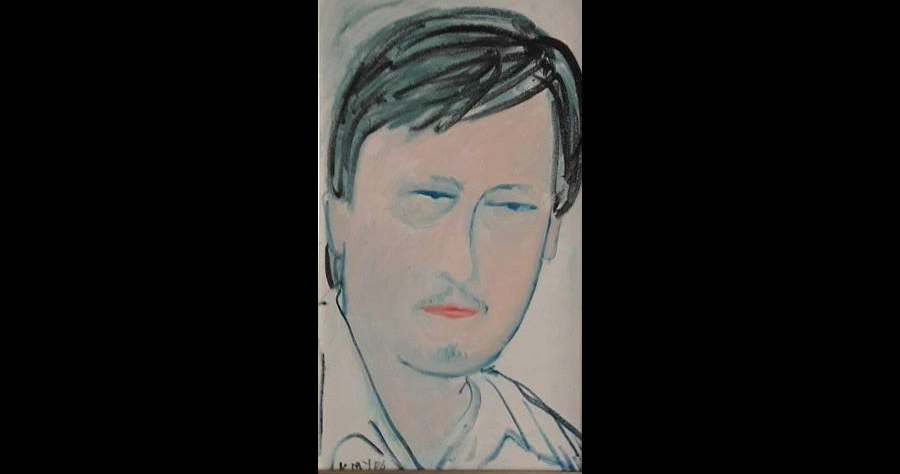
RANGOON — Three years have passed since artist Kin Maung Yin left his colorful world behind, but his creations are still intensely alive among his friends and fans.
An art exhibition to commemorate the third anniversary of his death will be held on June 10-12 displaying 60 of his many works—20 on each day of the three-day exhibition—at the Peace Gallery on Maha Bandula Street in Rangoon's Kyauktada Township.
Widely acclaimed as one of the leaders in the second generation of Burma's modern art movement together with Win Pe and Paw Oo Thet, Kin Maung Yin was known for his bohemian lifestyle and daringly abstract sketches.
He was also an illustrious architect and a director. "Kin Maung Yin is at the top of the list of rare artists in Burma," Win Pe said in praise of his friend.
He created thousands of paintings during his lifetime. "Art is about creating what you want freely. If it is not free, how can it be art?" asked Kin Maung Yin.
The legendary artist passed away at the age of 75. He lived a hermetic life of solitude in a one-room wooden house in northern Rangoon.
"Less is more. I have everything I need here," the legendary artist told The Irrawaddy in an interview in 2013.
Kin Maung Yin never named prices for his paintings. In many cases, he sold his paintings for notional sums. But some of his paintings have sold for thousands of US dollars among his fans.
"I hold commemorative art exhibitions so that younger generations understand the value of Kin Maung Yin. I want them to know that there was a world-class artist in Burma. I also organized this with an eye for development of the art industry," said event organizer Ko Tin Maung Lwin.
In the 1960s, Kin Maung Yin, Win Pe and Paw Oo Thet stepped on and relentlessly pursued their dream of modern art.
"He was a man of great value to our country, and had international-level skills. He lived a life of ease. He knew how to live a life of ease," said Win Pe.
Kin Maung Yin was born to British-Burmese Frank Sewell and Daw Mya Thi in 1938. His grandfather John Sewell was a British Army officer during the British colonization of Burma.
He studied architecture at Rangoon Institute of Technology (now Yangon Technological University), and devoted his whole life to art.
"Burma was too busy with civil war and power struggles at that time to appreciate an architect and artist like him with such a creative mind," said Win Pe.
RANGOON — Pro-ISIS groups in Southeast Asia are trying to recruit Rohingya migrants in Malaysia—who have fled persecution in Arakan State—to join Islamic militants fighting Philippine security forces, according to a recent report from a Jakarta-based research firm.
The Institution for Policy Analysis of Conflict (IPAC), which focuses on conflicts in Indonesia and the Philippines, stated the recent attacks in the southern Philippines city of Marawi indicates growing radical movements fueled by ISIS and population movements across the region.
In its report titled "How Southeast Asia and Bangladeshi Extremism Intersect," published in May, IPAC states that developments in Syria, Bangladesh, and Burma, put the relationship of South and Southeast Asian extremists "on a much more dangerous footing."
Syria has been in civil war since 2011. In Arakan, there has been a long-running denial of rights to the Muslim Rohingya, topped with an army crackdown in late 2016 that killed and displaced thousands.
"The persecution of Muslims in Burma adds to the potential for radicalization in diaspora communities and to the perception in extremist circles in Southeast Asia that Rohingya are ripe for recruitment," read the report.
IPAC director Sidney Jones said, "It's possible that ISIS could find support within a fringe of the diaspora Rohingya community, but the angry young Rohingya inside Myanmar are far more likely to join an ethno-nationalist insurgency than a movement linked to the global jihad."
Some 70,000 people have fled Arakan State to Bangladesh since Burma's military began a security operation last October in response to an attack on border posts in which nine police officers were killed.
A group calling itself Arakan Rohingya Salvation Army (ARSA), previously named the Faith Movement, or Harakah al-Yaqin, claimed the attack, according to a report released in December by the International Crisis Group, but the group has denied links with any international terrorist group.
The IPAC report, however, said ARSA leaders have turned to some South Asian extremist groups for help with training.
A UN body agreed in March to send a fact-finding mission to Burma over claims of killings, rape, and torture by security forces against Rohingya Muslims in the troubled state.
There are an estimated 1 million Muslims in the region who self-identify as Rohingya and who are today largely stateless. Many in the Buddhist Arakanese community and Burma's government describe the Rohingya as "Bengali," implying that they are migrants from Bangladesh.
As of early 2017, UNHCR had registered some 800 Rohingya in Indonesia and nearly 56,500 in Malaysia, many of whom have lived there for decades.
It also stated that Indonesians, Malaysians and other sympathizers are seeking to assist the Rohingya in Burma through contacts with Bangladesh-based Rohingya groups.
"By and large, Myanmar has more to worry about from a Rohingya armed rebellion in the name of achieving basic political rights than from ISIS, and in a way that’s good news because it means there's a real prospect for a political solution, if only the authorities in Yangon had the guts to act," said Jones.
"There are other entry points to ISIS: one or two youths from the Rohingya boat people who ended up in radical Islamic schools in Indonesia or a few among the Rohingya community in Malaysia attracted by online appeals from Syria and Mindanao," he added.
Some Bangladeshi students from middle-class families studying at Malaysian universities develop pro-ISIS sympathies, stated the report, either at home or while in Malaysia. Some use Kuala Lumpur as the take-off point for travel to Syria, and some meet each other as ISIS fighters in Syria or Iraq.
"The existence of an armed group on the border mounting attacks on Myanmar security forces could inspire pro-ISIS groups in Bangladesh, Indonesia and Malaysia to do more systematic recruiting among their respective Rohingya communities and individuals willing to carry out attacks on their own," read the report.
Extremism is becoming increasingly "intertwined, making the traditional distinction between South and Southeast Asia obsolete," in terms of counter-terrorism, according to the report.
Historically, the Rohingya Solidarity Organisation (RSO), which operated out of southeastern Bangladesh, reportedly had ties with Southeast Asian extremists in the late 1980s and 1990s, but is now thought to be defunct.
RANGOON — The ruling National League for Democracy (NLD) refused to allow a party lawmaker to question the government over controversial Article 66(d) of Burma's Telecommunication Law in Parliament, insisting the government had plans for amending the law.
The party's Upper House Lawmaker from Sagaing Division U Ye Htut claimed his question on plans to repeal or amend the law was postponed by the NLD's parliamentary questions supervising group led by U Win Htein, at a parliamentary recess in Naypyidaw on Friday.
"I wanted to raise the question, as I see the article has become a threat to the freedom of the press…and there is no fairness on granting bail [for the accused]," he said.
The group told U Ye Htut the government already had plans to amend Article 66(d), he said, adding it was the second time he was denied permission to put forward a question about the law to Parliament.
Article 66(d) of the Telecommunications Law is a criminal law provision that permits penalties of up to three years in prison for "extorting, coercing, restraining wrongfully, defaming, disturbing, causing undue influence or threatening any person using a telecommunications network."
The broad wording of the law and its bail restrictions for those accused of violating the statute mean it has been criticized by human rights and free speech activists, who have called for the article to be repealed.
There have been 68 defamation cases filed under Article 66(d) since 2013—seven cases under former President U Thein Sein's administration, which created the statute, and 61 cases under the NLD government.
The Committee to Protect Journalists (CPJ) said at a press conference on Friday that the government was committed to amending, but not repealing, Article 66(d) after meeting with permanent secretary of the Ministry of Information Myo Myint Maung on Thursday.
Draft legislation was with the Ministry of Communications and Transport and had been seen by the attorney general, CPJ representatives said, lamenting the fact that the NLD government committed only to amending the law from criminal to civic but not repealing it entirely.
"No one wants this law repealed," CPJ quoted Myo Myint Maung as saying at Thursday's meeting, adding that it took this as the NLD's attitude to the law.
Some 14 journalists have been charged under the law, with the latest case coming against The Voice Daily's chief editor and writer who were sued by the Burma Army over a satirical article.
Ko Maung Saung Kha, a poet who was sentenced and jailed under Article 66(d) and now leads a research team on The Telecommunication Law, said the NLD should have allowed the question to be put forward to the Parliament.
"It might be because they already have a plan to amend, but they could pass the question and explain in Parliament what they are doing and where they have difficulties," he said. "I think people have the right to know," he added.
"Article 66(d) must be repealed, not amended," Ko Maung Saung Kha said.
RANGOON — The Burmese military has announced that it will cooperate with the Chinese manufacturer of the military plane that crashed into the Andaman Sea on Wednesday for an investigation.
As of Thursday afternoon, only 31 bodies had been found. The fate of the rest remains unknown. However, given the altitude and nature of the crash site, survivors are unlikely. The death of all 122 passengers would mark this as the most tragic aviation accident in the country in the past decade.
The Office of the Commander-in-Chief released a statement on Thursday afternoon that said: "Officials from the company [Shannxi Aircraft Corporation] that produced the aircraft will also cooperate in the investigation."
It did not mention when the investigation would begin.
A plane wheel has been retrieved but the fuselage and other debris from the Y-8 remain missing. The recovered bodies were sent to a military hospital in Dawei for autopsy and identification. Ten of the identified bodies were cremated on Friday afternoon in Dawei.
On Friday, search and rescue missions were still underway in the Andaman Sea despite severe weather in the area. Eight Burma Navy vessels and 20 local fishing trawlers searched for bodies and debris using divers and sonar systems.
The aircraft, a Y-8 200F, was flying at 18,000 feet over the Andaman Sea when it lost contact with Dawei Airport at 1:35 p.m. en route from Tanintharyi Division's Myeik to Rangoon on Wednesday.
According to the flight's passenger manifest released by the military, those on board were not only servicemen. There were family members and children on board who were returning home and others who were undergoing hospital transfer.
RANGOON — Two battalions of the Kachin Independence Army (KIA) issued separate warnings against traveling at night on roads in Mogaung and Hpakant townships in Kachin State this week.
Battalion 6 based in Hpakant Township and Battalion 11 based in Mogaung Township, both under KIA Brigade 2, distributed the notices dated June 7 advising against travel on the Myitkyina-Tanai-Ledo, Mogaung-Kamaing, Lawa-Kamaing, Kamaing-Hpakant, and Wehka-Hpakant roads.
"There is a flurry of military activity near battalions 11, 14 and 6," Lt-Col Tang Sen of KIA Battalion 6 told The Irrawaddy. "So, we issued notices as a warning to avoid civilians being injured."
The KIA issued notices to a local transportation service providers association running passenger buses and cargo trucks between Myitkyina, Mogaung and Hpakant townships as well as concerned village administrators and workers at amber, gold and jade mines in the area, said Lt-Col Tang Sen.
The KIA Battalion 6 notice warned against traveling between 7 p.m. and 6 a.m. on those roads as of June 10.
The notice issued by KIA Battalion 11 was addressed to village administrators along the Myitkyina-Tanai-Ledo road, warning against traveling on the road between 7 p.m. and 5 a.m.
"The KIA will not take responsibility for problems that arise because of traveling during this restricted period," the notice read.
Brang Shawng, driver of a Myitkyina-Hpakant passenger bus, told The Irrawaddy on Thursday: "We got this notice two days ago. It is better not to travel as they said. Better safe than sorry."
When asked by The Irrawaddy about KIA warnings, police officers of Hpakant and Mogaung townships said they had no comment though they were aware of the notices.
Cargo truck driver U Khaing Kyaw said: "I've been here driving for three years. During that time, there was shooting in Kamaing. As I'm not a local and I don't know Kachin language, I've stopped driving now. I'll only drive when things become stable again."
The Burma Army said three locals in Tanai Township were injured by KIA artillery fire on June 5 and 6, according to a press release.
KIA spokesperson Lt-Col Naw Bu said clashes broke out from June 3 to 6 in Tanai and the KIA lost a frontline outpost in the clashes. On Tuesday, there were also clashes between government and KIA troops on Lawa road in Hpakant, and military tensions remain high, he added.
In the first week of June, the Burma Army dropped warning notices by helicopter urging locals and migrant workers to relocate as it would crack down on illegal amber and gold mines in Tanai Township.
Clashes in Tanai Township have forced more than 1,000 locals and migrant workers to flee; many are still on the road with their movements blocked by authorities.
RANGOON — Since September 2011 to date, fighting has been on and off in Kachin Independence Army (KIA)-controlled areas in northern and northeastern Burma, particularly in Waingmaw, Mansi, Tanai, and Hpakant areas near Laiza and northern Shan State. Reports of residents being killed or injured have been frequent.Over 100,000 people have been displaced and lived in the IDP camps for six years. They still do not know when they will be able to return home.
Airstrikes against the KIA started at the end of 2011—despite former president U Thein Sein instructing the Burma Army on Dec. 10, 2011 to cease offensives against the KIA and only act in self-defense.
Tensions escalated in the northernmost part of Burma as Burma Army helicopters reportedly shelled several KIA bases in May 2012.
In August of that year, an estimated 6,000 residents from more than 20 villages in Hpakant Township were displaced. Airstrikes were repeated in December; the Burma Army claimed they were in response to attacks by the KIA.
In February and May 2013, the government and the KIA held peace talks in Ruili, China and in state capital Myitkyina respectively but did not reach agreement on signing a ceasefire. In late 2013, the KIA hosted an ethnic armed group conference in Laiza and decided to form the nationwide ceasefire coordination team (NCCT) to communicate with the government in order to draft the text for the government's nationwide ceasefire agreement (NCA). The NCCT was later dissolved in late 2015.
In late 2013, another 2,000 villagers were displaced in Mansi Township due to clashes between the Burma Army and the KIA. The KIA was engaged not only with the Burma Army, but also with the Burma Army-aligned Kachin Border Guard Force (BGF) by the middle of the year.
At least six civilians were killed and twelve injured in 2012 and 2013 and some 178 Burma Army soldiers were killed in 2014, according to close KIA ally the Ta'ang National Liberation Army (TNLA).
In 2014, more than 5,000 civilians were displaced in eastern Kachin State and neighboring Shan State, due to a week of clashes in April. In May that year, the government and the KIA's political wing the Kachin Independence Organization (KIO) set up a peace monitoring commission, which was halted after the new National League for Democracy (NLD)-led government took office in March 2016.
Peace talks through the NCCT were ongoing well until August 2014, when in a NCA drafting meeting the Burma Army raised its six-point stance on the peace process, which included pursuing democracy in accordance with the 2008 Constitution and strictly abiding by the country's existing laws.
Peace talks nearly broke down after the Burma Army shelled a KIA training ground in Hka Bhum base on Nov. 19, 2014, killing 22 ethnic cadets, and injuring 15 others.
KIO/KIA leaders led by then-secretary Dr. La Ja and then-deputy commander-in-chief Gen Gun Maw visited the capital Naypyidaw and met the previous government and commander-in-chief Snr-Gen Min Aung Hlaing for the first time in mid-March 2015. The 16-member NCCT signed a deed of commitment, supporting the NCA accord in March 2015.
The KIA decided against signing the NCA in October that year alongside the Shan State Army-North, New Mon State Party, and the Karenni National Progressive Party, who all stood for the "all-inclusion" of ethnic armed groups.
Fighting intensified again for three weeks in May 2015 in KIA controlled areas, near a village abandoned in 2012 named Nam Lin Pa—with the Burma Army launching airstrikes and artillery shells.
A Kachin internally displaced persons camp in Laiza, Kachin State. (Photo: Myo Min Soe / The Irrawaddy)
The KIA and an ethnic bloc of which it is a member the United Nationalities Federal Council joined Daw Aung San Suu Kyi's 21st Century Panglong peace conference in Naypyidaw in August and September 2016, despite military engagement in the run up to the conference.
Nearly a week of fighting between the KIA and the Burma Army near Shahtu Zup village in Tanai Township led to school closures and around 1,000 civilians fleeing along the Tanai-Hpakant highway in mid Aug 2016.
In Myitkyina, Kachin man Lungjung Tu Raw was charged with violating Burma's Peaceful Assembly Law for organizing a protest calling for an end to Burma Army offensives in the region, despite receiving permission from authorities. Police said not all of the slogans were pre-approved and thus he violated the law.
In November 2016, the Northern Alliance, of which the KIA is a member, attacked and occupied the Muse border trading zone in northern Shan State. Because of the attack, the Burma Army used the term "insurgents" against the KIA and its allies—a further obstacle to peace negotiations.
Since Sept. 2016, the Burma Army heavily attacked KIA outposts surrounding Laiza and the KIA lost four strategic outposts in December after four months of Burma Army offensives.
On Oct. 3, 2016 a two-year-old girl was killed and her two brothers, aged five and six, were severely injured in Puwang village in Muse Township, northern Shan State, due to artilery shelling. Neither the Burma Army nor the KIA has taken responsibility for the incident.
In early 2017, the KIA joined the United Wa State Army (UWSA)-led alliance and planned to leave the UNFC, which it was chairing. In February and April, the seven-member alliance met in Panghsang, the capital of the Wa self-administered region and proposed an alternative peace process, calling the current NCA flawed.
In late May, members of the UWSA alliance, including the KIA, attended the opening of the second session of the 21st Panglong union peace conference in Naypyidaw and joined a dinner hosted by State Counselor Daw Aung San Suu Kyi.
The KIO's vice chairman General N'Ban La and his wife also met with Daw Aung San Suu Kyi on May 26, after the KIO representative told the Irrawaddy that the meeting had opened the future negotiation path.
Fighting between the KIA battalion 14 and Burma Army troops at the Maisa outpost started on June 3, 2017 near Nambyu and N'Ga Ga villages in Tanai Township, which led around 1,000 villagers to flee. Authorities stopped more than half of those from moving.
A Kachin Independence Army (KIA) soldier in Laiza, Kachin State in 2013. (Photo: Reuters)
The Long Lead Up to the Current War: Timeline of Key Events from 1947 – 2011
February 1947—Kachin leaders signed the Panglong Agreement with the Burmese government, which laid the foundation for the creation of a fully autonomous Kachin State.
February 1949—Naw Seng, a Kachin military officer in the Burmese army, defected to the Karen rebels along with his battalion. He then led the first Kachin rebel army in the fight for Kachin independence.
February 1961—Parliament under then Burmese Prime Minister U Nu declared Buddhism as the state religion, infuriating the mostly Christian Kachin population.
February 1961—A group of educated young Kachin men founded the Kachin Independence Army (KIA) and pledged to fight for a free Kachin republic. Intense fighting with the Burmese army ensued.
August 1963—Burmese Gen Ne Win, who came to power after staging a military coup, held peace talks with ethnic armed forces, including the Kachin. However, negotiations broke down after the ethnic representatives rejected Ne Win's demands, which included a condition that their armed forces must be concentrated in designated zones and their activities must be disclosed to his regime.
October 1980—Brang Seng, the chairman of the Kachin Independence Organization (KIO), the KIA's political wing, went to Rangoon and met with Ne Win for peace talks. He asked the Burmese government for Kachin State autonomy with self-determination.
December 1980—The Burmese government rejected the KIO's demand for the inclusion of autonomous rights in the Constitution, saying the demands had not been accepted "by a vote of the people." Peace efforts broke down and fighting resumed.
July 1993—KIO delegates negotiated with Burmese military leaders over a ceasefire in KIA-controlled areas in Kachin State and Shan State. The KIO's major demand was regional development.
February 1994—The KIO signed a ceasefire agreement with the ruling military regime of the State Law and Order Restoration Council.
September 2010—The KIO formally rejected the Burmese government's plan to accept the Border Guard Force plan, which would subjugate the KIA under Burmese military command. The KIO called for the emergence of a genuine federal state. Naypyidaw subsequently forced the closure of KIA liaison offices in Kachin State.
September 2010—Burma's Election Commission rejected the registration of three Kachin political parties from running in the country's first national elections in 20 years, saying the party leaders were linked with the KIA.
May 2011—The KIO sent a letter to the Chinese government to withdraw its investment from a massive hydropower dam project in Kachin State, warning that local resentment against this project could spark a civil war.
June 9, 2011— Fighting erupted between KIO and Burma Army troops on, when government forces broke the ceasefire and attacked KIA positions along the Taping River east of Bhamo, Kachin State, near the Ta-pein hydropower plant.
Timeline of key events from 1947-2011 was researched by Ba Kaung.
KYAUKPHYU TOWNSHIP, Arakan State —Days before the first supertanker carrying 140,000 tons of Chinese-bound crude oil arrived in Burma's Kyaukphyu
port, local officials confiscated Nyein Aye’s fishing nets.
The 36-year-old fisherman was among hundreds banned from fishing a stretch of water near the entry point for a pipeline that pumps oil 770 kilometers (480 miles) across Burma to southwest China and forms a crucial part of Beijing's "Belt and Road" project to deepen its economic links with Asia and beyond.
"How can we make a living if we're not allowed to catch fish?" said Nyein Aye, who bought a bigger boat just four months ago but now says his income has dropped by two-thirds due to a decreased catch resulting from restrictions on when and where he can fish. Last month he joined more than 100 people in a protest demanding compensation from pipeline operator Petrochina.
The pipeline is part of the nearly US$10 billion Kyaukphyu Special Economic Zone, a scheme at the heart of fast-warming Burma-China relations and whose success is crucial for the Southeast Asian nation's leader Daw Aung San Suu Kyi.
Embattled Daw Aung San Suu Kyi needs a big economic win to stem criticism that her first year in office has seen little progress on reform. China's support is also key to stabilizing their shared border, where a spike in fighting with ethnic armed groups threatens the peace process Daw Aung San Suu Kyi says is her top priority.
China's state-run CITIC Group, the main developer of the Kyaukphyu Special Economic Zone, says it will create 100,000 jobs in the northwestern state of Arakan, one of Burma's poorest regions.
But many local people say the project is being rushed through without consultation or regard for their way of life.
Suspicion of China runs deep in Burma, and public hostility due to environmental and other concerns has delayed or derailed Chinese mega-projects in the country in the past.
China says the Kyaukphyu development is based on "win-win" co-operation between the two countries.
'Avoiding Panic'
Since Beijing signaled it may abandon the huge Myitsone Dam hydroelectric project in Burma earlier this year, it has pushed for concessions on other strategic undertakings—including the Bay of Bengal port at Kyaukphyu—which gives it an alternative route for energy imports from the Middle East.
Internal planning documents reviewed by Reuters and more than two dozen interviews with officials show work on contracts and land acquisition has already begun before the completion of studies on the impact on local people and the environment, which legal experts said could breach development laws.
The Kyaukphyu Special Economic Zone will cover more than 4,200 acres (17 sq kilometers). It includes the $7.3 billion deep sea port and a $2.3 billion industrial park, with plans to attract industries such as textiles and oil refining.
A Reuters' tally based on internal planning documents and census data suggests 20,000 villagers, most of whom now depend on agriculture and fishing, are at risk of being relocated to make way for the project.
"There will be a huge project in the zone and many buildings will be built, so people who live in the area will be relocated," said Than Htut Oo, administrator of Kyaukphyu, who also sits on the management committee of the economic zone.
He said the government has not publicly announced the plan, because it didn't want to "create panic" while it was still negotiating with the Chinese developer.
Ambitious Deadline
In April, Burma's President Htin Kyaw signed two agreements on the pipeline and the Kyaukphyu port with his Chinese counterpart Xi Jinping, as Beijing pushed to revive a project that had stalled since its inception in 2009.
The agreements call for environmental and social assessments to be carried out as soon as possible.
While the studies are expected to take up to 15 months and have not yet started, CITIC has asked Burma to finalize contract terms by the end of this year so that the construction can start in 2018, said Soe Win, who leads the Burma management committee of the zone.
Such a schedule has alarmed experts who fear the project is being rushed. "The environmental and social preparations for a project of these dimensions take years to complete and not months," said Vicky Bowman, head of the Myanmar Centre for Responsible Business and a former British ambassador to the country.
CITIC said in an email to Reuters it would engage "a world-renowned consulting firm" to carry out assessments.
Although large-scale land demarcation for the project has not yet started, 26 families have been displaced from farmland due to acquisitions that took place in 2014 for the construction of two dams, according to land documents and the land owners. Experts say this violates Burma's environmental laws.
"Carrying out land acquisition before completing environmental impact assessments and resettlement plans is incompatible with national law," said Sean Bain, Burma-based legal consultant for human rights watchdog International Commission of Jurists.
Job Opportunities?
CITIC says it will build a vocational school to provide training for skills needed by companies in the economic zone. It has given $1.5 million to local villages to develop businesses.
Reuters spoke to several villagers who had borrowed small sums from the village funds set up with this money.
“The CITIC money was very useful for us because most people in the village need money,” said fisherman Thar Sai Aung, who borrowed $66 to buy new nets.
Chinese investors say they also plan to spend $1 million during the first five years of the development, and $500,000 per year thereafter to improve local living standards.
But villagers in Kyaukphyu say they fear the project would not contribute to the development of the area because the operating companies employ mostly Chinese workers.
From more than 3,000 people living on the Maday island, the entry point for the oil pipeline, only 47 have landed a job with the Petrochina, while the number of Chinese workers stood at more than double that number, data from labor authorities showed.
Petrochina did not respond to requests for comment. In a recent report it said Burma citizens made up 72 percent of its workforce in the country overall and it would continue to hire locally.
"I don’t think there’s hope for me to get a job at the zone," said fisherman Nyein Aye. He had been turned down 12 times for job applications with the pipeline operator.
"Chinese companies said they would develop our village and improve our livelihoods, but it turned out we are suffering every day."
RANGOON — From 1920 to the present day, only four women have been appointed as the heads of government ministries in Burma.
The sobering fact was evident in a recently published book, "A Dictionary of Biographies in Myanmar Chronological Order," by researcher Than Htun (Mawlamyine), which documented brief profiles of Burma's presidents, vice-presidents, prime ministers, and Union ministers from the 1920s to 1988.
The book covered Burma's periods from British colonial rule through the parliamentary democracy to the Burma Socialist Program Party.
Out of more than 200 cabinet ministers spanning nearly 70 years, only one has been female: (Claribel Irene Po), an ethnic Karen woman who was among the lawmakers elected to Parliament in the 1952 elections, four years after Burma gained independence.
Mrs. Ba Maung Chain
She became Burma's first female Union minister, with her appointment as the Karen State minister, serving from March 16, 1952 to 1953, March 4. But her term was followed by an absence of women in ministerial roles that spanned nearly half a century after the 1962 military coup.
Ruled by the military generals for decades, the role of women in Burma's political offices had diminished, despite women's efforts to combat oppression and boost their involvement in top-tier politics.
Ma May Sabe Phyu, director of the Gender Equality Network (GEN), said the fact that Burma has had only four Union-level female ministers in a century highlights the country's gender disparity.
The juntas' rule was the main reason why women were absent from politics, she said, as positions of power were reserved for generals.
"There was no fair play for qualified women," she said. If ministerial roles were elected instead of appointed, she added, more women would take seats.
Some political reforms took place in 2011 when the military regime handed over power to a quasi-civilian government led by then President Thein Sein. Female ministers were chosen to fill two of the 36 Union ministerial positions, picking up the mantle left almost 60 years before by Mrs. Ba Maung Chain.
Daw Myat Myat Ohn Khin, Daw Khin San Yi
Daw Myat Myat Ohn Khin, an Upper House representative and then a deputy minister for health, was appointed as the minister for social welfare, relief and resettlement in 2012. Daw Khin San Yi, formerly a deputy minister for national planning and economic development, headed two ministries: education in 2014, and science and technology in 2015, but she was appointed to these roles after the deaths of her male predecessors in each.
The government of former President Thein Sein also appointed five women as deputy ministers.
Despite the appointments, Burma remained one of the lowest countries in the Association of Southeast Asian Nations for the number of women in government. Some nations in the region have had at least a dozen female ministers, including Thailand, Indonesia, and Malaysia.
But Burma is among only a handful of countries, including Thailand, Indonesia, and the Philippines, that have had a woman leading the country. Daw Aung San Suu Kyi, the country's most famous pro-democracy leader, and her party, the National League for Democracy (NLD) won a landslide victory in the 2015 general election, defeating ex-generals led by the then ruling Union Solidarity and Development Party.
Many expected an increase in the number of women in cabinet positions with the advent of the NLD, but the only woman appointed to the Union government was the country's de facto leader herself.
State Counselor Daw Aung San Suu Kyi, pictured at the second session of the Union Peace Conference in Naypyidaw in May. / Myo Min Soe / The Irrawaddy
As a constitutional clause prevents anyone with a foreign spouse or children from becoming President, voters did not get see their leader hold executive office. But she did take the roles of State Counselor, and two ministerial posts—foreign affairs and the president's office—out of 22 government ministries, which were cut down from 36 ministries under the previous government.
Having only one woman in government was an unexpected and disheartening development for women's rights activists, who have continued petitioning for a minimum of 30 percent of women to be included at the decision-making levels in all government sectors.
Yet unlike previous administrations, Burma now has two female chief ministers for the first time: Dr. Lei Lei Maw in Tenasserim Division and Nang Khin Htwe Myint in Karen State.
NLD lawmaker Ma Zin Mar Aung took the disappointing statistic—just four women ministers in nearly a century—as a signal for her and other women to work even harder. By doing this, she said, women would eventually be represented more fairly.
"It could be because of political systems or social norms. But as a woman, it encourages me to work more in society," NLD lawmaker Ma Zin Mar Aung said.
The number of women lawmakers has risen almost threefold, so that the country's legislative chambers are made up of 13 percent women compared with less than 5 percent of seats in the previous government.
NLD lawmaker Ma Phone Kaythi Naing from Shan State said the low representation of women at the decision-making level in Burma was a driving factor in her run for election.
"The fact shouldn't be discouraging. It wouldn't work out," she said. "Instead, I take it as motivation to work more for gender equality in legislative matters," she added.
The developing friendship between Burma and the United States prompted China to start searching for new ways to shore up the relationship. In 2012, academic-style journals in China ran several articles analyzing what went wrong with Beijing's Burma policy and what could and should be done to rectify it. One proposed measure was to launch a public relations campaign in Burma aimed at overhauling China's current negative image in the country. Beijing also began furiously reaching out to other elements of Burmese society—including the NLD and other democrats—utilizing the CPC's "government-to-government," "party-to-party," and "people-to-people" strategy that lies beyond the CPC's previous limited circle of regime leaders and their business cronies.
In addition to these 'soft power' tools, Beijing also has access to a range of more kinetic options as well as an ability to either facilitate or frustrate any efforts by Burmese leaders to assert control over and establish a durable peace in the totality of Burmese territory. Since 2011, China has been carefully implementing this mix of hard and soft power tools to regain a position of leverage with both the Thein Sein and Aung San Suu Kyi governments.
To strengthen its position vis-à-vis China, Burma has also turned to its partners in the Association of Southeast Asian Nations (Asean), which it chaired in 2014. Even more significantly, when Gen. Min Aung Hlaing, who was appointed commander-in-chief of Burma's military in March 2011, went on his first foreign trip in mid-November, he did not go to China—but instead to China's traditional enemy, Vietnam. Burma and Vietnam share the same fear of their common, powerful northern neighbor, so it is reasonable to assume that Min Aung Hlaing had a lot to discuss with his Vietnamese hosts.
While the Burmese government seeks to build deeper relations with other nations in the region, stark domestic challenges continue to hinder meaningful economic or political developments at home. As history has shown, China's dual-track policy has maintained distinct leverage and influence over Burma's rebel groups and government, further complicating Burma's peace process, an initiative taken by Thein Sein shortly after he assumed the presidency in early 2011. The Chinese government consistently denies reports of interfering in the peace process but Beijing's tacit support for the largest non-state armed group in Burma tells a different story.
In May 1989, the CPB's successor, the United Wa State Army (UWSA), entered into a ceasefire agreement with the Burmese government, which suited China's new commercial interests. But it was also imperative for Beijing to find ways to strengthen the UWSA, and by extension its leverage over the Burmese government. After all, the Chinese had had a long-standing relationship with most of the leaders of the UWSA, dating back to their CPB days. Thus, the UWSA was able to purchase vast quantities of weapons from China and, according to the April 26, 2013 issue of the prestigious military affairs journal Jane's Defense Weekly, these purchases included armed transport helicopters which: "[The acquisition of helicopters] marks the latest step in a significant upgrade for the UWSA, which has emerged as the largest and best-equipped non-state military force in Asia and, arguably, the world," the journal wrote.
In the second half of 2012, the UWSA had acquired armored vehicles for the first time. These included both Chinese PTL-02 6×6 wheeled "tank destroyers" and an armored combat vehicle that IHS Jane's identified as the Chinese 4×4 ZFB-05. Furthermore, the UWSA has obtained from China huge quantities of small-arms and ammunition—and around 100 HN-5 series man-portable air defense systems (MANPADS), a Chinese version of the first-generation Russian Strela-2 (SA-7 "Grail") system.
Thus, today the UWSA has become better armed than the CPB ever was. It can field at least 20,000 well-equipped troops apart from thousands of village militiamen and other supportive forces. Moreover, the top leaders of the UWSA are usually accompanied by Chinese intelligence officers who provide advice and guidance. So what is China up to? Why the arming and continued support of a non-state military force, while at the same time, Beijing has had cordial relations with the Burmese government since it abandoned its policy of supporting communist insurrections in the region?
United Wa State Army (UWSA) soldiers march during a media display in Pansang, Wa territory in northeast Burma on October 4, 2016. (Photo: Soe Zeya Tun/Reuters)
Beijing's policies are no doubt a way of putting pressure on Burma at a time when its relations with the United States are improving. China feels it cannot afford to "lose" Burma to the West, and seems to define Burma's foreign relations with other regional actors in zero-sum terms. A strong UWSA provides China with a strategic advantage and is also a bargaining chip in negotiations with Naypyidaw. Significantly, when the President's Office Minister U Aung Min visited Monywa in November 2012 to meet local people protesting a controversial Chinese-backed copper mining project, he openly admitted: "We are afraid of China… we don't dare to have a row with [them]. If they feel annoyed with the shutdown of their projects and resume their support to the communists, the economy in border areas would backslide."
By "the communists" he clearly meant the UWSA and its allies, among them the Myanmar National Democratic Alliance Army (MNDAA) in Kokang, another former CPB force, which returned to armed struggle in February 2015. China, predictably, has denied any involvement in that conflict, but the fact remains that most of the MNDAA's weaponry and vast quantities of ammunition have been supplied by the UWSA. The Chinese have always denied giving any material support to the UWSA. But recent arms shipments to the UWSA that have included man-portable air-defense systems, armored fighting vehicles, heavy artillery and other sophisticated military equipment, which are not the kind of equipment that "falls off the back of a truck," or could be sent to the UWSA by some local officials in Yunnan. The deliveries were almost certainly directed from the highest level of China's intelligence and military authorities in Beijing.
According to one well-placed source, China is indirectly "teaching the Burmese government a lesson in Kokang: move too much to the West, and this can happen." At the same time, Beijing is playing another "softer" card by inviting Burmese politicians and journalists on all-paid for "study trips" to China and being actively involved in so-called "peace talks" between the Burmese government and the country's multitude of ethnic rebel armies. Whether China wants to export revolution or expand and protect commercial interests, it apparently feels the need to have a solid foothold inside Burma. There is no better and more loyal ally in this regard than the UWSA and its affiliates.
Sun Guoxiang, China's special envoy for Asian affairs (foreign ministry), has repeatedly expressed public support for Burma's peace process. According to the transcript of a meeting Sun held in February 2017 with representatives from two of Burma's ethnic armed ceasefire groups, Sun said: "China has a unique foreign policy towards Myanmar [Burma] and respects the sovereignty of Myanmar…we are only doing our duty as a friendly neighbor." Sun's cordial tone cuts a sharp contrast with the China-backed UWSA's militant message delivered with seven ethnic armed groups around the same time against the Burmese government's "national ceasefire agreement"—a joint salvo which caught many observers off-guard raised new questions about China's true position toward Aung San Suu Kyi's peace initiative, which she inherited from Thein Sein. The seven groups rejected the government's "national ceasefire agreement" and called for a more direct, political approach to solving Burma's decades-long civil war.
Sun is right in stating that China's multi-layered policies towards Burma are indeed "unique"–and, to many outsiders, they often seem contradictory. But under examination, China's foreign policies have their own logic. Envoy Sun's positive message is the first surface layer of China's diplomacy, which is almost always publicly characterized as "amicable" and "friendly" with regional countries it engages.
The second layer consists of the International Liaison Department of the Central Committee of the Communist Party of China (ILD/CPC). The body was originally set up in the 1950s to develop contacts with other communist parties and support revolutionary movements across the globe. These days, however, ILD/CPC representatives are often seen at conferences and for hob-knobbing with political parties of all ideological stripes. The ILD/CPC also supports various non-state groups, including armed resistance organizations, like the UWSA, which serve China's long-term strategic and economic interests.
The third layer is the People's Liberation Army (PLA), which maintains links with other militaries across the world. Along with selling weapons to foreign governmental and nongovernmental clients, directly or through front companies, it has provided beneficiaries such as the UWSA with a wide variety of weaponry. Some of those armaments are then shared with other ethnic armed groups actively fighting against the government.
China may have transformed its economic system from rigid socialism to free-wheeling capitalism, but politically it remains an authoritarian one-party state where the CPC is above the government with the PLA serving as the armed-wing of the Party. The old policy of maintaining "government-to-government" as well as "party-to-party" relations has not changed.
Consequently, China's main man in dealing with Burma's many political actors is not Sun but rather Song Tao, head of the ILD/CPC. Song, a senior politician and diplomat, was educated at Monash University in Australia and served as an assistant to the Chinese ambassador to India in the early 2000s before becoming ambassador to Guyana and the Philippines.
In October 2015, Song took part in a high-profile visit to North Korea and the following month took over the post as ILD/CPC chief from Wang Jiarui, a CPC veteran who was in charge of maintaining contacts with communist members in countries like North Korea, Cuba and Vietnam. While Song is not a high-profile figure like Sun, he is known to work actively in the background and apparently prefers to meeting with Burmese politicians and top soldiers in Beijing rather than Naypyidaw. Song did meet with Suu Kyi in Naypyidaw August 2016, just weeks before the launch of her peace process. The differentiation between "government-to-government" relations maintained by China's foreign ministry and the CPC's "party-to-party" links with groups such as the UWSA–and with the CPC's positioned above the government in Beijing—explains why China can publicly praise Burma's peace process while quietly providing the UWSA with heavy weaponry.
Unlike Western democracies, China's foreign ministry is not necessarily the lead actor in shaping policy, rather the Party is ever-present within the three different levels of engagement. The foreign ministry is the public face and its policies are always characterized as "amicable" and "friendly" with regional countries it engages with. However, to paint a more comprehensive picture of the PRC's relations with the Burmese government and ethnic rebel groups, the other two levels of Chinese engagement (dominated by the CPC) must also be examined. The massive upsurge in outreach to Aung San Suu Kyi, pro-democracy activists, and even journalists—including innumerable "study trips" to China since 2012—as well as Chinese support for the UWSA essentially serves the same strategic purpose: Put pressure on the military, who really pulls the strings in Naypyidaw, and force it to keep its options open for the future, with the aim of securing the vital "Burma corridor."
Conclusion
Seen from this perspective, pauk-phaw is little more than empty rhetoric. Beijing is not going to give up the secure position it has cultivated inside Burma since the late 1960s. Likewise, China will not easily give up its hard-won access to the Indian Ocean and Burma's strategic importance to Beijing cannot be overestimated. More than 60 per cent of the world's oil shipments pass through the Indian Ocean, from the Middle East's oil fields to China, Japan and other strong economies in the region, as does 70 percent of all container traffic to and from the Asian industrial countries and the rest of the world. While traffic across the Atlantic has diminished and that which crosses the Pacific is static, trade across the Indian Ocean is increasing. Parts of the ocean, especially in the west around the Horn of Africa and next to the Strait of Malacca in the east, are areas where pirates are active and terrorists have been shipping arms to various conflict zones in the region. This has prompted tighter regional cooperation between the United States, Australia, India and Japan. Burma is in the middle of this imbroglio—and China is attempting its utmost to preserve its influence over the country.
Realities on the ground will not change. China is there, just across the northeastern border. Western countries, with which Burma would prefer to deal, are far away, lack the depth and subtlety of China's relationships inside Burma, and have their own relationships and equities with Beijing. The West may be able to counter China's influence in Burma, which would be welcome by most domestic stakeholders in the country—but that would require a sophisticated approach based on a better understanding of how China exerts its influence in the region as well as a willingness to devote real resources to a serious strategy toward that end. Given this mismatch in both interests and capabilities, it seems likely that China's long-game will continue to be the more persistent challenge for Burma and its neighbors.
This concludes the 5-part series, China and Burma: Not Only Pauk-Phaw. Read part 4 of the series here.
This article was originally published here by The Project 2049 Institute, a policy group based in the US.