The Irrawaddy Magazine |
- President Orders Yangon Gov’t to Follow Law in Eleven Media Case
- More Than 170 Rohingya Refugees Resettled in Northern Rakhine, Govt Says
- Connections, Differences and Hungry Cats
- No Development Without Rule of Law, Mon State MP Says
- UN’s Special Envoy Discusses Peace Process with Kachin Officials
- Dutch Gov’t Lifts Travel Restrictions to Southern Rakhine, Tourism Industry Wants More
- Official Suing Journalists for Incitement Tells Court Their Article was Wrong
- Switzerland Joins EU in Sanctioning Myanmar’s Military Generals
- Thai Army Chief Says No Need to Intervene if Politics Stable
- Trump to Nominate Former Air Force General as Top Asia Diplomat
- Cambodia’s Garment Workers Fear EU Trade Threat But Producers Optimistic
- EU Pushes for Approval of Trade Agreement with Vietnam
- US Senate Leader: Congress Should Not Join ‘Pile-On’ On Myanmar’s Suu Kyi
| President Orders Yangon Gov’t to Follow Law in Eleven Media Case Posted: 18 Oct 2018 07:23 AM PDT YANGON—Myanmar President U Win Myint on Thursday intervened in the detention of three Eleven Media journalists, ordering the Yangon regional government to follow the Media Law in handling their case. The Yangon regional government filed lawsuits against two editors and a reporter from Eleven Media Group earlier this month accusing them of committing offenses against the state. They have been held at Insein Prison for the past nine days. In the afternoon, a President's Office directive to the Yangon government went viral on Facebook. It briefly stated the three main steps required under the media law: to file an initial complaint about the case with the Press Council in line with the Media Law's Article 22; to deal with the issue in cooperation with the council; and, if the case is not addressed by the council, to bring the case to court. The Yangon government didn't follow the procedures stated. Instead, the journalists were arrested and taken to court immediately. The presidential intervention comes amid mounting criticism that the Yangon government's lawsuit against the journalists constitutes an assault on freedom of expression. Even lawmakers said the story that prompted the lawsuit was based on MPs' discussions in Parliament about the general's auditor report on the government budget for fiscal 2016-17. President's Office spokesman U Zaw Htay confirmed the directive while speaking to reporters in Naypyitaw on Thursday. In brief comments, he said the regional government had notified the President's Office of its action against the Weekly Eleven journalists, and that the Union government had responded by ordering it to act in line with the law. He declined to comment further about the letter, directing inquiries to Yangon authorities. According to the presidential directive, the case was reported to the president last Wednesday, the same day on which the journalists were arrested. The Myanmar Press Council (MPC) announced that it had received a complaint letter from the Yangon government on Thursday afternoon. Regional government director U Aung Kyaw Khine, who is acting as the plaintiff in the case on behalf of the government, submitted the letter personally, said council member U Zeyar Haling, who is also chief editor of Mawkun magazine. However, the official failed to present a concrete reason for the filing of the complaint, U Zeyar Haling said. "[U Aung Kyaw Khine] merely told us that he submitted the case to the Press Council on the instruction of higher authorities. He did not say who was actually behind the order," he said. It is unclear what action the Press Council will be able to take, however, as it is prohibited from getting involved in ongoing lawsuits. Council chairman Hanthawaddy U Ohn Kyaing was quoted in a local publication as saying that if the case was to be mediated by the council, the lawsuit needed to be dropped first. U Zeyar Hlaing said, "Although there are multiple options for resolving the case, it's pretty obvious that the regional government deliberately chose to file serious charges against the journalists." He added that the Weekly Eleven report did not defame the government, as its reporting was based on statistics contained in the chief auditor's report and discussed by lawmakers in the regional Parliament. "I don't see anything defamatory in the article, and it did not tarnish the image of government. But the government has now really damaged its own image by failing to act in line with procedures," U Zeyar Hlaing said. The post President Orders Yangon Gov't to Follow Law in Eleven Media Case appeared first on The Irrawaddy. |
| More Than 170 Rohingya Refugees Resettled in Northern Rakhine, Govt Says Posted: 18 Oct 2018 06:08 AM PDT SITTWE, Rakhine State — More than 170 Rohingya refugees who have returned from Bangladesh to Rakhine State through unofficial channels have moved back home or been resettled in villages where they have relatives, according to Maungdaw District authorities. Deputy district administrator U Ye Htoo said 177 Rohingya have been resettled in all, including 106 males and 71 females. "Since April, 177 [Rohingya] have come back into the country. We've sent them to the villages of their closest relatives through the village administrations. For those who have homes, we have sent them back to their homes," U Ye Htoo told The Irrawaddy. They were among the 700,000 Rohingya who fled to Bangladesh to escape a military crackdown in northern Rakhine triggered by militant attacks on security posts in the area in August 2017. Of the 177, 62 were arrested upon their return but granted amnesty and released on May 27 by the government, which reasoned that they did not know Bangladesh and Myanmar had agreed to an official repatriation plan. Of the rest, 92 were rescued at sea from a capsized boat in June and 23 crossed the border over several months without being arrested. "The people who came back this month are from Kyein Kyaung village. I heard they are currently staying in Maung Ni village and that the government and UN agencies have provided them with food," U Anarwa, the administrator of Pantawpyin village in Maungdaw, told The Irrawaddy. Though Bangladesh and Myanmar agreed to a formal repatriation process months ago, it has not been used to return a single refugee to date. "It is said that some 4,000 to 6,000 [Rohingya] will be repatriated, but we have not received any official letter about it," said U Ye Htoo. Authorities have issued National Verification Cards (NVCs) to the Rohingya returnees, while the Ministry of Social Welfare, Relief and Resettlement has provided them with food, he added. NVCs have been issued in Rakhine since June 2016. The government said the cards have been issued to 6,097 males and 3,076 females in the state as of Jan. 3. The Myanmar government has opened two camps along the border to take in returnees and a third to temporarily accommodate them until they are permanently resettled. Translated from Burmese by Thet Ko Ko. The post More Than 170 Rohingya Refugees Resettled in Northern Rakhine, Govt Says appeared first on The Irrawaddy. |
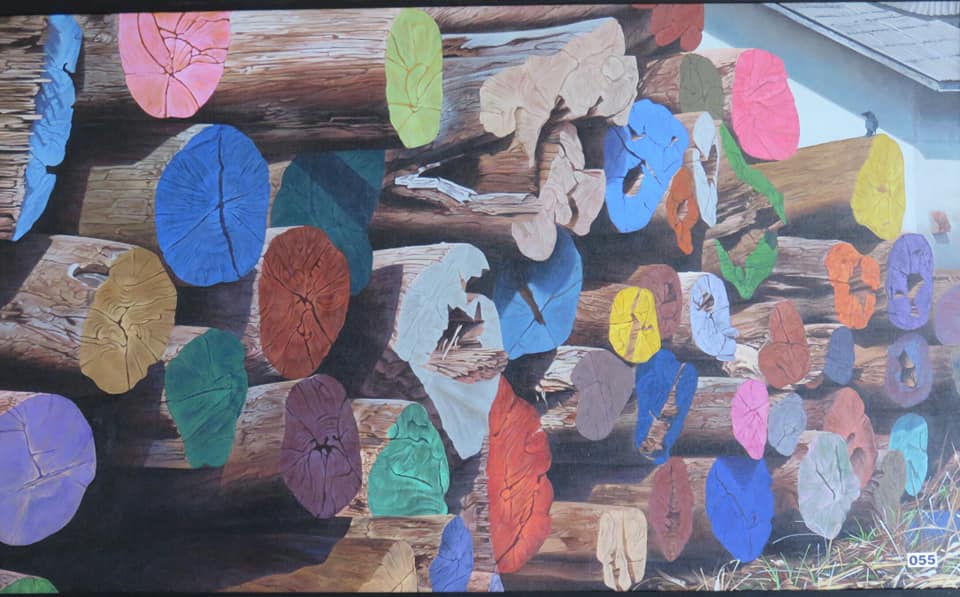
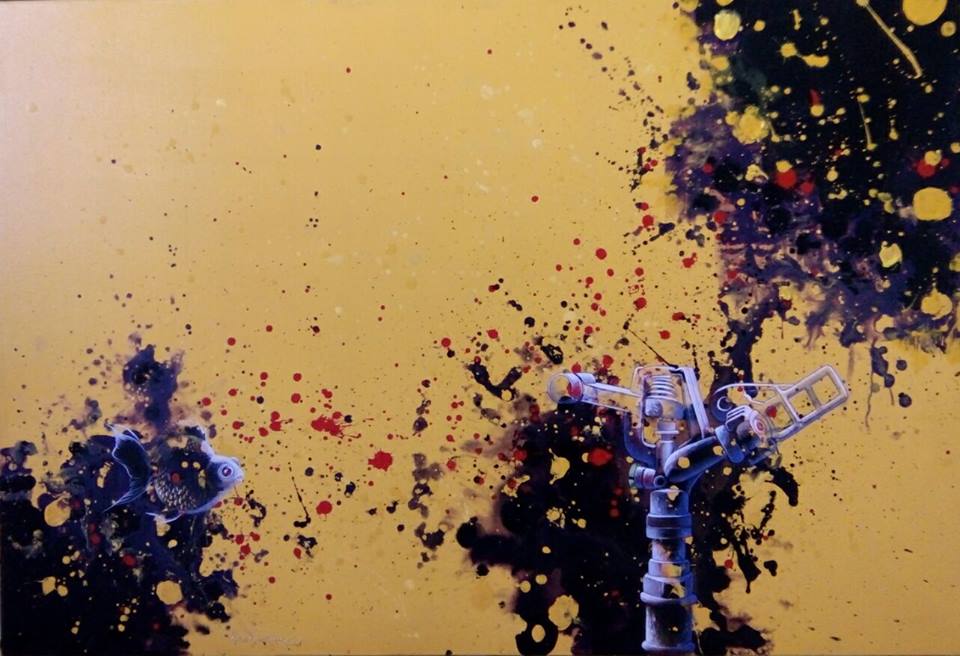
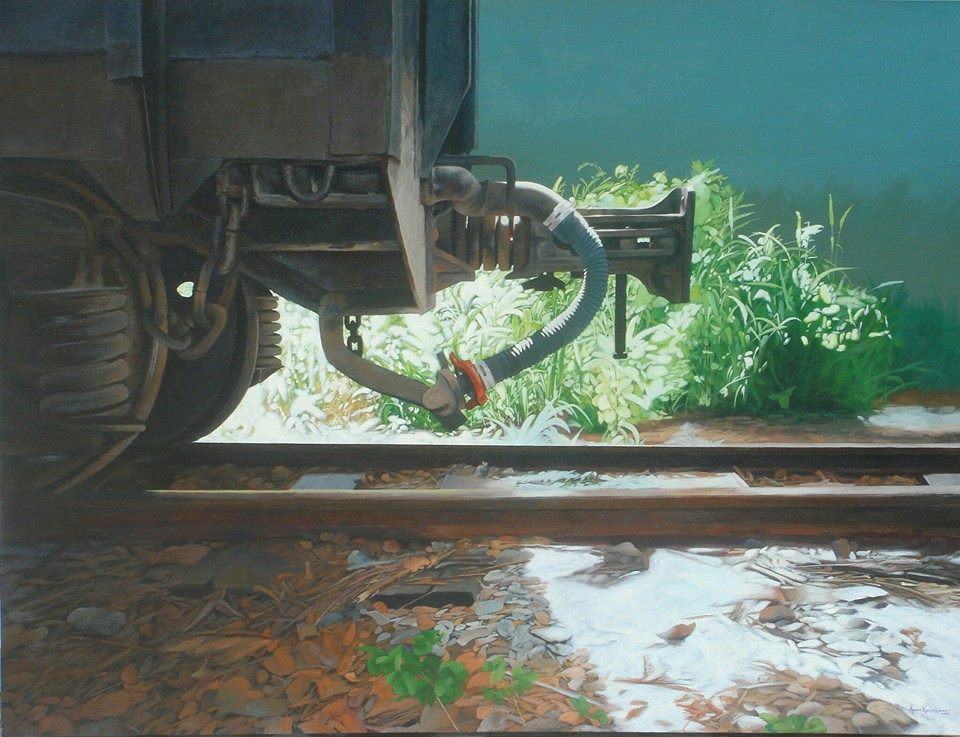
| Connections, Differences and Hungry Cats Posted: 18 Oct 2018 05:13 AM PDT YANGON—Train couplings and painted logs have long preoccupied the young artist Kyaw Kyaw Lwin, and images of them recur in his work. "I draw couplings to symbolize connection. It is intended to encourage mutual support and help between people," he said. The 25-year-old artist's first solo exhibition, "Current of Samsara", begins Oct. 20 at the Ahla Thit Gallery on University Avenue Road in Yangon's Bahan Township. 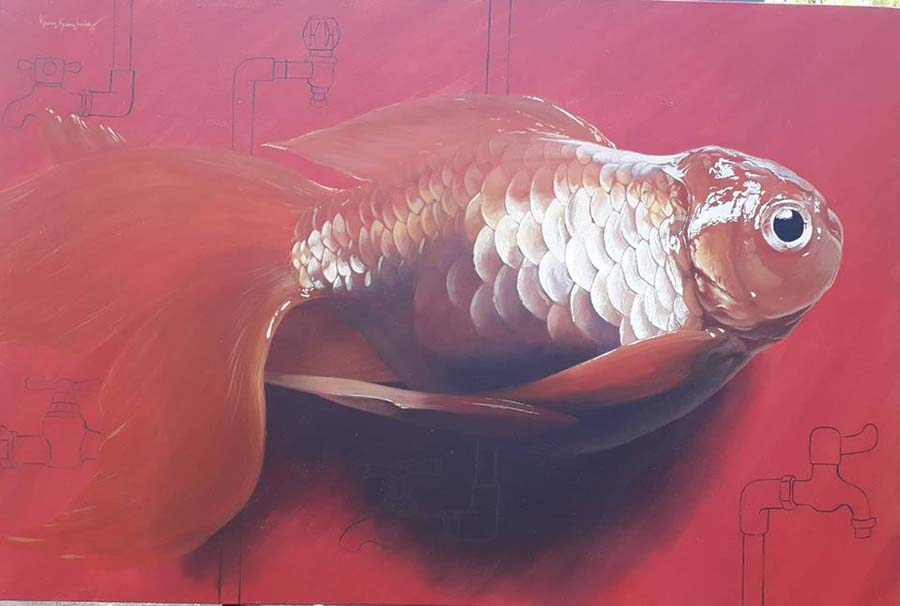 In one work, "Difference", a pile of logs can be seen, their cut ends painted in various colors. The message he wants to send is simple, he says. "Those colors represent the minds of people. Dirty colors may be above the clean colors. Similarly, honest people may be lower in their social status." His other favorite subjects are cats, fish and taps, often combined into a single work, such as one painting titled "Hope." "The fish need water, and the cat is hungry. The cat likes fish. The fish needs water—but water is not coming from the tap. I have conveyed this idea in a surrealist style," the artist said. 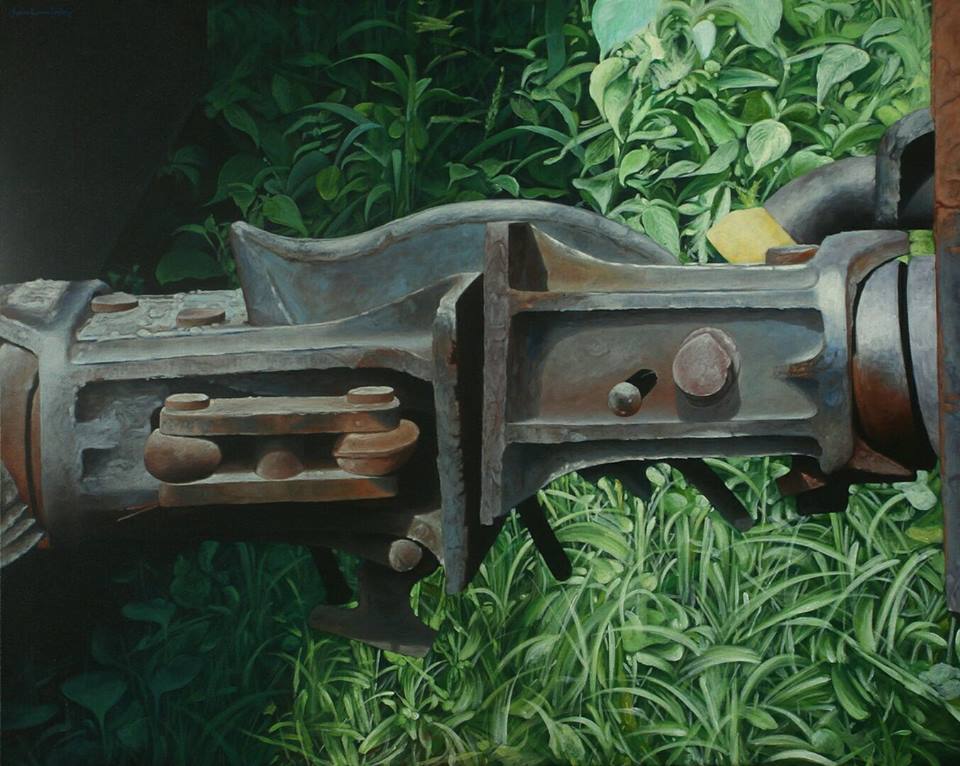 Over 30 paintings by Kyaw Kyaw Lwin will be on display from Oct. 20-24. They can be purchased at prices from 200,000 to 1.5 million kyats. Kyaw Kyaw Lwin is a graduate of the Yangon State School of Fine Arts, and has participated in over 40 group shows. "I hope my paintings give viewers some food for thought," he said. The post Connections, Differences and Hungry Cats appeared first on The Irrawaddy. |
| No Development Without Rule of Law, Mon State MP Says Posted: 18 Oct 2018 04:50 AM PDT YANGON — As chair of Mon State Parliament's Women’s and Children's Rights Committee, Daw Khaing Khaing Leh is dedicated to protecting the region’s youth and female constituents. In the first seven months of this year, her committee has received more than 40 complaints of sexual violence against females, including the alleged rape of minors. While investigating sexual assault cases and working to bring the perpetrators to justice, the 38-year-old lawmaker has also been promoting the rule of law. A former lawyer, Daw Khaing Khaing Leh was elected to the state Parliament to represent Thaton Township for the National League for Democracy in the 2015 general elections, becoming one of six female lawmakers in the 31-seat legislature. She has urged the state government to take steps to ensure security and the rule of law and tried to promote good relations between the executive and legislative branches. She also chairs the Parliament's Bill Committee. Daw Khaing Khaing Leh spoke recently with The Irrawaddy at the Parliament in Mawlamyine about the difficulties local lawmakers are facing to implement reforms and how much progress they have made since the general elections. Lawmakers raise problems affecting the public and the needs of their constituents in parliament. How satisfied are you with how they are being solved or improved? When we look at whether the government has kept all the promises it made to Parliament in response to lawmakers' questions and proposals, it hasn’t. I am saying this because a report by a parliamentary committee on the government's guarantees, pledges and undertakings said the government only implements about 30 percent of its promises. Some are still in the works, some have been implemented and others are pending. Another thing is state development. Mon State has been receiving a larger budget, so we have been able to work on improving municipal services and road transportation in the state over the past three years. But in our state we do not yet have full electricity coverage in Ye Township and in rural areas while we are generating electricity for other states and regions. What do you think of the government’s failure to fulfill most of its promises? There are two points. One is that when it is easy to take action on lawmakers' questions or proposals, the government does. Like asking it to build roads or bridges. It's easy to implement that because it just puts the requests in the budget proposals. But when it comes to issues like squatting and illegal land use, there are some delays in government action. But those are the things lawmakers often raise. In cases of confiscated land, it needs to be solved according to the policies of the Union government's Committee for Scrutinizing Confiscated Farmland and Other Land. It has difficulty acting on cases where the state government doesn’t have authority and needs to collaborate with the Union government. But some say work is not being done because government departments drag their feet and because there is too much red tape. Yes, there is that too. When [the state] Parliament writes to the state government, it takes days to hear back. Even sending information between the chief minister’s office and another minister’s office in the same building takes a long time. Then directives will be issued to other departments after that. We need to find ways to make those steps quick. We are developing an e-government system. But I think it will be a long time yet before implementation. Before then, we need to eliminate some unnecessary steps in the paperwork to be effective at providing public services. What do you think the [state] government should prioritize in the remaining two years of its term? There are no priorities. Everything should be done simultaneously. Every government focuses on infrastructure developments such as building bridges, constructing roads and providing electricity and water, which are important in fulfilling the basic needs of the public. But while we are working on infrastructure, ensuring the rule of law is also important. People would be satisfied with improvements in meeting their basic needs, but they hope to live having equal rights and justice. Only by strengthening the rule of law will peace and development be sustainable. The post No Development Without Rule of Law, Mon State MP Says appeared first on The Irrawaddy. |
| UN’s Special Envoy Discusses Peace Process with Kachin Officials Posted: 18 Oct 2018 03:33 AM PDT YANGON—The United Nations Secretary-General's special envoy to Myanmar discussed the peace process with Kachin government cabinet members on Wednesday, during her first trip to Kachin State. "We mainly discussed the peace process," Kachin Minister of Social Welfare U Thin Lwin told reporters after the meeting in the Kachin State government office. Government officials discussed their actions in the peace process at state level even though the Kachin [Independence Army] have not signed the Nationwide Ceasefire Agreement (NCA). Both sides agreed that the peace process requires patience and takes time, he said. During the visit, the UN special envoy Christine Schraner Burgener visited IDP (internally displaced persons) camps in Myitkyina, the capital of Kachin State, which is home to people who have been displaced from areas near Myitkyina due to ongoing fighting between the Myanmar military and the Kachin Independence Army (KIA) since 2011. Christine Schraner Burgener held meetings with the Kachin State Chief Minister U Khet Aung, Kachin State Security and Border Affairs Minister Col. Thura Myo Tin, the social affairs minister and secretary of the Kachin State government and Kachin State advocates. She also met with the Commander of the Northern Command Maj-Gen Tay Zar Aung and senior military officers of the command. In Naypyitaw on Friday, the UN special envoy held a meeting with State Counselor Daw Aung San Suu Kyi, sharing views on the latest progress in the process of national reconciliation and peace; ongoing inter-communal dialogue; the opening of the Office of the Special Envoy in Naypyitaw; and the implementation of the repatriation of displaced persons under the bilateral agreement between Myanmar and Bangladesh, according to the Ministry of Information. During the discussion with Daw Aung San Suu Kyi, both sides also addressed the challenges facing Myanmar, including the situation in Rakhine State and cooperation between Myanmar and the Office of the Special Envoy of the United Nations Secretary-General, according to the Ministry of Information. On Monday, she visited northern Rakhine State—Sittwe, Maungdaw and Buthidaung townships—and met with local communities who suffered from communal violence during the Rohingya crisis in Rakhine State. She held a meeting with state government officials including Rakhine State Chief Minister U Nyi Pu and Commander of the Western Command Maj-Gen Soe Tint Naing. She also visited IDP camps in Sittwe and Kyauktaw townships. Discussions with the state government officials focused on three main topics: building peace and harmony between the two communities; the resettling process; and the repatriation of displaced persons, vice-speaker of the Rakhine State parliament, U Mya Than told The Irrawaddy. Rakhine-based media reported the speaker of the Rakhine State parliament U Kyaw Zan Hla revealed a positive view of Christine Schraner Burgener, saying she is more flexible when discussing the Rakhine issue than the UN human rights envoy to Myanmar, Yanghee Lee. Christine Schraner Burgener made her first visit to Myanmar in July this year. She discussed the Rakhine humanitarian issue with State Counselor Daw Aung San Suu Kyi and the military's Commander-in-Chief Sen-Gen Min Aung Hlaing during the trip and also met with Muslim and Hindu refugees in Maungdaw, Rakhine State. The post UN's Special Envoy Discusses Peace Process with Kachin Officials appeared first on The Irrawaddy. |
| Dutch Gov’t Lifts Travel Restrictions to Southern Rakhine, Tourism Industry Wants More Posted: 18 Oct 2018 02:27 AM PDT YANGON – Despite a number of European countries continuing to discourage travel to Myanmar based on allegations against the army of committing crimes against the Rohingya community in August 2017, the government of the Netherlands has eased its stance on one Rakhine State tourist destination last week. Last year, on the official map outlining areas of Myanmar considered safe and unsafe to travel to, the Netherlands marked the entire Rakhine State in red, marking it as an unsuitable state to visit due to instances of violent conflict there, particularly referring to northern Rakhine State from where nearly 700,000 Rohingya fled from military rampages and sought refuge in neighboring Bangladesh. The official website of the Netherland's Foreign Affairs Ministry "The Netherlands Worldwide" —published in Dutch— updated its map on Oct. 10 to mark the areas of Kachin State, northern Shan State and the majority of Rakhine State to a red status. The website warns travelers against visiting Rakhine State, specifying that—especially in northern Rakhine State—there are great tensions between the Muslim and Buddhist community, and these tensions “regularly lead to violence.” The website uses “Muslim" and "community” rather than using the contentious term “Rohingya.” As well as Thandwe Township’s Ngapali Beach in southern Rakhine, one of Myanmar's most popular tourist destinations and a great source of tourism income having the red status removed, the map shows the red status warning remaining in place on other southern townships namely Taungup, Ramree and Kyaukphyu. It states that if tourists are interested in spending their holidays at Ngapali, they can travel there by air or land via the motorway south of Ngapali but warns "Travel no further than the line at Thandwe (see map)."  The website advises tourists traveling to Ngapali Beach to follow the "messages in the media" and to inform a travel company, hotel and local authorities in advance of their trip. Some Myanmar travel agencies and hoteliers have welcomed the Dutch authorities' update to the map. However, there have been some points of criticism towards the update as some key tourism areas still remain in the red zone. Specifically, northern Rakhine’s famous archeological site, the ancient city of Mrauk-U where a large number of pagodas, temples and stupas still exist, spurring archeologists and the ministry of religious affairs to apply for UNESCO World Heritage Site status for the site in 2019 in still under red status. It’s unclear how many western governments rank Myanmar as an unsafe country for holidaymakers on their official travel advice websites. Daw Yin Myo Su, owner of Mrauk-U Princess Hotel near the ancient city site assumes two possible factors for Mrauk-U remaining in the red zone on the Dutch travel warning map: there could be barriers for travelers in applying for travel insurance if they intend to travel to the area, and there could be a lack of proper information about the on-the-ground safety status via the respective foreign embassies. "[Changing the status of] southern Rakhine’s Ngapali is better than nothing for [the tourism sector]. We are glad to hear that either way,” she said. She explained that Mrauk-U should not be recognized as a conflict-sensitive area as it located one hundred miles from the conflict-torn Maungdaw Township and doesn't even have an internally displaced persons camps like the state capital of Sittwe and Thandwe Township. She had expected wider travel relaxations from western countries and urged for travelers to be provided with more accurate information. Managing director of travel agency Nature Dream Daw Sabe Aung, said she was confused about the selective destination ranking by the Dutch government and questions whether the change is linked to interests in foreign investment in Ngapali or whether the ranking is based on complaints from travelers to who want to visit Ngapali. "Is that because of foreign investors in Ngapali? As far as I know, there is no foreign-owned hotel business in the Mrauk-U tourism industry,” said Daw Sabe Aung.  In her work as MD of one of the top travel agencies in Myanmar, Daw Sabe Aung noticed that many Russians, Germans and some other westerners have travelled to northern Rakhine’s Mrauk-U recently. She added that some of them even went to Chin villages located in rural areas outside the town of Mrauk-U to see the women with traditional facial tattoos. "Even women and children toured Mrauk-U safely. They haven’t received any disruption or inconveniences during their trips. My point is that the Arakanese are expecting tourists." The post Dutch Gov't Lifts Travel Restrictions to Southern Rakhine, Tourism Industry Wants More appeared first on The Irrawaddy. |
| Official Suing Journalists for Incitement Tells Court Their Article was Wrong Posted: 18 Oct 2018 01:22 AM PDT YANGON — The government official suing three Eleven Media Group journalists for incitement told a court on Wednesday that information in a recent article was incorrect. Managing editors U Kyaw Zaw Lin and Nari Min and chief reporter U Phyo Wai Win were arrested on Oct. 10 and charged under Article 505 (b) of the Penal Code for an article published two days earlier that was critical of the Yangon Region government. The trial started Wednesday at the Tamwe Township Court. The story in question, written by U Phyo Wai Win under the pseudonym Phyo Wai, criticized the Yangon government for wasting public money because of mismanagement, citing as examples a government loan for the purchase of a fleet of school buses obtained from two private banks without parliamentary approval and irregularities at the government's Yangon Metropolitan Public Company, where more than 600,000 shares are under the regional planning and finance minister's name. "The facts written by Phyo Wai are incorrect," said U Aung Kyaw Khaing, a director of Yangon's government office. The regional government formed the Yangon Metropolitan Public Company as a public entity and registered it with the Directorate of Investment and Company Administration in 2017, he said. The Yangon government owned 51 percent of the company’s shares and the 64 billion kyat ($41.6 million) investment was approved by Parliament, he added. A statement from the regional government on Oct. 11 said that 539,500 shares in the company were owned by the government and that 486,000 shares were owned by the Myanmar Construction and Development Co. Ltd., a private company mostly made up of developers. "It is not the case that shares are under [Planning and Finance Minister] U Myint Thaung's name. He just represents the government in the company," said U Aung Kyaw Khaing. "The incorrect information published in Weekly Eleven prompted shareholders and officials from Myanmar Construction and Development to worry about public mistrust in the company and dishonors the regional government," he added, quoting from the Oct. 11 statement. Speaking with reporters outside the courtroom, U Phyo Wai Win defended his reporting. "[My story] was based on what [regional] lawmakers said, as [lawmakers] Daw Sandar Min and U Kyaw Zeya had said. I didn't do anything wrong," he said. Daw Sandar Min and U Kyaw Zaya have told the media that the story was not wrong because it was based on what they said in Parliament based on the Auditor General's report on the government's 2016-17 fiscal year budget. The defendants have applied for bail. The court will announce its decision on the request at the next hearing on Oct. 26. Translated from Burmese by Thet Ko Ko. The post Official Suing Journalists for Incitement Tells Court Their Article was Wrong appeared first on The Irrawaddy. |
| Switzerland Joins EU in Sanctioning Myanmar’s Military Generals Posted: 18 Oct 2018 01:07 AM PDT YANGON—Switzerland has imposed an asset freeze and travel ban (entry and transit) on seven high-ranking members of Myanmar's military and security forces for human rights violations committed in the country. The bans see Switzerland aligning itself with the sanctions against the Myanmar military adopted by the European Union in April and June this year. Switzerland's Federal Council said the ban came into effect on Wednesday but didn't mention the names of the seven individuals. It's likely, however, that they are the same seven as those listed in the sanctions imposed by the EU in June: Deputy Maj-Gen Aung Kyaw Zaw, Maj-Gen Maung Maung Soe, Brig-Gen Than Oo, Brig-Gen Aung Aung, Brig-Gen Khin Maung Soe, commander of the Border Guard Police Brig-Gen Thura San Lwin, and the commander of the Eighth Security Police Battalion Thant Zin Oo. All were accused of atrocities against the Rohingya by the EU as well as rights group like Amnesty International. Apart from the asset freeze and travel ban, the Swiss ban also targets the sale, supply, export and transit of dual-use goods to military end users and to military and border guard police end users in Myanmar as well as equipment, technology and software that can be used to monitor communications (internet, telephone) in addition to the existing embargo on arms and equipment that can be used for internal repression. "The Federal Council condemns the ongoing widespread, systematic, grave human rights violations committed by Myanmar's military and security forces, and is deeply concerned by the deteriorating human rights situation," said the council in their statement. The EU extended its arms embargo on Myanmar for another year, accusing Myanmar of "serious and systemic" human rights violations in military operations in the country's northwest last year that sent nearly 700,000 Rohingya Muslims fleeing to neighboring Bangladesh. Despite its bans on the military, the Federal Council reaffirmed that Switzerland's support for peace, democracy and socio-economic development in Myanmar will continue. Meanwhile, the EU is considering trade sanctions on Myanmar over the Rohingya crisis which would mainly affect the country's garment industry and major exports to the EU. The move has received criticism, however, by those who say the sanctions would potentially put nearly 450,000 jobs in the country at risk. The post Switzerland Joins EU in Sanctioning Myanmar's Military Generals appeared first on The Irrawaddy. |
| Thai Army Chief Says No Need to Intervene if Politics Stable Posted: 17 Oct 2018 10:03 PM PDT BANGKOK — Thailand’s new army chief on Wednesday did not rule out another military intervention if there was political conflict after the return of civilian rule in a general election next year. General Apirat Kongsompong, who took up his post this month, said the army was being closely watched and would strive to remain neutral. “We have to tread carefully…. We cannot let politics use us,” Apirat told reporters in Bangkok. When asked by a reporter if he was prepared to launch another coup, Apirat said: “If politics does not create conflict like in the past, there is no need for us to intervene.” Thailand has been under military rule since a May 2014 coup which the army said was necessary to restore order after months of pro- and anti-government protests. The government, led by former army chief Prayuth Chan-ocha, the current prime minister, has repeatedly delayed elections with the latest poll date now set for February 2019. The Southeast Asian country has a history of military interference starting in 1932 with the overthrow of the absolute monarchy through a bloodless revolt. In 2006, the military ousted popularly elected Prime Minister Thaksin Shinawatra, a telecommunications billionaire. The latest 2014 putsch saw his sister, Prime Minister Yingluck Shinawatra, ejected from power. The coups were part of a long-running power struggle between Shinawatra supporters and the military-backed royalist elite. The post Thai Army Chief Says No Need to Intervene if Politics Stable appeared first on The Irrawaddy. |
| Trump to Nominate Former Air Force General as Top Asia Diplomat Posted: 17 Oct 2018 09:46 PM PDT WASHINGTON—US President Donald Trump plans to nominate former Air Force General David Stilwell to be the State Department’s top diplomat for East Asia, a post that has remained unfilled for more than a year despite major challenges in the region. A White House statement on Wednesday said Trump had announced his intention to nominate Stilwell, a former career fighter pilot who speaks Korean, Chinese and some Japanese, to be assistant secretary of state for East Asian and Pacific Affairs. The nomination must be confirmed by the Senate, but experts said Stilwell would likely receive broad support from the chamber. The post has remained unfilled since the previous incumbent, Daniel Russel, stepped down in April last year, in spite of a major crisis over North Korea’s pursuit of nuclear weapons and worsening relations and a trade war with China, the world’s No. 2 economy and Washington’s main rival in the region. Stilwell retired from the US Air Force in 2015 with the rank of brigadier general after 35 years of service. The White House statement said he was currently director of the China Strategic Focus Group at the US Indo-Pacific Command Headquarters in Hawaii and an adjunct senior fellow at the East West Center in Honolulu. Stilwell joined the Air Force in 1980 as a Korean linguist and served in South Korea before earning degrees in Asian studies and the Chinese language. He also served with the Air Force in Japan, as well in a senior Asia planning role at the Pentagon and as defense attaché in Beijing from 2011 to 2013. Russel welcomed Stilwell’s nomination. "I have worked with Dave Stilwell and know him well. I'm glad that the president has now nominated an experienced Asia hand to this important position and hope the Senate will confirm him expeditiously," he said in an email. Trump’s former secretary of state, Rex Tillerson, previously nominated Russel’s former deputy, Susan Thornton, for the post, but she was seen by administration hawks as too soft on China and her nomination never came to a vote in the Senate. Eric Sayers, an Asia specialist and former Republican congressional staffer, said Stilwell would be welcomed by Republican Asia watchers and should also have good chemistry with the two other senior administration officials responsible for Asia, Matt Pottinger at the National Security Council and Randy Schriver at the Pentagon. The post Trump to Nominate Former Air Force General as Top Asia Diplomat appeared first on The Irrawaddy. |
| Cambodia’s Garment Workers Fear EU Trade Threat But Producers Optimistic Posted: 17 Oct 2018 09:45 PM PDT PHNOM PENH — A European Union decision to ramp up trade pressure on Cambodia has alarmed unions in its garment industry, a pillar of the economy that employs about 700,000 people, but a key grouping of manufacturers said the risk would take months to materialize. Cambodia’s biggest export market, the EU, warned this month that the Southeast Asian nation would lose special access to the world’s largest trading bloc in a punitive response to its move away from democracy. Some Western countries have criticized a July election won by Prime Minister Hun Sen, calling it flawed because of a campaign of intimidation by his allies and the lack of a credible opposition dissolved by the Supreme Court. The repercussions could devastate garment exports, which account for about 40 percent of Cambodia’s gross domestic product (GDP), and industries such as sugar. “The European market is an important one,” said At Thon, president of the Coalition of Cambodian Apparel Workers’ Democratic Union. “If factories close their doors, it will be hard.” Cambodia’s factories supply global brands, such as Gap Inc., Swedish fashion brand H & M and sportswear brands Nike, Puma and Adidas, among others. Cambodia’s exports to the European Union, under its Everything but Arms (EBA) scheme, were worth 5 billion euros ($5.8 billion) last year, EU data show. Although Hun Sen vowed to defend Cambodia’s sovereignty in the wake of the EU announcement, some union leaders fear workers already grappling with personal debt could see bank balances plunge further into the red. “Workers borrow some money to build houses for their parents or do other businesses,” Sia Kunthea, president of the Cambodia Women Labor Union Federation, told Reuters. The European Chamber of Commerce in Cambodia is seriously concerned about the possibility of trade preferences being withdrawn, it told the European Commission this week. “We would suggest a different course of action to foster the EU’s core values, through cooperation activities rather than by implementing a suspension or sanctions,” the body representing the private sector, said in a letter. Producers optimistic Cambodia’s $7-billion apparel industry is the largest formal employer among a population of 15 million. “It will be difficult if the EBA is suspended,” said Hoeun Tharith, 42, a shoe factory worker and father of three, adding that he shrank from the consequences of losing his monthly income of about $210. Yet the Garment Manufacturers Association in Cambodia (GMAC), which represents 600 factories, is optimistic. The threat of tariffs was still months away and would be the subject of a six-month EU review, said Kaing Monika, the grouping’s deputy secretary general. “At this point, nobody can guarantee what the outcome will be and whether it will result in a substantial loss,” Kaing Monika told Reuters. “What we are more concerned about is the media speculation leading to reduced confidence from buyers and investors … the actual situation might be much less frightening.” Some say it is too soon to tell if buyers will pull out and turn to lower-cost Asian rivals. Sweden’s H&M, which sources from 62 factories in Cambodia, said it understood the need to look into the rights situation, but urged the European Union to also weigh the impact on workers. “Potential negative effects on the employment for the people in the garment industry must be taken into consideration,” it said in a statement to Reuters, without saying if it planned to pull out of Cambodia. Costs are lower in neighboring Vietnam, another garment-making hub, where the minimum wage ranges from $118 to $170. This advantage will only improve after a hike of seven percent takes effect in Cambodia’s textiles and footwear industry in January, pushing the corresponding figure to $182. “Of course if companies move, Vietnam might benefit a little bit,” Dang Phuong Dung, a former official of the Vietnam Textile and Apparel Association, told Reuters. The post Cambodia’s Garment Workers Fear EU Trade Threat But Producers Optimistic appeared first on The Irrawaddy. |
| EU Pushes for Approval of Trade Agreement with Vietnam Posted: 17 Oct 2018 09:24 PM PDT BRUSSELS—The European Commission submitted for approval on Wednesday a free trade agreement with Vietnam, its first comprehensive open markets deals with a developing Asian country. The EU-Vietnam trade and investment agreements will need approval from the EU’s 28 members and from the European Parliament, some of whose members have expressed concern over Vietnam’s human rights record. The parties have agreed a related accord to promote democracy and human rights, including commitments, dialogue and possible sanctions. EU Trade Commissioner Cecilia Malmstrom said no one denied there were human rights problems in Vietnam. "We are talking openly about this with our Vietnamese counterparts and the trade agreement will not make Vietnam a fully-fledged democracy overnight. It is one tool in the toolbox that we have in relations with Vietnam and other countries," she told a news conference. The European Union will sign a trade deal on Friday with Singapore, another member of the Association of Southeast Asian Nations (ASEAN), and is in talks with Indonesia. It is unclear whether the European Parliament, which is expected to debate and vote on the Singapore agreement as well as the EU-Japan free trade deal, will have time to pass the Vietnam accord before EU elections in May. The trade deal would eliminate 99 percent of all tariffs, although some staged over a time period and some, notably agricultural products, limited by quotas. Vietnam, for example, would cut its duty on EU car imports from 78 percent to zero over 10 years and for wines and spirits, from around 50 percent, over seven years. EU companies would also be able to bid for Vietnamese public contracts. In return, the European Union would take seven years to eliminate its duties on certain Vietnamese products, such as its major textiles, clothing and footwear exports. Vietnam has pledged to protect 169 European food and drinks products, such as champagne or Parmigiano Reggiano cheese, meaning such names could only be used for EU imports. The agreement includes a chapter on sustainable development, such as implementing international standards on labor rights and the Paris climate accord. The post EU Pushes for Approval of Trade Agreement with Vietnam appeared first on The Irrawaddy. |
| US Senate Leader: Congress Should Not Join ‘Pile-On’ On Myanmar’s Suu Kyi Posted: 17 Oct 2018 09:16 PM PDT WASHINGTON — The Republican leader of the US Senate said on Wednesday that civilian leader Daw Aung San Suu Kyi remains the best hope for Myanmar and that it would not be helpful for Congress to join an international “pile-on” against her over a military crackdown on the country’s Rohingya Muslims. “The pile-on has been quite obvious. It's also noteworthy that it hasn't done any good,” Majority Leader Mitch McConnell said in an interview with Reuters. “And I just don't think joining that and further undercutting the best hope we have for genuine Burmese democracy in the future is good policy.” The United States was a strong backer of Daw Aung San Suu Kyi as she emerged in the 1980s as a pro-democracy icon who endured years of house arrest for standing up to military rule in Myanmar, also known as Burma, and was awarded the Nobel Peace Prize. She and McConnell have had a close relationship for years, and he has an enduring interest in the country. When asked whether Congress should press Daw Aung San Suu Kyi to voice support for pardoning two Reuters journalists convicted of violating an official secrets law, McConnell did not rule out the possibility. “I’m not going to answer right now,” McConnell said. “But that’s an interesting question.” So far he has not allowed Senate votes on legislation to punish or condemn Myanmar’s action against the Rohingya. Asked what might change his stance, McConnell said he did not see a “helpful” role for Congress to take action. “I think the Secretary of State is continuing to work on it. I don’t think Congress [having] some resolution of condemnation or whatever beyond the sanctions that have already been imposed on individuals…by the administration, is going to be helpful,” he said. Pressure mounting Global pressure has been mounting on Myanmar — and Daw Aung San Suu Kyi — to act after a crackdown in Rakhine State last year drove some 700,000 of the largely stateless Rohingya Muslim minority over the border into Bangladesh. Myanmar has denied most accusations of human rights abuses, saying the military responded to a legitimate threat from Rohingya militants who attacked police posts. Governments and human rights advocates around the world also have been calling for the release of the two Reuters journalists, Ko Wa Lone and Ko Kyaw Soe Oo, who were convicted on Sept. 3 and sentenced to seven years’ imprisonment in a case seen as a test of the country’s democracy. The two reporters, who pleaded not guilty, were investigating the killing of 10 Rohingya villagers by the Myanmar security forces, at the time of their arrest. Daw Aung San Suu Kyi has been criticized for failing to use her moral authority to protect civilians, and there have been calls for her to be stripped of her Nobel Peace Prize. She was also sharply rebuked by the United States after she said the journalists’ imprisonment had nothing to do with freedom of expression. A UN report released in August accused Myanmar’s military of genocide and called for the Security Council to impose an arms embargo, impose targeted sanctions and set up an ad hoc tribunal to try suspects or refer them to the International Criminal Court. Myanmar’s government rejected the report as “false allegations.” A US State Department report released last month accused Myanmar’s military of waging a “well-planned and coordinated” campaign of mass killings, gang rapes and other atrocities against the Rohingya, but stopped short of calling it genocide or crimes against humanity. Myanmar officials did not respond to the US report. The United States has imposed sanctions on a handful of military and police commanders in Myanmar. The post US Senate Leader: Congress Should Not Join ‘Pile-On’ On Myanmar’s Suu Kyi appeared first on The Irrawaddy. |



| You are subscribed to email updates from The Irrawaddy. To stop receiving these emails, you may unsubscribe now. | Email delivery powered by Google |
| Google, 1600 Amphitheatre Parkway, Mountain View, CA 94043, United States | |


