Wednesday, August 16, 2017

The Irrawaddy Magazine

The Irrawaddy Magazine


Deadline Approaches for Supreme Court Appeal in Koh Tao Murder Case 

Posted: 16 Aug 2017 08:36 AM PDT

CHIANG MAI, Thailand – Five months after the District Court of Appeal in Koh Samui, Thailand, turned down an appeal for two Burmese migrant workers sentenced to death, the legal defense team for the pair are ready now to file an appeal to the Thai Supreme Court in Bangkok.

Win Zaw Htun and Zaw Lin—both in their early 20s—were sentenced by the Koh Samui Township Court in Dec. 2015 for charges they have denied, involving the 2014 deaths of British nationals Hannah Witheridge, 23, and David Miller, 24, on Koh Tao island.

The legal defense team—made up of members of the Thai Lawyer Council, legal advisers from the Myanmar government, and members of non-government organizations advocating for labor rights—would have to file the Supreme Court appeal no later than the Aug. 21 deadline. They have been preparing for the appeal since early March 2017 and have requested monthly extensions to complete the procedure.

U Aung Myo Thant, a defense lawyer in the case, said they are likely to file the appeal on Friday. "If not, the appeal would be submitted next Monday, on the due date," he said.

The defense team expects that once they submit this appeal, the Supreme Court ruling will come within a year's time.

Win Zaw Htun and Zaw Lin are reportedly in good health and have met with family members and supporters at least twice since the last appeal application, according to the defense team's U Min Min, representing the Foundation for Education Development.

"We are optimistic about the upcoming appeal and hope that it will not be dismissed this time, as we have more strong evidence for the case," U Min Min said.

Their first appeal to the district court was submitted in 2016 and included nearly 200 pages of supporting documents, in which the defense team argued that the DNA evidence which led to the men's conviction was inadmissible, because it had not been collected or analyzed according to international standards.

Lawyer U Aung Myo Thant said that while a death penalty conviction must be particularly solid, the allegations against the two migrant workers have brought up inconsistencies in the case and have led to a questioning of the evidence presented by the prosecution.

The defense team is also preparing to file an appeal for a royal pardon from the Thai King Maha Vajiralongkorn, but whether they will need to submit it will depend on the results of the upcoming Supreme Court appeal.

"If the two men are still in prison even after the appeal at the Thai Supreme court, we will have to file appeal for a pardon from the King of Thailand within a month," U Aung Myo Thant explained.

Still, the lawyer said that they hope to win their case through legal efforts, as he insists that the two men in question "have no relation to the 2014 murders."

The post Deadline Approaches for Supreme Court Appeal in Koh Tao Murder Case  appeared first on The Irrawaddy.

Displaced Kachin Mothers Struggle to Feed Their Children

Posted: 16 Aug 2017 08:16 AM PDT

SADUNG, Kachin State — On a foggy evening, a few women trundled along the slope of a valley, grasping bundles of green leaves, and carrying their babies in slings on their backs. They entered a compound of dozens of bamboo homes roofed with blue tarpaulin, some displaying the UNHCR logo, in the backdrop of paddy fields lush with rain and leading to mountains.

The women walked inside homes venting smoky waves, a sign that dinner was cooking in the camp for internally displaced people (IDPs). Based in Sadung town in Waingmaw Township, Kachin State, about 70 kilometers from the Kachin capital of Myitkyina, the camp was established with 408 people in early 2017.

It was the result of renewed fighting between the Kachin Independence Army (KIA) and the Myanmar Army, or Tatmadaw, near Zai Awng camp, which forced thousands of IDPs to flee to Waingmaw and Myitkyina townships.

Known locally as an area of displaced Lisu people, an ethnic minority of several hundreds of thousands living mostly in Kachin and Shan states, the residents of the camp often gather edible plants from nearby highlands, as international aid agencies in 2016 changed their ration schemes to provide cash rather than food.

Children at Sadung IDP camp in Kachin State. (Photo: Moe Myint / The Irrawaddy)

The change has proved crippling for IDPs such as Daw Wo Mi, a Lisu mother-of-five who is fluent in Burmese, unlike most other people in the camp who only speak the Lisu language.

"I cannot afford to cook meat for my children very often in one month. Our table is mostly decorated with a couple of side dishes," she said.

Cash Rations

According to the most recent UNHCR (United Nations High Commissioner for Refugees) estimation, nearly 100,000 IDPs have been sheltering for up to six years across Kachin State and along the border of neighboring Shan State since the collapse of a 17-year ceasefire agreement between the Tatmadaw and the KIA in 2011.

IDPs make up 9 percent of jade-rich Kachin, and among this figure, 70 percent are women. Many of them—including residents of the Sadung camp—have little hope of returning home and reclaiming the lives they had before the conflict.

From 2011 to early 2016, international aid agencies provided rice bags for Kachin IDPs, but in March 2016, the World Food Programme (WFP) replaced the food with cash, because of the refugee crises in the Middle East and "donor fatigue," according to Hka Li, the director of the humanitarian department in the Kachin Baptist Convention (KBC).

U Thein Soe, committee member of Thagara IDP camp in Waingmaw Township, told The Irrawaddy that each beneficiary used to receive 13.5 kilograms of rice, two bottles of oil, salt and two cups of beans every month from 2011 to 2016. Now, each IDP is given 9,000 kyats (US$6.60) monthly, or, for those deemed the most vulnerable, 13,000 kyats ($9.53).

Nang Shwe, a 23-year-old Shan mother of two who lives in Thagara camp, said, "We can't even buy meat for a few days a month. How can I pay for tuition fees for my children?"

Not Enough Food

The current aid package means most IDPs receive just 300 kyats per day ($0.22)—in the commercial capital of Yangon, this is not even enough to take a round trip journey on a public bus, and will barely cover the cost of a bind of watercress and roselle, the leaves of which can be fried or boiled in soup.

During The Irrawaddy's recent visit to Kachin's IDP camps, Lisu, Shan and Kachin women spoke through the assistance of a translator of their financial hardships. Shan mother-of-two Nang Shwe said, "I cannot even give 100 kyats ($0.07) of pocket money to my child when he goes to school."

Nang Shwe, 23, (pictured) who lives in Thagara camp, is struggling to provide for her family on the aid rations. (Photo: Moe Myint / The Irrawaddy)

Daw Wo Mi, the Lisu mother, explained that her family of seven recently arrived at the camp and falls under the "most vulnerable" category, therefore receiving 91,000 kyats ($66.70) altogether every month from the WFP.

She initially focused on buying low-grade rice bags of 50 kilograms instead of clothing for her family. A rice bag costs between 30,000-40,000 kyats ($22-29) in Sadung town and her family consumes at least two bags per month. She used the remaining 30,000 kyats on oil, salt, and other basic commodities.

"I have to spend at least 4,000 kyats ($2.93) if I want to buy meat in the market, so vegetables are the main dishes on the table," she said. The children, she added, sometimes even refuse these dishes and eat only rice.

Mother-of-three Daw Lang Yu, 44, who recently arrived at the camp on the compound of Lhavo Church in Waingmaw Township said, "We eat rice with salt when we have no money to go shopping."

Women at an IDP camp on the compound of Lhavo Church in Waingmaw Township sit near the cooking area. (Photo: Moe Myint / The Irrawaddy)

Finding Work

The struggle to put enough food on the table was a story that repeated itself in every camp The Irrawaddy visited in Waingmaw, Myitkyina, and Sadung towns. IDPs and aid workers told The Irrawaddy that the typical tasks of women in the camps include cooking, washing clothes, and parenting, while their husbands look for day labor in town, cutting bamboo or collecting firewood.

Some women would leave the camps to seek recruitment on paddy farms, and some IDP camps located near urban areas see residents earning small amounts of money for selling crafts such as amber beads and necklaces in local markets.

KBC humanitarian department director Hka Li said aid organizations give vocational training to IDPs as well as small grants for livelihood projects. International religious organizations occasionally give donations, he added.

However, he conceded, "I suppose meals with meat would be very limited for IDPs."

Local relief organizations reported that dire financial needs drive some young women to travel to China in order to find work; some marry Chinese men, and others are known to get trafficked, although the organizations said there is no systematic data available on trafficking cases among these populations.

A lawyer in Waingmaw Township who asked for anonymity said IDP women have been working as prostitutes at an illegal casino near Bala Min Htin Bridge that is under the control of militia groups. The Irrawaddy could not verify this claim.

KBC delegates told Daw Aung San Suu Kyi in Naypyitaw last month that addressing the food shortage of IDPs must be prioritized, Hka Li said, but it was undecided when the problem would be addressed.

But mostly, the women in camps are burdened by the perpetual fear of more armed clashes—even more than cash or food concerns. Tatmadaw battalions, militias, and KIA Regiment No. 6, for instance, contest the area of Sadung.

Daw Wo Mi, the Lisu mother of five, fled the fighting in 2011 and again in 2016. "I have no idea about politics, but we are always caught in the crossfire whenever they fight," she said.

A view from Sadung IDP camp in Kachin State. (Photo: Moe Myint / The Irrawaddy)

The post Displaced Kachin Mothers Struggle to Feed Their Children appeared first on The Irrawaddy.

Govt Spokesperson Denies Establishment of People’s Militias in Rakhine

Posted: 16 Aug 2017 07:24 AM PDT

NAYPYITAW — Spokesperson from the Myanmar President's Office U Zaw Htay has denied that the government will establish people's militias in Rakhine State.

"We are paying special attention to countering terrorism and the security of the local people. But speaking of the formation of people's militias, I want to make it clear that it is not the policy of the government," U Zaw Htay told The Irrawaddy.

The National League for Democracy (NLD) government stated after taking office in 2016 that it had no plan to establish paramilitary forces in Rakhine State, the spokesperson added.

There have been media reports, which quoted the chairman of Sittwe Township NLD chapter U San Shwe Kyaw, about a government plan to provide arms and military training to ethnic Arakanese Buddhists in the state's northern township of Maungdaw.

According to U Zaw Htay, Myanmar Army troops have been conducting security operations in the Mayu mountain range in cooperation with border police, following talks between State Counselor Daw Aung San Suu Kyi and military leaders.

Sittwe District NLD chairman U Thinn Kha Kyaw told The Irrawaddy that U San Shwe Kyaw's statement did not represent the party.

"There are only three spokespersons for the NLD in Rakhine State—the chairman of the Rakhine State NLD, me and another one. U San Shwe Kyaw is not a spokesperson. We only knew about it after the media reported it. It is just his personal view," he said.

On Sunday, Buddhist monks and locals took to the streets in 15 Rakhine State townships, demanding that the government provide greater security and arm local Buddhists, citing a fear of Muslim militants.

The Irrawaddy was not able to obtain a comment from Rakhine State chief minister U Nyi Pu and spokesperson of the Rakhine State government U Min Aung on Wednesday.

Members of the Arakan National Party (ANP), which holds the majority of seats in the Rakhine State parliament, made the suggestion during a meeting with Myanmar Army Commander-in-Chief Snr-Gen Min Aung Hlaing last week to arm Arakanese youth, but the army chief did not give a clear answer.

Translated from Burmese by Thet Ko Ko

The post Govt Spokesperson Denies Establishment of People's Militias in Rakhine appeared first on The Irrawaddy.

State Counselor Calls on Central, Private Banks to Collaborate

Posted: 16 Aug 2017 05:16 AM PDT

YANGON — State Counselor Daw Aung San Su Kyi held a meeting in Naypyitaw on Tuesday at her office with members of the country's Central Bank and delegates from the government's economic committee concerning the development of Myanmar's banking sector.

Bankers who attended the two-hour meeting told The Irrawaddy that Daw Aung San Suu Kyi advocated for collaboration and regular meetings between private bankers and the Central Bank of Myanmar in order to improve the banking sector.

In what was their first meeting with the State Counselor, private bankers presented information pertaining to the functioning of local banks under the rules and regulations of the Central Bank.

"The Central Bank's policy is very important in improving the banking sector. The bankers presented some obstacles in the current banking system related to working under existing Central Bank regulations," U Thaung Han, CEO of the Myanmar Citizens Bank, told The Irrawaddy on Tuesday.

"We are glad to have the chance to present our situation and our needs. She [Daw Aung San Suu Kyi] met with the chairs of private banks for the first time. It was a spark of positive change in the banking sector," he added.

Chair of the Global Treasure Bank U Maung Maung Thein said Daw Aung San Suu Kyi called on bankers to invest in other "important, essential sectors" in the country.

The Central Bank underwent staffing changes in the first week of August, welcoming new deputy governors and members.

U Ye Min Oo, a member of the National League for Democracy government's economic committee, said the Central Bank has an important role in changing the banking system. "It also needs to review and assess the output of the Central Bank's governors after three to six months," he explained.

The Central Bank of Myanmar sets the rules and regulations for local private banks, such as minimum interest rates for loans, limits to extending loans exceeding 25 percent of authorized capital, and conducting special audit programs.

The post State Counselor Calls on Central, Private Banks to Collaborate appeared first on The Irrawaddy.

Military Rejects Returning Yangon Stadium to the Public

Posted: 16 Aug 2017 05:07 AM PDT

YANGON — Myanmar's military said it has no intention to return a 13-acre sports ground and stadium in Yangon's Hlaing Township to the public, when replying to a lawmaker's question in Parliament on Wednesday.

U Aung Kyaw Kyaw Oo, a Lower House lawmaker representing Hlaing Constituency, asked whether there was a plan to give the property back to Hlaing Township residents during the parliamentary session.

Deputy Defense Minister Maj-Gen Myint Nwe replied that the [former] Ministry of Construction transferred the 13.754 acres of land including the stadium to the Ministry of Defense on July 30, 1991.

"Now, it is the only stadium used for trainings and competitions of the regiments and corps under Yangon Region Military Command. So, we can't give it up back," he said.

The Deputy Defense Minister added that athletic training was being held for military members there with the intention of winning international sporting titles for the country.

The department of Sports and Physical Education under the Ministry of Sports constructed a sports ground and stadium for residents in 1969 when Myanmar hosted the fifth Southeast Asian Peninsular Games.

The venue later held soccer matches between wards, townships, and schools in Yangon, as well as other sporting competitions and annual festivals.

The lawmaker claimed that the township had brought up seven elite national soccer athletes and one weightlifter in the past.

He said the military grabbed the stadium after security operations took the venue during the 1988 pro-democracy uprising against the then authoritarian rulers. It then leased the grounds to the Yangon United soccer club.

"A stadium is necessary for Hlaing. I would like to ask [the military] to give us other unused land in the township in order to build another stadium," lawmaker U Aung Kyaw Kyaw Oo said.

The deputy defense minister said the military would take this into consideration if there were a request from the Ministry of Health and Sports for the unused plot in line with land requirements.

He added that there are only 13 township stadiums in Yangon's 45 townships.

U Aung Kyaw Kyaw Oo told The Irrawaddy that he would ask the Ministry of Health and Sports to obtain land for a stadium for the township.

"It is no surprise that the military won't return it. I expected that. But there is a large area of land that they own in our township that has gone unused. I will try to get them to give this as a substitute," he said.

The post Military Rejects Returning Yangon Stadium to the Public appeared first on The Irrawaddy.

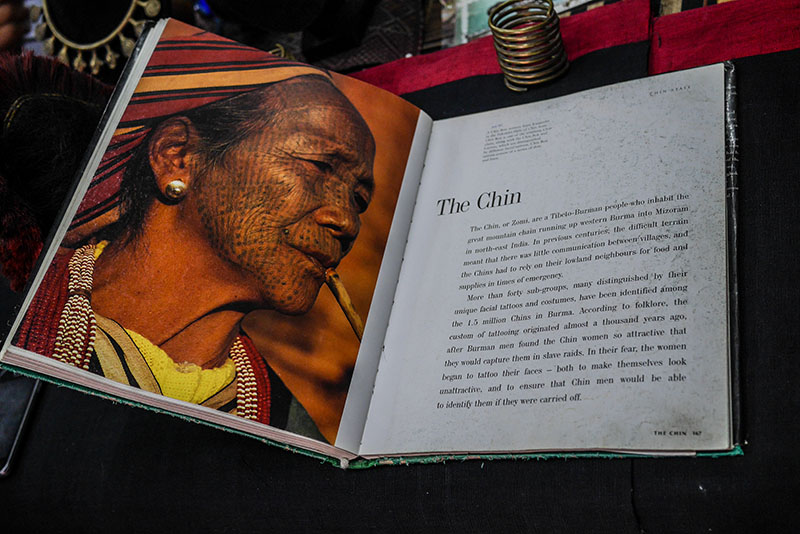
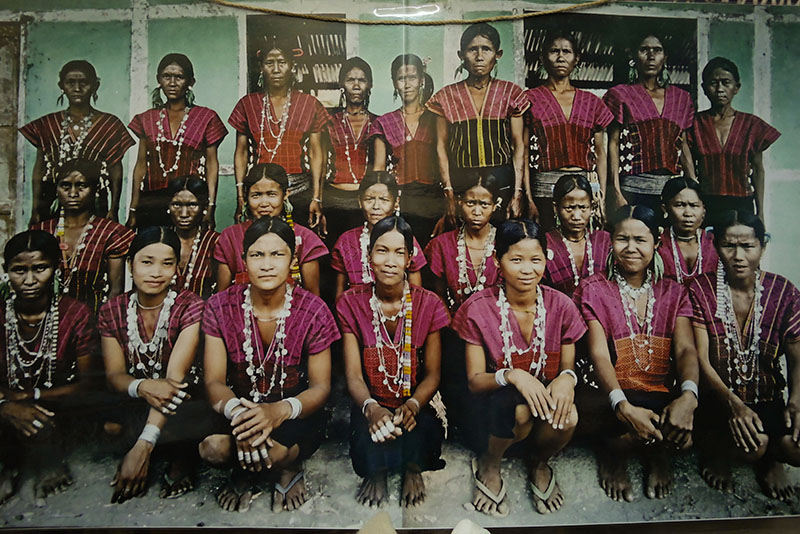
The Textured Lives of the Chin Hills

Posted: 16 Aug 2017 04:15 AM PDT

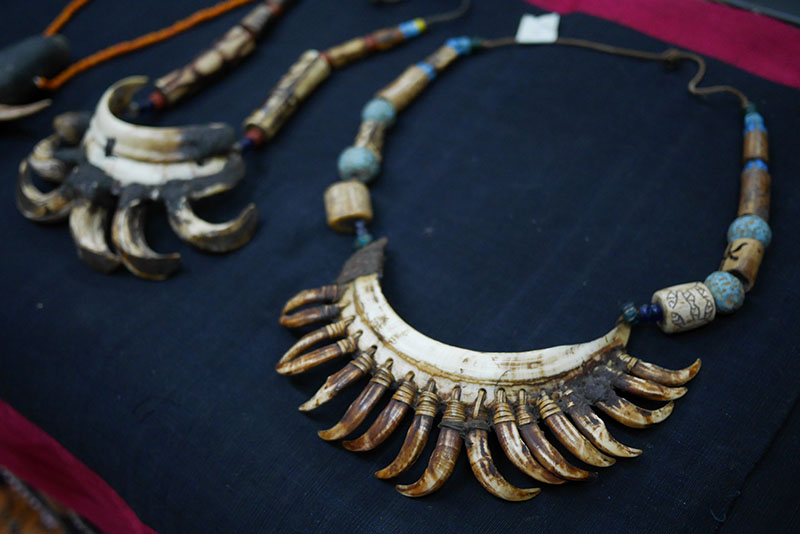
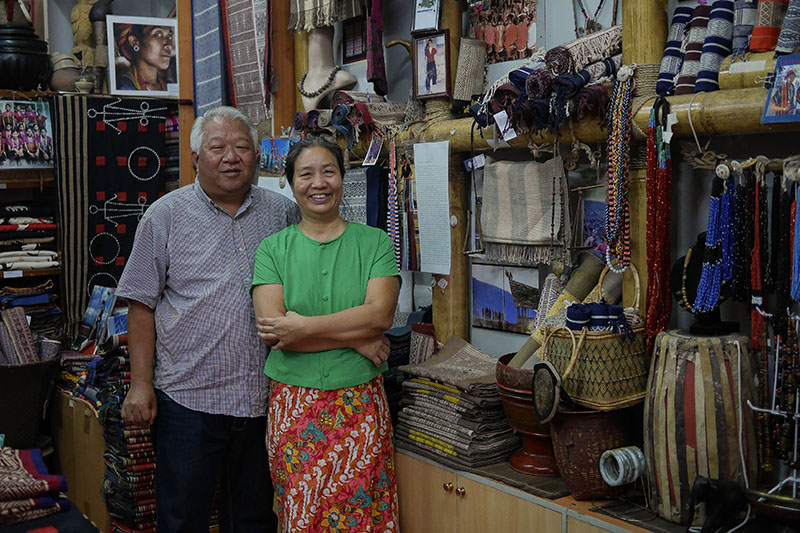
The Irrawaddy revisits this story from June 2015 about Khun Shwe and her husband Kyin Lam Mang, who have become advocates for traditional Chin crafts.

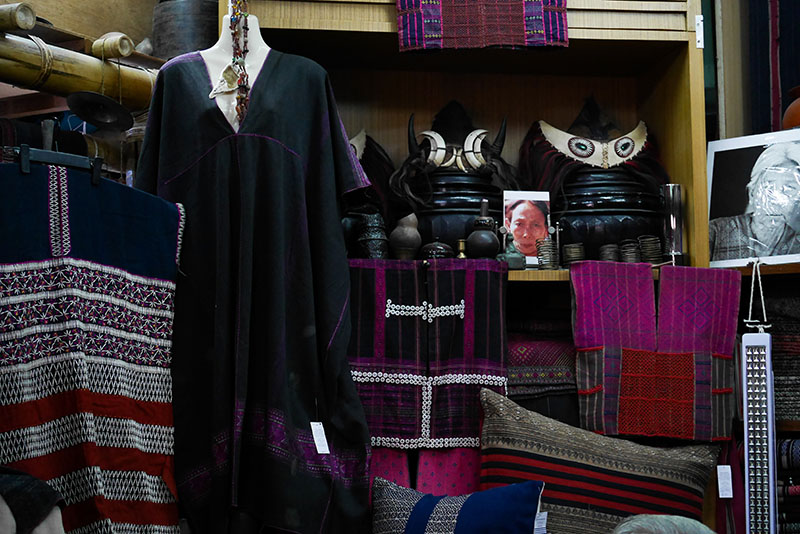
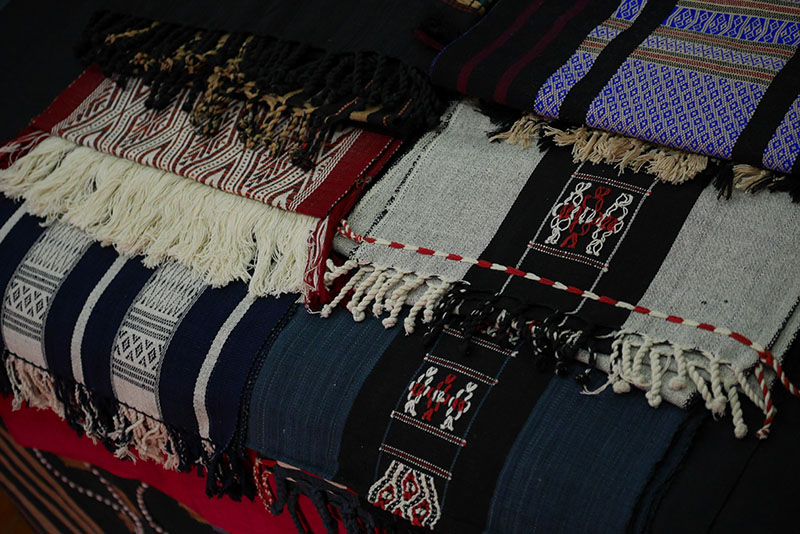
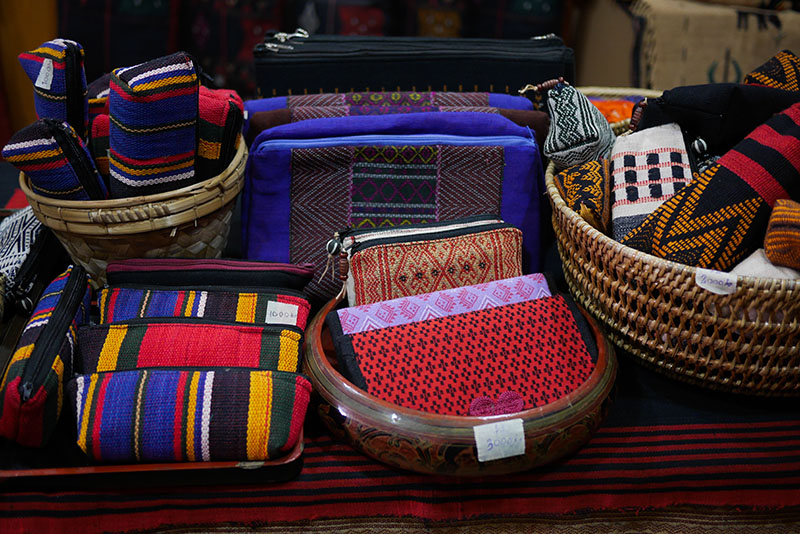
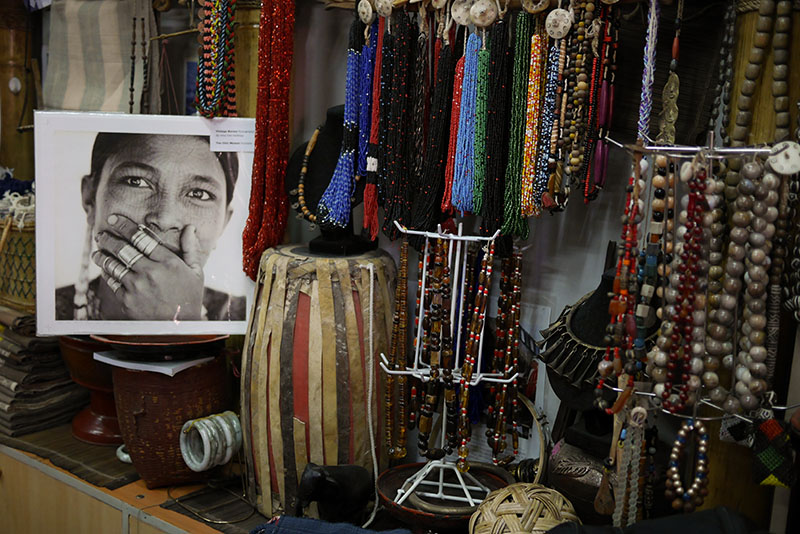
YANGON — At a sideways glance, Yo Ya May seems less a textile shop than a museum. Sitting on the first floor of Yangon's bustling Bogyoke Market, cofounders Khun Shwe and her husband Kyin Lam Mang clearly feel blessed by their success, and in the course of their lives become the city's most eager advocates for traditional Chin craft.

Their store is an undeniable labor of love.

"My children tell me, 'you are really absorbed in this job. Your soul will stay circling around the shop after you die,'" Khun Shwe told The Irrawaddy.

Founded in the 1990s, Yo Ya May has been based at the tourist hotspot since 2003, garnering praise from Lonely Planet and enjoying the dividend from the tourist boom of recent years.

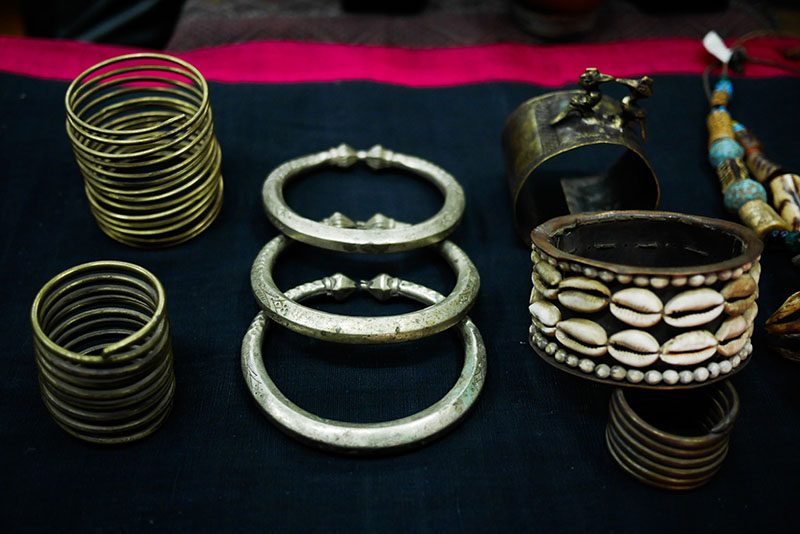
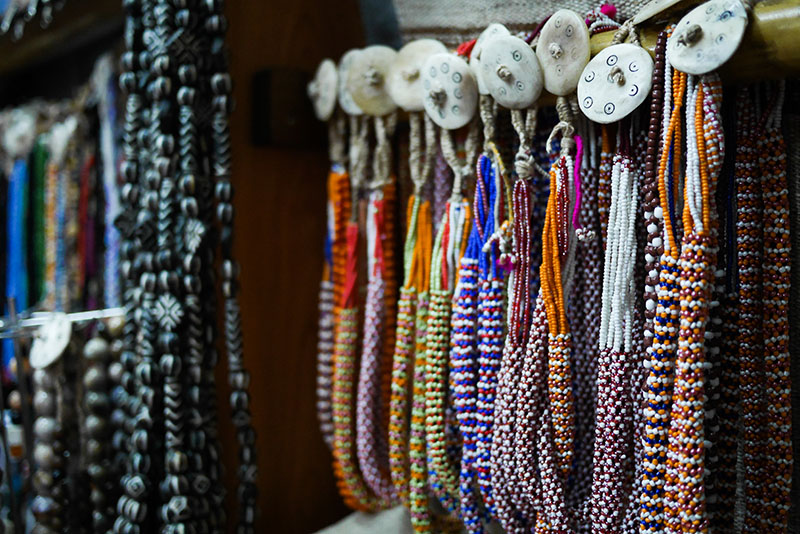
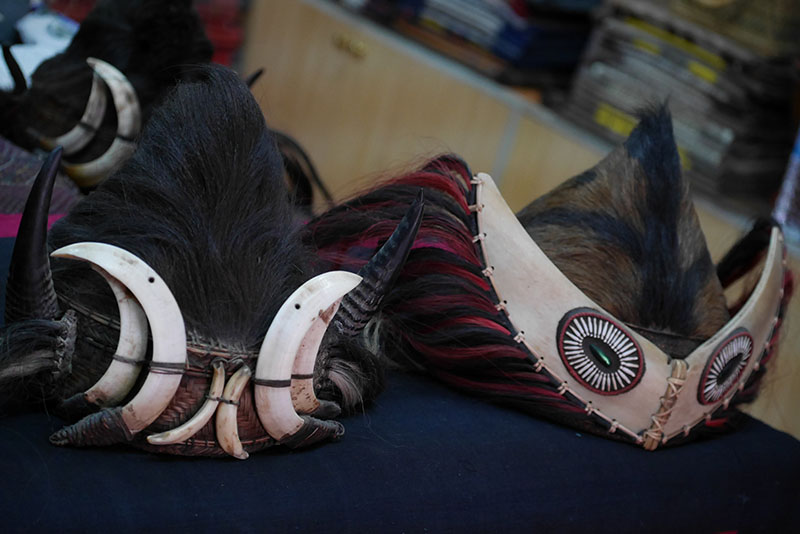
Both 56-year-old Khun Shwe and her husband hail from Tedim Township in northern Chin State, and walking into their store is a window into their world. Sitting by hand-woven dresses and fabrics are photos of women in tribal dress and a library's worth of books on ethnic weaving styles, techniques and fashions. For the women behind Yo Ya May's wares, there are no worthier ambassadors than the store's owners.

"We started this as a family business," Khun Shwe said. "We continued with pride because with our work we are able to support Chin women as well."

The mother of seven children herself, Khun Shwe said that most Chin women don't get the chance to have a formal education, with many villages in the remote mountainous state lacking even primary schools, and with most parents unwilling to send them away for their studies. In many of Chin State's most isolated communities, the women instead devote all of their efforts to craft.

"They pour all of their creativity and imagination into their weaving, that becomes their masters degree," she said.

When the business started, their stock came exclusively from the work of three elderly women from the southern Chin State township of Paletwa. Each weaved in keeping with the traditions of the Khami ethnic group, which according to Khun Shwe is the most complicated in design and technique of all local Chin styles. As demand grew with the years, Yo Ya May has expanded to take work from members of the ethnic Chin community living in Sagaing Division and Arakan State—some of whom are also trained in Naga craftsmanship—and have begun to stock the work of Kachin and Karen women. Around 100 women in all are now working for the store.

Cheery Zahau, a Chin women's rights activist who will be contesting this year's general election, told The Irrawaddy that Chin textiles are becoming more popular with higher tourist numbers, reinvigorating traditions that have until recent years been quarantined by the isolation of one of the country's least developed communities.

"The larger the market is, the better for Chin women," she said. "These women will have more income and they will be encourage to preserve their culture."

With a vast collection of vintage materials, Khun Shwe said she would like to open a museum in the future dedicated to promoting Chin culture. With most of her trade dependent on foreign buyers, she believes that more should be done to foster a local appreciation of ethnic traditions.

"It is rare for local people to come to our shops," she said. "Only foreigners buy souvenirs here. It would be better more locals knew the true value of these products."

The post The Textured Lives of the Chin Hills appeared first on The Irrawaddy.

Aung San Suu Kyi’s Free Press Dilemma

Posted: 16 Aug 2017 03:18 AM PDT

Aung San Suu Kyi is treating the press in Myanmar poorly, and that may impede her efforts to democratize the conflict-wrought country. But is Suu Kyi's apparent authoritarian streak mere caution?

Expanding civil liberties too forcefully could bait the former junta into retaking full control of the Southeast Asian nation, setting back the cause of liberty and democracy.

Prior to becoming Myanmar's State Counselor—the de-facto head of government—Suu Kyi was considered a hero among Western democrats due to her role as a leader during the 1988 uprisings against the military-run government, which resulted in her being placed under house arrest repeatedly from 1989 until 2010. In 1991, she won the Nobel Peace prize for her efforts.

Now, however, that image has been sullied. Human rights advocates and journalists are alarmed by her treatment of the media and fear the erosion of gains in freedom of speech. As Reuters reported last week, she is calling on the nation to follow state-run news reports about government activities and keeping independent media at a distance.

Foreign media are given more access her than the domestic press, but their movement in conflict zones is still sharply limited. Suu Kyi's security detail has even physically prevented foreign reporters from asking her questions.

"Despite hopes a Suu Kyi-led government would improve press freedom conditions in Myanmar, the situation for reporters has not materially improved over the previous military and military-backed regimes," says Shawn Crispin, the Committee to Protect Journalist's Southeast Asia senior representative. "It's been eye-opening for anyone who remembers her as a pro-democracy icon standing up to military power."

In 2013 Myanmar's legislature enacted the Telecommunications Law, the most controversial aspect of which is arguably the broadly-written section 66d.

Under 66d, anyone can press charges over internet, telephone, radio and television content, regardless of whether or not he or she is the subject of the content.

The maximum prison sentence for being convicted on 66d charges is three years, though fines may also be imposed. According to the free speech advocacy organization PEN Myanmar, at least 80 cases invoking 66d have been filed since the law passed; 73 of those occurred since Suu Kyi came to power in 2016.

While even some members of the media have invoked 66d, it has also been used by members and supporters of the National League for Democracy, Suu Kyi's political party. Some of the law's victims were prosecuted, and served months in prison, for making controversial comments about Suu Kyi.

There are small signs that Suu Kyi's party is beginning to reform media law. The upper house of Myanmar's Assembly, with the NLD now in the majority, approved amendments to 66d in August that would prevent third parties from pressing charges without permission from the aggrieved individual, and make it easier for defendants to obtain bail. A proposal to abolish 66d entirely, however, stalled.

It's not clear what role Suu Kyi played in trying to advance the legislation, though she was certainly involved.

Then there's the Unlawful Associations Act's section 17(1), in which even covering an event can land a journalist in jail if the government disapproves of a person or group present. While the act has been on the books since 1908, it's still wreaking havoc under Suu Kyi's pro-democracy government.

Earlier this month, three journalists were denied bail after they were detained under the Unlawful Associations Act for covering a ceremony organized by the Ta'ang National Liberation Army, the armed wing of a rebel group based in Myanmar's northeastern Shan State, in June.

Suu Kyi herself doesn't speak in direct opposition to these laws and the fallout from them, opting instead to talk in broad terms about potentially changing them. Perhaps that's because of the fragility of her country's first steps towards democracy and constitutional liberty.

The Burmese military has 25 percent of seats in the legislature and it could retake power under an emergency clause in the Constitution, which requires over 75 percent approval in the legislature to be modified. So legislators from the military can undo any progress if they think reformers have gone too far.

"The military clearly sees journalists attempting to faithfully cover stories within conflict zones and disseminate them in online media as a potential threat to national security," writes John Dale, an associate sociology professor at George Mason University and an expert on development and human rights in Myanmar, in an email.

Journalism advocates also note, however, that Suu Kyi often refrains from speaking to the Burmese press, choosing to speak only to international news outlets on occasion.

"As far as I can recall, since the election she has only done press conferences inside Myanmar when foreign dignitaries have been visiting, and she has taken a very limited number of questions," says Thomas Kean, editor in chief of the independent publication Frontier Myanmar. "She seems to see little need to engage with journalists on a day-to-day basis."

That may be partly just because Suu Kyi does not have strong historical relationships with the local independent media. During Suu Kyi's house arrest, "there was little local media beyond the government newspapers and journals and they were very hostile toward her, even extremely rude," says Priscilla Clapp, the Chief of Mission to the US Embassy in then-Burma from 1999-2002 (the US didn't have an ambassador then due to strained relations). "There is now a plethora of newspapers and journals, many with their own agendas, and I can imagine that it would be very difficult and politically tricky for her to choose which outlets to grant interviews without causing a great political uproar."

But some of her actions cannot be given such benign explanations. Her own office seems to have taken a page out of President Donald Trump's playbook by dismissing reports about her and about clashes between the military and ethnic minorities as fake, fabricated and false.

Suu Kyi spokesperson Zaw Htay did not respond to a request for comment about complaints from media and activist groups.

"I think now she and her government don't want to confront…the military," emailed Nai Kasauh Mon, editor-in-chief of Mon News Agency, a non-profit news outlet that reports on the Mon ethnic community, and spokesperson for Burma News International, an association of 13 independent news outlets reporting on Myanmar.

"While they fought for democracy, they were not afraid," he adds. "But now they are afraid to lose their power." Call it the Catch-22 of democracy promotion.

Alex Lazar is a reporter in Washington, DC covering defense and military issues. The opinions expressed here are his own. This article originally appeared in Reuters.

The post Aung San Suu Kyi's Free Press Dilemma appeared first on The Irrawaddy.

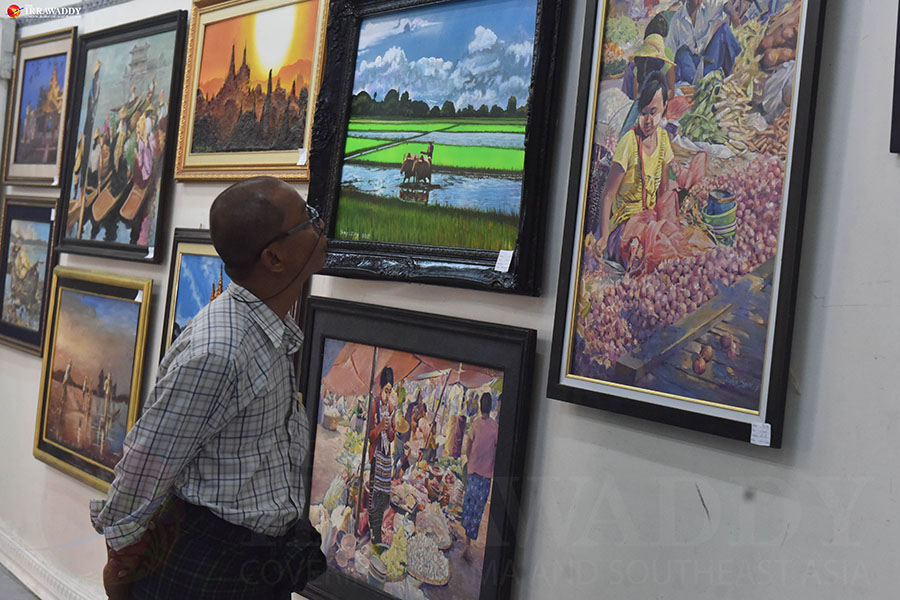
Insein Artists Exhibit Their Work

Posted: 16 Aug 2017 03:09 AM PDT

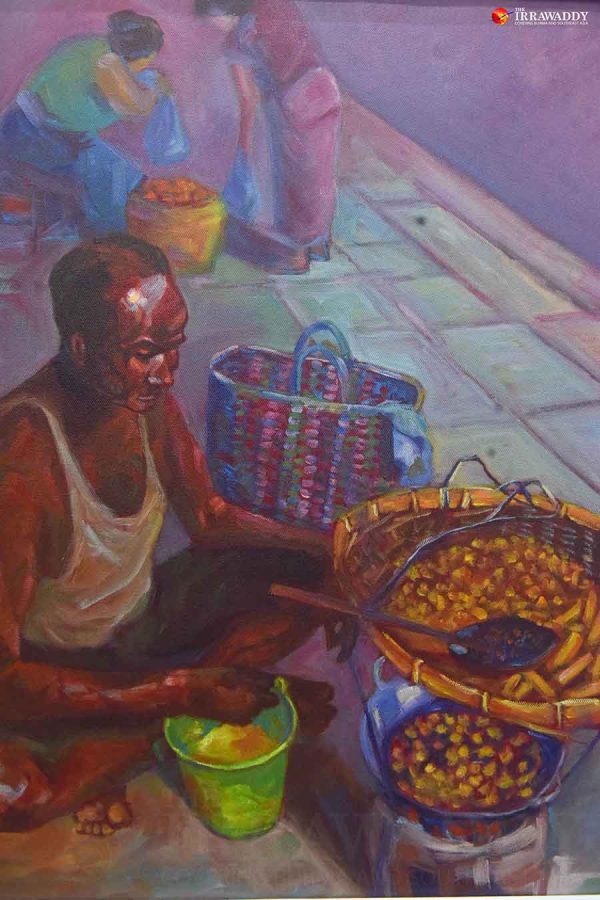
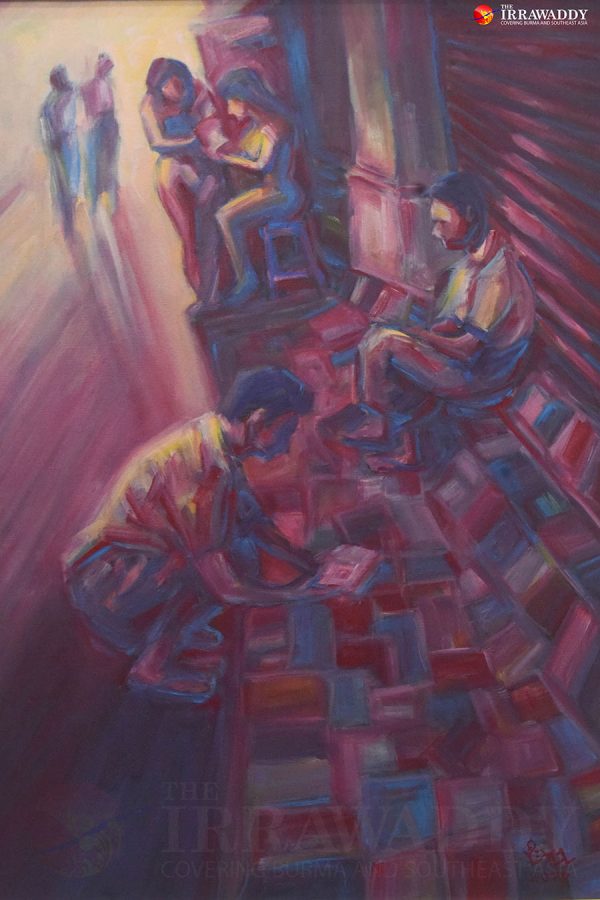
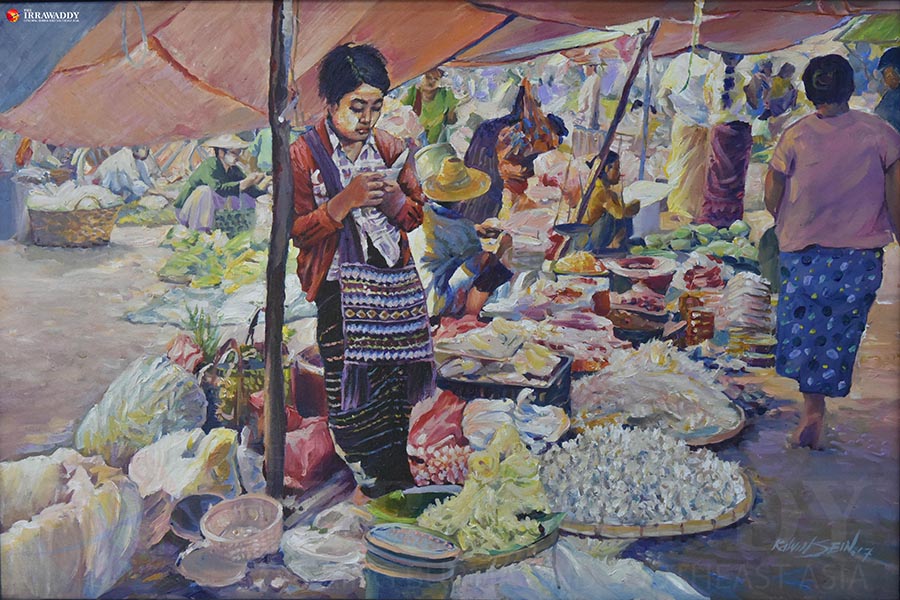
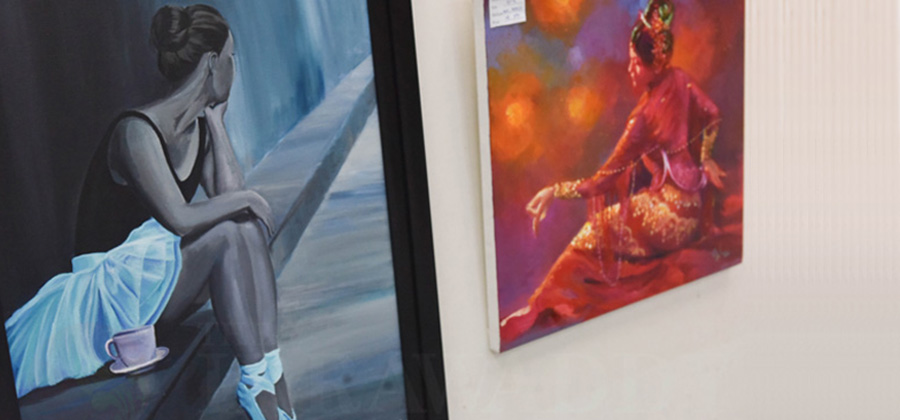
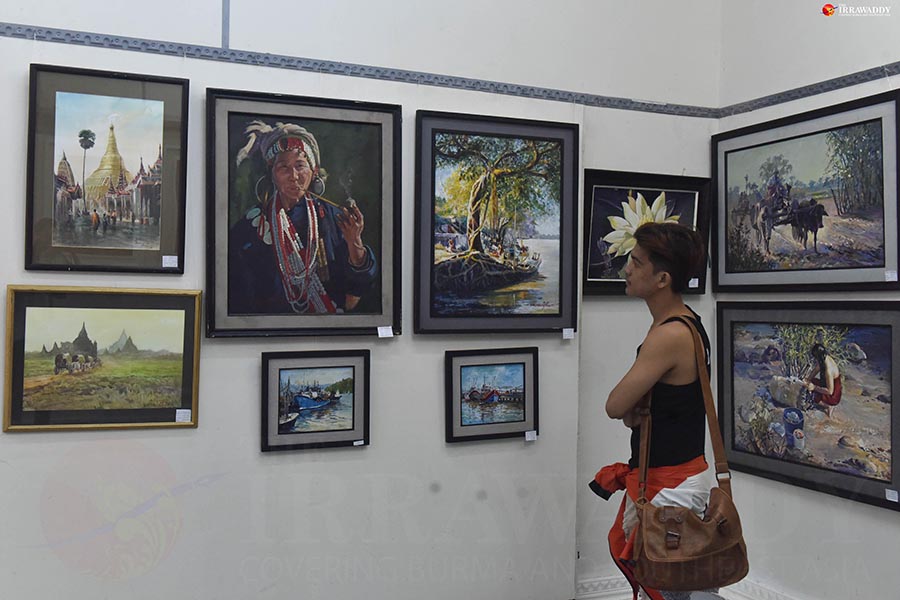
YANGON — The annual group exhibition of Insein Township artists features Yangon cityscapes, as well as culturally significant places and ethnic people from across the country.

Artist Moe Thura talked about his painting, which depicts Pansodan Road's second-hand book vendors.

"Mostly I paint everyday life—scenes from my daily life. I often go to second-hand book markets. I like the place, the atmosphere. So I put it on canvas."

One of artist Triangle Tun Naing's works is a wild flower in full bloom on a sunny day. He said he saw the flower by the roadside in southern Shan State.

"This is about freedom—a flower in the wild and in the wind.  So, I didn't even frame this painting," he said.

Modernist Nyi Tun features a nude series focused on mass and density. He said most of his paintings showcased at the exhibition were drawn from female art models.

There are more than 50 paintings from 16 artists priced between US$100 and $1,200, showcased until Sunday at Myanmar Traditional Artists and Artisans Organization (Central) in Bogyoke Aung San Market in Yangon.

Translated from Burmese by Thet Ko Ko.

The post Insein Artists Exhibit Their Work appeared first on The Irrawaddy.

Detained Student Union Member Released on Bail

Posted: 16 Aug 2017 01:24 AM PDT

MANDALAY — A court in Taungoo Township, Bago Region, released a detained student union member on bail on Tuesday.

Ko Aung Htet, a former member of the Student Union of Taungoo, was detained at Taungoo Prison in early August and faces trial under Article 505(b) of Burma's Penal Code.

"My lawyers asked the court for bail, as I need proper medical treatment. They stated that my life would be at risk if I had to wait for my trial inside a prison," said Ko Aung Htet. "The court released me on bail. Everyone was surprised. I have to thank the court for considering my health.

While in prison, Ko Aung Htet was attacked by an inmate a few days into his detention and suffered an injury to his head.

Ko Aung Htet believes that he was attacked because the other inmate wanted to be transferred to another facility. He will seek treatment at Yangon General Hospital now that he has been released on bail.

The inmate who attacked Ko Aung Htet was charged under prison law and is currently detained in an isolation cell.

Ko Aung Htet, along with another former Student Union member Ko Victor, was sued by a local lieutenant colonel of the Myanmar Army's Southern Command for traditional Thangyat songs, which they composed and sang during Thingyan Water festival in Taungoo in April. The songs advocated for the amendment of the military-drafted 2008 Constitution.

The two men are facing a lawsuit for incitement under Article 505(b), which is punishable by a maximum of two years imprisonment, a fine, or both. The article generally does not allow the accused persons to be released on bail.

"It is because we used a graphic picture of the Constitution in flames on our parade car and our shirts," said Ko Aung Htet.

"Accusing us under 505(b) shows that the army is still afraid of the abolishment or the amendment of the Constitution. We will take any risk to push for its amendment," he added.

The next court hearing for Ko Aung Htet is set for August 29. Ko Victor is still on an arrest warrant.

The post Detained Student Union Member Released on Bail appeared first on The Irrawaddy.

Thai PM to Visit White House in October: Thai Foreign Minister

Posted: 15 Aug 2017 11:20 PM PDT

BANGKOK — Thailand's prime minister and junta chief Prayuth Chan-ocha will visit the White House in October, Thailand's foreign minister said on Tuesday, adding trade and security would be on the agenda, the latest sign of warming ties between Bangkok and Washington.

Last week US Secretary of State Rex Tillerson paid a visit to Thailand—the highest level visit by a US official since the military took power in a 2014 coup.

Tillerson's trip and Prayuth's invitation from US President Donald Trump to visit the White House are the latest sign that Bangkok and Washington are re-establishing normal diplomatic relations following the coup.

"There will be discussions with President Trump about trade, investment, military security and the regional situation which is a big issue," Thai foreign minister Don Pramudwinai told reporters.

The Thai government had previously said the visit would take place in July.

A spokesman for the US Embassy in Bangkok said he had no new information on Prayuth's visit to the White House, which follows an invitation extended by Trump to Prayuth during an April telephone call between the two.

"We look forward to the Prime Minister's visit to Washington, DC. We continue to seek a mutually agreeable day for the prime minister's visit to the White House," spokesman Steve Castonguay told Reuters.

Tillerson's priority has been urging Southeast Asian countries to do more to cut funding streams for North Korea as tensions mount between the United States and North Korea.

The United States has said it believes North Korean front companies are active in Thailand and is trying to encourage the Thais to shut them down.

Tillerson, however, made no public comment on North Korean firms during his 5-hour stay in Bangkok where he met with Prayuth.

Don said the issue was not specifically raised during Tillerson's visit.

"The United States has not pressured Thailand to shut North Korea business," Don said. "The secretary's visit discussed broad issues."

The post Thai PM to Visit White House in October: Thai Foreign Minister appeared first on The Irrawaddy.

Peace in Nagaland: Myanmar and India Both Have a Role to Play

Posted: 15 Aug 2017 07:25 PM PDT

There is much talk and speculation about a new solution to ongoing peace negotiations between the Indian government and the National Socialist Council of Nagaland—Isak Muivah faction (NSCN-IM). There is also an emerging belief among many Naga that a solution to the decades-old conflict may be just around the corner—sentiments held by Naga residents on both the Indian and the Myanmar sides of the border.

This expression of hope—as auspicious at it may seem—coincides with some recent significant developments in the history of the Naga struggle for repossession of its homeland.

The Naga—under the aegis of the Government of the Peoples' Republic of Naglan (Nagalim) (GPRN)—celebrated their independence day on August 14 at Hebron near Dimapur in Nagaland, a day ahead of India's own national Independence Day. Monday also marked a year since the joint announcement made by NSCN-IM general secretary Thuingaleng Muivah and the government of India interlocutor R.N. Ravi that both sides were getting closer to a "final settlement."

The joint statement issued on August 13 last year said: "We assure the people that the talks have been progressing in the right direction with determination. We are closer than ever before to the final settlement and hope to conclude it sooner rather than later." A ceasefire agreement was signed between the NSCN-IM and the government of India in 1997 and since then there have been more than 80 rounds of talks paving the way for a "framework agreement," that was signed in August last year.

Very recently, V.S. Atem—member of the collective leadership of NSCN-IM—is said to have told a visiting Naga delegation from Myanmar that a "solution will arrive soon."

Meanwhile in Myanmar, the National Socialist Council of Nagland-Khaplang (NSCN-K) has, for the first time, made its position clear on the nationwide ceasefire agreement (NCA) that frames the Myanmar peace process. Leaders of the NSCN-K told the Myanmar government the group is willing to sign the NCA if it covers all Naga including those living across the international boundary with India. The NSCN-K has, in fact, proposed a tripartite dialogue, involving India, Myanmar and the Naga, to find a solution for peace.

Recently, the NSCN-IM General Secretary Muivah also reiterated the call for the "integration of all Naga territories." He was quoted in a report in Indian news site FIRSTPOST as saying: "The historic 'Framework of Agreement' recognizes the unique history, the identity, the sovereignty, the territories of the Naga. It also recognizes the legitimate right of the Naga to the integration of all Naga territories."

The backdrop of all this—and what perhaps assumes great significance—is the call for a tripartite dialogue involving the government of India, Myanmar and the various Naga groups on both sides of the geographical divide. Most Naga in Myanmar feel this is the best way forward as they don't believe the country's NCA addresses their needs. They desire an alternative platform that addresses the key issue of Naga Homeland, according to Muivah.

Similar views were expressed by Athong Makury, the president of the Council of Naga Affairs, in a recent interview. According to Makury: "Tripartite dialogue is a must in order to solve this conflict. We are also observing the situation on both sides. There are many capable people who can lead this. Also, India as a big nation with a long history of democracy should take initiative on this. It is an opportunity for India."

Young leaders like Makury certainly see merit in a joint dialogue involving all the different stakeholders, as they feel that a peace process only involving the Government of India and the NSCN-IM is not sufficient. Though he is confident that "uncle" Muivah will not give up on the sovereignty issue, he is also wary of the lack of transparency of the agreement. He sees no logic in a Naga solution if it's one-sided—meaning without taking into account the larger aspirations of all Naga. "If they are going to solve the conflict in accordance with imaginary boundary lines, it will be a fatal blunder," Makury cautioned.

Displays of optimism among Naga residents on both sides of the border are rarely felt, perhaps because most Naga view the peace process with much skepticism and the content of the framework agreement between New Delhi and NSCN-IM is still unknown. Even if the framework agreement is made known, will it answer questions regarding the integration of Naga-inhabited areas in Arunachal Pradesh, Assam, Manipur in India and some areas of Myanmar—areas considered to be the rightful homeland of the Naga? Local ethnic groups of states bordering Nagaland in India have vehemently opposed the idea of a Greater Nagaland by incorporating the Naga-inhabited areas of those states.

The pre-conditions put forth by NSCN-K to sign the NCA certainly give the Naga homeland issue a new dimension. The NSCN-K has been fighting with the Indian government but it has rarely come to blows with the Myanmar Army. A bilateral agreement between Myanmar's government and the NSCN-K signed in 2012 allows the outfit to keep arms and to freely move unarmed personnel within Myanmar. The organization was allowed designated military camps in the Naga Self-Administered Zone, which includes Lahe, Leshi, and Namyun townships in Sagaing Division.

Even though the chance of a conflict with the Myanmar military is remote, the issue of territorial integrity for the Naga is supremely important, and declared widely on social media. The eastern Naga hold on to their history and text "rejecting the division of the Naga homelands" in the Anglo-Burmese Yandabo Treaty of 1826, and later in 1953 under the India-Myanmar demarcation of Naga territory by prime ministers Pandit Jawaharlal Nehru and U Nu.

Like most ethnic armed organizations in Myanmar, the Naga opposed the country's military-drafted 2008 Constitution, which they claimed "badly damaged and sliced" Naga territories into pieces. A Facebook post by the Naga in Myanmar (Eastern Naga) states: "The hill townships, Lahe, Leshi, and Namyun, were given as a Naga Self-Administered Region but not Hkamti, Homalin and Tamu townships, which now fall under Sagaing Division. This was done by the junta without the consent of the Naga public. The military knew it belonged to the Naga but intentionally annexed major parts of the Naga territory into their fold. It is a deliberate human rights violation [against] the Naga!"

The issue of integration of Naga-inhabited areas has proven to be extremely sensitive on the Indian side of the border and could throw up similar challenges on the Myanmar side. It is hard to forget the June 2001 violence in Manipur's Imphal Valley, in which protests and riots broke out over an extension to a ceasefire between the government and Naga forces.

It remains to be seen how the concept of "shared sovereignty" plays out in reality. On August 14, 2015, speaking at Hebron, Muivah claimed that it was "clearly stated in the agreement that both sides respect the people's wishes for sharing sovereignty," adding that, "We have to work out to what extent to share our rights to sovereignty."

On the Myanmar side of the Naga story, the big question is whether the same concept of a shared sovereignty applies to the tripartite dialogue—if and when it happens.

It may be too early to comment, but recent developments in the Indian government's framework agreement—which is expected to provide a possible solution—and the call for a tripartite dialogue by the NSCN-K certainly are certainly positive steps going forward.

Bidhayak Das is a veteran journalist who has also spent more than a decade working on promoting democracy in Myanmar. He is currently working as an independent consultant on elections, media and communications.

The post Peace in Nagaland: Myanmar and India Both Have a Role to Play appeared first on The Irrawaddy.

Questions Raised About $300 Million Downtown Development Project

Posted: 15 Aug 2017 06:46 PM PDT

YANGON — Land clearing and demolition for a project worth more than US$300 million on the former site of a Defense Services Museum, near Shwedagon Pagoda, has prompted a lawmaker to inquire about the initiative in the upcoming parliamentary session.

U Kyaw Zay Ya, a Yangon regional lawmaker representing Dagon Township—where the site is located—told The Irrawaddy that the scale of the project on a nine-acre plot of land attracted his attention.

The lawmaker said that in the upcoming legislative session on Aug. 31, he would ask the government about the project details, which have not yet been made public. The project is the first such undertaking granted permission for investment under the new Myanmar Investment Law.

He also pointed out that some of his constituents were unhappy with the new project, which includes the construction of a hotel on the site where Jubilee Hall, once a landmark in country's struggle for independence from British colonial rule, was located.

In the 1970s, the historic building was demolished to make way for the Defense Services Museum, which has since moved to Naypyitaw.

In 2011, the government announced plans to privatize land in Yangon, including state-owned colonial heritage buildings and military-owned land. Most of the areas were handed over to well-connected companies, while critics pointed to a lack of transparency in the selection and leasing processes.

The Irrawaddy has learned that the development project at the former Defense Services Museum was first approved under previous U Thein Sein-led government. The local Ayeyar Hinthar Holdings Co. Ltd. initially won the tender announced in December 2011, for developing and operating a hotel, offices and service apartment, and a shopping mall.

Ko Ne Ne Hlwam Moe, vice chairman of Ayeyar Hinthar, told The Irrawaddy on Tuesday that the company signed a leasing contract in 2013 with the government for 50-year terms with two 10-year extensions.

"Since 2013 we have been paying annual land use fees of US$2 million to the government," he added.

But according to written correspondence seen by The Irrawaddy from the Yangon Region government to the company in January this year, the owner of the land in question is mentioned as the Ministry of Defense.

Later, the company partnered with the Japanese companies Fujita Corporation, Tokyo Tatemono Co. Ltd, and Japan Overseas Infrastructure Investment Corporation for Transport & Urban Development (JOIN). The Myanmar Investment Commission granted investment permission for the joint venture in May 2017.

Under the joint venture, they will develop a nine-floor five star hotel operated by Japan's Hotel Okura Co. Ltd., as well as offices and commercial facilities.

A depiction of the project as it is supposed to look upon completion. (Photo: Supplied)

The total cost of the project is expected to reach $332.5 million, with construction to start at the end of 2017 and be completed by 2020, according to the vice chairman of Ayeyar Hinthar.

"It is a more than a $300 million investment in Myanmar. A nice project will be developed in this place. Many job opportunities will come and the government will get around $170 million in profits from leasing," Ko Ne Ne Hlwam Moe said.

He said they are now doing a traffic impact assessment, as the Yangon City Development Committee is curious about how the project will impact the gridlock of the city.

The post Questions Raised About $300 Million Downtown Development Project appeared first on The Irrawaddy.

National News

National News


Teachers to continue ‘blue ribbon’ campaign

Posted: 15 Aug 2017 02:30 PM PDT

Teachers from Mandalay Technical University said they will continue to hold "blue ribbon" campaign until authorities meet their demand for a fair and more stable promotions policy, a senior teacher said on Monday.

Myanmar workers file complaint against S. Korean supervisors

Posted: 15 Aug 2017 02:21 PM PDT

A group of Myanmar construction workers in Seoul, South Korea, filed a police complaint against their three Korean supervisors for rude and abusive behavior, one of the workers told The Myanmar Times on Tuesday.

Yangon government takes first move to bring Reuters to court

Posted: 15 Aug 2017 02:17 PM PDT

The Yangon government has filed a complaint against international news agency Reuters before the Myanmar Press Council over a report about the alleged lack of transparency in the procurement of buses, a senior member of the council said Tuesday.

Checking defence spending not our job, says Auditor General

Posted: 15 Aug 2017 02:15 PM PDT

The Union Auditor General Office does not audit defence expenditures as it is under the Controller of Military Accounts, Union Auditor General U Maw Than told the Pyidaungsu Hluttaw on Tuesday.

Tatmadaw to continue clearing out illegal mines in Tanai and Hpakant

Posted: 15 Aug 2017 01:57 PM PDT

The Tatmadaw needs to continue military operations in Tanai and Hpakant in Kachin State to bring peace, order and stability in the area and put an end to illegal amber and gold mining, according to a proposal of three Tatmadaw MPs to the Pyithu Hluttaw.

Hackers attack e-Mandalay Web Portal, but no damage done

Posted: 15 Aug 2017 01:48 PM PDT

Hackers attacked the e-Mandalay web portal since it was launched on July 20 but did not leave damage to the website, according to U Sai Kyaw Zaw, chair of the portal's implementation committee.

Traffic deaths rising in Mandalay

Posted: 15 Aug 2017 01:44 PM PDT

The number of deaths due to car crashes has been increasing in Mandalay city, according to the data of the region's traffic police force.

Shan Herald Agency for News

Shan Herald Agency for News


RCSS/SSA to return detained soldier to Tatmadaw

Posted: 15 Aug 2017 10:05 PM PDT

The Restoration Council of Shan State/Shan State Army (RCSS/SSA) says it will return a Burmese soldier who was apprehended earlier this week during a clash in Mong Kung Township, southern Shan State.

Gen Yawd Serk, the chairman of the Restoration Council of Shan State/Shan State Army (RCSS/SSA).

Gen. Yawd Serk, the chairman of the RCSS/SSA, told Shan Herald that the arrested soldier will be handed over to the Burmese army. He said that his group had reported the case to Shan State's Joint Monitoring Committee (JMC), which was formed to monitor both government forces and ethnic armed groups in accordance with the terms of the Nationwide Ceasefire Agreement (NCA) signed on October 15, 2015.

"This arrested soldier is from Bago Township," he said. "We are in the process in transferring him back to the Tatmadaw [Burmese army]."

Fighting between RCSS/SSA and Burmese army Infantry Battalion 577 broke out in Wan Mong village tract in Mong Kung Township on August 13.

On October 5, 2016, Shan Herald reported that clashes between two groups broke out in Mong Kung Township, a RCSS/SSA stronghold, when a Burmese unit overran an RCSS/SSA rehabilitation center. The hostilities compelled more than 2,000 civilians to flee their homes.

The RCSS/SSA is considered one of the strongest ethnic armed groups in Burma. Despite the ceasefire accord, it has clashed more than 20 times with Burmese government forces since the signing of the NCA with the then President Thein Sein administration.


By Shan Herald Agency for News (SHAN)

Tuesday, August 15, 2017

The Irrawaddy Magazine

The Irrawaddy Magazine


Karen Women Wary of Return to Myanmar

Posted: 15 Aug 2017 08:23 AM PDT

Naw Kwut was a young Karen woman when she stepped on a landmine and lost her right leg while she was forced to act as a porter for the Myanmar Army 20 years ago.

"We were treated badly. They asked us to do everything for them," she said, recalling her experiences in the jungle. She grew up in a village controlled by the Karen National Union (KNU)'s Brigade 1, in Thaton, Mon State.

Naw Kwut is one of the many women who survived the conflict, along with suffering torture and human rights abuses by Myanmar military troops. She fled to KNU-controlled territory on the Thailand-Myanmar border to seek help after losing a limb.

Now 45 years old, the mother of four children is working to help other disabled people. She worries about her children's safety and education if she is to return to her village.

"I will not go back yet. People say we have peace, but there is neither peace nor tranquility for us," she said, adding that many disabled people and their families share her concerns.

'No Peace in the Jungle'

Even though there has been no engagement between the KNU and the government army in KNU-controlled territory for a few years, the women in those areas feel that there is no security for them to be able to return to their homes.

The KNU signed a bilateral ceasefire agreement with the government in 2012 and the nationwide ceasefire agreement (NCA) in late 2015. It is a leading ethnic armed group – along with NCA-signatory the Restoration Council of Shan State (RCSS) – negotiating with the government and the Myanmar Army to build federalism through the peace process.

The KNU has been conducting pilot surveys in areas where displaced persons and refugees are slated to return. But demining efforts have yet to start and land redistribution remains a challenge.

"It may be true that there is peace for those who live in the cities, but there has never been peace for people in the jungle and remote villages," said Naw Kwut.

Naw Myaing Poe, the chief justice of the KNU, echoed her concerns. She said the area is not safe and that it is important that women look out for themselves.

KNU Chief Justice Naw Myaing Poe, Aug. 12, 2017. (Photo: Nyein Nyein / The Irrawaddy)

Helping Others

Many women are no longer hoping that men will provide security and are preparing themselves. Some have joined the KNU in an effort to learn self-defense skills in case of further attacks or conflict.

One such woman is Nan Cho Cho Win, a villager in her young twenties from the Irrawaddy Region. She is a medic trainee in a community health program run by the KNU, where she and other women learn how to provide medical treatment, along with receiving basic military training.

She said it doesn't feel as though there is peace and that the whole country seems to be in a fragile state.

"I joined so that I could help others without access to healthcare. And knowing defense techniques will prepare us in case of future clashes."

The KNU also trains people from other ethnic groups who are keen to learn. Laydeya is an ethnic Naga woman who is training to be a medic. She is preparing to take her knowledge back to Naga territory.

"I came to learn because the Naga region faces many disease outbreaks as well as clashes," she said.

Regarding the current peace process, she is less aware of it, but said she wants "peace between all ethnic groups."

Women, Leadership and Peace

In the past, when Karen men were targeted for persecution under the allegation of supporting the Karen resistance, Karen women served as village heads and protected their people, despite lacking formal security training.

Karen State now has more female village heads than other areas around the country, according to a United Nations Development Program research study in 2015.

But in peace negotiations, men largely outnumber women in delegations representing the government and ethnic armed groups.

Women's views need to be heard during peace negotiations, said Naw Myaing Poe.

"These women village heads would be happy to come to the table if they were invited. It's sad that they aren't, even after putting their lives at risk throughout our struggle," she added.

The post Karen Women Wary of Return to Myanmar appeared first on The Irrawaddy.

USDP-Led Coalition Calls on Govt to Reject Rohingya Ethnicity

Posted: 15 Aug 2017 07:14 AM PDT

YANGON — A coalition of 20 political parties led by the Union Solidarity and Development Party (USDP) called on the Myanmar government to declare to the international community that there is "no Rohingya ethnicity" in the country.

Party representatives—largely from minor groups currently unrepresented in Parliament, including the Democratic Party Myanmar, National Democratic Force, and the National Development Party—discussed issues in northern Rakhine State on Monday at the USDP head office in Yangon. After the talks, they signed the statement, which contained four demands: improve general security in the region, provide increased security for government staff, enforce the 2014 counter-terrorism law, and reject the term "Rohingya" to describe a population of more than 1 million Muslims.

The self-identifying Rohingya are widely labeled throughout Myanmar as "Bengali," implying that they are immigrants from neighboring Bangladesh, rather than belonging to Rakhine State.

The United Nations High Commissioner for Refugees estimated in May that 168,000 Rohingya had fled violence and persecution Myanmar in the last five years, mostly seeking refuge in Bangladesh and Malaysia. Most recently, following militant attacks on police outposts in October 2016, Myanmar security forces carried out clearance operations in Rakhine State, displacing nearly 70,000 Rohingya to Bangladesh.

Myanmar State Counselor Daw Aung San Suu Kyi has been criticized for not speaking out on behalf of the group, and has previously labeled both the terms "Rohingya" and "Bengali" as "emotive." She told UN Special Envoy for Human Rights in Myanmar Yanghee Lee in June 2016 that these "controversial terms should be avoided."

Speaking to The Irrawaddy on Tuesday, USDP central executive committee member U Hla Thein chastised the international community for "complaining about human rights violations to the government" while "ethnic Rakhine and members of the security forces are being killed by militant terrorists."

In early August, seven ethnic Mro—a sub-ethnicity of the Buddhist Arakanese in the region—were found dead of gunshot and machete wounds in the Mayu mountains of Maungdaw Township in northern Rakhine State. While no one has been arrested for the murders, local sources have said they suspect militants active in the borderlands of committing the murders.

Hundreds of troops were deployed to Rakhine State last week after a meeting between military commander-in-chief Snr-Gen Min Aung Hlaing and a seven-member delegation from the Arakan National Party (ANP) in Naypyitaw.

The Irrawaddy reported on Monday that the Myanmar military gave a verbal order to villagers in the state's northern townships to avoid entering the Mayu mountains for any reason, in order to "avoid fatalities" while they conduct clearance operations in the area.

U Hla Thein told The Irrawaddy that the recent mission "was not enough, if further attacks potentially happen in the area."

The post USDP-Led Coalition Calls on Govt to Reject Rohingya Ethnicity appeared first on The Irrawaddy.

Yangon Chief Minister Files Complaint Against Reuters

Posted: 15 Aug 2017 04:35 AM PDT

YANGON — Yangon Region Chief Minister U Phyo Min Thein filed a complaint against wire news agency Reuters on Monday over an article about his regional government's deal to import buses from China, Myanmar Press Council told The Irrawaddy.

The article, published on August 6 under the headline "Suu Kyi's man in Yangon under fire over transit deal with China," questioned the transparency and accountability behind two deals, estimated at more than US$100 million, according to the report.

U Aung Hla Tun, one of the two vice chairpersons of the Myanmar Press Council, told The Irrawaddy on Tuesday that the council received the complaint letter from the chief minister on Monday and would inform Reuters about the complaint on Tuesday in order to mediate the case.

The chief minister told the council the article was factually incorrect and Reuters had failed to verify the article's information with him, said U Aung Hla Tun, adding that the council could not disclose any further details about the complaint.

Reuters, however, stated in its report that U Phyo Min Thein "declined several interview requests from Reuters" regarding the story.

The move will be the second incident in which the Yangon chief minister has filed complaint against a news organization. In November of last year, U Phyo Min Thein filed a case with the Tamwe Township police station and a complaint to the Press Council against Eleven Media Group and its chief executive officer Dr. Than Htut Aung, for an alleged accusation in the paper's editorial that he had accepted a bribe.

The article quoted Yangon National League for Democracy (NLD) lawmaker U Kyaw Zay Ya as saying U Phyo Min Thein's government lacks transparency and the "image of the government would be damaged if he doesn't change."

In late April, Yangon planning and finance minister U Myint Thaung said at the regional legislature that Yangon Bus Public Company (YBPC) purchased 1,000 buses from two Chinese companies selected and endorsed by the Chinese ambassador to Myanmar at a total cost of US$56 million.

New Chinese-made buses at People’s Square in front of Shwedagon Pagoda in Yangon. / Photo: Thet Tun Naing / The Irrawaddy

Another 1,000 buses were bought from Beiqi Foton Motor Co. Ltd., another Chinese state-owned company, in a private deal by businessman Kyaw Ne Win, a grandson of former junta leader Ne Win, reported Reuters.

There was no public tender or debate in the regional legislature before the deals were agreed, added the report.

YBPC is a public-private joint venture majority-owned by the regional government, one of the many companies which services the government's Yangon Bus System (YBS).

The ambassador "guarantees" the quality of products and the price of vehicles are "reasonable," U Myint Thaung told the parliament.

The two chosen firms were Anhui Ankai Automobile Co. Ltd. and privately-owned Zhengzhou Yutong Bus Co. According to the Reuters' report, the former is state-run and the latter is led by a member of China's National People's Congress.

Dr. Maung Aung, secretary of the Yangon Region Transport Authority (YRTA), the regional government body that oversees the bus system, told The Irrawaddy in January that a government-to-government deal would make the process faster as the city was in short supply of buses.

Dr. Maung Aung was not available for further comment at the time of reporting.

In an email to The Irrawaddy regarding the chief minister's complaint, a Reuters' spokesperson said, "Reuters stands by the fairness and accuracy" of the story.

The regional government requested 70 billion kyats in the 2016-2017 fiscal year's re-budgeting process, saying that the large sum was to be spent on public transportation reform in the commercial capital.

The post Yangon Chief Minister Files Complaint Against Reuters appeared first on The Irrawaddy.

The Khaki Guardians of The NLD

Posted: 15 Aug 2017 04:04 AM PDT

YANGON — When they received an ultimatum from the Union Election Commission (UEC) in December 1991, both the National League for Democracy (NLD) acting chairman U Aung Shwe and secretary U Lwin faced a dilemma. They were told to expel Daw Aung San Suu Kyi from the party or dismantle the NLD. The reason, according to the then military regime, was her connection with armed insurgent groups and the receipt of aid indirectly from abroad.

With Daw Aung San Suu Kyi and NLD chairman U Tin Oo under house arrest at the time, it was a hard choice for U Aung Shwe. He didn't want to see the party shut down under his leadership. So, he followed the UEC order and faced serious criticism from NLD sympathizers at home and abroad. To the junta's delight, party members were divided on the issue, as the chairman also made a series of follow-up expulsions, including U Tin Oo, from a list handed down by military rulers. Mass resignations followed. On the other hand, the party still legally existed, at least. U Aung Shwe said he acted as he did for the party's survival.

U Aung Shwe. / The Irrawaddy

After Daw Aung Suu Kyi and U Tin Oo were released from house arrest in 1995, the pro-democracy icon resumed her position as NLD general secretary while U Tin Oo assumed the role of vice chairman. Daw Aung San Suu Kyi once described U Aung Shwe and U Lwin, a former colonel and the father-in-law of current President U Htin Kyaw, as the "guardians" of the NLD's survival while the party was under fierce pressure and threats from authorities.

With the death of U Aung Shwe, the 99-year-old ex-brigadier general, on Sunday, the party has lost its second to last guardian. U Kyi Maung and U Lwin died in 2004 and 2011, respectively, and only U Tin Oo, the former general, is still alive. But he was admitted to the hospital in May after suffering a stroke. He is now 90.

Ironically, despite its long defiance against military rule in the country, all four of the NLD guardians served in the army. They joined as young men, and some fought against the British and Japanese for the country's independence. They served as general, brigadier and colonel until they were forced to retired by the then dictator Ne Win after he came to power in 1962.

Since the NLD formation after the popular uprising in 1988, they joined the party as members of the Patriotic Old Comrades League—one of three founding factions of the main opposition party. In spite of being initially being regarded as turncoats, history has proved that they were caretakers of the party who managed to keep the NLD going, especially in the 1990s and 2000s when the military regime tried its best to quash the party. They are politically humble NLD supporters and followers of Daw Aung San Suu Kyi who never took credit for their actions. The Lady knows this.

When Daw Aung San Suu Kyi and U Tin Oo were first put under house arrest in 1989, U Kyi Maung, a former colonel, took over the leadership of the party and helped steer it to its landslide victory in the 1990 election while empowering the party's youth. But a few years later, he fell out with Daw Aung San Suu Kyi and in 1997, he quit politics altogether.

U Tin Oo, Daw Aung San Suu Kyi and U Kyi Maung in Yangon, June 1996. (Photo: Uzo Uda)

The NLD faced another life-or-death situation in 2010 while the Lady was under house arrest again: register for the military-organized general election or face extinction, as the regime would no longer deem the party legally valid.

U Tin Oo, the vice chairman, decided against taking part in the election, citing the election laws as unjust. When a vote was held on whether or not to join, his faction won. The election turned out to be rigged and the NLD still enjoyed popular support despite its refusal to register for the polls.

U Tin Oo.

Controversial Figures

For all of their top positions since the formation of the NLD, the guardians didn't easily win the hearts and minds of the majority of party members.  Their military backgrounds didn't impress the party's young membership, as they had joined the NLD out of hate after their bitter experiences during the army's bloody crackdown in the 88 Uprising.

"We only thought of Daw Aung San Suu Kyi as our leader. For us, they were from the Patriotic Old Comrades League. We didn't see them as among us," recalled Ko Zaw Aung, who was then a member of the NLD Central Youth Working Committee.

He remembered that their youth members were rarely patient with the older members at meetings as "they always took everything into consideration."

When U Kyi Maung became the chairman in 1989, they welcomed him cautiously. They once frustrated their new leader at a meeting by calling him a turncoat. The ex-colonel was mad enough to slam the table in front of him, the former youth member said.

"But later, he built trust among young people by empowering them—which led to the NLD's victory in the 1990 election," he explained.

Monywa Aung Shin, the editor of the party's newspaper D-Wave, called U Aung Shwe a good leader despite controversies around him for expelling Daw Aung San Suu Kyi.

"He took a flexible, defensive line that kept our party alive amid the junta's oppression. He knew when to move forward and when to retreat," he said.

"Both U Aung Shwe and U Lwin calmly managed to move the party forward," he added.

Chairman U Aung Shwe, Secretary U Lwin,  and other NLD Central Executive Committee members (R to L) at the 59th Anniversary of their Independence Day at the party headquarters in Yangon in Jan, 2007. / REUTERS

Ko Zaw Aung couldn't agree more with what Monywa Aung Shin said. The 48-year-old social researcher told The Irrawaddy that when he learned about the expulsion, he was upset and thought, "How dare they do that."

But later, he realized it was for the party's survival. And there was good reason to believe so.

When Daw Aung San Suu Kyi and U Tin Oo were released in 1995, many thought U Aung Shwe would be punished for the expulsions.

But on their first meeting, the ex-brigadier general told the Lady: "Suu Suu, I hand the party back to you."

To many people's surprise, Daw Aung San Suu Kyi replied, "It's OK, Uncle. Let's work together as we did before."

The junta's plan to divide the NLD proved to be fruitless.

Setting Good Examples

Despite the initial controversies that they brought, nobody can deny the fact that the guardians were men of vision who understood what they needed to do to move the party forward while standing at the forefront of Myanmar's struggle to democracy.

"The current military leaders should learn how their seniors led toward the country's democracy movement," Ko Zaw Aung said.

He added, apart from learning, they should collaborate more with Daw Aung San Suu Kyi for democratic transition.

"If they do, the army will go down in history for their graceful participation in the country's reform."

The post The Khaki Guardians of The NLD appeared first on The Irrawaddy.

Myanmar Govt to Send Special Envoy to UN

Posted: 15 Aug 2017 02:47 AM PDT

NAYPYITAW — The Myanmar government will dispatch a special envoy to be stationed in New York where the UN is headquartered to explain the Rakhine issue to the international community, said U Kyaw Zeya, permanent secretary of the Ministry of Foreign Affairs.

He mentioned the plan in response to The Irrawaddy's question during the Asean 50th anniversary celebration in Naypyitaw on Monday.

"We met concerned directors-general and explored ideas. We've made proper preparations to assign a separate body," said U Kyaw Zeya.

The Rakhine issue calls for cooperation and coordination among all ministries to find an answer, he said.

"We can't shift the responsibility to each other. We have difficulties handling this issue but we'll try to achieve success by working together. Not only our foreign ministry, but other agencies are also working to find a solution," said U Kyaw Zeya.

On July 24, Daw Thandar, a well-known human rights activist and National League for Democracy (NLD) lawmaker, submitted an emergency proposal to the Lower House to condemn UN Special Rapporteur for Human Rights in Myanmar Yanghee Lee's end-of-mission statement after concluding her recent visit to the country on July 21.

Lee said she was "disappointed to see the tactics applied by the previous government still being used," and that she would "strongly urge the government" to allow an international independent body to investigate allegations of rights abuses particularly in Rakhine State, and in conflict regions in Myanmar at large.

Daw Thandar's proposal was unanimously approved by the parliament. Daw Pyone Kaythi Naing, an NLD lawmaker from Shan State's Kalaw, additionally proposed sending a special envoy to the UN to counter international allegations and provide briefings outlining Myanmar's legislative perspective on the situation in Rakhine State.

She told The Irrawaddy that Myanmar's government was only able to respond after international agencies make allegations, and that the government should take the initiative to explain the situation to the UN first.

Daw Pyone Kaythi Naing, who is also a member of the Lower House International Relations Committee, has consistently promoted the idea of sending a special envoy to the UN whenever there has been parliamentary debate on issues in Rakhine State.

"We are in a defensive position, while the other side has disseminated widespread propaganda in the international community," she told The Irrawaddy.

"The government should send a special envoy—a respected figure with diplomatic expertise—to the UN to counter it," she added.

The State Counselor's Office announced on August 11 that it was considering imposing a curfew in certain areas in Rakhine State; and that it would cooperate with the Myanmar Army to counter militancy. Since militants attacked border police posts in Maungdaw last October, 59 people have been killed and 33 went missing as of August 9, according to the State Counselor's Office.

According to sources from Rakhine State, Myanmar Army troops in cooperation with local security forces are conducting clearance operations in the Mayu Mountain Range, where they claim that militants are hiding. "Clearance operations" carried out in the area after the October border guard post attack resulted in widespread accusations of human rights abuses committed by the military.

The Myanmar government should find a long-term solution, spur economic development, and create education and job opportunities in Rakhine State rather than isolating communities, said political analyst U Tin Maung Than.

The post Myanmar Govt to Send Special Envoy to UN appeared first on The Irrawaddy.

Army Defends Kachin State Clearance Operations

Posted: 15 Aug 2017 02:26 AM PDT

NAYPYITAW — Military representatives assigned to Parliament argued on Monday that Myanmar Army plans to conduct operations in the contested area of Kachin State's Tanai Township are in line with the military-drafted 2008 Constitution.

Lt-Col Khin Maung Swe told the Lower House that the army was increasing clearance operations in the Kachin Independence Army (KIA)-controlled area in order to support the government.

"According to the mandate given by the Constitution, we are carrying out area clearance operations on our own initiative with a sense of responsibility and also in line with the law to stop the unlawful acts of KIA insurgents without impacting the lives and property of the people," he said.

Two other military representatives also seconded his view. Tanai lawmaker U Lin Lin Oo sparked the discussion with a proposal urging the Ministry of Natural Resources and Environmental Conservation and the Kachin State government to properly handle illegal gold and amber mining in the Kachin townships of Tanai and Hpakant.

The three military representatives said the army would take actions in accordance with the Constitution against those who they deem saboteurs of the country and the people, and who cause damage to the environment.

Lt-Col Soe Myint Aung also told the Parliament that according to the Constitution, the army did not need to seek approval in order to protect the resources and environment of the country.

He claimed the KIA operated unlicensed gold and amber mines in the two townships and earned about 2.8 billion kyats in tax per year, which he said the group used on the procurement of arms and ammunitions rather than the development of the state.

Leaders of the KIA's political wing, the Kachin Independence Organization (KIO), and their families were lining their pockets, he added.

"They are indulging in that money and the power of arms, and therefore have no desire for peace and have not signed the NCA [Nationwide Ceasefire Agreement]," said Lt-Col Khin Maung Swe.

"There is illegal mining in those areas because there is no rule of law," he added.

He also accused the KIA of planning to use locals and migrant workers as human shields to deter Myanmar Army operations.

Lawmaker U Lin Lin Oo does "not want clashes" in the region, he told The Irrawaddy.

"I only want to negotiate between the two sides to avoid clashes. But the army said it would conduct clearance operations, and as it is in the KIA-controlled area, it seems that clashes are unavoidable," he said.

The KIA conducted mining in the area under the Than Shwe regime, when a truce was in effect, but after 2011, clashes broke out with the KIA expanding its operations to amber mines, according to U Lin Lin Oo of the National League for Democracy (NLD).

Myanmar Army helicopters dropped leaflets in the second week of June, asking people in the mining areas to leave by June 15 or else be recognized as insurgents supporting the KIA. The drop was followed by military operations.

Earlier this month, military representatives submitted a proposal to Kachin State Parliament to designate Hukawng Valley, which includes Tanai Township, as a restricted area. The proposal was put to vote, and failed.

A lawmaker and member of the Lower House Public Affairs Committee who asked for anonymity said the military did not cooperate with the government in undertaking military operations, saying it was in the name of regional security.

"It is difficult for the government to intervene as they gave the reason of security concerns," the lawmaker told The Irrawaddy.

On May 19, the Myanmar Army Northern Command commander tried to persuade the Kachin State chief minister to impose a curfew in Tanai, but the commander was denied.

Translated from Burmese by Thet Ko Ko.

The post Army Defends Kachin State Clearance Operations appeared first on The Irrawaddy.

Police Shoot, Arrest Elephant Poacher in Irrawaddy Region

Posted: 14 Aug 2017 11:44 PM PDT

PATHEIN, Irrawaddy Region — Police arrested an elephant poacher after an exchange of fire in Irrawaddy Region's Thabaung Township on Sunday.

A combined force of local police, forestry police, and officials from the forestry department spotted three poachers during a patrol in the forest of Khayin Chaungpya, around 30 miles from Thabaung.

One poacher was arrested and two others got away, according to the Irrawaddy Region Police Force.

"The combined force found a skinned elephant and poachers during their patrol," police Lt-Col Khin Maung Latt of Irrawaddy Region Police Force told The Irrawaddy.

"One of the poachers shot at police with an improvised firearm, and the combined force returned fire. We arrested him after he was injured in the right thigh."

The arrested poacher, Cho Lwin, is from a village in Shwethaungyan in Pathein Township and was initially admitted to Thabaung Township Hospital before being transferred to Pathein Hospital on Monday for surgery.

Police also seized four elephant tusks, two improvised firearms, two containers of gunpowder, 11 metal balls, two 15-inch knives, a three-inch arrow, dried elephant hide, grilled elephant meat, a tail and a cell phone.

The skinned and decapitated elephant was 40 years old.

"We found four tusks, so we assume they killed two elephants, though we have yet to investigate," said the police lieutenant colonel.

Police were chasing the two unarmed poachers that escaped, he said.

A joint force of local police, forestry police, and forestry department officials found the decaying carcass of a 40-year-old elephant. (Photo: Pathein Township Police Force)

Police have charged all three suspects under the Protection of Wildlife and Conservation of Natural Areas Law and for carrying unlicensed firearms.

From January to mid-August, 11 elephants were killed by hunters in Pathein, Ngapudaw and Thabaung townships in the Irrawaddy Region—most of them killed by poisoned arrows, according to the Irrawaddy Region Police Force.

On the occasion of World Elephant Day last week, national and international conservation organizations—including the Wildlife Conservation Society and the World Wide Fund for Nature (WWF)—warned of Myanmar's declining wild elephant population following a surge in demand for their skin.

"At least 30 wild elephants have been poached so far in 2017 with six elephants killed in the last six weeks. This is far above the previous yearly poaching average for Myanmar," said Aung Myo Chit, country coordinator of the Smithsonian Conservation Biology Institute, according to a joint press release.

The number of wild elephants in Myanmar has plummeted to between 1,400 and 2,000 compared to tens of thousands just decades ago.

Conservation groups are working with the Myanmar government to train rangers, according to the statement. In July alone, 45 rangers were trained.

"Training rangers is the first step on our journey to win this battle against poachers," said Christy Williams, country director of WWF Myanmar. "Rangers are on the conservation frontlines, protecting the world's natural and cultural treasures.  With their commitment and the help of our supporters, there is hope for Asian elephants."

On Friday in parliament, Minister for Natural Resources and Environmental Conservation U Ohn Win said his ministry would coordinate with the defense ministry to equip forestry department personnel with arms.

Translated from Burmese by Thet Ko Ko.

The post Police Shoot, Arrest Elephant Poacher in Irrawaddy Region appeared first on The Irrawaddy.

Ten Things to do in Yangon This Week (Aug. 15 – Aug. 21)

Posted: 14 Aug 2017 07:01 PM PDT

Children's Hospital Visit | Aug. 20

A local volunteer group Wisdom for Life is visiting Yankin Children's Hospital to present storybooks and to read to young patients. Volunteers are encouraged to join.

August 20, Yankin Children's Hospital. Contact Tel: 09-799816779; 09-43176169; 09-972933229; 09-263675616

Film 'Story of Khiam' & Lecture on Traditional Music | Aug. 18

This event will feature a documentary film on making of the Naga tribe's 10-meter long traditional drum made from a hollowed log. The movie screening will be followed by a talk by Myanmar musician Diramore on Myanmar traditional music.

August 18, 6:00 pm. Japan Culture House, Room 322B, 2nd Floor, Building-C, Pearl Condo, Kabar Aye Pagoda Road

Myanmar Wine Lovers Club: Wine & Food Pairing | Aug. 16

A variety of wine will be available for tasting. Reservations can be made by email at mwlc.pr@gmail.com

August 16, 6:30 to 8:30 pm.  CAFE DEL SeOUL, No. 24/1 Pyay Road, 7 Mile, Mayangone Tsp. Tickets 10,000 kyats (including wine & canapé).

Nutrition Promotion Event | Aug. 19

This event is organized by 3MDG Myanmar Fund and the Livelihoods and Food Security Trust (LIFT) Fund to promote public awareness about the importance of nutrition in the first 1,000 days of a child's life. There will be quizzes, a puppet show and nutrition talks by well-known speakers.

August 19, 10:00 am to 4:00 pm. Yangon Gallery, People's Park.

Australia Canterbury Education Group Seminar | Aug. 17

Education opportunities at Australian universities will be outlined at the event. Registration here.

August 17, 5:30 to 7:00 pm. Edulink Office, Junction Square 3rd Floor, Tel: 09-425765090.

MasterBaytar: Retro Session

MasterBaytar: Retro Session | Aug. 19

This night will bring about reminiscences of 1990s with songs from the decade played the whole night.

August 19, 8:00 pm to 2:00 am. The Penthouse, No. 271-273 Ba Ga Yar Street. 

BOSSY BEATS at Basement Bar | Aug. 19

Bossy Beats is a music movement, concert series and social program that celebrates diversity and femininity.

August 19, 8:00 pm to 1:00 am. The Basement, No. 785 Mahabandoola Road, Lanmadaw Tsp. Entry: 8,000 kyats

Doemal Food Land | Aug. 18 – 19

There will be a variety of samples for foodies, and a lucky draw with food challenges between 1:00 and 2:00 pm, and 5:30 and 6:30 pm on both days.

August 18-19, 9:00 am to 9:00 pm, Junction Square.

Group Art Exhibition | Aug. 16 – 20

A group art exhibition of 16 artists will feature over 40 paintings on different subjects.

August 16-20. Myanmar Art and Artisan Organization, Bogyoke Market.

To the Sea | Aug. 1 – 28

Artist San Myint's exhibition will showcase 25 acrylic paintings depicting the lives of people in Rakhine State.

August 1-28. Eternal Art Gallery, Yuzana Housing.

The post Ten Things to do in Yangon This Week (Aug. 15 – Aug. 21) appeared first on The Irrawaddy.

Debating with Data: A Response to ‘The Myth Myanmar can Afford to Ditch’

Posted: 14 Aug 2017 06:38 PM PDT

A recent post on Tea Circle, "The Myth Myanmar Can Afford to Ditch," argues that Burmese women are free, independent, and empowered. Alas, available data does not support such an argument.

A 2014 Study by the Asia Foundation found that 71 percent of respondents believed that men make better political leaders than women. An identical 71 precent believe that men make better business executives than women. The study found no differences between male and female respondents in holding these opinions.

Broader Burmese society reflects these views. According to the 2014 census, 270,000 women identified themselves as 'employers' – i.e., business owners, whereas 777,000 men identified themselves as business owners. Of the 100 largest Burmese conglomerates, only three are run by female CEOs. The census also revealed that for 7.2 million women, their primary job is 'household work', although this is true for only 270,000 men. On average, a working man earns 138,000 kyats per month; a working woman earns 110,000.

Women are excluded from top government jobs too. Daw Aung San Suu Kyi remains the only female minister. Only 14.5 percent of the Union Parliament (excluding the seats set aside for the military) are women – an improvement from the previous parliaments but still a long way to go before the country achieves a parity. Likewise, there is a scarcity of women in other government departments and branches.

At the President's Office, women make up 53 precent of total employees, but only 10 percent of management level positions (management level is defined as Deputy Director or equivalent position and above). In the Union Election Commission, which singularly failed to discipline gender discriminatory language during the 2015 election, women make up 52 percent of total employees, but 9 percent of management. Figures are almost identical for the Constitutional Tribunal.

The Foreign Office, whose workforce is 49 percent women, drops to 23 percent women at senior levels. From 1967 to 2015, the country had no female ambassador. That year, Daw Yin Yin Myint was appointed ambassador to Germany, becoming the country's second female ambassador ever, following Daw Khin Kyi, the widow of General Aung San, who served as Burmese ambassador to India from 1960-67. In the Ministry of Mines, 42 percent of the workforce is female, but 10 percent of its senior level positions are females. Female mining engineers are rare and in local culture, it is believed that if a woman were to enter a quarry or a mine, said quarry would stop producing minerals or collapse altogether.

At the Ministry of Education, 79 percent of its workforce is female and 76 percent of its leadership roles are filled by women – a parity to which other departments should aspire. However, at school-level – where an ordinary citizen first encounters social hierarchies as a child – the picture is less rosy. In elementary schools, 85 percent of the teachers are female, but only 63 percent of principals/heads of school are female. In middle schools, 90 percent of teachers are female, yet women make up only 71 percent of principals. In high schools, 82 percent of teachers are female, and only 59 percent of principals are female.

In addition to the lack of women in leadership roles, women's position domestically is precarious too, where they play Nancy to the patriarchy's Bill Sikes. In the 2015-16 Demographic and Health Survey, it was found that 51 percent of women agree that wife beating is justified under certain circumstances, a slightly higher percentage than the 49 percent of men who agreed. Men, however, are no paragons of virtue: 21 percent of men believed that wife beating was justified if their wives were "involved in too much social activity". In Yangon, nearly two in five men held such a view.

Fifteen percent of women ages 15-49 have experienced physical violence, and three percent of women ages 15-49 have experienced sexual violence. However, only a small proportion of these violent attacks ever get reported. In 2016, there were 1,100 reported rape cases in Myanmar (and 700 cases in the previous year).  Many rapes go unreported due to a culture of silence; a well-known Burmese saying, "Don't make one shame into two," exhorts against a rape survivor going public. Among women who have experienced physical or sexual violence and sought help, the majority sought help from family or neighbors. Only 0.9 percent of women noted they went to the police; a further 2.5 percent and 2.9 percent sought help from lawyers and social work organizations, respectively.

All these statistics are just the tip of an iceberg in a country where information is not readily available – information such as the availability of safe abortions. Even in rape cases, and in cases where the mother's life is in danger, abortion is prohibited in Myanmar. Many suffer and perish in back-alley clinics.

As such, we cannot afford to ditch the 'myth' of female repression. We need to fight harder for gender equality, and as the original author noted, there is a lot to be hopeful about in Burmese society. The same Asia Foundation report cited above noted that 82 percent of respondents feel a woman should make her own choice when voting. The Demographic and Health Survey found high asset ownership rates, control over earnings, and participation in decision making for women. Labor participation among 20 to 24-year-old women is high at 72 percent.

From an economic standpoint, it makes sense to keep talking about and promoting women's welfare and empowerment. Our internal assessments at First Rangoon show that if Myanmar increases female labor participation from the current 54 percent to 75 percent, the country's GDP will increase by $7 billion (13.8 percent growth).

It should be a goal of the current government and parliament to maintain the high labor participation rate among the 20 to 24-year-old women, and amend the laws and institutions that disenfranchise and disempower them. Changing societal views and attitudes, not to mention religious and cultural teachings, will take time and generations. The institutional and legal reforms, however, can – and should – start immediately.

Born in Yangon, Shine Zaw-Aung studied International Relations at Stanford University, where he was an honors fellow at the Center for International Security and Cooperation. He co-founded First Rangoon, a consultancy, and contributed to the Myanmar Ministry of Foreign Affairs at MISIS. Shine is currently working toward his MBA at the University of Chicago.

This article originally appeared in Tea Circle, a forum hosted at Oxford University for emerging research and perspectives on Burma/Myanmar.

The post Debating with Data: A Response to 'The Myth Myanmar can Afford to Ditch' appeared first on The Irrawaddy.

National News

National News


Conservationists alarmed over rising elephant skin trade

Posted: 14 Aug 2017 02:09 PM PDT

Conservationists have raised alarm over the increase in elephant skin trading in the country that targets mother elephants and calves, which could lead to the extinction of wild elephants in the country.

Government plans to arm foresters to fight smugglers, illegal hunters

Posted: 14 Aug 2017 02:05 PM PDT

The government is planning for arming the foresters to ensure their safety against smugglers and illegal hunters who attacked them, Minister for Natural Resources and Environmental Conservation Minister U Ohn Win said.

Daw Aung San Suu Kyi to ASEAN: People’s support needed

Posted: 14 Aug 2017 01:50 PM PDT

On the eve of 50th anniversary of ASEAN, State Counsellor and Foreign Minister Daw Aung San Suu Kyi said that a viable ASEAN Community would need people's support.

20 political parties urge govt to act on Rakhine issue

Posted: 14 Aug 2017 01:44 PM PDT

Twenty political parties on Monday met and signed an open letter calling on the government to use the country's counter-terrorism law to stem the rising violence in Rakhine state.

No let up in H1N1 infection in Myanmar

Posted: 14 Aug 2017 01:41 PM PDT

Five new patients were confirmed with H1N1 but there were no reported deaths during the last 24 hours, the Ministry of Health and Sports said on Monday.

Government to open vocational training schools for dropouts in Yangon

Posted: 14 Aug 2017 01:39 PM PDT

The Yangon government and the Ministry of Education will start collaboration in running vocational training schools in the region to help youth dropouts find gainful employment, Yangon Chief Minister U Phyo Min Thein said.

Mandalay garbage collection services losing money

Posted: 14 Aug 2017 01:36 PM PDT

The Mandalay City Development Committee (MCDC) Cleaning Department has sought cooperation of other agencies in its crackdown against beggars, a department official said on Monday.

MCDC seeks help in crackdown against beggars

Posted: 14 Aug 2017 01:32 PM PDT

The Mandalay City Development Committee (MCDC) Cleaning Department has sought cooperation of other agencies in its crackdown against beggars, a department official said on Monday.

FDA shuts down seven drinking water factories in Yangon

Posted: 14 Aug 2017 01:30 PM PDT

Seven drinking water factories were shut down in Yangon last week for violations of government rules, the region's Department of Food and Drug Administration said.