Tuesday, June 27, 2017

The Irrawaddy Magazine

The Irrawaddy Magazine


Detained Myanmar Journalists to be Charged Under Colonial Era Law: Officials

Posted: 27 Jun 2017 09:04 AM PDT

YANGON — Three Myanmar reporters detained at an undisclosed location by the army will be charged under a colonial-era statute against "unlawful association" and risk up to three years in jail, government and army officials said on Tuesday.

The military arrested the journalists in Myanmar's northeastern Shan State on Monday after they covered a drug-burning event organized by the Ta'ang National Liberation Army (TNLA), an ethnic armed group designated as an "unlawful association" by the Yangon authorities.

The reporters are from two media outlets, the Democratic Voice of Burma (DVB) and The Irrawaddy.

The arrests alarmed Myanmar's media community, increasing fears that freedom of speech has become increasingly restricted since the government of Nobel Peace Prize winner Daw Aung San Suu Kyi took power in April last year.

"Everyone should be treated according to the law," Daw Aung San Suu Kyi's spokesman U Zaw Htay told Reuters. He added that the military told him it planned to charge the reporters under the Unlawful Association Act. A military source confirmed this.

Citing information from the army, U Zaw Htay said the three reporters and four other men arrested with them were "being treated very well" at a military guesthouse and would be handed over to the police "tomorrow or the day after tomorrow."

Despite pressure from human rights bodies and the West, State Counselor Daw Aung San Suu Kyi's government has retained loosely worded security laws dating to British colonial rule, which ended in 1948, and decried by monitors as violating free speech.

The State Counselor has not spoken out against increasingly frequent arrests of reporters and activists.

The Unlawful Association Act has long been used by the authorities to arbitrarily arrest and detain people in Myanmar, in particular people in ethnic and religious minority areas, according to human rights watchdog Amnesty International, which has called on the government to release the journalists.

Western governments have also expressed their concern over the incident. "Journalists need to be able to do their work, as a free press is essential to Myanmar's success," the US embassy in Yangon said on its official Facebook page.

The editors from the publications where the reporters work told Reuters they had tried obtaining explanations from the military and the government, but to no avail.

"We are all concerned about the situation, because we have lost connection with the detainees," Than Win Htut, a DVB editor, told Reuters. "Their families have the right to know what happened to them."

The post Detained Myanmar Journalists to be Charged Under Colonial Era Law: Officials appeared first on The Irrawaddy.

Media Organizations Call for ‘Immediate Release’ of Detained Journalists

Posted: 27 Jun 2017 07:50 AM PDT

YANGON — Myanmar media organizations sent an open letter to the country's leaders on Tuesday calling for the immediate release of three journalists detained by the military while reporting in northern Shan State.

The statement, addressed to the President, State Counselor and the Myanmar Army commander-in-chief, was signed by 25 news outlets, organizations and journalist networks currently attending the fifth annual ethnic media conference in Karenni (Kayah) State's Loikaw, The letter described the arrests—which took place on Monday—as "restricting and censoring the press."

"Before charges are brought against [the detained journalists], we media organizations and journalists urge the government to stress the [resolution of this] issue," U Myint Kyaw, a member of Myanmar Press Council, told The Irrawaddy.

"It is not good for anyone if the media is 'hands off' when it comes to reports relating to ethnic armed groups and in terms of access to information," he said.

The military arrested seven people, including three reporters—The Irrawaddy's Lawi Weng, also known as U Thein Zaw, as well as U Aye Naing and U Pyae Bone Naing from DVB—on the road between Namhsan and Lashio townships in northern Shan State. The authorities said they were apprehended on suspicion of connection with the ethnic armed group the Ta'ang National Liberation Army (TNLA), which operates in the area.

The reporters had traveled to a TNLA-controlled area to report on a drug eradication event marking the International Day against Drug Abuse and Illicit Trafficking. Their whereabouts were still unknown on Tuesday afternoon, as were the identities of the four other detainees.

The open letter highlighted that while the government aims to bring all ethnic armed groups on board its peace process, the arrest of journalists for contacting what was termed a "terrorist group" is not a positive sign for national reconciliation.

Citizens need to receive information from ethnic regions during this time, and the journalists are just trying to fill that requirement, the letter added.

"It is very concerning that the media organizations still can't reach the whereabouts of their detained journalists and under which exact conditions they were arrested. The journalists were out there just to gather information, not rebelling against the country," the letter stated.

The Myanmar Press Council also sent the letter to army chief Snr-Gen Min Aung Hlaing on Tuesday, requesting help in securing the release of the detained reporters.

U Myint Kyaw from the council added that they would try to meet with military representatives soon to discuss the case.

Several other human rights groups, media agencies and associations expressed their concern for the detained journalists and have called for their release.

In a statement published on Tuesday, the TNLA also condemned the military's arrest of the reporters who had covered their drug eradication event.

The US Embassy in Myanmar also said in a statement on Tuesday that they were "concerned" about the incident. "Journalists needs to be able to do their work, as a free press is essential to Myanmar's success," the embassy said.

The post Media Organizations Call for 'Immediate Release' of Detained Journalists appeared first on The Irrawaddy.

Wa Declare Poppy-Free Zone

Posted: 27 Jun 2017 07:43 AM PDT

The United Wa State Army (UWSA) claimed opium poppy fields have now been completely eradicated from the southern area of the Wa Self-Administered Division bordering Thailand, as it incinerated seized drugs to mark the UN's international day against drug abuse on Monday.

"I invite government officials, lawmakers, foreigners, and other people to observe our southern Wa State—I guarantee there is no poppy plant in the southern part [of UWSA territories] controlled by military region 171," said UWSA commander Yang Guozhong at a village in Pone Pa Kyin Township, home to the ethnic armed group's southern headquarters.

According to the commander, a total of 2.7 million methamphetamine tablets, four kilograms of heroin, and 14 kilograms of raw opium were seized by the UWSA anti-narcotics squad between January 2014 and June 2017. Thirty drug dealers and 60 drug users were arrested over the same time period by the narcotics squad.

The Wa anti-narcotics squad, headed by Yang Guozhong, was formed on June 26, 2011.

Yang Guozhong said UWSA Chairman Bao Youxiang had sworn to the international community he would eradicate drug production, dealing and abuse in Wa-controlled areas.

UWSA began controlling opium poppy growing in 1996 and adopted policies to combat the production of drugs in 2005.

In 2000, UWSA relocated residents living in the southern part of Wa Self-Administered Division to the northern part, and also relocated those from northern part to southern part to grow substitute crops, said the commander.

Areas around Pone Pa Kyin village were being used to grow rubber, maize, oranges, and rice, when The Irrawaddy visited.

From 2011 to 2017, the UWSA drug squad made four door-to-door inspections in military region 171. Drug users, if arrested for the first time, were brought to undergo military training while repeat offenders were handed prison sentences.

U Hsan Win Aung, a lawmaker of the National League for Democracy (NLD) in the Shan State parliament, said that besides the government, ethnic armed groups were also responsible for drug eradication.

UWSA previously incinerated drugs behind closed doors in the southern Wa Self-Administered Division in 2004 and 2015, amid allegations that the drugs were fake.

On Monday, journalists were invited to inspect the seized drugs.

Myanmar is the second biggest poppy grower, and over 80 percent of poppy is grown in Shan State, according to the UN.

Authorities from Thailand, which shares a border with the southern Wa Self-Administered Division, have accused UWSA of supplying drugs to dealers in Thailand.

Ta Ma Ha, the vice-chairman of another Wa ethinic armed group the Wa National Organization, the political wing of the Wa National Army, was arrested in Chiang Mai, Thailand with 10 kilograms of pure methamphetamine, 7.5 kilograms of raw opium and 26,400 methamphetamine pills in June last year.

WNO denied its involvement in the drug trade.

The southern part of Wa Self-Administered Division, often referred to as military region 171, houses five brigades of more than 2,000 troops each: 772, 775, 778, 518 and 248.

The incineration ceremony was attended by the Mongton Township Lower House lawmaker, NLD party members and officials from the Forest Department.

UWSA signed a ceasefire with the military regime in 1989, but opted out of signing the Nationwide Ceasefire Agreement (NCA) with the former U Thein Sein government in 2015. In April, together with other northeastern ethnic armed groups, it denounced the NCA and proposed an alternative path to peace.

Under the 2008 Constitution, the UWSA-controlled area also known as Shan State (North) Special Region 2, consists of six townships— ​Hopang, Metman, Mongma, Narphan, Panghsang, and Panwai—which are divided into two districts.

Translated from Burmese by Thet Ko Ko.

The post Wa Declare Poppy-Free Zone appeared first on The Irrawaddy.

Military Files Second Lawsuit Against Myanmar Publication: Lawyers

Posted: 27 Jun 2017 07:37 AM PDT

YANGON — The Myanmar military submitted another lawsuit at the Bahan Township court against The Voice Daily's chief editor and columnist over the same satirical article that led to charges under the country's controversial online defamation law, according to the lawyers of the accused.

Lt-Col Lin Tun originally filed a suit at the Bahan Township police station on May 17. The police detained the columnist Ko Kyaw Zwa Naing, also known by his pen name British Ko Ko Maung, and the paper's chief editor U Kyaw Min Swe in early June, bringing them to court under Article 66(d) of the 2013 Telecommunications Law.

Examining statements made by the chief editor to the police, the court later decided that columnist Ko Kyaw Zwa Naing could not be indicted under the Article 66(d) as his article was to be primarily printed in The Voice's daily newspaper, rather than distributed online. He was absolved from the charge on June 16.

U Khin Maung Myint, legal adviser to chief editor U Kyaw Myint Swe, said that the police summoned the pair and their lawyers on June 23 for further investigation into the case under an additional complaint.

Defense lawyer U Myo Thein told The Irrawaddy on Tuesday that the new complaint addressed the same concerns raised under the Article 66(d) charges.

"It seems like the plaintiff complained twice about the same issue, and such an action is not in line with legal provisions," he said.

U Khin Maung Myint, however, emphasized that the complaint appeared to have ben submitted to the Bahan Township court at the same time as Lt-Col Lin Tun filed the charges filed against the pair at the police station, but the police had only just started taking action regarding the additional complaint.

"According to existing laws, any individual or any institution has a legal right to file complaints [to the prosecuting body] if one feels aggrieved," U Khin Maung Myint said, stressing, "In this particular case, the plaintiff has exploited [his] legal rights."

The article in question, titled 'Kyi Htaung Su Thitsar'—meaning 'Oath Made in a Nation of Bullets'—was written by Ko Ko Maung and published on March 26.

The title was a play on the army-produced film 'Pyi Htaung Su Thitsar'—translated as 'Union Oath'—that commemorated the country's 72nd Armed Forces Day and aired on state- and military-owned channels in early March.

Lower-ranking soldiers die in ongoing battles while the leaders of armed groups hold peace talks and exchange smiles, the satirist wrote.

The lawsuit came amid mediation held by the Myanmar Press Council between the paper and the military. The Tatmadaw complained to the council about the article just before the Thingyan holidays in April.

According to U Khin Maung Myint, the army insisted that The Voice publish an apology note stating that the article's content was factually wrong. However, the paper only published a note on May 14, expressing its "regret" for the army's concerns, and said the article was humorous, constructive and did not intend to harm the image of the military or any other ethnic armed groups.

Lawyer U Myo Thein has requested three times that the court grant bail for U Kyaw Min Swe, but the attempts have been denied by the judge. The next court hearing is scheduled for June 30.

The post Military Files Second Lawsuit Against Myanmar Publication: Lawyers appeared first on The Irrawaddy.

From the Archives: Surviving the Night

Posted: 27 Jun 2017 05:58 AM PDT

Today marks the second day that The Irrawaddy’s senior reporter, Lawi Weng, is in detention in northern Shan State after he was arrested by the Myanmar Army on June 26 along with fellow journalists U Aye Nai and U Pyae Bone Naing of the Democratic Voice of Burma while reporting in the region. 

We are re-posting one of Lawi Weng’s past articles to highlight his dedication and professionalism in reporting on conflict and to remind readers that he continues to be held, in an as yet-unknown location.   

'Surviving the Night' was originally written on November 23, 2016. In this piece, Lawi describes long, cold hours in Shan State’s Kutkai Township listening to artillery shells fall in the distance as clashes occurred between the Tatmadaw and ethnic armed groups. 

The sounds of guns and artillery fire made for a sleepless night on Monday in Nang Pha Lon village, located on the road from Lashio to Muse, in northern Shan State's Kutkai Township.

It was 7 p.m. when the shooting started.

Our car, with eight people inside, was parked at a shop belonging to an ethnic Kachin woman. Hearing the guns nearby, she gathered her things in a small bag hung on her shoulder, preparing to run.

"Where would you hide?" I said, asking if she in fact had a bunker—she did not.

With nowhere to go, I returned to the car, where a friend of mine, Ma Noe, was waiting. We agreed to stay there, and leave the night to fate.

"It's a matter of luck," Ma Noe said. "If we have bad luck, artillery will fall on our car. But let's anticipate that we will have good luck."

There was nothing to say as the time passed. We just listened to the gunshots and artillery explosions in the distance—from whom they were being fired, we did not know. On Sunday, four ethnic armed groups—the Kachin Independence Army (KIA), the Ta'ang National Liberation Army, the Myanmar National Democratic Alliance Army and the Arakan Army—announced that together they had formed a Northern Alliance and began a joint offensive against the Burma Army along the Chinese border in northern Shan State. To date, more than 5,000 people have been displaced, and state media report that at least 10 people—both police and civilians—have been killed.

Dogs barked throughout Nang Pha Lon, and that, combined with the cold, made it impossible to sleep. We kept from using any light, worried that it would attract attention from the armed men nearby.

As we saw the early morning sun dawn on Tuesday, I felt thankful that we had been lucky as Ma Noe had predicted, and that we could proceed our journey.

Just outside Nang Pha Lon village, we soon discovered that over 100 vehicles, including large 12-wheel trucks, had been blocked from continuing onward by a group of KIA soldiers. Like us, they had spent the night in their cars, fearing the shells they could hear being fired from the surrounding mountains.

The previous afternoon—Monday—we had encountered KIA troops by the roadside who had demanded that each vehicle pay a fee in order to pass. Drivers of big trucks were required to pay 500,000 kyats (US$382); our smaller car got through for 50,000 kyats ($38).

At the checkpoint, our phones had been confiscated as well.

"It's for security, and we will give it back soon," said the KIA member who took my phone from me and from the other passengers in the car. We never got them back.

Some truck drivers refused to pay the fee in order to pass, claiming they did not have the money to do so, and the keys to their vehicles were seized. One KIA soldier held a handful of keys up for the line of waiting cars to see, pronouncing that we were paying a "yearly tax."

"After you pay this, you don't have to pay again for the whole year," he said.

At one point, he shot his gun upward toward the sky, threatening to "destroy" any trucks for which the "tax" could not be paid. The congestion of seized vehicles meant that only small cars were able to pass.

Fifteen minutes past Nang Pha Lon, we encountered Burma Army soldiers intent on removing the KIA road block. We later heard that a truck driver was shot in the head when fighting broke out between the KIA and the Burma Army in the same area where we had been delayed.

The Kachin shopkeeper in Nang Pha Lon had said that the village's precarious location meant that she had to exist between two armed forces—the KIA and the Burma Army. She explained that government troops had left the area near her house only two days before, and that KIA members had immediately taken their place.

"We are the people," she said, "who are in the middle."

But she decided that she would not run from the conflict anymore. Her market is her life, she said.

This article was originally published on November 23, 2016.

The post From the Archives: Surviving the Night appeared first on The Irrawaddy.

Lawmaker Presses Union Govt to Share Pipeline Profits with Shan State Govt

Posted: 27 Jun 2017 04:37 AM PDT

Naypyitaw — A Shan State lawmaker in the Lower House has asked the Union government to share the profits from the Shwe natural gas pipeline for development in Shan State.

During the Lower House session on Monday, Nan Kham Aye representing Shan State's Namtu Township asked a question about the annual earnings from gas sold to China, and when a share of the profits would be given to the Shan State government.

In 2012, under U Thein Sein's administration, the Shan State Parliament approved a lawmaker's proposal to seek 5 percent of the profits from the gas pipeline.

The China-backed oil and natural gas pipeline starts near Rakhine State's Kyaukphyu and runs through Magwe and Mandalay divisions and Shan State before entering China at the border city of Ruili in Yunnan Province.

The pipeline is supplied from the Shwe gas field in the Andaman Sea and is being developed by the Daewoo International Corp, state-owned Myanma Oil and Gas Enterprise (MOGE), Oil and Natural Gas Corporation (ONGC) Videsh, Gas Authority of India, Korean Gas Corporation, and China National Petroleum Corporation (CNPC).

"The Union government should create opportunities for equitable resource sharing among regions and states," the lawmaker told Parliament.

Deputy Minister of Electricity and Energy Dr. Tun Lwin said since the start of production in 2013 to the end of the 2016-17 fiscal year, MOGE has earned a dividend of US$121 million, but it has given all of the funds to the Union government as per the 2008 military-drafted Constitution.

MOGE, the deputy minister said, had to obtain a loan of €86.16 million from China Development Bank to implement the project, and the debt has increased to €103.64 million with interest.

"As we're still repaying the loan, we have not made a profit," said the deputy minister.

Lawmaker Nan Kham Aye then asked the deputy minister to provide a timeframe for when Shan State could expect to see its 5 percent of the profits.

"Regions that have sacrificed their environmental and social well-being for the national interest should receive the rewards they deserve," said the lawmaker.

The deputy minister said his ministry gave all earnings to the Union government and it was the responsibility of the planning and finance ministry to collect and manage taxes and distribution.

"The planning and finance ministry distributes State funds to the Union as well as divisional and state governments. Profits from this project are shared among the entire country," said the deputy minister.

The post Lawmaker Presses Union Govt to Share Pipeline Profits with Shan State Govt appeared first on The Irrawaddy.

Media, Rights Groups Urge Authorities to Release Arrested Journalists

Posted: 27 Jun 2017 01:20 AM PDT

Human rights groups and local media have urged authorities to release three journalists detained by Myanmar's military while working in northern Shan State on Monday, as the reporters' editors say their whereabouts remain unknown.

Myanmar's military arrested seven people, including the three journalists, traveling in two vehicles near Phayagyi Village on the road between Namhsan and Lashio townships in northern Shan State on Monday, according to a statement from the office of the commander-in-chief of the Tatmadaw.

Editors from The Irrawaddy and Democratic Voice of Burma (DVB) said the whereabouts of the three journalists—The Irrawaddy's Lawi Weng, also known as U Thein Zaw, and U Aye Naing and U Pyae Bone Naing from DVB— were still unknown on Tuesday afternoon.

"We've lost contact with [the reporters]," U Than Win Htut, an editor of DVB, said in a statement released on Tuesday, adding that there had been conflicting reports of the three being detained in both Namhsan and Lashio township police stations.

The reporters traveled to a Ta'ang National Liberation Army (TNLA)-controlled area to report on a drug-burning event to mark International Day against Drug Abuse and Illicit Trafficking and were arrested on suspicion of connection with the TNLA and handed over to police, according to the Tatmadaw's Monday statement.

"Their families and colleagues are worried; we contacted phone numbers provided by the police and military, but we cannot get a clear answer," U Than Win Htut said. "We are in the dark."

Chief editor of The Irrawaddy Ko Aung Zaw called for Lawi Weng and the DVB journalists to be released, saying "we are ready to cooperate, under the proper conditions, with authorities for their release."

"Lawi Weng was just doing his job, gathering news. He has not committed any crime," he added.

Amnesty International described journalists' critically important work as "under threat" by the Myanmar government's draconian laws and said the recent arrests sent a "chilling message," in a statement released on Monday.

"These journalists must be immediately and unconditionally released, and allowed to resume their work freely and without fear," said James Gomez, Amnesty International's Director for Southeast Asia and the Pacific, according to the statement.

Phil Robertson, Deputy Asia Director of Human Rights Watch said it was time for Myanmar to repeal Myanmar's 1908 Unlawful Associations Act, believed to have been used to charge the journalists, in a tweet posted Tuesday. "Stop using colonial laws to arrest & punish journalists & activists," he tweeted.

The post Media, Rights Groups Urge Authorities to Release Arrested Journalists appeared first on The Irrawaddy.

Media Urges Govt to Scrap Article 66(d)

Posted: 27 Jun 2017 01:14 AM PDT

LOIKAW, Karenni State — Members of the media concerned about the growing use of Article (66)d of the Telecommunications Law urged the government to reconsider the legislation.

Editors, journalists and the information minister talked about the controversial law, which has been criticized for suppressing freedom of expression, and the problems that social media presents to the mainstream press, at the Ethnic Media Conference in Loikaw on Monday.

Editor of the Karen Information Center, Nan Paw Gay, said Article 66(d) is "an obstacle to freedom of expression and a threat to all people in the media."

"Article 66(d) should be thoroughly reviewed and if it needs to be revoked, the government should not hesitate to do so, and then draft new legislation that does not affect the media's ethics," she said.

Editor and founder of Mawgun magazine, U Zayyar Hlaing, would "not disagree" with the parliamentarians and people in government who have argued that Article (66)d should be kept in order to control social media users who act without ethics or responsibility.

"But it is an injustice that a person is detained for what he or she said even though they are not committing any physical crimes," he said.

Some 20 media members have been charged under Article 66(d) including The Voice Daily news editor U Kyaw Min Swe, said U Zayyar Hlaing, quoting figures from the Ministry of Transport and Communications.

Ko Thiha, a media trainer at Yangon Journalism School, said media practitioners—especially registered print media outlets—are already ethical and responsible.

Part of the problem, he added, lies with media bodies such as the Press Council, whose responsibility is to intervene in disputes among the media or between the media and its audience.

"However good we are at journalistic ethics, we cannot do anything if an organization like the Press Council is weak and incompetent," said Ko Thiha.

Ko Myo Myint Zaw, a central member of the Thandwe-based Rakhine Journalist Association, argued that Article 66(d) should be scrapped.

"As an online media group, we worry about posting our news reporting because we could be arrested at anytime and charged for what the authorities deem as wrong reporting," he said.

The media practitioners told The Irrawaddy that authorities pledged to use Article 66(d) for serious cases of unethical, irresponsible and defamatory posts, but it has been used more widely. The mainstream media is being charged under the law and denied bail, they added.

In his opening speech, information minister U Pe Myint told the conference that technology has blurred the line between the mainstream media and social media, which, he said, underlined the importance of media practitioners being ethical.

"Media practitioners, including social media users, need to balance their freedom of expression and defamation against others," said U Pe Myint.

The minister acknowledged that wider use of Article 66(d) to target "irresponsible" Facebook posts has impacted the mainstream media.

He told The Irrawaddy that legal experts and parliamentarians would review the law.

The post Media Urges Govt to Scrap Article 66(d) appeared first on The Irrawaddy.

Local Organizations Address Ongoing Practice of Torture and Needs of Survivors

Posted: 26 Jun 2017 11:52 PM PDT

YANGON— Daw Ze Nyoi, 43, still remembers every detail of her husband's arrest and torture. It happened five years ago but she tearfully recounted it as though it was yesterday.

"It hurt me badly," she cried at a public event to mark the International Day in Support of Victims of Torture in Yangon on Monday.

Her husband, Lahtoi Brang Shawng, then a 26-year-old Kachin man, was arrested by Military Affairs Security on June 17, 2012, while they were living at the Jan Mai Kawng camp for internally displaced persons (IDPs) on the outskirts of Myitkyina, Kachin State. He was initially accused of involvement in a bomb explosion and later charged as a KIA captain under Article 17(1) of the Unlawful Associations Act.

Daw Ze Nyoi said during the interrogation, her husband was burned on his face, abdomen, and eyes. He was stabbed several times in both thighs and suffered wounds to his head and legs. She said it was difficult to recognize his face after what was done to him.

She attended 64 trials over the course of a year from the IDP camp while her husband was detained. He was forced to make a false confession and sentenced to two years with hard labor on July 18 but released after a week when he was granted amnesty.

Daw Ze Nyoi addresses the audience at a panel discussion, while three other survivors share their experiences. (Chanson/ The Irrawaddy)

"I can't sleep and eat when others do. I became a fishmonger and also sold vegetables when it was hard to get fish. My life was so hard," she said.

She said her husband is no longer in good health and cannot work, but they have to spend about 40,000 kyats every week for his medicines.

"I would like to request support for the families of victims of torture," she told the audience at the event, where lawmakers, former political prisoners, survivors of torture and their families gathered.

The event was held by Vimutti Women's Organization (VWO), the Assistance Association for Political Prisoners (AAPP), Women's League of Burma (WLB), Asia Justice and Rights (AJAR) and the Network for Human Rights Documentation-Burma.

The five organizations called for an end to torture, the rehabilitation of survivors and the ratification of the United Nations Convention against Torture and other Cruel, Inhuman or Degrading Treatment or Punishment (CAT) in a joint statement released on Monday.

Celebrations to mark the International Day in Support of Victims of Torture were also held in Irrawaddy Division's Bogale and Monywa in Sagaing Division.

"Torture is not a practice of the past. It continues to be used in Myanmar," Aung Myo Kyaw from the AAPP said, adding that this event was held to address the ongoing problem and the needs of survivors.

He said despite torture being carried out by state and non-state actors, action is rarely taken against the perpetrators.

Other survivors of torture, including former political prisoners, shared their experiences at the event and called for justice for the victims, for stopping the practice of torture and for the release of all remaining political prisoners.

The post Local Organizations Address Ongoing Practice of Torture and Needs of Survivors appeared first on The Irrawaddy.

In Troubled Rakhine State, Focus Turns to Mountains  

Posted: 26 Jun 2017 09:55 PM PDT

YANGON — The Mayu mountains in northwestern Rakhine State have become the focus of fresh reports of armed activity in the troubled region, as government and intelligence sources claim the hills are sheltering militants.

Security forces conducting clearance operations in the mountainous area on the borders of Buthidaung and Maungdaw townships on June 20-21, found a suspected militant camp which was being used to try to recruit and train people in nearby Muslim Rohingya villages, according to the state-run Global New Light of Myanmar last week.

The security forces killed three suspected militants hiding in a man-made tunnel during the operation, according to the report, which claimed the killings were in "self-defense." Homemade weapons, two packs of gunpowder, two coils of wire, and dozens of walkie-talkies were found in the operation, according to the June 22 article.

The government also claimed last week that interrogations of suspects had indicated that another tunnel, 110-foot in length, was dug by militants in a western part of the mountain range during April and May.

An Asian intelligence source who asked for anonymity has claimed armed training sessions have been carried out in the mountains of the region over a considerable period, and that militants were "regrouping" in the area.

Militant recruitment of local leaders began in 2013, according to the source, followed by the training of villagers a year later in both Bangladesh and northern Rakhine State.

"Training was in small batches to avoid attention, a village at a time, so members would not know the identities of other trainees, primarily in the hills of the Mayu range along the border of Maungdaw and Buthidaung townships, as well as possibly in the compounds of some large houses in villages," the source said.

"Hundreds" of militants, including some of foreign origin, were active along the Rakhine-Bangladesh border, according to the source, who claimed there had been "significant funding and donations" from Saudi Arabia, Pakistan, and other gulf countries for Bangladesh and Myanmar-based Muslim militant groups.

The existence or extent of foreign elements in the region is still largely a subject of speculation, with reports remaining difficult to confirm.

On May 4, Myanmar police said two Pakistani nationals—along with two locals—died in an explosion as they tried to assemble an improvised explosive in Buthidaung. It is not known how the men's nationality was identified and there was no further information.

The Arakan Rohingya Salvation Army (ARSA), previously named the Faith Movement, or Harakah al-Yaqin (HaY), which claimed responsibility for the October 9 2016 attack on three border posts that killed nine police officers, has denied links with any international terrorist group.

However an International Crisis Group (ICG) report on the conflict released in December last year stated that a number of persons of Rohingya heritage in the Middle East were allegedly involved in the event.

The report also stated that HaY was led by a committee of Rohingya émigrés in Saudi Arabia, and seemed to be receiving funds from the Rohingya diaspora and major private donors in Saudi Arabia and the Middle East.

Myanmar expert Bertil Lintner wrote in The Irrawaddy in December that one of the key leaders of the 9 October attack was said to be a Pakistani national named Abdus Oadoos Burmi. He was reportedly born in Pakistan to parents from Rakhine State and had been linked to organizations affiliated with al Qaida, Lintner wrote.

Prior to the attack, Oadoos Burmi appeared in videos on social media showing armed men speaking in the local dialect spoken by Rohingya Muslims. The attack triggered a brutal army crackdown and some 74,000 Rohingya—most of whom were stateless and had already been stripped of their rights—have fled Rakhine to Bangladesh since the security operations began, according to UN estimates.

The post In Troubled Rakhine State, Focus Turns to Mountains   appeared first on The Irrawaddy.

Ten Things to Do in Yangon This Week (June 27)

Posted: 26 Jun 2017 07:45 PM PDT

Light of the Nation | June 30

Burmese Python Aung La N Sang fights Bigdash, the defending middleweight world champion to whom he lost months ago.

June 30, 7 pm. Thuwunna Stadium. Tickets available here.


Myanmar Women's Day | June 29

Showcases of traditional Myanmar dress throughout different periods, as well as comedy and musical performances take place to celebrate Myanmar Women's Day.

June 29 and 30. 7 pm. National Theater. Tickets can be purchased at entry.


Kanbawza Bank Cup | June 28, 30, July 2

Myanmar U-22 men's soccer team will play against Cambodia, Hong Kong and Japan University teams respectively on June 28, 30 and July 2.

June 28 and 30, July 2, 6 pm. Thuwunna Stadium. Advance tickets for 1,000 to 3,000 kyats are available at Hledan Center, Bogyoke Aung San Stadium, and Padonma pitch between 10 am and 5 pm until June 27.


Book Sale | July 1-7

Yar Pyae Publishing House offers a 20 percent discount on all books published by it as well as by Pu Pwint Wai Wai Publishing House.

July 1-7, Yar Pyae book stores on Pansodan Road (upper block), and in Hledan.


Apartment Sale | June 30 to July 2

Hundreds of apartments and condos priced between 25 and 100 million kyats are showcased.

June 30-July 2. Tatmadaw Hall on U Wisara Road.


Wednesday Night Music: Acoustic Session | Every Wednesday

50th Street has live acoustic music on Wednesdays, with songs ranging from contemporary pop hits to beloved classics.

Every Wednesday, 8:30 pm to 10:30 pm. 50th Street Cafe Restaurant and Bar, No. 9/13 50th St, Botahtaung Tsp.


Open Mic Unplugged | Every Wednesday

An open mic aimed at supporting young talent in practicing their craft.

Every Wednesday, 4 pm to 8 pm. Hledan Center. Free admission.


Pouring Rain @ The West | June 30

Dozens of musicians and DJs perform.

June 30, 7 pm to 11:30 pm. The West Steakhouse, Building D, G12, Kaba Aye Pagoda Road, Pearl Condo. Tickets are 5,000 kyats, available at 09-962599848.


Trance.Portation: Techno to Trance Party on a Boat | July 1

Onboard activities include games, fire dancing, and an exploration and ecstatic dance workshop.

July 1. Leaves from the Warden Jetty at 12 pm and arrives back late at night. Tickets are 15,000 kyats and are available at 09-796140175.

Platform of the Peace | July 1-7

This art exhibition will feature the works of Korean and Myanmar artists.

July 1-7. New Treasure Art Gallery, No. 84/A, Thanlwin Street, Golden Hill Avenue, Bahan Tsp.

The post Ten Things to Do in Yangon This Week (June 27) appeared first on The Irrawaddy.

Will the United Nationalities Federal Council Dissolve?

Posted: 26 Jun 2017 07:16 PM PDT

The United Nationalities Federal Council (UNFC) was established in February 2011 to fulfill various peacemaking objectives such as building ethnic unity, establishing a genuine multi-party system, and introducing a peaceful federal union. Six years since its formation, the UNFC has failed to obtain its objectives, or achieve any tangible results, and instead faces fragmentation among its members.

Initially, many people—particularly ethnic minorities—put their hopes in the UNFC, believing that the organization could collectively deal with the government and military to end Myanmar's perennial civil wars. But the hope of many has faded, particularly after the Kachin Independence Organization (KIO)—one of the chairs and co-founders of the UNFC—withdrew its membership earlier this year.

The question of whether the UNFC will dissolve in the same manner as the National Democratic Front (NDF) formed in 1976 and the Ethnic Nationalities Council (ENC) formed in 2001 is frequently asked, especially by skeptics. The answer depends on whether the UNFC can resolve existing problems in the near future. If not, it may well be consigned to history.

Membership Problems

The UNFC was formed from the remnants of the Committee for the Emergence of a Federal Union (CEFU) in November 2010 with 12 member organizations. The expectations of UNFC members were high. In 2014, however, the Karen National Union (KNU) suddenly withdrew its membership. An internal power struggle was largely assumed to be behind the move. One year later, in October 2015, two other members—the Pa-O National Liberation Organization (PLNO) and the Chin National Front (CNF)—were suspended from the council after signing the government's nationwide ceasefire agreement (NCA), which other members had rejected because it was not all-inclusive of armed groups. The Myanmar National Democratic Alliance Army (MNDAA) and the Ta'ang National Liberation Army (TNLA) resigned from the bloc in 2016, followed by the KIO and the Wa National Organization (WNO) in 2017.

For the time being at least, the UNFC remains the linchpin of collective political bargaining. But if more members withdraw, the architecture of commitment and negotiation will be gone.

Coordination Problems

All members of the UNFC share the same political goal of building lasting peace in the country but have different interests in and opinions on the peace process, respectively. History provides insight into this complex scenario. Since some members signed the NCA, the UNFC has seen ever-more division among its members.

Adherence to a single political process requires a lot of coordination and cooperation by all members. The difficulty lies in the fact that different potential solutions to Myanmar's peace process vary in their costs and benefits to UNFC members—which include both smaller, weaker groups and larger, more powerful groups. Particularly, smaller groups are less able to resist attacks from Myanmar's military and thus have to consider security as a greater concern. That is the reason some of its members signed the NCA in 2015 and others recently showed inclinations to signing. These actions in turn frustrated other members, particularly the KIO, which has remained resolute in not signing the accord due to its lack of inclusivity.

The UNFC needs coordination on crucial points such as the NCA to survive.

Financial Problems

Another major problem facing the UNFC is its onerous financial burdens. Each member contributes a certain portion of the UNFC's finances. Some smaller ethnic armed organizations, however, will not be able to contribute their share in the long run. The costs of the UNFC are high—operational costs, administrative costs, living costs for staff, travel costs and meeting costs. There may be a "free rider" problem in the UNFC in which some small armed organizations wish to benefit from the UNFC's leadership in the peace process and the security umbrella it provides, but do not want to, or cannot afford to, contribute membership fees.

According to a prominent member of the UNFC, Japan's Nippon Foundation has provided some financial and technical assistance after signing a memorandum of understanding with the UNFC for a relief plan in September 2012. The foundation has been working closely with the UNFC in the peace process. The UNFC has, in the past, requested the Nippon Foundation act as a foreign mediator during negotiations with the government. The question is, however, how long the foundation will continue to provide financial assistance to the UNFC when the council fails to reach tangible results in the country's peace process.

Ineffective Institution

Weak structural mechanisms also hold the UNFC back as an effective institution. For example, the council lacks any voting mechanism or a policy to discourage members from leaving. It is understandable that members should be free to exit, but without any mechanism to penalize members who leave the bloc, each exit is costly to the organization. When high-profile members like the KNU and KIO unexpectedly leave, the UNFC seems a loose organization, much like if corporations were free to enter and exit the market casually.

With an absence of any effective voting mechanism, the UNFC is unable to aggregate opinions on policy decisions.  The chairperson oversees most of the UNFC decision making, rather than a unanimity or majority voting system, inevitably leading to friction over policy decisions. The withdrawal of the KNU in 2014 showed how easily groups could become dissatisfied.

The Federal Union Army (FUA), the military wing of the UNFC, was established to protect areas with ethnic minorities but it does not function well. Initially, an agreed policy was to provide military support whenever a member group came under attack. Today, however, it is practically defunct. For example, the FUA has failed to assist the KIO facing an onslaught of Tatmadaw attacks in the last few months. All members were supposed to stand shoulder-to-shoulder to counter government attacks, but, in reality, the UNFC only issues a statement that expresses its deep concern against government offensives on member groups.

Facing Dilemmas

After the withdrawal of some members, the UNFC confronts a dilemma. Firstly, the UNFC faces a challenge of a new membership. The UNFC received applications from five armed groups—namely the Democratic Karen Buddhist Army (DKBA), the Chin National Front (CNF), Kachin National Organization (KNO), Kuki National Organization (KNO), and Zomi Revolutionary Organization (ZRO)—to join its ranks, but it's quandary is whether to accept new members as the government has said if new groups join, it will cease negotiations with the bloc.

The second dilemma facing the UNFC is that of the NCA. Myanmar's government and military have been encouraging groups to sign the ceasefire accord and earlier this year, some smaller groups did show an inclination to sign the NCA. This may have been behind the KIO pulling away from the UNFC and instead allying with a new United Wa State Army (UWSA)-led bloc of groups in the northeast of Myanmar. It is a tough choice for the UNFC to decide whether to continue down the NCA road or instead oppose the ceasefire accord and inject a new trajectory into the country's peace process.

The Future of the UNFC

Unsurprisingly, the UNFC is looking to new leadership and new structure to achieve its goal of national peace and federal union. The leadership will go to either the New Mon State Party (NMSP) or Karenni National Progressive Party (KNPP). Under a new leader, the question of to what extent the UNFC can achieve its political goals and deal with the government and military will have to be asked. If the Tatmadaw continues to pressure ethnic armed groups to sign the NCA by force, the sustainability of the UNFC depends on how strongly the group can remain united in its political goal and rejection of the NCA. The bloc must also find a way to cooperate with the UWSA-led northern alliance, which includes former UNFC members.

If the UNFC cannot resolve its existing problems and establish a concrete strategy to achieving peace, it will dissolve. Nobody wants that.

Joe Kumbun is the pseudonym of a Kachin State-based analyst.

The post Will the United Nationalities Federal Council Dissolve? appeared first on The Irrawaddy.

National News

National News


Vaccines can stop Rotavirus deaths in children

Posted: 26 Jun 2017 01:10 PM PDT

Two out of every five diarrhea-related hospitalisations among children under five years of age are caused by the Rotavirus in Myanmar. It is not your typical "stomach bug" or "flu" bug.

Diver dies in plane crash recovery effort

Posted: 26 Jun 2017 01:08 PM PDT

One of the divers involved in the recovery of the Tatmadaw plane crash, died at the Mingaladon Military Hospital on Thursday (June 22), according to the Myawaddy Daily.

Yangon police destroy $220m in drugs

Posted: 26 Jun 2017 01:04 PM PDT

The Yangon Regional Police Force marked the International Day Against Drug Abuse and Illicit Trafficking, 2017, by destroying drugs and narcotics worth US$220 million (K300.9 billion).

8-day Taung Pyone festival to start July 31

Posted: 26 Jun 2017 01:00 PM PDT

Taung Pyone, one of the most popular festivals in Myanmar will be held for eight days, starting from July 31 and vendors who offer various goods to the public, are being invited to apply for lots, according to Wish-fulfilling pagoda trustee member, U Myint Ko Oo.

Road names to point out Mandalay’s history

Posted: 26 Jun 2017 12:57 PM PDT

The names of some of the roads and streets in Mandalay will be named after historical figures and events, said the Mandalay City Development Committee (MCDC).

Tatmadaw arrest three reporters

Posted: 26 Jun 2017 12:47 PM PDT

Tatmadaw has arrested three reporters and four other people from the ethnic areas in Namsan township in northern Shan state where the Ta'ang National Liberation Army has presence, said a statement from the office of Commander-in-Chief of Defense Services.

The Voice satirist to face second charge: lawyer

Posted: 26 Jun 2017 12:45 PM PDT

The satirist who was recently discharged from a defamation charge against the Tatmadaw in a Yangon court is likely to face another charge, the defendant's lawyers have said.

Shan Herald Agency for News

Shan Herald Agency for News


Shan armed groups burn drugs to mark UN narcotics day

Posted: 26 Jun 2017 08:27 PM PDT

Two ethnic Shan armies, the Restoration Council of Shan State/Shan State Army (RCSS/SSA) and the Shan State Progress Party/Shan State Army (SSPP/SSA), held separate ceremonies on Monday to mark the UN's International Day Against Drug Abuse and Illicit Trafficking.


The SSPP/SSA held an event at its headquarters, Wan Hai, in southern Shan State's Kesi Township, while the RCSS/SSA convened at its headquarters in Loi Tai Leng, Mongpan Township, close to the Thai-Burmese border.

"The total amount incinerated [in Wan Hai] was 999,060 methamphetamine pills and 16.5 visses* of opium," said an announcer at the SSPP/SSA ceremony. "These narcotics had been seized between 2014 and 2017."

The announcer added that since 2015, the armed group had arrested 114 drug users.
The SSPP/SSA said that its narcotic-clearance work had been hampered due to armed conflict in the region.

The RCSS/SSA declared that it had seized 223,035 methamphetamine pills, 19.63 kilograms of opium and 14.54 kg of heroin, and arrested 557 drugs users and dealers during the past one-year period.

Other ethnic armed groups in Shan State, including the United Wa State Army (UWSA), one of the strongest armed groups in Burma, held drug-burning ceremonies. 

The UWSA staged an event in Mong Bok, while the National Democratic Alliance Army (NDAA) held an incineration ceremony in Mongla Township. The Ta'ang National Liberation Army (TNLA) said it also conducted a drug-burning activity.

According to the United Nations Office on Drugs and Crime (UNODC), Burma is the world's second largest producer of opiumafter Afghanistan. Shan State is said to be the largest opium producer in Burma.

*one viss=1.63kg

By Shan Herald Agency for News


Monday, June 26, 2017

The Irrawaddy Magazine

The Irrawaddy Magazine


Villagers Flee Following Maungdaw Murders

Posted: 26 Jun 2017 09:24 AM PDT

YANGON – Former village administrator U Maung Mae told The Irrawaddy over the phone on Monday that around 100 residents from Tarein village in Rakhine State's northern Maungdaw have left their homes following the killing of two men over the weekend.

Tarein is made up of 84 ethnic Rakhine households, with a total population of 156, the majority of whom rely on agriculture and paddy cultivation.

The State Counselor's Office Information Committee released a statement describing the incident, which occurred on Saturday morning. Four men from Tarein reportedly were hunting for tortoises when they were attacked by eight other men armed with machetes; two were wounded and escaped, while one was found dead later on Saturday, and another on Monday. Possible witnesses are reportedly being questioned.

The statement did not elaborate on the cause of the confrontation.

As the authorities—relying on eyewitness accounts—identified the perpetrators as Muslims, the incident has contributed to an atmosphere of growing mistrust between the area's Buddhist Rakhine and Muslim communities, many of the latter identifying as Rohingya.

Rakhine landowners in the area once hired local Muslims to farm, and tend cattle. Villagers say that these working relationships have become less common in recent months.

In October of 2016, Muslim militants attacked three border police outposts in the area, killing nine policemen. In the aftermath of the attacks, the Myanmar Army and police carried out joint "clearance operations" in northern Rakhine State, during which United Nations agencies estimated around 70,000 Rohingya Muslims were displaced. The area remains highly securitized.

The double murder on Saturday has "terrified" Tarein's villagers, former village administrator U Maung Mae said, adding that "hearsay has gone viral" among members of the community, leading many residents to flee to the town of Maungdaw, where they feel safer.

"They are scared to tend cattle outside and go out in search of forest products. How can we survive in this condition?" he said.

Ko Thein, a resident from nearby Kyein Chaung village, said that members of his community had also left for Maungdaw and Buthidaung towns.

A border police officer, who spoke to The Irrawaddy on the condition of anonymity, declined to give a specific number of those who had fled, and accused locals of spreading false information. He added that "enough" police had already been deployed to Tarein.

A series of unresolved attacks on individuals has plagued northern Rakhine State in recent days, allegedly carried out by unidentified groups of masked men whose affiliations and motivations are not known.

An administrator from Khaung Ta Ka village was killed at around 2 a.m. on Saturday—his son and daughter were reportedly stabbed as they tried to protect their father.

On early Sunday morning, an official from Myo Thu Gyi village, near Maungdaw town, was killed in a similar fashion; his two daughters were wounded in the attack and are receiving treatment at a Maungdaw hospital, according to the State Counselor's Office Information Committee.

The committee also reported an incident in which ten masked men attempted to enter the house of Ahmi Ahli, head of Tet Oo Chaung village tract, last week. After being confronted by villagers, the assailants fired guns and fled. A suspect in the attack was reportedly apprehended by border police on Sunday.

A villager from Liek Ya was reportedly attacked as he prayed in a mosque on Sunday. He remains in hospital, and those who perpetrated the incident have not been found.

Last week, the Myanmar military and border police raided what they described as a militant camp the forest of the Mayu mountain range in Maungdaw Township. They killed three men in the process, and confiscated both homemade guns and 20 wooden dummy guns from the scene.

The post Villagers Flee Following Maungdaw Murders appeared first on The Irrawaddy.

Despite Opposition, Ministry Says It Will Increase Electricity Prices

Posted: 26 Jun 2017 08:42 AM PDT

NAYPYIDAW — The Ministry of Electricity and Energy will increase electricity prices soon, said deputy minister Dr. Tun Lwin, citing an annual financial loss of 300 billion kyats concerning the electricity supply.

Pulaw Township lawmaker U Ohn Khin asked during the Lower House parliamentary session on Monday if the government would adjust electricity prices.

The production cost of electricity by state-owned and private power plants is around 92 kyats per unit, but the price sold to users is 69 kyats on average. The government then subsidizes 22 kyats for each unit used, creating a loss of 337 billion kyats during the 2016-17 fiscal year, said the deputy minister.

Because of the subsidies, the government is short of funds to invest in the country's electricity production facilities for the benefit of national development, said Dr. Tun Lwin. "So, we need to cover those costs," added the minister.

Lawmaker U Ohn Khin said that residents in Tanintharyi (Tenasserim) Division have to pay 350 to 650 kyats per unit for electricity from private electricity producers, and that they would not use appliances such as refrigerators or washing machines, even if they received them for free.

"They dare not use them due to the high electricity prices. When they buy home appliances, they choose the ones that consume the least electricity," said U Ohn Khin.

The ministry, he argued, "can't increase electricity production because of the loss." Its income would not increase as long as electricity production itself does not increase, he said, adding that the local population is growing. "So we have been in a vicious circle which should be stopped now," U Ohn Khin said.

Currently, only 38 percent of the country's population is connected to the national grid, leaving 62 percent of the population without access to government-supplied electricity, said the deputy minister.

"Only when those who have access to [government-supplied] electricity pay reasonable electricity prices will we use the money which we have to annually subsidize the building of new grids," said Dr. Tun Lwin.

The previous government attempted to increase electricity prices in November 2013, but aborted its plan in the face of strong opposition from the people.

Currently, households pay 35 kyats per unit for up to 100 units, and 40 kyats per unit for up to 200 units. Any units above 200 cost 50 kyats.

Industrial users pay 75 kyats per unit up to 500 units, 100 kyats from 501 to 10,000 units, 125 kyats from 10,001 to 50,000 units, and 150 kyats from 50,001 to 300,000 units. The unit price drops to 100 kyats for usage that rises above 300,000 units.

At present, as the state-run power plants cannot produce additional electricity, and the ministry has to purchase up to 51 percent of country's total production from private producers. The government has to buy electricity for 68 kyats per unit from private hydropower plants, and for 158 kyats per unit from private gas-fired power plants, according to the deputy minister.

U Htay Aung, a hotelier in Yangon, has complained about the government's plan to increase electricity prices.

"Things such as electricity and rail transportation are not meant to make profit and it is the responsibility of the government to provide such services. We are hardly making profits, and the price increase will surely become a burden to us," he told The Irrawaddy.

Last Friday at a meeting between businessmen and military-appointed Vice President U Myint Swe in Yangon, industrialists proposed tripling electricity rates for household use to 150 kyats, and increasing industrial use from 150 kyats to 175 kyats.

The ministry, in cooperation with the World Bank, is designing its tariff policy and held workshops concerning new electricity rates in April and May, attended by parliamentary committees, energy ministers of divisional and state governments, and experts.

The post Despite Opposition, Ministry Says It Will Increase Electricity Prices appeared first on The Irrawaddy.

European Food Festival Sates Yangonites’ Appetite for Continental Cuisine

Posted: 26 Jun 2017 07:22 AM PDT

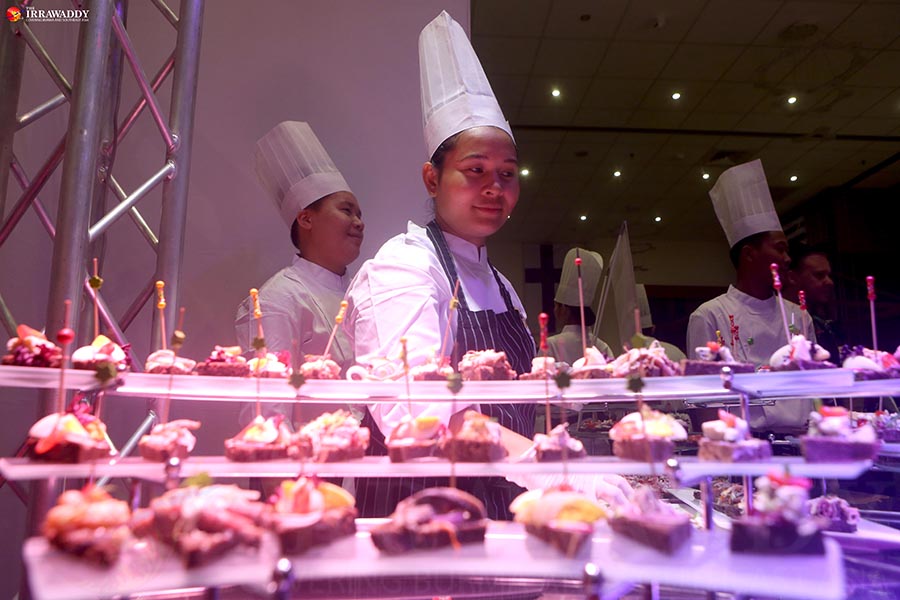
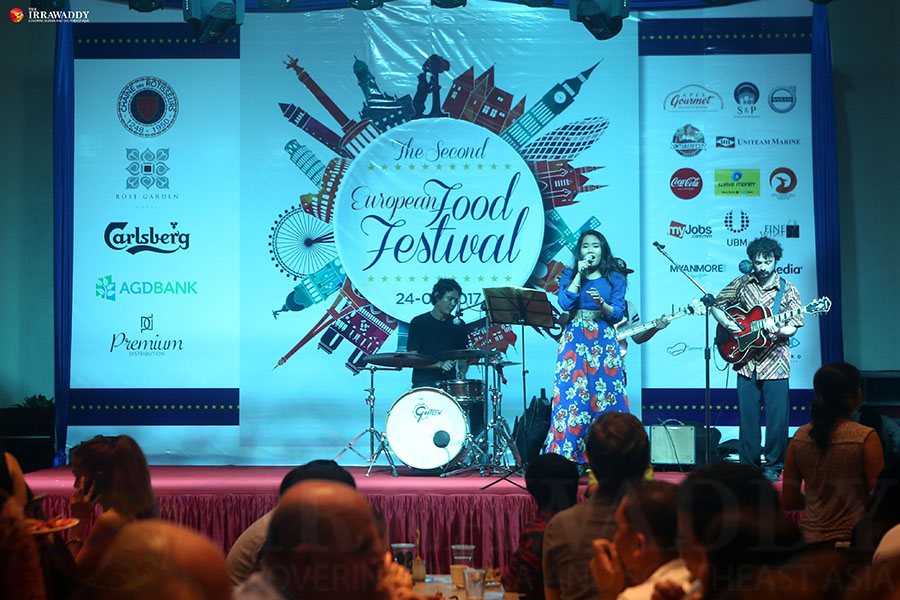
Yangon's Rose Garden Hotel was transformed into a little Europe on Saturday as 1,500 people attended the second annual European Food Festival organized by gastronomic association La Chaîne des Rôtisseurs and Carlsberg Brewery, with support from the European Union Delegation to Myanmar.

Swedish meatballs, German bratwurst, Italian pizza, and Polish dumplings were washed down with Romanian wine and British craft ales—all to the tune of live Euro pop and jazz.

The money from ticket sales raised an estimated US$14,000 for two charities: Hamburg-based Myanmar Development Aid e.V's Thanlyin Orphanage and educational and vocational training community organization My Red Elephant, according to Alexander Scheible, General Manager of the Rose Garden Hotel.

Scheible described the day as a "great success," praising the all the restaurateurs and chefs who came together to showcase the diversity of European food.

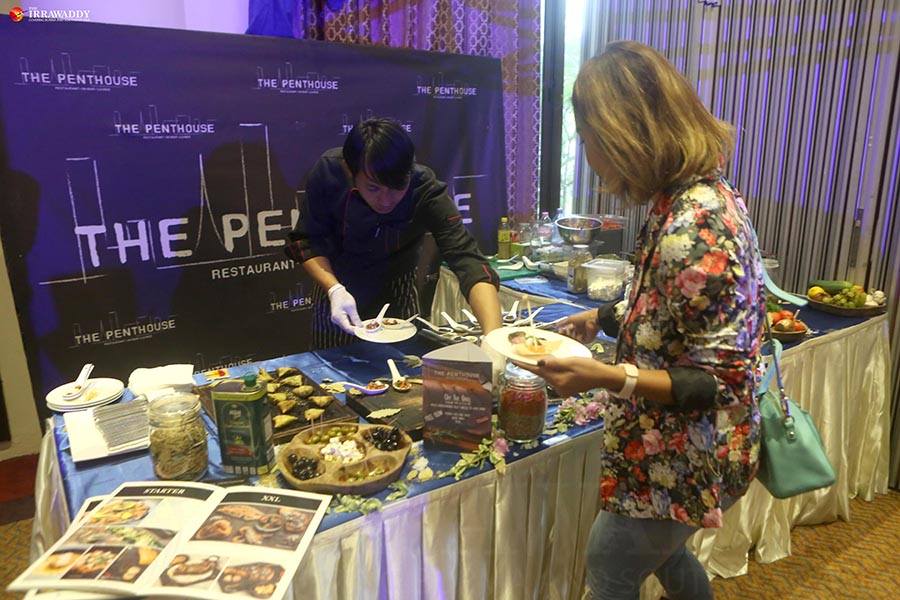
Twenty-eight European countries were represented by booths forming a "who's who" of Yangon's European dining scene.

Sanchaung's Mahlzeit Restaurant served up delicious German fare, Le Planteur on the shore of Inya Lake offered French beef and potato.  Pun+Projects (the brains behind 50th Street Bar and Grill) presented a hearty beef stew, and tasty ricotta-stuffed pasta and pizza were on offer at L'Opera's booth.

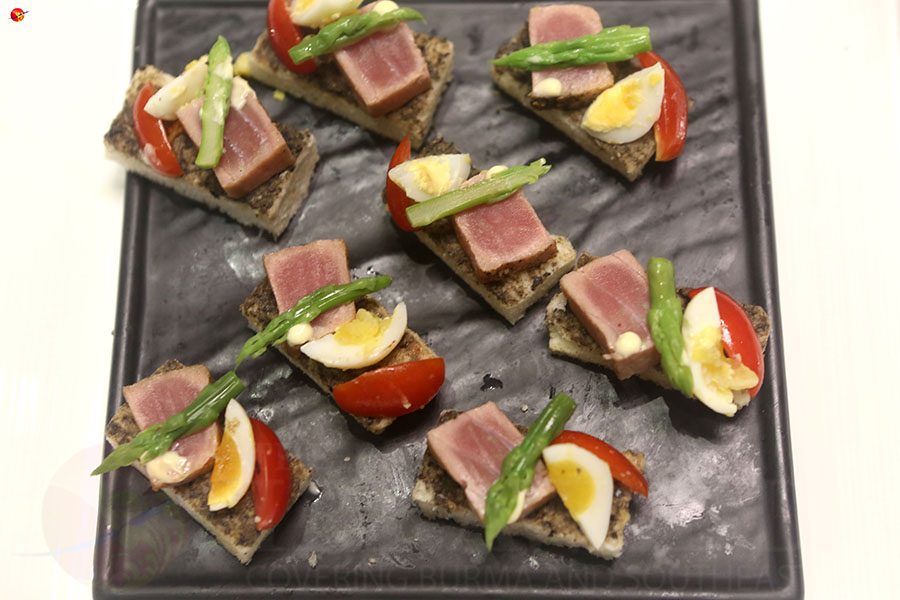
The City's five-star hotels did not disappoint. The Polish dumplings and stuffed cabbage by Kandawgyi Palace Hotel were the epitome of European comfort food while The Savoy kept it simple, and delectable, with large squares of fine smoked salmon served with beetroot.

For those with a sweet tooth, highlights included Annie's Greek-style yoghurt with various fruit compotes, chocolate brownies and mini lemon meringue pies from restaurant training school Shwe Sa Bwe, and waffles from Myanmar Deaf Chefs.

The—at times deafening—soundtrack to the party was provided by Ye Lin Aung who played British pop tunes, and Alice's Wonderband whose performance included French tunes and blues numbers. A tango dance show also captivated attendees, particularly among the children.

Glasses of German weizen beer, English bitter, and blonde ale by Yangon's first microbrewery Burbrit were popular, leading to queues and frequent barrel changes. Bottega sparkling wine also went down well with guests, even if it was served in paper cups.

The post European Food Festival Sates Yangonites' Appetite for Continental Cuisine appeared first on The Irrawaddy.

Fifth Annual Ethnic Media Conference Convenes in Loikaw

Posted: 26 Jun 2017 07:14 AM PDT

LOIKAW, Karenni State — An ethnic media conference eyeing the development of an official ethnic media policy convened in Karenni (Kayah) State's capital of Loikaw on Monday.

During the three-day event, nearly 100 journalists from across the country will discuss ethnic media policy frameworks and challenges, as well as the promotion of the rights of women journalists and the role of ethnic media in Myanmar's political transition, peace process, and the building of a federal Union.

In his opening address, Nai Kasauh Mon, executive director of ethnic media coalition Burma News International (BNI) and chief editor of the Mon News Agency, urged the participants to provide input on a future ethnic media policy as well as the sustainability of their media outlets, which have a smaller circulation than larger media in central Myanmar.

"At this fifth session, we will discuss the formulation of a more comprehensive and coherent ethnic media policy. But such a policy won't immediately be able to be drafted at this conference. At the very least, we'll need many more recommendations," Nai Kasauh Mon told The Irrawaddy.

The ethnic media conference is in its fifth year. Previous sessions were respectively held in Mon State's Moulmein (Mawlamyine), Shan State's Taunggyi, Chin State's Hakha and Arakan State's Mrauk U since 2013. Those conferences focused on networking between ethnic media outlets and their role in the peace process.

The government's information minister U Pe Myint also addressed the ethnic media conference, saying that media would develop alongside Myanmar's political transition.

He admitted that he was aware that his ministry needed to do much more to promote the development of ethnic media.

"We have plans for the development of ethnic news media and literature. We have an obligation to implement these two things. Therefore we broadcast news on TV and radio in ethnic languages, and we also publish supplements in ethnic languages in newspapers.  But we haven't done enough. We know that much remains to be done," said U Pe Myint.

Nan Paw Gay, chief editor of the Karen Information Centre (KIC)​ said that challenges for ethnic media had continued in different forms since the political transition, but that a shortage of human capacity, and financial and technical restrictions remain common issues throughout the country.

"These problems have persisted, though we have tried to solve them. So, I want ethnic media to be given a certain extent of no-strings-attached assistance, either by the state government or Parliament or the Union government, without [editorial] independence restricted," she told The Irrawaddy.

Security is one of the concerns for journalists in ethnic areas, said Say Reh Soe, chief editor of Kantarawaddy Times, a local ethnic media outlet based in Loikaw.

"As there are many armed groups in Kayah State, tensions between the Tatmadaw and ethnic armed organizations remain. So it is quite sensitive for reporters to gather news in the areas controlled by either group. [The authorities] designate areas as 'black' and 'brown' depending on security levels," he explained, a reference to zones controlled by ethnic armed organizations—designated as black—and areas of contested control between the Myanmar Army and ethnic armed groups—brown. "It is a challenge for the security of reporters to gather news in those areas," he explained.

Ethnic media outlets have a better understanding of the situations of their respective areas, and therefore could work in cooperation with Yangon-based media to reach a wider audience and to gain greater financial returns in order to ensure their sustainability, suggested media trainer U Myo Tha Htet of Internews.

"The journalistic standards of ethnic media have improved," he said. "So, at this point, we'll seek ways in which they can get financial returns for their sustainability," he added.

U Nay Lin Soe from the Myanmar Independent Living Initiative (MILI), representing persons with disabilities at the conference for the first time, urged the media to write more stories about the abilities of disabled persons both in mainland and ethnic regions.

As a panelist at the conference, he said dignified portrayals of disabled persons, rather than those that describe them as pitiful, would contribute to changes in policies that affect them.

U Nay Lin Soe explained that he hoped that ethnic media, in speaking out about the needs of vulnerable people, would also present the plight of disabled persons from a perspective informed by human rights.

"When [media] present the issues of disabled people, they should not present them from traditional point of views, but from the point of view of fundamental rights in modern times," he said.

Translated from Burmese by Thet Ko Ko

The post Fifth Annual Ethnic Media Conference Convenes in Loikaw appeared first on The Irrawaddy.

Tatmadaw Arrests Seven in Shan State

Posted: 26 Jun 2017 06:45 AM PDT

Myanmar's military arrested seven people, including three reporters, on the road between Namhsan and Lashio townships in northern Shan State on Monday, according to a statement from the office of the commander-in-chief of the Tatmadaw.

The seven men were travelling in two vehicles near Phayagyi Village and were arrested on suspicion of connection with ethnic armed group the Ta'ang National Liberation Army (TNLA), which operates in the area.

The Tatmadaw statement said the local reporters—The Irrawaddy's Lawi Weng, also known as U Thein Zaw, and U Aye Naing and U Pyae Bone Naing from the Democratic Voice of Burma—had been handed over to police.


The duty officer at the Lashio Township police station did not know anything about the arrests when contacted by The Irrawaddy.

The military statement described the TNLA, which has not signed Myanmar's nationwide ceasefire agreement, as "threatening the peace and stability of the country."

The reporters traveled to a TNLA-controlled area to report on the destruction of opium poppy plantations by the ethnic armed group.

The post Tatmadaw Arrests Seven in Shan State appeared first on The Irrawaddy.

Myanmar, Thailand Incinerate Illicit Drugs Worth US$800 Million

Posted: 26 Jun 2017 05:15 AM PDT

Officials in Myanmar and Thailand burned illegal narcotics worth more than US$800 million on Monday to mark the UN day against drug abuse and trafficking.

The move came even as authorities struggle to stem the flood of illicit drugs in the region, with Thailand's justice minister last year saying the country's war on drugs was failing.

In Thailand's Ayutthaya province, more than nine tons of drugs with a street value of over 20 billion baht ($590 million) went up in smoke including methamphetamines, known locally as "yaba" or "crazy drug", according to police.

"Currently, we are able to take down a lot of networks, including … transnational networks bringing drugs into Thailand … to be shipped to Malaysia and other countries," Sirinya Sitthichai, Secretary-General of the Office of Narcotics Control Board, told reporters in Ayutthaya.

In neighboring Myanmar, the police said they destroyed confiscated drugs worth around $217 million.

Myanmar remains one of the world's largest producers of illicit drugs, including opium, heroin and methamphetamines. Those narcotics are often smuggled into China.

Last year, law makers in Myanmar voiced disappointment over the country's lacklustre efforts to tackle the drug problem.

The market for methamphetamines has been growing in Southeast Asia, the UN has said. It estimates that Southeast Asia's trade in heroin and methamphetamine was worth $31 billion in 2013.

The post Myanmar, Thailand Incinerate Illicit Drugs Worth US$800 Million appeared first on The Irrawaddy.

Outgoing UNAIDS Country Director: ‘Structural Barriers are Preventing People From Getting Tested and Treated’

Posted: 26 Jun 2017 04:30 AM PDT

Mr. Eamonn Murphy is about to take up the position of regional director for the Asia Pacific Joint United Nations Program on HIV/AIDS (UNAIDS) after holding the position of country director in Myanmar twice: between 2002 and 2004, and most recently since 2012. He has presided over an office that has seen new HIV infections in the country fall by 24 percent since 2010, and AIDS-related deaths decrease by 40 percent.

Last month, Mr. Murphy welcomed the government's third five-year national strategic plan on the issue, and praised the injection of extra funding from the current administration. The Irrawaddy's Rik Glauert sat down with Mr. Murphy to learn more about his insights into and his experiences of fighting the HIV epidemic in Myanmar.

What are you most proud of from your time in Myanmar?

The work of UNAIDS is to help others to do their work. You won't see photos of me in the newspaper treating people. We don't make the change alone; we support others who are trying to create change. The fact that the community groups are leading, with the Parliament, in the drafting of legislation on the new HIV law in Myanmar, is a real success for me. We are supporting them, technically, but we are behind. It has been truly nationally owned. That for me is the satisfaction of working in the UN in this particular organization.

The HIV and AIDS treatment program scale up has been very much led by the government. The new policies and decentralization have meant more people are being treated than ever before. Civil society continues to grow and be empowered—we have done training with groups of men who have sex with men (MSM) and sex workers' groups. There has been so much positive change in the last five years, and it has been a privilege to be here and support national leadership. It is Myanmar people leading, not a lot of foreigners telling people what to do.

Mr. Eamonn Murphy at a candlelight memorial for AIDS sufferers in Yangon in 2013. (Photo: UNAIDS)

What unique challenges have you observed concerning the fight against HIV/AIDS in this country?

Every epidemic is different because the country has unique cultural, social, political characteristics that impact it. HIV prevalence among injecting drug users, principally heroin, is high in Myanmar—nationally it is 28.5 percent. But there are pockets, particularly in towns in Kachin and northern Shan states, where it is as high as 50 percent. Drug use in these areas is the 'center of the onion'—you've got issues like conflict, cross-border trade in jade, timber, and drugs, a whole range of economic and social factors surrounding it.

Culturally conservative groups can reject modern health interventions, from both a values and a political basis—they see methadone and needle exchange programs as impositions from the central government. Geography is also a major challenge: if people have to travel to get to methadone they will continue to buy heroin at the local market where it is cheaper and easier to come by.

HIV prevalence among MSM is also very high—up to between 22 and 27 percent in the urban centers of Mandalay and Yangon. The lack of any law reform in Myanmar for decades is also holding things back. Lawmakers currently have a discrimination protection law for people living with HIV, and if they can also address Section 377 of the penal code that criminalizes "unnatural sex," that will help a lot to reduce fear and will reduce new infections. The Suppression of Prostitution Act is also up for revision, which could improve help available to sex workers.

There's a lot of stigma and discrimination against HIV positive people in Myanmar, which needs to change. If you're a taxi driver in Yangon, why do you need to have a HIV test? I'm unaware of anyone getting HIV from riding in a taxi. Critical structural barriers are preventing people from getting tested and treated.

Mr Eamonn Murphy at a meeting to discuss harm reduction measures for people who inject drugs in Lashio, Shan State in 2003. (Photo: UNAIDS)

What changes have you seen throughout the course of your time in Myanmar?

The first time I was here [in 2002], HIV/AIDS was highly politicized. In the eyes of the government, any journalist walking through the door was looking to criticize the country, and HIV/AIDS was used as a way to do that. The government didn't like the data coming out—there was a whole range of estimates of infections, from the government, from us, from outside. HIV/AIDS was picked on, compared to other health issues, to criticize in hopes to bring about democratic change. That didn't help us respond to the epidemic—the government went into lockdown and the overall HIV/AIDS numbers were held back. The then health minister Dr. Kyaw Myint was very brave. He set out to establish a fund for HIV treatment and prevention and gained international financial support. He was happy to engage with people and establish formal structures.

In 2012 there was big shift when power moved from the military junta to the Union Solidarity and Development Party. It was really exciting to work with colleagues in the Ministry of Health when I came back—many of them knew what they wanted to change, even though the ability to make that change was hard, but the motives were there and the energy was so strong.

Dr. Pe Thet Khin [health minister from 2011-14] invited a number of different partners and NGOs and was working to establish universal health coverage. He had a very public health approach and was responsible for bringing back medicines into the health systems in 2013.

Things have not changed that fast, of course, and things slowed down over the 2015 election period. With the new National League for Democracy-led government we have seen more openness to decisions, but the bureaucracies are slow to change. The current health minister Dr. Myint Htwe has a very public health approach and has introduced a very progressive new national health plan that HIV will be part of. He is the one driving the change in treatment provision. Devolving decision-making to the states and regions is going to be critical for his vision. It is going to take a while for people to find the confidence in his plans, though.

Mr. Eamonn Murphy in his Yangon office. (Photo: Chanson / Irrawaddy)

How has international funding informed the way Myanmar tackles HIV/AIDS?

Myanmar has never been awash with development assistance in the way that some other countries in the region have been, because of international sanctions. And, since 2011-12, health funding has actually been in decline. The budget for HIV, tuberculosis and malaria has not grown; it has shrunk and it is now covering more things. It is understandable that development money is going to the economy and capacity building in the workforce, but the need to fight HIV is still great.

The new government has increased the provision of treatment with new policies and more government money. The new minister has trebled what was put in before to US$15 million as the Global Fund [to Fight AIDS, Tuberculosis and Malaria] flatlines. The costings behind the new strategic plan are clever. A World Bank tool and an AIDS epidemic modeling tool were used to optimize the spending. That's why models of service are changing.

[This change] is out of necessity but it is also out of good logic. The future of public health depends on more domestic resources. But, unfortunately, prevention will lose out in the middle of that, that's where development partners can help. You can't treat yourself out of a HIV epidemic. I encourage development partners to really look at investment in health and HIV and the whole range of social services.

What's next for you?

I'll be regional director for Asia Pacific. For UNAIDS, that region is all the way from Pakistan and Afghanistan to the Pacific islands. It includes China and India—a lot of people. We may not have the large-scale epidemics of Africa, but we have serious numbers at risk or infected and major human rights issues. The challenges are going to be great, but I love a challenge. It's not just about the disease itself, it's about the context. The rights of the individuals, their access to rights and services. Of the biggest challenges will be rights issues, because of the concentrated nature of the epidemics. It is marginalized people that are most affected.

I'm excited about it, as I will also be able to get back to Myanmar. I would like to refer to the successes of Myanmar too, for other countries to look at. They can ask: "How did Myanmar scale up treatment with limited resources available?" A lot of it is about commitment. I think there is a lot to be learned from Myanmar. Health reform is a real positive thing here.

The post Outgoing UNAIDS Country Director: 'Structural Barriers are Preventing People From Getting Tested and Treated' appeared first on The Irrawaddy.

U Win Htein: State Counselor Will Oversee Any Cabinet Reshuffle

Posted: 26 Jun 2017 02:47 AM PDT

YANGON — State Counselor Daw Aung San Suu Kyi will oversee any cabinet reshuffle, said ruling National League for Democracy (NLD) party secretariat member U Win Htein on Sunday.

At a press conference held after a two-day central committee meeting at the party's headquarters in Yangon, he said: "When it comes to changes of Union-level ministers and deputy ministers, Daw Aung San Suu Kyi will review, and she will have the final say," in response to a question on whether there was any cabinet shakeup in the pipeline.

He did not say whether there would be a cabinet reshuffle in the near future.

U Win Htein said the NLD had formed a committee to assess the performance of lawmakers and regional government members.

"We are reviewing their performance. But we won't reveal the findings to the public. However, we will submit them to the party Central Executive Committee to get them fixed if needed," he added.

The NLD government came to power in March 2016. In November last year, The Ministry of Agriculture, Livestock and Irrigation's deputy minister Dr. Tun Win was abruptly dismissed from the position, becoming the first cabinet member to be fired.

The government did not provide any reason for the dismissal at the time.

The post U Win Htein: State Counselor Will Oversee Any Cabinet Reshuffle appeared first on The Irrawaddy.

Nationalists Renew Protest Against Religion Minister

Posted: 26 Jun 2017 02:09 AM PDT

Mandalay — Nationalists gathered in Myanmar's two biggest cities to call for the resignation of the religious affairs minister U Aung Ko on Sunday.

The protesters in Mandalay and Yangon were rallying as they said the government had ignored the list of demands they laid out at a demonstration in Naypyitaw last month.

The demands included the acquittal of a number of nationalists guilty or accused of crimes, the lifting of a nationwide preaching ban on ultranationalist monk U Wirathu, imposed because of his religious hate speech, and an apology from U Aung Ko.

They claim the minister is neglecting Buddhism and favoring Islam, but the Ministry of Religious Affairs and Culture questioned the authenticity of the protest, alleging that demonstrators were paid to attend.

More than 200 Buddhist monks, nuns, and laypeople rallied at Manawyaman grounds in Mandalay on Sunday, holding placards and shouting slogans that accused U Aung Ko of influencing the state Buddhist authority the State Sangha Maha Nayaka Committee.

"Since the ministry did not follow our demands in the one month that we gave, we are here to urge for the resignation of the minister again," said U Eaindaka, vice president of the Patriotic Young Monks Union.

The protests would continue, he said, if the government continued to ignore the demands.

"Our demands are the demands of every citizen, so the government authorities should listen," he said. "The minister is not protecting or supporting the wellbeing of Buddhism enough. He did many things to sadden us, the Buddhists, by oppressing the Buddhist monks."

U Eaindaka said articles 361 and 362 of the 2008 military-drafted Constitution declare Buddhism as the national religion and grant other religions the freedom to worship.

But the minister said other religions' freedom to worship should be respected, claimed U Eaindaka, adding that Buddhism is the "host" and should be respected by all other religions, which are "visitors" in the country.

On the same day outside City Hall in Yangon, roughly 200 people, including monks, protested the same message as the nationalists in Mandalay.

The protesters listed six demands similar to the demands announced in Naypyitaw last month and gave the government seven days to respond to them.

If the government does not respond, they threaten to camp outside Yangon's City Hall.

The post Nationalists Renew Protest Against Religion Minister appeared first on The Irrawaddy.

World Bank Arm Defends Mandalay Cement Factory Project Amid Civil Society Opposition

Posted: 26 Jun 2017 12:15 AM PDT

Following an open letter sent to the World Bank's President Jim Kim by a coalition of community-based organizations opposing a proposed plan to support the expansion of a cement plant in Mandalay Region and the coal mine that fuels it, the International Finance Corporation (IFC) maintains that the project is worthwhile.

The open letter was endorsed by 174 organizations, all but two of which are based in Myanmar. Sent earlier this month, it claimed that the IFC’s proposed financial backing of the expansion of the Shwe Taung Cement Factory and related coal mine contradicted a long list of World Bank and IFC guidelines and objectives.

"We emphasize the sheer irresponsibility of this investment and the multiple ways it undermines the IFC’s commitment to sustainable investment and 'shared prosperity' through private sector development," it stated.

The proposed plan to expand the cement factory also includes enlarging operations at a coal mine operated by the firm in Sagaing Division that exclusively supplies the cement factory.  The IFC's backing of the coal mine expansion and the project's use of coal is one of the major points of contention among civil society groups.

The letter from the coalition also pointed out that Shwe Taung Group chairman Aik Htun co-founded and ran a bank targeted by US authorities for being a "Financial Institution of Primary Money Laundering Concern."  The Asia Wealth Bank collapsed in 2003 amid a massive crisis in Burma's banking industry.

The letter also noted that Aik Htun was described by US authorities as someone with "connections with the narcotics trade."  The Sino-Burmese tycoon whose business interests stretch from construction to real estate has denied these allegations, characterizing them as the result of petty jealousy spread during a period when the country was closed off.

The explanation does not appear to hold water with civil society groups that warned in the letter that "financing this project would send the message that the IFC disregards the reputational risks associated with the borrower, and is more interested in lining its pockets and that of Myanmar's crony elite than promoting sustainable development in accordance with its mandate."

The IFC’s country chief in Myanmar, Vikram Kumar, explained in an email response to The Irrawaddy the merits of the IFC’s proposal to invest US$15 million and provide a loan of US$20 million in the project that is expected to cost a total of US$110 million.

"We believe the cement sector to be critical for Myanmar in the next few years. IFC's financing for Shwe Taung Cement Company (STC) will help triple its productivity, and meet growing demand for raw material for key sectors like infrastructure, housing and ultimately manufacturing," wrote Kumar.

The IFC predicts that the project if it moves forward would generate 200 direct jobs and potentially as many as 4,000 "indirect jobs," a figure that was obtained using case studies on the cement industry from other developing countries.

Kumar and his colleagues also disagree with a number of claims made in the letter concerning the project’s compliance with IFC and World Bank guidelines.  The civil society coalition claims the IFC’s proposed investment does not comply with World Bank coal-screening criteria.  The letter also claimed that the IFC involvement in the project contradicted a promise from the World Bank that it would avoid supporting coal projects in Myanmar.

"As the World Bank has pledged not to finance coal power plants in Myanmar due to their devastating environmental, health and climate impacts, it is not clear why the IFC is considering funding this project," the letter stated.

Kumar counters that the World Bank screening policy on investing in coal-fired power only concerns power plants that contribute power to a national grid.

"The project is aligned with this policy in that coal mined by the company is not being used for power generation at the plant, but solely in the cement kiln, a widely used practice internationally," explains Kumar.

Another concern flagged by the coalition opposing the IFC’s proposal is that the Environmental and Social Impact Assessment (ESIA) commissioned for the project "falls short in a number of areas, including failing to adequately assess existing pollution levels in project site areas."

When asked about this claim, Kumar responded that the consultancy that carried out the ESIA, the UK-based Environmental Resource Management (ERM), is "an international and reputable consultancy which is aligned with the IFC's Performance Standards."

The work of ERM, which calls itself the "world's largest pure play environmental and sustainability consultancy," is described somewhat differently in the open letter, whose authors contend that the consultations with local villagers were "farcical" and were "undertaken in an attempt to comply with the IFC Performance Standards."

"Some villagers reported a 5-minute question and answer session. This undercuts the Shwe Taung Group's and the IFC's social license to operate," the open letter claimed.

While the open letter also claimed that farmers living near the cement plant had been subjected to "judicial harassment" for complaining about the impact of the cement plant – which began operating in 2010 – on their land and livelihood, Kumar paints a very different situation.

"Consultations by IFC and ERM with villages and communities in proximity to the cement plant and mine indicate support for the project and appreciation for community outreach activities by the company," said Kumar.

Date of IFC Decision on Project Unclear

Although a summary of the project posted on the IFC website says the IFC's board was tentatively scheduled to decide about the IFC's involvement at a meeting in Washington on June 8 – one day after the letter was sent to World Bank chief Jim Kim – this did not happen. It remains unclear when the 25-member board that Kim chairs will decide on the project.

"This project hasn't been submitted to the board and the exact board date is not confirmed yet," said Kumar.

The long list of groups who signed the letter represent a wide swath of Myanmar civil society and include organizations based in every state and region of the country, a number of whom are internationally known including the Karen Environment and Social Action Network (KESAN) and the Kachin Development Networking Group (KDNG).  The latter organized a well-attended protest outside a high-end hotel in the Kachin State capital Myitkiyna last year, citing concerns that the IFC was failing to consult with communities that would be affected by the IFC’s water mangement plan.

Another group that signed the letter, Earth Rights International (ERI),  a legal-focused NGO that was co-founded by Karen activist Ka Hsaw Wa, is currently suing the IFC in US court on behalf of peasants in Honduras in a suit that alleges that the IFC's backing of a controversial palm oil project on contested land has had lethal implications.

ERI’s legal team alleges that the IFC continued to support the Dinant Corporation's plantation project despite there being widespread allegations that the firm "employed hitmen, military forces, and private security guards to intimidate and kill local farmers who claim Dinant's owner stole their land decades prior."

ERI gained widespread attention in international legal circles for suing a US oil giant on behalf of villagers from eastern Myanmar who alleged that they had been used as forced labor for a pipeline project.  The lengthy case was eventually settled out of court after the villagers achieved a series of precedent-setting legal victories.

The post World Bank Arm Defends Mandalay Cement Factory Project Amid Civil Society Opposition appeared first on The Irrawaddy.

Overruling Diplomats, US to Drop Iraq, Myanmar from Child Soldiers’ List

Posted: 25 Jun 2017 07:46 PM PDT

In a highly unusual intervention, Secretary of State Rex Tillerson plans to remove Iraq and Myanmar from a US list of the world's worst offenders in the use of child soldiers, disregarding the recommendations of State Department experts and senior US diplomats, US officials said.

The decision, confirmed by three US officials, would break with longstanding protocol at the State Department over how to identify offending countries and could prompt accusations the Trump administration is prioritizing security and diplomatic interests ahead of human rights.

Tillerson overruled his own staff's assessments on the use of child soldiers in both countries and rejected the recommendation of senior diplomats in Asia and the Middle East who wanted to keep Iraq and Myanmar on the list, said the officials, who have knowledge of the internal deliberations.

Tillerson also rejected an internal State Department proposal to add Afghanistan to the list, the three US officials said.

One official said the decisions appeared to have been made following pressure from the Pentagon to avoid complicating assistance to the Iraqi and Afghan militaries, close US allies in the fight against Islamist militants. The officials spoke on condition of anonymity.

Foreign militaries on the list can face sanctions including a prohibition on receiving US military aid, training and US-made weapons unless the White House issues a waiver.

Human rights officials expressed surprise at the delisting, which was expected to be announced on Tuesday, the officials said, as part of the State Department's annual Trafficking in Persons (TIP) Report.

A State Department official said the TIP report's contents were being kept under wraps until its release and the department "does not discuss details of internal deliberations."

The Pentagon did not immediately respond to a request for comment.

Under the Child Soldiers Prevention Act of 2008, the US government must be satisfied that "no children are recruited, conscripted or otherwise compelled to serve as child soldiers" in order for a country to be removed from the list and US military assistance to resume.

In the lead-up to Tuesday's report, the State Department's Bureau of Democracy, Human Rights, and Labor, which researches the issue and helps shape US policy on it, along with its legal office and diplomatic bureaus in Asia and the Middle East concluded that the evidence merited keeping both countries on the list, the officials said.

Officials said that although the report had been finalized there was always the possibility of last-minute changes.

Betraying Children

Human Rights Watch said removing Myanmar, formerly known as Burma, from the list would be a "completely premature and disastrous action that will effectively betray more children to continued servitude and rights abuses."

The decision also would put the Trump administration at odds with the United Nations, which continues to list the Myanmar military, along with seven ethnic armed groups, on its list of entities using and recruiting child soldiers.

"What's particularly astonishing is this move ignores that the UN in Burma says that it is still receiving new cases of children being recruited" by the Myanmar military, said Phil Robertson, deputy Asia director at Human Rights Watch.

Rights groups have long accused Myanmar of using child soldiers. Bordering both China and India, Myanmar is also of growing strategic importance to the United States at a time of increasing encroachment in the region by China, which has sought closer relations with its neighbor.

Iraq, which has received more than US$2 billion in US arms and training over the last three years, was added to the State Department's "Child Soldier Prevention Act List" in 2016. However, the flow of US assistance has continued.

Former President Barack Obama handed out full or partial waivers regularly, including last year to Iraq, Myanmar, Nigeria, South Sudan and others out of 10 countries on the list.

Last year's State Department report said some militias of Iraq's Popular Mobilization Forces (PMF), an umbrella group of mostly Shi'ite Muslim factions with ties to the Iraqi government and backed by Iran, "recruited and used child soldiers."

The report said that despite the PMF being funded by the government, Baghdad struggled to control all of its factions.

"The government did not hold anyone accountable for child recruitment and use by the PMF and PMF-affiliated militias."

Human Rights Watch said in January that it had learned that militias had been recruiting child soldiers from one Iraqi refugee camp since last spring.

The broader TIP report, the first of Trump's presidency, is sure to be closely scrutinized for further signs that under his "America First" approach there will be little pressure brought to bear on friendly governments, especially strategically important ones, for human rights violations at home.

The Obama administration, while more vocal about political repression around the world, also faced criticism from human rights groups and some US lawmakers that decisions on annual human trafficking rankings had become increasingly politicized.

The post Overruling Diplomats, US to Drop Iraq, Myanmar from Child Soldiers' List appeared first on The Irrawaddy.

The Poet Parliament—an Artistic Administration Ready to Deliver?

Posted: 25 Jun 2017 07:11 PM PDT

After Daw Aung San Suu Kyi's National League for Democracy (NLD) strolled to victory in the 2015 General Election, much discussion was dedicated to the demographic make-up of the country's new ruling party. Analysis of the NLD's new parliamentary body was often critical, characterizing it as both too old and too inexperienced (negative assessments individually, but uniquely damning together), and rightly condemning its decision not to run a single Muslim candidate for office.

One demographic oddity that did make positive headlines, however, was the election to office of 11 poets. In fact, the number of NLD MPs voted in on November 8 who defined themselves as poets was only two fewer than those who listed their profession as politician.

Although there is no doubt that the victory of poet and former political prisoner U Tin Thit over former Defense Minister U Wai Lwin was a sensational story, there is an argument that column inches dedicated to the number of poets in parliament gained more traction due to alliterative potential than newsworthiness. That being said, the phenomenon did highlight an artistic streak running through Myanmar's new ruling party.

State Counsellor Aung San Suu Kyi has regularly professed her affinity for the Arts and acts as patron to the Irrawaddy Literary Festival, the Human Rights Human Dignity International Film Festival and the Yangon Photo Festival.

Though at the time of the election, there were few who would have predicted his rise to prominence, President U Htin Kyaw also has literary credentials, being a published author of a book about his father Min Thu Wun, himself a revered poet and luminary of the Khitsan Sarpay movement of the 1930s, widely considered Burma's first modern literary movement.

Add to this list U Zayar Thaw, a former member of seminal Burmese hip-hop act ACID and a Pyithu Hluttaw MP since 2012, and it is easy to see why the elections preceded a period of buoyancy in the creative sector borne of finally having some of "our own" in positions of power.

There has also been a distinct feeling that despite a lack of confidence in the NLD's ability to bring about peace or narrow the economic divide while the military retains the power it does, the Arts is an area which could see significant development under a supportive government.

In recent months, I have spent a lot of time discussing support for public art initiatives in Myanmar, and although I can only speak for Yangon, there have been positive signs during the first 12 months of the new administration.

In December, the Yangon Region Government collaborated with the Institut Français de Birmanie to organize the inaugural Mingalabar! Festival, a citywide multidisciplinary celebration of the Arts, which included the largest free, public art performances in Yangon's recent history.

In January, the Goethe-Institut was granted permission to install Wolfgang Laib's "Where the Land and Water End" in the historic Secretariat building. The draw of such an internationally renowned artist coupled with the chance to enter such an iconic building went on to attract almost 20,000 visitors. And with my personal background in photography, it was especially pleasing to see the Yangon Photo Festival being able to move out of the Institut Français and present a weekend of exhibitions and projections (the theme of which was 'Myanmar's Diversity') to large crowds in Maha Bandoola Park.

The Yangon Region Government has been rightly lauded for making the city's parks and public spaces available for these events, but we should not overlook the fact that each of the examples above were initiated by foreign cultural organizations with far greater operational capacity than the vast majority of Myanmar's independent artistic groups.

Established, internationally recognized events such as Beyond Pressure Performance Art Festival and Wathann Film Festival continued to organize essential programming for local artists, as did a plethora of small independent galleries and creative collectives. If the Yangon Region Government is truly interested in promoting public art, then one of its priorities must surely be assisting initiatives such as these so that they are able to operate on a level playing field with the logistical and financial might of new international events.

Wathann in particular is a perfect example of what the current administration should be striving for. In recent years, the Ministry of Information has provided the beautiful Waziya Cinema free-of-charge as a venue whilst financing has been sought from both international funding bodies and domestic commercial sponsorship, leaving the Wathann team autonomy to apply their knowledge and experience to curation and organization.

This marriage of government support, international funding, domestic sponsorship and local organization epitomizes the potential that Yangon has for the development of internationally renowned arts programs.

It should be an ideal time for the Arts in Myanmar: a government which is—on paper at least, and with notable exceptions which I will touch on later—supportive, a growing number of progressive domestic and international companies who recognize the economic potential of the creative sector, the simultaneous waning of a long period of censorship and growth of a long-restricted international market.

But most of all there is an impressive number of talented, experienced and capable artists and organizers who have already created spaces for art, virtually unsupported.

Lokanat Gallery, Pansodan Gallery, New Zero Art Space and many other established institutions were founded independently, by artists for the benefit of artists. Each of the institutions named above were also founded under one of the most repressive censorship regimes in modern history—one can only imagine the potential which could be unleashed by a supportive government. And yet on a local level, this has not yet happened.

Unfortunately, many local initiatives in Yangon that are presented under the banner of 'art' or 'culture' can be characterized more accurately as being about money, vanity, or a disturbingly misplaced understanding of what 'art and culture' actually is. Anyone who has visited 'Myanmar Culture Valley,' a conglomeration of chain restaurants opposite Shwedagon's West Gate, can attest to this.

Even projects put forward with the very best of intentions seem to be rooted more in idealism than in any understanding of the actual needs of the artistic community.

In December, it was reported that the waterfront between Pansodan Jetty and Sule Pagoda Road would be opened up by the Yangon Region Government and warehouses in the area converted into "art spaces for public recreation." March 2017 was touted as an opening date. Although the plans were met with general approval from the wider public, many within the arts community opined that despite being presented as an 'arts space,' there had been worryingly little consultation with the local arts community. Six months on, there is no sign of any "art spaces," or even access to the waterfront.

The lack of an inclusive planning process for what would have been a major investment in Yangon's creative future, exacerbated by what seems like an increasingly premature and ill-advised public announcement, erodes confidence within the creative community that the government is striving for the same things as them. Good intentions are not enough—what is needed is a planning process that includes Yangon's creative community from the outset.

The latest place to be touted as a future "cultural space" is an impressive proportion of the currently-under-renovation Secretariat building— 40 percent, according to an advisor to the project, Mr Vinod Daniel.

It has to be assumed that a large amount of that will be dedicated to museum space, but with the Secretariat occupying an entire city block, even with that taken into consideration, it could constitute a major contribution to Yangon's available public space for the Arts.

The Thein Sein administration was very open about its desire for Yangon to emulate Singapore when it comes to economics and infrastructure, and Aung San Suu Kyi reiterated this aspiration speaking in Singapore just last year. Much credit for the surprisingly full program of public art in Yangon this year should go to Yangon Chief Minister U Phyo Min Thein, and one of his first international excursions after election to office was a study mission to Singapore.

The reason why this should be interesting to Yangon's Arts community is that although most people associate Singapore with the economy and infrastructure that Thein Sein coveted, there are few countries in the world currently doing more to improve their standing in the international Art world.

In 2006, Singapore hosted its first biennale. In 2012, it announced a budget of S$274 million over five years to develop art and culture in the country, and in 2015, it opened the National Gallery of Singapore which now houses the world's largest collection of Southeast Asian art.

Many will baulk at the idea of the Yangon Regional Government looking to Singapore for pointers on city development, but if Phyo Min Thein and the Myanmar Government really are looking to develop the artistic potential, which this city clearly has, there are worse places for them to be looking.

Right now, Singapore is desperately trying to claw back the cultural heritage it lost in the pursuit of economic progress—it is essential that the Myanmar government pays heed to the investment that Singapore is now making and realize that by supporting the Arts from the beginning, they can become regional leaders in the Arts without that kind of financial investment further down the road.

One major issue is that there are no clear indications of what the NLD government's policies are when it comes to the Arts, and no government body who's remit it is to work with contemporary practitioners in a range of mediums.

In most countries this responsibility would fall to the Ministry of Culture, who in Myanmar do control the State Fine Arts School and the National University of Art and Culture. Unfortunately for Myanmar's progressive arts scene the curriculums at both of these institutions reflect the extremely traditional and conservative reputation the ministry has.

The NLD's decision to combine the Ministry of Culture with the Ministry of Religious Affairs during a period of heightened nationalist rhetoric and religious intolerance (creating the current Ministry of Religious Affairs and Culture), gives little reason to hope that they are planning on increasing their support for progressive self-expression through the Arts any time soon.

Currently the majority of creative organizations and events are obliged to work with the Ministry of Information, whose role is generally limited to content-checking and permit-issuing, and certainly not one of creative support.

If the Arts community in Myanmar is to take advantage of a new, amenable administration, they must push the NLD to create a coherent and inclusive policy for the Arts, which includes convening a body drawn from the Arts community who will be involved in the process of developing and enacting it.

Finally, and not an issue that can be adequately covered here but which cannot be left out of this discussion—if there is to be any real progress in the development of the Arts in Myanmar, there must be reassessment of laws currently being misused to arbitrarily restrict freedom of expression and an end to all lingering vestiges of censorship.

Just this week, a human rights leader in Pathein was charged under Article 66(d) of the Telecommunications Act for live-streaming a play in which his son was participating—a satirical drama called "We Want No War"—so that his friends were able to watch it.

The Myanmar Army also sued nine students involved in the production for defamation, two of whom are now awaiting trial. Days later, an 18-minute documentary called "Sittwe," which depicts young people affected by conflict in Rakhine State, was banned from being shown at the Human Rights Human Dignity International Film Festival, the same festival which lists State Counsellor Aung San Suu Kyi as its patron.

There is no inherent necessity for art to be political, but it is essential that political and social commentary through photography, filmmaking, performance or any other form of the Arts is not restricted. In a country which has endured years of repression and control, it is inevitable that there will be times when the two overlap—this is exactly the reason why the country now has 11 poets in political office.

It is clear that a slew of poets, a rapper, and a leader who is patron of a few festivals is no reason to consider the current government of Myanmar advocates for the Arts, but with 115 former political prisoners currently serving as elected representatives of the country, surely they should be advocates for freedom of expression. And that is really what we mean when we talk about supporting the Arts—supporting creativity and capacity for free expression.

Matt Grace is the founder of Myanmar Deitta, a not-for-profit organisation which works to develop resources for documentary photographers and filmmakers in Myanmar. The organisation manages the only dedicated photography gallery in the country as well as a library and resource centre, scholarship programme and numerous projects related to the Documentary Arts. Myanmar Deitta recently joined with a number of other local creative initiatives to form Pyinsa Rasa, an Arts Collective which works on collaborative creative projects to develop opportunities for arts promotion, education and support.

This article originally appeared in Tea Circle, a forum hosted at Oxford University for emerging research and perspectives on Burma/Myanmar.

The post The Poet Parliament—an Artistic Administration Ready to Deliver? appeared first on The Irrawaddy.